
Calendar Formats and Bindings That Suit a Wall, a Desk or a Pocket


Four formats, four bindings, and one coating decision that people regret. A calendar is built in that order, each binding takes something off the page, and there is a date you need to order by.
The format decides the binding: a folded wall calendar is saddle stitched through its own fold and hangs from a punched hole, a desk tent or any calendar that must lie flat wants twin loop wire, and a pocket calendar is a folded card with no binding at all. The second decision is coating, and it is the one people get wrong: gloss makes photographs snap and repels ballpoint ink, so run the image half glossy and keep the date grid dull, matte or uncoated. Then work the calendar backwards from delivery, because a January start loses value every week of December.

Quick answer
Format first, binding second, coating third
A calendar is three decisions stacked in order. Format sets the trim and how the piece lives in the room: wall, desk tent, poster or pocket. Binding follows from it, since a folded wall calendar saddle stitches through its own fold while anything that has to lie flat or stand up wants twin loop wire. Coating comes last and matters most in use, because a gloss sheet that flatters a photograph will not take a pen on the date grid. Everything else, weight, hole position, page count, falls out of those three.
Pick the Format Before You Draw a Single Grid

Format is the first decision because everything after it follows: the trim, the binding, the page count, the paper weight, and how the finished thing hangs, stands or folds. Get it wrong and you find out at the punching stage, which is far too late.
| Format | Flat sheet | Finished | Binding that suits it | Where it fails |
|---|---|---|---|---|
| Wall | 11 x 17 or 12 x 24 | 11 x 8.5 or 12 x 12 folded | Saddle stitch through the fold, hole punched | Needs real wall space, and the pages never lie flat |
| Desk tent | 8.5 x 11 plus an easel back | Roughly 8.5 x 5.5 standing | Twin loop wire along the head | Falls over on a crowded desk and takes up depth |
| Poster | 18 x 24 or 24 x 36 | One flat sheet, no folds | None, just a hanging hole or a strip | No room to write, and the whole year in one type size |
| 3.5 x 8.5 | 3.5 x 2 tri folded, wallet sized | None, two folds only | Dates get tiny, and the creases run straight through the grid |
The honest ranking for a business handing these out is wall first, desk second, pocket third. A wall calendar is seen by everyone who walks into the room for a year. A desk tent is seen by one person, which is fine when that person is the buyer. A pocket calendar is cheap and easy to mail, and it is also the one most likely to be thrown away with the envelope, so treat it as a companion piece rather than the main event. If you are still weighing trims, our guide to standard calendar sizes lists them flat and folded.
One thing people underestimate: the desk format wants a genuinely stiff cover. A tent that sags at the fold looks cheap from the first week, and the fix is a heavier cover stock, not a heavier interior.
The Four Bindings, and What Each One Does to Your Pages

Binding is where calendar quotes diverge, and the differences are mechanical rather than cosmetic. Each method changes how the pages move, what page count you are allowed, and how much margin you lose at the head of the sheet.
| Binding | Lies flat | Page count rule | Margin it takes | Watch out for |
|---|---|---|---|---|
| Saddle stitch | No, pages spring back | Must divide by 4 | Little, but the fold steals the centre | The hanging hole tears out of light stock over a year |
| Twin loop wire | Yes, and flips a full 360 | Any count | About 3/8 in along the head | Loops bend in transit, so box them |
| Plastic coil | Yes, flips 360 | Any count | Similar punch strip | The helix offsets facing pages slightly, so avoid art crossing the spine |
| Perfect bound | No, the glued spine resists | Any count, needs bulk | Gutter loss on every page | Wrong tool for a calendar, right for a thick planner |
Two rules cover most jobs. First, if the calendar has to be written in while it hangs, wire or coil, because a saddle stitched page you press flat with your hand will lift again the moment you let go. Second, if the run is large and the budget is tight, saddle stitch, and spend the saving on a heavier back cover so the hanging hole survives twelve months of being lifted off a nail.
Wire binding also solves the page count problem quietly. Saddle stitch demands multiples of four, so adding a single page of company information to a twelve month calendar forces three more pages you did not plan. Wire takes whatever you give it. The full range of methods sits in our binding options collection, and the wider decision list for a branded calendar is covered in six components to consider when creating a custom calendar.
Paper and Coating, Where the Grid Has to Take a Pen
This is the decision that generates the most complaints after delivery, and it is entirely avoidable. A calendar is two different products printed on the same sheet: a photograph, which wants gloss, and a date grid, which has to accept ballpoint ink from a hand moving quickly.
A gloss aqueous or UV coating seals the surface. Photographs gain contrast and depth, and pen ink sits on top and beads. Dull and matte coatings hold most of the image quality and still take a pen, though they scuff more visibly on dark solids. Uncoated stock takes pen and pencil best of all and makes photographs look muted, which is a fair trade on a calendar that is mainly a working tool.
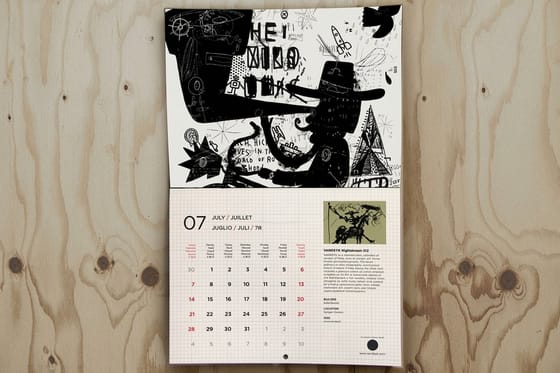
The workable answer on a folded wall calendar is a split: gloss or dull on the image half, dull or uncoated on the grid half. On weights, 100lb gloss text is the everyday interior and 80lb to 100lb cover is right for the cover and the back panel that carries the hanging hole. Going lighter than that on the back is the false economy that ends with a torn hole in March.
Order a sample before you commit a thousand units to a coating decision made on a screen. Our free paper samples let you take a pen to the actual stock, which settles the argument in about four seconds. For the photography side of it, the custom photo calendar guide covers image selection and color.
Dating, Lead Time, and Getting Them Out Before the Year Turns

A calendar is the only print product with an expiry date printed on its face. That single fact should drive the schedule more than the print turnaround does.
Work backwards. If you want calendars in customers' hands during November, allow time for delivery and distribution, print before that, and sign off the proof earlier still. Early October for artwork approval is a comfortable target, not a tight one, and it leaves room for the thing that always happens: someone spots that a public holiday is on the wrong day and the grid has to be corrected. Check the date grid against an authoritative source twice, by two different people, because a typo on a date is not a typo you can live with.
If the window slips, do not print a January start in mid December. Switch to a sixteen month layout or a fiscal year start instead, and the same artwork stays sellable. Academic audiences want September through December of the following year anyway.
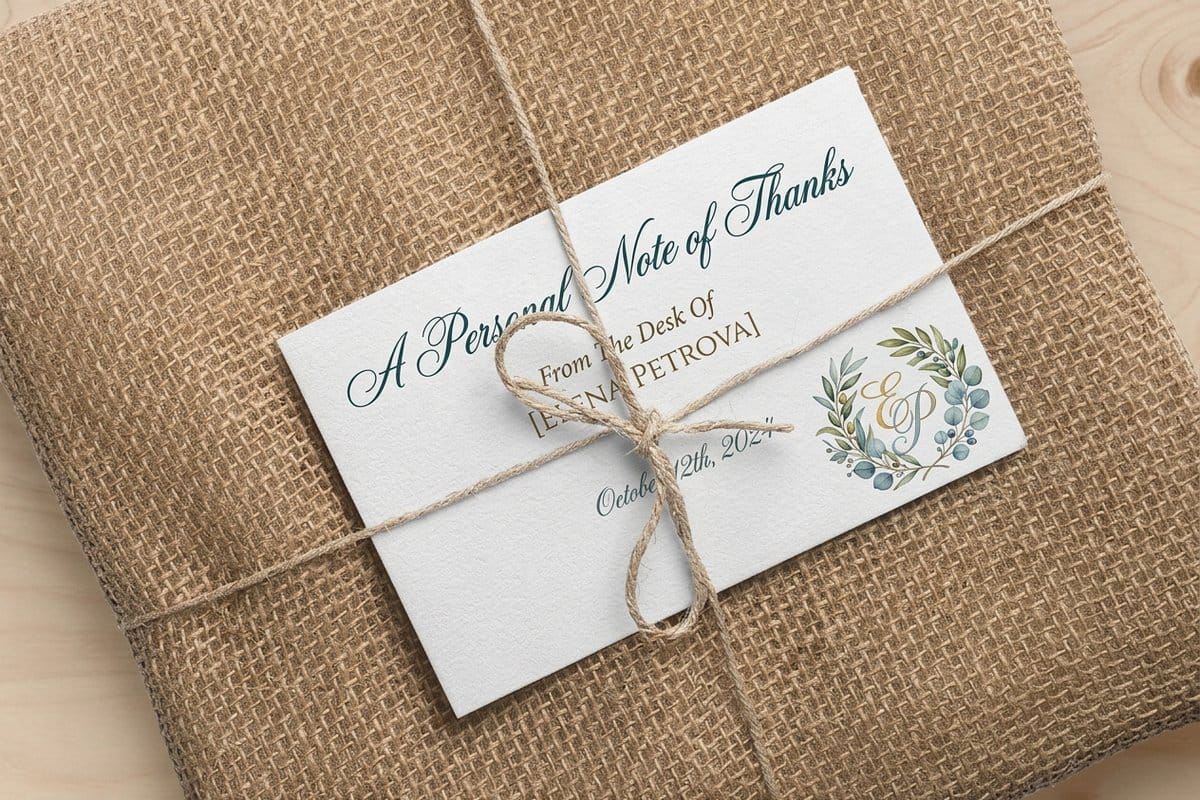
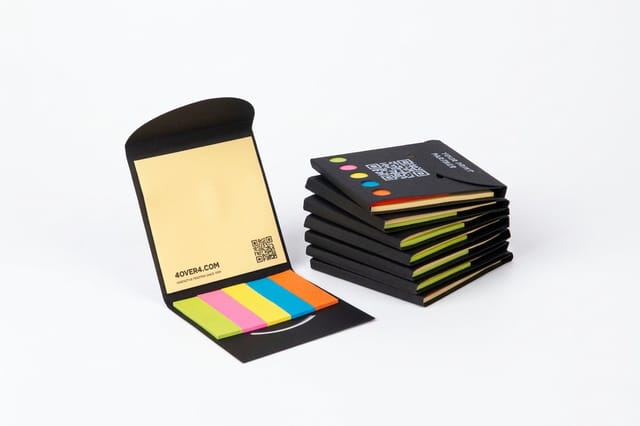
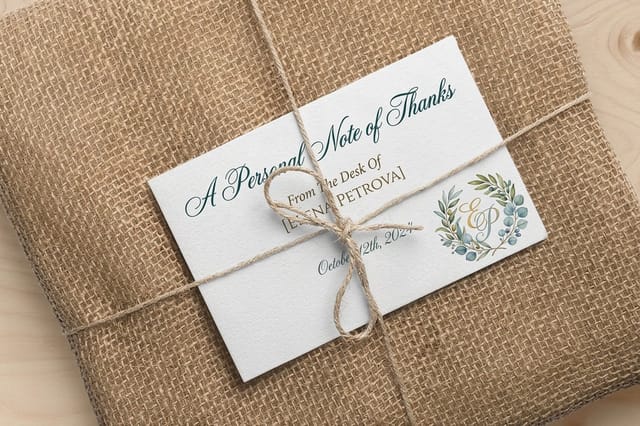
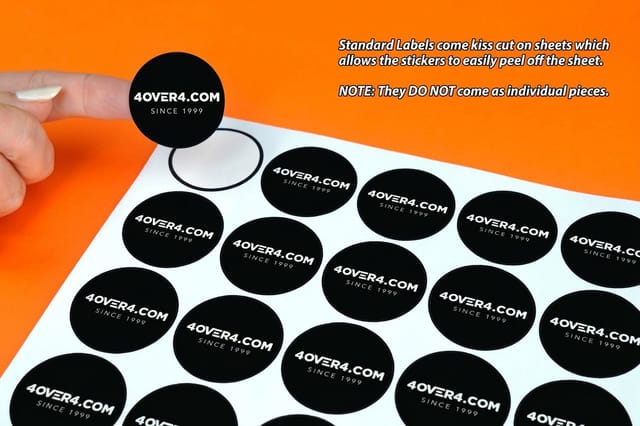
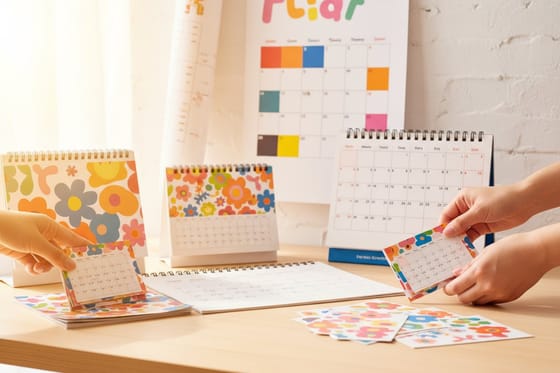
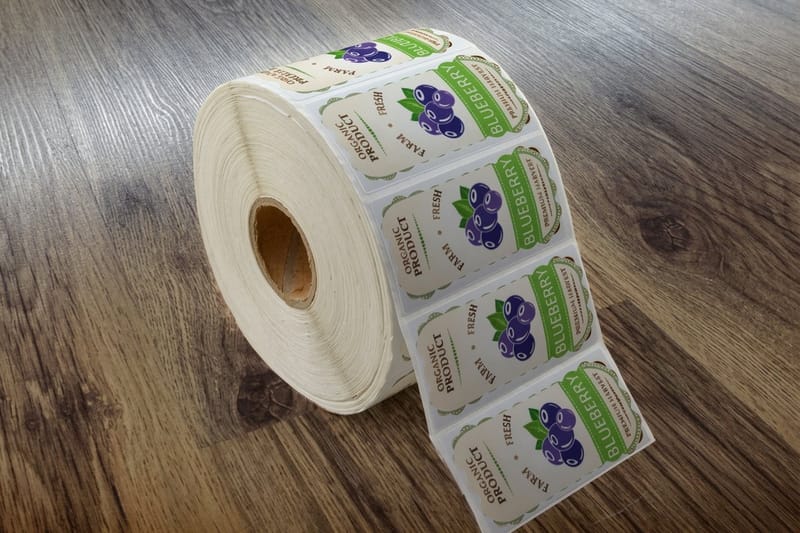
Then there is getting them out. Wire bound calendars need a box, because the loops catch and bend in a soft mailer, and custom printed boxes turn the packaging into part of the gift instead of a cost. Seal and address with printed standard labels, from $23.88, rather than handwriting a mailing run. If the calendar is a client thank you, send it with matching thank you cards, from $19.77, and tuck in a business card, from $17.57, so the recipient has your number when they look up at the wall in March. A pad of Pocket Stickies, from $5.00, makes a light second item in the same box for desk based recipients.
Wally explains calendar binding
What the wire and the staples take off your page
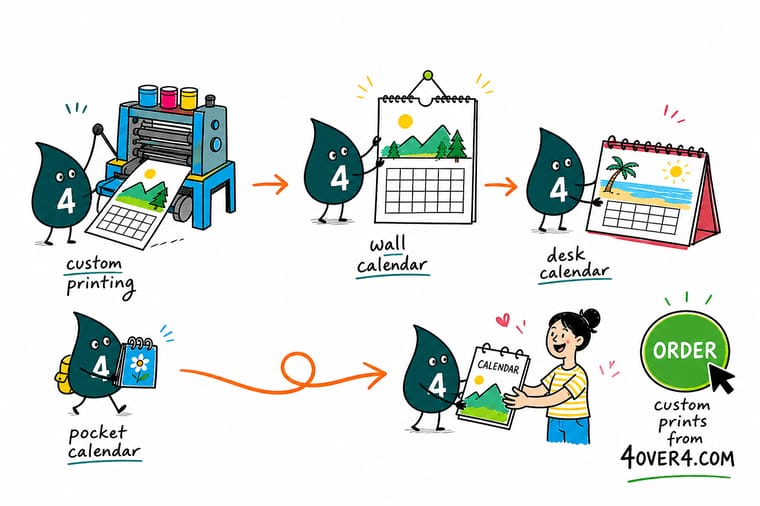
Wally folds an 11 by 17 sheet in half, staples it through the fold, punches one hole in the back and hangs it on a nail. That is a wall calendar, and its page count has to divide by four. Then he punches a strip of little rectangles along the head of a desk tent, threads twin loop wire through them and stands it up, and now the pages flip all the way round and lie flat. Both bindings take margin off the top, so he keeps dates and logos well clear of the punch line. Last thing he checks: can you write on it with a pen, or did the gloss coating win.
Compare binding options →Specs and pricing
Sizes and starting prices on the pieces that ship with a calendar
Live configuration choices and starting prices straight from the 4OVER4.COM configurator, for the desk pads, cards and labels that travel with a calendar run.


Print it
Send the calendar out with something in the box
Explore more
Where to go next
By the numbers
On-time delivery matters most on a dated calendar
Common Questions
Your calendar printing questions, answered
What size is a standard wall calendar?
The common one is 11 by 17 inches printed and folded in half to a finished 11 by 8.5, so the top half carries the image and the bottom half carries the month grid. The square 12 by 12 folded from 12 by 24 is the other size people recognize, and it gives the photography more room at the cost of wall width. Poster calendars that put the whole year on one sheet run 18 by 24 or 24 by 36. If you are choosing between them, the practical question is not looks, it is where the calendar hangs: a 12 by 12 opened flat is two feet of wall.
Should I use saddle stitch or wire binding for a calendar?
Saddle stitch if the calendar folds in half and hangs from a hole punched through the back, which is the cheapest and most common wall build. Twin loop wire if you want the pages to flip a full 360 degrees and lie completely flat, if the piece stands on a desk, or if you want the wire itself plus a hook to be the hanger. Wire costs more per unit and adds a punching pass, and it makes the finished piece bulkier to ship. Saddle stitch is thinner and cheaper but the pages will never sit perfectly flat.
Can you write on a glossy calendar page?
Not reliably with a ballpoint or a rollerball. A gloss aqueous or UV coating seals the sheet so the ink sits on the surface, beads, and smears when a hand crosses it. Pencil and a fine permanent marker will hold. If the calendar is going to be used rather than admired, ask for the grid pages to run dull or matte coated, or uncoated, and keep the gloss on the image half where it does the work.
How many pages is a twelve month calendar?
Twenty eight for the standard wall build. Each month uses two pages, an image and a grid, which is 24, then the front cover, the inside front, the inside back and the back cover add four more. That total divides by four, which is exactly what saddle stitch needs since every folded sheet contributes four pages. Add a thirteenth month or a price list page and you break the multiple, so you either add three more pages or move to wire binding, which accepts any page count.
When do I need to order calendars for a January start?
Have artwork approved and a proof signed by early October, and plan to have the boxes in hand by mid November. That leaves you November and early December to hand them out or mail them, which is when recipients still have a bare wall to fill. Print in late December and you are selling a product that has already lost a month of its life. Build the schedule backwards from the date you want them in someone else's hands, not from the print turnaround.
Is a sixteen month calendar worth the extra pages?
It is if you miss the November window or if your audience runs on an academic or fiscal year. A sixteen month calendar starting in September carries through to December of the following year, which means it is still a live product in February when a January start is unsellable. The cost is four extra pages, and with saddle stitch four pages is exactly one more folded sheet, so the maths stays tidy. The catch is that you are committing to a start date months earlier, so the artwork deadline moves up with it.
How should calendars be packed for shipping?
Flat, boxed, and with something rigid in with them. Wire bound calendars are the fragile ones because the loops catch on everything and bend, which is why they travel better in a fitted box than in a poly mailer. Saddle stitched wall calendars survive a stiffened mailer as long as the corners are protected. For a mailing run, print a shipping label rather than hand writing addresses, and seal the box with a printed label so the package carries the brand before it is opened.
Get Started
Pocket stickies cost $5.00 for 3 and ship in 1 business day
Settle the format, pick the binding that matches how the calendar gets used, and print it early enough to hand out in November.
Legal Disclaimer
Gold Standard guarantees apply to all standard orders placed through 4over4.com. Price match requires verifiable proof of a competitor's published price for an equivalent product with matching specifications and turnaround time. Satisfaction guarantee covers manufacturing defects and print quality issues. Contact support with order number and documentation. On-time delivery rate based on tracked orders 1999 to 2026. Individual results may vary based on shipping carrier performance.
