
9 Iconic 1990s Hip-Hop Album Cover Designs


Why 1990s Hip-Hop Covers Still Set the Standard
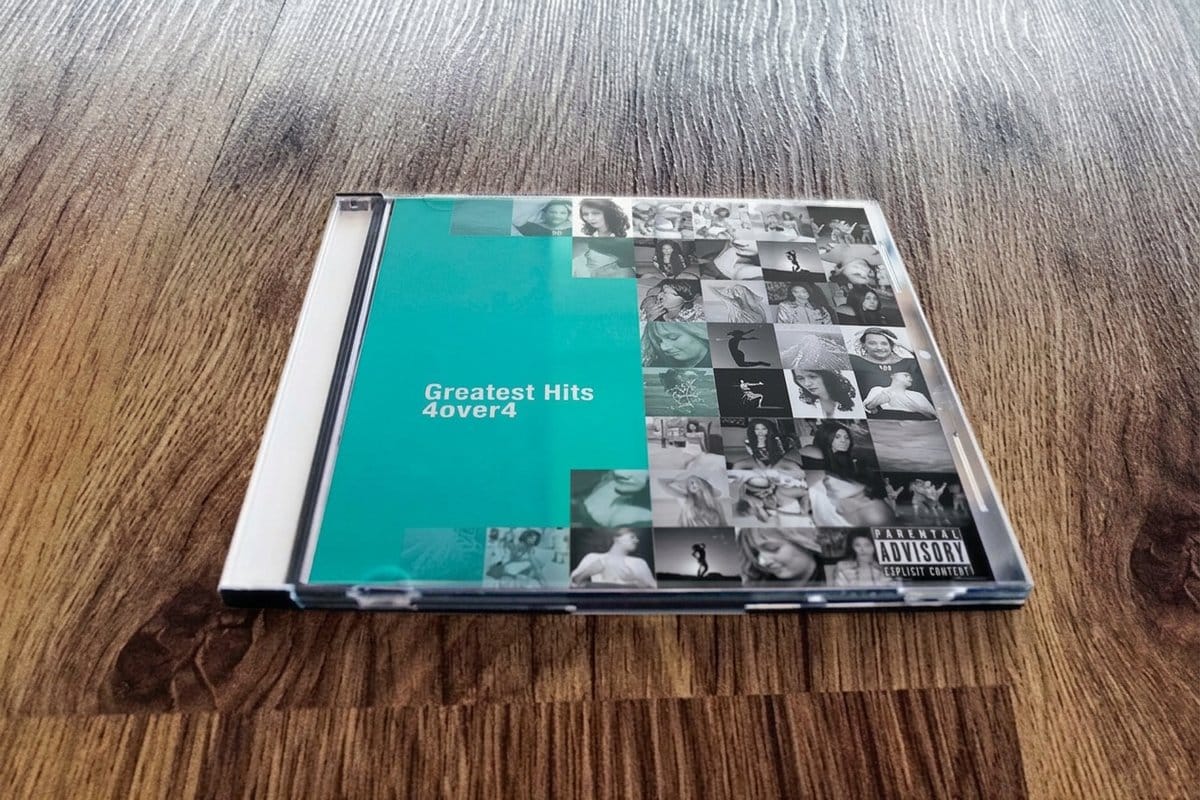
The 1990s were when hip-hop cover art grew up. The decade treated the front of a record as a statement rather than a label, and the results still shape how music is packaged today. Bold display type, heavy contrast, a single unforgettable image, and a point of view you could read across a record store: those choices were not accidents, they were a visual language that a whole generation of designers still borrows from.
What makes the era worth studying is not nostalgia, it is craft. Every great 90s cover made one clear decision and committed to it, whether that was a stark portrait, a hand drawn logo, a photo that told a whole story, or type that felt like a shout. Those same principles carry straight into modern print, and every one of them can live on a CD cover, a poster, or a sticker you order today.
Below are nine design approaches that defined the decade, grouped by the move that made them iconic, with the print lesson each one teaches. 4OVER4.COM has printed for 150,000+ businesses and creators since 1999, so once you know the look you want, you can put it on a real, physical release.
Shop the range
Music and Entertainment Printing
CD covers, sleeves, posters, and merch to press a release and stock a merch table.
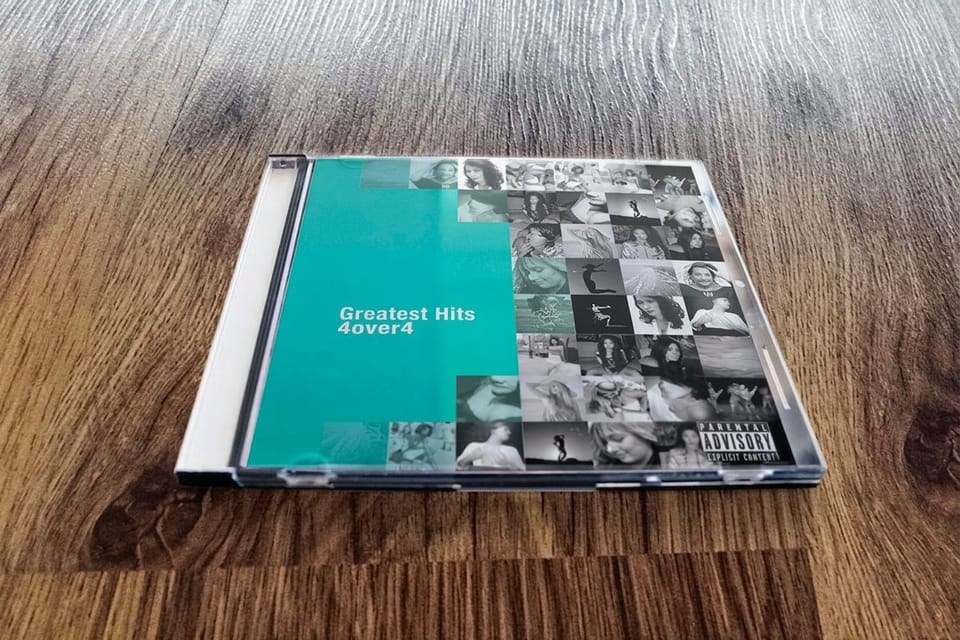
1 to 3: The Portrait, the Logo, and the Photo Story
The first three moves are the backbone of the era. The commanding portrait put the artist front and center with nothing to hide behind, proving that a single confident face can carry an entire cover. The custom logo turned a name into a mark, a piece of lettering so distinctive it became merch on its own. And the photo story used one real scene, a street, a stoop, a moment, to say more than any illustration could.
The print lesson is the same across all three: pick one hero element and let it breathe. A portrait needs clean margins and a stock that holds skin tones. A logo needs sharp edges and a finish that makes it pop. A photograph needs a paper that keeps the shadows deep. Get the one big idea right and the cover works from across a room.
Print picks
Turn cover art into a physical release
Live prices, ready to carry your artwork onto CD, poster, and sticker.
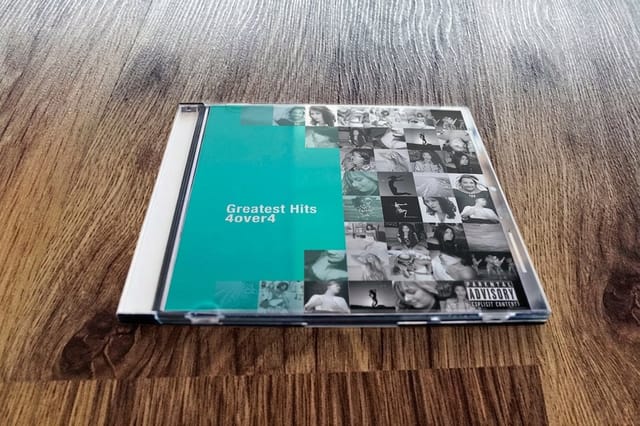 CD Covers From $75.80 The front of the record, where a great design earns the first play.
 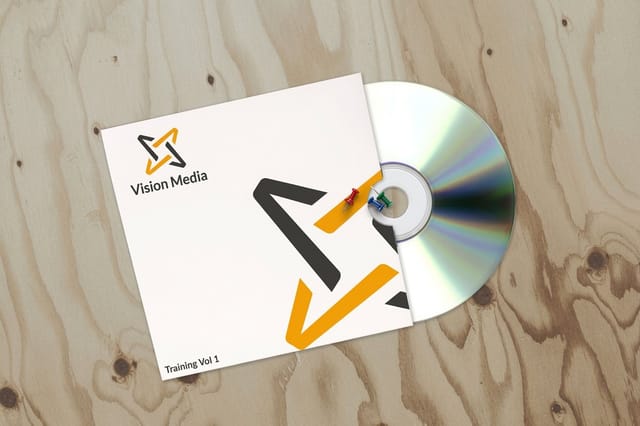 CD Sleeves From $438.25 The protective wrap that finishes a physical release cleanly.
 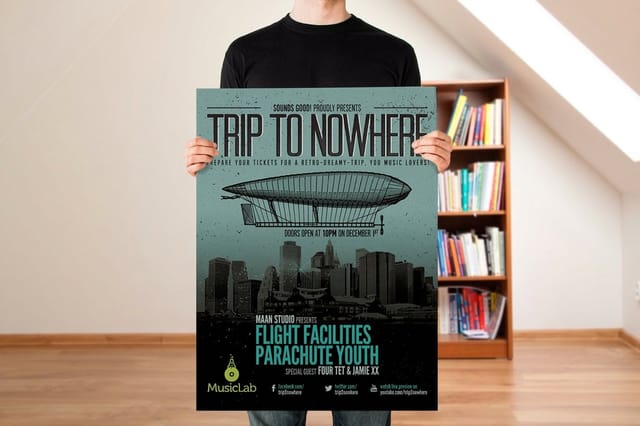 Standard Posters From $108.75 Blow the cover up to wall size for the show and the merch table.
 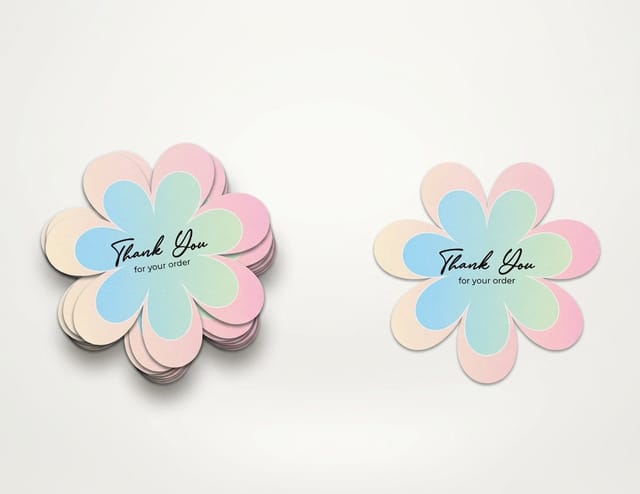 Die-Cut Stickers From $93.37 The cheap merch fans actually keep and stick on everything.
 4 to 6: Bold Type, Heavy Contrast, and the Single Color

The middle three moves are about impact you can read at a glance. Oversized type turned the title into the artwork, filling the frame with letters that felt loud. Heavy black and white contrast stripped a cover to its bones and made it feel serious and permanent. And the single ownable color gave a release a signature you could spot on a shelf before you read a word.
These looks translate beautifully to large format. A type driven cover becomes a poster that dominates a venue wall. A high contrast design keeps every bit of its punch when it is blown up, because there is nothing fussy to lose. Here is what real CD cover pricing and specs look like, so you can plan a pressing around actual numbers instead of a guess.
Quantity and price
CD cover pricing and specs
Real configurator numbers. The larger the pressing, the lower the per cover cost drops.
| Quantity | Price Per Unit | Total |
|---|---|---|
| 25 | $3.03 | $75.80 |
| 50 | $1.67 | $83.48 |
| 100 | 91.2¢ | $91.18 |
| 150 | 65.9¢ | $98.86 |
| 200 | 53.3¢ | $106.55 |
| 250 | 45.7¢ | $114.24 |

7 to 9: The Hand-Drawn Mark, the Collage, and the Icon
The last three moves show the era's range. The hand drawn mark brought a human, imperfect touch that felt personal in a world of clean corporate design. The collage layered images and textures into something dense and rewarding, a cover you kept discovering. And the single graphic icon reduced a whole identity to one shape simple enough to stamp on anything.
Each of these has an obvious print home. A hand drawn mark or an icon is born to be a sticker, cut to its exact outline and stuck on a laptop, a case, or a lamppost. A rich collage rewards a larger canvas like a poster where the eye has room to wander. The move you love most points straight at the merch you should print.
The Print Lesson Behind Every Great Cover
Strip away the styles and one rule remains: commit to a single idea and print it with care. The covers that lasted did not hedge. They chose a portrait or a logo or a color and executed it cleanly on a physical object people held. In an age of endless scrolling thumbnails, a physical release with real weight and a sharp finish is exactly the kind of statement the 90s understood.
That is the opportunity for any artist working today. You do not need a label to press a release that looks like it belongs on that wall of classics. Take your cover to a poster for the show, cut your logo into stickers for the fans, and finish the record with a proper sleeve. The look is timeless, and the print is more affordable than the era's legends ever paid.
Blow it up
Posters for the show
Take the cover to wall size for venues, the merch table, and the fans who want it framed.
What these covers teach about print design
Every cover above solves a problem you will hit the moment your own art goes to press. Read them as rules rather than as history. Each lesson below is the same technique written for the file you are about to send us.
Commit to one focal point. A portrait, a logo, or a single field of color. Whatever you pick has to survive at an inch and a half on a phone and at two feet on a wall. If you cannot name the one thing a stranger sees first, the cover is not finished yet.
Set the type big enough to read across a room. The classic sleeves put the artist name and the title in weights heavy enough to hold up on a folded jacket in a bin. Print a proof at actual size, tape it to a wall, and walk back ten feet. Anything you cannot read from there goes up a size or gains weight.
Build your color in CMYK before you send the file. Screens glow in RGB, presses lay down cyan, magenta, yellow and black ink. A neon that burns on your monitor lands quieter on paper, so choose the ink values yourself instead of letting an automatic conversion choose them for you. For the deep black those covers lived on, use a rich black build rather than 100% K alone, which prints closer to charcoal on coated stock.
Give the art 1/8 inch of bleed and keep anything you care about 1/4 inch inside the trim. Covers, sleeves, posters and stickers are all cut in a stack, and the blade drifts a little through it. Art that stops exactly on the trim line shows a white sliver on part of the run, and a title set tight to the edge loses a letter.
Bring the pixels. Photography goes to press at 300 dpi at final size, so a two foot poster needs a file built at two feet, not a web JPEG scaled up until the grain shows. Logos and type belong in vector, where the edge stays sharp whether it prints on a sleeve, blows up to poster scale, or gets cut into a sticker.
Pick the finish for the artwork, not out of habit. Gloss deepens photographs and makes saturated color snap, which is why photo led covers hold up on it. Matte kills glare and keeps flat color fields and fine type calm, which suits illustration and heavy black. Add a spot finish only where you want the eye to stop, usually the logo.
Design for the shape you are actually printing. A square cover cropped into a portrait poster is a new composition, not a resize, and a logo headed for a die cut needs a clean outline with no hairline tails the blade cannot follow. Lay the sleeve, the poster and the sticker out as three files from one idea and all three land.
Proof before you commit the run. The cheapest fix is the one you make before the press runs the full quantity. Order the short run first, check the trim, the black and the type in your hand against what you saw on screen, then order the stack for the tour.
Compare the Formats and Choose Your Merch
The fastest way to decide what to print is to see the options side by side. A type heavy or high contrast cover almost always deserves a poster, where scale does the work. A logo or icon belongs on stickers. A full pressing needs covers and sleeves. Most artists end up ordering a small mix, a run of covers, a stack of posters for the tour, and a sheet of stickers to give away.
Here are our most ordered posters compared on stock, finish, size, quantity, turnaround, and from price, so you can match the format to the art and the budget in one look.
Compare formats
Popular posters, side by side
Stock, finish, size, quantity, turnaround, and from price across our most ordered posters.
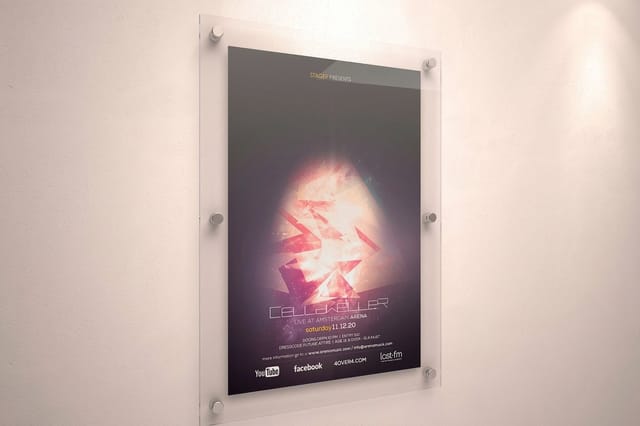 Large Format Posters | Standard Posters | 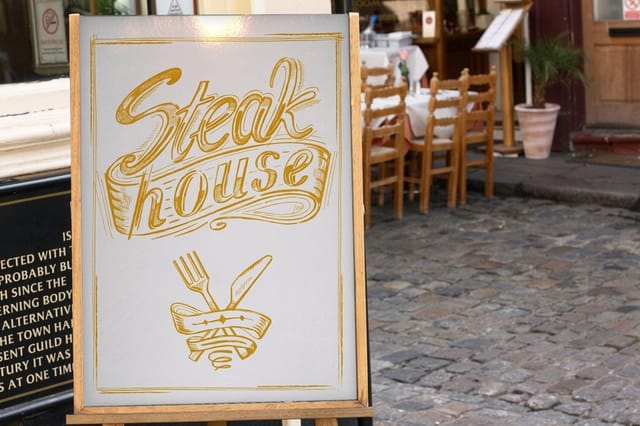 Dry Erase Posters | 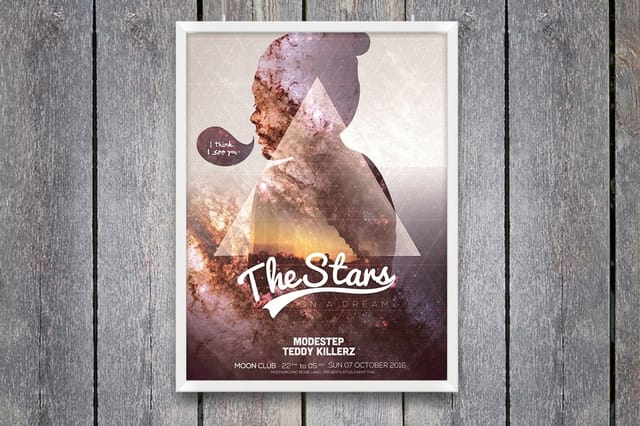 Mounted Posters | |
|---|---|---|---|---|
| Min price | $25.00 | $108.75 | $29.00 | $39.99 |
| Paper / stock | 10mil Semi Gloss | 100# Gloss Text | Dry Erase Face/ Adhesive Vinyl Backer | 10.4 mil Semi Gloss |
| Finish | - | Standard Finish | - | - |
| Size | 11" x 17" | 11" x 17" | 11" x 17" | 8" x 10" |
| Default qty | 1 | 50 | 1 | 1 |
| Turnaround | 2 business days | 5 business days | 4 business days | 4 business days |
| Rating | ||||
| View & customize | View & customize | View & customize | View & customize |
What It Costs to Press Your Own Release
Pressing physical music no longer requires a label's budget. At 4OVER4.COM, CD covers start at $75.80, sleeves at $438.25 for a full run, posters at $108.75, and die-cut stickers at $93.37. Price depends on the size, the stock and finish, and the quantity, and larger runs bring the per unit cost down fast, which helps when you are stocking a merch table for a tour.
Start small and grow the release from there. A short run of covers proves the design, a batch of posters covers the shows, and stickers spread the name for pennies each. Check the live configurator on each product page for exact numbers, and lean on 99.8% on time delivery so your merch arrives before the release date, not after.
The merch that travels
Die-cut stickers
Cut your logo or cover to its exact shape, the cheapest merch that spreads a name for you.
Wally presses your cover art into a real release
Nine iconic looks, three ways to print them
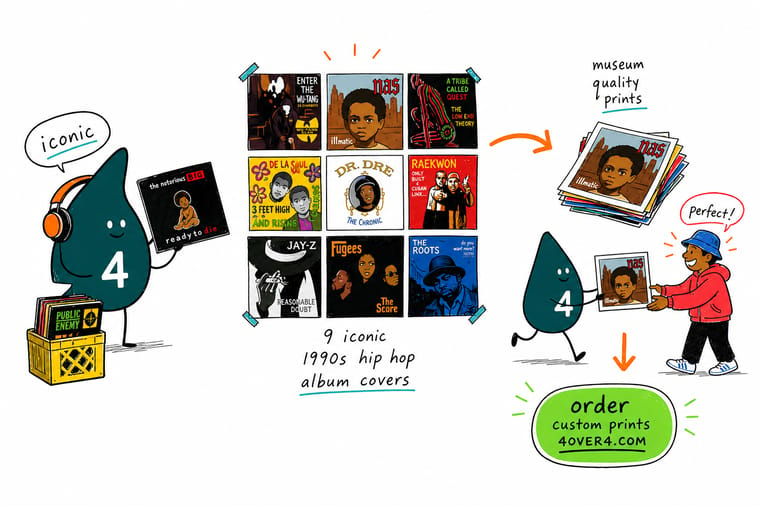
The 1990s taught hip-hop to treat a cover as a statement: one bold idea, printed with care. That lesson still holds. Take your cover to a sharp CD cover, blow it up to a poster for the show, and cut your logo into stickers fans keep. 4OVER4.COM presses it all without a label budget, so your release looks like it belongs on the wall of classics.
Press your cover art on CD covers →Why these covers still shape design today
Explore more
More ways to print music art and merch
CD covers run 25 for $75.80 on 100# gloss text, and die-cut stickers 25 for $93.37 on uncoated label.
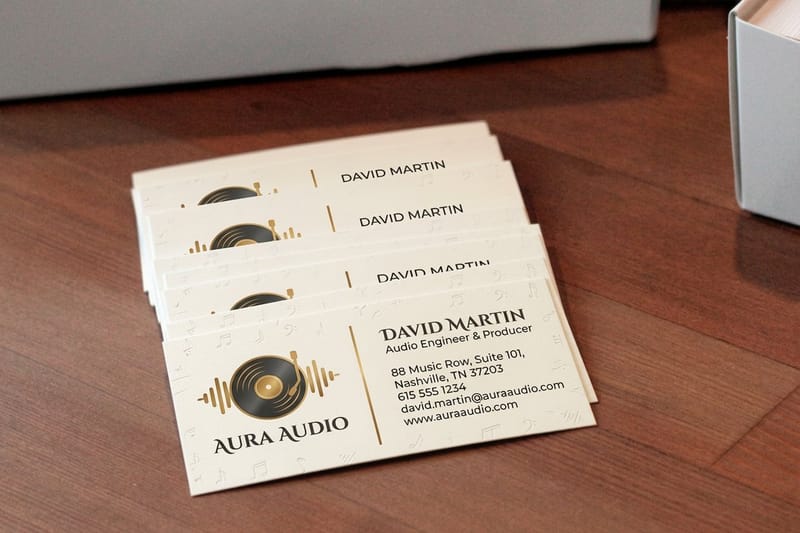 Collection Music and Entertainment CD covers, sleeves, posters, and merch to press a release.
  Shop Posters Printing Every poster size and stock for the show and the merch table.
  Product CD Sleeves The protective wrap that finishes a physical release.
  Guide How to Make Stickers Turn a logo or icon into merch fans keep.
  Guides Finishes and Techniques Foil, spot UV, and finishes that make art pop.
  Article Custom 3D Posters How a poster becomes something fans stop to look at.
  Case study Making an Impact Story How a small team made a big physical impression.
  List Taproom Starter Pack A ready print set for a venue or taproom launch.
  Benefit Same Day Printing Order today, ship today when a release date looms.
  Service Online Design Templates Lay out your cover inside the cut and bleed lines.
 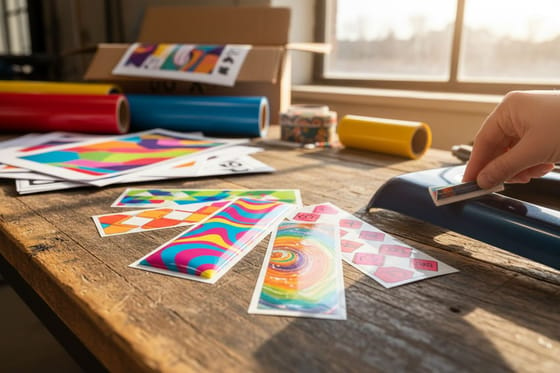 Showcase Sticker Design Gallery Materials and design ideas for standout stickers.
  Article Logo Sticker Ideas Ten ways artists use stickers to spread a name.
 Ready to press your cover art into a real release?
Take one bold idea and put it on a sharp CD cover, a poster for the show, and stickers fans keep. 4OVER4.COM prints music art without a label budget, on brand and on time.
Album art and merch questions, answered
What made 1990s hip-hop album covers so iconic?
The decade treated the cover as a statement rather than a label. Great 90s covers made one bold decision, a commanding portrait, a custom logo, a single ownable color, oversized type, and committed to it completely. That clarity is why they still read from across a room and why designers keep borrowing the moves. The same principles translate straight to modern print, whether you put your art on a CD cover, a poster, or a sticker.
Can I print my own album cover and merch without a label?
Yes. Independent artists press professional looking releases every day. At 4OVER4.COM, CD covers start at $75.80, sleeves at $438.25 for a full run, posters at $108.75, and die-cut stickers at $93.37. Design your cover online, order a short run to prove it, then scale up for the tour. With a 4.8 out of 5 star rating and 99.8% on time delivery, your merch arrives before the release date, not after.
What is the best way to turn cover art into merch?
Let the design tell you. A type heavy or high contrast cover becomes a poster, where scale does the work for a venue wall or a merch table. A logo or a single graphic icon becomes a die-cut sticker, cut to its exact shape and stuck on laptops and cases across town. A full pressing gets CD covers and sleeves. Most artists order a small mix of all three so the art shows up in every format a fan might want.
Gloss or matte for a portrait cover?
Match the material to the art. A portrait cover wants a stock that holds skin tones and deep shadows. A high contrast or type driven design keeps its punch on almost any paper, so you can choose the finish for feel. A gloss finish makes color pop for bold graphic covers, while a matte finish reads more serious for stark black and white designs. The online designer lets you preview your art inside the cut and bleed lines before you commit.
How much does it cost to print posters and stickers for a tour?
Less than most artists expect, and the per unit price drops fast in larger runs. Posters start at $108.75 and die-cut stickers at $93.37 at 4OVER4.COM, with cost depending on size, stock, finish, and quantity. For a tour, a batch of posters covers the venues and a sheet of stickers gives away for pennies each while spreading your name. Check the live configurator on each product page for exact numbers based on your run.
