
The Print and Digital Marketing Mix That Actually Works

Marcus is our print marketing voice, built from the knowledge of our production team, with over 20 years in printing.
A print and digital marketing mix that works splits the budget by job rather than by percentage. Digital is the better buy when demand already exists and you need to find it, measure it and change it this week; print is the better buy when you need attention, physical persistence and reach among people who are not searching for you at all. Most small budgets fail not because they picked the wrong channel but because they bought both to do the same job. On the print side the jobs fall to four pieces: postcards and door hangers to reach every home in a service area, flyers for counters and events, and brochures to hand over in a meeting.
Where each channel earns its place
| Channel | What it does best | Where it falls down | How you measure it | How the cost behaves |
|---|---|---|---|---|
| Paid search | Catching demand that already exists | Nobody is searching yet, or the term is priced past your margin | Cost per conversion inside the ad platform | Auction, rises with competition |
| Paid social | Putting a new offer in front of a defined audience | Scrolled past in a second, and slow on considered purchases | Click and conversion tracking, plus post-purchase surveys | Cheap to start, gets pricier as you scale |
| Selling again to people who already bought | Useless without a list, and inbox placement is not yours to control | Revenue per send, unsubscribe rate | Near zero per contact once the list exists | |
| Direct mail postcards | Landing in a hand and staying on a counter for days | Feedback is slow and you pay for the whole run before you learn anything | Coupon code, vanity URL, tracked number, holdout area | Fixed per piece, drops as the run grows |
| Flyers and door hangers | Covering one neighborhood completely and cheaply | Every household outside your service radius is wasted spend | Redemption counted per drop zone | Lowest cost per household of anything physical |
| Business cards and brochures | Carrying credibility into a conversation that is already happening | Does nothing until somebody is standing in front of you | Close rate in meetings where you handed one over | One print cost, no ongoing media spend |
Read the last column before the first. Auction channels get more expensive as competitors arrive; a print run costs the same whatever the market is doing, so 500 postcards cost $51.62 in a quiet month and $51.62 in December. Flyers follow the same rule at 50 for $39.54, and both print in 3 business days. You can price a postcard run in the configurator before committing a quantity.
Split the budget by job, not by percentage
Most budget arguments start in the wrong place. Somebody asks whether to put seventy percent into digital or sixty into print, and neither number means anything until you know what the money has to accomplish. A dentist filling a new hygienist’s calendar inside one postcode has a completely different problem from an online store trying to lower its cost per order, and the same split would be wrong for both of them.
Sort the work into three jobs before you sort the money. Capture: somebody already wants what you sell and you need to be there when they look for it. Create: nobody is looking yet, so you have to put yourself in front of them. Convert: they know you, and something has to close the gap between interest and a booking. Digital owns capture. Print does the heavy lifting on create. Convert is nearly always a mix of both.
Once the jobs are named, the split more or less falls out on its own. If you want the definitions side by side before you plan, our breakdown of the difference between digital and traditional marketing is the shorter read, and whether traditional marketing is still worth investing in takes the print side apart in detail.
The three jobs, with a real example
Take a physiotherapy clinic opening a second location two miles from the first. Search ads for "physio near me" do the capture job well, because the people typing that already want a physio and only need to find one. But the number of people typing it each month in a two mile radius is small and fixed, so a bigger budget just buys the same searches at a higher price.
The create job is everything else in that radius: the people with a sore shoulder who have not decided to do anything about it yet. No amount of search budget reaches them, because they are not searching. A postcard through the door of every home within the catchment does reach them, and it keeps working from the fridge for a fortnight. The convert job is a follow up email, a reminder card handed over at the end of a session, and a brochure that answers the questions people ask on the phone.
Why percentage splits mislead
The two kinds of spending do not behave the same way. Digital budget is a tap: you can turn it up on Tuesday, down on Thursday, and off entirely while you rewrite the offer. Print budget is a batch decision. You commit to a quantity, the cost per piece drops as that quantity climbs, and the run exists whether or not the offer turns out to be any good.
That is why a flat percentage is a bad planning tool. It treats a commitment and a dial as the same thing. Plan print in whole campaigns with a start date, a drop area and a deadline, and plan digital as a monthly rate you adjust while the campaign runs.
Where digital genuinely wins
Four things digital does that print cannot touch. It targets by behavior rather than geography, so you can reach people who searched for a specific term last week instead of everybody on a street. It changes in minutes, so a headline that is not working on Monday is replaced by lunchtime. It reports back the same day. And it has no floor, so a test can cost the price of a coffee, while the smallest postcard run is 50 cards for $16.48 and takes 3 business days to print before it goes anywhere near a mailbox.
The measurement advantage is the one that matters most on a small budget, because it shortens the loop between spending money and knowing something. If you are still working out which offer people actually want, spend the first money where the answer comes back this week. Our digital marketing guide for small business covers how to set that loop up without a marketing team.
None of that makes digital the safe default. The auction price moves against you as competitors arrive, the platform can change what your audience sees without asking, and the ad stops existing the moment the card declines. There is also the awkward truth that most of the attention you buy is one second long, sandwiched between two things the person actually opened the app for.
The costs nobody puts in the plan
Ad spend is the visible number. The invisible ones are creative production, the hours somebody spends inside the ad manager each week, and the learning period where a new campaign spends real money finding its audience before performance settles. A budget that covers only the media buy is a budget that runs out halfway through the experiment.
There is also platform dependency, which is a genuine risk rather than a talking point. If one channel supplies most of your enquiries, a policy change or an account suspension takes the business with it. That is not an argument against digital. It is an argument for having a second route to the same customers, and the campaigns that went badly wrong are usually the ones with a single point of failure.
Where print genuinely wins
Print earns its budget on persistence, saturation and trust. A postcard on a kitchen counter is seen every time somebody walks past it, which is a very different unit of attention from an impression that ends when the thumb moves. A flyer through every door in a defined area reaches the households that never see your ads at all, including the ones that use an ad blocker and the ones that are not on the platform you buy. And a printed brochure handed over in a meeting carries a weight that a link in a follow up email does not, because somebody paid to make it and cannot quietly edit it afterwards.
There is also a pricing quirk worth knowing. Paid media is an auction, so your cost goes up when a competitor decides to spend more. Printing is a manufacturing cost, so a postcard run costs what it costs regardless of what anybody else is doing that month. In a competitive category, that stability is a real advantage rather than a nice thought.
Now the limits, because they are the reason print gets abandoned. Feedback is slow, and the first useful signal arrives days after the drop rather than the same afternoon. You pay for the whole quantity before you learn whether the offer works. Nothing can be edited once it is on the press, so a wrong phone number is a reprint. And on direct mail the list is more than half the result, so a beautifully printed card sent to the wrong addresses fails no matter how good the design is. How direct mail marketing actually works goes through the list side properly.
Making print measurable so the comparison is honest
Print is not inherently unmeasurable. It is usually measured badly, and then written off in the comparison against a channel that reports itself. Four things fix that, and all four are decided before the file goes to press.
Give each drop its own destination. A vanity URL printed on the card, pointed at a landing page that matches the offer word for word, tells you exactly how many people came from that run. A QR code does the same job as long as it lands on that page and not on your homepage, because a code that dumps somebody on a homepage teaches them never to scan another one.
Then give each area its own code. Different coupon codes or tracked phone numbers per zone turn one campaign into several readable tests, and after two rounds you know which streets are worth mailing again and which ones never respond. The fourth trick is the one most businesses skip: deliberately leave one comparable area unmailed. Comparing enquiries from the mailed zone against the holdout is the closest a small business gets to knowing what the print actually caused, rather than what happened to coincide with it.
The pieces that carry the most weight on a small budget
Postcards are the default for anything local, because the message is visible without anybody opening anything and the cost per piece is low enough to repeat. Flyers give you more room to explain an offer and suit an insert, a counter stack or a handout at an event. Door hangers beat both for services that visit the home, since they sit at eye level on the handle instead of in a pile of post.
For the convert job, business cards and brochures do work that no ad does, because they exist inside a conversation that is already going well. Stickers sit slightly outside all of this and behave more like small scale outdoor advertising, which sticker marketing and why it works covers on its own terms. Everything above is printed from the same digital printing range, so a whole campaign can share one stock, one color build and one turnaround.
A mix that holds up on a small budget
Start where you can already prove a return, then buy one honest test of the other side. If search ads are producing bookings at a cost you are happy with, that stays funded first. The test budget is a fixed amount you decide in advance, spent on a print run big enough to read a result from, with a code on it so you can read that result at all. A run so small it cannot produce a measurable response is not a cheap test, it is a wasted one.
Run the two together rather than in sequence. Same offer, same wording, same window, so somebody who sees the postcard on Tuesday and your ad on Thursday gets one consistent message instead of two competing ones. If your ad platform lets you target the postcodes you mailed, do exactly that during the two weeks after the drop, because the card creates the recognition and the ad catches the person once they start looking.
Give it long enough to be judged fairly. Print response builds over days and the first week is not the whole story, which is the single most common reason a business decides print does not work for them and stops after one attempt. Set the review date when you set the budget, and compare against your holdout rather than against last month.
What to cut first when money is tight
Cut anything you cannot attribute and cannot explain the purpose of. That usually means the brand awareness spend with no offer attached, on either side of the print and digital line. Keep the capture spend, keep whichever piece of print is actually being handed to somebody, and drop the rest until there is more money.
A second rule worth holding to: never cut the piece a customer receives after they buy. The follow up card, the packaging insert, the promotion that brings somebody back a second time. Repeat business is the cheapest revenue in any business, and ten practical ways to use marketing promotions covers how to earn it without discounting yourself into a corner.
What the print half actually costs
Print budgets get planned on guesses far more often than digital ones, usually because the numbers live behind a quote form somewhere. They do not have to. At the default postcard size, 50 cards cost $16.48, 500 cost $51.62 and 1,000 cost $86.78, so the price per card falls from 33 cents to under 9 cents as the drop grows. The pricing below is the live configurator, so you can size a drop before you design anything.
Quantity and price
Postcard pricing and specs
Real configurator numbers, where the per piece cost falls as the run grows. Work out your drop area first, then read the row that matches it.
| Quantity | Price Per Unit | Total |
|---|---|---|
| 50 | 33.0¢ | $16.48 |
| 100 | 24.2¢ | $24.16 |
| 200 | 15.9¢ | $31.86 |
| 300 | 12.8¢ | $38.45 |
| 400 | 11.3¢ | $45.04 |
| 500 | 10.3¢ | $51.62 |

You can also earn coins on every order and redeem them against future printing, which effectively lowers the cost of the second and third drop in a campaign.
Stock and finish decide how long the piece survives
The advantage print has is persistence, and stock is what protects it. A postcard on 14pt or 16pt cover stays flat on a counter for weeks; the same design on thin text stock curls in a day and gets binned as junk. Gloss lifts photography and shrugs off a wet worktop. Matte cuts glare and reads more easily under kitchen lighting. Uncoated stays writable, which matters if you want somebody to note an appointment on it.
Print it
Postcards, ready to drop
Preset sizes on premium cover stock, the fastest way to get a printed offer into a neighborhood.
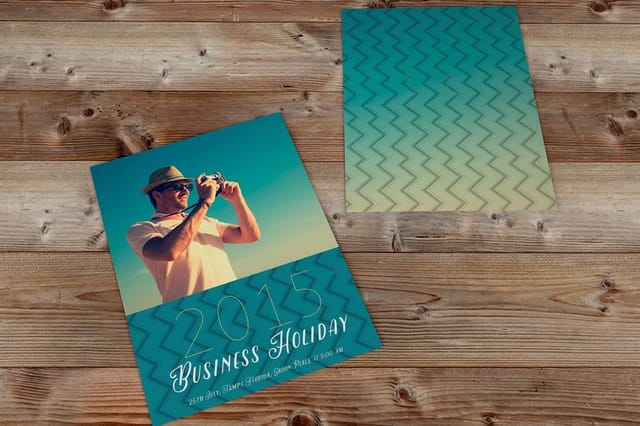
Size is a message decision as much as a cost one. A larger card survives a pile of post because it does not disappear underneath it, and it gives the offer room to be read from across a kitchen. A smaller card costs less per piece and lets you mail the same area more often, which usually beats one large card sent once. If your comparison is between a printed piece and an emailed one, printed against digital newsletters tests the same trade-off on a format where both versions genuinely exist.
How the mix shifts by business type
The split changes with how your customers are defined. Geography favors print: a plumber covering a two mile radius can hang 250 door hangers for $290.41 on the streets that call most, and repeat the drop each quarter. Intent favors digital, because an online store selling in every state has no street to cover. Most businesses sit somewhere between the two.
- Local service businesses. Print carries the load here, because your customers are defined by geography rather than by interest. Door hangers and postcards across the service radius, search ads for the small pool of people already looking.
- Restaurants and retail. Anything that reaches a household within walking or driving distance. Flyers and menus for coverage, social for the pictures, and a promotion printed on the receipt or the bag to bring people back.
- Ecommerce. Digital first, because your customers are not concentrated in one postcode. Print pays for itself inside the box: an insert card, a discount for the next order, a sticker people actually keep.
- B2B and professional services. The buying cycle is long and personal. Brochures and business cards do the convincing in meetings, while search and email keep you present during the months between the first conversation and the decision.
- Nonprofits and events. Print for anything with a place and a date, because a card on a fridge outperforms a calendar invite nobody accepted. Digital for the reminders in the final week.
Blanks for the print half
If the design is holding up the campaign, start from a template rather than a blank page. 4OVER4.COM sizes its blanks to exact product specs, so bleed and trim are already marked and your offer does not get cut off at the edge. Put the vanity URL and the coupon code for that drop area inside the trim line on the blank, because those two lines are how you read the print half against the digital half later.
Start fast
Blanks for the print half
Postcard design templates and exact size blanks so your artwork lands inside the cut line first time.


Wally splits the budget by job, not by channel
One offer, two routes, one way to read the result
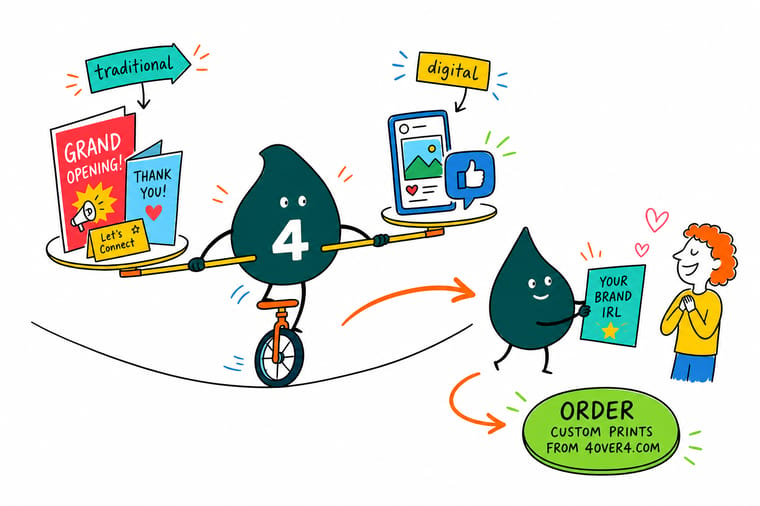
Put digital on the demand that already exists and print on the people who are not searching yet. Run both on the same offer in the same two weeks, print a vanity URL and a coupon code per drop area, and leave one comparable area unmailed so you can see what the print actually caused. 4OVER4.COM prints the physical half on premium stock with free proofs.
Price a postcard run →What to remember about the mix
Rules that keep the mix honest
- One offer across both channels. The postcard, the landing page and the ad should say the same thing in the same words. A mismatch between what somebody read on paper and what they find online kills the response you already paid for.
- Put a code on everything printed. A vanity URL, a coupon code or a tracked number per drop area. It costs nothing at the design stage and it is the only reason you will be able to defend the print budget next quarter.
- Keep a holdout. Leave one comparable area unmailed. Without it you are comparing a campaign against a season, and every result you report is a guess.
- Do not judge print in week one. The response curve is slower than a digital one. Set the review date up front and stick to it, rather than calling the result on the first quiet Monday.
- Print in campaigns, buy digital by the month. Print is a batch commitment with a fixed quantity. Digital is a rate you adjust while it runs. Budgeting them the same way is what makes both look unpredictable.
Explore more
The print half of the campaign
Postcards run 50 for $16.48, flyers 50 for $39.54, and door hangers 250 for $290.41.
Product Postcards The base piece of any local campaign, visible without being opened. Product Flyers Room to explain an offer, cheap enough to cover a neighborhood. Product Brochures The piece that answers questions in a meeting instead of an inbox. 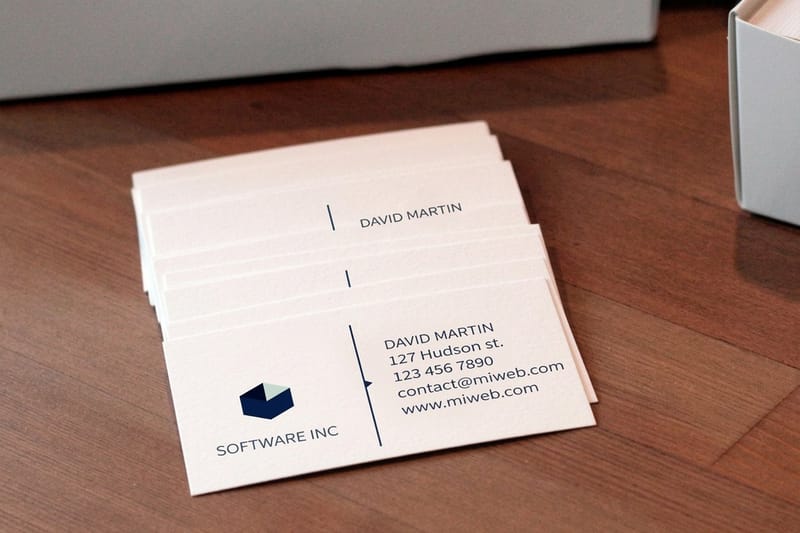 Product Business Cards Still the cheapest thing you can hand somebody who already likes you.
 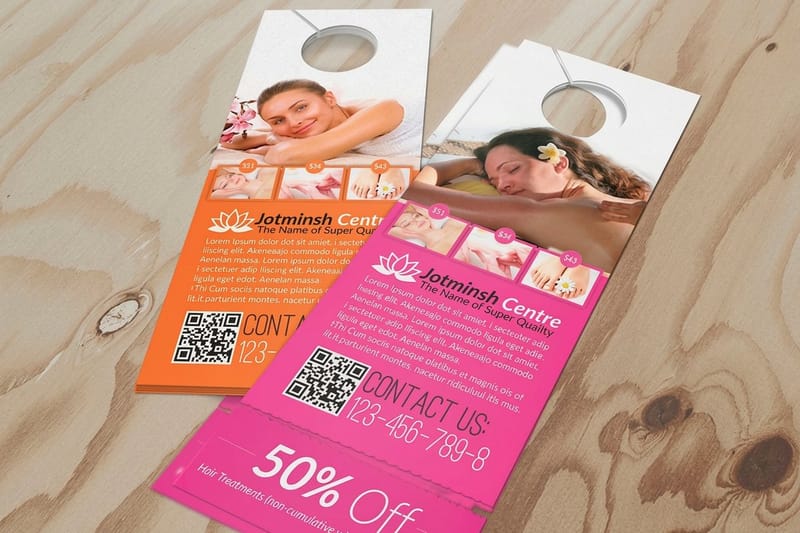 Product Door Hangers Eye level at the front door, never buried in a pile of post. Category Digital Printing Short runs and fast turnarounds for the whole campaign.
 Seasonal campaigns are where the two channels tend to work hardest together, and ten holiday campaigns worth stealing shows what that looks like when the timing is planned rather than improvised.
Ready to print the other half of your marketing?
Pick a size, drop in your design or a free template, and 4OVER4.COM prints it sharp on premium stock, as fast as your campaign date needs.
Common questions about the print and digital mix
Is print marketing still worth it for a small business?
Yes, for the jobs digital handles badly. Print reaches people who are not searching for you, covers a geography completely rather than a targeting segment, and stays visible on a counter or a fridge long after an ad has stopped running. It is a poor choice when you have not settled on your offer yet, because you pay for the whole run before you learn anything. The honest rule is to use digital while you are still working out what to say, and add print once the message is proven and you need to reach people the ad auction never puts you in front of.
How do I track a printed campaign so I can compare it with digital?
Decide the tracking before the file goes to press, because none of it can be added afterwards. Print a vanity URL that points at a landing page matching the offer word for word, and give each drop area its own coupon code or tracked phone number so one campaign reads as several tests. If you use a QR code, land it on that same offer page rather than the homepage. The strongest addition is a holdout: pick one comparable area, deliberately leave it unmailed, and compare enquiries between the two. That comparison is the closest a small business gets to knowing what the print actually caused.
What percentage of a marketing budget should go to print?
There is no percentage that survives contact with a real business, because the right answer depends on whether your customers are defined by geography or by intent. A local service business with a two mile catchment often puts more into print than into ads, since the pool of people actively searching in that radius is small and fixed. An online store selling nationally usually inverts it and keeps print for what goes inside the box. Plan it as whole campaigns instead: a print run with a start date, a drop area and a review date, and a monthly digital rate you adjust while it runs.
Which is cheaper, direct mail or paid social?
Paid social is cheaper to start and direct mail is more predictable to repeat. A social test can run for the price of a takeaway, while a mail drop means committing to a quantity up front. But social sits in an auction, so your cost per result rises whenever competitors spend more, and it can move a long way in a busy season. A print run is a manufacturing cost that does not care what anybody else is doing, and the per piece price drops as the quantity climbs. Cheap to test does not mean cheap to scale, and that is where the two often swap places.
Should a brand new business start with print or digital?
Start digital for the offer, then print once it is proven, with one exception. If you sell face to face at all, print business cards on day one, because handing somebody a link is not the same as handing them a card and the cost is trivial. Beyond that, use cheap digital tests to find out which offer and which wording people respond to, since fixing a headline online takes seconds and fixing it on paper takes a reprint. Once you know what works and who it works on, print is what puts that proven message in front of the people ads never reach.
