
Mailer Box Design Ideas for a Memorable Unboxing Experience


Nadia is our customer education voice, built from the knowledge of our production team, with over 20 years in printing.
A memorable unboxing comes from three cheap decisions and one expensive one: a box sized to the product, one strong mark outside, something printed on the surface the buyer meets when the lid opens, and only then the printed box itself. A run of custom mailer boxes starts at $711.78, so if you are not shipping one size in that volume yet, a plain kraft mailer with printed tissue from $126.32 and a die-cut seal from $29.16 buys most of the same moment.
Ways to brand a mailer, and what each one costs
| Approach | Starting price | What it brands | Choose it when |
|---|---|---|---|
| Printed mailer box | From $711.78 | Outside and, if you pay the second pass, inside | You ship one box size in enough volume to use the run |
| Kraft mailer box | From $711.78 | One or two colors on brown board | Your mark works as line art, not as photography |
| Printed tissue paper | From $126.32 | The second the lid lifts | You want the reveal without committing to a box run |
| Packaging labels | From $29.16 | A seal, a plain box, a bag, a sleeve | Small runs, several box sizes, artwork that changes |
| Printed packaging tape | From $347.11 | Every parcel you ship, whatever the box | You ship mixed sizes and want one consistent mark |
| Packaging sleeves | From $438.25 | A wrap that turns a plain box retail-facing | The product also sits on a shelf, not only in a parcel |
Each price is the smallest run on the product page: 250 printed mailers for $711.78 in 7 business days, the same figure for kraft, and far less for a seal or a sheet of tissue. Most brands end up running two of these at once, usually a plain box with $126.32 of printed tissue and a $29.16 seal, then a printed box once one size settles. The full range sits in the packaging printing collection.
Why the unboxing moment is worth printing for
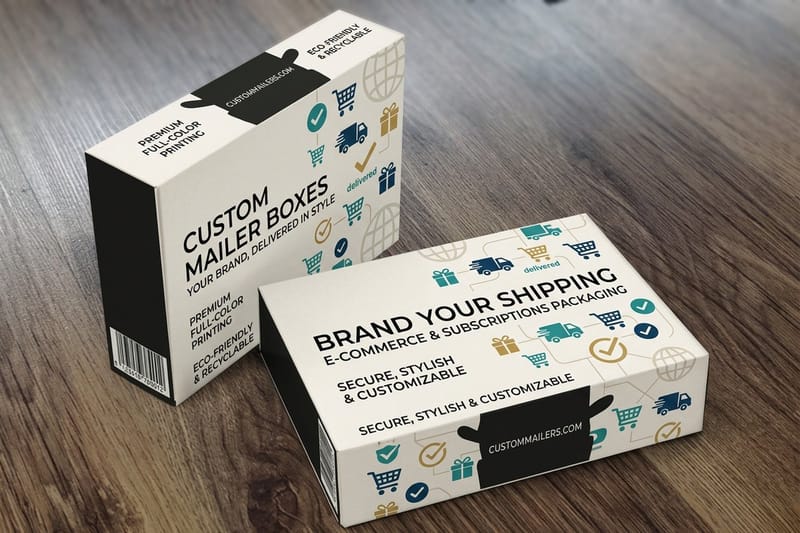
The box is the only piece of your brand a customer holds before the product. It arrives at their door, it sits on a counter for a minute, and in that minute it either looks like something a person chose or like something a warehouse grabbed. That minute is also the one people film, which is the entire reason unboxing became a category.
What it is not is a license to spend. The reveal is carried by three cheap decisions and one expensive one, and the expensive one is the box itself. A box sized to the product, one strong mark on the outside, and something on the inside face the buyer only meets after the lid is open will do more than a full-color flood coat that cost four times as much.
Start from the box style before the artwork. A roll end tuck top is the standard mailer because it folds without glue and the lid becomes an inside print surface the moment it opens. Our guide to choosing a box style covers the alternatives, and cardstock versus corrugated settles the material question before you commit a dieline.
Size the box to the product, not to the shelf you have
Carriers bill on dimensional weight, which means the space inside the box is charged whether or not anything is in it. A box one size larger than it needs to be adds cost to every single parcel for as long as you use it, and it lets the product move in transit, which is the other half of a bad arrival.
Measure the product with its wrap on, add the void fill you actually intend to use, and order to that. If you are not sure how the carrier measures it, how to measure a box for shipping walks through the girth and DIM arithmetic before you order a run you cannot change.
What the board does to your artwork
A mailer box is corrugated, which is two liners with a fluted layer between them. The flutes are why the box is rigid and also why the surface is never perfectly flat. Fine reversed type, hairline rules and delicate gradients all fight the flute, and a large dark solid shows every scuff and crease as a white line.
Design for the board rather than against it. Solid shapes, generous type, and colors that hide handling beat a photographic flood coat. Hold logos and any type a quarter inch clear of every score line, because ink cracks where the board folds and a cracked logo is the first thing a customer sees.
Mailer box design ideas that hold up in a real warehouse
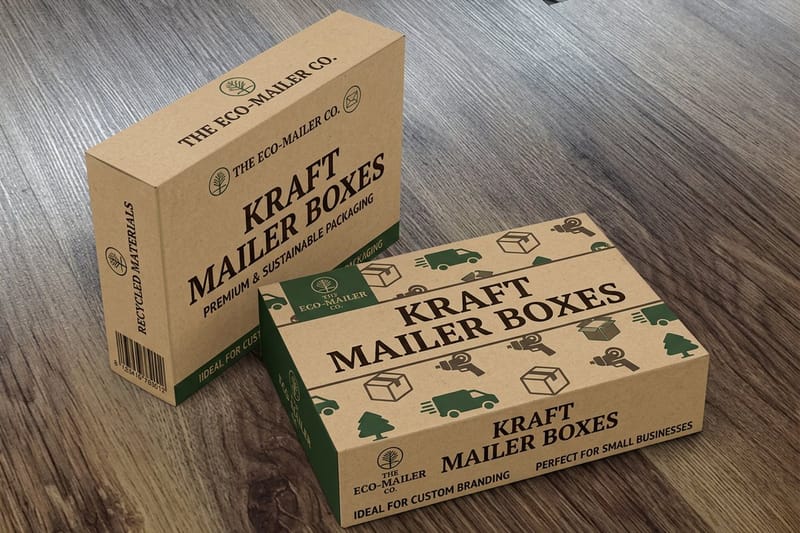
These are the directions that survive contact with a packing bench, a courier van and a doorstep. They are ordered from the cheapest to execute to the most involved, so a brand shipping fifty parcels a week can start at the top and work down as volume justifies it.
A note on kraft before you fall in love with a pale palette. Kraft board is brown, and most kraft box printing carries no white ink, so a soft pink prints as a tint of brown and a pastel logo disappears. Kraft rewards one dark color, confident line work and empty space. If your identity depends on light tones, print on white mailer boxes and let kraft go.
Six directions worth printing
1. One mark, held big. A single logo or wordmark at a size that reads across a hallway, on a clean field, with nothing else on the panel. It is the cheapest design on this list and it is what most brands should do first.
2. A pattern that runs off the edges. A repeating mark tiled across the panels reads as considered, hides scuffs far better than a solid, and does not need registration to be perfect at the folds.
3. Kraft with one dark color. Line art on brown board, printed once. It looks deliberate rather than cheap, and kraft mailer boxes carry the recycled story without you saying a word about it.
4. Print on the inside face only. Leave the exterior plain and put the color where the buyer meets it, which is the moment the lid folds back. It also keeps the parcel discreet on a doorstep.
5. A sentence, not a slogan. One line of real writing inside the lid, in place of a tagline. Care instructions, where the thing was made, or what to do if it arrived wrong. People read it because it is short and because it is not advertising.
6. A seal that finishes the box. A die-cut packaging label across the lid opening turns any plain box into your box, and it is the one element you can change every season without reprinting anything.
What to leave off
Do not print your full address block on a mailer, and do not print a promotion with a date on it. The first is what the shipping label is for, the second is what turns a run of boxes into scrap the moment the offer ends.
Skip the QR code unless it points somewhere worth scanning. A code that lands on a homepage teaches people to stop scanning your codes. A code that opens the care guide for the exact product in the box earns the scan.
Inside print, inserts and tissue
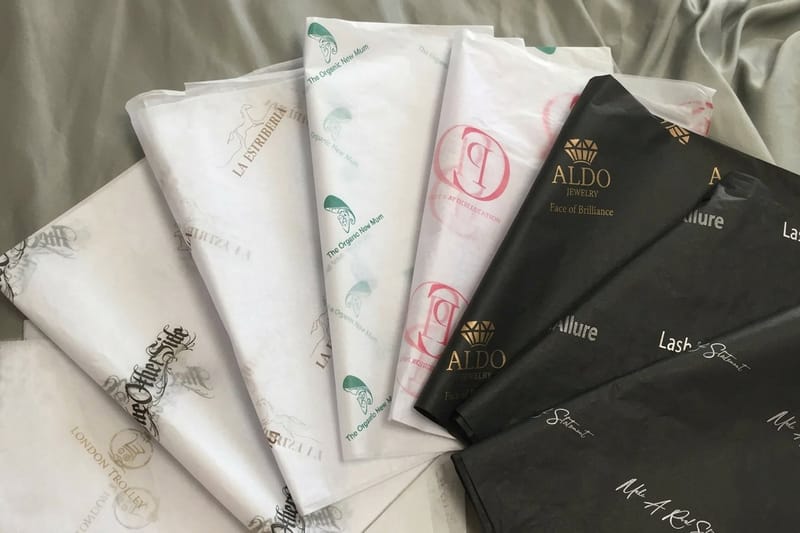
Inside print is a second pass on the board, and it is priced as one. That is the honest trade-off: the interior is the highest impact surface in the whole parcel and also the one nobody sees until after they have already bought. Subscription boxes and gifts earn it. A replenishment order that the same customer receives every month does not.
When the second pass does not pay, buy the effect somewhere cheaper. Printed tissue paper starts at $126.32 and covers the same moment for a fraction of a box run, and it wraps whatever you ship rather than one box size. Branded wrapping and tissue goes deeper on stock weights and how many sheets a run actually gives you.
Then there is the insert, which is the only part of the parcel that can carry a next action. A card with a reorder code, a care guide, or a request for a photo does more for repeat orders than any amount of printed board. Packaging inserts that drive repeat sales has the formats that get kept instead of binned.
The layered parcel, in order
Work outward from the product. Product, then tissue or a wrap, then the insert sitting on top where it is found first, then void fill only where the product can move, then the lid. Each layer should take a second to get through, which is what makes an unboxing feel like an unboxing rather than a rummage.
Two layers is usually enough. Three is a gift. Four is a customer wondering why they are still opening things, and it is also four things going into a bin, which is a story your packaging does not want to tell.
One consistent mark across mixed box sizes
Most brands ship more than one box size, and printing a run of each is where packaging budgets die. Printed packaging tape at $347.11 solves it from the other direction: one mark that lands on every parcel regardless of the box under it, including the plain ones you buy locally when a run sells out.
A packaging sleeve does the same job when the product also has to face a shelf. Slide it over a plain box and the same box works in a parcel and in a retail display, which is one artwork instead of two.
Mailer box pricing and specs at 4OVER4.COM
A printed mailer comes in two sizes, 5 by 7 by 1.7 inches for flat goods and 5.5 by 5.5 by 2.625 inches for a deeper square item, printed full color on the outside. The setup is paid once per run, so 250 boxes and 500 boxes both cost $711.78, and 1,000 cost $797.02, which takes the unit price from about $2.85 to about 80 cents. The numbers below come from the live configurator, so you can size the budget before you commit to a dieline.
| Spec | Custom and kraft mailer boxes |
|---|---|
| Sizes | 5 x 7 x 1.7 in, or 5.5 x 5.5 x 2.625 in |
| Stock | 14pt uncoated cover, or 18pt cover with gloss on one side |
| Full color on the printed face | |
| Quantities | 250 to 25,000 boxes |
| Production | 7 business days |
| What to upload | Artwork laid out on the dieline for your size; choose the free online proof to see it before production |
Quantity and price
Custom mailer box pricing and specs
Live configurator numbers on printed corrugated mailers, where the setup cost spreads across the run and the unit price drops with it.
| Quantity | Price Per Unit | Total |
|---|---|---|
| 250 | $2.85 | $711.78 |
| 500 | $1.42 | $711.78 |
| 1,000 | 79.7¢ | $797.02 |
| 2,500 | 53.5¢ | $1,338.30 |
| 5,000 | 44.6¢ | $2,231.42 |
| 10,000 | 40.4¢ | $4,044.70 |
You can also earn coins on every order and put them against the next print run, which matters more on packaging than on anything else because packaging is the thing you reorder.
Board, finish, and what they do to the artwork
Board and finish decide how the design survives, not how it looks on screen. Corrugated gives you rigidity and a slightly textured surface, which is forgiving of pattern and unforgiving of hairlines. A gloss coating lifts color and resists moisture but shows fingerprints on a dark panel. Matte reads quieter and hides handling better, which is usually the right choice on a box that will be carried, stacked and set down before anyone sees it.
Print it
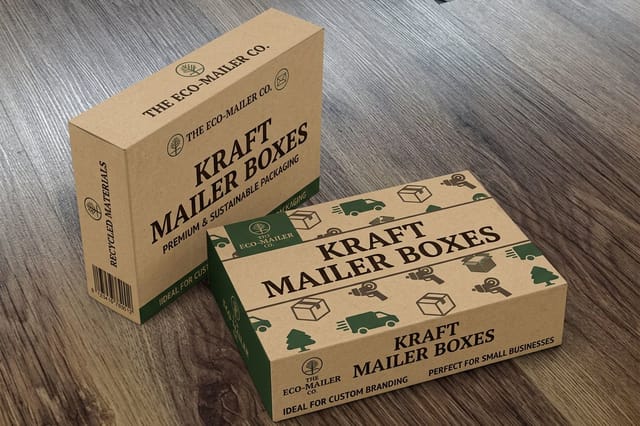
Kraft mailer boxes, ready for one strong color
Brown corrugated board with the recycled look built in, printed in the colors that actually hold on kraft.
The other variable is what sits against the product. Board that touches food has to be rated for it, and any product with a sharp edge or a glass wall wants a fitted insert rather than loose fill. If you are still choosing between board types, the nine types of packaging lays out where a mailer stops being the right answer and a rigid box or a folding carton starts.
What to print, by what you ship
The right answer changes with the product inside, so here is where each type of brand usually lands.
- Apparel and accessories. Tissue and a seal do most of the work, because the product is soft and needs a wrap anyway. A white mailer photographs better than kraft against most garment colors.
- Beauty and skincare. Inside print earns its cost here, because the parcel is often a gift and almost always filmed. Keep glass off the box wall with a fitted insert rather than loose fill.
- Food and confectionery. Board choice comes first and decoration second. Check the liner is rated for what it touches, and put the ingredient panel on a label so a recipe change does not scrap the box run.
- Subscription boxes. The one case where a full printed mailer, inside and out, pays back. The same box arrives every month, so the artwork amortises across the whole subscriber base.
- Electronics and hardware. Fit and protection outrank print. A snug box with a rigid insert, one strong mark outside, and a printed serial or QR that opens the setup guide.
Ordering custom mailers without wasting a run
Order the sample before the run. Print one box, pack the real product in it, seal it with the tape you actually use, and post it to yourself. Everything that goes wrong with packaging shows up in that parcel: the rattle, the cracked fold, the color that shifted on brown board, the insert that slid under the product where nobody found it.
Ask for the dieline for your box size before you design, and lay the artwork out on it rather than on a flat rectangle. Then decide the quantity honestly. Boxes are a fixed artwork with a long life, so the run should match how long the artwork will stay true, not the lowest unit price on the page. More ideas for the artwork itself sit in unique packaging box design ideas, and if sustainability is part of the brief, seven eco-friendly packaging ideas covers the choices that hold up. For seals, wraps and everything that goes around the box, browse tissue paper printing and printed tapes, or start a design in the template library.
Wally packs the box before he prints it
Sample the parcel, then buy the run
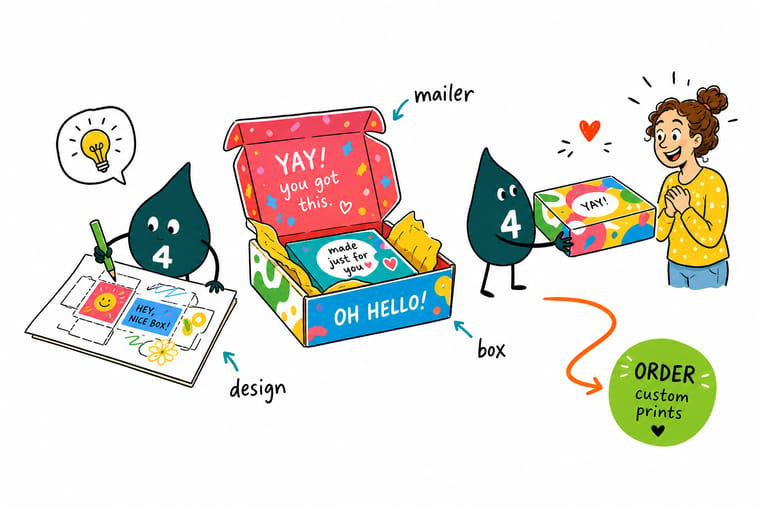
Size the box to the product with its wrap on, hold logos a quarter inch clear of every fold so the ink does not crack, and remember kraft board has no white ink. Print one box, pack the real product, seal it with your tape and post it to yourself before you order hundreds. 4OVER4.COM prints mailers, tissue, tape and seals so the whole parcel matches.
Order custom mailer boxes →What corrugated board will and will not take
Design rules that hold on corrugated board
- Hold ink off the scores. Keep logos and type a quarter inch clear of every fold. Ink cracks on a crease, and a cracked logo is the first thing anyone notices.
- Avoid the full dark flood. A heavy solid across a corrugated panel shows every scuff as a white line. A pattern or a lighter field takes handling far better.
- Test the kraft before you commit. Brown board shifts every color warm and there is usually no white ink. Print a proof on the real board rather than judging it on a screen.
- Design the inside as its own panel. The interior is seen flat and open, not folded. Lay it out at the size it will be read at, with the type running the way the lid opens.
- Order the box to the product. Measure the product wrapped, add the fill you will really use, and buy that size. Dimensional weight charges you for empty space on every parcel.
Explore more
Everything that goes in and around the box
Packaging sleeves run 100 for $438.25 in 5 business days and printed tape 1 for $347.11 in 20 it.
Product Custom Mailer Boxes Printed corrugated mailers in your size, outside and in. Product Kraft Mailer Boxes Brown board, one strong color, recycled look built in. Product Custom Tissue Paper The cheapest way to own the moment the lid opens. 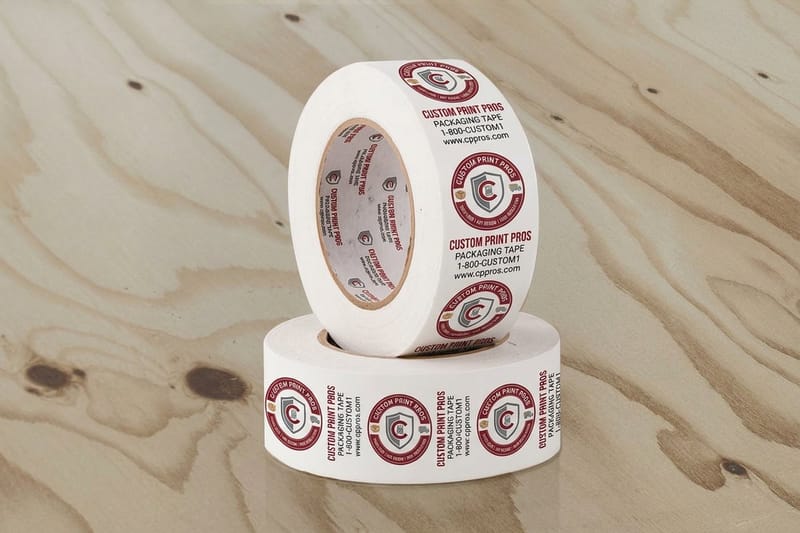 Product Custom Printed Packaging Tape One mark on every parcel, whatever box is under it.
 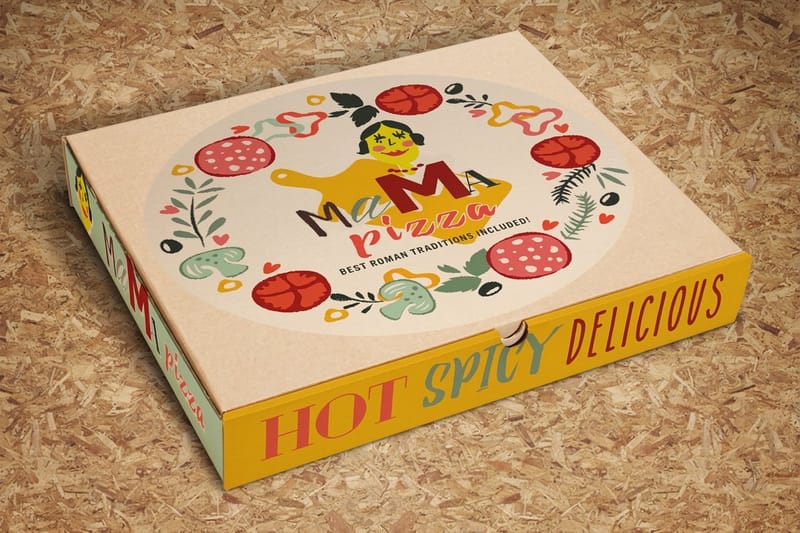 Product Premium Packaging Labels Die-cut seals that turn a plain box into your box.
  Category Custom Box Printing Every box style, board and size in one place.
 Ready to print the parcel, not just the box?
Pick your box size, add tissue, tape and a seal, and 4OVER4.COM prints the whole set on stock built to survive the trip.
Common questions about mailer boxes
Are printed mailer boxes worth it for a small brand?
Only once you ship enough of one box size to use the run. Custom mailer boxes at 4OVER4.COM start at $711.78 because a printed box carries a dieline and a press setup before it carries any ink, and that cost does not shrink with a small order. Below that volume the better buy is a plain kraft mailer with printed tissue from $126.32 and a die-cut packaging label from $29.16, which covers the same reveal, works across more than one box size, and lets you change the artwork whenever you want without scrapping stock.
Should I print the inside of the mailer box?
It is a second print pass on the board, so treat it as a separate line in the budget rather than a free extra. It pays back when the parcel is a gift, when it is a subscription box that arrives to the same person every month, or when customers routinely film the opening. It rarely pays back on a replenishment order from a customer who has already seen it three times. If you want the interior moment without the second pass, printed tissue and an insert card sit in exactly the same place in the sequence and cost far less.
Kraft or white mailer box?
Kraft if your mark works as line art in one dark color, white if your identity needs pale or accurate color. Kraft board is brown and most kraft box printing has no white ink, so a pastel logo prints as a tint of brown and a photograph goes muddy. Kraft also carries a recycled look without a claim attached to it, which suits a lot of brands. White board gives you clean color and photographs better against dark products, which is why apparel brands usually land there. Print a proof on the actual board before you decide, because neither one looks on press the way it looks on a screen.
What size mailer box should I order?
Measure the product with its wrap already on it, add the void fill you genuinely intend to use, and order that size. Carriers bill on dimensional weight, so the empty air in an oversized box is charged on every parcel for as long as you use the run, and the product moves around inside it as well. If you are stuck between two sizes, take the smaller one and change the void fill. The guide on measuring a box for shipping covers how girth and DIM weight are worked out before you commit to a dieline you cannot alter.
Why does the print crack on the folds of my boxes?
Because corrugated board is creased before it is folded, and the ink film on the surface splits when the fibres open at the crease. It is a property of the board rather than a printing fault, and it shows most on dark solids and on any logo that crosses a score. The fix is in the layout: hold artwork a quarter inch clear of every score line, keep heavy solids off the fold, and let a pattern rather than a flat color run across the crease if something has to. Ask your printer for the dieline for your box size and design to it rather than to a flat rectangle.
