
Business Postcard Ideas That Help New Startups Win First Customers


The business postcard ideas that work for a new startup all share one thing: a single offer a stranger can act on this week, printed large enough to read on the walk from the mailbox to the recycling bin. Size, stock and mailing list are downstream of that decision, not the other way round, and the fastest way to waste a first print budget is to settle the design before the offer. This page covers the offer angles that work when nobody knows your name, what belongs on the front versus the back, where to get a list, and the business basics print set that has to be ready when the phone rings.
Postcard sizes and what each one mails as
| Size | Mails as | What fits on the front | Best for |
|---|---|---|---|
| 4 x 6 in | USPS postcard rate | Headline plus one image, roughly 6 to 9 words on the front | First drop, tight budget, high volume |
| 5 x 7 in | Letter rate | Headline, image, and a short subhead | Invitations, openings, appointment reminders |
| 6 x 9 in | Letter rate | Headline, image, plus a price list or a map | Service menus, anything with more than one price |
| 6 x 11 in | Flat or saturation rate | Headline, image, offer block, and a coupon panel | Saturation drops where the piece must beat a stack of mail |
| 4.25 x 5.5 in | USPS postcard rate | One line and a phone number | Handouts, door drops, box inserts, event tables |
Postage rules the size choice more than design does. Confirm the current dimension and thickness limits with USPS before you lock a layout, because a card that misses the postcard rate by a fraction of an inch mails at letter prices for its entire run. Add 0.125 inch bleed to whichever size you pick.
Lead with one offer and give it an edge
Pick the offer before you open a design tool. A new business has no reputation to trade on, so the card has to buy attention with something a stranger can check in two seconds: what they get, what it costs, and the date it stops. Everything people usually put first, the logo, the tagline, the stock photo of a handshake, is decoration around that.
The most common failure is a discount off a price nobody knows. "20% off" from an unknown name has no anchor, so the reader has nothing to compare it against and moves on. Print the arithmetic instead: "$89 first deep clean, normally $140." Now the card is doing a job.
If the numbers are the part you are unsure about, our guide to building a marketing offer works through what a first job can afford to give away and still be worth winning.
Offer angles that work when nobody knows your name
A fixed price on the first job. Removes the fear of an open-ended quote, which is the real reason people do not call a new tradesperson. It works best where the scope is obvious: one room, one car, one lawn.
A free assessment with a real deliverable. Free is only interesting if something arrives at the end of it. A written estimate, a two-page report, a photo set. "Free consultation" on its own has been used by everyone and now means nothing.
A neighbor offer. Name the street or the development on the card. A saturation drop that says "we are working on Maple Street this month" outperforms the same card without the street name, because it turns an advert into local news.
A bring-this-card price. The card has to be handed over to get the price, which is the only cheap way a small business can tell what the mailing actually did.
The deadline, and why a date beats a duration
A date on the card is the difference between a response this month and a card that sits under a fridge magnet until it gets thrown out. Give it three to five weeks from the drop, long enough to survive a holiday and short enough to feel like a decision.
The trade-off is that a dated card cannot be reprinted for the next drop. If you plan to mail the same design four times a year, print the offer undated on the front and put the date in a coupon panel on the back, so only the back plate changes between runs.
Front and back, and what belongs on each
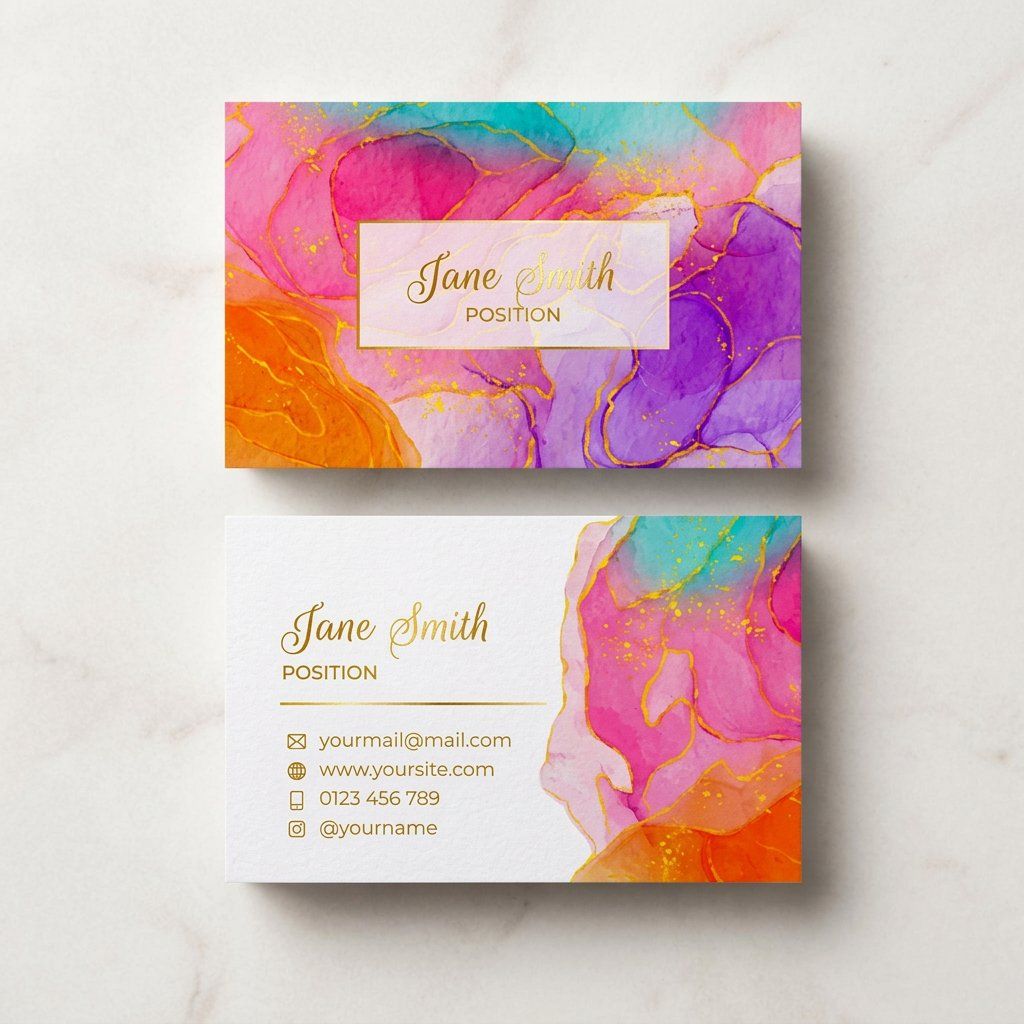
The front has one job: get the card turned over. One headline, one image, and enough space around them that the headline is not competing with anything. Six to nine words is a working limit on a 4 by 6 front, and a headline that names the reader's problem beats one that names your company.
The back carries the work. The offer in full, the deadline, one instruction telling people what to do next, and the address panel. On a mailed card the address side is split: the address block, the postage and the barcode take the right-hand portion and USPS wants that area kept clear, which leaves you a column on the left. Lay that column out at its real width rather than discovering it at the proof stage.
Give people a phone number and a URL short enough to type. A QR code is a good second route and a bad only route, because the part of a local list most likely to phone you is also the part least likely to scan. For more layout patterns with examples, see our postcard ideas and examples guide.
The technical bits that ruin a run
Build the file with 0.125 inch bleed on every side, keep type at least 0.125 inch inside the trim, and set the document to CMYK at 300 DPI. The color most often ruined is a bright RGB blue, which prints noticeably duller in CMYK. If the brand depends on that blue, ask for a proof before the run rather than after it.
Full color on both sides costs a little more than color front and black back. On short runs the gap is small enough that both sides in color is usually the better trade; on long runs, a black-only back is a real saving and looks deliberate if the front is bold enough to carry the piece.
Stock and coating, and the one that catches people out
14pt cardstock is the standard for mailed postcards and 16pt is noticeably more rigid, which matters on anything larger than 6 by 9 inches where a thin card arrives bent. Gloss lifts photography and shrugs off damp; matte reads calmer and photographs better under a phone camera.
Here is the one that catches people out: gloss cannot be written on. If your team writes an appointment time, a quote number or a name on the card, order uncoated or matte. Every business that has printed a gloss appointment card has learned this from a customer holding a smudged pen mark.
Where a startup gets a list worth printing for

Most new businesses have no list, and that is fine, because the cheapest option does not need one. A saturation drop covers every address on a chosen carrier route: blunt, cheap per piece, and well suited to anything a household needs regardless of who they are, such as cleaning, lawn care, pizza, or a dentist opening two streets away.
A rented targeted list costs more per name and only pays back when the offer is narrow enough to justify the premium. If your customer is any household within three miles, do not pay for targeting you do not need. If your customer is a dental practice with more than four chairs, targeting is the only thing that makes the mailing viable.
The list you already own beats both. Past enquiries who never booked, event sign-ups, people who asked for a price and went quiet: those addresses know your name, and a postcard to them is a reminder rather than an introduction. Clean it before you print, because an undeliverable address is paid for twice, once in printing and once in postage.
How many to print, and how many times
Work backwards from jobs, not from budget. Decide how many jobs you need this quarter, apply the rate at which your enquiries actually close, and that tells you how many responses you are printing for. Response on a cold local drop is low enough that the honest planning question is how many cards it takes to get one job, not how many cards you can afford.
Then split the quantity across drops rather than spending it all at once. Two mailings to the same 2,000 addresses beat one mailing to 4,000 for a business nobody recognises, because the second card is the one that gets read. Change the image and the headline between drops; keep the offer and the phone number identical so the two pieces reinforce each other.
Knowing which drop worked
Use a different landing URL or a different phone extension per drop, or fall back on the bring-this-card price. Without one of those three, you will be guessing, and a business that guesses about its mailing usually stops mailing.
Campaign postcards are the best-documented version of this discipline because the deadline is fixed and the result is public. The tactics in our article on direct mail postcard ideas that win votes transfer almost unchanged to a local business with an opening date. When the offer outgrows a card and needs a letter, our envelope sizes guide covers the formats that mail cleanly.
The pieces that work alongside the postcard

A postcard starts the conversation and almost never finishes it. Every job it wins ends with somebody standing in a doorway, on a driveway, or across a counter, and that is the moment a card gets handed over. Budget for both from the start rather than treating the card as an afterthought once the mailing has spent the money.
The good news for a new business is that the handover piece costs almost nothing next to the mailing. Free business cards are $0.00 plus shipping, which is enough to test a design in the wild before you commit. Classic business cards start at $17.57 on premium stock, and artist business cards at the same $17.57 if the brand leans visual. Service businesses can start from a ready layout with cleaning services business cards.
Business card stickers at $10.76 are the piece most people forget. Same artwork, adhesive back: they go on the mailer, the folder you leave behind, the equipment you install, the box you ship. A sticker on something the customer keeps outlives every postcard you send them.
Keep the two pieces recognisably the same
Use one accent color, one typeface pairing, and the same logo lockup on the postcard and the card. When somebody who half-remembers a postcard is handed a card two weeks later, the match is what closes the gap between "who are you" and "oh, you sent that thing". Browse the full range at business card printing, and the wider startup print set in the business basics collection.
Once there is a van, a window or a reception desk to brand, the same artwork carries over to labels and signage. Business labels handle the packaging and equipment side, and our buyer's guide to acrylic business signs covers the first permanent piece most new premises buy.
What the follow-up card costs
The postcard budget is set by postage and quantity. The card that finishes the job is set by stock and finish, and the per unit cost drops as the run grows. These numbers come straight from the live configurator, so you can size both halves of the spend before you commit.
Quantity and price
Business card pricing and specs
Real configurator numbers on premium stock, where ordering more drops the per unit cost.
| Quantity | Price Per Unit | Total |
|---|---|---|
| 100 | 17.6¢ | $17.57 |
| 200 | 11.5¢ | $23.07 |
| 300 | 9.15¢ | $27.46 |
| 400 | 7.96¢ | $31.86 |
| 500 | 7.25¢ | $36.26 |
| 600 | 6.77¢ | $40.64 |
You can also earn coins on every order and redeem them against future printing, which matters when a campaign runs across several drops.
Stock and finish, and how they change the card
Stock is a weight decision and a durability decision at once. 14pt is the standard for a mailed postcard and for most business cards; 16pt is noticeably more rigid, which shows on anything larger than 6 by 9 inches, where a thin card arrives creased from the sorting equipment. On a business card the extra rigidity is felt rather than seen, and it is the cheapest upgrade that changes how a card is received.
Print it
Business cards, ready when the phone rings
Premium stock and standard sizes, printed fast enough to arrive before the mailing lands.
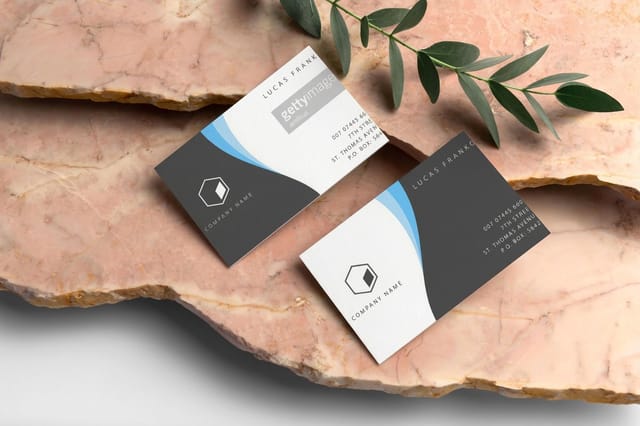
Finish changes both look and behavior. Gloss lifts photography and resists damp, which suits a card that lives in a mailbox on a wet morning. Matte reads calmer, cuts glare, and photographs better under a phone camera, which matters more than it used to. Uncoated stays writable, so it is the only sensible choice if anyone on your team writes an appointment time or a quote number on the card by hand. Pick the coating for how the piece gets handled, not for how it looks flat on a desk.
Postcard angles by business type
The offer that works depends on what you sell and how close the customer already is. It breaks down by business type.
- Cleaning and home services. Fixed price on a first job, street named on the front, saturation drop on two or three carrier routes. Pair it with cleaning services business cards for the doorstep handover, and see our cleaning business name ideas if the name is still open.
- Artists, makers and craft sellers. A postcard that doubles as a print. People keep it, which is the whole point, and the back carries the shop URL and the market dates. Craft business name ideas and artist business cards keep the identity consistent.
- E-commerce and subscription boxes. The postcard rides in the box as a re-order card with a code, so it costs no postage at all. The card ideas e-commerce sellers actually use apply to the insert too.
- Professional services. Skip saturation. Rent a narrow list, print 6 by 9 inches so a short case summary fits, and offer an assessment with a written deliverable rather than a discount.
- Brand new businesses still choosing a name. Do not print until the name is settled and the domain is held. Our business name ideas and tips guide is the step that comes before any of this.
Postcard blanks with the mail panel marked
If you are not starting from a blank artboard, a template removes the two errors that cause reprints: artwork that stops short of the bleed, and type that sits inside the trim. 4OVER4.COM sizes its blanks to exact product specs, so the cut lines and the safety margin are already marked. Pull one from the blank template library before you start laying out.
Start fast
Postcard blanks with the mail panel marked
Design templates and exact size blanks so your artwork lands inside the cut line the first time.
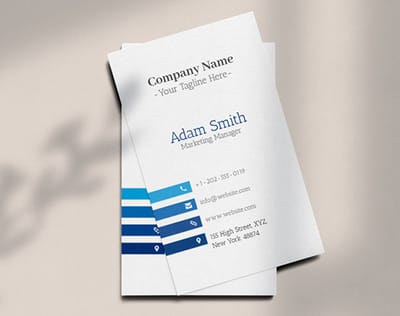
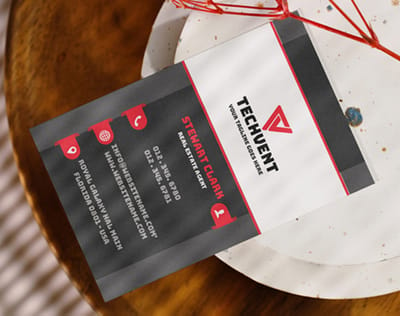
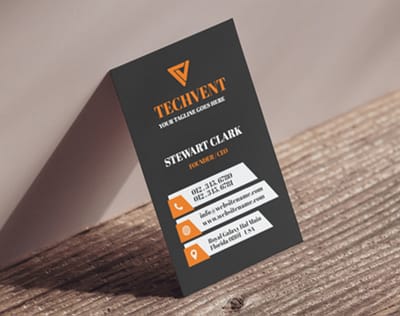
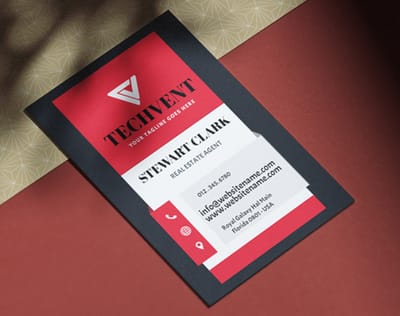
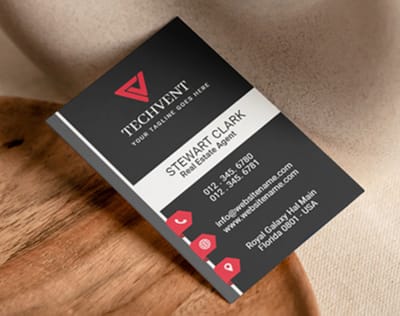
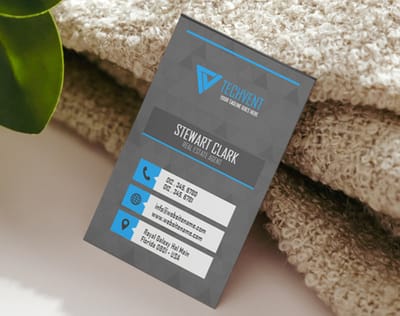
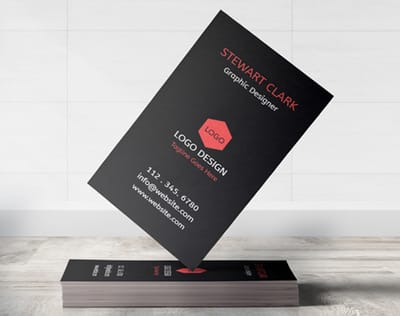
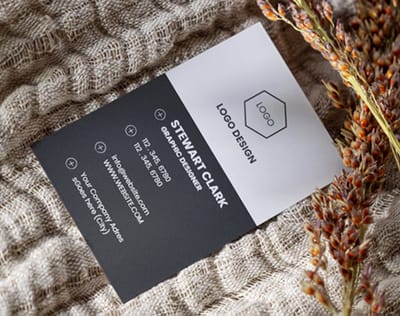

Wally builds a startup postcard that gets a call
One offer, one date, one instruction
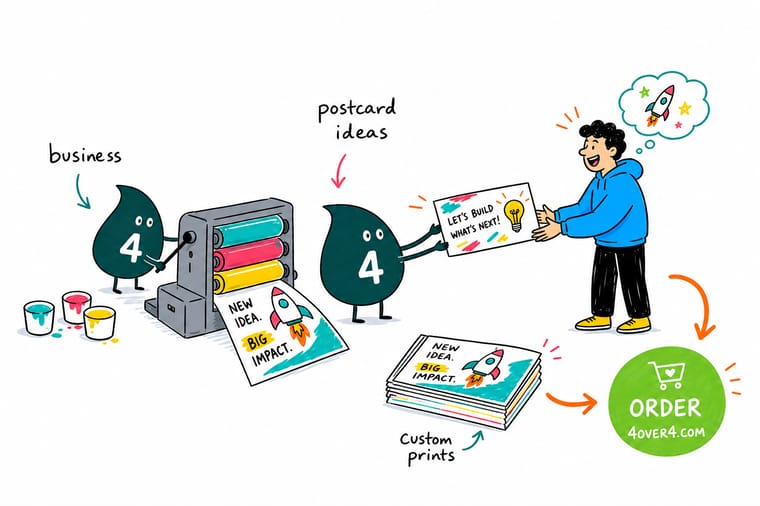
Write the offer as a real number rather than a percentage, print the deadline as a date, and leave one instruction on the back. Stay at or under 6 by 4.25 inches and 0.016 inches thick for the USPS postcard rate, add 0.125 inch bleed, keep type 0.125 inch inside the trim, and have the matching business cards printed before the mailing lands.
Get free business cards →What a first mailing has to get right
Design rules that hold at every size
- One offer, one instruction. The card should ask for exactly one action. Two calls to action split the response and neither one wins.
- Headline names their problem. A headline about the reader outperforms a headline about your company on every card that has ever been tested against itself.
- Print a date, not a duration. A date is checkable at a glance. A duration requires the reader to remember when the card arrived, which nobody does.
- Leave the address panel alone. Keep the right-hand portion of the address side clear for the block, the postage and the barcode, and design your copy into the column that is left.
- Matte or uncoated if anyone writes on it. Gloss will not take a pen. If your team writes appointment times on the card, the coating decision is already made.
Explore more
More ways to print and promote
Classic business cards run 100 for $17.57 in 3 business days, which is the piece the postcard hands off to.
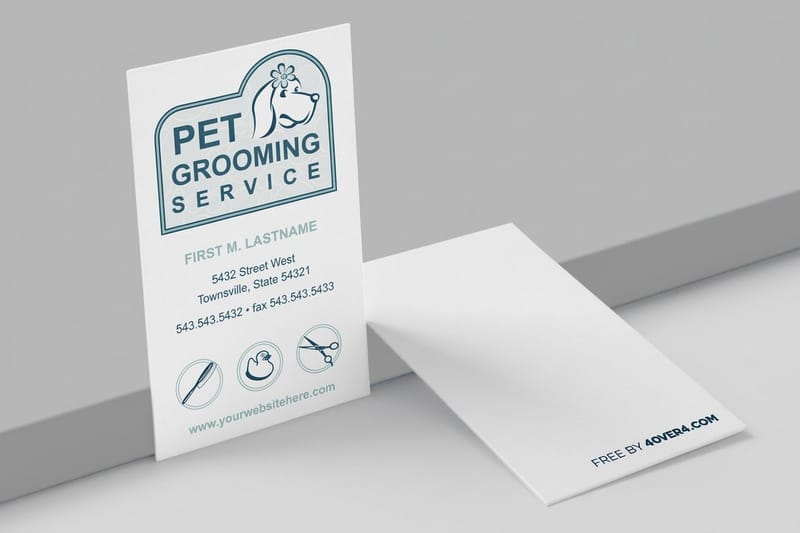 Product Free Business Cards Test a design in the wild for the cost of shipping.
 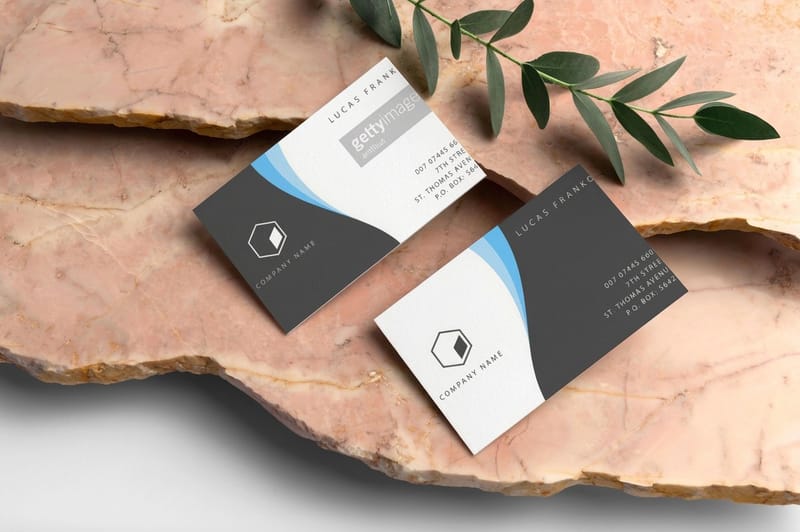 Product Classic Business Cards Premium stock for the handover the postcard sets up.
  Product Business Card Stickers Same artwork, adhesive back, for mailers and equipment. Category Business Card Printing Every stock, finish and shape in one place.
 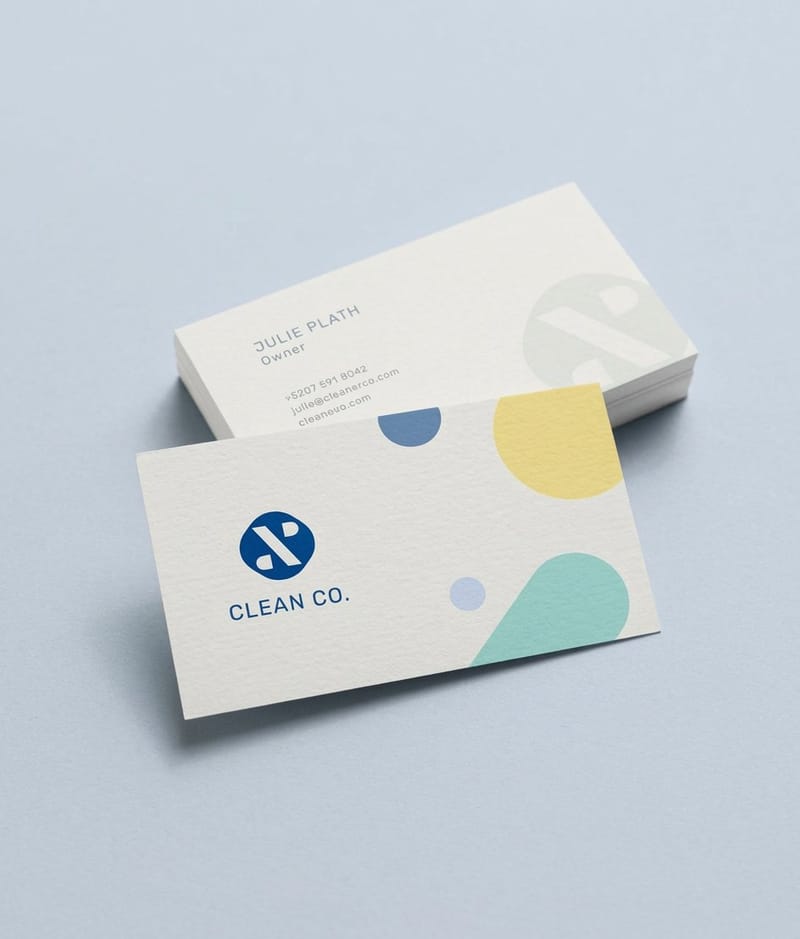 Guide Postcard Ideas and Examples Layouts and offer patterns worth copying.
 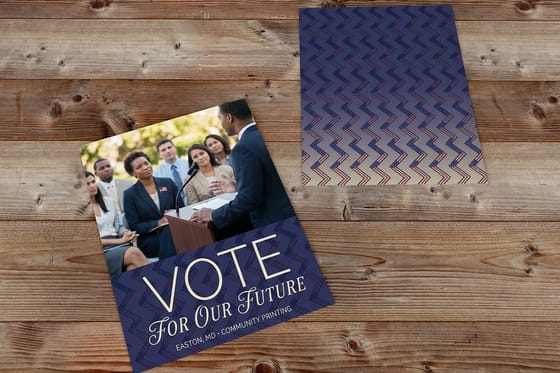 Article Direct Mail Ideas That Win Votes Deadline-driven mail tactics that transfer to local business.
 Ready to print the set?
Settle the offer, pick the size, and 4OVER4.COM prints the cards that finish what the mailing starts, on premium stock, as fast as your opening date needs.
Common questions about business postcards
What size postcard should a brand new business mail?
Start at 4 by 6 inches. It qualifies for the USPS postcard rate as long as the piece stays at or under 6 by 4.25 inches and 0.016 inches thick, so it is the cheapest way to get volume out of a first budget, and volume is what a business nobody has heard of needs. Move up to 6 by 9 inches when the offer genuinely needs the room, such as a service menu with several prices or a map, and accept that it mails at letter rates. The mistake is printing large because large feels serious. A 4 by 6 card mailed twice beats a 6 by 9 card mailed once at roughly the same spend.
What actually goes on the back of a business postcard?
The offer in full, the deadline as a printed date, one instruction telling the reader what to do, your phone number and a typeable URL, and the address panel. On a mailed card the address side is divided: the address block, the postage and the barcode take the right-hand portion and USPS wants that area kept clear, which leaves you a column on the left for copy. Design that column at its real width from the start. A QR code can sit in the copy column as a second route, but it should never replace a phone number, because the people most likely to call you are the least likely to scan.
How do I get a mailing list when I have no customers yet?
Use a saturation drop to every address on a carrier route near you. It needs no list at all, it costs the least per piece, and it fits any business a household might need regardless of who lives there. A rented targeted list is worth the higher cost per name only when your customer is specific enough that most of a carrier route would be wasted, which is usually true for business to business and rarely true for home services. Whatever you use, also mail the addresses you already have: past enquiries who never booked are the warmest names a new business owns and they cost nothing to collect.
How many times should I mail the same addresses?
At least twice, and three times if the budget allows, before you judge whether the mailing works. The first card arrives from a name nobody recognises and gets sorted out with the rest of the mail. The second card arrives from a name that is faintly familiar, and familiarity is what buys the three seconds of attention the offer needs. Keep the offer and the phone number identical across drops and change the image and the headline, so the pieces reinforce each other rather than reading as two unrelated adverts. Space them three to five weeks apart.
Should my postcard and my business cards match?
Yes, and more tightly than most new businesses bother with. One accent color, one typeface pairing, and the same logo lockup across both. The whole point of mailing repeatedly is recognition, and recognition collapses the moment the card someone is handed looks like it came from a different company than the postcard on their counter. Practically, design the postcard first because it has the least room for compromise, then carry its palette and type onto the card. Free business cards at 4OVER4.COM cost $0.00 plus shipping, so there is no reason to run mismatched artwork while you settle the look.
