
Political Direct Mail and Postcard Ideas That Win Votes


Direct Mail Still Decides Down-Ballot Races

Digital ads scroll past. A postcard sits on the kitchen counter until someone reads it. That is why direct mail still moves the needle in the races that decide the most, city council, school board, judge, and state legislature, where a few thousand votes and a persuadable middle settle the outcome. Mail reaches households that ignore political ads entirely, and it reaches them at home, where they actually vote from.
The ideas below are the pieces of a mail program that wins: the right list, one sharp message, a proven layout, a clear call to action, and a timed sequence that builds to election day. 4OVER4.COM prints the full ground game, postcards, door hangers, yard signs, and flyers, so the plan and the print stay in one place.
Shop the range
Political printing collection
Postcards, yard signs, door hangers, and flyers for the whole ground game.

Political Mail Versus Official Election Mail
USPS sorts campaign season mail into two categories, and mixing them up is the fastest way to lose days at the dock. Political Mail is anything sent by a registered candidate, a campaign committee, a party committee or a political action committee that supports or opposes a candidate or a ballot measure. That covers your introduction postcard, your contrast piece and your get-out-the-vote closer. Official Election Mail is the narrow category reserved for authorized state and local election officials: ballots, voter registration cards, polling place notices and voter information guides. A campaign may not mail Official Election Mail, and an election office does not mail Political Mail.
The difference shows up as paperwork at the acceptance window. Political Mail travels under the red USPS Tag 191 on every tray, sack and pallet, which is how the network flags it for the extra visibility and tracking the Postal Service gives election season mail. Official Election Mail carries the Official Election Mail logo on the piece itself. Tell your mail house which category you are in before the job is trayed and tagged, because an untagged drop is handled like ordinary marketing mail, and inside the last ten days of a race that is the difference between a piece that persuades and a piece that arrives after the polls close.
On the print side the rules that matter are the ones your printer controls: the address block left clear where the automation reads it, an aspect ratio the sorters accept, and stock stiff enough to survive the machines without curling. Political postcards are built to those specs, door hangers skip the mailstream entirely for a canvass, and Every Door Direct Mail covers a precinct with no voter file at all.
The Disclaimer That Has to Be on the Piece
Before the artwork goes anywhere, find out what your race requires printed on the piece itself. A mailer without the right disclaimer can be a reportable violation, and it is the one mistake you cannot fix after the drop.
Federal candidates and committees work to Federal Election Commission rules, which call for a paid for by line naming the committee, and for independent pieces a statement about whether a candidate authorized it. State and local races run on their own statutes, and those vary widely on wording, on whether an address is required, and on the minimum type size the notice has to be set in.
- Get the exact string from your compliance contact. Do not paraphrase it off another campaign's mailer.
- Set it as readable type. Several states set a floor, and small grey text over a photograph fails it.
- Put it in the layout early. Adding it last is what pushes it into the address block.
Build the disclaimer into the template once and every drop in the sequence inherits it.
Political Mail Postage and Cost Per Piece
Two routes get a postcard into a voter's hands, and they price out very differently. EDDM mails every address on a carrier route at the saturation rate with no names printed and no voter file bought. EDDM Retail takes no permit, caps at 5,000 pieces per ZIP code per day, and the piece has to be flat size, taller than 6.125 inches or longer than 11.5 inches, so a pocket-size postcard does not qualify. You reach the whole route, including the households that will never vote in your race.
A targeted voter list costs more per piece and buys precision: pull only the persuadable partisans or the low-turnout supporters out of the voter file, then mail First-Class for delivery in a few days with free forwarding and returns, or USPS Marketing Mail to cut postage on a drop that has a week of slack in it. Add the file access or list rental, the address cleanup and the presort on top of print. On print itself, political postcards start at $16.48 and direct mail postcards at $18.94, campaign yard signs at $25 and political door hangers at $290.41, and the per-unit cost falls hard as the quantity climbs, which is what makes a full precinct affordable.
- Postage class. EDDM rides the saturation rate on a simplified address, no names needed. A targeted list mails First-Class for speed or USPS Marketing Mail for price, both with a permit and a presort behind them.
- Cost per piece. EDDM is the cheapest way to touch an entire route, because postage sits at the lowest tier and there is no addressing data to buy. Targeted mail costs more per piece on postage plus data, and earns it back by not printing for voters who cannot help you.
- List cost. Zero for EDDM, you pick routes off a map by ZIP code. A voter file costs money or party access, and it has to be deduplicated and address-updated before it mails or you pay postage on undeliverables.
- Targeting. EDDM stops at the carrier route and everyone on it gets the piece. A voter list targets the household by party, vote history, age or turnout score, which is the only way to run a get-out-the-vote drop that does not remind your opponent's voters to vote.
Rule of thumb: saturate with EDDM when your win number is most of the precinct and the message is broad, and buy the list when the persuadable slice is small enough that mailing everybody wastes more money than the file costs. Political postcards run either way, and door hangers cover the doors your canvass reaches with no postage at all. The EDDM overview walks the route selection step by step.
Idea 1 and 2: Nail the List and the Single Message
A perfect postcard mailed to the wrong door is wasted money. Start with the list. Pull a persuadable-voter file from your voter database, or when you want to blanket a precinct without a list at all, use USPS Every Door Direct Mail to cover full carrier routes at the lowest postage. The EDDM overview explains when a saturation drop beats a targeted list.
Then commit to one message. A winning mailer makes a single argument, one issue the voter cares about and one ask, not a policy platform crammed onto four inches of cardstock. The strongest political postcards read in the two seconds between the mailbox and the recycling bin. Here are the live picks that carry that message door to door.
Print picks
Four pieces that win the ground game
Live prices, ready to customize with your candidate, message, and colors.
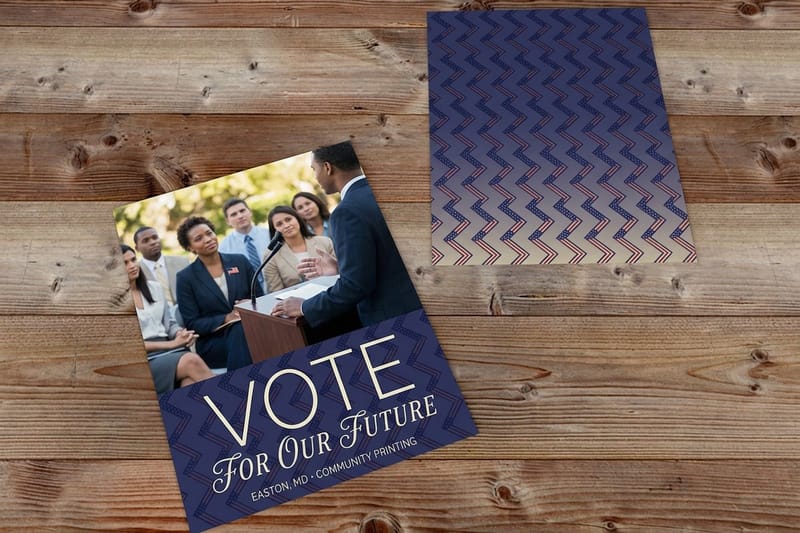
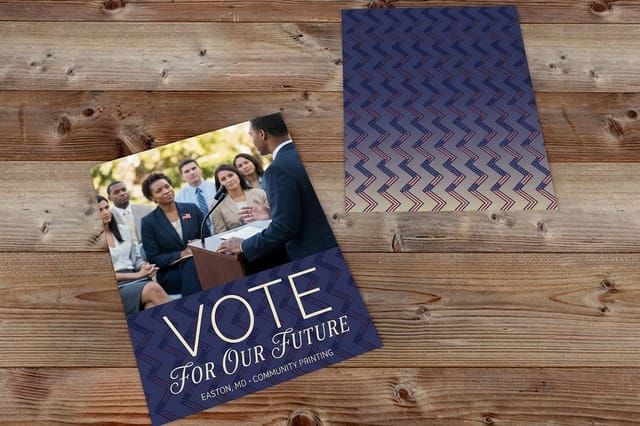 Political Postcards From $16.48 The core persuasion piece, sized for the mailbox and priced for a full precinct.
 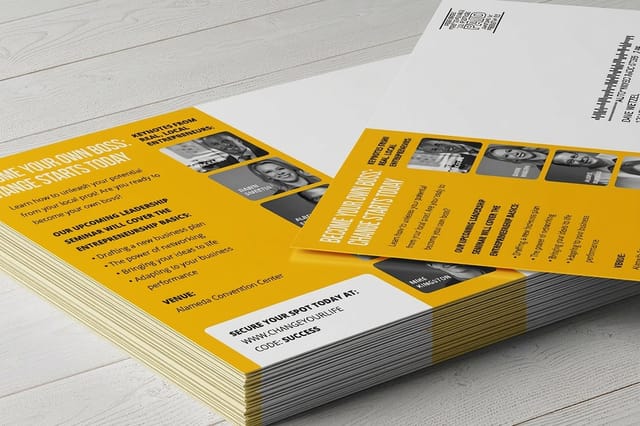 Direct Mail Postcards From $18.94 Set up for the mail stream, ready to hit a targeted voter list on schedule.
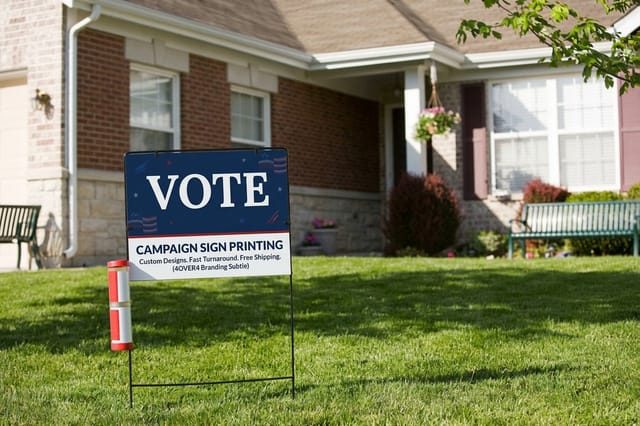
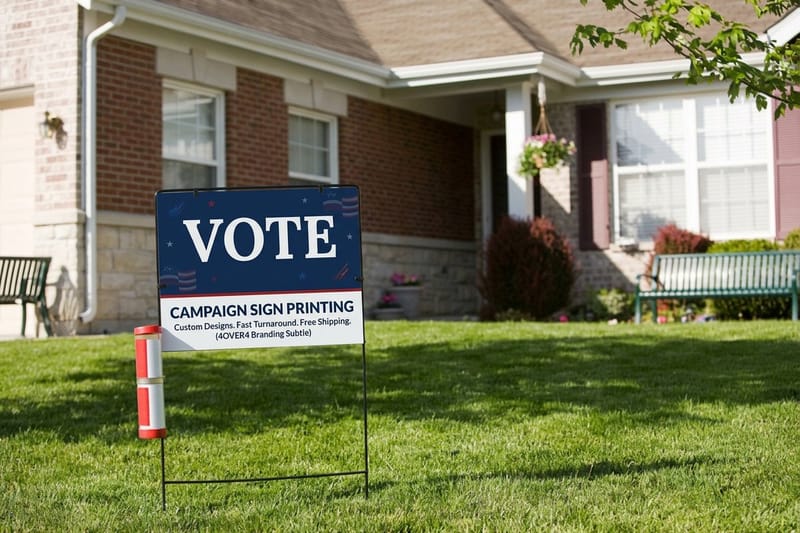
 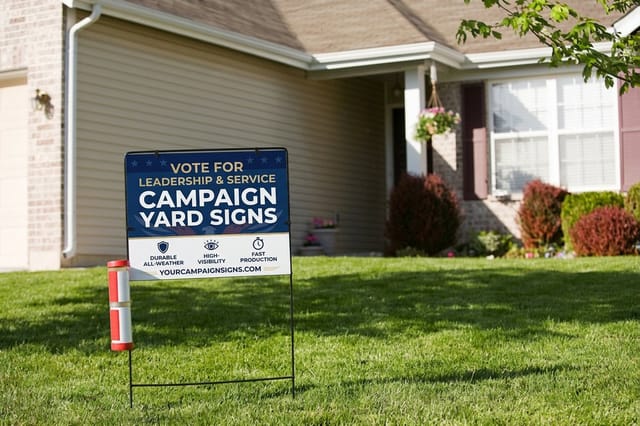 Campaign Yard Signs From $25.00 Name recognition on every lawn, the quiet endorsement neighbors trust.
 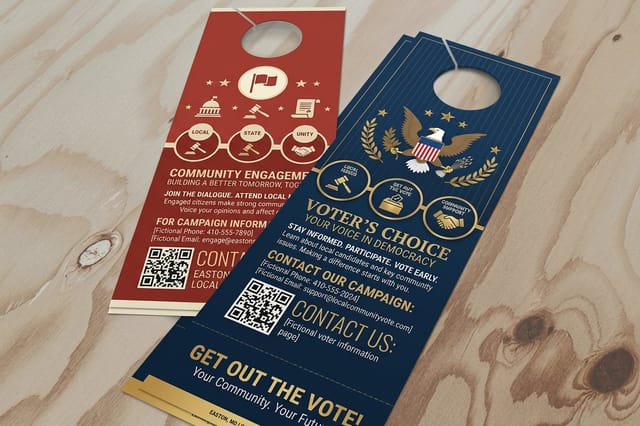 Political Door Hangers From $290.41 The canvasser handoff that stays on the door until the voter reads it.
 Idea 3 and 4: Use a Layout That Has Already Won

Do not reinvent the persuasion mailer. The layouts that win are boring on purpose: a candidate photo that reads as trustworthy, a headline that states the one issue, a short contrast or proof point, and a call to action a voter cannot miss. Idea three is the bio-and-contrast card, who the candidate is on one side and the choice on the other. Idea four is the proof card, an endorsement, a record, or a local testimonial that answers the voter's real question, why should I trust you.
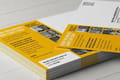
Set the postcard up to real mail specs so it clears the automation and hits the target date. These are the exact size and price options for a direct mail postcard run.
Size and price
Direct mail postcard specs
Real configurator numbers for a postcard built to move through the mail stream.
| Quantity | Price Per Unit | Total |
|---|---|---|
| 50 | 33.0¢ | $16.48 |
| 100 | 24.2¢ | $24.16 |
| 200 | 15.9¢ | $31.86 |
| 300 | 12.8¢ | $38.45 |
| 400 | 11.3¢ | $45.04 |
| 500 | 10.3¢ | $51.62 |
Idea 5 and 6: Time the Sequence to Election Day
Build the calendar backwards from election day, not forwards from today. The date you schedule is the in-home date, so back the print turnaround and the postage class out of it before you promise a drop. This is the countdown that carries a down-ballot race:
- 6 to 8 weeks out, introduction postcard. Purpose: put a face and a name in front of voters who have heard neither. In home before absentee and vote-by-mail ballots start arriving, so the first impression is yours.
- 4 weeks out, issue or contrast postcard. Purpose: one issue, one argument, the choice stated plainly. In home while early voting is still a decision rather than a habit.
- 2 to 3 weeks out, proof piece. Purpose: the endorsement, the record or the local testimonial that makes the first two pieces credible. In home the week ballots land in mailboxes.
- 7 to 10 days out, canvass door hanger. Purpose: back up the knock nobody answered and hand over the polling place and the hours. Hung on doors, no postage, so it moves entirely on your schedule.
- 3 to 5 days out, GOTV closer. Purpose: the date, the polling place, the hours and the ask, nothing else on the card. In home over the final weekend, mailed First-Class so a late entry still makes it.
One mailer is a whisper. A sequence is a campaign. The winning cadence is a series that builds: an introduction drop, a contrast drop, and a get-out-the-vote drop that lands in the final week with the date, the polling place, and the ask. Idea five is consistent frequency, mailing steadily right up to election day so your name is the last one a voter sees. Idea six is the GOTV closer, a final piece whose only job is to turn a supporter into a voter.
The full cadence and file setup live in the direct mail campaign guide, and you can lay out every drop cleanly in the online design templates studio so the series looks like one campaign, not five. Print the whole countdown at once on political postcards and door hangers so a slipped press date never costs you a drop.
A nonprofit ran this same build-and-close sequence and doubled its response, worth a read in the direct mail case study.
Lay out the sequence
Political postcards, ready to customize
Design every drop inside the mail-safe area so the series reads as one campaign.
Idea 7 to 9: Work the Ground Game Around the Mail
Mail is strongest when the rest of the ground game echoes it. Idea seven is the yard sign network, name recognition on every supporter's lawn, the quiet peer endorsement that mail cannot buy. Idea eight is the canvasser door hanger, left when no one answers, so a knock that misses still lands the message. Idea nine is the rally and event flyer that fills a room and feeds the volunteer list.
- Yard signs. Cheap, durable name recognition that turns supporters into billboards.
- Door hangers. The canvass backup that stays on the door until it is read.
- Flyers. Event and rally handouts that build the volunteer and donor list.
- Postcards. The persuasion and GOTV workhorse, mailed on a schedule.
Door hangers pull real weight in a canvass, and the door hanger effectiveness guide makes the case with the numbers.
Back the canvass
Political door hangers
The message that stays on the door when no one answers the knock.
Volunteer Handwritten Postcards
A parallel program runs alongside printed mail and costs almost nothing but time. Volunteers hand write postcards to targeted voters, usually from a script the campaign supplies, and the pieces go out with ordinary stamps.
It works because handwriting survives the two second sort over the recycling bin that kills a glossy mailer. The tradeoff is throughput. A volunteer writes a few dozen in an evening, so this supplements a print program rather than replacing one.
The practical setup is to print the cards blank on one side. Run political postcards with your artwork, the disclaimer and the return address on the front, then leave the message side clear for the handwriting. That gives you compliance and consistency from the press, and warmth from the volunteer.
Give writers a short script, a hard deadline that sits inside the mail window, and the stamps. Anything you leave them to buy themselves is where the program stalls.
Back the canvass
Political door hangers
The message that stays on the door when no one answers the knock.
Idea 10: Compare Your Mail Pieces Before You Commit
A budget only stretches so far, so pick the pieces with your eyes open. Line up the popular political print formats on size, quantity, turnaround, and from-price, then load the budget where it moves the most votes, usually persuasion mail plus a GOTV closer, with signs and hangers filling the ground.
For a picture of how much mail still shapes elections, the direct mail industry data is a useful gut check, and the campaign postcard templates gallery gives you a running start on the artwork.
Compare formats
Popular political pieces, side by side
Stock, size, quantity, turnaround, and from-price across our most ordered campaign print.
 Political Signs | Political Postcards | Political Door Hangers | 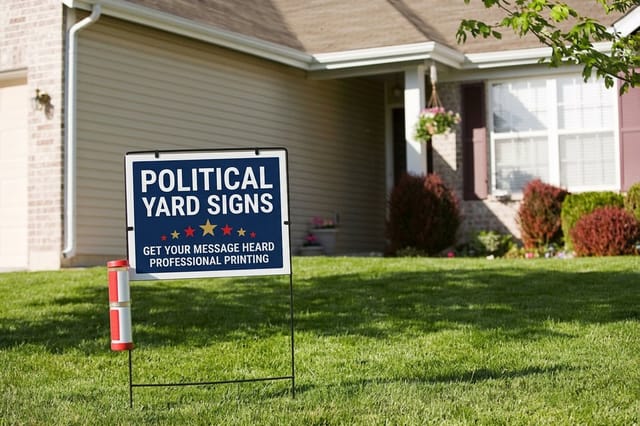 Political Yard Signs | |
|---|---|---|---|---|
| Min price | $25.00 | $16.48 | $290.41 | $25.00 |
| Paper / stock | 4mm White Coroplast | 14pt Gloss Cover | 14pt Gloss Cover | 4mm White Coroplast |
| Finish | - | Standard Finish | High Gloss UV Coating | - |
| Size | 12" x 18" | 2.5" x 2.5" | 4.25" x 11" | 12" x 18" |
| Default qty | 1 | 50 | 250 | 1 |
| Turnaround | 5 business days | 3 business days | 7 business days | 5 business days |
| Rating | ||||
| View & customize | View & customize | View & customize | View & customize |
Get the Whole Program to the Mailbox on Time
In a campaign, a missed mail date is a missed race. Build every piece to spec, set the address block and bleed for the mail stream, keep the message readable at arm's length, and lock your campaign colors so every drop matches. A clean file clears automation and hits the target date without a reprint.
When news breaks and a rapid-response piece has to move now, 4OVER4.COM Same Day Printing turns qualifying orders around the same day. Pull the whole ground game from the political printing collection and keep sharpening the plan in our direct mail guides.
Rapid response
Same day printing
Ship a breaking-news mailer the same day when the order qualifies.
Wally runs the winning mail sequence
The right list, one message, and a cadence that closes on election day
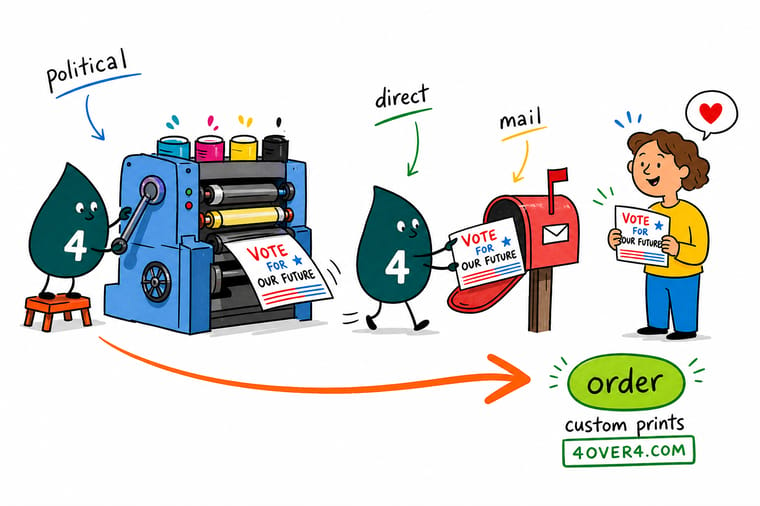
A political mail program wins on a targeted or EDDM list, one sharp message, a proven layout, and a sequence that builds to a get-out-the-vote closer. 4OVER4.COM prints the whole ground game, postcards, signs, door hangers, and flyers, sharp and on the mail date, as fast as same day, so every drop lands when it counts.
Print your campaign mail →Mail that moves a voter before it hits the recycling
Explore more
More ways to reach voters with print
Related pages across 4OVER4.COM, one card each, so you can keep building the campaign.
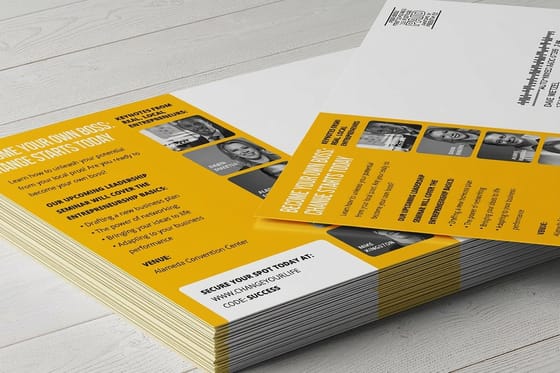 Article 15 Print Marketing Examples That Still Win Customers Study 15 print marketing examples across direct mail, flyers, packaging, and signage, with the reason each one Article Direct Mail Campaign Ideas That Fill a Route Instead of a Mailbox EDDM and direct mail campaign ideas with the piece, the quantity and the drop date for each one, plus the post
  Collection Political Printing Postcards, signs, hangers, and flyers for the whole campaign.
  Product Political Postcards The persuasion workhorse, sized and priced for a full precinct.
  Guide Direct Mail Campaign Guide Build the list, message, and cadence that moves voters.
 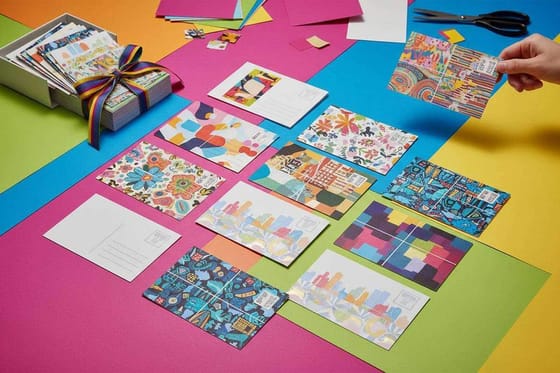 Showcase Campaign Postcard Templates A gallery of political postcard layouts to start from.
  Service Every Door Direct Mail Blanket a precinct by carrier route at the lowest postage.
  Case study Direct Mail That Doubled Response How a sequenced mail program doubled donations.
  Statistics Direct Mail Data The numbers behind why mail still moves votes.
  Benefit Same Day Printing Ship a rapid-response mailer before the cycle turns.
  Category Yard Signs Printing Name recognition on every supporter lawn.
  Article Local Print Marketing Print tactics that reach a community where it lives.
 Ready to put your message in every mailbox?
Build the list, sharpen one message, and 4OVER4.COM prints the postcards, signs, and hangers that carry it, as fast as same day.
Political mail questions campaigns raise most
What is a USPS Political Mail Ambassador?
It is a Postal Service contact assigned to help campaigns, committees and mail houses get election mail through the network on time. They answer questions about tagging, acceptance and the paperwork attached to political mail, and they can flag a problem before a drop reaches the dock rather than after. Ask your local business mail entry unit for the current contact well before your first drop, not during the final week.
Can a political campaign use nonprofit postage rates?
No. Nonprofit rates are reserved for qualified organizations that the Postal Service has authorized, and a candidate committee, a party committee and a political action committee do not qualify. Campaign mail goes at commercial rates, either First Class for speed and free forwarding or Marketing Mail when the drop has slack in the schedule. Budget from those numbers rather than from a nonprofit quote.
Does political direct mail still work?
Yes, especially in down-ballot and local races where a persuadable middle decides the outcome. A postcard reaches voters at home, where they actually cast a ballot, and it reaches households that ignore political ads entirely. Mail sits on the counter instead of scrolling past, so it gets read. The winning approach is not one glossy card, it is a sequenced program: a targeted or EDDM saturation list, one sharp message, a proven layout, and a cadence that builds to a get-out-the-vote piece in the final week. 4OVER4.COM prints the postcards, signs, door hangers, and flyers that carry it.
Should a campaign use a targeted list or EDDM?
Use a targeted voter list when you need to reach specific persuadable or base voters and you have the file to do it, because every piece lands on a door that matters. Use USPS Every Door Direct Mail when you want to blanket a precinct or carrier route without buying a list, which drops postage to the lowest rate and covers everyone in the area. Many campaigns do both: EDDM for saturation in a friendly precinct, targeted mail for the swing households. The EDDM overview helps you decide which fits your race and budget.
What makes a political postcard persuasive?
One issue and one ask. The strongest political postcards make a single argument the voter already cares about, back it with one proof point or contrast, and end with a call to action they cannot miss. Use a candidate photo that reads as trustworthy, a headline that states the issue in plain words, and type large enough to read in the two seconds between the mailbox and the recycling bin. Do not cram a full platform onto four inches of cardstock. Set it up to real mail specs so it clears automation and hits your target date.
How do I choose the right mix of political print pieces?
Load the budget where it moves the most votes, then fill the ground around it. Persuasion mail plus a get-out-the-vote closer usually earns the first dollars because postcards reach voters at home on a schedule. Campaign yard signs add cheap name recognition and peer endorsement on supporter lawns. Door hangers back up the canvass, staying on the door when no one answers. Flyers build events and the volunteer list. Compare the formats on size, quantity, and price before you commit, and keep the message consistent across every piece so the whole program reads as one campaign.
What does political direct mail cost, and how are prices set?
At 4OVER4.COM, political postcards start at $16.48 and direct mail postcards at $18.94, campaign yard signs at $25, and political door hangers at $290.41. Price depends on the piece, the size, the stock and finish, and the quantity, with the per-unit cost dropping sharply as volume climbs, which is what makes a full precinct affordable. EDDM lowers postage further by mailing whole carrier routes. Check the exact configurator numbers on each product page, and use same day printing when a rapid-response piece has to move before the news cycle turns.
What is political mail?
Political Mail is the USPS category for mail sent by a registered candidate, a campaign committee, a party committee or a political action committee that supports or opposes a candidate or a ballot measure: introduction postcards, contrast pieces, get-out-the-vote closers. It is not the same as Official Election Mail, which only authorized state and local election officials may send, and which covers ballots, voter registration cards, polling place notices and voter information guides. Political Mail is identified with the red USPS Tag 191 on every tray, sack and pallet so the network can give it the extra visibility and tracking it applies during election season, while Official Election Mail carries the Official Election Mail logo on the piece itself. Tell your mail house which category the job is before it is trayed and tagged.
What does political direct mail cost per piece?
Three costs stack on every piece: print, postage and data. Print at 4OVER4.COM starts at $16.48 for political postcards, $18.94 for direct mail postcards, $25 for campaign yard signs and $290.41 for political door hangers, and the per-unit cost drops sharply as the quantity climbs. Postage depends on the route you pick: EDDM mails every address on a carrier route at the saturation rate with no names printed, capped at 5,000 pieces per ZIP code per day and requiring a flat-size piece taller than 6.125 inches or longer than 11.5 inches, while a targeted list mails First-Class for delivery in a few days with free forwarding and returns, or USPS Marketing Mail when the drop has slack in the schedule. Data is zero for EDDM, since you pick routes off a map, and a real line item for a voter file that has to be deduplicated and address-updated before it mails. Run the exact quantity through the configurator on each product page for your print number.
When should campaign mail land before election day?
Count backwards from election day and schedule in-home dates, not press dates. An introduction postcard should be in home 6 to 8 weeks out, before absentee and vote-by-mail ballots start arriving. The issue or contrast piece lands about 4 weeks out, while early voting is still a decision. The proof piece, an endorsement, a record or a local testimonial, lands 2 to 3 weeks out, the week ballots hit mailboxes. Canvass door hangers go up 7 to 10 days out with no postage in the way. The get-out-the-vote closer, carrying only the date, the polling place, the hours and the ask, should be in home 3 to 5 days out, mailed First-Class so a late entry still makes it. Back the print turnaround and the postage class out of each in-home date, and print the whole sequence at once so a slipped press date never costs you a drop.
