
The Best Promotional Products and Trends for 2026


Jordan is our labels, packaging and sustainability voice, built from the knowledge of our production team, with over 20 years in printing.
The promotional products that pay for themselves in 2026 are magnets at $19.68, mugs at $20.86, t-shirts at $21.96 and tote bags at $22.73, because each one claims a permanent place in a house, an office or a wardrobe. The trend behind all of them is the same: smaller runs of better items, judged against what someone would buy in a shop rather than against other freebies.
Promotional products compared at a glance
| Item | From | Where it lives | How long it lasts | Best for |
|---|---|---|---|---|
| Tote bags | $22.73 | Hallway hook, car boot, weekly shop | Years if the handles are stitched properly | Retail, conferences, member gifts |
| Mugs | $20.86 | Office kitchen, home cupboard | Years, but only if it beats the mug they own | Client gifts, onboarding, staff |
| T-shirts | $21.96 | Wardrobe, then the gym drawer | Long, if the design works without your logo | Teams, events, merch drops |
| Magnets | $19.68 | Fridge door, filing cabinet | Years, because nobody throws away a fridge magnet | Service businesses, takeaways, trades |
| Keychains | $53.55 | In a pocket, every single day | Only as long as it stays on the ring | Dealerships, gyms, property handovers |
| Stickers | $29.16 | Laptop lid, water bottle, van door | Until the surface changes | Brands with a design people want |
| Coasters | $10.98 | A bar top or a desk | One event, or one busy season | Venues, breweries, launch nights |
Each From price is the live configurator total for the smallest run: one tote, one mug or one t-shirt, ten coasters, 25 keychains. Prices move with quantity, print area and material, and lead times run from 3 business days on stickers to 7 on tote bags. Browse the full range on the promotional products collection before you settle on a shortlist.
Why promotional products still earn their budget
A promo product buys something an ad cannot: a physical object that sits in someone’s house or hand for months. Nobody scrolls past a fridge magnet. The catch is that the object only works while it is still being used, so the whole decision rests on one question, which is whether the recipient would keep this thing if your logo were not on it.
That question kills most of the catalog. A thin tote that sags after one shop gets binned. A stress ball gets a laugh and then a drawer. A mug with a good handle and a proper glaze sits in a kitchen cupboard for years, and every morning it is on a desk in front of someone.
It is also why the cheap end is a trap. Spending half as much per unit to reach twice as many people looks efficient on a spreadsheet, and then half of the run is in a bin by the following week. Order fewer of something people keep. Pick that item from our branded merchandise range. Our guide to branded merchandise works through the same maths with real examples.
The three surfaces worth buying
Almost every promo product that works occupies one of three places: a fixed surface in the home or office, a bag or vehicle that travels, or a body. The fridge door is the highest dwell-time surface in a house, which is why custom magnets at $19.68 outperform items that cost three times as much. A tote is the traveling version. A t-shirt is the body version, and it is the hardest to get right because people are fussy about what they wear.
Anything that does not claim one of those three places is competing with a drawer, and the drawer usually wins.
What a promo product cannot do
It will not generate demand on its own. A branded mug does not persuade anyone to switch supplier, and treating merch as a lead source produces disappointment and a cupboard of leftovers. What it does well is keep a name in front of someone who already knows you, hold a relationship warm between purchases, and give a team something to wear that makes a shared thing feel real.
Judge it on that. If the goal is direct response, spend the money on the print that actually works a booth instead, and use merch as the thing people leave holding.
The promo products worth ordering in 2026
Seven items carry most of the useful work, and each one suits a different situation. Prices below are real 4OVER4.COM starting prices, so you can plan a budget before you configure anything.
Read the table across, not down. The price column matters far less than the second and third columns, which are where the item lives and how long it survives once it gets there.
Totes, mugs and tees: the three that carry a brand
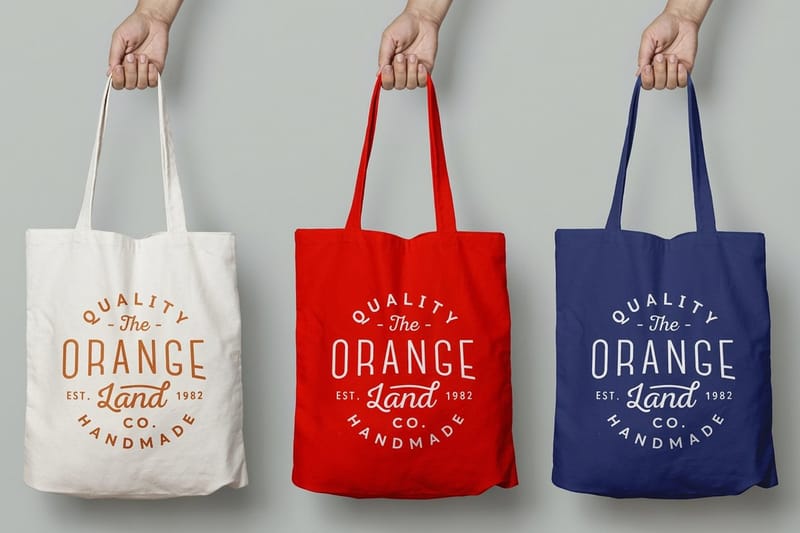
Tote bags at $22.73. The material decides everything. A light cotton tote is fine for a conference bag that carries paper for two days; canvas is what survives a weekly shop for years. If you want the sustainability angle to hold up, use a recycled stock and say so on the bag. Our comparison of cotton, canvas and recycled totes covers the weights, and the minimums and turnaround guide covers what a run actually involves. Every size and fabric sits in our custom tote bags range.
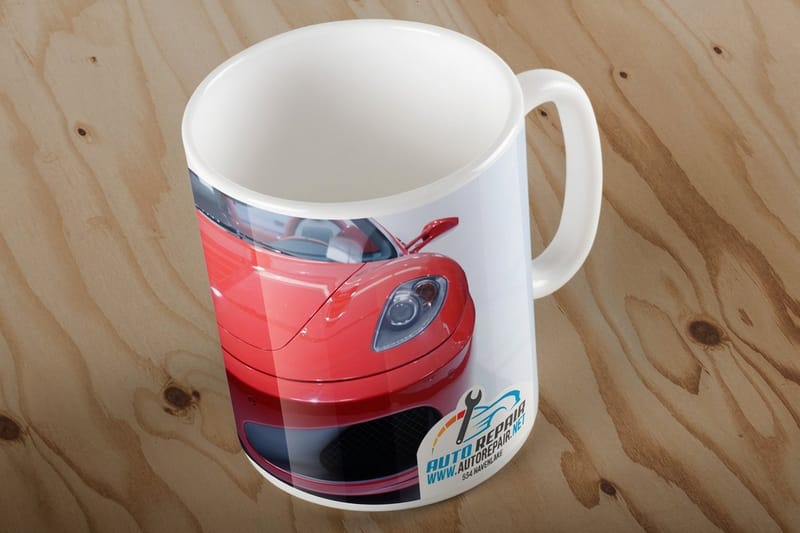
Mugs at $20.86. A mug has to beat the mug someone already likes, and that is a matter of the handle, the weight and the glaze more than the print. Design for the wrap: the handle interrupts the artwork, so put the mark on one side and let the other side carry a single line rather than trying to run a continuous pattern all the way round. There is a walkthrough in how to design your own mug.
T-shirts at $21.96. The rule that separates worn merch from unworn merch is simple. Design the shirt someone would buy, then put your name somewhere small. A shirt that is only a logo blown up to twelve inches is a uniform, and people do not wear uniforms voluntarily. Print method matters at scale too, which the DTG versus embroidery comparison sets out.
Magnets, keychains, stickers and coasters
Magnets at $19.68. The best-value item on this list, because the fridge door is permanent and a magnet has to fail badly to be removed. Give it a reason to stay beyond your logo: a bin collection calendar, a conversion chart, an emergency number. Making custom magnets covers the stocks and sizes.
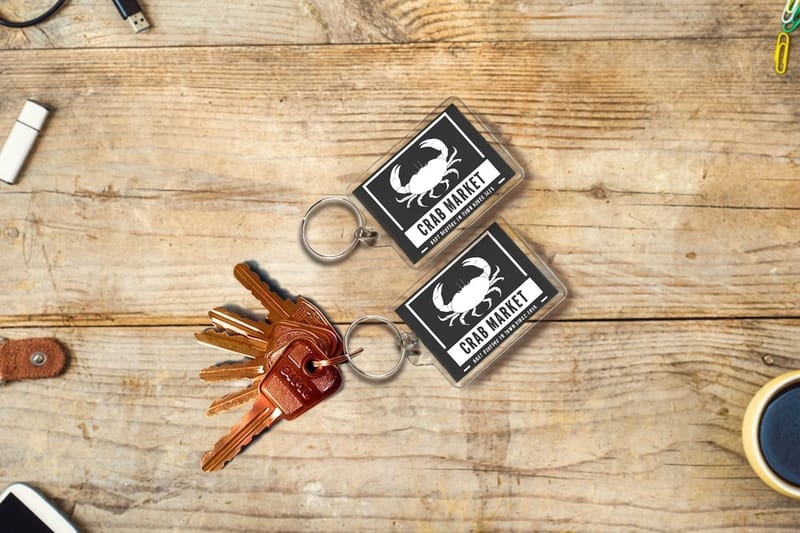
Keychains at $53.55. Highest daily contact of anything here, and the hardest sell, because a keyring is already full and people are protective of it. It works when the key comes with the keychain, which is why dealerships, gyms and letting agents get so much out of them. Acrylic prints full color, engraved metal survives longer and looks more considered.
Stickers at $29.16. The only item on the list people ask for. A sticker gets applied because the recipient likes the design, so the design has to stand alone as a design. Die-cut to the shape, not a rectangle with white edges. Ten ways to use logo stickers has the placements worth planning for.
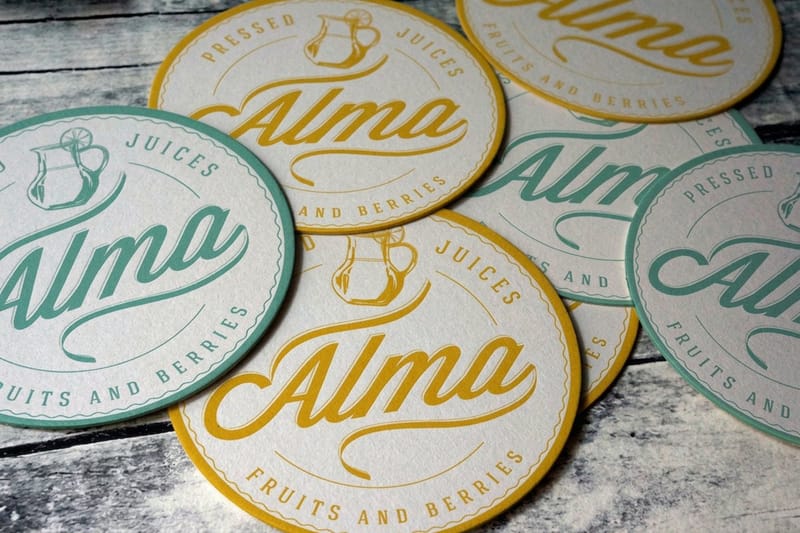
Coasters at $10.98. Cheapest per unit, and honest about it. A pulpboard coaster absorbs condensation and lasts one busy night, which is exactly right for a launch, a beer festival or a tasting room, and wrong for anything you want to be remembered in six months. For a bigger run, the Vistaprint coasters alternative printed factory-direct compares the two on price and stock.
Trends worth following, and one worth ignoring

Promo trends move slowly, because the objects themselves barely change. What shifts is the standard people apply to them, and in 2026 that standard is retail. The item is judged against what a buyer would pay for in a shop, not against other freebies.
Four shifts are worth building into a plan this year. The fifth is worth skipping.
Fewer items, better ones
Budgets that used to buy 1,000 cheap units now buy 250 good ones, handed to people chosen on purpose. This is the single most useful change in the category. It also changes how you order: smaller runs, more often, tied to a specific event rather than a warehouse pallet ordered once a year.
Merch that stands alone as design
The gap between promo apparel and merch people buy has closed. Brands print shirts with an actual graphic, a joke, a local reference, and the logo sits on a sleeve or a back neck. If a stranger would wear it without knowing the company, it works. Pick the blank from our custom T-shirts before you brief the artist. How brands use language on merch is a decent read on where the line sits between current and try-hard.
Materials you can name
Recycled and organic stock is now expected on bags and apparel rather than being a premium upsell. Say what the material is on the product itself. A vague sustainability claim printed on an item nobody can identify does more harm than saying nothing, and it is the fastest way to be accused of greenwashing by your own customers.
Kits instead of single items
Onboarding boxes and event kits keep growing, because three coordinated pieces feel like a gift while one feels like a handout. A tote, a mug and a sheet of stickers in a printed box costs less than most people assume and lands far harder. Match the finishes across all three or it reads as leftovers, which is where branded office supplies and event planning overlap neatly.
The one to skip: novelty tech
Cheap branded electronics age badly and reflect on you when they do. A charging cable that frays or a power bank that holds nothing after a year is a daily reminder that your company bought the cheap one. If the budget stretches to good tech, it is not really promo any more, it is a gift, and it needs a gift budget.
Matching the product to the audience
The same item lands differently depending on who receives it. A keychain is perfect at a car handover and slightly insulting at a supplier meeting: a dealership can order 25 for $53.55 and hand one over with every set of keys, while a supplier gets more from a single mug at $20.86 or one 14.5" x 16" cotton canvas tote at $22.73. Work down this list and pick by relationship rather than by budget.
- Existing customers. Something with a fixed home. Magnets on the fridge, a mug on the desk. You are keeping a name warm between purchases, not making a first impression.
- Event attendees. A tote they need on the day, so it gets used before they have decided whether to keep it. Fill it with the rest of the collateral and it walks out of the venue full.
- Staff and teams. Apparel, but only with a design people would choose. Ask before you order sizes. A shirt in the wrong size never gets worn no matter how good the print is.
- Trade and B2B contacts. Keychains and coasters land badly here. A quality mug or a well-made tote works, because the recipient reads the item as a signal of how you run your own business.
- Local walk-in trade. Magnets and stickers. Cheap per unit, permanent placement, and both are made for a business that wants to be remembered by postcode rather than by industry.
Quantity and price
Tote bag pricing and specs
Live configurator numbers, where the per unit cost steps down as the run grows.
| Quantity | Price Per Unit | Total |
|---|---|---|
| 1 | $22.73 | $22.73 |
| 5 | $16.67 | $83.36 |
| 10 | $10.99 | $109.88 |
| 15 | $10.10 | $151.56 |
| 20 | $9.79 | $195.78 |
| 25 | $9.25 | $231.14 |
You can also earn coins on every order and redeem them against future printing, which stretches a merch budget across more of the year.
Designing artwork that survives a promo item
A logo that looks fine on a business card can fall apart on a tote. The print area is wider, the surface is textured, and the viewing distance is three meters rather than thirty centimeters. Five habits fix most of it.
- One color, done properly. A crisp single-color mark on a mid-weight item beats a full-color print on a thin one. Ink coverage does not rescue a cheap blank.
- Send vectors, not screenshots. Promo items print at sizes a logo was never tested at. A vector file scales; a 72 DPI PNG pulled off a website turns into fuzzy edges on a mug.
- Respect the print area. Every item has a fixed window: the flat panel of a tote, the side of a mug away from the handle, the front face of a coaster. Design inside it rather than shrinking artwork to fit.
- Keep contrast high on fabric. Dark ink on a light bag or light ink on a dark tee. Mid-tone on mid-tone disappears at three meters, which is the distance the bag will usually be seen from.
- Drop the URL, keep the name. People search a name. A long URL across the front of a shirt is the clearest sign that nobody thought about whether it would be worn.
Print it
Mugs, ready to wrap
Ceramic mugs with a full wrap print area, the easiest desk placement you can buy.
Start from a blank if you would rather not measure anything. 4OVER4.COM sizes its blanks to the exact print area of each item, so the artwork lands inside the safe zone the first time. Pull one from the blank template library, or start from a layout in the design template library and swap in your own marks. If you are printing apparel alongside the rest, the custom t-shirt guide covers what changes when ink meets fabric.
Ordering promotional products at 4OVER4.COM
Configure the item, upload artwork or a template, and check the free proof before anything prints. The proof is where wrap seams, print area overruns and low-resolution logos get caught, and it costs nothing to look at it properly. Order the first batch small enough to see the item in real use, then reorder once you know the material and the placement hold up. Prices step down with quantity, so a reorder of a proven design is always better value than a large first run of an unproven one.
Explore more
More ways to print and promote
Standard keychains run 25 for $53.55 and mugs 1 for $20.86, both out in 5 business days.
Product Tote Bags Cotton, canvas and recycled stock from $22.73. Product Custom Mugs Full wrap printing on ceramic, from $20.86. 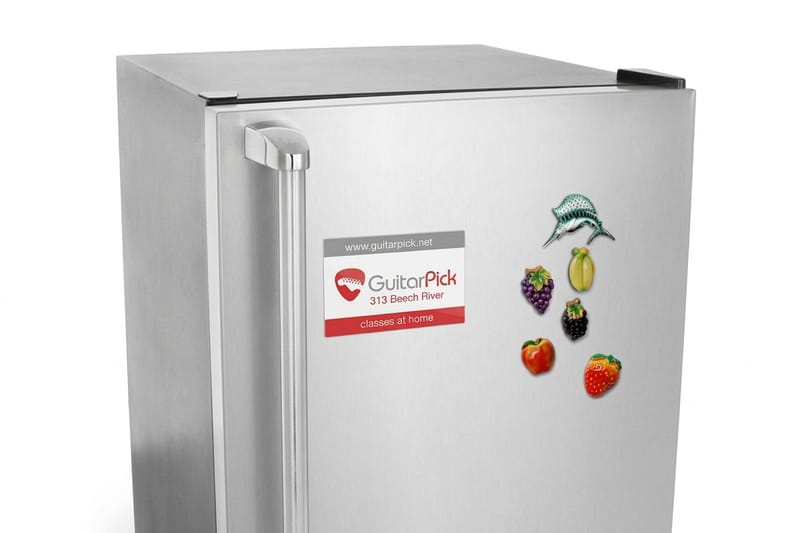 Product Custom Magnets The fridge door, held for years, from $19.68.
  Product Keychains Acrylic, PVC and engraved metal from $53.55.
  Product Drink Coasters Pulpboard coasters for venues, from $10.98.
  Category Promotional Products Every promo item we print, in one place.
 Wally picks the promo item people actually keep
Fit with the recipient beats unit price, every time
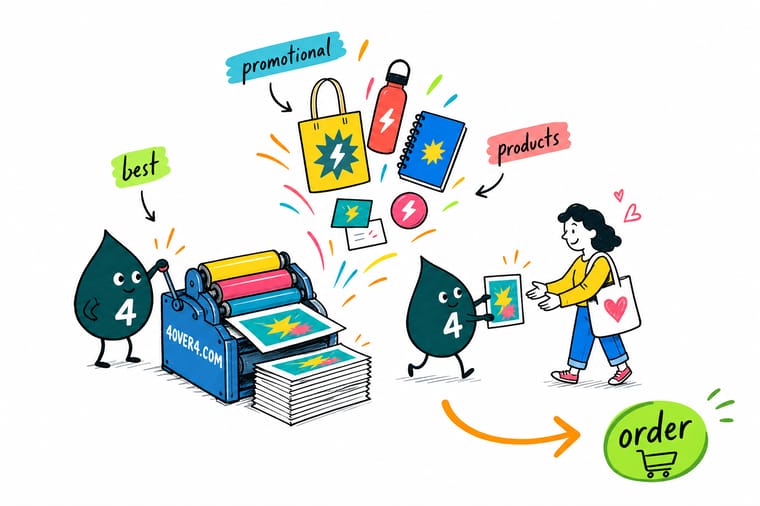
Pick the surface first: a magnet for the fridge at $19.68, a tote for the weekly shop at $22.73, a mug for the desk at $20.86. Send vector artwork, keep the mark inside the print area, use one strong color rather than a busy full-color print, and order a small first run so you can see the item in real use before you commit to the reorder.
Browse promotional products →What decides whether an item gets kept
Start with one tote or one mug, then reorder the winner
Pick the item, drop in your artwork or a free template, and count back from the event date: stickers print in 3 business days, mugs, t-shirts and keychains in 5, tote bags in 7.
Common questions about promotional products
What is the best promotional product for a small budget?
Custom magnets, at $19.68 to start. They claim the fridge door, which is the surface in a house that gets looked at most often, and almost nobody removes a magnet once it is up. Give it a second job beyond your logo, such as a bin collection calendar, a size conversion chart or an emergency contact number, and it survives even a kitchen clear-out. Drink coasters at $10.98 are cheaper still, but they are built for one busy night at a venue rather than for years of use, so match the item to how long you want to be remembered.
How many promotional products should I order for an event?
Order for the people you actually want to reach, not for the door count. A common mistake is buying one item per expected attendee, handing them out indiscriminately, and watching most of them get abandoned in the venue. A better split is a cheap item for everyone who stops at the stand, such as stickers, and a good item for the smaller number of conversations that go somewhere, such as a tote or a mug. That way the budget concentrates on people who will remember the conversation.
Are branded t-shirts worth it if nobody wears them?
They are worth it only when the shirt works as a shirt. If the front is a logo scaled up to fill the chest, it reads as a uniform and stays in a drawer. Print something a person would choose to wear, a graphic, a local reference or a line with some humour in it, then place your mark small on a sleeve or the back neck. The second issue is sizing: buying a standard size curve leaves you with leftover XS and 3XL, so ask for sizes before you order whenever the recipients are known, such as a team or a member list.
What file should I send for promotional product printing?
Send vector artwork, either an AI, EPS or PDF file with fonts converted to outlines. Promo items print your logo at sizes it was probably never tested at, and a low-resolution PNG pulled from a website shows every soft edge once it is on a mug or a bag. If you only have a raster file, send the largest original you have rather than a version exported for the web. Free blanks with the right print areas already marked are in the blank template library.
Can I mix promotional products into one branded kit?
Yes, and it is usually the stronger move for onboarding and client gifting. Three coordinated pieces feel like a gift, whereas one item feels like a handout, and the cost difference is smaller than most people expect once you are ordering the pieces anyway. The thing that makes or breaks a kit is consistency: use the same ink color, the same logo treatment and the same material family across every piece. Mismatched finishes make a kit look like leftovers gathered into a box.
