
25 Nonprofit Fundraising Event Ideas That Raise More Money


The fundraising events that raise the most money per hour worked are the small repeatable ones: give-back nights, trivia nights, pancake breakfasts and 5K runs, all sold on advance tickets so you know the headcount before the doors open. Galas, auctions and golf tournaments raise the biggest gross totals and cost the most to produce, so most organizations run one of those a year and three of the smaller ones around it.
Fundraising event formats at a glance
| Event format | Lead time | Volunteer load | Where the money comes from | Printed pieces it needs |
|---|---|---|---|---|
| Give-back night at a restaurant | 2 to 3 weeks | One volunteer | A share of the night’s covers | Nonprofit postcards, table tents |
| Trivia or bingo night | 4 weeks | Three to five volunteers | Table entry fee plus a bar tab split | Event tickets, raffle tickets |
| 5K run or walkathon | 3 to 4 months | A committee plus race-day crew | Registration plus peer-to-peer pledges | Event badges, tents, postcards |
| Silent or live auction | 2 to 3 months | A procurement team | Donated lots sold above cost | Bid sheets, numbered paddles, tickets |
| Gala dinner | 6 to 9 months | A committee plus paid help | Tables, sponsors, appeal from the stage | Event tickets, badges, programs |
| Golf tournament | 4 to 6 months | A committee plus a course contact | Foursomes and hole sponsorships | Badges, tee signs, event tents |
Lead times assume a volunteer committee rather than paid staff, so shorten them if you have a development team. You can order numbered event tickets in any size straight from the configurator.
Pick the event by cost per dollar raised
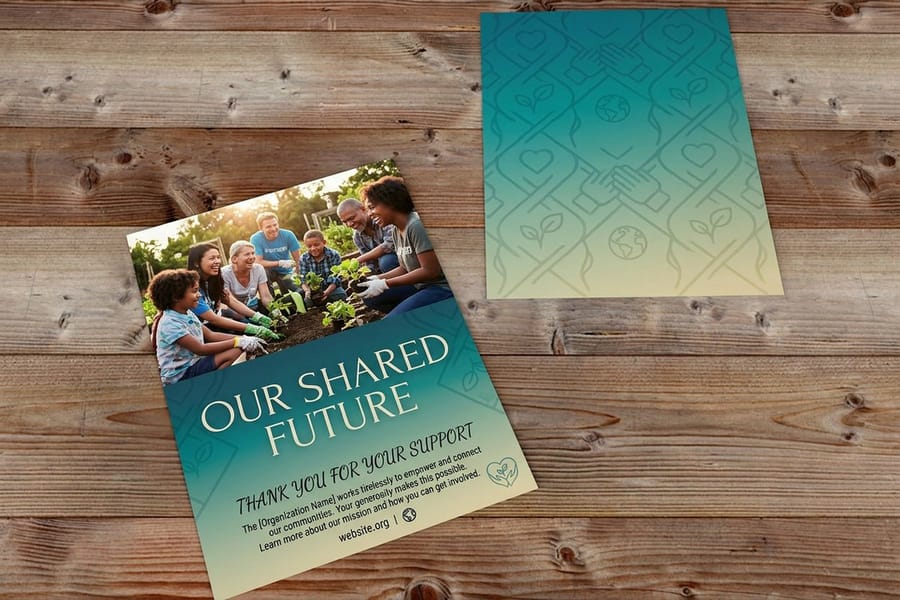
Before the idea list, one filter that saves a season of work: divide what an event will cost you, in cash and in volunteer hours, by what it will realistically bring in. A trivia night that costs a venue donation and twenty volunteer hours can net more per hour than a gala that eats a six-month committee, and the gala still ends up on the calendar because it is what boards expect.
That is the trade-off nobody prints on the fundraising checklist. Big-ticket events raise the largest gross number and the smallest number per hour worked. Small repeatable events raise less each time and keep raising it, and they build the mailing list that makes the big event work later. Most organizations need one of each, not five of either.
The second filter is who is already in the room. An event that asks your existing donors to show up again is a renewal; an event that brings strangers is acquisition, and acquisition needs a way to capture names. That is what the printed piece is for. A nonprofit postcard with a QR to a sign-up form turns a one-night crowd into a list you can mail next year.
What the printed pieces actually do
Three jobs, and each one is a different piece. Promotion gets people to buy in advance, which is the difference between planning for a known headcount and guessing. Admission controls the door and makes the money auditable, which matters when the audit happens. On the day, signage and badges stop volunteers from answering the same question two hundred times.
Skip any of the three and the gap shows up as work. No advance ticket means a cash box and a headcount argument. No badge means your board members cannot tell a first-time guest from a lapsed donor, on the one night of the year they have the chance to ask.
Print deadlines run ahead of everything else
Work backwards from the door. Save-the-dates land six to eight weeks out, the main invitation or postcard three to four weeks out, and tickets need to be in hand before the first person asks to buy one. Day-of items such as badges, signs and table numbers can be ordered late, but not with the guest names on them if the list is still moving.
Leave the guest count on badges until the last responsible moment, and print the generic pieces early. Our event signage planning guide lays out the full sequence, and the signs and placement guide covers where each sign has to stand to be read.
The 25 ideas, grouped by how much lift they take
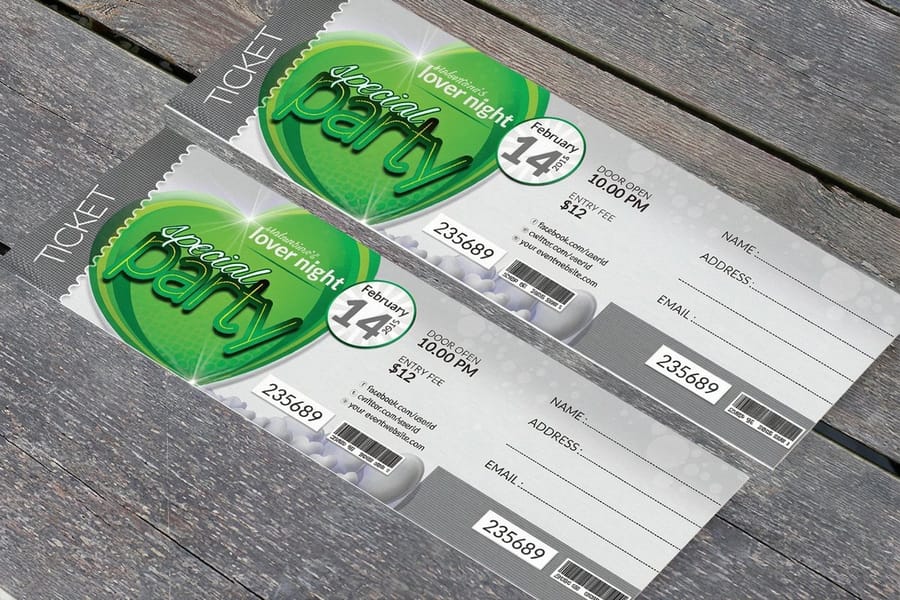
Every idea below names the print piece it needs, because that is usually the part left until the week of. They are grouped by lift: what one determined person can run, what needs a committee and a weekend, and what a board expects once a year.
Prices for the pieces are real and current. Nonprofit postcards start at $16.48, event tickets at $25.27, and event badges at $49.88, so the print budget for a small event is smaller than most committees assume.
Ideas 1 to 8: one person, a few weeks, no venue rental
1. Restaurant give-back night. A local restaurant gives you a percentage of the covers on a slow weeknight. Print postcards the diners have to hand over, because the restaurant needs a way to count your people against everyone else’s.
2. Pancake breakfast. Cheap ingredients, high margin, and a two-hour window that suits families. Sell tickets in advance through your board so you buy the right amount of batter.
3. Trivia night. Charge per table rather than per head and you sell eight seats with one ask. A numbered event ticket per table keeps the seating honest when more teams show up than registered.
4. Bingo night. The card sales are the fundraiser, not the door. Check your state rules on gaming before you set it up, then print the door tickets and let the cards do the rest.
5. Bake sale with pre-order cards. Pre-orders turn a hope into a number. A postcard with a tear-off order form outsells a sign-up sheet at the back of the room by a distance.
6. Movie night in a park. Free to attend, monetized on concessions and a suggested donation. You need a license for the film, and you need signage people can read from thirty feet in fading light.
7. Plant or book sale. Donated stock, near-zero cost of goods, and a natural repeat every spring. Postcards to the same streets every year do most of the work.
8. Dress-down day at a partner employer. Staff pay a few dollars to skip the dress code. It costs you nothing but the ask, and a stack of postcards in the break room is the whole campaign.
Ideas 9 to 17: a committee and a weekend
9. 5K run or walkathon. Registration is the floor and peer-to-peer pledges are the ceiling. Runners need bib numbers, volunteers need badges, and the start line needs a tent that reads as your organization in every photo taken that morning.
10. Silent auction. Runs alongside another event and costs almost nothing to add. Print bid sheets with the item number, the retail value and the minimum raise, because handwritten sheets are where auction money quietly disappears.
11. Chili cook-off. Entrants pay to compete, guests pay to taste and vote. Tasting tickets double as ballots, which is the neatest print trick in community fundraising.
12. Craft fair with paid vendor booths. Your income is booth fees, collected before a single shopper arrives. Vendors want a numbered map and clear aisle signage more than they want anything else you can offer.
13. Car wash. Youth-group standard, and it still works because it is visible from the road. Pre-sold wash tickets from the week before beat drive-up traffic on the day, every time.
14. Talent show. Performers bring their own audience, which is the point. Sell reserved seats with numbered tickets and charge a little more for the front rows.
15. Rummage or yard sale. Highest effort per dollar on this list, and worth running anyway when a donor is clearing a house. Signage and postcards to the surrounding blocks are the entire marketing plan.
16. Wine or beer tasting. A local producer pours, you sell the glass. Guests need a durable badge or a wristband that shows they are of age and paid, because paper tickets do not survive a spilled tasting table.
17. Cornhole or pickleball tournament. Team entry fees plus sponsor signs on each court. Brackets printed large and posted at the courts save your volunteers from being asked who plays next for four hours straight.
Ideas 18 to 25: the annual push
18. Gala dinner. Tables sell better than seats, and sponsors sell better than tables. Print the ticket as something a guest keeps, because a keepsake ticket is a reminder on a fridge for a year.
19. Live auction. Six to eight strong lots beats twenty weak ones, and a professional auctioneer usually pays for themselves. Numbered paddles and a printed lot list are non-negotiable.
20. Benefit concert. A local act with a following, a venue that donates the room. Tiered ticket prices printed in different ink colors let a volunteer read the tier across a dark doorway.
21. Golf tournament. Foursomes plus hole sponsorships, and the sponsorships are where the margin lives. Every hole needs a sign, the registration desk needs a tent, and every player needs a badge with their tee time on it.
22. Casino night. Chips are bought with donations and cashed for raffle entries rather than money, which is what keeps it legal in most places. Confirm the rules in your state first, then print the chip vouchers and the entry tickets.
23. Fashion show. Local boutiques lend the clothes and bring their customers. Sell square tickets that look like an invitation rather than a raffle stub, since the ticket sets the tone of the evening.
24. A giving day with a physical hub. An online push works harder when there is somewhere to stand. A tent in a plaza with a running total on a board turns a hashtag into something passers-by can see.
25. Sponsored endurance ride or hike. Long lead time, high per-participant totals, and the strongest peer-to-peer results on the list. Riders need numbered bibs, checkpoints need signage, and the finish needs a photo backdrop people will post.
What each print piece costs and when to order it
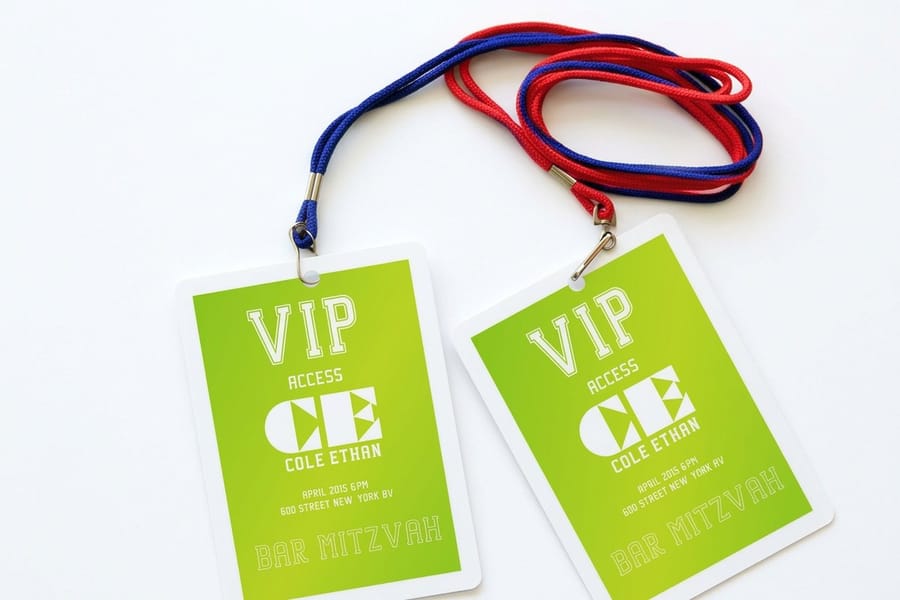
Four pieces cover almost every event on the list: a postcard that promotes, a ticket that admits, a badge that identifies, and a tent or sign that marks the spot. The rest is variation.
Postcards are the cheapest way to reach people who are not on email, which for most community organizations is the older half of the donor base. Tickets pay for themselves the first time somebody asks whether a table was paid for. Badges only start earning above roughly 75 guests, the point where people stop recognizing each other and your board loses the ability to work the room.
Order in that sequence and the costs land in the order your cash flow can take them. Postcards go first and are the smallest line. Tickets follow once the price is set. Badges and event tents come last, and the tent is the only one that survives to next year.
Paper stock, and where it matters
For a ticket that gets torn at a door and thrown away, 14pt is plenty. For a gala ticket that doubles as an invitation and sits on a fridge, 16pt with a matte finish feels like it cost something, and that perception is doing quiet work on the ask. Uncoated stock takes a pen, which matters for anything a guest has to write on, such as a bid sheet or a raffle stub.
The one place to spend up is anything that goes outdoors or gets handled all day. A paper badge on a lanyard is soft by mid-afternoon; a plastic badge survives the whole weekend and can be collected and reused next year, which changes the maths on a recurring event.
Numbering, and why raffles need it
Sequential numbering is what makes a raffle or a paid entry auditable. It lets you reconcile the number sold against the money taken, and it settles disputes at the prize table without anyone taking anyone else’s word for it. Ask for numbering when you order rather than trying to add it by hand.
Raffle rules are set by the state, not by us, and they differ enough that a permit is required in some places and prohibited in others. Check before you print, because the print is the easy part to redo and the license is not.
Ticket pricing and specs at 4OVER4.COM
Ticket pricing moves with size, stock, finish and quantity, and the per unit cost drops as the run grows. The numbers below come straight from the live configurator, so a treasurer can size the print line before the committee votes on it.
Quantity and price
Event ticket pricing and specs
Real configurator numbers, where a larger run drops the per unit cost enough to make numbering worth adding.
| Quantity | Price Per Unit | Total |
|---|---|---|
| 50 | 50.5¢ | $25.27 |
| 100 | 42.8¢ | $42.84 |
| 200 | 25.8¢ | $51.62 |
| 300 | 20.1¢ | $60.42 |
| 400 | 17.3¢ | $69.20 |
| 500 | 15.6¢ | $77.99 |
You can also earn coins on every order and redeem them against future printing, which stretches a fundraising budget a little further across a season of events.
Stock and finish for tickets, badges and postcards
Stock decides how the piece feels in a hand, and feel does quiet work on an ask. A 14pt ticket is right for anything torn at a door; 16pt with a matte finish is what a gala ticket should be, because it reads as an invitation and stays on a fridge. Uncoated stock takes a pen, which is the deciding factor for bid sheets, raffle stubs and anything a guest writes on.
Print it
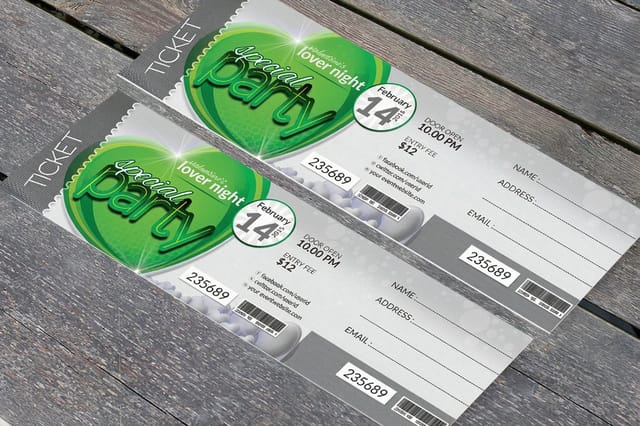
Event tickets, ready to sell
Preset sizes with sequential numbering, the fastest way to get advance sales moving.
Badges follow the same logic in a harder environment. Paper on a lanyard is soft by mid-afternoon and unreadable by the evening, so a one-day indoor event can use paper and anything longer or outdoors should not. Postcards are the opposite problem: they are cheap enough that the temptation is to under-design them, and a postcard that only carries a date raises less than one that says in a sentence what the money does. For more on making that sentence land, read our postcard ideas and examples guide, and if the event includes a merchandise table the branded merchandise guide covers what sells.
Which events suit which organizations
The right event depends less on the idea than on who your supporters already are, so here is a breakdown by organization type.
- Community food banks and shelters. Repeatable low-cost events beat one annual gala. A pancake breakfast plus a spring plant sale, both promoted on postcards to the same streets each year, builds the list the gala later depends on.
- Schools and PTAs. Trivia nights, fun runs and craft fairs, all sold on advance tickets so the volunteer count matches the turnout. Numbered tickets stop the perennial argument about who paid.
- Faith communities. Concerts, dinners and rummage sales, promoted from the pulpit and reinforced with a postcard people take home. Banners for the building carry across the whole season rather than one night.
- Animal rescues. Adoption-day tents plus a photo backdrop earn more social reach than paid promotion. Badges separate handlers from the public, which matters when live animals are in the room.
- Health and research charities. Endurance events and giving days with a physical hub. Peer-to-peer pledges carry the total, and printed bibs and checkpoint signage are what makes the day feel like a real race.
Ticket and badge blanks at printed size
If you are not starting from scratch, templates speed everything up. 4OVER4.COM sizes its blanks to exact product specs so your artwork lines up with the cut lines and bleed, which matters more on a ticket than on almost anything else because a numbered stub has a perforation to design around. Grab a print ready blank from the blank template library with bleed and trim already marked.
Start fast
Ticket and badge blanks at printed size
Ticket design templates and exact size blanks so your artwork lands inside the cut line.
Wally builds the print kit for a fundraiser
Four pieces cover almost every event on this list
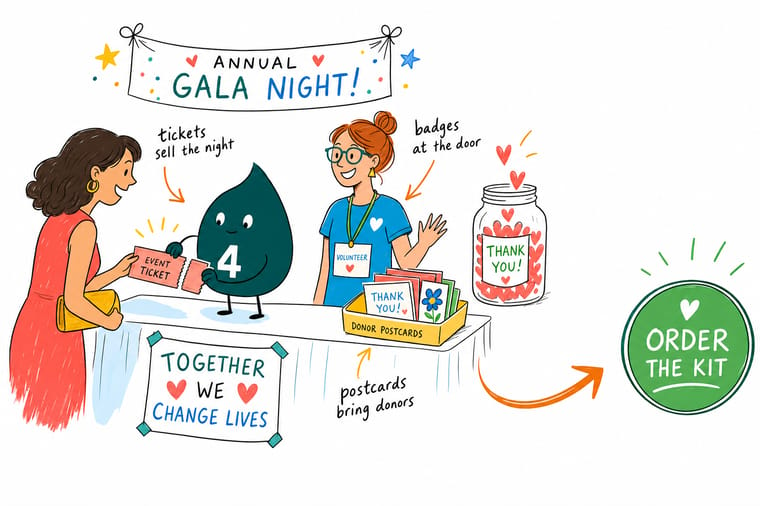
Mail a nonprofit postcard six weeks out with one sentence on what the money does, sell numbered event tickets in advance so you cater to a real headcount, print badges once you pass about 75 guests, and put a branded tent over the registration desk so every photo from the day carries your name. Order the postcard first and the badges last, after the guest list stops moving.
Order event tickets →What separates a profitable event from a busy one
Print decisions that lift the total
- Put the ask on the piece. A postcard that says what the money does raises more than one that only says when the event is. One concrete sentence beats a mission statement.
- Price the ticket where it sells out. A sold-out room at a lower price raises more than a half-empty room at a higher one, and it is a far better story for next year.
- Number everything you sell. Sequential numbers reconcile the cash box against the count and settle disputes at the prize table without an argument.
- Make the badge readable across a table. First name large, organization small, role smaller still. A badge nobody can read at conversational distance is a lanyard.
- Design the ticket to be kept. A ticket that looks like an invitation stays on a fridge and reminds someone of you for a year. A stub goes in the bin at the door.
Explore more
More ways to print and promote your event
Event tickets run 50 for $25.27 and badges 25 for $49.88, both out in 5 business days.
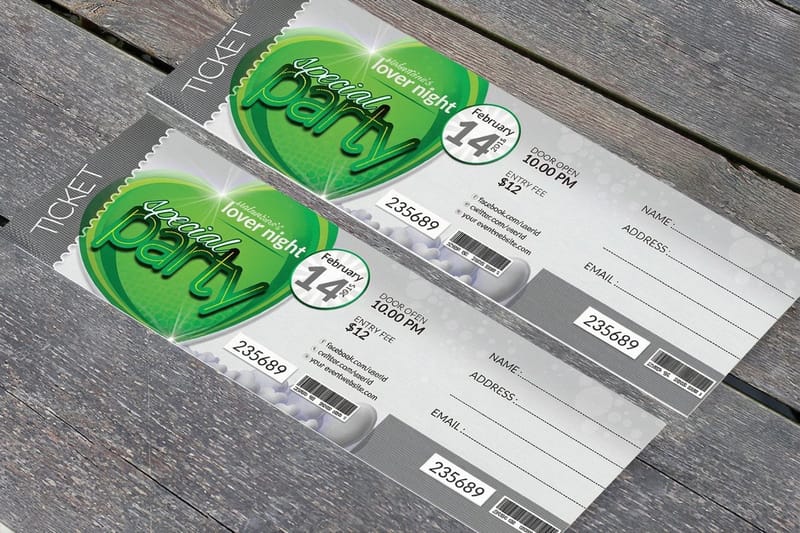 Product Event Tickets Numbered admission tickets for paid-entry fundraisers.
 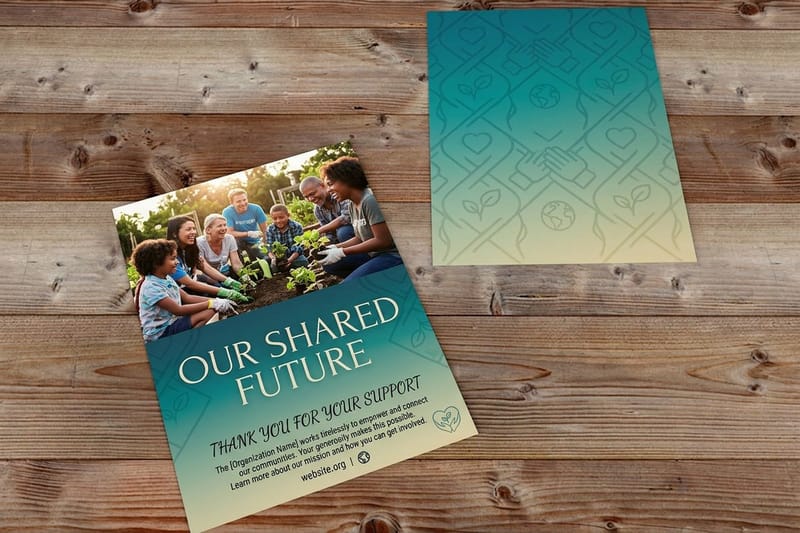 Product Nonprofit Postcards Mail the ask and the date to the streets you serve.
 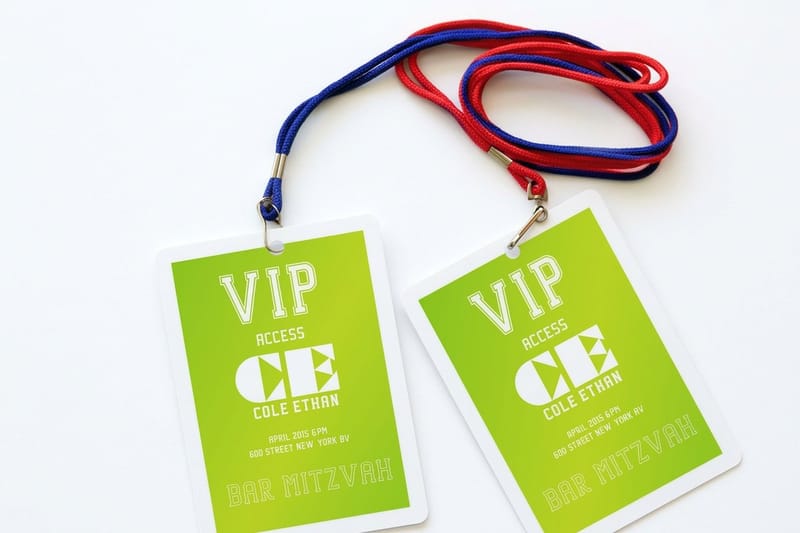 Product Event Badges Tell guests, volunteers and board members apart on the night.
 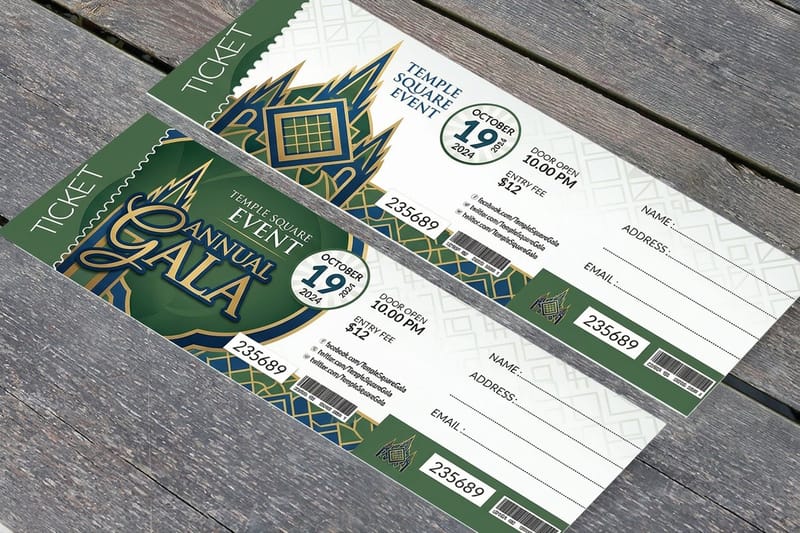 Product Square Event Tickets A ticket shaped like an invitation, for galas and shows. Category Event Ticket Printing Every ticket size, stock and numbering option.
 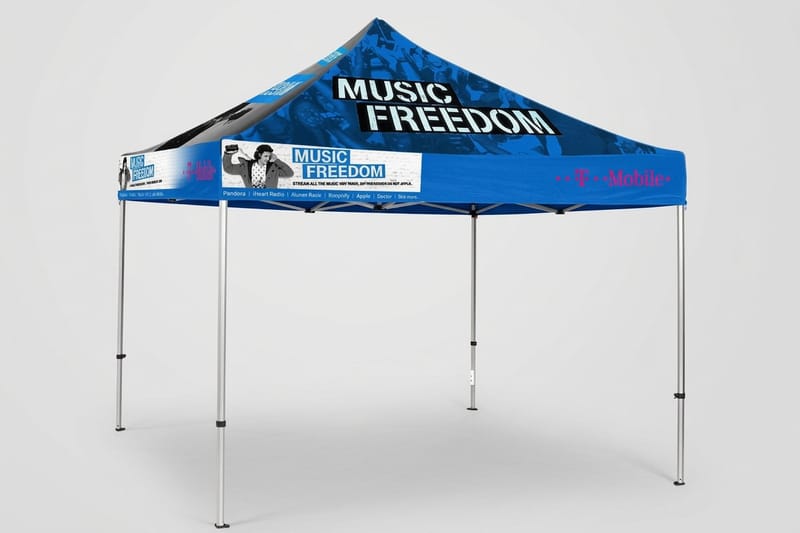 Category Event Tent Printing The tent that marks your start line and your registration desk.
 Planning something beyond a fundraiser? Read 7 unique corporate event ideas, church banner ideas for worship and events, guest book ideas for weddings and events, or business card ideas for event planners. If the event has a seasonal gift component, the holiday packaging ideas guide is the next stop, and volunteer identification runs through event badge printing.
Ready to print your event kit?
Pick your ticket size, drop in your design or a free template, and 4OVER4.COM prints it sharp on premium stock, as fast as your event date needs.
Common questions about fundraising events
Which fundraising event makes the most money for a small nonprofit?
Measured in gross, a gala or a golf tournament. Measured in net per volunteer hour, which is the number that should decide your calendar, a trivia night, a restaurant give-back night or a pancake breakfast usually beats both. Small events cost a venue donation and twenty or thirty volunteer hours, and they can run three or four times a year without exhausting the people who run them. The practical answer for most organizations under a million dollars of revenue is one annual signature event plus two or three small repeatable ones, because the small ones build the mailing list the big one sells tables to.
How much should we charge for a fundraiser ticket?
Price it where the room fills. A sold-out room at a lower price raises more than a half-empty room at a higher price, and it gives you a waiting list to point at next year. Cover your direct cost per head with the ticket, then plan for the actual fundraising to happen inside the event through a raffle, an auction or an appeal from the stage. Selling tables rather than individual seats raises the average transaction and takes one ask to fill eight chairs.
Do we still need printed tickets if we sell online?
Yes, for two reasons. A physical ticket is what a volunteer at the door can check in a second without a phone, a signal or an app, and door queues are where a good event turns into a bad first impression. The second reason is that a well-printed ticket is a keepsake and a reminder. Sell online, mail or hand out the printed ticket, and use sequential numbering so the count reconciles against the money. Event tickets at 4OVER4.COM start at $25.27, which for most events is a smaller line than the door signage.
Are name badges worth printing for a fundraising event?
Above roughly 75 guests, yes. That is the point where people stop knowing each other by sight and your board members lose the ability to tell a first-time guest from a lapsed major donor, on the one evening a year they have the chance to have that conversation. Below 75, a badge is an expense with no return. Print first names large enough to read across a table, keep the organization line small, and use a plastic badge for anything running more than one day since paper on a lanyard is soft by the afternoon. Event badges start at $49.88 and plastic event badges at the same price.
How far ahead should we order the printed materials?
Save-the-dates six to eight weeks before the event, the main postcard or invitation three to four weeks out, and tickets in hand before the first person asks to buy one, which is usually earlier than the committee expects. Day-of items such as badges, table signs and directional signage can be ordered late, with one exception: anything carrying guest names has to wait for the list to stop moving, so budget a few days between the RSVP deadline and the print order. Free proofs before the run are worth the extra day when a date or a time is printed on the piece.
