
The 8-Piece Hearing Aids New Customer Kit That Fills Screenings
Hearing care has a marketing advantage most industries lost years ago: its audience still reads the mail. Here are the eight print pieces that fill a hearing clinic's schedule, from the screening invitation in the letterbox to the recall card that keeps clients for a decade.
The hearing aids new-customer kit is eight print pieces built around the free screening: direct mail postcards, flyers, door hangers, and rack cards invite it, large-type brochures and specialist business cards win the family decision that follows, and appointment cards with recall postcards keep every fitted client coming back for years.
The picks
Eight pieces, from $16.48 recall postcards to a $290.41 door hanger run
Lead with the $18.94 screening mailer. The eight are numbered in the order a client relationship builds, from that invitation to the $16.48 recall postcard, each priced live from the configurator. Read on for what each piece does.
Design and print help
One clinic brand, readable everywhere, nothing set under 14 point
This audience rewards clarity and large type. The services below are open to every 4OVER4.COM order, not built for this kit alone: direct mail services print, address and mail the screening invitations in one job, and the online designer locks the clinic logo and colors across all eight pieces.
The rule that holds the whole kit together: 14 point is the floor anywhere on a piece, body copy sits at 16 to 18 point, and the offer, the address and the phone number run larger again. Dark text on plain light stock, no reversed white type over a photograph, short lines, a plain typeface with open letterforms. Somebody reading at arm length in a dim hallway should find the number without hunting for it, and that single decision does more for response than any other choice on the page.
How they work together
Invite the screening, win the household, keep the client
Each piece owns a stage of the journey from first invitation to loyal client. Print the whole sequence and no stage goes quiet.
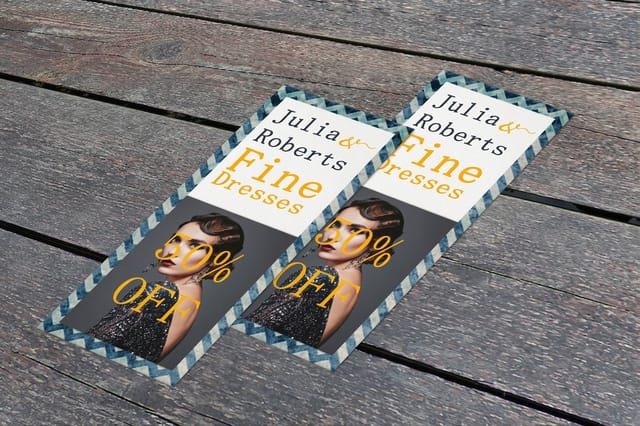
Mailed invitations carry the free hearing test to the households most likely to need it, flyers announce screening events at centers and pharmacies, door hangers sweep the streets around the clinic, and rack cards hold the pharmacy and senior-center counters between events.
The brochure explains devices, styles, and financing in large calm type for the whole household, and the specialist's card travels through the physicians and family members who push the decision.
Appointment cards put fittings, adjustments, and annual tests in writing, and recall postcards bring fitted clients back on schedule, where the long-term value of hearing care lives.
1. Direct mail postcards: the screening invitation that fills the book
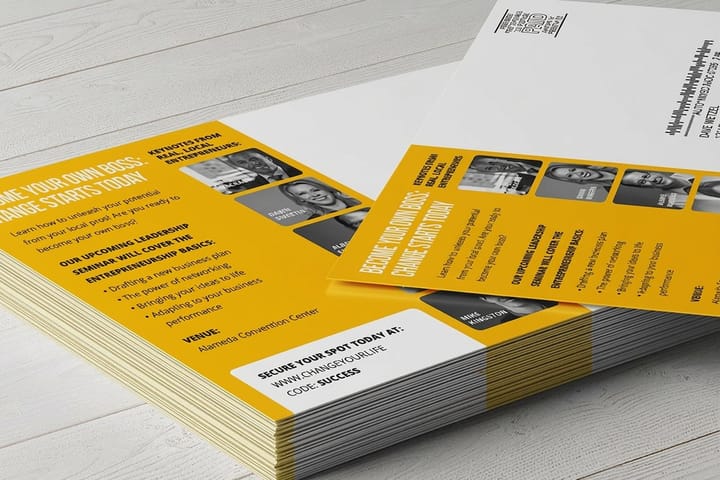
Hearing care runs on one proven play: mail a warm, plain-spoken invitation to a free hearing screening to the households most likely to need it, and let the clinical visit do the convincing. The audience reads its mail, trusts what arrives on paper, and responds to an offer that costs nothing and commits nothing.
Everything else in the hearing clinic kit exists to catch the people this one piece reaches, which is why the direct mail postcard is printed first and ordered in the largest quantity. Get the list, the offer and the type size right on this card and the other seven pieces have somebody to talk to.
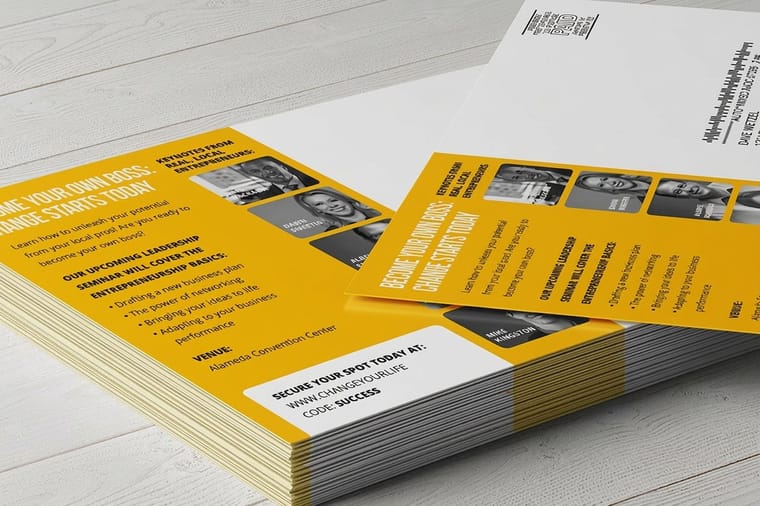
Write it in large type with zero cleverness: the offer, the dates, the address, the phone number. Target by neighborhood and age using a proper list; the walkthrough in how to build or rent a mailing list covers the options, and these five steps take the card from design to letterbox. Print direct mail postcards in a size that stands out in the stack.
Mail monthly, not once. Hearing loss is gradual, and the card that gets ignored in March gets answered in September.
Plastic cards and durable mailers for hearing clinics
Paper does the inviting, plastic does the remembering. When the offer is a free screening a household will act on in a month or two rather than today, print the keeper piece on plastic and it survives the fridge door, the wallet and the kitchen drawer instead of the recycling bin. Plastic discount cards print at credit-card size on rigid 30 mil stock, the same gauge as a bank card, so the offer, the clinic address and the phone number stay readable after a year of handling. Ask for sequential numbering when you want to know which mailing a redeemer came from.
For clients who carry keys everywhere, plastic cards with a key tag break into a wallet card plus a snap-off tag, so the clinic number rides on the keyring of the client and on the keyring of the family member who drives them to appointments. Mail the plastic piece inside a paper carrier, or hand it over at the end of the screening so the follow-up number never has to be looked up again.
Keep the paper and the plastic on one design. Run the volume invitation as direct mail postcards at 6 x 9 so it lands face-up on the stack, then reserve plastic for responders, referral partners and the recall list, where the higher cost per piece is repaid by a card nobody throws away.
2. Recall postcards: the relationship, kept on schedule
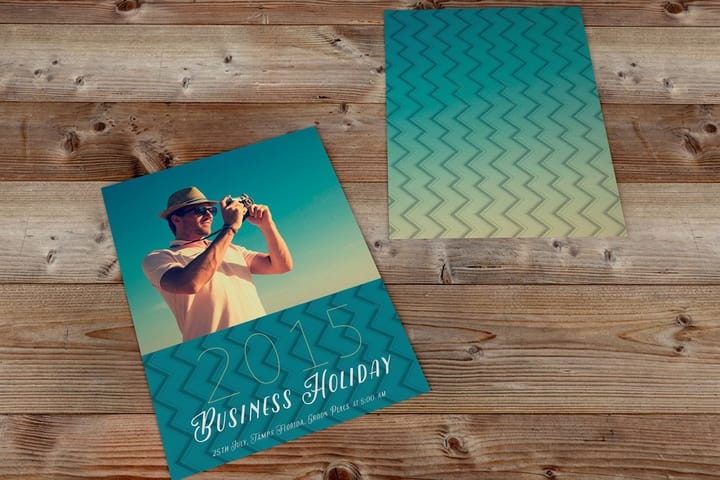
The most profitable list a hearing clinic owns is its own fitted clients. Devices need adjustments, ears need annual tests, and technology improves every few years. The recall postcard keeps that entire aftercare calendar running: a friendly card at the twelve-month mark, a clean-and-check invitation in the quiet season, an upgrade conversation when a device generation ages out.
Because the audience already trusts you, the card can be simple: the reminder, the reason, the number. The direct mail response benchmarks show how strongly mail to an existing list performs compared to any cold channel. Keep a standing order of standard postcards so the recall rhythm never waits on a print run.
Some fitted clients pin the card to a board, and some put it in a wallet and keep it there for years. For that second group print the recall piece as a durable plastic card at credit-card size on 30 mil stock: clinic name, direct line, and a blank line for the next test date written in by hand at the counter. Paper is right for the monthly mailing because it costs less per drop, plastic is right for the client you intend to keep through several device generations, because it is still legible on the day they finally need it.
If the household juggles keys more than paperwork, the plastic card with key tag puts the same number on the keyring, which is the fastest thing to reach for when a device starts whistling on a Tuesday morning.
A fitted client kept for a decade is worth several new ones. This card is the cheapest piece of that decade.
3. Brochures: the kitchen-table explainer for the whole family
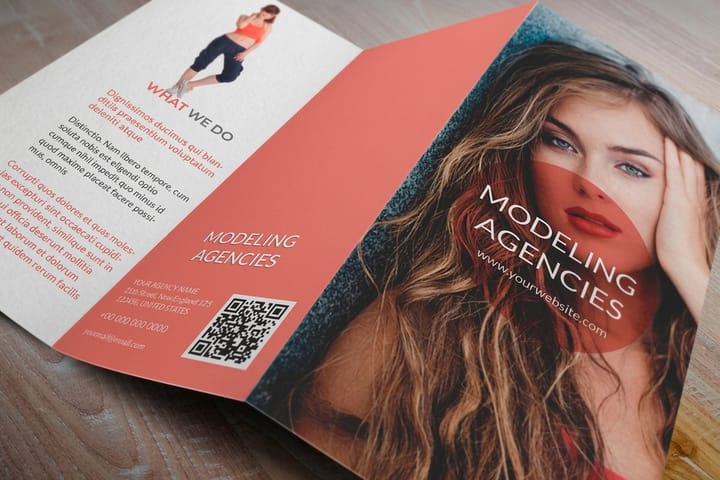
Hearing aids are a family decision made slowly. The client hesitates, the spouse encourages, the adult children research from three states away. The brochure is the one piece that serves the entire household: device styles compared plainly, what a screening and fitting involve, financing and insurance answered honestly, all in type large enough to be read comfortably.
Give one to every screening visitor and mail one with every inquiry response. The same piece racks in physician offices and pharmacies where referrals start. The healthcare marketing benchmarks confirm what this industry knows: informative material outperforms promotion with health decisions. Print standard brochures in a rack-friendly fold with your largest comfortable type.
The brochure keeps working after the visit ends, in the exact conversations where the decision actually gets made.
4. Appointment cards: fittings and follow-ups, in writing
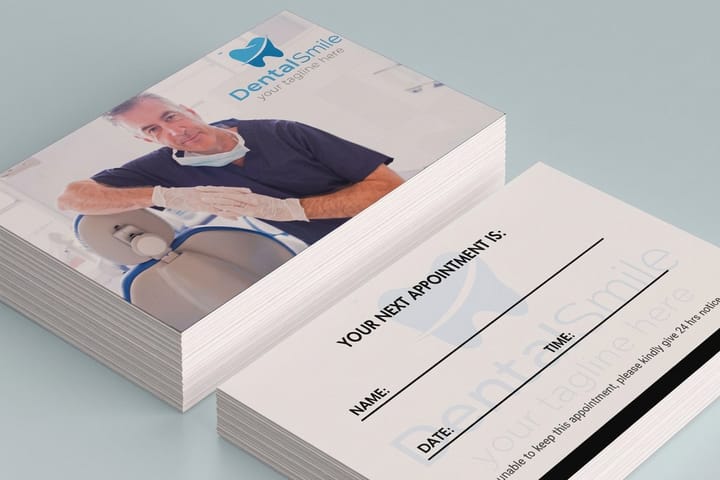
A hearing care relationship is a sequence of appointments: the screening, the fitting, the two-week adjustment, the annual test. Each one missed is revenue lost and outcomes worsened. The appointment card puts every next step in writing, in the wallet, in type the client can read at arm's length, which no phone reminder reliably achieves with this audience.
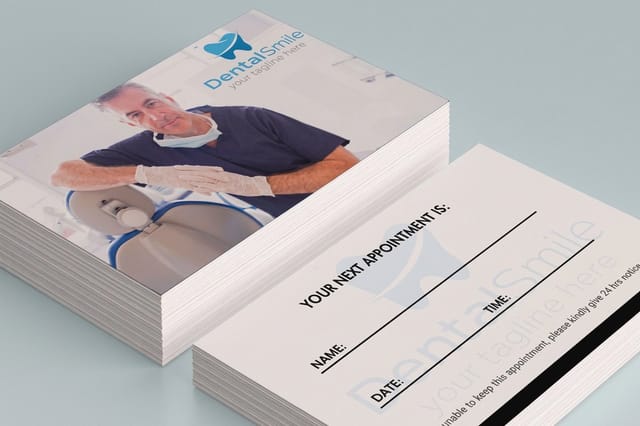
Design for legibility first: clinic name, phone, and a generous ruled space for the date and time, written by hand at the desk. Print the cancellation and rescheduling number on the back in the same large type. Browse formats at appointment cards printing and configure the standard card to match the clinic brand.
Hand the card over with the words the next one is booked. Commitment made physically is commitment kept.
5. Business cards: the specialist in every referrer's drawer
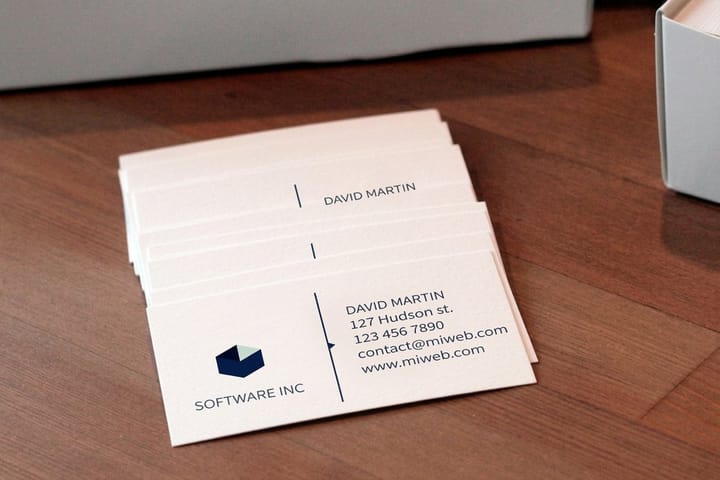
Hearing clients arrive through a chain of quiet recommendations: the physician who notices at a checkup, the pharmacist asked about ringing ears, the friend whose devices changed their life, the adult child who did the research. A specialist's card in each of those hands is what turns the recommendation into a phone call.
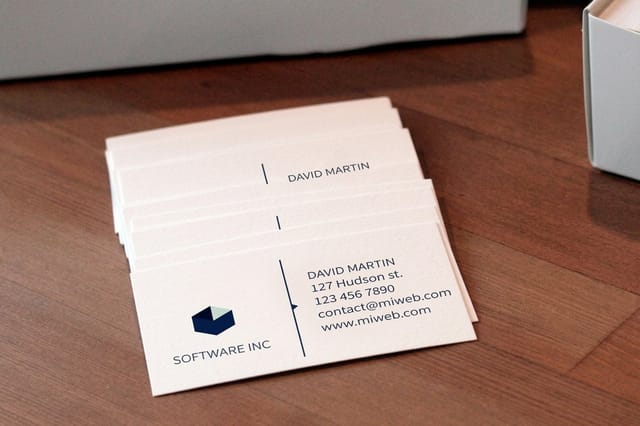
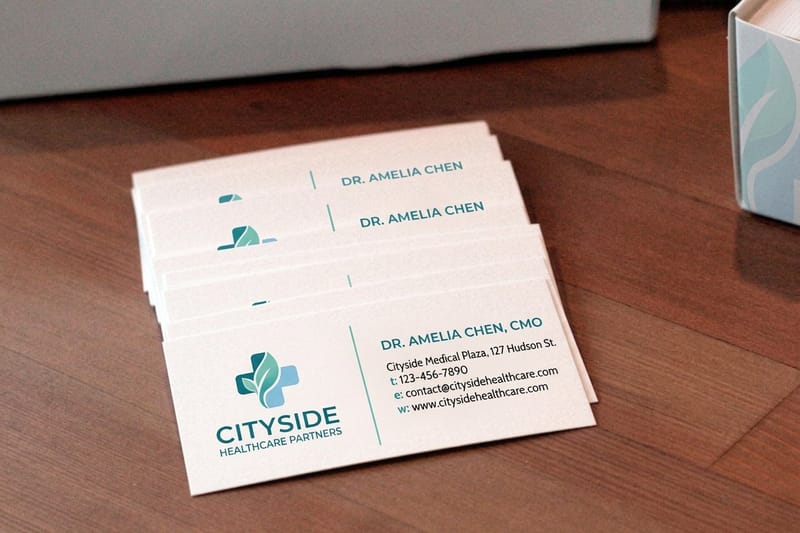
Print cards for every provider and the front desk. Name, credentials, direct line, and the clinic number in large clear type, with the address and parking note on the back, details that matter to this clientele. The layout rules in business card format tips keep it clean. Order standard business cards in the same stock as the appointment cards so the desk set matches.
Leave a small stack with every referring physician and pharmacy. The drawer they go into is where your next client starts.
6. Flyers: screening events, announced where your audience gathers
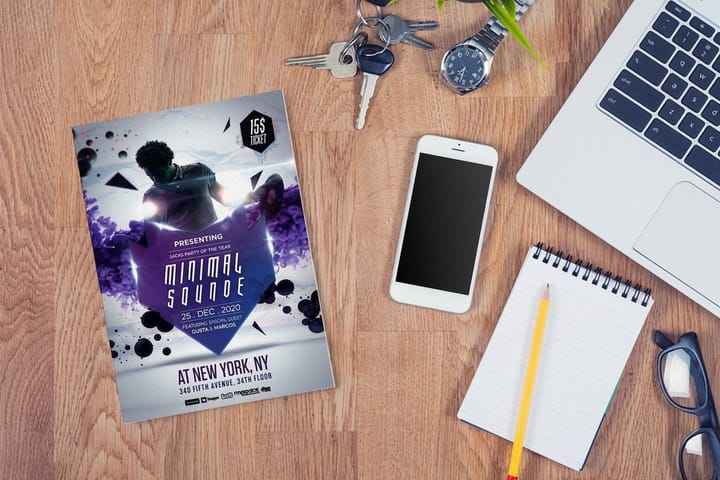
The community screening event is hearing care's best introduction: a table at the senior center, a morning at the pharmacy, a health fair booth. Low pressure, free, and social, it meets people exactly where hesitation lives. The flyer is what fills those events, posted in the weeks before at every place your audience already goes.
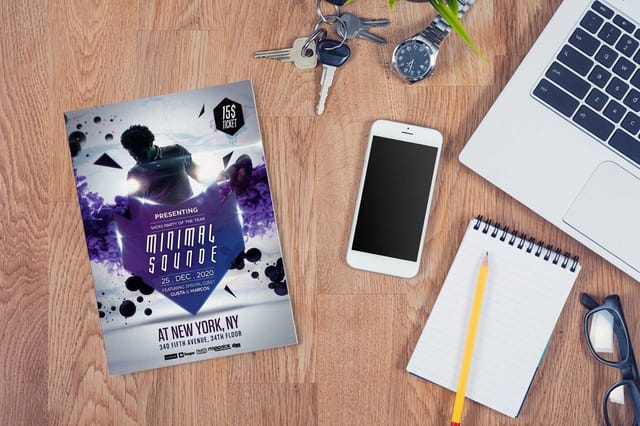
One event per flyer: what, where, when, free, and the phone number, all in large type with high contrast. Skip the decoration; this reader rewards clarity. The build method in how to design flyers applies, doubly so its rule about one focal point. Print standard flyers fresh for each event so dates never go stale on a corkboard.
Ask each venue to keep a stack at the counter too. The person who will not stop at a booth will still pocket a flyer.
7. Door hangers: the neighborhood sweep, one door at a time
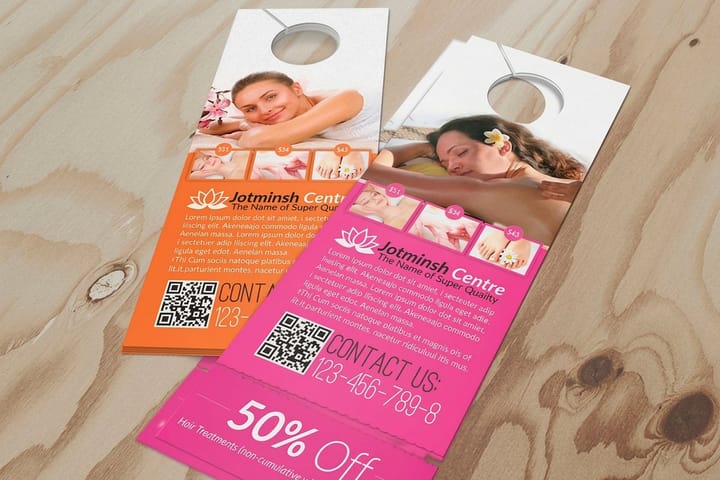
Between the mailing list and the community board sits everyone else: the households around the clinic and the senior communities nearby that no list captures cleanly. The door hanger reaches them all, arriving alone at the door with one plain offer, a free hearing screening, and nothing competing for attention when it is read.
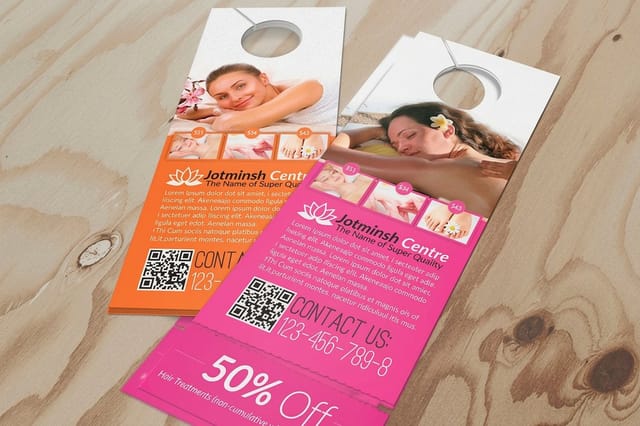
Large type, high contrast, the offer, the address with a small map, and the phone number. Nothing else. The evidence in are door hangers effective and the door hanger effectiveness data cover where the format earns its walk. Configure door hangers with a tear-off card carrying the number, sized for a wallet.
Sweep one neighborhood per month, senior communities first. The whole radius learns where the clinic is, one door at a time.
8. Rack cards: the screening offer that waits on the counter
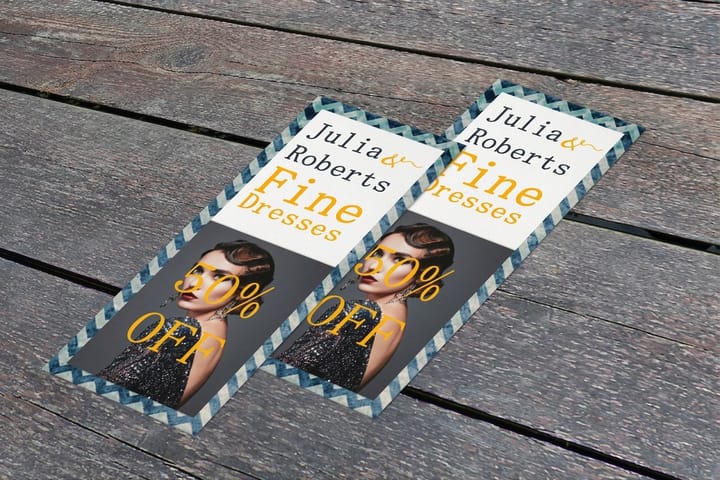
Flyers announce an event; rack cards hold the ground between events. On the pharmacy counter, the senior-center front desk, and the physician's waiting room, a rack card keeps the free-screening offer standing exactly where your audience already stands, week after week, with no event date to expire it.
Design it for the reader and the room: the offer in large type at the top, three reassuring lines about what a screening involves, and the phone number big enough to read at arm's length. Our explainer on what rack cards are covers the format, and how to create a captivating rack card design keeps the narrow canvas persuasive.
Restock the racks monthly and thank the locations each season. Every counter that carries your card is a quiet referral partner working the hours the clinic is closed.

Specs and pricing
Anchor the kit: direct mail postcard specs and live pricing
The mailed screening invitation is the piece this kit is built around: direct mail postcards start at $18.94, and 500 cost $89.68 and print in 4 business days. Set nothing under 14 point and the phone number larger again before you size the run. Here are the live specs and price-per-unit for direct mail postcards at 4OVER4.COM, straight from the configurator.
| Quantity | Price Per Unit | Total |
|---|---|---|
| 500 | 17.9¢ | $89.68 |
| 1,000 | 17.1¢ | $170.53 |
| 2,000 | 9.35¢ | $186.95 |
| 3,000 | 6.84¢ | $205.13 |
| 4,000 | 5.58¢ | $223.31 |
| 5,000 | 4.83¢ | $241.51 |
| 6,000 | 4.56¢ | $273.85 |
| 7,000 | 4.37¢ | $306.18 |
Wally explains the kit
Eight pieces built around one small yes: the free screening
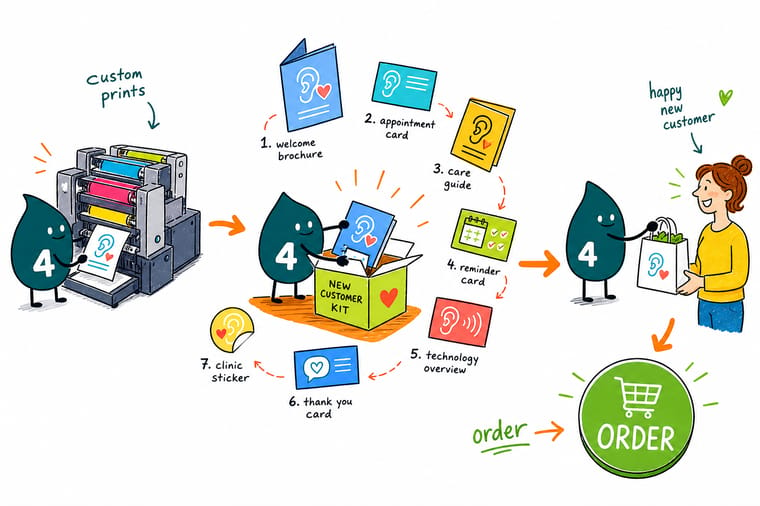
Wally runs hearing care marketing like a good conversation: never ask for too much at once. The mailed postcard offers a free screening, the flyer, door hanger, and rack card repeat the invitation around the neighborhood, the big-type brochure helps the whole family talk it through, and once the client says yes, the appointment card and recall postcards keep the relationship on schedule for years. Keep everything readable at arm's length.
Shop healthcare printing →See it in use
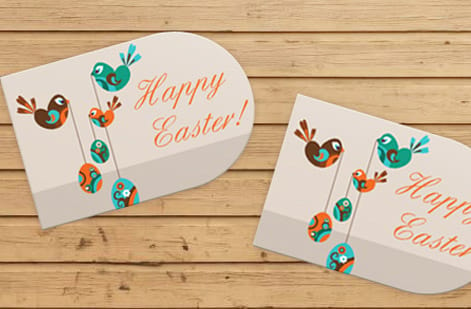
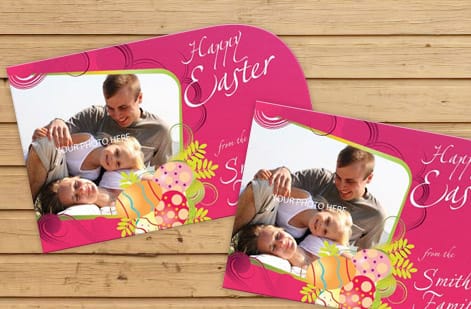
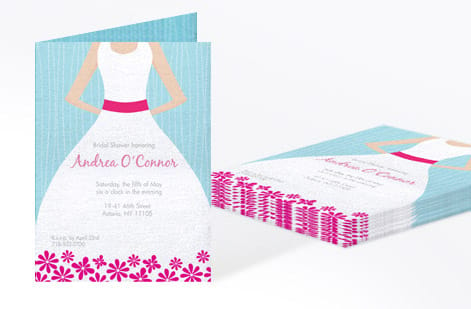
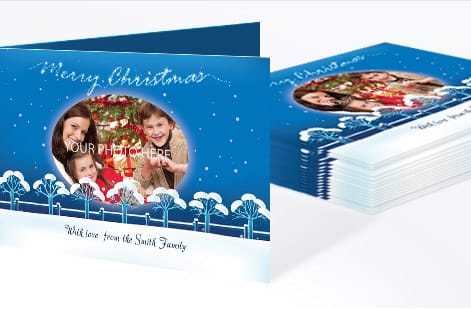
Postcards we printed for mail campaigns




%22%2F%3E%3Ccircle%20cx%3D%2242%22%20cy%3D%221%22%20r%3D%2217%22%20fill%3D%22%2314b8a6%22%20opacity%3D%220.15%22%2F%3E%3Ccircle%20cx%3D%2240%22%20cy%3D%2250%22%20r%3D%225%22%20fill%3D%22%2314b8a6%22%20opacity%3D%220.1%22%2F%3E%3Crect%20x%3D%2272%22%20y%3D%22-7%22%20width%3D%2227%22%20height%3D%2210%22%20rx%3D%224%22%20fill%3D%22%2314b8a6%22%20opacity%3D%220.08%22%20transform%3D%22rotate(7%2080%2030)%22%2F%3E%3C%2Fsvg%3E)
Explore more
Where to go next

By the numbers
One kit, printed to be heard
Common Questions
Common questions about the hearing clinic kit
What is in the hearing aids new-customer kit?
Eight print pieces that fill a hearing clinic's schedule and keep it full: direct mail postcards inviting free screenings, standard postcards for recall reminders, large-type brochures explaining devices and financing, appointment cards for fittings and annual tests, business cards for the specialists, flyers for community screening events, door hangers for the surrounding neighborhoods, and rack cards for the pharmacy and senior-center counters.
Why is direct mail the lead piece for hearing care?
Because the audience and the channel match almost perfectly. Hearing care clients skew older, and older households reliably open and act on physical mail. A mailed invitation to a free hearing screening reaches them at home, in comfortable type, with time to think and a number to call, none of which a display ad delivers.
What offer actually works in hearing care marketing?
The free screening, almost always. Hearing aids are a considered purchase with real hesitation attached, so marketing the devices directly asks too much too soon. A no-cost, no-commitment hearing test is a small yes that starts the relationship, and the clinical conversation carries it from there. Every outreach piece should sell that first step.
Why do brochures matter so much in this industry?
Because the decision is made by a household, not an individual. A spouse notices the volume creeping up; an adult child worries from another city. The brochure that explains device styles, what an appointment involves, and financing options in large readable type gets passed around the family, and it keeps making the case at the kitchen table for weeks.
Who should the recall postcards go to?
Every fitted client, on a schedule: the annual test reminder, the clean-and-check invitation, the upgrade conversation when devices age. Hearing care revenue compounds through the relationship, and a simple card mailed on time is the cheapest way to keep years-long clients from quietly drifting to the chain across town.
Where should the flyers and door hangers go?
Flyers belong where your audience already gathers: senior centers, churches, pharmacies, libraries, and community centers hosting your screening events. Door hangers work the streets around the clinic and near senior communities, one plain offer per door with the date, address, and phone in large type. Between them they cover the neighborhood the mail list misses.
Can hearing clinic mailers be printed on plastic?
Yes, and the sensible split is paper for volume, plastic for keepers. The screening invitation that drops to a rented list stays on paper because the cost per piece has to stay low. The card you want kept goes on plastic: a plastic discount card at credit-card size on 30 mil stock, the gauge a bank card uses, or a plastic card with a snap-off key tag so the clinic number rides on the keyring of the client and of whoever drives them to appointments. Plastic survives a purse, a fridge door and a year of handling, so the number is still readable on the day the household finally books.
What type size should a hearing care mailer use?
Nothing under 14 point anywhere on the piece, body copy at 16 to 18 point, and the offer, address and phone number larger again. Set dark ink on plain light stock, never reversed white type over a photograph, keep the lines short, and pick a plain typeface with open letterforms so a lowercase a does not read as an o. Leave real white space around the phone number. Much of this audience reads at arm length in poor light, so what a designer calls generous type is simply legible type to the person holding the card.
How much does the full kit cost to print?
Each piece is priced live on its own product page and scales with quantity, size, stock, and finish. 100 appointment or business cards start at $17.57, 50 recall postcards at $16.48, 50 flyers at $39.54, 50 brochures at $57.11, 500 screening mailers at $89.68 for the print, and 250 door hangers at $290.41. At each starting quantity the eight pieces come to about $571.20, and the door hanger run is the largest line. Set your quantities in each configurator and the totals update live.
Get Started
Five hundred mailers cost $89.68 and print in 4 business days
Order the kit from 4OVER4.COM piece by piece, door hangers first. Adjust size, quantity, and finish on any product and watch the price update live.
Legal Disclaimer
Gold Standard guarantees apply to all standard orders placed through 4over4.com. Price match requires verifiable proof of a competitor's published price for an equivalent product with matching specifications and turnaround time. Satisfaction guarantee covers manufacturing defects and print quality issues. Contact support with order number and documentation.
