
The 13-Piece Gas Station Print Lineup That Sells the Turn-In
The pole sign wins the fuel stop. These thirteen print pieces win everything profitable after it: the turn-in, the walk-in, the wash club, and the fleet account down the road.
The gas station lineup is thirteen print products that move drivers from the road to the register: yard signs and feather flags sell the turn-in on the approaches, the banner works the canopy, the Signicade A-frame closes the walk-in, aluminum signs and door decals answer the permanent questions, window clings and posters sell the store to the captive pump audience, floor graphics route the walk-in past the coffee, counter cards and plastic membership cards enroll the wash club, and flyers with business cards land the fleet accounts nearby.
The picks
Thirteen products, in the order a station puts them up
Start here. The thirteen run from $17.57 business cards and $25 yard signs to a $182.32 Signicade A-frame and 250 plastic membership cards at $226.11, numbered in the order a station usually needs them. Keep one brand kit from the road to the register, then read on for what each piece actually does.

Wide format printing for fuel stations
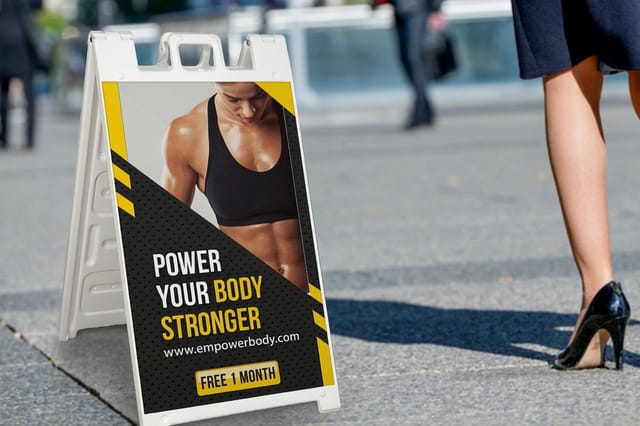
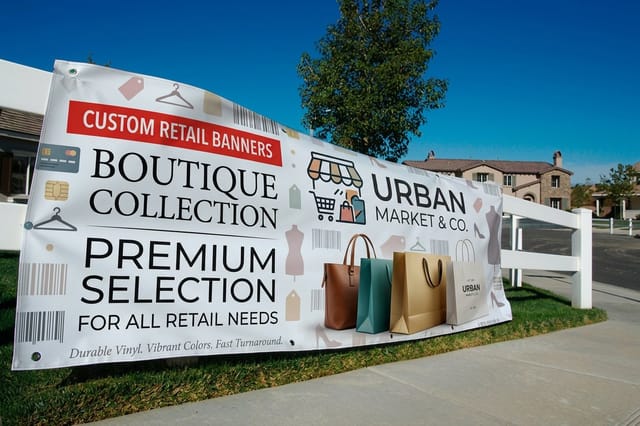
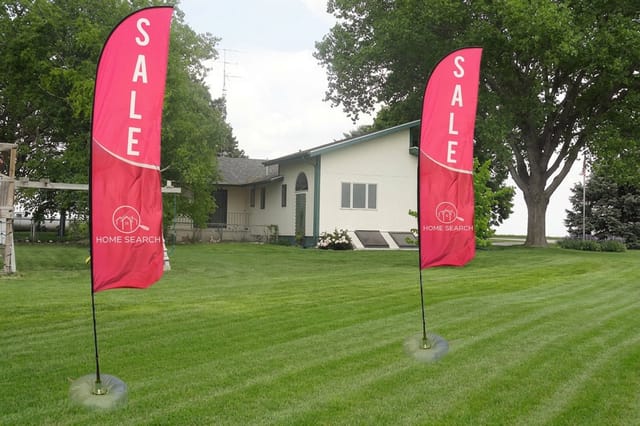
Five of the thirteen pieces are wide format: they print on a roll instead of a sheet, and they carry the messages a driver has to read from the road, not from the counter. Banners, window clings, feather flags, aluminum signs and floor graphics are the large end of the lineup, and each one has a different ceiling on size.
| Piece | Substrate | Max printed size | Where it goes on the lot | From |
|---|---|---|---|---|
| Retail banners | 13 oz scrim vinyl, single or double sided, 9 oz mesh for exposed runs | 10 ft on the short side, up to 50 ft long in one piece | Canopy fascia and the fence line facing traffic | 79 dollars |
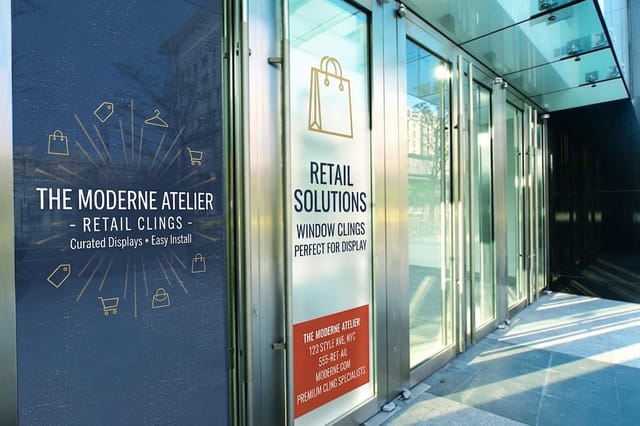
| Retail window clings | Static cling vinyl, no adhesive, removable in one piece | up to 24 by 36 in per panel, tiled for bigger glass | C-store glass facing the pump islands | 30 dollars |
| Feather flags | Knitted polyester, dye sublimated, single or double sided | 8, 10, 13 and 15 ft pole heights | Curb line at the turn-in, one every two parking bays | 108.75 dollars |
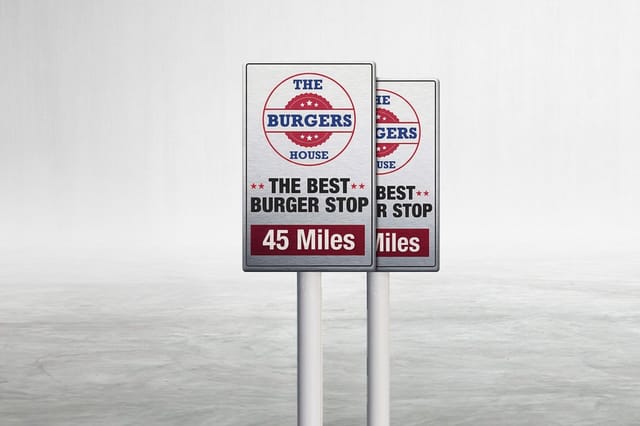
| Aluminum signs | .040 and .063 gauge aluminum, pre-drilled | up to 48 by 96 in per panel, no seam | Air, water, restrooms, diesel lane, wash entrance | 36 dollars |
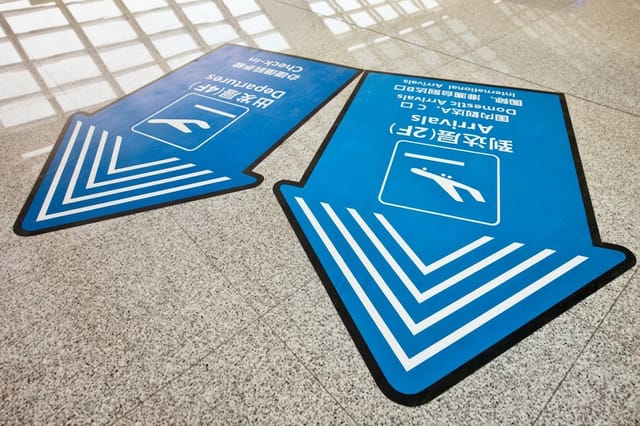
| Floor graphics | Anti-slip laminated floor vinyl, rated for retail floors | up to 48 in wide, cut to any length | Store tile, from the door to the coffee and the register | 34 dollars |
Pick the size from the reading distance, not from the wall. A driver waiting at the light is 150 to 300 feet out, which is feather flag and canopy banner territory: the working rule of thumb is 1 inch of cap height for every 10 feet of reading distance, so a headline read from 60 feet needs 6 inch letters and three words, not a paragraph. A customer already at the pump is 10 to 40 feet from the glass, and that is where window clings and posters earn their keep. Once they are through the door they are inside 10 feet, and floor graphics and counter cards take over.
Then match the material to how long the message has to live. Vinyl banners, mesh, clings and floor graphics are the pieces you replace when the offer changes, so order the seasonal ones in pairs and rotate them. Aluminum is the opposite: mount it once, in the right gauge, with the holes drilled before it ships. Keep the type and the colors identical across all five and a forecourt that would otherwise look like five different owners reads as one brand from the road.
Design and print help
One look from the road sign to the register
A forecourt full of mismatched signs reads as clutter; the same messages in one brand kit read as confidence. Lock the station colors in the online designer, check on the proof that the price type on the 24 by 36 in A-frame sign and the canopy banner reads at road speed, and rush the outdoor pieces when a price war starts on the corner.
How they work together
From the road to the register, in three moves
Each piece owns a point on the customer’s path. Print the whole sequence and the approach, the forecourt, and the counter all keep selling.
The decision happens on the approach. Yard signs sell the car wash and hot food a block early, feather flags catch the eye in motion, the canopy banner makes the offer at highway scale, aluminum signs mark the lot permanently, and the A-frame closes the walk-in at the door.
The tank takes three minutes. Clings on the store glass and posters in the pump sightline spend that captive time selling coffee, the car wash, and the snack run, permanent door decals answer hours and payment questions, and floor graphics route the walk-in past the margin shelves.
The counter card enrolls the wash club and coffee card at every sale, the plastic membership card makes the club official in the wallet, flyers carry fleet fueling and wash-book offers to the depots and contractor yards nearby, and the business card closes the account conversation.
1. Signicade A-frames: the last word before the door
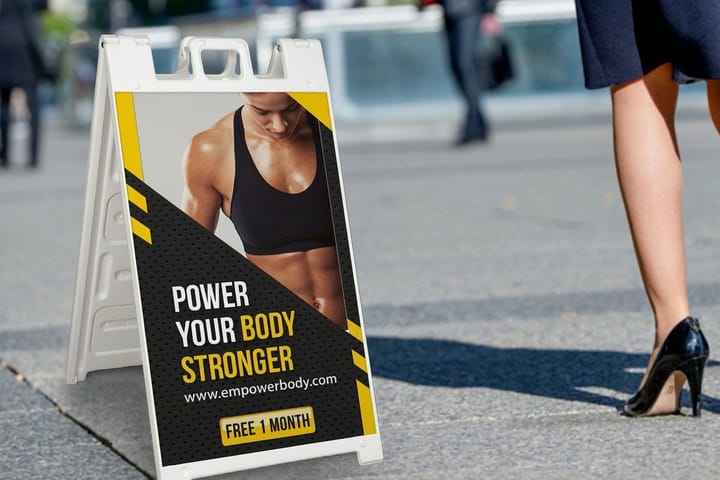
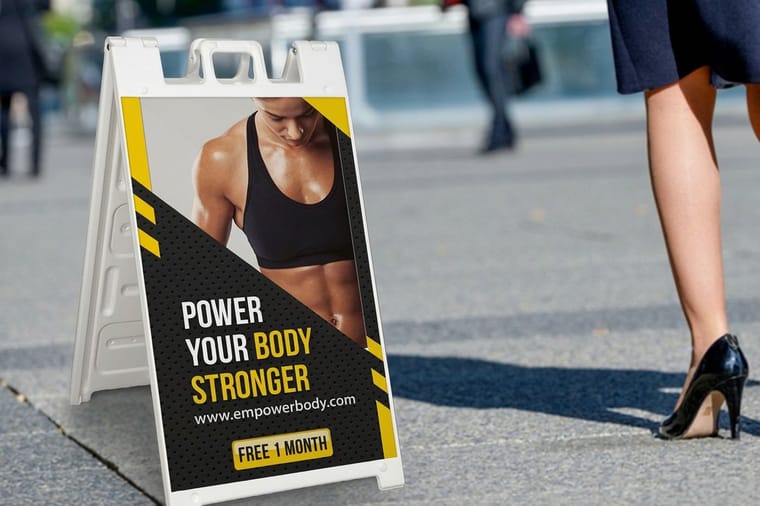
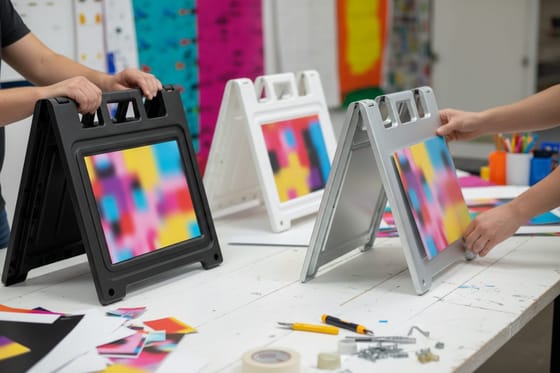
Every customer on your lot walks one path: pump to door. The Signicade A-frame stands on that path and makes the final pitch: two hot dogs for three dollars, wash special today, jackpot at forty million. It is the piece that converts a fuel stop into a store visit, which is the single most profitable conversion a station makes.
The Signicade base earns its keep on a forecourt: molded plastic that shrugs off wind, bumper taps, and being dragged across concrete twice a day. Print two sets of inserts, a morning message and an evening one, and the same frame works both shifts. The comparison in Signicade vs aluminum vs plastic A-frames explains why plastic wins for exactly this environment.
Change the message at least weekly. The A-frame is a conversation with regulars who visit twice a week, and a sign that never changes stops being read by the people who see it most.
2. Retail banners: the canopy is a billboard you already own
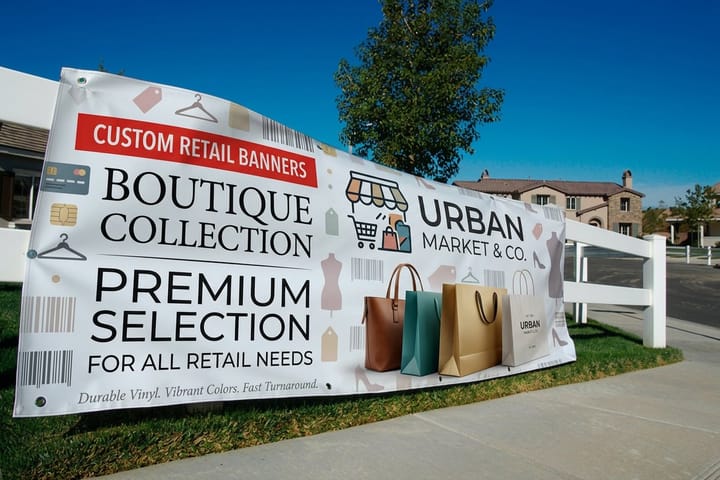
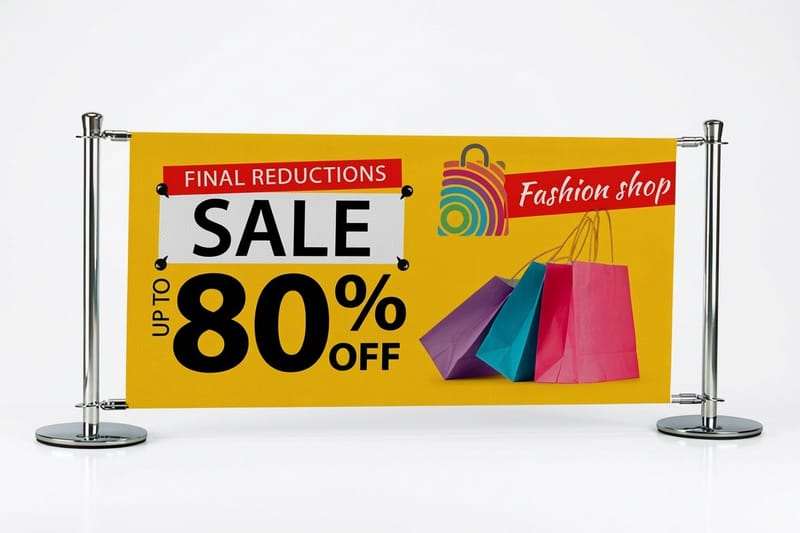
Stations rent nothing better than what they already have: canopy fascia and fence line facing a busy road. A vinyl banner across either turns dead space into the week’s loudest offer, readable at 40 miles an hour: unlimited wash club, new hot food, diesel lane open.
Design for the speed of the audience. Five words, price in the biggest type on the banner, no phone numbers, no fine print. Vinyl takes exhaust, sun, and weather for seasons, and grommets make the swap a one-ladder job. The sizing and file rules in how to make banners apply directly, and a 3 by 10 foot run suits most fascia.
Rotate seasonally: wash club in spring pollen season, cold drinks in July, coffee in October. The banner should always answer the question this month’s driver is already asking.
3. Yard signs: selling the turn-in a block early
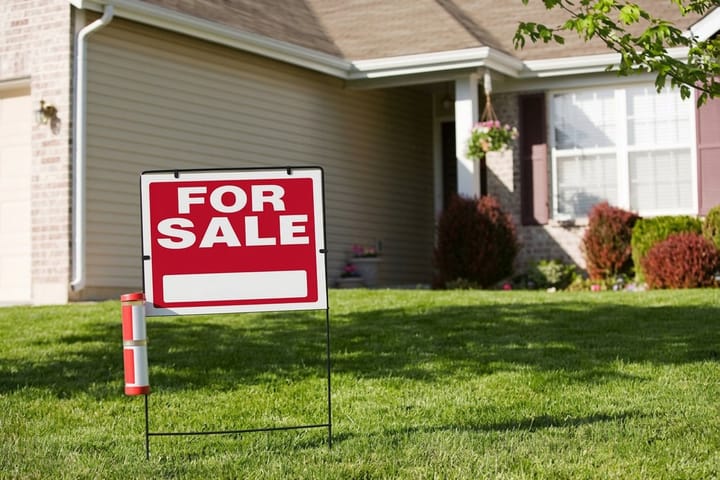
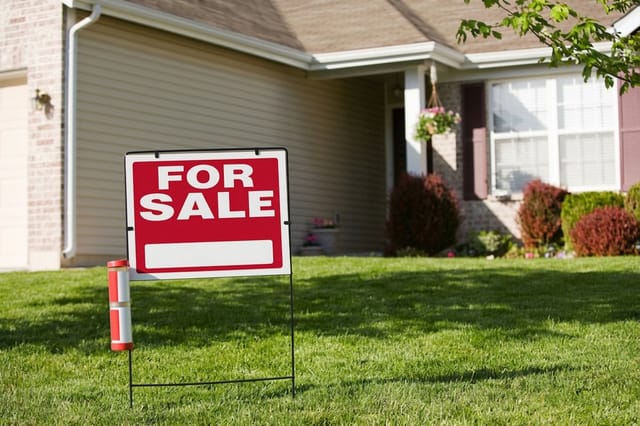
By the time a driver can read your A-frame, they have already decided whether to turn in. Yard signs work the moment before: planted along the approaches, they put car wash 5 dollars or hot food now in front of drivers while the turn is still an easy choice. For 25 dollars a sign, it is the cheapest lane-change in advertising.
One message per sign, five words maximum, letters big enough to read at speed; the discipline in how to make yard signs covers layout and durable outdoor yard sign materials settles corrugated plastic versus the alternatives for year-round weather. Place them legally on your own frontage and check the right-of-way rules for anything beyond it.
Swap the message monthly and pull faded signs immediately. A crisp sign sells the wash; a sun-bleached one sells the station across the street.
4. Retail window clings: the store glass, aimed at the pumps
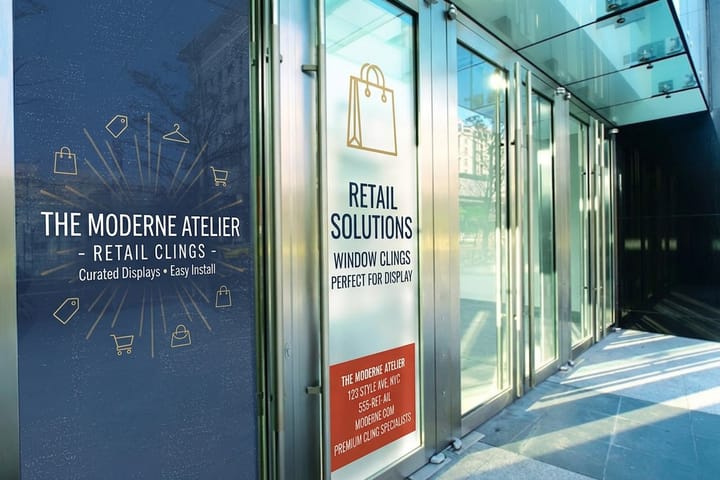
Your c-store windows face the pumps, and the pumps hold a captive audience: thirty feet away, three minutes, nothing to read. Window clings turn that glass into the menu of reasons to walk inside: two-for coffee, the meal deal, the wash bundle, sized in type that carries across the forecourt.
Clings beat posters taped inside glass because they apply cleanly, peel without residue, and survive condensation. Rotate them weekly with the promo calendar; the five-minute technique in how to apply window clings makes it a one-person job, and what are window clings and decals covers which material handles freezer-aisle glass and cold climates.
Keep one window clear for sightlines to the register; safety and staff visibility sell trust, and trust sells the walk-in as much as any deal does.
5. Posters: three captive minutes, twice a week
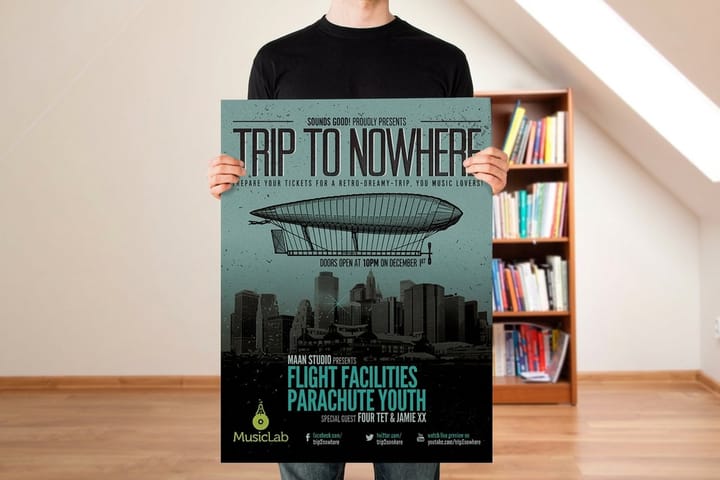
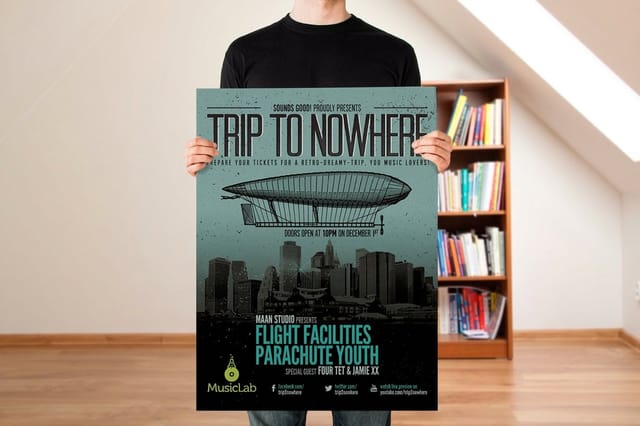
Advertisers pay fortunes for guaranteed attention, and a fuel pump delivers it free: the average fill-up is three minutes of standing still, eyes wandering. A poster in that sightline, on the pillar, by the air machine, inside the store door, sells the car wash and the coffee to someone with literally nothing else to look at.
Treat each poster like a billboard: one product, one price, one line. An 18 by 24 inch print in a cheap snap frame survives the environment and swaps in seconds. The structure in how to design a poster in 8 steps keeps the message honest, and larger formats from posters and wall art cover the tunnel entrance if you run a wash.
Match the poster to the dwell point: wash posters at the pumps, snack posters at the door, lottery inside. The message should always name the next step from where the reader is standing.
6. Retail counter cards: memberships sold while the receipt prints
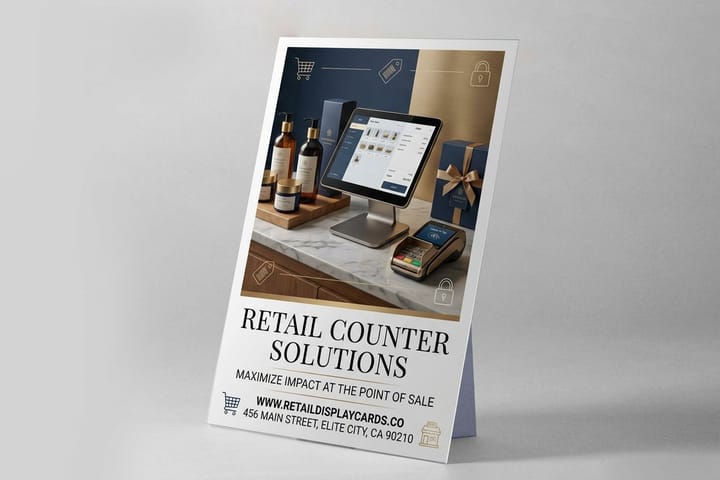
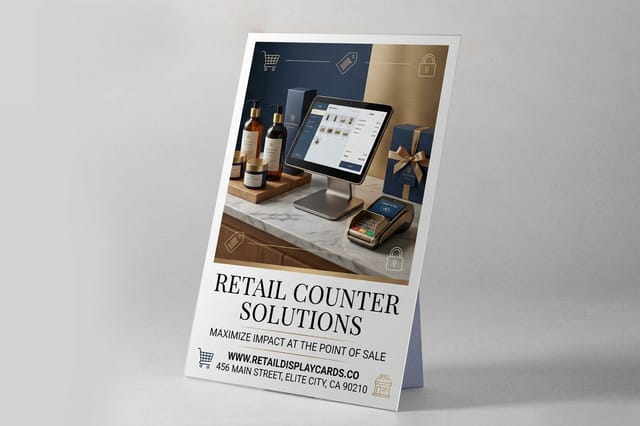
The best gas station customers are not customers; they are members. The unlimited wash club and the coffee punch card convert a drive-by into a weekly habit, and the counter card is where that conversion happens: at the register, during the fifteen seconds every customer spends waiting, wallet already open.
One card, one program, one action: join the wash club, first month half price, ask the cashier. Print a stand-up card for the counter and a smaller version for the pump toppers if your hardware takes inserts. Order from retail counter cards in short runs so the offer can change with the season without waste.
Train the till line to point at the card, not recite the pitch. The card does the selling; the cashier just closes.
7. Flyers: the fleet accounts nobody else is chasing
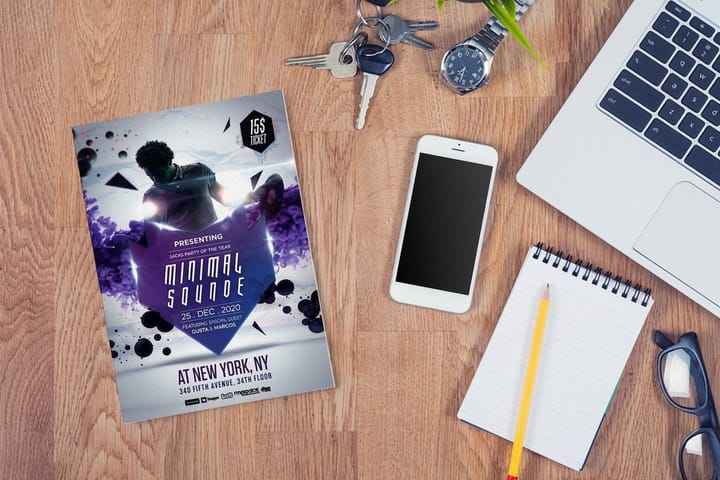
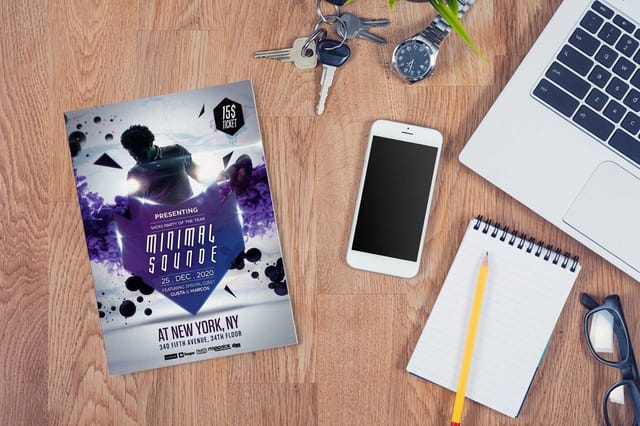
Within two miles of your station there are contractors, landscapers, couriers, and delivery fleets whose drivers fuel somewhere every single day, and almost nobody markets to the person who decides where. A one-page flyer, fleet discount, wash books for company vehicles, monthly invoicing, walked into those depots and office parks, hunts revenue that repeats weekly for years.
Lead with the number that matters to a fleet manager: cents off per gallon or the wash-book price, then the phone number of a human who answers. Keep it to one page, one offer, one call to action; the fundamentals in how to design flyers apply even when the audience wears a hi-vis vest. Print enough to canvass the area twice, because the second visit lands the accounts the first one warmed up.
Track redemptions with a simple code per business park. The flyer that lands one landscaping fleet pays for the whole print run before lunch.
8. Feather flags: motion that outsells any static sign
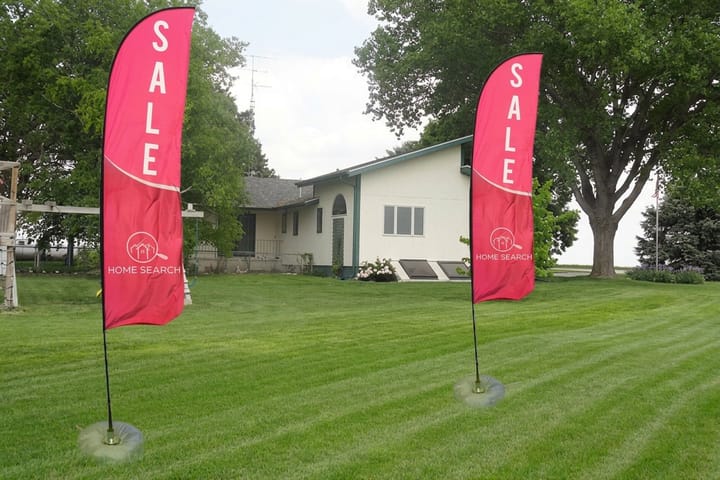
A driver's eye is built to catch movement, and the feather flag is the only piece on the lot that moves. A row of them along the frontage, open, car wash, hot coffee, flutters at exactly the height a windshield frames, and it works hardest at dusk and in traffic, when static signs melt into the background.
One word or two per flag, letters running vertically, station colors underneath. Rotate the message seasonally, cold drinks in July, coffee in October, and store the off-season flags rolled; the hardware outlives many print swaps. The comparison in yard signs versus A-frames versus banners maps where flags beat the alternatives, and the wider outdoor arsenal lives under signs and banners.
Anchor the bases properly and check the flags weekly. A frayed flag says more about the restrooms than any sign inside can undo.
9. Aluminum signs: the permanent answers, mounted once
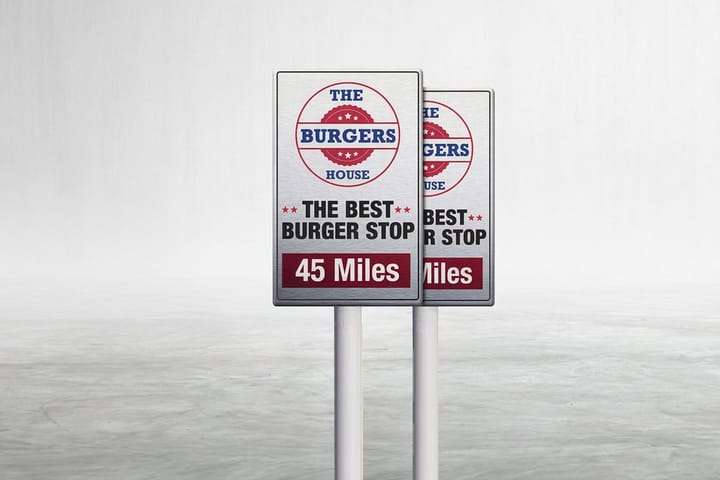
Every lot has questions that never change: where the air and water are, whether there are restrooms, which lane is diesel, where the car wash entrance starts. Aluminum signs answer them once, in rigid metal that shrugs off sun, rain, and bumper taps for years, and every answered question is a staff interruption that never happens.
Two gauges cover a forecourt. Use .040 aluminum for the small flat-mounted wayfinding panels, the 12 by 18 and 18 by 24 inch air, water and restroom markers that sit on a wall or a pump island column. Step up to .063 for anything longer than 24 inches or anything hanging in open air where wind can flex it: the diesel lane marker on a post, the car wash entry panel, the hours and price board by the door. Panels print up to 48 by 96 inches, so a full bay header comes off one sheet with no seam to catch water.
Order the holes with the sign, not after it lands. The standard drill is a 1/4 inch hole in each corner set 1 inch in from the edge, which lines up with lag screws into a wall or bolts through a post; on anything over 36 inches ask for holes along the top and bottom edge as well so the panel cannot drum in a crosswind, and ask for rounded corners on any sign at head height near a pump island. Mount to a flat face with washers behind the panel, never straight onto a curved rail, and the sign stays flat for the life of the store.
Map the lot from a first-time visitor's seat, place a sign at each decision point, and keep the type and colors matched to the rest of the lineup. The comparison in aluminum versus coroplast versus PVC explains why metal wins the permanent jobs, and acrylic versus metal versus aluminum signs settles the finish question.
At 36 dollars to start, permanent wayfinding is the cheapest infrastructure on the lot, and it never calls in sick.
10. Floor graphics: the store aisle, given a current
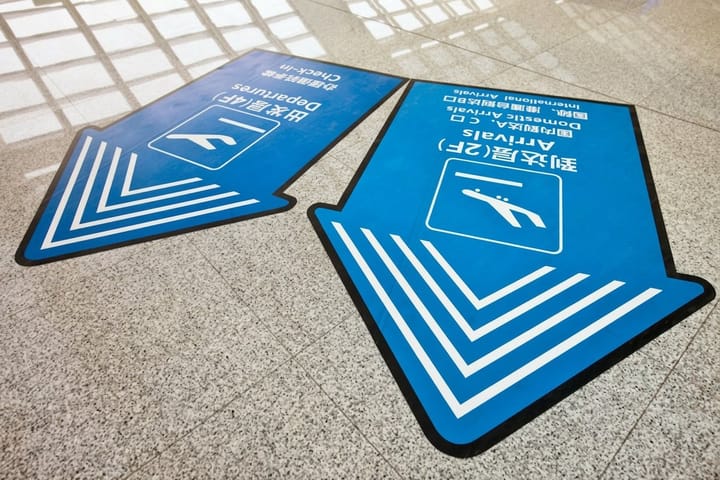
A pump customer entering the store has one plan: pay and leave. Floor graphics quietly rewrite it. Arrows and spots on the tile, fresh coffee this way, wash club sign-up at the register, two-for snacks ahead, guide the walk-in past the margin shelves without a single word from staff, and people follow floor cues with surprising obedience.
Use anti-slip laminated vinyl rated for retail floors, keep each graphic to one instruction, and replace them when the edges scuff. The application technique in how to apply a vinyl decal carries over directly, and stickers versus labels versus decals sorts the material families.
Point one arrow at the coffee and one at the wash-club card and the floor pays rent. At 34 dollars to start, it is the cheapest routing system in retail.
11. Membership cards: the wash club, carried in the wallet

The counter card sells the wash club; the plastic membership card is what makes joining feel real. A durable card in the wallet, next to the bank cards, turns a promotion into a belonging: this is my station. Members fuel where their wash is, buy the coffee while they wait, and renew by habit, which is the entire economics of the forecourt.
Print the club name big, the member line on the back, and number the cards for lookup at the till. Pair them with plastic key tags for the customers who prefer the keyring version that is always in hand at the pump.
Hand the card over in the first wash visit, not by mail. The moment it slides into the wallet at your counter is the moment the habit starts.
12. Business cards: the fleet conversation, closed properly
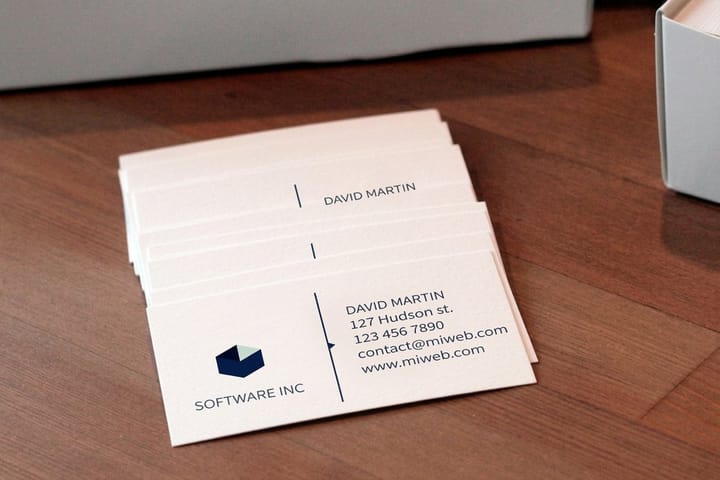
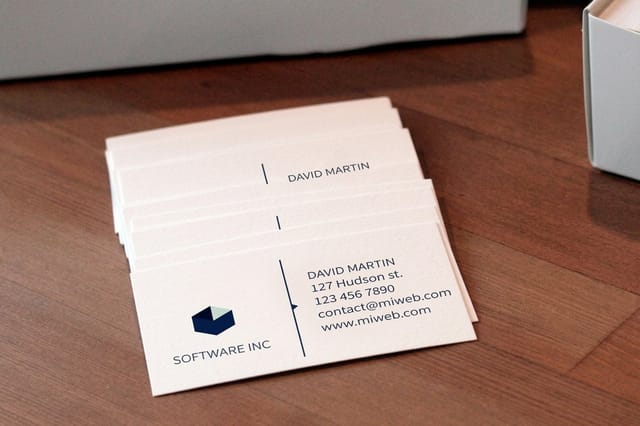
The most valuable customers a station signs are not at the pumps; they are the fleet managers, delivery companies, and neighboring businesses the flyer campaign warms up. Those conversations end the way business conversations always have: with a card. The owner's name, a direct line, and fleet accounts and wash books on one clean rectangle turns a maybe into a call-back.
Put the fleet offer on the back, cents off per gallon, monthly invoicing, wash books, so the card carries its own pitch to whoever approves the account. The fundamentals in how to make business cards cover layout, and the business cards range has stocks that survive a glovebox.
Keep a stack at the register too. The customer who asks whether you do fleet pricing is halfway signed; the card finishes the walk.
13. Window decals: the permanent answers on the glass
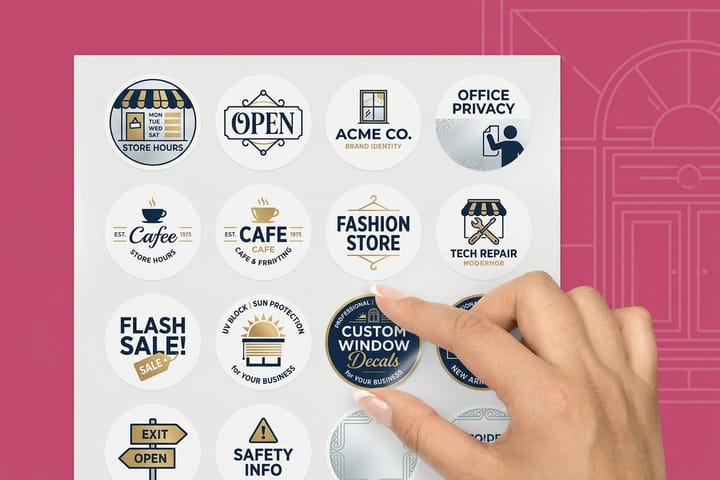
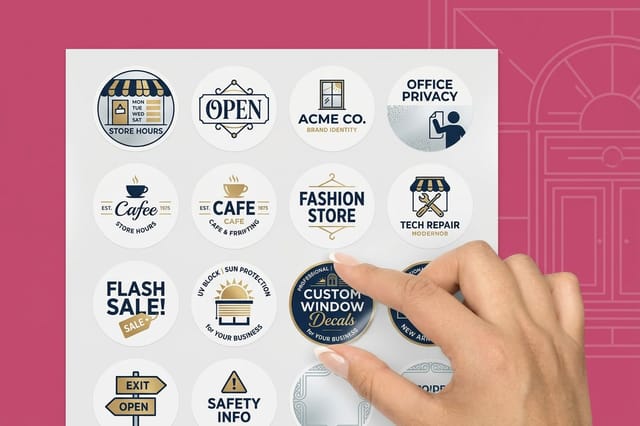
The clings rotate weekly; the decals are the glass's permanent record. Hours, open 24 hours, pay at pump, ATM inside, restrooms for customers, the station brand on the door at handle height: questions every visitor has, answered once, in durable adhesive vinyl that survives sun, frost, and a thousand door swings a day.
Cut the main brand decal to the logo shape so the door reads as designed rather than labeled, and keep the informational set in one type style. The difference between the removable and permanent families is covered in what window clings and decals are, and how to make custom decals walks the file setup and cut options.
Do the doors, then the drive-through wash entrance. Glass that answers questions is staff that never takes a break, at 93 dollars for the set.
%22%2F%3E%3Ccircle%20cx%3D%2249%22%20cy%3D%2220%22%20r%3D%2224%22%20fill%3D%22%232dd4bf%22%20opacity%3D%220.15%22%2F%3E%3Ccircle%20cx%3D%2254%22%20cy%3D%2227%22%20r%3D%22-3%22%20fill%3D%22%232dd4bf%22%20opacity%3D%220.1%22%2F%3E%3Crect%20x%3D%2279%22%20y%3D%22-9%22%20width%3D%2234%22%20height%3D%2220%22%20rx%3D%224%22%20fill%3D%22%232dd4bf%22%20opacity%3D%220.08%22%20transform%3D%22rotate(44%2080%2030)%22%2F%3E%3C%2Fsvg%3E)
Specs and pricing
Anchor the lineup: A-frame specs and live pricing
The A-frame makes the final pitch on every walk-in, so it anchors the set. Here are the live specs and price-per-unit for Signicade A-frames at 4OVER4.COM, straight from the configurator.

| Quantity | Price Per Unit | Total |
|---|---|---|
| 1 | $182.32 | $182.32 |
| 2 | $182.32 | $364.64 |
| 3 | $182.32 | $546.96 |
| 4 | $182.32 | $729.27 |
| 5 | $182.32 | $911.60 |
| 6 | $182.14 | $1,092.87 |
| 7 | $172.60 | $1,208.21 |
| 8 | $172.45 | $1,379.56 |
Wally explains the lineup
Thirteen pieces, one forecourt, printed to sell the walk-in
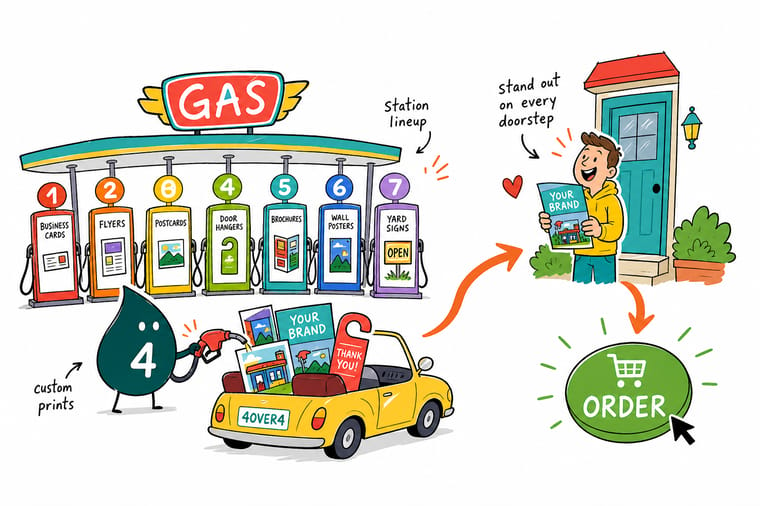
Wally reads a gas station like a relay: the yard sign and feather flag sell the turn, the banner sells the offer, the A-frame sells the door, and the clings, decals, and posters sell the coffee while the tank fills. Inside, the floor graphics run the route, the counter card signs them up, the membership card keeps them, and the flyer with a business card brings the fleet. Put one brand kit on all thirteen and the whole lot runs one play.
Shop retail printing →%22%2F%3E%3Ccircle%20cx%3D%2243%22%20cy%3D%221%22%20r%3D%2218%22%20fill%3D%22%23f59e0b%22%20opacity%3D%220.15%22%2F%3E%3Ccircle%20cx%3D%2240%22%20cy%3D%2250%22%20r%3D%225%22%20fill%3D%22%23f59e0b%22%20opacity%3D%220.1%22%2F%3E%3Crect%20x%3D%2273%22%20y%3D%22-7%22%20width%3D%2228%22%20height%3D%2210%22%20rx%3D%224%22%20fill%3D%22%23f59e0b%22%20opacity%3D%220.08%22%20transform%3D%22rotate(8%2080%2030)%22%2F%3E%3C%2Fsvg%3E)
Explore more
Where to go next



By the numbers
One lineup, printed to convert
Common Questions
Common questions about the gas station lineup
What is in the gas station lineup?
Thirteen print products that move customers from the road to the register: yard signs and feather flags for the approaches, a retail banner for the canopy or fence, a Signicade A-frame for the entrance, aluminum signs for the permanent lot wayfinding, window clings, posters, and door decals facing the pumps, floor graphics routing the store, counter cards and plastic membership cards for the wash club and coffee card, flyers for fleet and local business accounts, and business cards for the account conversations they start.
Why does a gas station need print when the pole sign shows the price?
The pole sign wins the fuel stop; print wins everything profitable after it. Fuel margins are thin, while the car wash, coffee, and store basket carry the real margin. The lineup is built to convert a three-minute fuel stop into a store visit and a membership, which is where a station actually makes its money.
Where should yard signs go for a gas station?
On the approaches, not the lot. A sign 300 to 500 feet before each entrance, selling one thing in five words or fewer, car wash 5 dollars, fresh coffee, diesel here, catches drivers while they can still change lanes. Check local sign rules for the right-of-way, and use two per approach so the message survives one being missed.
What works best in the c-store windows?
Clings facing the pumps, not the street. The audience standing at a pump is thirty feet away with nothing to read, so give them the current deals in type sized for that distance: two-for coffee, wash bundle, meal deal. Static clings peel and reapply cleanly, which makes weekly rotation realistic for one person on a slow morning.
Do A-frames pay off on a gas station lot?
The A-frame at the store door is the last word before the purchase decision, and it moves whatever it names: fresh food, lottery jackpots, wash specials. A Signicade base survives wind, bumps, and daily dragging, and swapping the printed inserts costs far less than replacing a whole sign, so the message can change with the morning.
How do fleet flyers work for a station?
Businesses with vehicles, contractors, delivery services, landscapers, decide where their drivers fuel, and nobody markets to them. A one-page flyer with a fleet discount or wash-book offer, walked into the depots and office parks within two miles, can add accounts that buy every week for years. It is the least glamorous piece in the lineup and often the highest return.
How do we keep the lot from looking like sign clutter?
One brand kit: your station colors, one typeface, one price-type style, applied to every piece from the yard sign to the counter card. Clutter comes from mismatched one-off signs accumulated over years; a lineup built from one brand kit reads as one confident business, even with thirteen messages running at once.
How big can a fuel canopy banner be printed?
A canopy banner prints on 13 oz scrim vinyl up to 10 feet on the short side and up to 50 feet on the long side, so the common fascia runs, 3 by 20 and 4 by 30 feet, come off as one piece with no seam. Anything taller than 10 feet is welded from panels, which is normal on a full canopy wrap and invisible from the drive. Build the art at a tenth scale at 300 dpi or full size at 100 dpi, keep live copy 3 inches inside the hem so the grommets and the hem fold do not eat it, and size the headline for the reading distance: about 1 inch of cap height for every 10 feet, so a banner read from 60 feet needs 6 inch letters and no more than four words. Banners start at 79 dollars.
Do canopy banners need wind slits?
No. Half moon slits cut into the face of a vinyl banner do very little for wind load and they cut holes straight through the message, because the wind still catches every panel between them. If the canopy or the fence line is exposed, order the same artwork on 9 oz mesh instead and let the air pass through the print. Hem the banner all round, take grommets every 2 feet, tie every grommet rather than only the corners, and use bungees instead of zip ties so the banner can move a little instead of tearing at the eyelets. That combination outlasts any slit pattern.
Get Started
Window decals are 25 for $93.37 and print in 5 business days
Order the gas station lineup from 4OVER4.COM piece by piece, membership cards first. Adjust size, material, and quantity on any product and watch the price update live.
Legal Disclaimer
Gold Standard guarantees apply to all standard orders placed through 4over4.com. Price match requires verifiable proof of a competitor's published price for an equivalent product with matching specifications and turnaround time. Satisfaction guarantee covers manufacturing defects and print quality issues. Contact support with order number and documentation.
