
The Craft Vendor Market Set: 7 Pieces That Sell Out a Craft Fair Booth
A craft market gives you a six-foot table and a row of sixty booths that look exactly like yours. These seven pieces are what turn that table into a shop, in the order a shopper meets them: found from the aisle, stopped at the table, sold at arm reach, and carried home.
The craft vendor market set is seven print pieces that turn a bare table into a booth that sells: fabric table covers, feather flags, retail banners, die-cut hangtags, die-cut stickers, standard business cards, and retail boxes. The flag and banner get you found, the cover earns the stop, tags and stickers close the sale, and the box and card carry your name home. Print the small pieces for your first show and add the large-format ones once the season is booked.
The picks
The seven pieces, priced live
Start here. These are the seven products in the set, each priced live from its own configurator. Order them in one run so the color is built once across paper and fabric, then read on for what each piece does and when it is worth the money.
Design and print help
Keep all seven pieces on brand
Seven pieces printed on four different substrates only look like one booth if the artwork is built once. These 4OVER4.COM services are how makers hold that line without a designer on retainer.
How they work together
Print in the order a shopper meets you
Each piece owns one distance. Miss a distance and the booth leaks customers at that exact point, which is why the pieces are worth more together than apart.
At a busy market your booth competes with sixty others down one row. A flag rises above the tent line and a banner names you at the table. This is the only spend that works on people who were never going to stop.
A covered table reads as a business, an uncovered one reads as a garage sale. It also hides the totes, the cash box, and the lunch bag, which is half of why booths look messy by hour three.
Tags answer the price question without a conversation. Stickers give the browser who cannot afford the big piece something to buy anyway, and they leave holding your brand.
The box makes the purchase feel finished and giftable. The card is how a wholesale buyer, a repeat customer, or a market organizer finds you on Tuesday.
1. Fabric table covers: the piece that makes a table read as a shop
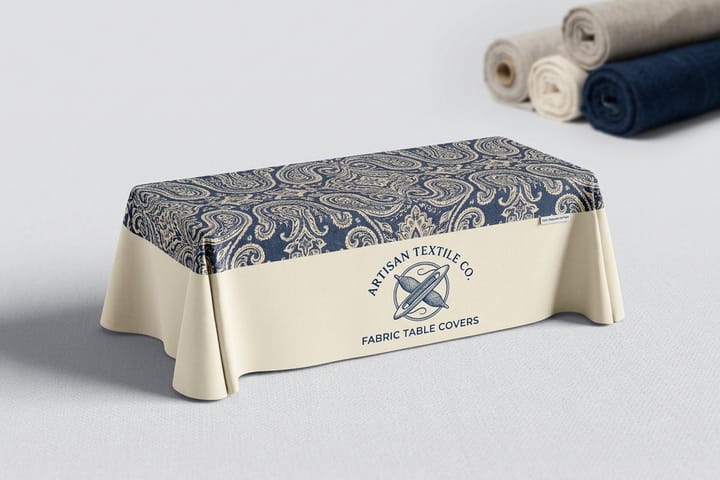
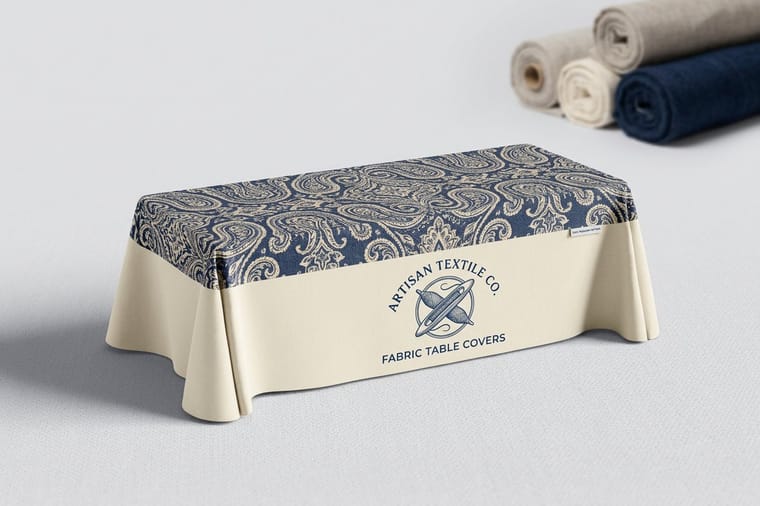
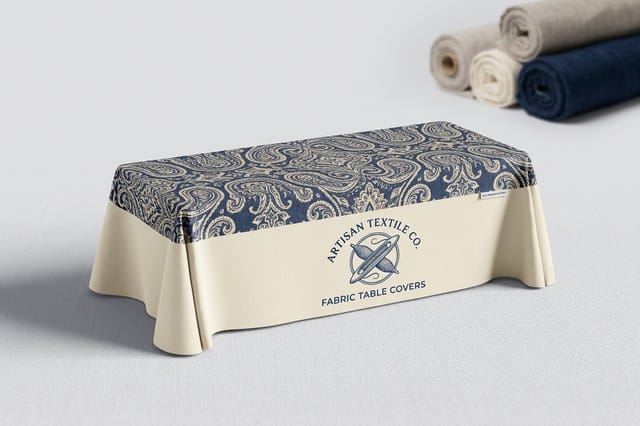
Walk any craft market and you can sort the booths in one pass. The ones with bare folding tables show their cardboard boxes, extension cords, and lunch bags underneath. The ones with a fitted cover look like a small shop that happened to set up outdoors. Shoppers make that judgement before they read a single price.
These are printed by dye sublimation, which puts the dye into the polyester rather than sitting on top of it. That matters for a piece you fold into a tote every weekend: the color does not crack along a crease the way a heavy vinyl print can, and the fabric sheds most of its wrinkles once it is stretched over the table. Measure the table the venue actually assigns you, not the one in your garage, because a six-foot cover on an eight-foot table leaves both ends exposed and the illusion collapses.
Be honest about the math. At $225.00 this is the biggest single line on the set, and it earns that back across a season of markets rather than one Saturday. If you have two shows booked, a plain black cloth plus a strong retail banner gets you most of the way. If you have ten, print the cover.
2. Feather flags: how people find you from the end of the row
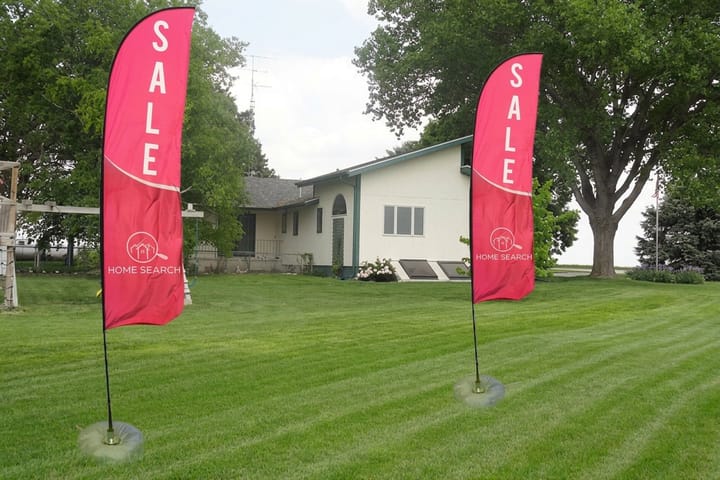
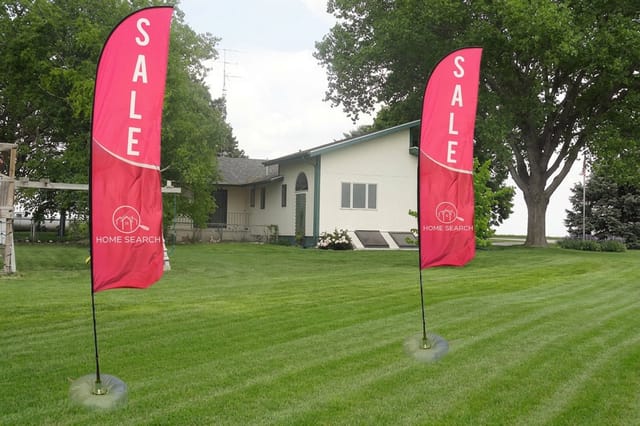
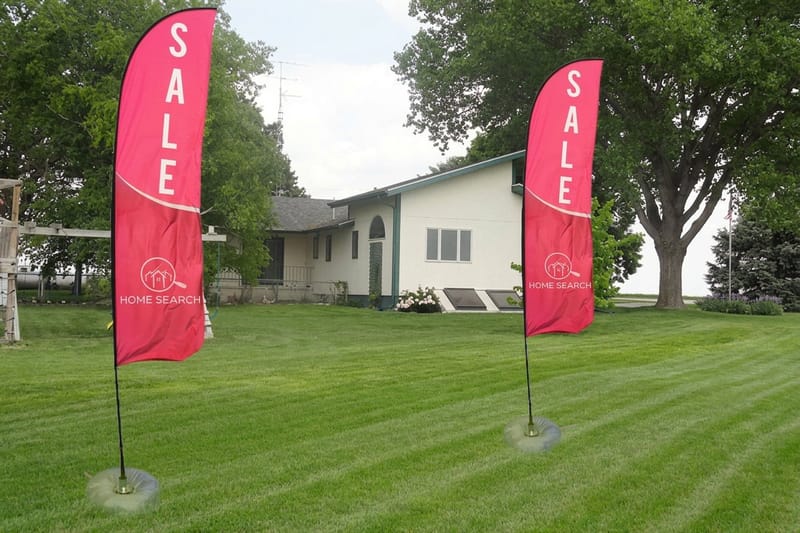
A craft fair is a wall of white tents. From the top of the row, every booth looks the same, and a shopper choosing where to spend the next twenty minutes cannot see your table at all. A feather flag breaks that line because it stands above the canopy and moves, and movement is what the eye catches in a crowded field.
It comes with real conditions. The flag needs the right base for the ground you are on, a spike for grass and a weighted cross base for asphalt, and a windy lakeside market will test both. Plenty of indoor venues ban freestanding aisle signage outright, so read the vendor packet before you order rather than after. Keep the artwork to your name and one word about what you make; anything longer is unreadable at the distance where the flag does its work.
When it is allowed, this is the cheapest way to be found in a field of tents. Pair it with the banner at the table so the person who spotted you at fifty feet still knows they arrived at the right booth.
3. Retail banners: your name at the front of the table
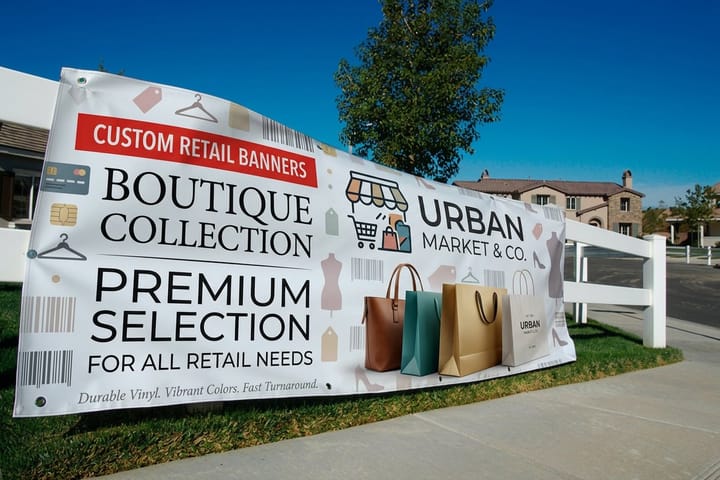
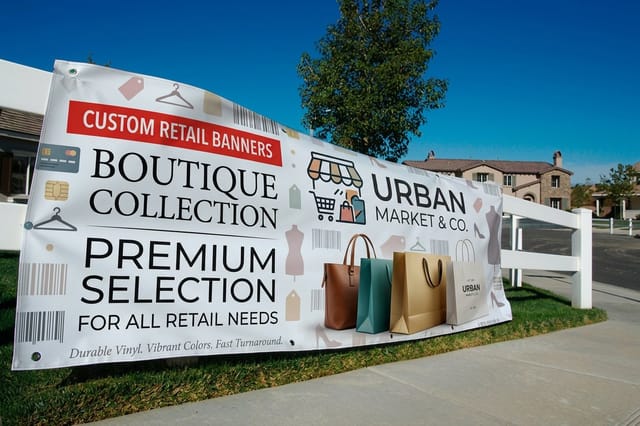
The banner is the piece that names you. Hung along the front edge of the table or across the back of the canopy, it answers the question a shopper forms in the second before they decide to stop: whose booth is this, and what is on this table. Starting at $79 it is also the cheapest large-format piece on the set.
The discipline is subtraction. A banner that lists your name, your craft, your website, your handle, and a discount says nothing, because nobody reads five things while walking. Lead with the name at a size that reads from across the aisle and let one short line say what you make. The focal-point method in our guide to making banners applies exactly here, and it is the difference between a banner people read and one they walk past.
Grommets on all four corners let you hang the same banner from a canopy frame at one show and zip-tie it to a table at the next. One banner covers a whole season if the design is not tied to a single event date.
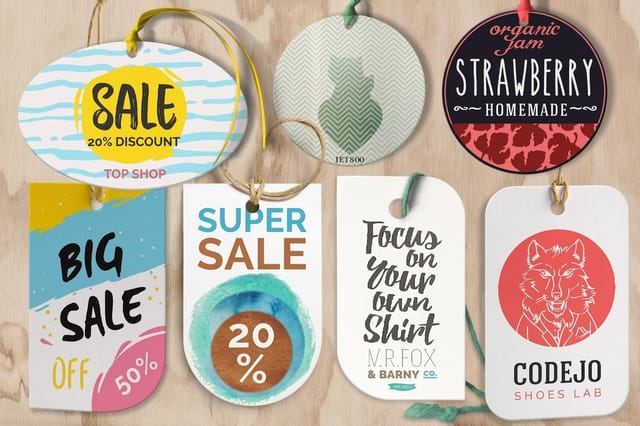
4. Die-cut hangtags: the price nobody has to ask for
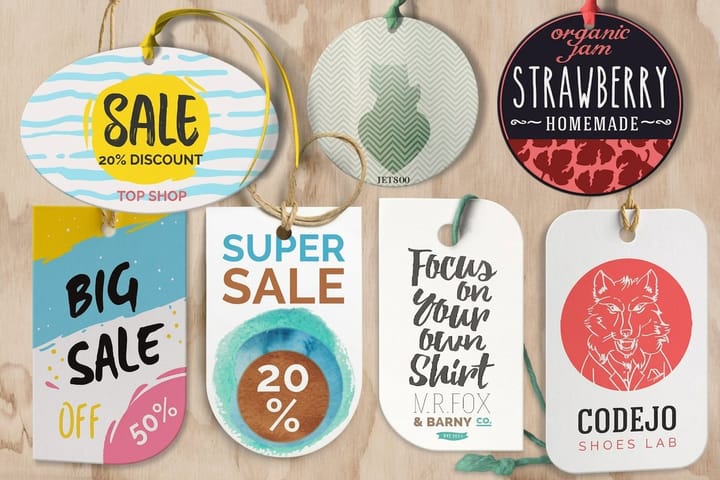
This is the piece most new vendors skip and the one that costs them the most. A shopper who loves a piece but cannot see a price will very often put it down and move on rather than ask, because asking feels like starting a negotiation. A hangtag ends that hesitation before it forms.
A tag does two jobs at once. The front carries your logo and the price, so the item looks finished and retail rather than homemade. The back is free space for the thing that actually closes a craft sale: the material, the care instruction, the fact that it was thrown, dyed, or stitched by hand. Order them with the hole already die-cut so you are not punching two hundred tags the night before, and pick the string or ribbon to match your two brand colors. Our custom swing tags guide covers hole placement and string choices in detail.
At $36.26 to start, tags are the cheapest upgrade to how your work is perceived on the table. They also carry into wholesale: a buyer who picks up a tagged item is looking at something already shelf-ready.
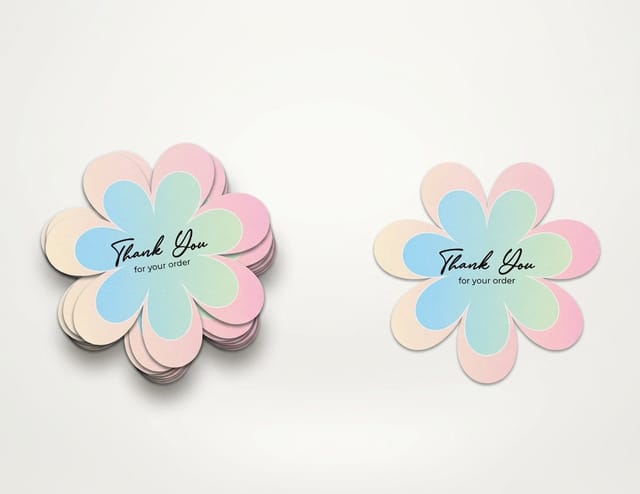
5. Die-cut stickers: the impulse buy that pays for the booth fee
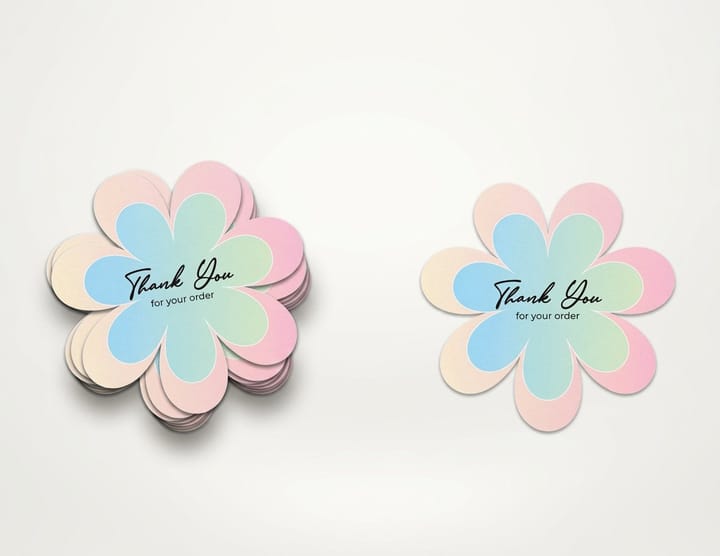
Stickers behave differently from everything else on this list, because they are stock rather than marketing. Priced at three to five dollars, a sticker converts the shopper who genuinely loves your work but is not spending forty dollars today, and it sends them home carrying your art on a laptop lid. That is the only piece here that both earns money on the day and advertises afterwards.
Keep the offer tight. One or two of your strongest designs beside the payment spot outsells a rack of twelve, because a browser at a market makes a snap decision or none at all. Design for the cut: fine points and thin tails do not survive a die line, so simplify the silhouette. Our guide to die-cut stickers explains what the cutter can and cannot follow, and the sticker sizes guide helps you settle on a size before you draw.
The run starts at $93.37, so this is a volume piece by nature. Order one design deep rather than five shallow, and browse the rest of our sticker printing options if you want a sheet or a vinyl finish instead.
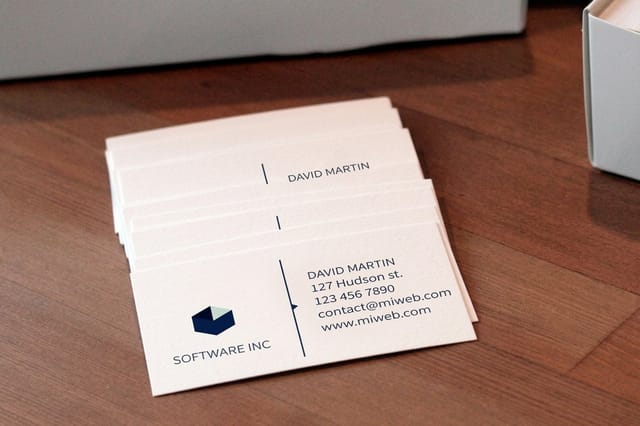
6. Standard business cards: how Tuesday finds you again
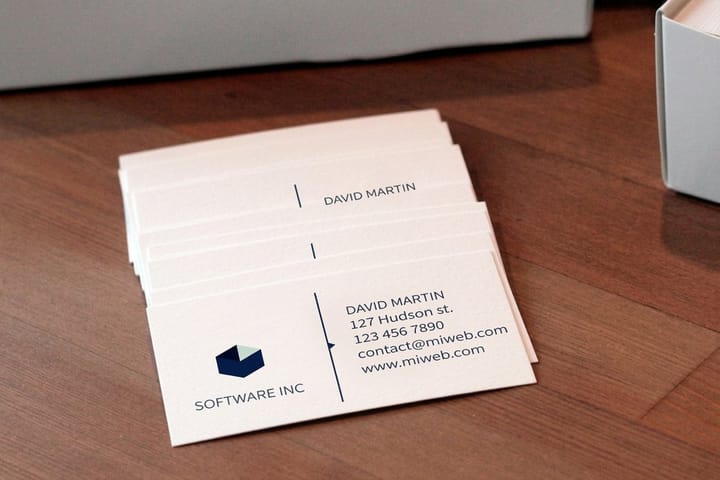
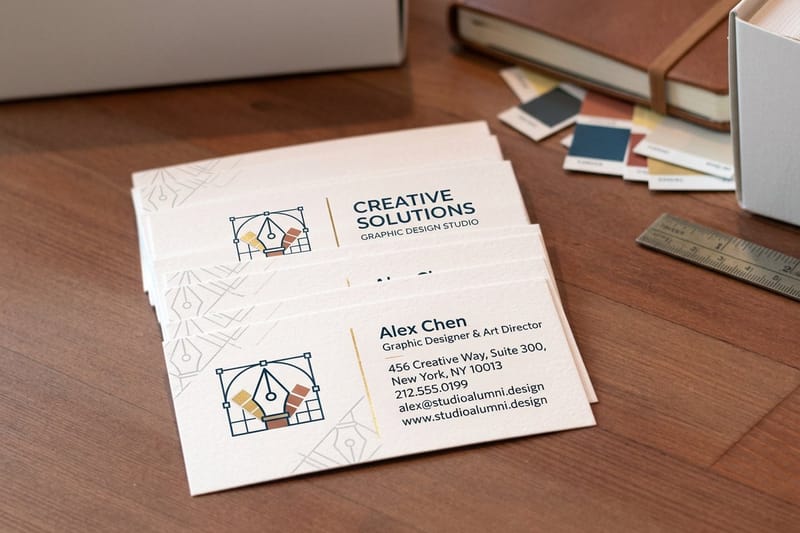
Markets end and memory fades fast. The shop owner who asked about wholesale, the customer who wanted the blue one in a larger size, the organizer scouting vendors for a bigger fair: all of them intend to follow up and most of them will not remember your booth name by Tuesday. A card in a pocket survives that.
Print the back, not just the front. Your shop link or a QR code straight to the listing turns the card into a checkout path instead of a keepsake. Leave a blank line if you take custom orders so you can write the detail down in front of the customer, which is a small thing that makes a commission feel booked rather than discussed. For layout ideas aimed at makers specifically, our piece on business card ideas for crafters is worth a read, and there are heavier stocks and finishes across our business card printing range.
At $17.57 to start it is the cheapest item on the set and the one with the longest tail. Slip one into every bag at checkout rather than waiting to be asked.
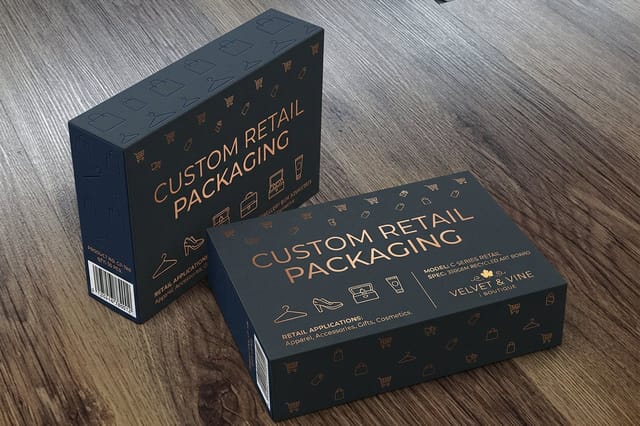
7. Retail boxes: packaging that turns a purchase into a gift
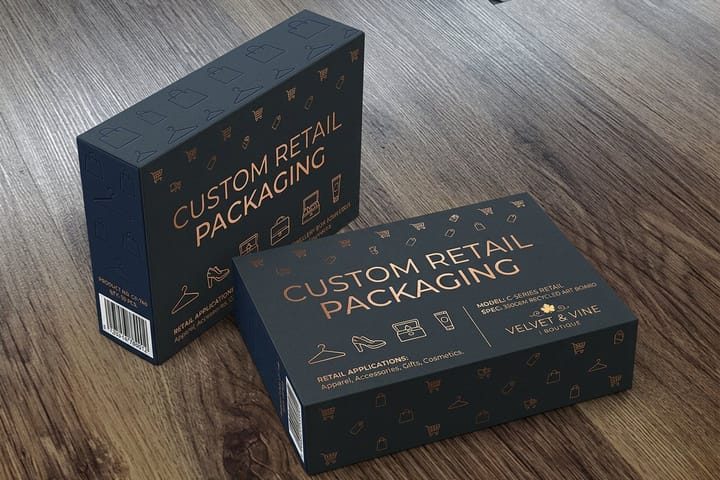
A candle handed over in tissue is a purchase. The same candle in a printed box is a present, and a large share of craft market spending is people shopping for someone else. The box also solves the practical problem of getting fragile work home across a parking lot, which is a real reason shoppers hesitate over ceramics and glass.
Understand what you are committing to. Retail boxes start at $711.78 because a custom box is a die and a print run, not a stock carton off a shelf, so the cost only makes sense once one product sells consistently across a season. If you are still testing which of five designs is the seller, use kraft bags with a die-cut hangtag this year and print boxes for the winner next year. That is the order of operations that keeps money in the business.
Once you do commit, a box works past the booth: it stacks on a retail shelf, it photographs well for a shop listing, and it is what a wholesale buyer needs to see before they place an order. If most of your selling happens online, our Etsy seller packaging essentials covers the shipping side of the same problem.
Specs and pricing
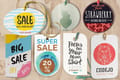
Anchor the set: die-cut hangtag specs and live pricing
The hangtag is the piece every item on your table wears, so it sets the stock and the color everything else matches. Here are the live specs and price per unit for die-cut hangtags at 4OVER4.COM, straight from the configurator.
| Quantity | Price Per Unit | Total |
|---|---|---|
| 100 | 36.3¢ | $36.26 |
| 200 | 20.9¢ | $41.74 |
| 300 | 16.5¢ | $49.43 |
| 400 | 12.9¢ | $51.62 |
| 500 | 11.6¢ | $58.23 |
| 600 | 11.2¢ | $67.00 |
| 700 | 10.2¢ | $71.40 |
| 800 | 9.47¢ | $75.80 |
Wally explains the set
Seven pieces, one booth, printed for a whole market season
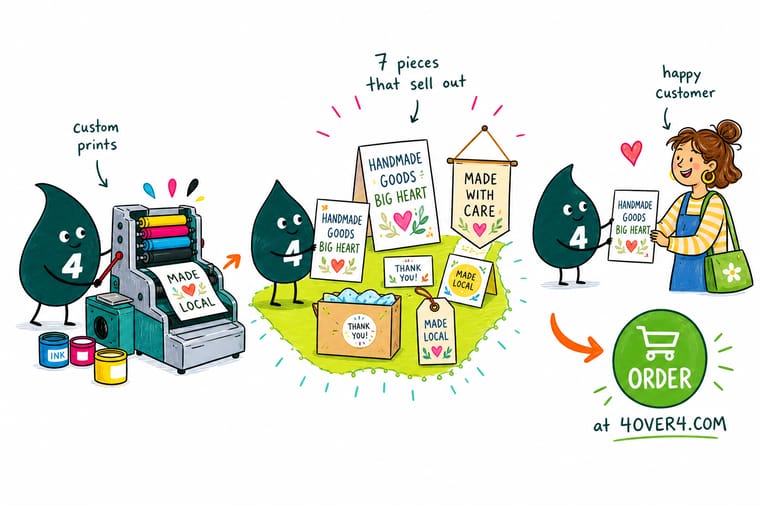
Wally works a craft fair backwards, from the shopper walking the row. At fifty feet the flag is the only thing they can see, at fifteen the banner and the covered table decide whether they slow down, and at arm reach a hangtag answers the price question they were never going to ask out loud. A sticker catches the person who loves the work but is not spending forty dollars today, and a printed box turns whatever they did buy into a gift. Print all seven at 4OVER4 in one run and every distance wears the same colors.
Shop the retail collection →See it in use
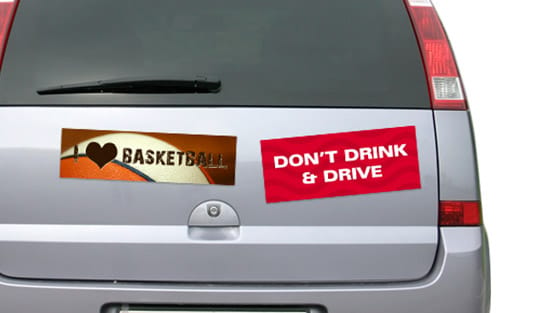
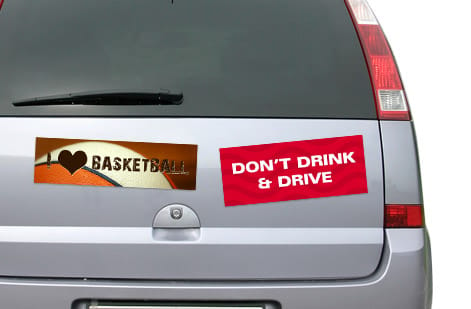
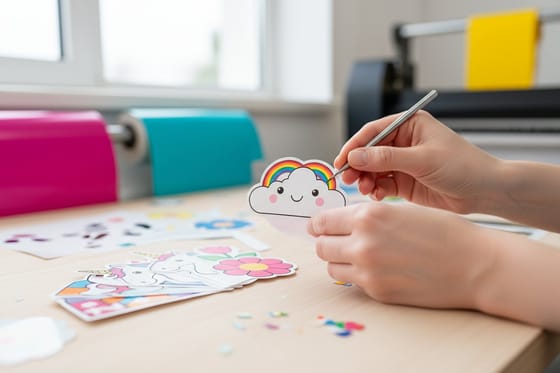
Contour cut sticker jobs off the press

Explore more
Where to go next

By the numbers
One set, printed for a whole market season
Common Questions
Common questions about printing for a craft market booth
What is in the craft vendor market set?
Seven pieces, chosen because each one does a job the others cannot: fabric table covers, feather flags, retail banners, die-cut hangtags, die-cut stickers, standard business cards, and retail boxes. Two work at distance, one earns the stop, two close the sale at the table, and two carry your name home. Ordered together from 4OVER4.COM they share one color build and one turnaround.
Which pieces should a first-time craft fair vendor print?
Start with hangtags, business cards, and a retail banner. Those three cover the two things that actually cost a new vendor sales: nobody knows what anything costs, and nobody can find you again after the market. Hangtags start at $36.26 and standard business cards at $17.57, so the entry cost is small. Add the table cover and the flag once you have four or more shows on the calendar, because those are the pieces that pay back across a season rather than a weekend.
Are feather flags allowed at indoor craft markets?
Often not, and that is worth checking before you order. Indoor venues frequently cap booth height or ban anything freestanding in the aisle, and fire marshals set the rule, not the organizer. Outdoors a flag is the single best thing you can do to be found, but it needs the right base for the surface: a ground spike on grass, a cross base with a weight on asphalt. Read the vendor packet first, then order the flag.
What size table cover do I need for a craft fair booth?
Most markets assign a six-foot or eight-foot rectangular table, and the vendor packet says which. Measure the table you will actually be given rather than the one you own, because a cover cut for six feet on an eight-foot table leaves the ends bare. Fabric covers are printed by dye sublimation, so the color goes into the polyester and does not crack along the fold the way a vinyl print can. They also travel folded in a tote and shake most of the wrinkles out.
Do stickers really sell at craft markets?
They do, and they behave differently from every other piece here. A die-cut sticker is a low-commitment purchase for the shopper who loves your work but is not ready to spend forty dollars, and it usually converts the browser who was going to leave empty-handed. Keep them by the payment spot, price them simply, and pick one or two of your strongest designs rather than a wall of options. Read our guide to die-cut stickers for how the cut line changes what a shape can survive.
When are retail boxes worth it for a maker?
When you sell a repeatable product at a price where packaging changes how it feels, and when you sell enough of it to clear a real minimum. Retail boxes start at $711.78 because they are a custom die and a print run, not a stock carton, so they suit the candle, soap, ceramics, or jewelry maker doing consistent volume across a season. If you are still testing designs, use kraft bags and a hangtag this year and print boxes when one product is clearly the seller.
How do I keep all seven pieces looking like one brand?
Fix three things and repeat them everywhere: one logo lockup, two colors, one typeface. Then order the set in a single run so the color is built once. Big-format pieces like the cover, flag, and banner are printed on different substrates from the paper items, so send the same values rather than eyeballing a match, and use the online designer or a shared template to hold the line across every piece.
Get Started
Die-cut hangtags start at 100 for $36.26
Order the craft vendor market set from 4OVER4.COM and print every piece in one turnaround, so the tags, the stickers, and the banner all wear the same colors. Set size, finish, and quantity on any product and the price updates live.
Legal Disclaimer
Gold Standard guarantees apply to all standard orders placed through 4over4.com. Price match requires verifiable proof of a competitor's published price for an equivalent product with matching specifications and turnaround time. Satisfaction guarantee covers manufacturing defects and print quality issues. Contact support with order number and documentation. On-time delivery rate based on tracked orders 1999 to 2026. Individual results may vary based on shipping carrier performance.
