
Window Cling and Decal Sizes With the Best Use for Each


Jordan is our labels, packaging and sustainability voice, built from the knowledge of our production team, with over 20 years in printing.
Seven sizes cover almost every window job, from a 4 inch car sticker to a full storefront pane. Each size has a purpose, a reading distance, and a way of measuring the glass before you order.
Window clings run from about 4 by 4 inches up to a full pane, and the right size is set by how far away people read it rather than by how big the glass is. An inch of headline cap height stays legible from roughly 10 feet, so a message meant for a parking lot 50 feet out needs 5 inch letters, which in practice means a cling around 24 by 36 inches. Static film handles anything up to about 18 by 24 comfortably. Above that, adhesive or perforated vinyl takes over.
Quick answer
Distance sets the letter height, and letter height sets the cling
Pick the reading distance first, then size the cling around the headline it has to carry. Divide the distance in feet by 10 to get the cap height in inches. One inch of caps reads at 10 feet, 2.5 inches at 25, 5 inches at 50. A 6 by 6 cling suits a door or car window, 12 by 18 covers a sidewalk message, 18 by 24 reaches across a narrow street, and 24 by 36 is the smallest piece that reliably reads from a parking lot. Anything covering a whole pane moves to perforated vinyl so the room keeps its daylight.
How Window Cling Sizing Actually Works
A window cling has no standard size the way a business card does. It is cut from roll stock, so the width and height are whatever you ask for, and that freedom is exactly why people get stuck.
The number that decides the size is not the window. It is the distance. Sign shops size lettering with one rule: an inch of cap height stays legible from about 10 feet. One inch reads at 10 feet, three inches at 30, five inches at 50. It is deliberately conservative, which is why it survives real conditions like glare, a moving car, and a customer who is looking at their phone.
So the sequence runs backwards from the viewer. Decide who the message is for and where they are standing. Someone at your door is 5 feet away. Someone on the sidewalk is 20 to 30 feet away. Someone in the parking lot is 50 feet or more. Divide that distance by 10 and you have the cap height in inches. Then pick a cling large enough to hold that headline plus whatever else has to sit around it.
That last part is where the size grows. A 5 inch headline on its own would fit inside 8 by 12 inches. Add a logo, a second line, and breathing room at the edges and you are at 24 by 36. A common mistake is ordering a big cling and then setting the type small inside it, which produces an expensive graphic that still only reads from 10 feet.
Once you know the size, this is what each window product offers when you order it. A window sticker in the small range is either a die-cut cling, static and reusable, or an adhesive window decal.
| Product | Material | Standard sizes | Starts at | Production |
|---|---|---|---|---|
| Clear window clings | Clear static cling, reverse printed for inside glass, optional white ink | 19 sizes from 11 x 17 to 40 x 60 in, or any size | $30 | 3 days |
| White window clings | Opaque white static cling | 14 sizes from 11 x 17 to 40 x 60 in, or any size | $25 | 2 days |
| Die-cut window clings | Clear static cling cut to your shape | 11 x 17 to 40 x 60 in, or any size | $30 | 3 days |
| Window decals | Adhesive label stock, six papers, kiss-cut on sheets | 2 x 2 to 11 x 11 in, or a custom size | $93.37 for 25 | 5 days |
| Perforated window decals | Perforated window vinyl | 2 x 2, 3 x 3, 4 x 4 and 11 x 17 in | $30 | 2 days |
Upload a PDF at full size with fonts converted to outlines and critical text a quarter inch inside the trim, and tell us the mounting side. Clear clings default to reverse print for inside glass facing out.
Small Clings, 4 by 4 to 8.5 by 11 Inches

Small clings are read by someone within arm's reach, so they carry information rather than a headline. Hours, a parking permit, a delivery app badge, a hygiene rating, a laptop mark, a car window sticker.
The workable range on car glass is 4 by 4 to 6 by 6 inches. Car windows are curved, and once a flat film gets much past 6 inches across it starts lifting at one corner because the glass is no longer flat under it. A shaped piece copes better than a rectangle, which is why die-cut window clings at $30 suit vehicle and laptop use more than a square panel does.
On door glass, 6 by 6 for a single icon and 8.5 by 11 for an hours panel are the two sizes that keep coming back. 8.5 by 11 has a practical advantage nobody mentions: you can proof it on your office printer at full size, tape it to the glass, and stand where your customer stands before you spend anything.
Watch the minimum on die-cut shapes. Below about 2 inches, thin points and narrow tails have too little contact area to grip, and they curl off the glass first. Keep the outline reasonably chunky and any interior cut-outs above a quarter inch.
Medium Clings, 12 by 18 and 18 by 24 Inches
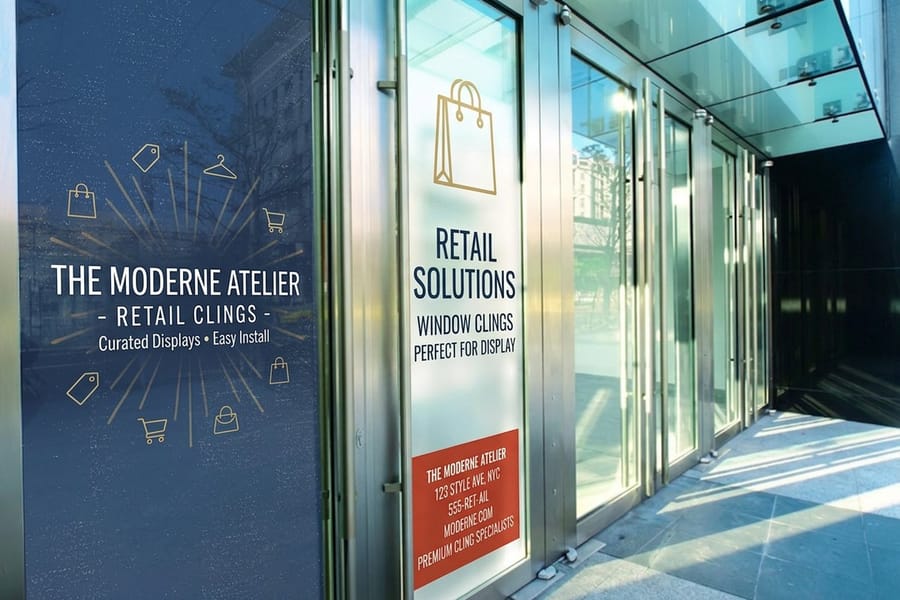
This is the band most retail orders land in. A 12 by 18 cling carries a headline around 2.5 inches tall, which lands at roughly 25 feet, and that is the width of a sidewalk plus a lane of parked cars. An 18 by 24 stretches the same idea to about 35 feet.
Sales, seasonal messages, a new menu, a hiring notice, a services list. These change often, and that is the argument for static film here rather than adhesive: a static cling peels off clean in seconds and goes back in the sleeve for next season. Retail window clings and restaurant window clings both start at $30, which makes running two or three seasonal sets a normal expense rather than a project.
One layout habit matters more at this size than any other. Put the single most important word at the top third of the cling, because the bottom of a mid-window graphic gets blocked by parked cars, planters, and people. Mount the cling with its top edge near eye level, around 60 inches off the floor, and the headline sits where the eye already is.
| Cling size | Headline it carries | Reads from | Where it belongs |
|---|---|---|---|
| 4 x 4 in | About 0.75 in caps | 7 ft | Car side glass, laptop, parking permit, app badge. |
| 6 x 6 in | About 1 in caps | 10 ft | Door glass icons, payment marks, hygiene notices. |
| 8.5 x 11 in | About 1.5 in caps | 15 ft | Hours panels, entry rules, counter-height notices. |
| 12 x 18 in | About 2.5 in caps | 25 ft | Sidewalk promos, seasonal sales, hiring notices. |
| 18 x 24 in | About 3.5 in caps | 35 ft | Mid-window offers seen from across a narrow street. |
| 24 x 36 in | About 5 in caps | 50 ft | Storefront headlines read from the parking lot. |
| Full pane | About 8 in caps | 80 ft | Brand takeovers, blackout panels, drive-past frontage. |
Read the third column before the first. If nothing in your situation is 35 feet away, an 18 by 24 is money spent on reach you do not need, and two 12 by 18 clings on separate panes will do more work.
Large Storefront Clings, 24 by 36 Inches and Up

At 24 by 36 inches a cling stops being a notice and becomes the sign. Five inch caps read across a parking lot, which is the point, and everything about handling changes at this size.
Two people apply a 24 by 36 cling. One holds the top corners against the glass, the other works down and outward with a felt squeegee. Attempting it alone is how a large static piece ends up with a permanent crease across the middle.
Material choice tightens here too. Clear film is transparent, so at this size a light design disappears against a dark shop interior during the day, and only reads at night when the lights are on behind it. White window clings at $25 print on opaque stock, so the artwork holds its color whatever is behind the glass. Use clear window clings at $30 when you actually want the display behind the graphic to show through, and set the artwork with a white underlayer beneath any pale element.
Bear in mind what a large graphic costs you in daylight. A 24 by 36 opaque panel is a third of a typical storefront pane, and that is a third of the light your staff work in. Retail teams who blacked out a full window in June regularly ask for something smaller by August.
Full-Window and Oversized Graphics
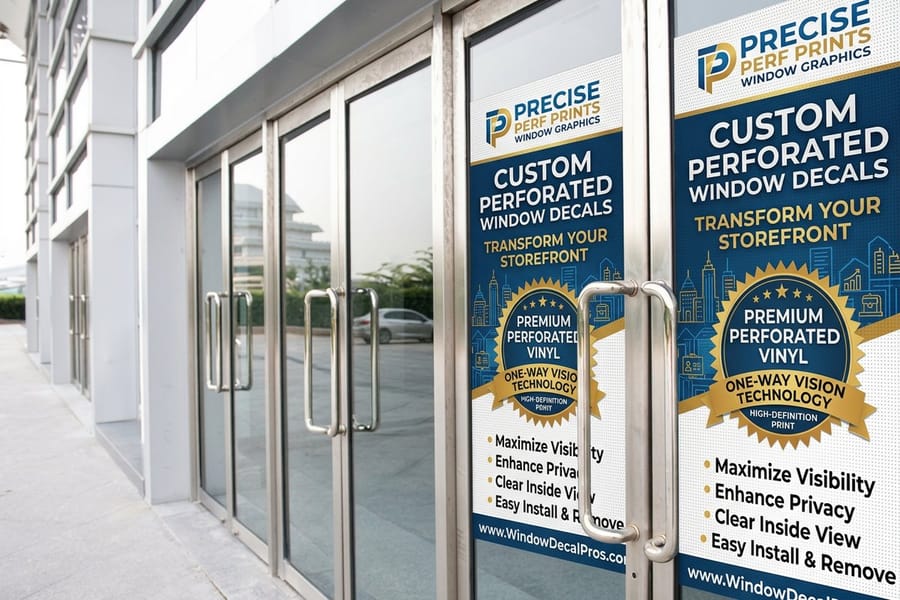
Past about 36 by 60 inches you are no longer choosing a cling size, you are covering a pane, and the material question outranks the size question.
Static film is out at this scale. It is heavy, unmanageable to align, and creeps on warm glass. Two materials take over. Perforated window decals at $30 are printed on film punched with a grid of small holes, typically 50 percent open, so the graphic reads as solid from outside while staff still see the street from inside. Perforated window vinyl at $30 is the same idea sold by the roll for larger frontage runs. The perforated window decals video overview shows the product before you order.
The honest limitation of perforated film is light. A 50 percent open pattern removes roughly half the daylight through that pane, and the view out is noticeably greyer, more so on an overcast day. It is still the only way to cover a full window without blinding the room, which is why it is standard on retail frontage and vehicle rear glass.
Oversized jobs also cross a physical limit. Roll stock has a finite width, so a pane wider than the roll gets printed in panels that butt or overlap on the glass. Plan the panel seams to land on a mullion or a natural break in the artwork rather than through a face or a word. Our guide to measuring and templating window graphics walks through the templating step for multi-pane frontage.
Static Versus Adhesive, and Why Size Decides It
People treat this as a taste question. It is a size question with a taste question attached.
Static cling has no glue. It holds because a smooth vinyl film and clean glass make contact across their whole surface, and that grip scales with area but so does weight and so does trapped air. Under about 12 by 18 inches, static is effortless and forgiving: lift a corner, reposition, done. From 12 by 18 to 18 by 24 it still works with care. Past 18 by 24 the sheet becomes awkward enough that most people end up with bubbles, and on a hot south-facing window a large static piece can drift a fraction downward over a season.
| Factor | Static cling | Adhesive decal |
|---|---|---|
| Comfortable size | Up to about 18 x 24 in | Any size, including full pane |
| Mounting side | Inside glass only | Inside or outside |
| Removal | Peels clean, reusable if stored flat | Removable, may need heat and adhesive remover |
| Best for | Messages you swap each season | Graphics that stay up for a year or more |
There is a printing consequence too. An inside-mounted graphic viewed from the street must be printed reverse reading, so the artwork is mirrored on the film. Tell us the mounting side when you order and we set the file that way. Vinyl window clings at $30 handle the swap-often work, and adhesive window decals at $93.37 take over for outside mounting and long-term installs. Our guide on how static cling vinyl holds on glass without any adhesive explains the grip itself, and you can see custom vinyl window clings in a short product video.
How to Measure Your Window Before You Order
Five minutes with a tape measure prevents the two problems that cause almost every window cling reprint: a graphic wider than the glass, and a graphic whose edge disappears under the frame.
- Measure the visible glass, not the opening. Run the tape across the pane from the inside edge of the frame on one side to the inside edge on the other. Do the same top to bottom. That is your maximum.
- Take half an inch off each side. Frames sit slightly proud of the glass and the reveal is rarely even. Ordering the exact glass measurement means one edge tucks under the frame. Subtracting half an inch per side gives a clean margin all round.
- Measure both panes if the window has a mullion. Two clings that meet at the divider look intentional. One large cling forced across a divider does not sit flat and will lift along the bar.
- Check the glass is genuinely flat. Old glass, tempered doors, and car windows all have curvature. On a curved surface, split the message into smaller pieces rather than fighting one large sheet.
- Stand where your customer stands. Walk to the sidewalk, the crossing, the far side of the lot. Note the distance in feet, divide by 10, and you have the cap height your headline needs before you open a design file.
- Note the mounting side. Inside means reverse reading artwork. Outside means adhesive rather than static.
Set the file up like any other print job: full size, artwork at 100 percent, fonts converted to outlines, and critical text kept a quarter inch inside the trim. Our bleed and trim guide covers the margins, and custom-sized printing explains how a non-standard dimension moves through production. Start from a correctly proportioned layout in the blank template library, then enter your measured size on the window clings category page and configure it.
Wally sizes a window cling
Measure the distance first, the glass second
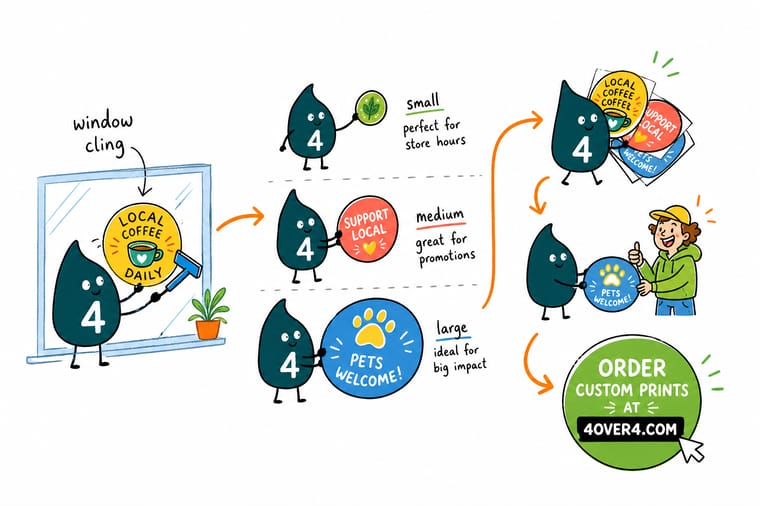
Wally walks out to where the customer stands, counts the feet, and divides by ten. Fifty feet means five inch letters, and five inch letters plus a logo means a cling near 24 by 36. Then he measures the visible glass and takes half an inch off each side so the frame does not eat the edge. Small and swapped often, he reaches for static cling. Large or going on the outside, he reaches for adhesive vinyl.
Order clear window clings →
Specs and pricing
Cling and decal options, sizes, and starting prices
Clear window clings start at $30 and print reverse for inside glass by default, white window clings start at $25 on opaque stock, and perforated window decals start at $30. Standard sizes run from 11 by 17 to 40 by 60 inches, or enter the width and height you measured; each card reads live from the 4OVER4.COM configurator.


Print it
Order a cling cut to the size you measured
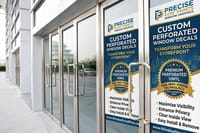
Clear clings from $30 when the display behind the glass should show through, white clings from $25 when the interior is dark, and die-cut clings from $30 for shapes on door and car glass.



Explore more
Where to go next
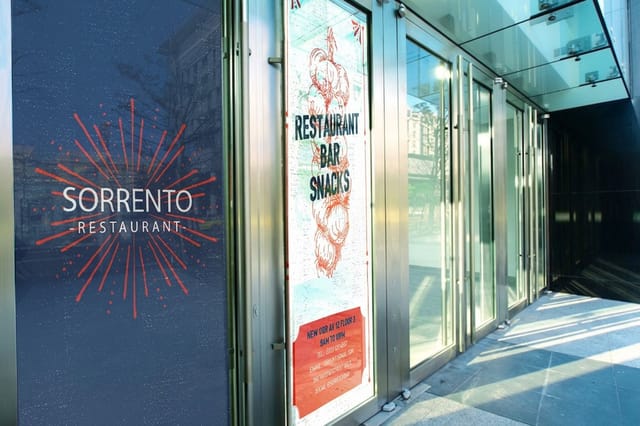
Template the pane with the measuring guide before you order, and if the graphic goes on car glass, the car decal size chart covers the 4 by 4 to 6 by 6 inch range.

By the numbers
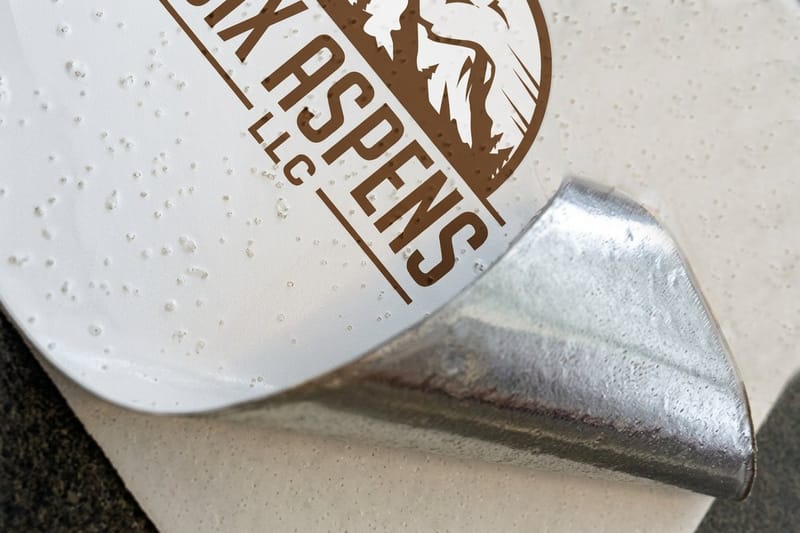
Who cuts and prints your window clings
Common Questions
Your window cling size questions, answered
What is the most common window cling size?
12 by 18 inches is the size most small businesses order, because it is the smallest piece that still reads from the sidewalk. A 12 by 18 cling comfortably carries a headline around 2.5 inches tall, which holds legibility at roughly 25 feet. Below that, 6 by 6 and 8.5 by 11 are the common sizes for door glass and counter-height notices, and 24 by 36 takes over once the message has to reach a parking lot.
How big should a window cling be for a storefront?
Work backwards from the distance. Measure how far the nearest foot traffic or parking is from the glass, divide that distance in feet by 10, and that is the cap height in inches your headline needs. A 50 foot reach needs 5 inch letters, and 5 inch letters plus a logo and a line of supporting text need roughly a 24 by 36 inch cling. If your window is deep enough for a full pane graphic, go bigger and keep the type the same size rather than scaling everything up.
Can I get a window cling in a custom size?
Yes. Window clings are cut from roll stock, so the size is set at the cutting stage rather than by a fixed die. Enter the width and height you measured in the configurator on the product page. Two habits save reprints: order to the visible glass minus half an inch per side, and keep any critical text at least a quarter inch inside the trim so the cut never clips it. Our guide on how to print any size covers the same logic across other products.
Do window clings work on the outside of the glass?
Static cling is designed for the inside of the glass, where it is protected from rain, road grit, and anyone picking at a corner. Outside mounting is where adhesive vinyl decals belong. The other thing to settle before you order is which way the artwork faces: an inside-mounted cling read from the street has to be printed reverse reading, so tell us which side it goes on and we set the file up accordingly.
What size window cling fits a car window?
For a side or rear car window, 4 by 4 up to 6 by 6 inches is the usable range, and most people land on 5 by 5. Anything larger competes with the curve of the glass and starts lifting at a corner. Car glass is also rarely flat, so a smaller die-cut shape sits better than a large rectangle. For a full rear window, perforated window vinyl is the right material because it prints on the outside and still lets the driver see out.
Static cling or adhesive vinyl for a large window?
Adhesive, once you pass about 18 by 24 inches. Static cling holds by contact with clean glass and nothing else, so a large sheet fights you during application, traps air along the middle, and can slide a fraction of an inch on a hot south-facing window. Static earns its place on anything you swap regularly, because it comes off clean and can be reused. Adhesive earns its place on anything large or long-lived.
Get Started
Window decals run 25 for $93.37, five business days
Enter the width and height you measured, choose clear, white, die-cut or perforated film, and we cut the cling to fit the glass you actually have.
Legal Disclaimer
Gold Standard guarantees apply to all standard orders placed through 4over4.com. Price match requires verifiable proof of a competitor's published price for an equivalent product with matching specifications and turnaround time. Satisfaction guarantee covers manufacturing defects and print quality issues. Contact support with order number and documentation.
