
Why Do Coffee Bags Have Vents, and Do You Need One?


Jordan is our labels, packaging and sustainability voice, built from the knowledge of our production team, with over 20 years in printing.
That raised button on a coffee bag is a one-way degassing valve. It lets carbon dioxide from freshly roasted beans escape while blocking the outside air. A pinhole does the first job and not the second, which is the difference that decides your shelf life. The printed side of the bag is ours: a waterproof, oil-resistant beverage label from $29.16 in sizes from 3 by 5 to 5 by 7 inches and an 18pt kraft hang tag, both placed around the valve rather than over it.
Coffee bags have vents because fresh roasted beans keep releasing carbon dioxide for days. That raised button is a one-way degassing valve: it opens outward to vent the gas so the sealed bag does not swell or burst, and stays shut against outside air so oxygen cannot get in and stale the coffee. It works in one direction only, driven by the pressure difference between the inside of the bag and the room, which is why nothing has to be opened or reset by hand. You need one whenever coffee is bagged fresh and then sits before it is opened, which covers almost everything a roaster puts on a shelf or ships to a subscriber. You can often skip it for fully rested coffee that has already finished degassing, for single-serve sachets that are torn open in one go, and for nitrogen-flushed cans where the oxygen has already been displaced at filling. One rule holds in every case: never cover the valve with a label or a hang tag, or the gas has nowhere to go.
Quick answer
Do you need a valve on your coffee bag?
If you bag coffee fresh and it sits before it is opened, yes. The one-way degassing valve releases the carbon dioxide that freshly roasted beans keep giving off, so the sealed bag does not swell or split, and it stops oxygen from getting in and going stale. You can often skip it for coffee that is fully rested before bagging, single-serve sachets, or nitrogen-flushed cans. Whichever you choose, the valve is only half the job. A real barrier film and a clean, oil-resistant label are what protect the roast and sell it on the shelf.
So what is that little button on a coffee bag?

Look at almost any bag of specialty coffee and you will find a small raised plastic disc on the front or the back, usually near the top. It is easy to read it as a design flourish, a place to press, or some kind of freshness gauge. It is none of those. It is a working one-way valve, and it is quietly doing one of the most important jobs in the whole package.
The proper name is a one-way degassing valve. It is welded straight into the film, and inside it sits a flexible membrane that opens under pressure from within the bag and closes against pressure from outside. Gas leaves. Air does not enter. That single rule is the entire point of it, and it is why fresh coffee can be sealed the same day it is roasted without turning the bag into a balloon.
Before we get into whether your product needs one, it helps to understand the thing the valve is actually reacting to, which is a bag full of coffee that has not stopped changing just because it left the roaster.
The real reason: fresh coffee is still breathing
Roasting drives a chemical reaction that keeps going after the beans cool. As part of that process the beans hold on to a large volume of carbon dioxide and then release it slowly over the following days and even weeks. The trade calls this degassing, and it peaks hard in the first twenty-four to seventy-two hours after the roast.
Seal that coffee into an airtight bag with no way for the gas to escape and the pressure has nowhere to go. The bag swells, the seams take the strain, and on a store shelf a row of over-inflated bags looks less like fresh coffee and more like a packaging problem. The valve is the pressure-release answer, sized so it opens at a gentle threshold and vents the excess without ever letting the outside in.
This is also the point where the packaging stops being just a bag and starts being part of your brand. Small-batch roasters who bag fresh lean on our no minimum order printing to run a short label batch for a single-origin drop, then print a proper roast-date line on a beverage label so the customer knows exactly how fresh the coffee in their hands really is. The full range of coffee and drink labels sits under beverage labels printing.
What happens to a sealed bag with no valve
Skip the valve on a bag of freshly roasted coffee and one of two things tends to happen, neither of them good.
- The bag inflates. Gas builds with nowhere to vent, the bag goes taut and pillow-hard, and it takes up more room, tips over on the shelf, and reads as a defect to a shopper.
- The seal gives way. If the film or the heat seal is the weak point, the pressure finds it. A split seam or a popped seal exposes the coffee to oxygen, which is the exact thing you were trying to keep out.
The alternative some producers choose is to let the coffee degas fully in the open before bagging, which works but costs you time, space, and a slice of peak freshness. Others reach for rigid cans with nitrogen flushing, which is excellent protection but a much bigger cost and commitment. The valve exists because it solves the pressure problem cheaply while keeping the coffee fresh, and it pairs neatly with a printed kraft hang tag that carries the origin story the can never could.
How a one-way degassing valve actually works

The mechanism is simpler than it looks, and the cutaway above walks through it. A rigid outer cap is bonded to the bag film, and beneath it sits a soft membrane, often a silicone or rubber disc, resting over a set of vent holes. A thin film of food-grade oil helps the membrane seat cleanly against its base so nothing leaks the wrong way.
When carbon dioxide builds inside the bag, the pressure lifts the membrane just enough to open a path, and the gas escapes through the cap. The moment the internal pressure drops back down, the membrane settles and reseals. Because the outside air is at ordinary atmospheric pressure, it never has the push needed to lift the membrane inward, so oxygen is locked out. One direction only, driven entirely by the pressure difference.
That is the whole trick. No moving parts you can wear out, no battery, no maintenance, just a pressure threshold and a membrane that knows which way to bend.
Degassing valve vs vent hole
Roasters use the word vent loosely, and it hides a real difference. A degassing valve is a sealed component with a membrane that opens under pressure from inside and reseals when the pressure drops. A vent hole is exactly what it sounds like: a pinhole or a laser-punched perforation in the film, open in both directions, all the time. They are not two grades of the same part. They behave in opposite ways on the three things that decide whether the coffee is any good when the bag is opened.
Oxygen ingress. The valve blocks it. Outside air sits at ordinary atmospheric pressure and never has the push to lift the membrane inward, so gas leaves and nothing comes back. A hole makes no distinction: it lets oxygen wander in as easily as it lets carbon dioxide out, which is the one thing the packaging exists to prevent.
Aroma loss. Coffee aromatics ride out with the escaping gas. A valve only cracks open when internal pressure builds, so the bag breathes in short bursts and holds its aroma in between. An open hole gives the volatiles a permanent exit, and the smell that should hit the customer at the grinder drains away on the shelf instead.
Shelf life. This is where the two split hardest. A valve behind a proper barrier film keeps the coffee effectively sealed until the buyer breaks the seal, so a roast date on the label still means something weeks later. A pinhole bag begins oxidizing the moment it is filled, which makes any printed date optimistic. Use a hole only for coffee that will be drunk within days, sampler bags handed out at a market, a cupping set going straight to a cafe. Anything that sits in a shop or ships to a subscriber gets a valve.
One practical note for artwork: a valve is a raised part with a footprint on the front or back panel, a hole is flush. Ask your bag supplier where the valve lands before you size the label, because the design has to work around it either way.
Whole bean vs ground: who needs the valve more
Both need one if you sell them fresh, but for different reasons, and it is worth knowing which curve you are on.
Whole beans degas more slowly because the gas is trapped deeper inside intact beans. They keep releasing carbon dioxide for a longer stretch, sometimes well past a week, so the valve stays useful for the life of the bag on the shelf.
Ground coffee is the opposite shape. Grinding exposes enormous surface area, so it dumps most of its gas quickly and then goes stale quickly once oxygen reaches it. That short, intense window is exactly when a valve plus a strong oxygen barrier earns its keep, because a ground-coffee bag has far less margin for error than a bag of beans.
If your line includes both, do not mix your assumptions. Label each clearly so the buyer knows what they are getting, and keep your brand color consistent across the two using a locked spot color so a bag of your ground and a bag of your beans read as the same roaster at a glance.
When you honestly do not need a valve

The valve is not a law of nature. There are real cases where it adds cost without adding much, and it is worth being honest about them.
- Coffee that is fully rested before bagging. If you settle beans for a week or two so the bulk of the degassing is done, the pressure risk is largely gone.
- Single-serve sachets and sample sizes. Small portions meant to be brewed almost immediately do not sit long enough for pressure to matter.
- Nitrogen-flushed rigid packaging. Cans and some pouches that are gas-flushed and sealed handle freshness a different way, and a valve can be redundant.
- Anything sold for immediate use. Café-to-go bags, catering portions, and quick-turnover retail where the coffee is gone in days.
Notice the pattern: the valve matters most when coffee is bagged fresh and then sits before it is opened. Take away either the freshness or the sitting, and the case for the valve gets weaker. Everything else about doing the package right, the barrier, the seal, and the label, still applies.
The valve is only half the job: barrier film and a label that holds up
Roasters often treat the valve as the whole freshness solution, and it covers only part of it. The valve manages pressure and keeps oxygen from walking in through the vent, but the rest of the bag has to hold up its end too.
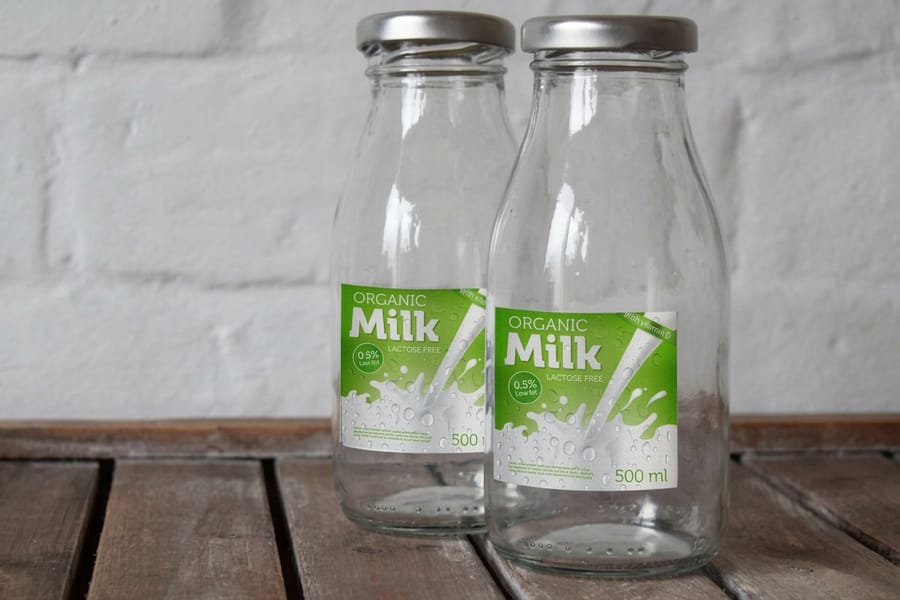
That means a real oxygen-barrier film, usually a foil or metallized layer, so oxygen and light do not creep through the walls. It means a clean, complete heat seal with no gaps. And it means a label that survives contact with coffee oils, condensation, and handling without smearing or lifting at the corner. A brilliant valve behind a cheap label that peels in a display fridge still looks like a cheap product. Our premium beverage labels come on 23 label stocks in sizes from 3 by 5 to 5 by 7 inches or any size, so you can pick one that clears the valve footprint your bag supplier gives you.
The three films most roasters choose between behave differently on all of it, on how much oxygen gets through the wall, on how long a roast date stays honest, and on how a printed label sits once the bag is filled.
| Bag film | Oxygen through the wall | Shelf life it supports | How a label behaves on it |
|---|---|---|---|
| Foil laminate | The lowest of the three. The aluminium layer is a true barrier rather than a slow filter, and it blocks light as well. | The longest. Pair it with the valve and the bag holds until the customer opens it. | Very smooth and slick, so use a permanent adhesive and press the whole label down. Nothing keys into the surface, and a corner left proud is the corner that lifts. |
| Metallised PET | Low, though not foil. The metallised coating is thin, so creases and flex cracks at the gusset can open small paths over time. | Long enough for retail rotation, shorter than foil once the bag has been handled and folded a lot. | Similar slick face to foil and it takes ink and adhesive well. Keep artwork off the fold lines, where the film moves most and the label edge gets worked loose. |
| Kraft with an inner liner | Down to the liner, not the paper. The kraft outside is decorative; the barrier is whatever film is laminated inside it. | Whatever the liner supports. A kraft bag with a foil liner performs like foil, one with a plain liner does not. | Uncoated paper is porous and slightly fibrous, so adhesive keys in and grabs hard, but the surface can fuzz and the print looks warmer and softer. Rounded corners survive shelf handling better than sharp ones. |
That last column is where a print partner matters. Our premium beverage labels are built waterproof and oil-resistant for exactly this environment, and if you want a shape that hugs the bag or wraps a seam, die-cut labels cut to your artwork instead of forcing your logo into a rectangle. Set the files up right the first time with our short read on bleed and trim and you avoid the white-edge surprise at the die line.
Turning a plain vented bag into a brand people remember
A vented bag off the shelf is a blank, and what a customer remembers is the printing on it. A small roaster can look as considered as a large one with three printed pieces.
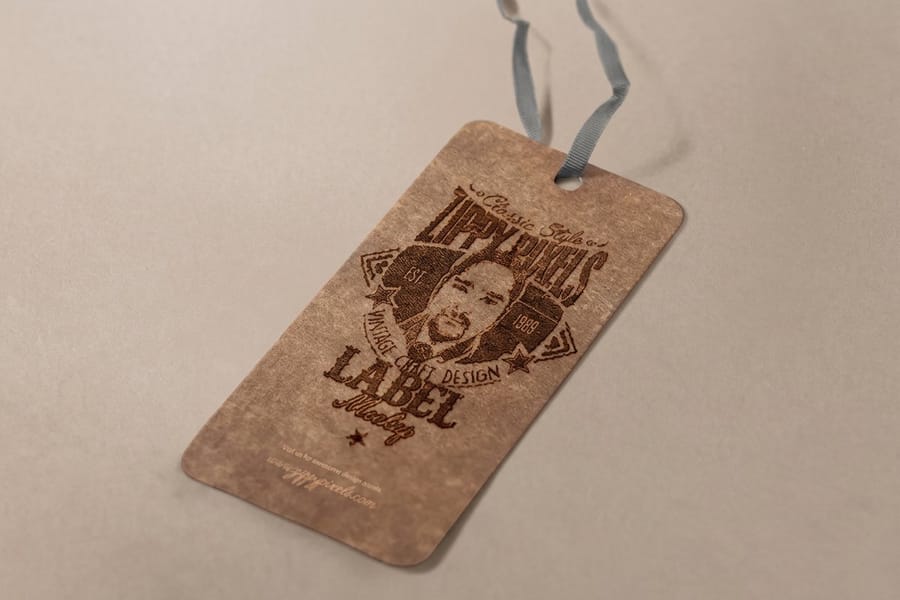
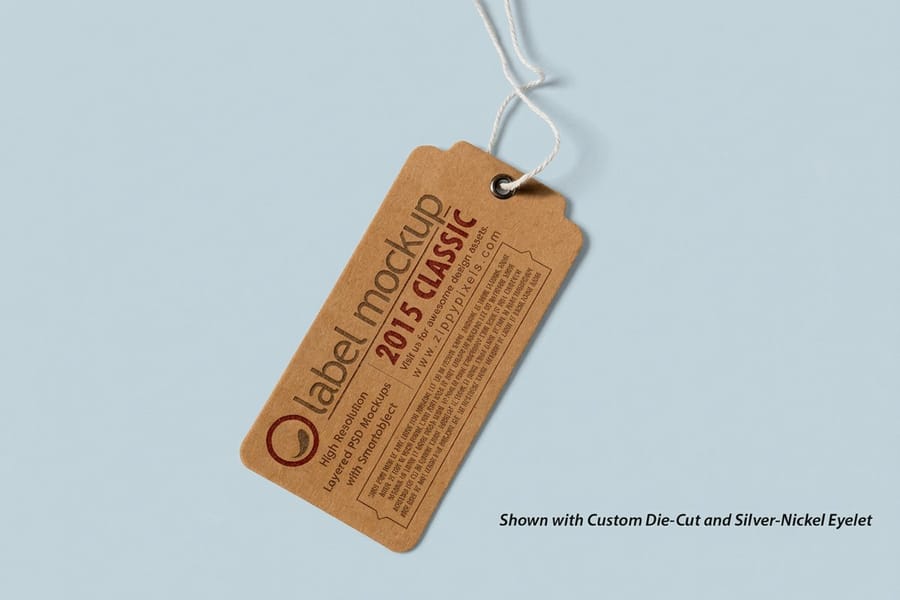
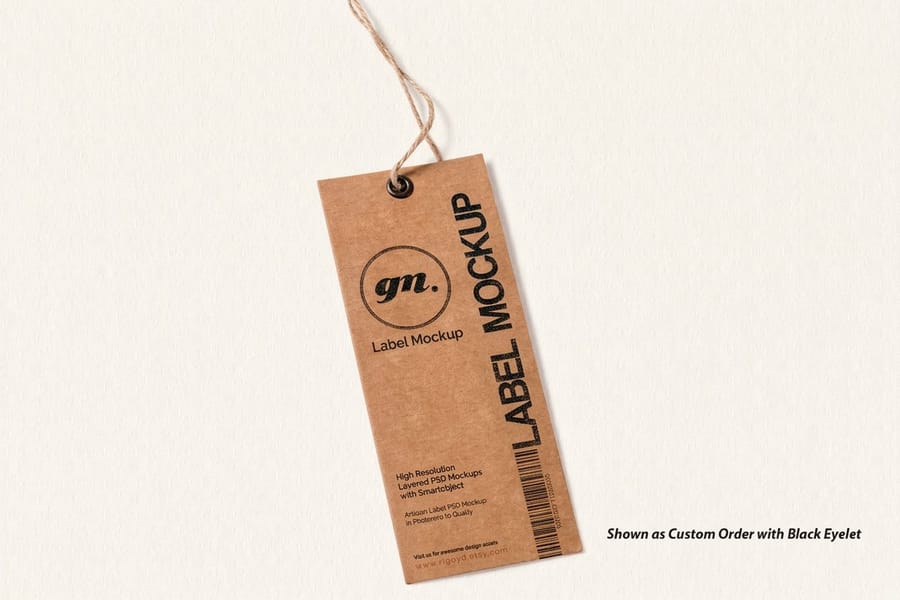
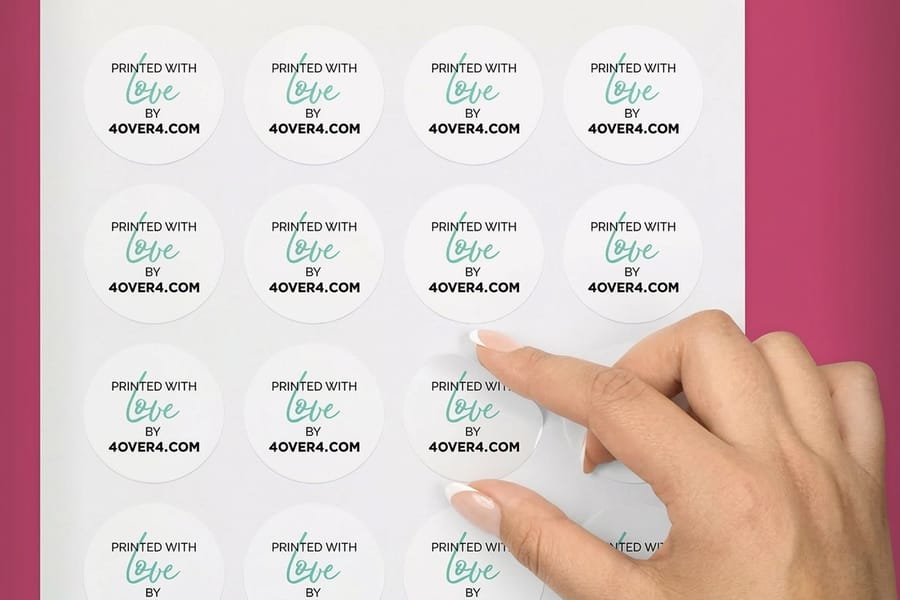
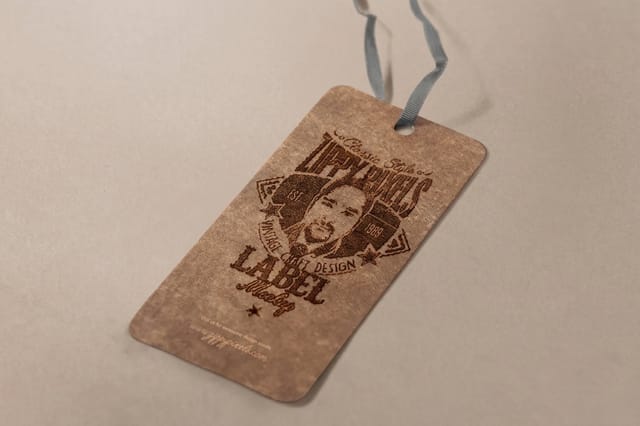
Three pieces do most of the work. A front label, 3 by 5 or 4 by 6 inches, that carries the name, the origin, the tasting notes, and a roast date. A hang tag, a 2 by 3.5 inch 18pt kraft tag from $57.96 for 100, looped over the top for the story, the farm, or a brew guide, which adds a tactile, gift-like weight to the bag. And a die-cut logo sticker, from $93.37 for 25, to seal the fold or badge the back. Print them in a consistent color and type and the whole thing reads like a considered brand rather than a bag with a sticker slapped on.
You do not need a warehouse to start. With no minimum order printing you can run one origin at a time, and the our free online designer lets you lay out a label in the browser and send it straight to print. When the artwork looks right on screen, it helps to know why printing uses CMYK so the color you approve is the color that lands on the bag.
Mistakes roasters make with vented coffee bags
Even people who understand the valve trip on the details around it. A few worth avoiding.
Assuming the valve replaces the barrier. A valve on a thin, non-barrier film still lets coffee go flat through the walls. The valve and the film are a team, not substitutes.
Placing a label over the valve. Cover the vent with a sticker and you can choke it or trap gas. Design the label and hang tag around the valve, not on top of it.
Bagging bone-fresh with no plan for pressure. If you bag within hours of roasting, the valve is doing serious work. Do not pair fresh coffee with a bag that has no valve and hope it settles.
Skipping the roast date. The valve keeps coffee fresher for longer, but a buyer still wants to know when it was roasted. A printed date on the label builds more trust than any freshness claim.
Letting the print quality slide. Smeared ink, a peeling corner, or a color that drifts batch to batch undoes the premium the valve implies. Lock your files, lock your color, and check a proof. If a term in the spec is unfamiliar, our printing terms glossary spells it out.
Wally explains the coffee valve
Let the gas out, keep the air out, and let the label do the selling
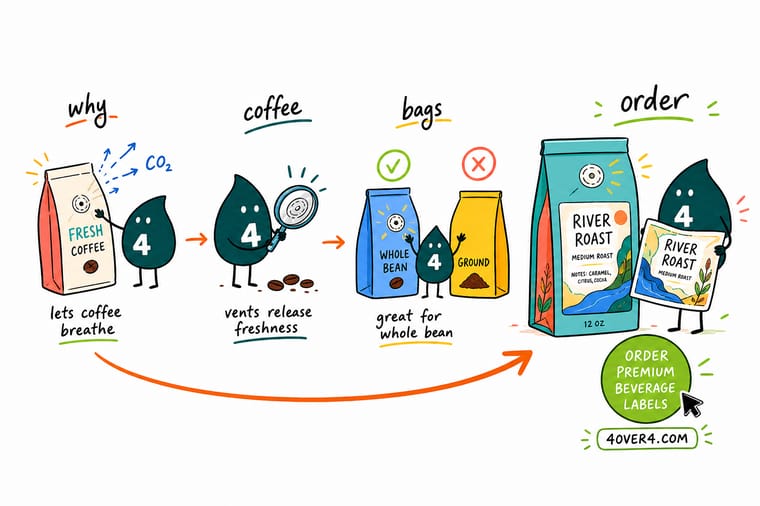
Wally thinks of a coffee bag like a tiny airlock: the valve is a one-way door that lets fresh-roast CO2 slip out so the bag never balloons, then snaps shut so oxygen can never sneak in. The valve keeps the coffee fresh, but the printing is what a customer picks up. Wrap the bag in a waterproof, oil-resistant label, loop a kraft hang tag over the top, and print the roast date so buyers trust it. That is where 4OVER4 comes in, even for a single-origin drop with no minimum order.
Design your coffee labels →
Specs and pricing
Coffee bag label specs and live pricing
The label is the part of the bag your customer reads. Premium beverage labels start at $29.16 on 23 label stocks in sizes from 3 by 5 to 5 by 7 inches or any size you enter. Premium beverage labels ship in 3 business days, waterproof and oil-resistant, with live specs below.

| Quantity | Price Per Unit | Total |
|---|---|---|
| 25 | $1.17 | $29.16 |
Print it
Everything a coffee bag needs, printed at 4OVER4


Explore more
Where to go next





By the numbers
We stock both paper and film, over sixty kinds
Common Questions
Common questions about coffee bag vents
What is the little valve on a coffee bag called?
It is a one-way degassing valve, sometimes called an aroma valve or a Goglio valve after the company that popularized it in the 1960s. It is a small plastic fitting welded into the bag wall with a flexible membrane inside. When gas pressure builds up in the bag the membrane lifts and vents, then it settles back and seals. From the outside it looks like a raised button, and that shape is why a lot of people assume it is a spot to press or a freshness gimmick rather than a working valve.
If I rest my coffee before bagging, do I still need a valve?
Often not. Most of the carbon dioxide leaves the beans in the first few days after roasting, so if you let coffee rest in a bin or a settling container for roughly seven to fourteen days before packaging, the worst of the off-gassing is already behind you. Plenty of roasters still add a valve as a safety margin because degassing does not stop cleanly on a schedule and it varies with the roast level, the origin, and how the beans are stored. If you bag same-day or next-day, treat the valve as non-negotiable.
Why can I smell the coffee through the valve but air cannot get in?
Because the valve is pressure-driven and one-directional. Aroma reaches your nose only when you gently squeeze the bag and push a little of the internal gas out through the membrane. Left alone, the outside air has no pressure advantage to force the membrane open the other way, so oxygen stays out. That squeeze-and-sniff moment is genuinely useful at the shelf, and it is one of the small reasons vented bags feel more premium to a buyer.
Does ground coffee need a valve more than whole bean?
Ground coffee has far more exposed surface area, so it off-gasses faster and goes stale faster once oxygen reaches it, which makes both the valve and a strong oxygen barrier more important in the short window before it is opened. Whole beans degas more slowly but keep releasing gas for longer, so they benefit from a valve too, just on a different curve. In practice, if you sell either one fresh, you want the valve.
Can I reuse or reseal a bag that has a valve?
You can reseal it with the tin tie or zipper to slow down staling, but the valve does not turn a resealed bag back into a factory-fresh one. Once you open the bag, oxygen gets in and the clock speeds up regardless of the valve, because the valve was only ever built to let gas out, not to pull air back out after opening. For storage, press the air out, roll the top down, and clip it, or move the coffee to an airtight container.
Does the valve keep coffee fresh on its own?
No, and this trips up a lot of new brands. The valve solves the pressure and off-gassing problem, but freshness also depends on the barrier properties of the film, a tight seal, and how the bag is stored away from heat and light. Pair the valve with a proper foil or metallized barrier layer, a clean heat seal, and a printed roast date on the label, and you have a package that actually protects what is inside.
Do you need a valve on a coffee bag?
Yes, if the coffee is bagged fresh and then sits before it is opened, which covers almost every retail bag and every subscription shipment. Fresh roasted beans keep releasing carbon dioxide for days, and without a valve that gas either swells the sealed bag or forces you to leave it loosely closed and let oxygen in. You can skip the valve for fully rested coffee that has finished degassing, for single-serve sachets that are torn open in one go, and for nitrogen-flushed cans where the oxygen has already been displaced. Whole beans degas more slowly and keep venting well past a week, while ground coffee dumps most of its gas fast and then stales fast, so ground has the least margin for error and benefits most from a valve backed by a real oxygen-barrier film.
Does a coffee bag valve let air into the bag?
No. The valve works in one direction only. A soft membrane sits over the vent holes under a rigid cap, and a thin film of food-grade oil helps it seat cleanly. Carbon dioxide building up inside lifts the membrane just enough to escape, then the membrane settles and reseals as soon as the pressure drops. Outside air sits at ordinary atmospheric pressure and never has the push to lift the membrane inward, so oxygen stays out. That is the difference between a valve and a plain vent hole, which is open both ways and lets oxygen in as freely as it lets gas out. Just do not cover the valve with a label or a hang tag, because a blocked valve cannot do either job.
Get Started
Order 100 kraft hangtags at $0.58 each
Print waterproof labels, kraft hang tags, and die-cut logo stickers that survive coffee oils and the shelf. Order one origin at a time with no minimum.
Legal Disclaimer
Gold Standard guarantees apply to all standard orders placed through 4over4.com. Price match requires verifiable proof of a competitor's published price for an equivalent product with matching specifications and turnaround time. Satisfaction guarantee covers manufacturing defects and print quality issues. Contact support with order number and documentation.
