
How Far in Advance to Send Party Invitations by Event Type


Lead times for every kind of party, the arithmetic that sets the mail date, and the print window most hosts forget to leave room for.
Send most party invitations three to four weeks before the date, six to eight weeks when guests have to travel, and add a save the date four to six months out for anything that requires a flight or a hotel. Count backward: the caterer wants a headcount seven to ten days ahead, guests need about two weeks to reply, and printing plus addressing plus mail transit takes another seven to ten days before that.
Quick answer
Three to four weeks, unless the party asks guests to travel
The invitation should reach a guest three to four weeks before an ordinary party, and six to eight weeks when the guest list includes people who need a flight, a hotel or a day off work. Those events also get a save the date four to six months ahead, because a save the date holds the calendar while the invitation carries the detail. Everything else is arithmetic: the venue wants a headcount seven to ten days out, guests take about two weeks to reply, and printing, addressing and transit fill another week to ten days before the envelope ever reaches a mailbox.
Lead Times by Event Type, in One Table
The right answer changes with how much the party asks of a guest. A neighbour walking two blocks needs a week. A cousin flying in needs four months of warning and a hotel block. Everything below is counted from the day the piece reaches the guest, not the day you place the order.
| Event | Save the date | Invitation mails | RSVP due |
|---|---|---|---|
| Destination or milestone party | 4 to 6 months out | 8 weeks out | 3 weeks before |
| Formal event with travel guests | 3 months out | 6 weeks out | 3 weeks before |
| Birthday, graduation, housewarming | Not needed | 3 to 4 weeks out | 2 weeks before |
| Baby or bridal shower | Only if guests travel | 4 to 6 weeks out | 2 weeks before |
| Holiday or December party | 6 to 8 weeks out | 4 to 6 weeks out | 2 weeks before |
| Casual local gathering | Not needed | 2 weeks out | 1 week before |
One row deserves a second look. The December line is the only one where the invitation goes out earlier than the equivalent event in June, and it is not because the party is grander. It is because a guest in December is holding four other invitations and will accept whichever arrived first. The same pressure applies to Memorial Day, July 4th and Labor Day weekends, when people commit to travel a month ahead.
Weddings run on a longer clock than any party on this list, and the etiquette around them is stricter. If that is what you are planning, the timeline in when to send wedding invitations replaces this table rather than extending it.
Count Backward From the Headcount, Not Forward From Today
Hosts pick a mail date by feel and then get surprised. The date is actually fixed by a chain of deadlines that runs in reverse, and once you write it out there is very little judgment left in it.
Start at the end. The caterer, the venue or the rental company wants a final number seven to ten days before the party. Set the RSVP deadline a few days ahead of that, because a handful of guests always need chasing. Guests need roughly two weeks with an invitation in hand before they reply, since most people wait for a weekend to check the calendar with a partner. Add those together and the invitation has to arrive about four weeks out for a catered party. That is where the three to four week rule comes from, and it is why shaving it to ten days quietly breaks the headcount rather than the etiquette.
Then add the part that lives on your side of the mailbox. Production, delivery to you, stuffing and addressing envelopes, and First Class transit all sit between the order and the guest. Seven to ten days is a fair allowance, and hand addressing is the step people underestimate: fifty envelopes is one evening, a hundred and twenty is a weekend. Ordering invitation envelopes printed with the return address removes half of that work, though they price at higher minimums and start at $170.42, so it earns its cost on a large guest list rather than a small one.
If the date has already slipped past you, do not redesign to save time. Print what you have and hand deliver locally. The options in the guide on same day invitation printing cover what a compressed schedule still allows, and starting from a correctly sized layout in the blank template library removes a day of file trouble.
When a Save the Date Earns Its Postage, and When It Does Not
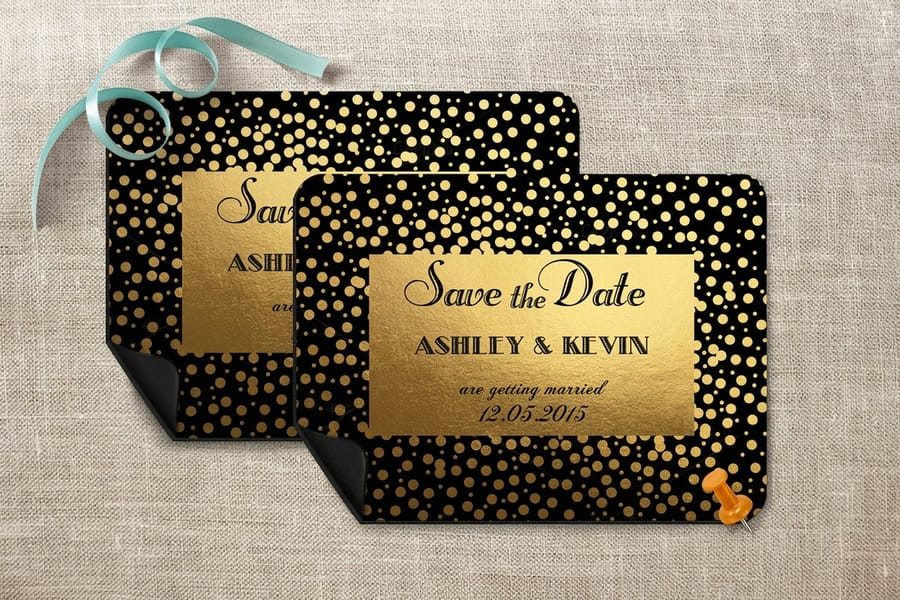
A save the date exists to solve one problem: you need to claim a date months ahead, but the venue, the menu and the start time are not settled yet. It holds the calendar without committing you to details you would have to correct later.
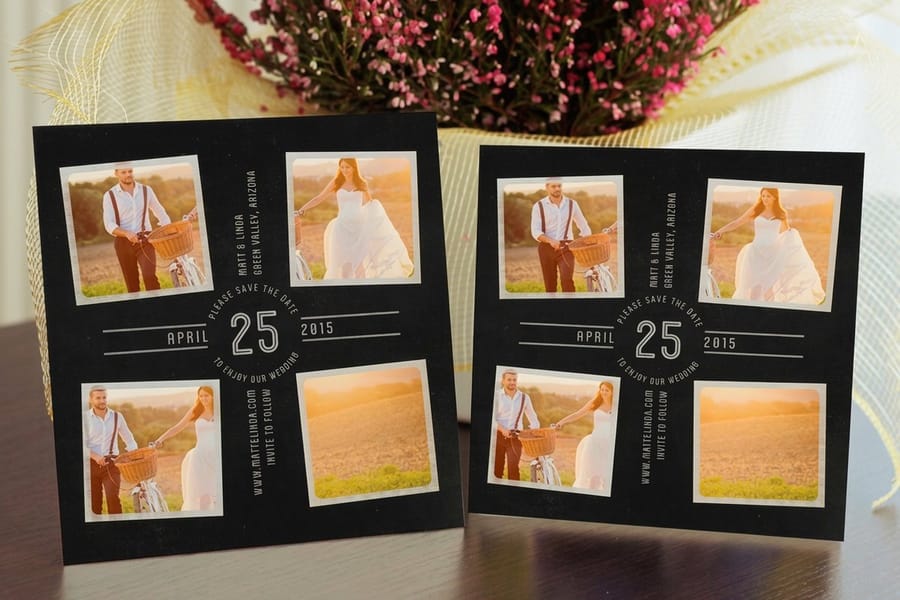
Send one when a guest would have to book travel, reserve a hotel room or request a day off. A destination weekend, a milestone birthday drawing family from three states, a party on a holiday weekend: all worth the extra mailing. Skip it for a local Saturday afternoon, where a save the date arriving in March for a June party simply gets read once and forgotten before the invitation ever shows up.
Two rules keep them from backfiring. First, never send one before the date and the city are locked. A corrected save the date does more damage than no save the date, because half your guests will remember the first version. Second, keep it deliberately thin: names, date, city, and the words that another mailing is coming. Everything else belongs on the invitation. The wording detail is worked through in how to make save the dates.
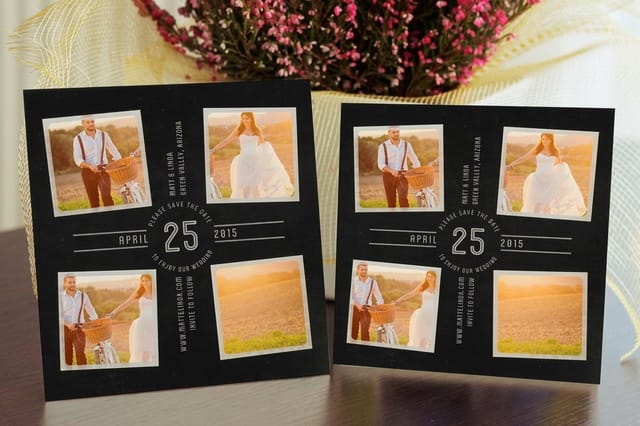
Format matters more here than on the invitation. Save the date cards start at $19.77 and mail as postcards with no envelope to stuff, which cuts both cost and an evening of addressing. Save the date magnets start at $19.68 and do something a card cannot: they end up on a refrigerator door where the date is seen every day for four months. When the gap between the announcement and the party is long, that visibility is the whole argument. Addressing the postcard version has its own rules, covered in how to address save the date postcards.
Picking a Format That Fits the Schedule and the Budget
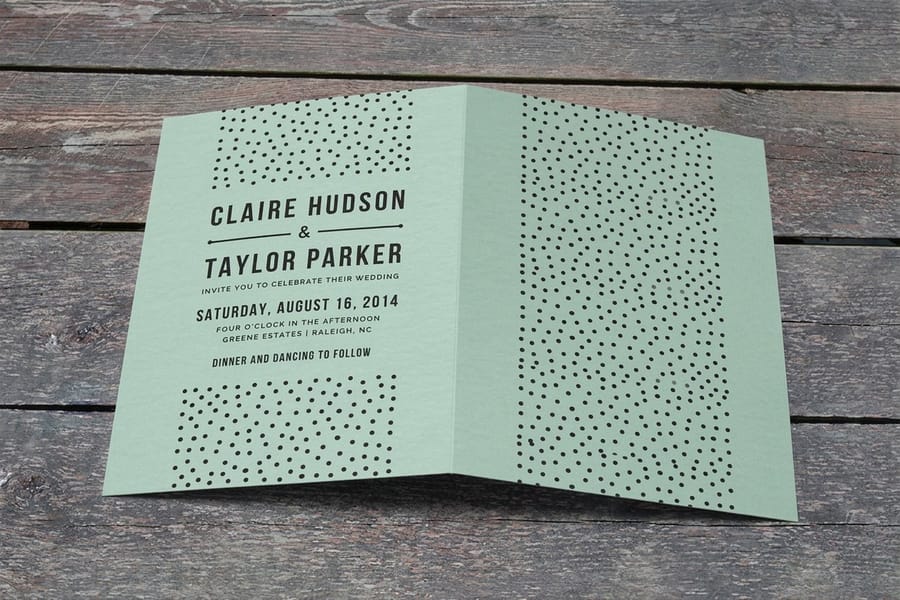
Format affects your timeline in two ways people rarely connect: how long assembly takes on your kitchen table, and how much detail you can carry without a second insert.
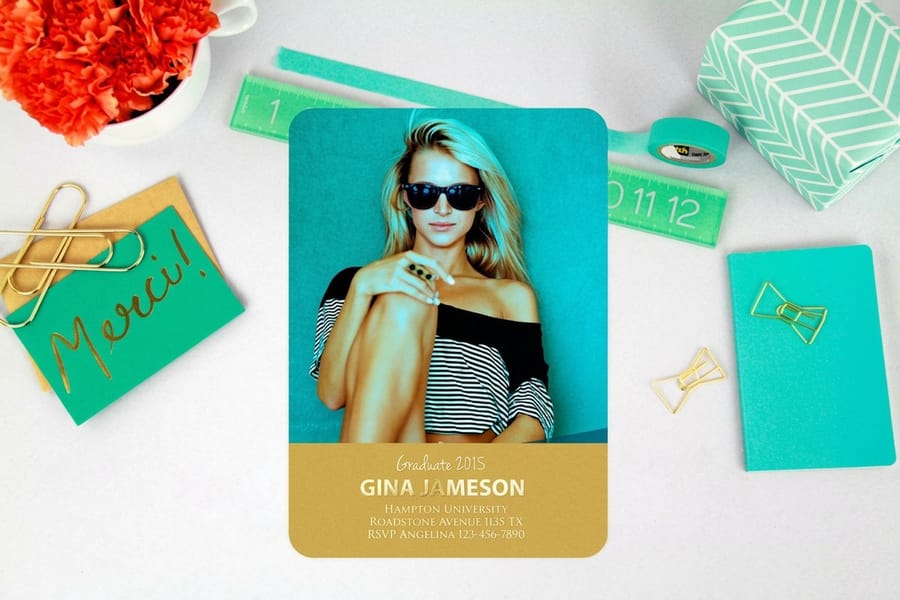
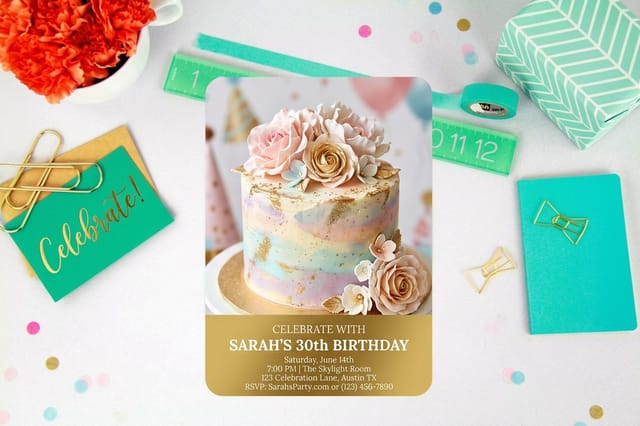
A flat card is the fastest path. Invitation cards start at $19.77, print full colour on both sides, and go straight into an envelope with nothing to fold or collate. For a birthday, a shower or a graduation party, that is usually the whole job, and birthday invitations start at the same $19.77 with artwork already suited to the occasion.
Folded invitations start at $38.22, roughly double the flat card, and buy you four printable panels instead of two. That extra room is worth it when the party needs directions, a parking note, an agenda or a registry line that would otherwise force a separate insert card. It is not worth it for a party whose entire message is a date, a time and an address. The trade-off between the two is broken down in folded versus flat invitations, and the size and envelope pairings sit in the invitation sizes guide.
One decision hides inside the size choice. A larger or squarer invitation needs a non standard envelope and often costs more to mail, which is a small surcharge per guest but a real one across a hundred and fifty. Check the reply piece too: the sizes in the RSVP card size guide are the ones that fit inside an invitation envelope and mail back at the card rate. To see every option side by side, the invitation printing category lists the flat, folded, metallic and specialty stocks together.
Wally counts backward
From the headcount, to the RSVP, to the mailbox
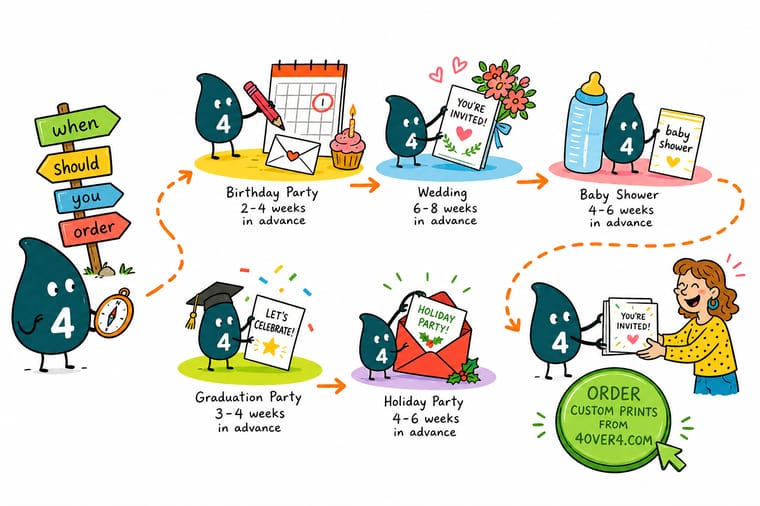
Wally starts at the party and walks backward. The caterer wants a number seven to ten days out, so the RSVP goes a few days before that. Guests need two weeks to answer, which puts the invitation in the mailbox three to four weeks ahead. Then he adds printing, envelope stuffing and transit, and orders about a week earlier still. If anyone on the list needs a plane ticket, he doubles the front half and mails a save the date months before.
Order invitation cards →Specs and pricing
Invitation formats, sizes, and starting prices
Compare the flat card, the save the date and the folded invitation side by side, with live configuration choices and starting prices straight from the 4OVER4.COM configurator.



Print it
Order the invitations in time to mail them

Explore more
Where to go next
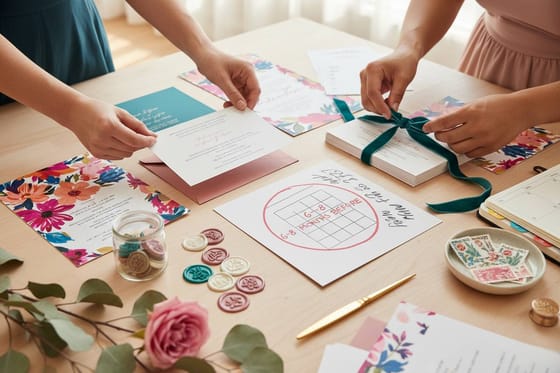



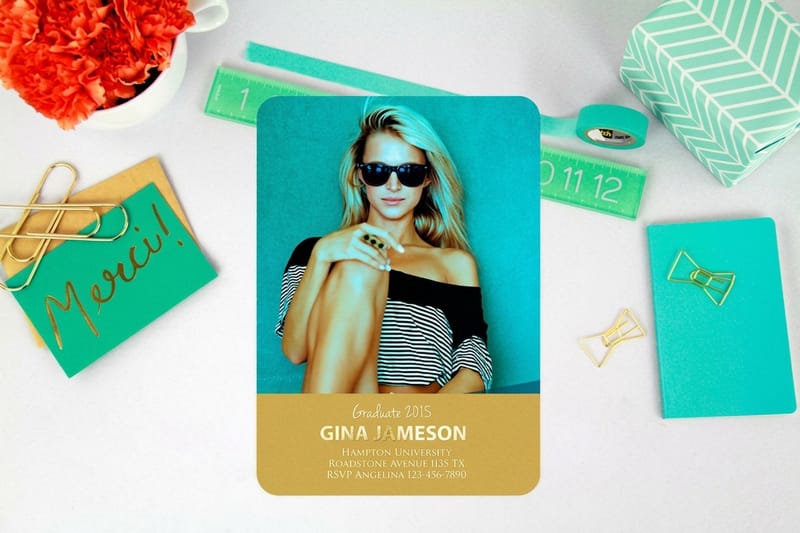
By the numbers
Event printing you can schedule around at 4OVER4
Common Questions
Your invitation timing questions, answered
How far in advance should you send out party invitations?
Three to four weeks ahead for a normal party, counted from the day the invitation reaches the guest rather than the day you order it. That window is long enough for people to arrange a sitter or shuffle a weekend, and short enough that the date stays in mind. Push it to six to eight weeks when guests travel or take time off, and pull it back to two weeks only for a small, local, casual gathering where a text would have worked anyway.
Is two weeks too late to send an invitation?
For a casual get-together of under twenty local people, two weeks works. For anything catered, ticketed or held on a weekend people book early, two weeks means a thinner turnout and a guest count you cannot trust. If two weeks is all you have, do not mail. Hand deliver, or send a digital note immediately and follow it with the printed invitation as the keepsake. Rush production exists for exactly this situation, and the guide on how to get same day invitation printing walks through what is still possible.
Do you need a save the date for a birthday party?
Only if the party asks something of the calendar that a normal weekend does not. A milestone birthday with out of town family, a destination weekend, or a date that falls near a holiday all justify one. A Saturday afternoon party for local friends does not, and sending a save the date for it just doubles the postage. The test is simple: if a guest would need to book travel or request a day off, send one.
When should the RSVP deadline be?
Two to three weeks before the party for anything catered, and one week before for a casual event. Caterers and venues usually want a final headcount seven to ten days out, so setting the RSVP a little earlier than that leaves room to chase the people who never reply. Print the deadline as a date, not as a number of days, because a date removes the ambiguity that produces late replies.
Should the save the date and the invitation say the same thing?
No, and that is the point of having both. A save the date carries the name, the date and the city, and nothing else. The invitation carries the venue address, the start time, the dress code, the RSVP deadline and any registry or parking detail. Sending full details twice invites confusion when one of them changes, and a save the date sent before the venue is locked is the single most common way a host ends up correcting themselves.
How long does invitation printing and mailing take?
Plan on about seven to ten days between placing the order and dropping envelopes in the mailbox. Production runs first, delivery to you follows, then you still have to stuff and address the envelopes, which takes an evening for fifty guests and longer than anyone expects for a hundred. Confirm the exact production and shipping options on the product page before you commit to a mail date, because the turnaround varies by stock, size and finish.
Get Started
Ready to get the invitations in the mail?
Pick a flat or folded format, set your quantity, and we print invitations that reach your guests with enough runway to actually reply.
Legal Disclaimer
Gold Standard guarantees apply to all standard orders placed through 4over4.com. Price match requires verifiable proof of a competitor's published price for an equivalent product with matching specifications and turnaround time. Satisfaction guarantee covers manufacturing defects and print quality issues. Contact support with order number and documentation. On-time delivery rate based on tracked orders 1999 to 2026. Individual results may vary based on shipping carrier performance.
