
The Safety Culture Shift That Transforms Teams


Where teams get stuck, why blame keeps them there, the five moves in the order that works, and the numbers that show the shift is taking hold before an injury rate ever moves.
A safety culture shift happens when a team stops asking who broke the rule and starts asking what let the failure happen, and it shows up first as more reports rather than fewer. The mechanism is a reporting loop people trust: fast to use, owned by a named person with a date, and closed out loud so everyone hears what a report changed. Blame stalls it, a published just culture unstalls it, and printed signs belong at the end of the sequence rather than the start.

Quick answer
A loop people trust, not a campaign people remember
The shift is mechanical before it is cultural. People report small problems when reporting is fast, when a named person owns the fix, and when they hear out loud what their report changed. Take away that last step and the reporting rate falls back within about a month, whatever the posters say. Blame is what makes the loop expensive to use, so a published just culture comes before any visual program, and print belongs at the point where a person makes a decision rather than on a corridor wall.
What Actually Changes When Safety Culture Shifts

The shift is not a new binder. It is a change in what a supervisor says in the first thirty seconds after something goes wrong, and everything downstream follows from that.
Patrick Hudson described the progression as a ladder, and it is still the clearest map of where a team sits. At the bottom, safety matters only when a regulator is in the building. One rung up, the team reacts hard after each incident and relaxes between them. Above that sits the calculative stage, where the systems are genuinely in place, audits pass, and paperwork is complete, which is where a great many competent organisations stop. The two rungs above are the ones that change outcomes: proactive, where the team goes looking for the next failure before it happens, and generative, where safety is simply how the work gets planned and nobody needs a campaign about it.
| Rung | What the team believes | What a supervisor asks first | Tell-tale sign |
|---|---|---|---|
| Pathological | Safety is a cost imposed from outside. | Who talked? | Incidents are quietly settled rather than recorded. |
| Reactive | We fix things after they hurt someone. | Who broke the rule? | A burst of activity after each event, then silence. |
| Calculative | We have a system for this. | Was the procedure followed? | Audits pass, and the same near misses keep repeating. |
| Proactive | We go looking for problems. | What let this happen? | Reports rise, and most of them are about conditions. |
| Generative | This is how we do the work. | What is it still telling us? | New starters learn the habits from the crew, not the induction. |
Read the third column, because it is the one you can hear from across a workshop. Most teams that describe themselves as safety first are sitting at calculative, with excellent documentation and a stubborn incident pattern. Getting off that rung is the shift this page is about, and it starts with the reporting loop in the diagram above.
Why Blame Is the Thing That Keeps a Team Stuck

Every team that cannot get past the calculative rung has the same root cause: reporting bad news costs the reporter more than staying quiet. Fix that trade and most of the rest follows on its own.
The confusion to clear up first is that a just culture is not a blame free culture. Blame free is a promise no manager can keep, and a crew that has been told nothing will ever happen to anyone knows it is being handled. What works is a published response that depends on the choice a person made rather than on how badly the outcome landed. Honest error gets support and a system change. An at risk shortcut, the kind that felt sensible at the time, gets a conversation about why it was tempting and what made the safe route slower. A conscious decision to run a known serious risk still gets discipline, and saying so plainly is what makes the first two categories believable.
For the gray cases, use the substitution test. Ask whether three other competent people, on the same shift, with the same information and the same production pressure, would probably have done the same thing. When the answer is yes, you are looking at a condition rather than a person, and disciplining the person leaves the condition in place for whoever is on shift next week.
The practical failure mode is subtler than shouting. It is the supervisor who accepts the report politely and never mentions it again. Nothing was punished, and the reporter still learns that speaking up produced nothing, which costs you the next report just as effectively.
Five Moves That Move the Needle, in Order
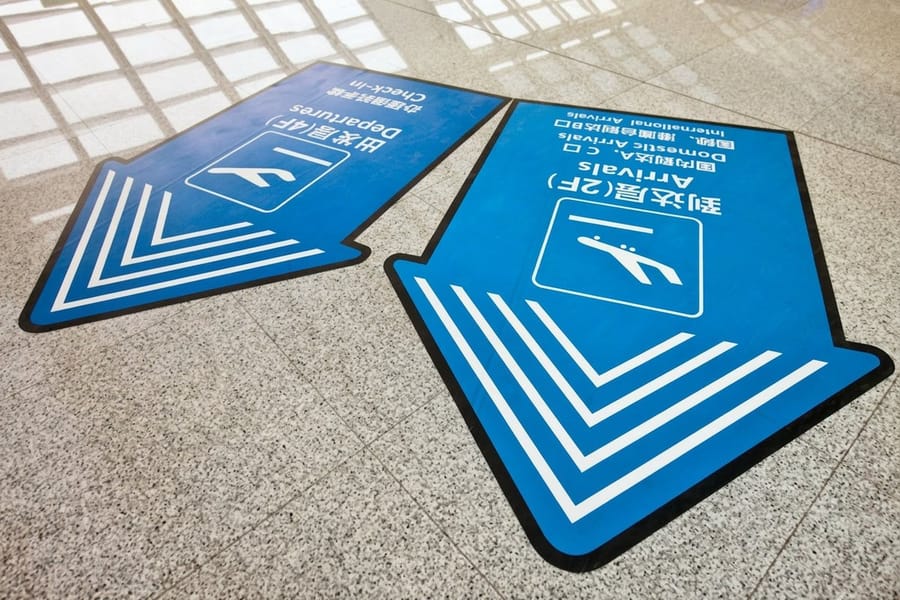
Do these in sequence. Running the visible ones first, before the reporting loop works, is what produces a safety campaign that everybody remembers and nobody believes.
- Make reporting take under a minute. If the form has fourteen fields, you are measuring persistence, not hazards. A card, a phone photo to one number, or a two field app all beat a good form nobody fills in.
- Give every report a named owner and a date. Anonymous ownership is no ownership. Names and dates are what turn a list of complaints into a maintenance queue.
- Close the loop out loud. Start each week by naming what came in and what changed. This is the step that is skipped most often and the one that decides whether reporting survives past the launch.
- Remove the hazard before you label it. The hierarchy of controls ranks elimination, substitution and engineering above administrative controls and personal protective equipment. Signage sits low on that list on purpose, and a sign in front of an unguarded hazard is a record that you knew.
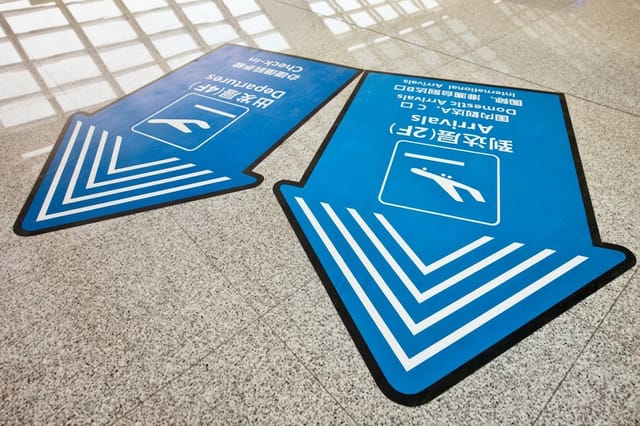
- Put the message at the moment of decision. Once the hazard is engineered down as far as it goes, the residual risk is a decision someone makes in a specific spot. That is where print earns its place, and where printed floor graphics at $34 do more work than a general awareness poster in a corridor.
The ordering matters more than the content. A team that installs the visual layer first gets a floor covered in messages that contradict what the schedule rewards, and crews read that contradiction accurately within days.
Making the Standard Visible Where the Work Happens
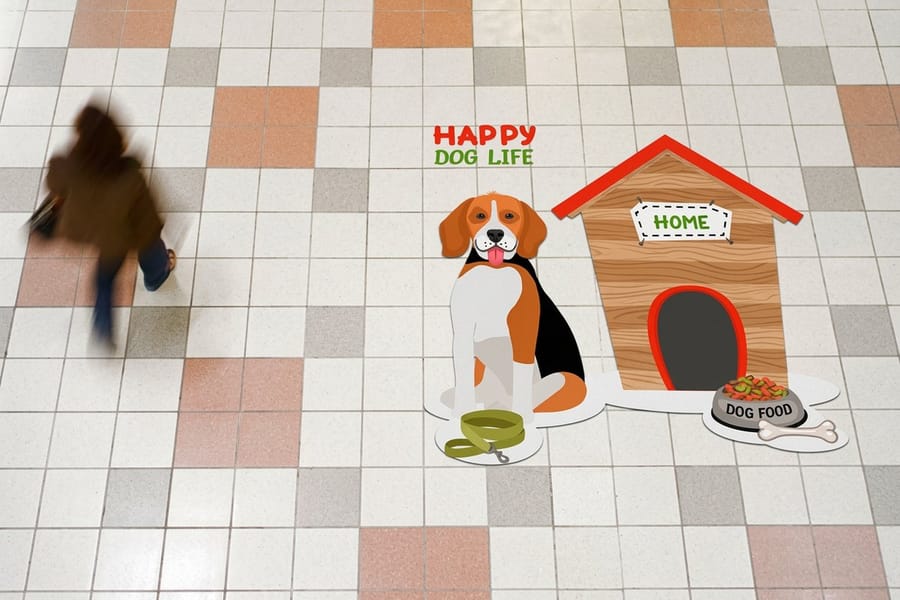
Print is the last layer, not the first, and it is worth doing properly once the layers underneath are real. The rule is simple: a message works at the point and moment of decision, and fades into the background everywhere else.
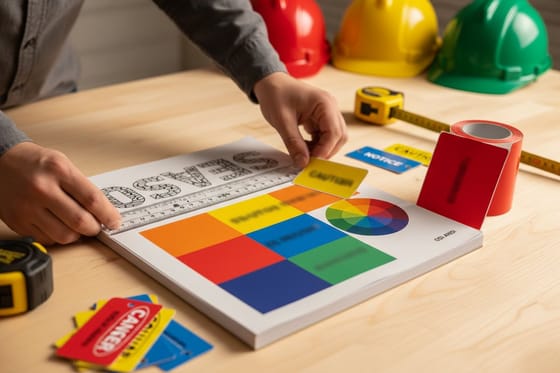
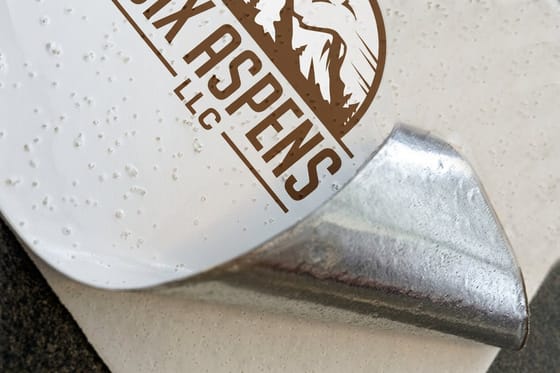
Permanent hazard points. Anything that has to survive a wash down, a forklift knock or five years of sunlight needs a rigid substrate rather than paper in a frame. Aluminum signs start at $36 and hold their color outdoors, which is why they are the default for gate rules, chemical stores and plant rooms. For interior notices that change more often, styrene signs at $29 cost less to replace when a rule is updated. Get the colors right before you print either: our guide to OSHA safety colors and ANSI color codes covers what red, orange, yellow and green are permitted to mean.
Traffic and separation. The highest value printed item on most sites is not a sign at all. It is the marking on the floor that tells a person on foot exactly where the vehicle aisle ends. Floor graphics start at $34 and go where the decision is made, which beats a wall poster that is read once. If the surface is rough or heavily trafficked, read the floor graphic installation guide before ordering, because a rushed install lifts at a corner and a lifted corner becomes its own trip hazard.
The rotating focus. One theme a month, changed on a schedule, stays visible in a way a permanent board does not. Large format posters start at $108.75 for a run, and the discipline that makes them work is the calendar, not the design. Anything left up past its month is furniture. Pair the rotation with the walk itself: plan where people will actually stop and look using the same method in our wayfinding signage planning guide.
The reporting tools themselves. Near miss cards, toolbox talk sheets and action lists live in a pocket or on a wall by the door. Printed notepads from $93.37 make the reporting step physical, which matters on sites where phones are restricted or gloves make a screen useless. If you are assembling the wider set of printed material a site needs, the office printing checklist lists it in one place, and the range of formats sits in large format printing.
How to Tell It Is Working Before an Injury Rate Moves

The injury rate is the wrong instrument for a team under a few hundred people. Serious injuries are rare enough that a good year and a lucky year look identical, and a rate that improves for two quarters tells you very little about whether the shift is real.
Watch four leading numbers instead. Reports received per month, which should rise early and then plateau higher than where it started. Median days from report to closure, which is the number that tells you whether ownership is real. Percentage of agreed actions completed by their date, which is the honest version of a management commitment. And participation, meaning how many different people filed a report rather than how many reports came in, because a healthy month is thirty people reporting once, not one person reporting thirty times.
Two traps. First, a rising report count read as a deteriorating site. It is the opposite, and the finance or operations conversation about that needs to happen before the numbers move, not after. Second, targets attached to report volume, which produce padded reports about litter and cable ties within a fortnight. Count them, publish them, and never set a quota.
The qualitative check is worth more than any of it. Ask a person who joined three months ago where they learned how things are done here. If they name a colleague and describe a habit, the shift has taken. If they name the induction video, you have a system and not yet a culture.
Wally explains the safety culture shift
Reports go up first, injuries go down after
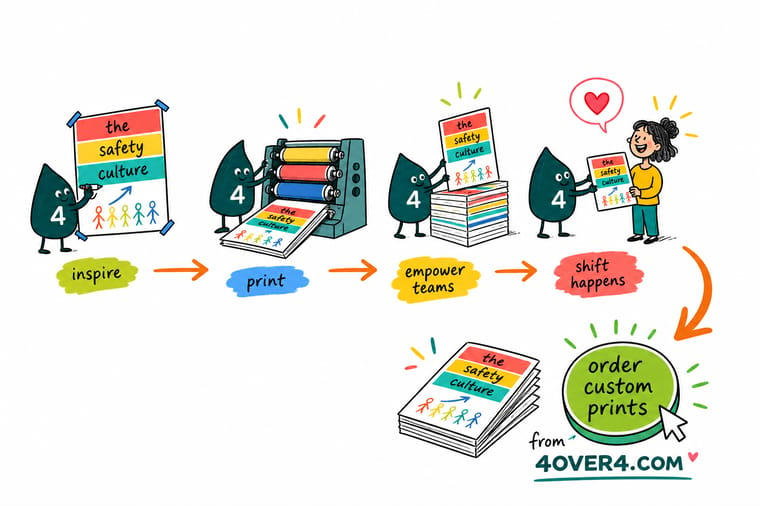
Wally does not start with posters. He makes reporting take under a minute, puts a name and a date on every report, then stands in front of the crew and says what changed because of it. That last part is the whole trick. Once people believe a report goes somewhere, they tell him about the loose grating before it becomes an ankle, and only then does he print the signs and the floor markings that hold the standard at the spot where someone has to decide.
Order aluminum safety signs →Specs and pricing
Sizes and starting prices for the visual layer
The three formats that carry most of a site standard, with live configuration choices and starting prices straight from the 4OVER4.COM configurator.


Print it
Print the reminders that sit where the decision is made


Explore more
Where to go next


By the numbers
Site signage and safety print from 4OVER4
Common Questions
Your safety culture questions, answered
How long does a safety culture shift take?
Plan in quarters, not weeks. The first visible change is usually reporting: within a month or two of leaders responding well to bad news, people start telling you about small things they used to swallow. The deeper change, where a new hire picks up the habits from the crew rather than from an induction slide, takes a year or more because it only holds once the people who model it have been consistent through a busy period. The fastest way to reset the clock to zero is to punish the first person who reports something inconvenient.
What is the difference between safety culture and safety climate?
Climate is the snapshot, culture is the substrate. Safety climate is what a survey measures this month: how people currently rate the priority their manager puts on safety versus output. Safety culture is the set of shared assumptions underneath, the things nobody says out loud because everybody already knows them. Climate moves quickly and can be moved by a single good or bad week. Culture moves slowly, which is why a climate survey is a useful thermometer but a poor scoreboard.
Do safety bonuses tied to injury rates work?
They work at hiding injuries. If a crew loses a bonus when someone reports a sprain, the sprain stops being reported and the underlying hazard stays. OSHA has warned employers about rate based incentive programs that discourage reporting for exactly this reason. If you want to spend the money, attach it to leading behaviors you can see: hazards reported and closed, actions completed on time, participation in walkthroughs. Reward the input, never the silence.
What actually is a just culture?
A published rule for how the organization responds to a person involved in an incident, based on the choice they made rather than the harm that resulted. Honest error gets support and a system fix. A deliberate shortcut that seemed reasonable at the time gets coaching and a look at why the shortcut was tempting. A conscious disregard for a known serious risk still gets discipline. James Reason described the substitution test for the gray cases: ask whether three other competent people, in the same conditions, with the same information, would probably have done the same thing. If the answer is yes, the problem is the conditions.
How do we run a toolbox talk that people do not hate?
Keep it to five minutes, hold it where the work happens rather than in a room, and make it a question instead of a reading. A supervisor who asks what could hurt someone on this job today gets a different meeting than one who reads a laminated hazard sheet aloud. Rotate who leads it, including people who are not supervisors. Finish by naming one thing that will change today and who owns it, then start the next talk by reporting whether it happened.
Do safety posters and signs actually change behavior?
Not on their own. A poster in a corridor is background within a week. The same message works when it sits at the point and moment of decision, so a floor marking at the exact spot where a forklift aisle crosses a walkway earns its cost while a general awareness poster in the break room mostly does not. Treat printed material as a cue for a decision people are already about to make, rotate it so it stays visible, and never let it substitute for removing the hazard.
Get Started
Safety posters run 50 for $108.75 on 100# Gloss Text
Pick the substrate for the spot, set your sizes, and we print the signs, floor markings and reporting stationery that back up a standard your crew already believes in.
Legal Disclaimer
Gold Standard guarantees apply to all standard orders placed through 4over4.com. Price match requires verifiable proof of a competitor's published price for an equivalent product with matching specifications and turnaround time. Satisfaction guarantee covers manufacturing defects and print quality issues. Contact support with order number and documentation. On-time delivery rate based on tracked orders 1999 to 2026. Individual results may vary based on shipping carrier performance.
