
What Sticker Singles Are and When They Beat Sheets or Rolls


Singles are the loose, one at a time format of a die-cut sticker. The cut works in a specific way, it prices differently from sheets and rolls, and a shape has to be drawn to survive the peel.
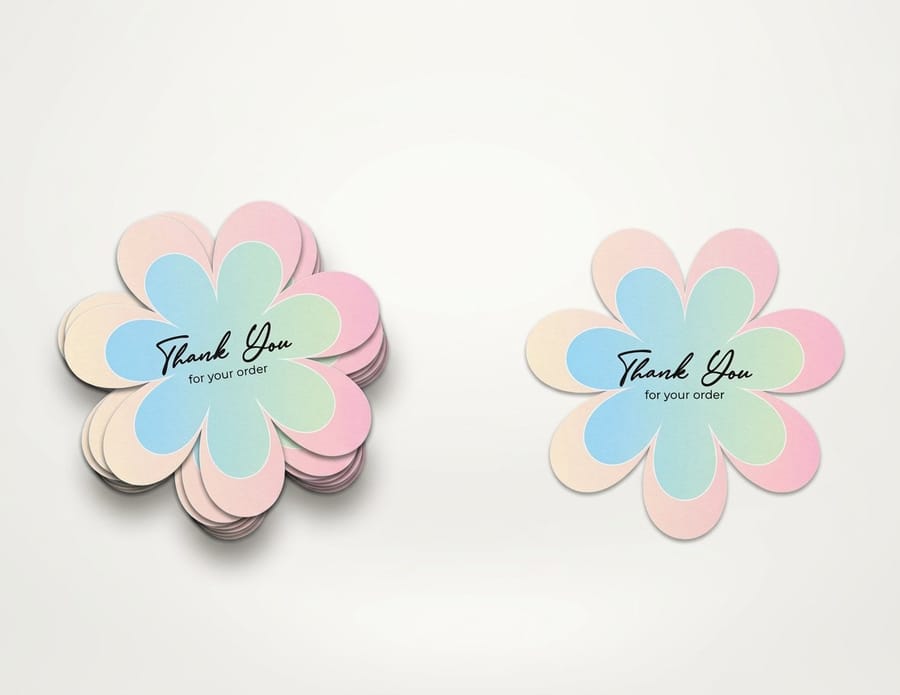
A sticker single is one individual sticker on its own piece of backing, cut through the face, the adhesive and the liner so it arrives loose rather than attached to anything. Sheets and rolls are kiss cut instead, which means the blade stops at the liner and the liner is what holds the stickers together. Order singles when each sticker gets handed to a different person, order a sheet when several stickers are sold as one item, and order a roll when somebody has to apply thousands of them.
Quick answer
One sticker, one backing, cut all the way through
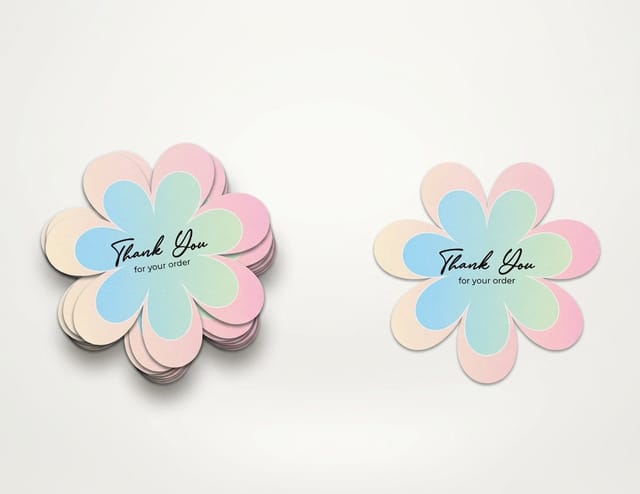
Singles are die-cut stickers that leave the press already separated. The blade follows the outline of your artwork and passes through the printed face, the adhesive and the liner, so there is no shared sheet and nothing to trim. On a sheet or a roll the same blade stops at the liner, and the unbroken liner is what keeps those stickers attached to each other. Singles suit anything handed over one at a time. Sheets suit sticker packs sold as a single product. Rolls suit anybody applying stickers in the hundreds per hour.
How a Single Gets Cut, Step by Step
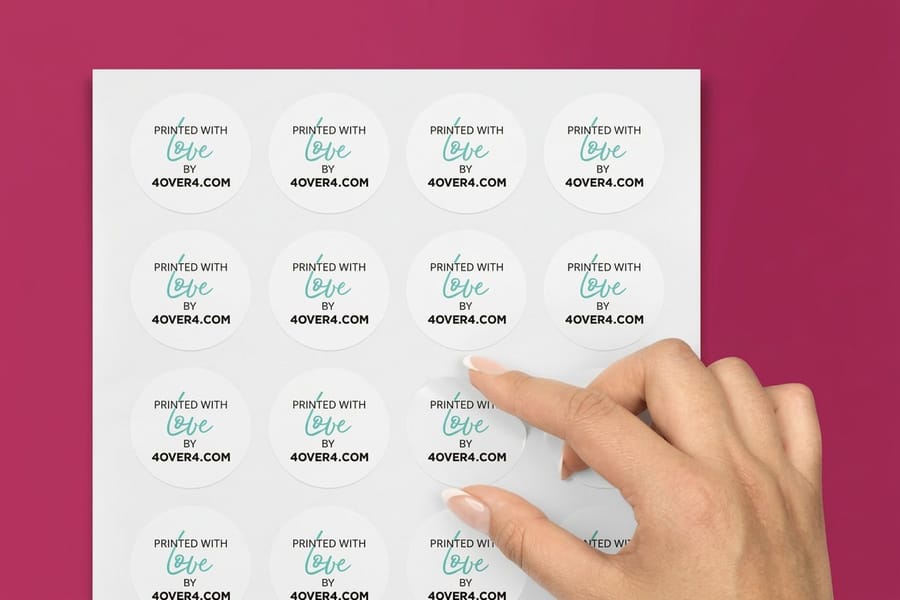
Four things happen between your file and a box of loose stickers, and each one explains a rule you will run into later.
One, the sheet prints. Your artwork goes down on vinyl or on a coated sticker paper, ganged up so several designs share the same press sheet. Nothing about the shape has happened yet.
Two, the laminate goes on. A clear film is applied over the print. On a single that film is what takes the fingernails, the car wash and the sunlight, so it is doing more work here than on a sheet that lives in a drawer.
Three, the cutter follows your path. A blade or a laser traces the contour path in your file, offset out from the art. On a single it goes all the way through the face, the adhesive and the liner. That is the whole definition of the format, and it is why the kiss cut and die cut distinction matters more than it sounds like it should.
Four, the waste is weeded and the pieces are boxed. The material between the shapes is stripped away and what is left is a pile of individual stickers, each carrying its own backing. There is no sheet to store, no perforation to snap, nothing to trim at your end.
Compare that with a sheet. There, step three stops at the liner. The face and adhesive are cut, the liner is untouched, and it is the intact liner that holds twelve stickers in a grid. Cut a hair too deep on a kiss cut and the liner splits, and the sheet turns up in the box as loose parts. Cut too shallow and the customer tears the sticker trying to pick it off. The tolerance on a single is much more forgiving, because going right through is the point.
Singles, Sheets and Rolls, and When Each One Is the Right Order
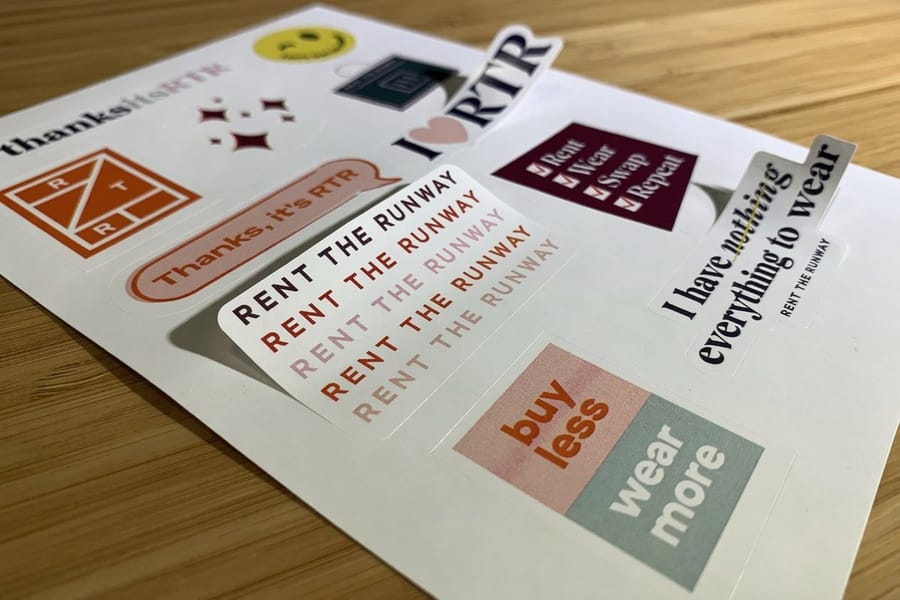
The three formats print from the same materials and cost roughly the same to manufacture. What separates them is who handles the sticker afterwards and how many times.
| Format | How it is cut | What you hand over | Where it wins |
|---|---|---|---|
| Singles | Through the face, adhesive and liner. | One loose sticker per person, per box, per order. | Giveaways, event tables, one sticker dropped into a shipped parcel, laptop and bottle stickers people choose individually. |
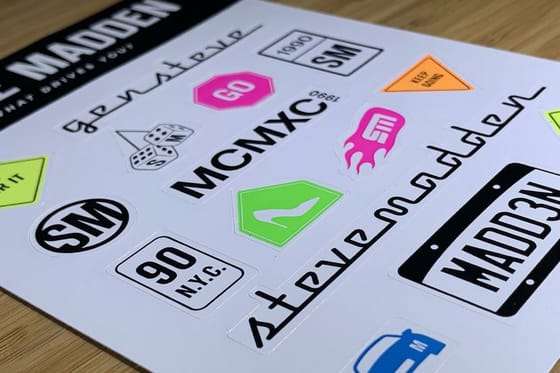
| Sheets | Kiss cut, liner left whole. | A flat card with several stickers on it. | Sticker packs sold as one item, planner and kids sets, anything that has to survive a mailer flat and look like a product. |
| Rolls | Kiss cut on a continuous web, wound on a core. | A roll that feeds a hand applicator or a machine. | Product labeling at volume, seals on packaging, anything where somebody applies thousands in a shift. |
Read the last column, not the price. A run of 500 singles handed out at a trade show is a good order. The same 500 as a sheet forces the recipient to carry a card around, which is worse. Flip it to 5,000 jars on a production bench and singles become a slow, expensive way to spend labor, because each one is a separate peel. That is the point where roll labels stop being an upsell and start being the cheaper answer, and the roll versus sheet comparison goes through the applicator side of it properly.
There is a middle case worth knowing. If you sell sticker packs, order the pack as a sticker sheet and the loose promotional design as singles. Two formats, two jobs, and the sheet doubles as the packaging. Our sheet layout guide covers how to space the shapes so the kiss cut has room to work.
Choosing the Material a Single Is Cut From
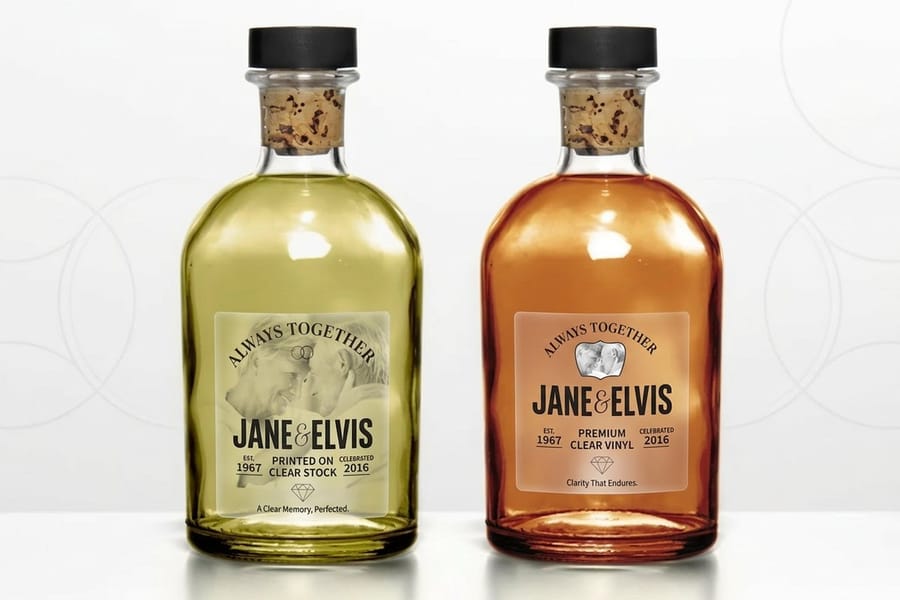
A single is handled more than a sheet sticker, so material choice shows up faster. The stock decides whether it survives a pocket, a windscreen or a dishwasher.
Vinyl is the default for anything that leaves the building. It flexes over a curved bottle, shrugs off water, and with a laminate it holds color outdoors for years rather than months. Vinyl stickers are what to order for laptops, water bottles, hard hats and vehicle glass. Coated sticker paper is cheaper and prints beautifully, and it is the right call for seals on packaging, indoor promotions and anything used once, but it darkens and cockles the moment it gets wet.
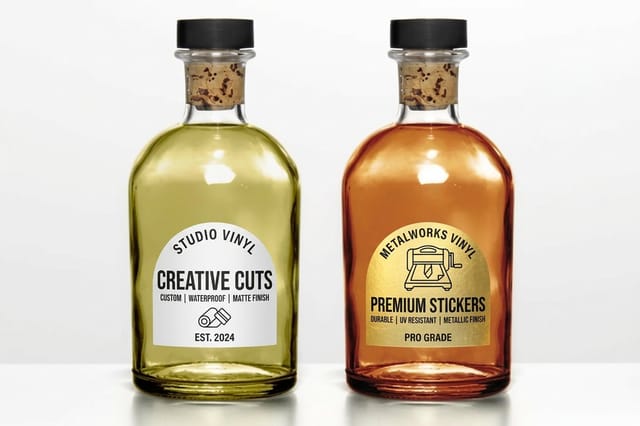
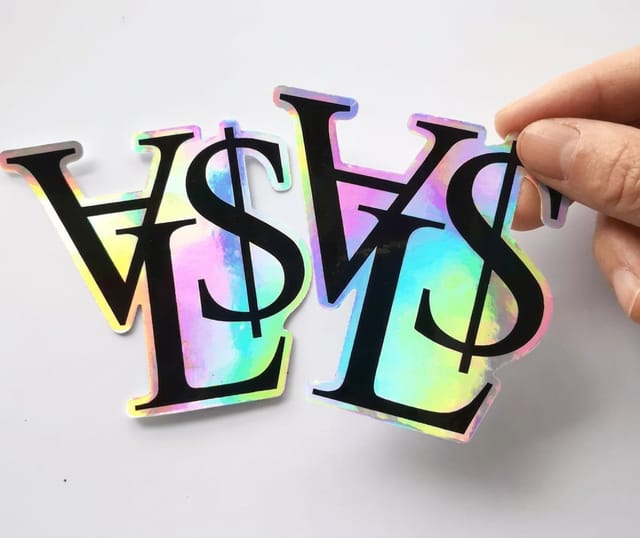
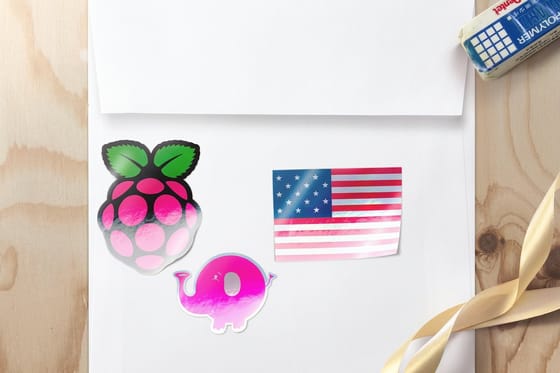
Then there are the two effect materials people underestimate. Clear stickers have no white base unless you ask for one, so whatever is behind the sticker shows through the artwork. On a white bottle that reads as printed directly on the glass, which is the effect people want. On a dark surface, pale artwork disappears. If the design has to hold up over an unknown background, specify a white ink layer under the art and accept that it stops being fully transparent. Holographic stickers put a rainbow film under the print, which does something spectacular to a bold logo and something muddy to a photographic image, because the film competes with midtones.
The rest of the material decision is durability and finish, and the sticker materials guide lays out the full set. If the piece is going outdoors, read the outdoor material guide before you pick, because the laminate matters more than the vinyl underneath it.
Setting Up Artwork So the Blade Follows It Properly
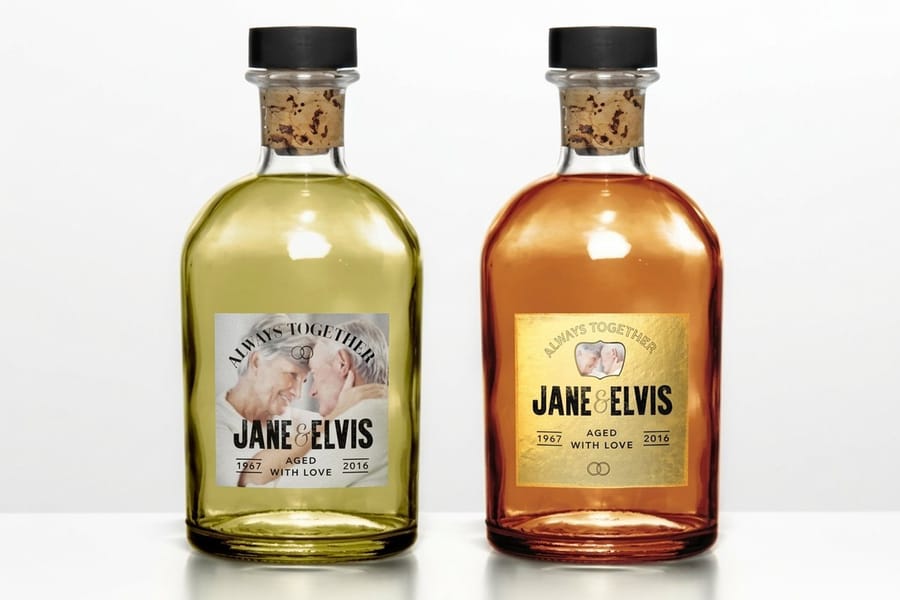
Most disappointing singles are cut exactly as the file asked. The file was wrong. Four habits fix nearly all of it.
- Give the cut path an offset. Draw the contour about an eighth of an inch outside your artwork, as its own named spot color path, so there is a border of material for the blade to hold. Printing and cutting are separate operations and they can shift against each other by a fraction of a millimeter, and that border is what absorbs the shift instead of shaving a sliver off one edge of your logo.
- Extend the background past the cut. The color or image behind the design has to run beyond the cut line, not stop at it. Stop at it and any drift shows as a white hairline down one side.
- Soften the interior corners. A blade cannot pivot on the spot. A sharp interior notch you draw square comes back with a small radius on it, so draw the radius yourself and the result matches your file rather than surprising you.
- Fatten anything thin. Narrow tails, thin script and single hairline strokes tear when somebody lifts the sticker off its liner. Take them to roughly an eighth of an inch or fold them into the body of the shape.
Send vector art at final size with fonts converted to outlines. If you would rather not build the geometry from scratch, the blank template library has correctly sized layouts to drop artwork into, and the sticker size guide is worth a look before you commit to a dimension, because a shape that is 20 percent smaller often costs meaningfully less without looking smaller in a hand.
What Singles Cost and How to Order Them
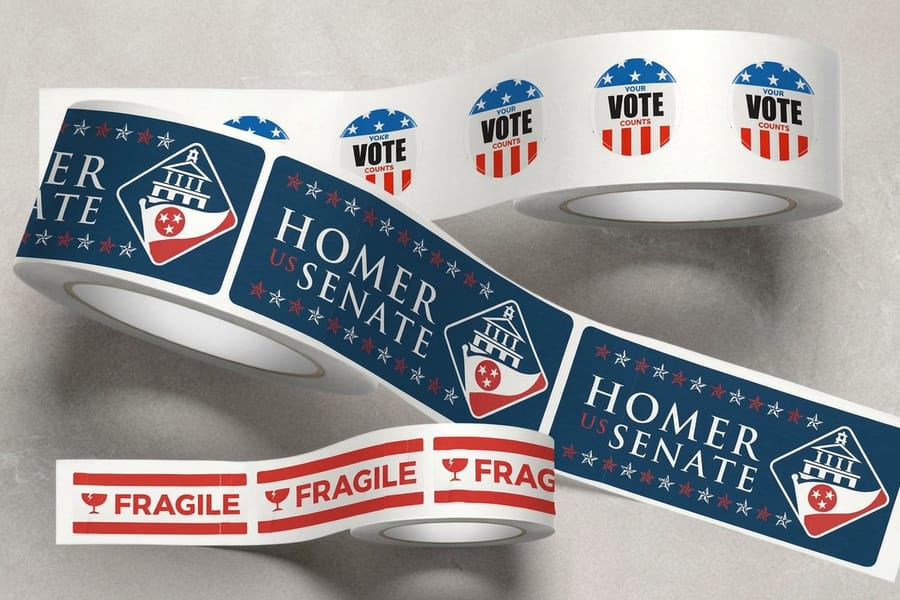
Start with the format, not the price, because the starting prices across formats are not comparable. Die-Cut Stickers start at $93.37, Sticker Sheets start at $181.24 and Roll Labels start at $322.98, but each of those is a starting price at that format's own minimum quantity. Configure the quantity you actually need on each product page and compare the two totals the widget returns. That is the only comparison that means anything.
What genuinely moves the number on a run of singles is quantity, then size, then material, roughly in that order. Doubling the quantity rarely doubles the price, because setup and the cutting file are paid for once. Going from paper to laminated vinyl costs real money and is usually worth it. Adding a holographic or metallic film costs more again, and is worth it only when the design is bold enough to carry it. The sticker pricing guide breaks down where each dollar goes.
Two practical notes before you order. First, order more than you think: the second run of the same design costs nearly as much as the first, because setup repeats. Second, if the singles are going to be sold rather than given away, decide the packaging at the same time, since a loose sticker in a padded envelope arrives curled. The packaging guide for sellers covers backing cards and sleeves. When you are ready, the full range of shapes, films and finishes sits in sticker printing, and the wider format list is at sticker and label printing.
Wally explains sticker singles
Cut all the way through, and it comes off on its own
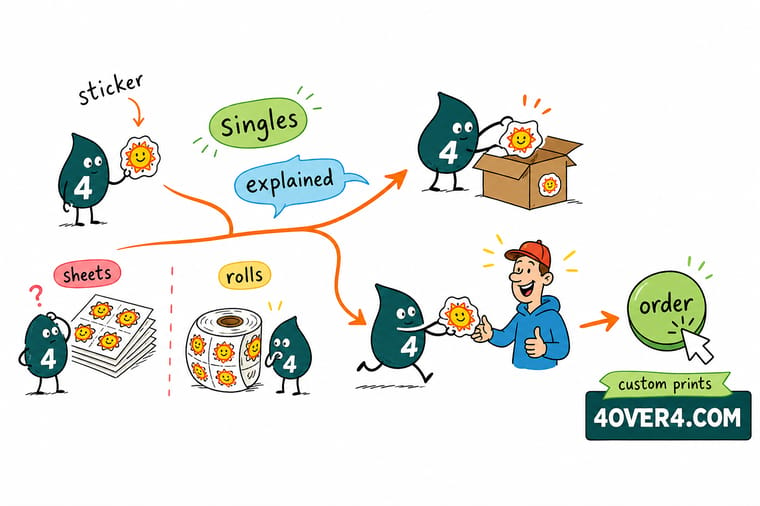
Wally puts a blade through the vinyl, the glue and the backing in one pass, so every sticker drops out of the sheet already loose. That is a single. On a sticker sheet he stops the blade at the backing, and it is the unbroken backing that keeps twelve stickers sitting in a grid. Same material, same printing, different depth. Hand one over at a stand and you want singles. Sell a set in a mailer and you want a sheet.
Order die-cut sticker singles →Specs and pricing
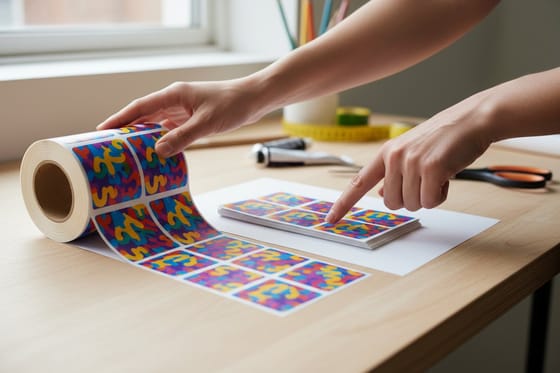
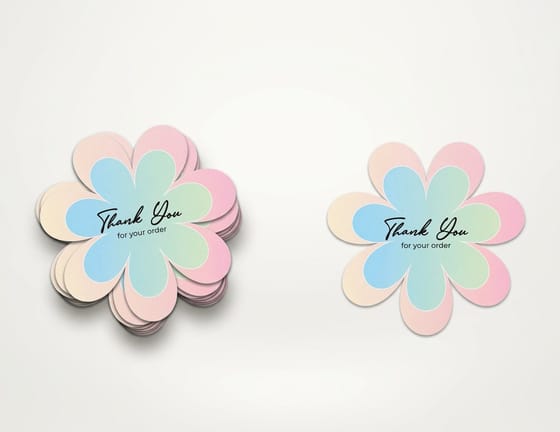
Singles, sheets and clear film, side by side
Configure each format at the quantity you actually need and read the totals against each other, since the starting prices sit at different minimums.


Print it
Order singles cut to your own outline
Explore more
Where to go next

By the numbers
Singles, sheets, rolls and holographic stickers
Common Questions
Your sticker singles questions, answered
What is a sticker single?
A sticker single is one individual sticker on its own piece of backing paper, cut to the outline of your artwork rather than to a square or a circle. The die passes through the printed face, the adhesive and the liner in one stroke, so each sticker comes off the press already loose. That is the difference between a single and a sheet: a sheet is kiss cut, which means the blade stops at the liner and the liner keeps every sticker attached to one another.
Are sticker singles the same as die-cut stickers?
In practice, yes. Singles is the ordering word for the format, die cut is the word for how the shape is made, and at 4OVER4.COM the product that delivers them is Die-Cut Stickers. The only reason to keep the two words apart is that a sticker sheet can also carry die-cut shapes on it. When someone says singles they mean each sticker arrives separate, on its own backing, ready to hand over one at a time.
How small can a sticker single be?
The limit is not really the size of the sticker, it is the width of its thinnest part. A one inch single is routine. A four inch single with a quarter inch tail is more fragile than a one inch solid circle, because the tail is where the vinyl tears as somebody lifts it off the liner. Keep any narrow element at roughly an eighth of an inch or wider, and if the design has a thin outline let it sit inside the cut border instead of forming the cut border.
Do singles cost more than a sheet?
Per sticker at low quantities, usually yes, because each one carries its own liner and its own outline in the cut file. Die-Cut Stickers start at $93.37 and Sticker Sheets start at $181.24, but those two numbers are not comparable per piece, since the minimum quantity is different for each format. The honest way to compare is to configure both at the quantity you actually need and read the two totals, which the price widget on each product page does live.
Can sticker singles go outside on a car or a water bottle?
Yes, if you order them on vinyl rather than paper and add a laminate. Vinyl handles rain, sun and a dishwasher cycle far better than a coated paper stock, and the laminate is what takes the scuffing and the UV. Paper singles are for indoor use, packaging seals and short campaigns. If the sticker is going on a truck panel or a bottle that gets washed, specify vinyl and say so at the order stage rather than hoping the default stock covers it.
What file do you need for a die-cut single?
Vector artwork at final size with the fonts converted to outlines, plus a cut path. Draw the cut path as its own named spot color path, offset out from your art by about an eighth of an inch, with the corners softened rather than left as sharp interior notches. A blade cannot turn a true interior right angle at small scale, so a corner you draw square comes back slightly rounded. If you would rather start from a correct file, the blank template library has the sizes already set up.
Get Started
Die-cut singles run 25 for $93.37, sheets 25 for $181.24
Upload the outline, pick vinyl or paper, and we cut every sticker through to the backing so it arrives ready to hand over.
Legal Disclaimer
Gold Standard guarantees apply to all standard orders placed through 4over4.com. Price match requires verifiable proof of a competitor's published price for an equivalent product with matching specifications and turnaround time. Satisfaction guarantee covers manufacturing defects and print quality issues. Contact support with order number and documentation. On-time delivery rate based on tracked orders 1999 to 2026. Individual results may vary based on shipping carrier performance.
