
Realtor Sign Posts Explained and How to Plant One That Stays Straight


Three frames hold a listing sign up, and they cost $29.89, $163.67 and $218.35. One post belongs on the lawn, the depth is a fixed number, and the riders each do one job.
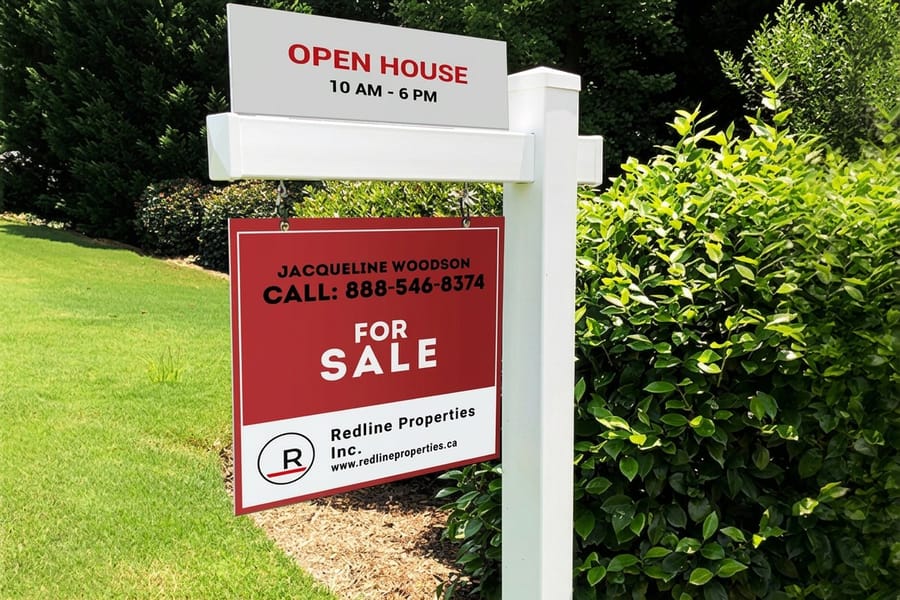
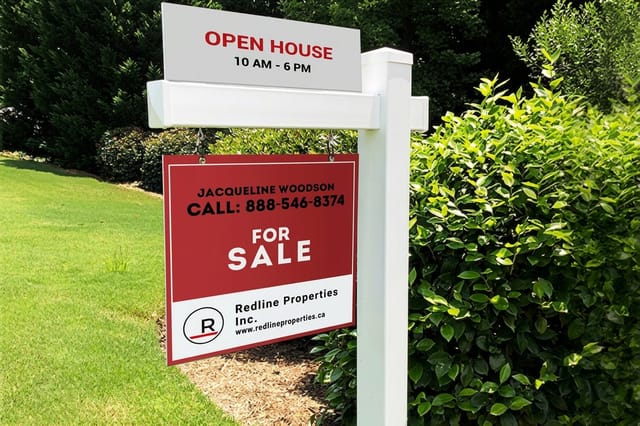
A realtor sign post is the frame that holds a listing sign off the ground, and three versions cover almost every job: a post and panel unit with a 6 foot PVC post and a hanging aluminum panel, a wire H stake pushed into a coroplast board, and a folding A frame for open house hours. The post and panel is the one that stays on the lawn for the whole listing, buried about 18 inches so roughly 4 feet 6 inches shows above grade. The other two go up in seconds and come home the same day.
Quick answer
One post stays for the listing, two frames go home at night
Pick the frame by how long the sign has to stand there without you. A post and panel kit buries about 18 inches of a 6 foot post and holds a rigid double sided aluminum panel at driver eye height for the whole listing, riders and all. A coroplast board on a wire H stake goes up in under a minute and is the right answer for directional signs and volume across a farm area. An A frame never touches the ground and belongs to the four hours an open house lasts. Costs are $218.35, $29.89 and $163.67 in that order.
The Three Realtor Sign Posts, and What Each One Holds
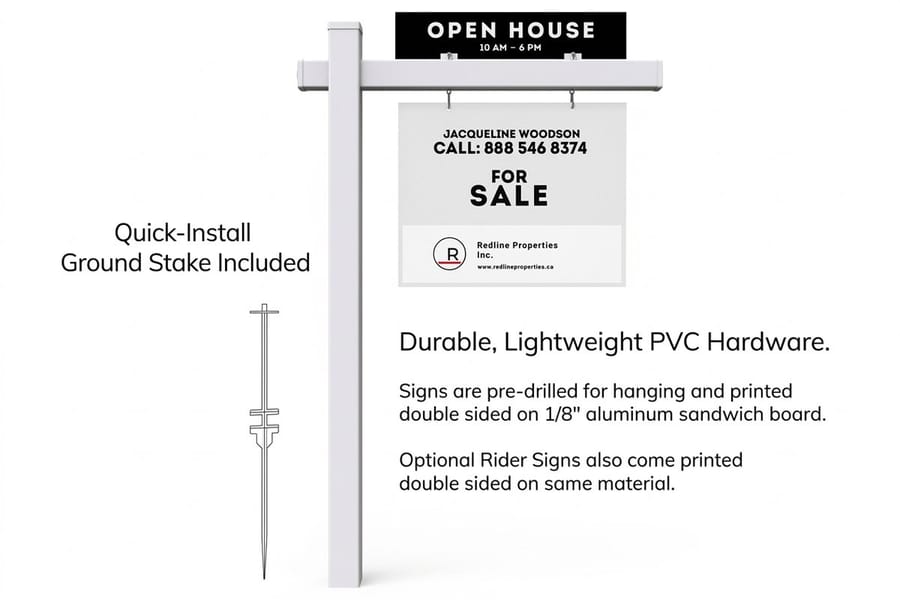
Agents talk about sign posts as one thing, but three different frames are doing three different jobs, and the mistake that costs the most is using the cheap one where the listing sign goes.
| Frame | What it holds | Starts at | Setup | Where it fails |
|---|---|---|---|---|
| Post and panel | A 1/8 inch aluminum panel hanging from the arm of a 6 foot PVC post. | $218.35 as a kit | Ten minutes, and you need a digging tool. | Frozen or rocky ground, and any spot where you cannot dig. |
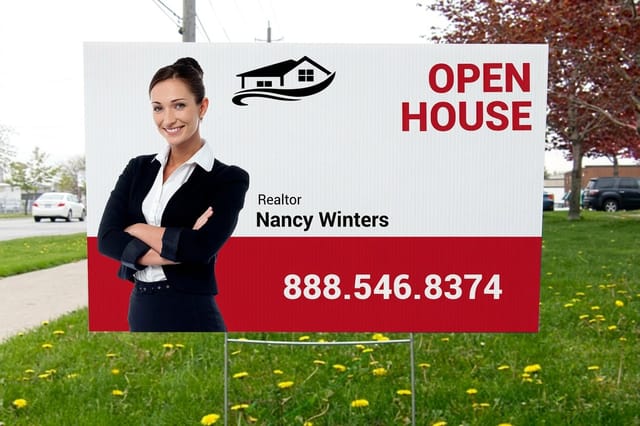
| H stake | A 4 mm coroplast board with the wire legs pushed into the flutes. | $29.89 per sign | Under a minute, push and go. | Hard clay bends the wire, and the board only reads from two faces. |
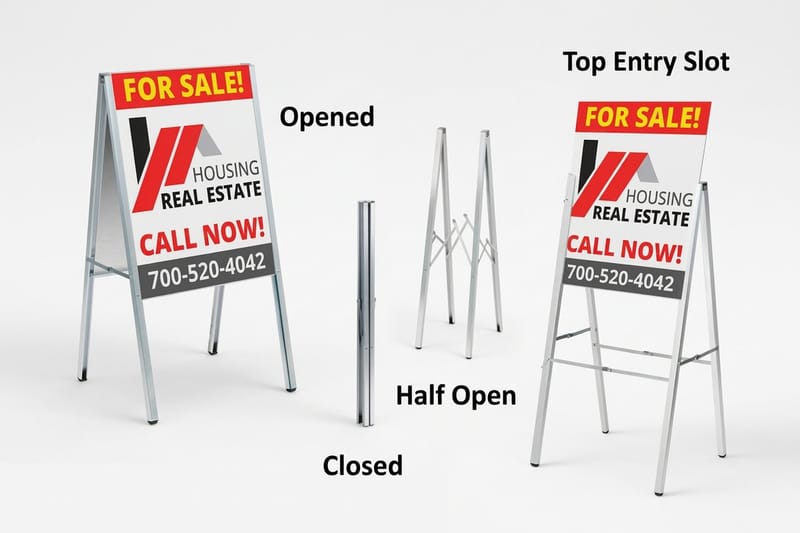
| A frame | Two panels in a folding frame that stands on the ground. | $163.67 for the frame | Seconds, no ground contact needed. | Wind tips it, and most towns will not let it stay overnight. |
Read the last column before the price column. The real estate post is the only one of the three that survives a full listing cycle unattended, because a rigid panel hanging from an arm has nothing to fold, nothing to blow over, and no wire to bend. The other two are speed tools. A real estate yard sign on an H stake is what you plant at the corner of the block on a Saturday morning, and an A frame is what you carry to an open house and packs back into the trunk when it ends.
One more difference nobody mentions in the catalog: a hanging panel swings. It rotates a few degrees into whichever way the wind is coming from, which means it presents an angled face to traffic in both directions. A staked board is fixed. Plant it square to the house and cars coming down the street see nothing but a one inch edge.
How to Plant a Post So It Is Still Straight in March

A leaning sign post reads as neglect, and every one of them leans for the same two reasons: the hole was too shallow and the backfill went in all at once.
Call 811 before the shovel goes in the ground. It is free, it takes a couple of days, and irrigation lines run shallow along exactly the strip of lawn where a listing sign wants to go. While you wait, walk the property line and pick the spot: inside the boundary, clear of the sidewalk, angled so the panel faces the direction most traffic approaches from.
Dig about 18 inches, and go deeper if your frost line is deeper. On a 6 foot post that leaves roughly 4 feet 6 inches showing, which lands the middle of a 24 by 18 inch panel near the eye line of somebody driving past at 25 miles an hour. Keep the hole narrow. A wide hole full of loose soil is a hinge.
The part that actually holds it: backfill in three or four layers and tamp each layer down with the end of a broom handle before adding the next. Check plumb after the second layer, not at the end, because a post that is off by five degrees at the bottom is off by half a foot at the arm. In frozen ground, drive a steel pilot rod first. Hitting the cap of a PVC post with a mallet in January splits it, and the crack runs down the length of the post.
Hang the panel last. The grommets in the top corners take the whole load, so lift by the panel body and not by the grommet edge when you seat it on the hooks. If you are printing a new panel for a new listing, the blank template library has the panel dimensions already set up, and our yard sign rules and design guide covers the type sizes that stay legible from the road.
Panel Material and Size Decide How Long the Sign Lasts

The post is hardware. The panel is the part that fades, warps, or holds up, and the choice between two materials decides which.
The listing panel on a post kit is 1/8 inch aluminum, always printed double sided, either the same image on both faces or two different designs. It is rust proof and it stays flat, which matters more than it sounds: a panel that bows catches wind like a spoon and puts all that force onto two grommets. Panels run from 24 by 18 inches, which is the default, up to 36 by 48 inches made to order. Bigger is not automatically better. A 36 by 48 inch panel on a 6 foot post sits low, catches serious wind, and on a narrow front lawn it reads as shouting.
Coroplast is the other path. Four millimeter white corrugated plastic, double sided full color, $29.89 for a single 24 by 18 inch sign and up to 100 in one order. It shrugs off rain and sprinklers for a few months and it costs a fraction of aluminum, which is exactly why it belongs on directional and open house signs rather than on the listing itself. The flutes are its weakness: push a stake through them crooked and the board crushes along the channel.
If you want aluminum without the post, aluminum sign panels start at $29 for an 11 by 17 inch panel across nine sizes up to 30 by 40 inches, finished with a 2.5 mil gloss or matte lamination. Matte is the better call on a west facing lawn, because gloss throws afternoon sun straight back at the driver you are trying to reach. For the full material breakdown, see aluminum signs compared with coroplast and PVC.
Riders, and the Order They Hang In

A rider is the 24 by 6 inch strip that hangs under the main panel and carries the one word that changes: SOLD, PENDING, OPEN HOUSE, PRICE REDUCED. Ours is double sided, so it reads whichever way the panel has swung.
Order matters more than agents expect. Status goes closest to the panel, because that is the line a passing driver reads after the brokerage name. Contact details or a web address go below it. If you are running an open house strip and a sold strip in the same week, print both rather than reprinting the panel, since a rider costs a fraction of a new aluminum sign.
Two riders is the working limit on a standard post. Each one adds surface at the far end of an arm, and the twisting force on the post grows faster than the weight does. Three strips on a windy corner lot is how a post ends up at forty five degrees after one storm. Full detail on wording and hierarchy is in the real estate sign riders guide, and the broader signage lineup for an agent is covered in real estate signage explained.
Permits, HOAs, and Getting the Post Back
The rules that catch agents out are local and they are rarely about the sign design. They are about where the post stands and how long it stays.
The strip between the sidewalk and the curb is public right of way in most municipalities, so a post planted there can be pulled by code enforcement without notice. Plant inside the property line. In managed communities, check the association rules before the first listing in that community rather than after: caps on panel size, a one sign limit, and a required setback from the curb are all common, and a few associations restrict signs to a specific weekend window.
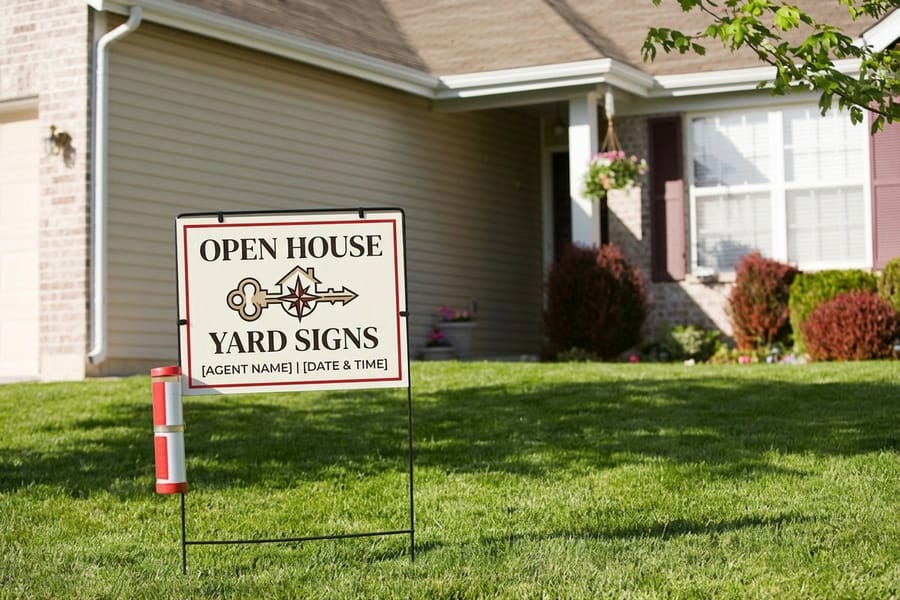
Open house directional signs live under a separate clock. Most towns allow them for the day of the showing only, which is precisely what a cheap staked board is for. Put out open house yard signs in the morning, collect them the same evening, and you never argue with anyone. Our open house directional sign guide covers arrow placement and the intersections worth covering.
When the property closes, pull the post within a few days. Rock it back and forth to break the soil grip instead of hauling straight up, which is what snaps a PVC post at grade. Hose the panel, let it dry, and store it flat. That is the whole reason the kit pays for itself: the hardware and a rigid aluminum panel both come back, and the next listing only costs a print run. If you are building out the rest of an agent kit, how to build a real estate print marketing kit lists what goes with the sign, and the full outdoor range sits on yard signs printing.
Wally plants the post
Eighteen inches down, four foot six showing
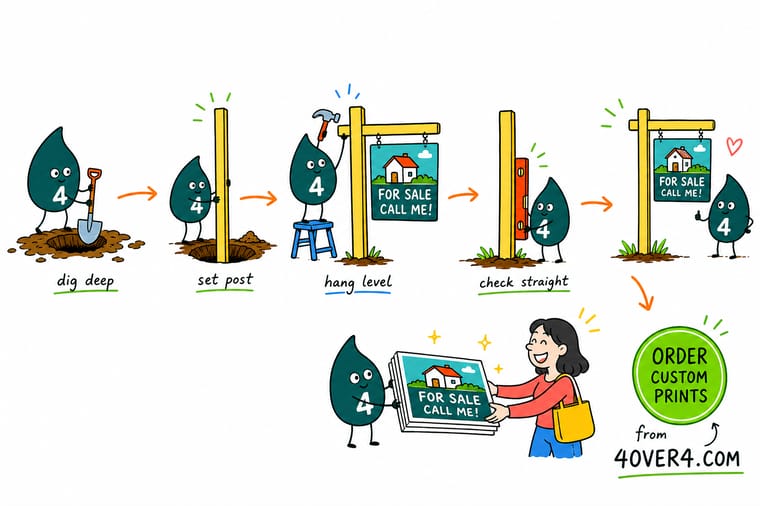
Wally digs a narrow hole about 18 inches deep, drops in the 6 foot post, then backfills in layers and tamps each one before adding the next. That is the whole trick. Check plumb halfway down rather than at the end, because five degrees of lean at the bottom is half a foot of lean at the arm. Then the aluminum panel goes on the hooks by its top grommets, and the rider hangs underneath. Come closing day he rocks the post loose instead of hauling it straight up, so it snaps out of the soil rather than snapping in half.
Order a real estate post kit →Specs and pricing
Posts, boards and panels, with live starting prices
Compare the three sign frames side by side, with the real configuration choices and starting prices straight from the 4OVER4.COM configurator.



Print it
Order the sign that fronts your listing

Explore more
Where to go next


By the numbers
The shop printing your yard and post signs, counted
Common Questions
Your realtor sign post questions, answered
What is a realtor sign post?
It is the frame that holds a listing sign off the ground so it reads from the street. The classic version is a post and panel unit: a 6 foot white PVC post with an arm across the top, and a printed 1/8 inch aluminum panel hanging from grommets in its top corners. The panel swings, which is how the same sign faces traffic coming from both directions. At 4OVER4.COM the post and panel ships as one kit at $218.35, frame and printed sign together, so there is no guessing whether a separately bought panel will fit the arm.
How deep should a realtor sign post go in the ground?
About 18 inches for a 6 foot post, and deeper than your local frost line if the ground freezes where you work. That leaves roughly 4 feet 6 inches showing, which is the height that puts a 24 by 18 inch panel in a driver line of sight rather than down among the shrubs. Dig the hole slightly narrower than you think, drop the post in, then backfill in three or four layers and tamp each one. Backfilling all at once leaves a loose column of soil that lets the post lean within a week.
Post and panel or an H stake, which should I use?
Use the post and panel on the listing itself and the H stake everywhere else. A 4 mm coroplast board on a wire H stake starts at $29.89 and goes up in under a minute, which is what you want for directional signs, corner arrows and a run of signs across a farm area. The post and panel takes ten minutes and a digging tool, but it holds a rigid aluminum panel at proper height for months and looks like the work of an agent rather than a weekend flyer taped to a stick.
Can I put a sign post on the sidewalk or the curb strip?
Usually not without a permit. The strip between the sidewalk and the street is public right of way in most municipalities, and code enforcement removes signs from it. Plant inside the property line, at least a couple of feet in from the sidewalk, and check the HOA rules before the first listing in a managed community. Some associations cap the panel size, some allow one sign only, and a few require a specific setback from the curb.
How long does a printed sign panel last outdoors?
The 1/8 inch aluminum panel outlives the listing. It is rust proof, stays flat, and holds color through a full season of rain and sun, which is why agents keep replanting the same panel with only the rider changing. A 4 mm coroplast board is the cheaper path and holds up fine for a few months, but it fades sooner and the flutes crush if the stake is driven through them carelessly. If the sign has to look sharp a year from now, print it on aluminum.
What do I do with the post when the property closes?
Pull it within a few days. A sign that sits past closing reads as a stale listing to everyone driving past, and in plenty of towns the seller gets the citation, not the agent. Rock the post back and forth to break the soil grip rather than yanking straight up, rinse the panel with a hose, and store it flat. Aluminum panels stack without warping, which is what makes the post kit reusable across listings.
Get Started
A real estate post costs $218.35 on 1/8 inch aluminum panel
Pick the panel size, add a SOLD or OPEN HOUSE rider, and the post kit arrives with the frame and the printed sign together, ready to hang.
Legal Disclaimer
Gold Standard guarantees apply to all standard orders placed through 4over4.com. Price match requires verifiable proof of a competitor's published price for an equivalent product with matching specifications and turnaround time. Satisfaction guarantee covers manufacturing defects and print quality issues. Contact support with order number and documentation. On-time delivery rate based on tracked orders 1999 to 2026. Individual results may vary based on shipping carrier performance.
