
Online Document Printing Explained From File Prep to Binding


What to send, what stock to pick, which binding your page count allows, and how long a document order really takes once proofing and shipping are counted.
Online document printing means uploading a print ready PDF to a commercial press instead of carrying a file into a copy shop, and it wins on price, stock choice and binding once the run is more than about 25 copies. Export a PDF at the finished trim size with fonts embedded, pick uncoated text stock for anything people write on, match the binding to the page count, and remember that turnaround counts production days only, with proofing before it and shipping after it.
Quick answer
A PDF at trim size, the right stock, and a binding your page count allows
The whole job is four decisions. Export a print ready PDF with fonts embedded and the page size set to the finished trim, not to letter. Choose uncoated 70lb or 80lb text if the document gets read and marked up, coated only if it is mostly photographs. Count the pages, then pick the binding that count allows, because saddle stitch needs multiples of four and perfect binding needs roughly 40 pages of bulk before there is a spine to glue. Finally, plan the calendar in three parts: proof approval, production business days, and shipping transit, because a quoted turnaround only ever covers the middle one.
Getting Your Document Into a File the Press Can Print
Most document jobs that go wrong go wrong before anyone touches a press. The file arrives as a working document, the printer opens it on a machine with different fonts, and the careful two page layout becomes three pages.
Export a PDF and send that. In Word it is Save As PDF with the standard or best-for-printing option; in InDesign it is the press quality or PDF/X-1a preset. Both embed the fonts, which is the whole point. Set the document page size to the finished trim size rather than letting a printer driver scale it, because scaling is where hairlines vanish and margins drift.
Two habits separate a clean file from a reprint. First, bleed: anything that runs to the edge of the page needs to extend 0.125 inches past the trim on all four sides, so the guillotine cuts through ink instead of leaving a white sliver. Office software has no bleed control, so you build the page 0.25 inches larger overall and let it be trimmed back. Second, safety: keep text, page numbers and logos at least 0.25 inches inside the trim. Our bleed, cut line and safety checklist lays out the measurements, and the Word to print ready PDF walkthrough covers the export settings step by step.
Color is the last thing to check. Screens are RGB and presses are CMYK, so a saturated screen blue prints duller than it looks. If a brand color has to be exact, specify it as a Pantone and expect a conversation about it rather than assuming the file will do the work. Starting from a correctly sized layout in the blank template library removes most of the geometry problems in one move.
Paper Weight and Binding, Chosen by Page Count
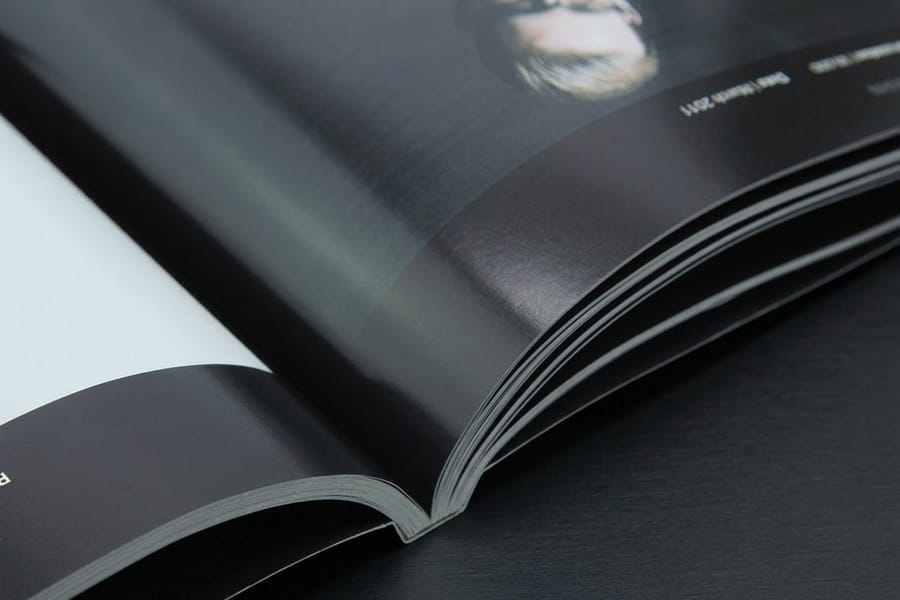
Binding is not a style choice you make at the end. The page count decides which methods are even available, so count the pages first and pick from what survives.
| Binding | Page range | Does it lie flat | Where it fits |
|---|---|---|---|
| Corner staple | 2 to about 20 sheets | Yes, but pages fan | Handouts, price lists, anything disposable. |
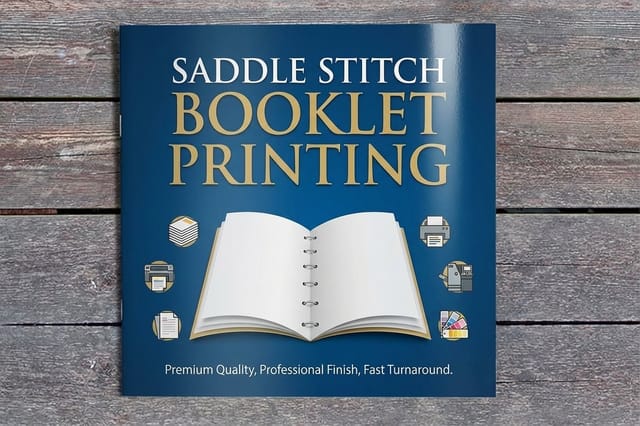
| Saddle stitch | 4 to 64 pages, multiples of 4 | Mostly, thin ones better | Programs, newsletters, short catalogs and reports. |
| Wire-O coil | 8 to roughly 300 pages | Yes, folds fully back | Manuals, workbooks, cookbooks, anything used open. |
| Perfect bound | About 40 pages upward | No, the spine resists | Books, thick catalogs, annual reports that sit on a shelf. |
The multiples-of-four rule catches people out constantly. One folded sheet makes four pages, so a saddle stitched booklet cannot be 10 or 14 pages. Land on an odd count and you add a blank rather than argue with the folder. On thicker saddle stitched books, creep pushes the inner pages outward and the trim takes more off them, which is explained in full in the guide to page counts, multiples of four and creep.
Stock follows use. Interiors that get read and annotated belong on uncoated 70lb or 80lb text; interiors that are mostly photographs belong on 100lb gloss text. Covers go up to 80lb or 100lb cover so the piece does not curl in a bag. If you want the method-by-method detail, the binding types guide compares durability and cost, and perfect bound books start at $375.05 while standard booklets start at $240.55.
What Turnaround Actually Counts, and What It Does Not
A quoted turnaround is production time, and production time is narrower than most people assume. It excludes the hours your file sits waiting for preflight, it excludes weekends and holidays, and it never includes shipping.
The clock starts at proof approval, not at upload. A digital proof is a PDF showing the imposition and the trim, and it is the point where a missing bleed or a wrong page order surfaces. Approving it at 4pm on a Friday means production starts Monday morning, which quietly adds three days to a job nobody thought was late.
Then shipping is its own number. Ground across the country runs several transit days, and no press speed compensates for that, which is why the fix for a tight deadline is almost always the shipping service rather than the production tier. When a date is genuinely fixed, work backwards from it and order against the ship date. The guide to same day and rush options sets out what can realistically be pulled forward, and how online printing works maps the whole path from upload to delivery.
One more thing worth knowing: a hard copy proof, printed on the real stock and mailed to you, is the only honest way to judge color and paper feel. It costs money and adds days. For a run of business documents it is usually not worth it. For a 5,000 copy catalog going out under a brand color, it is cheap insurance.
Online Printing Versus the Copy Shop Down the Street
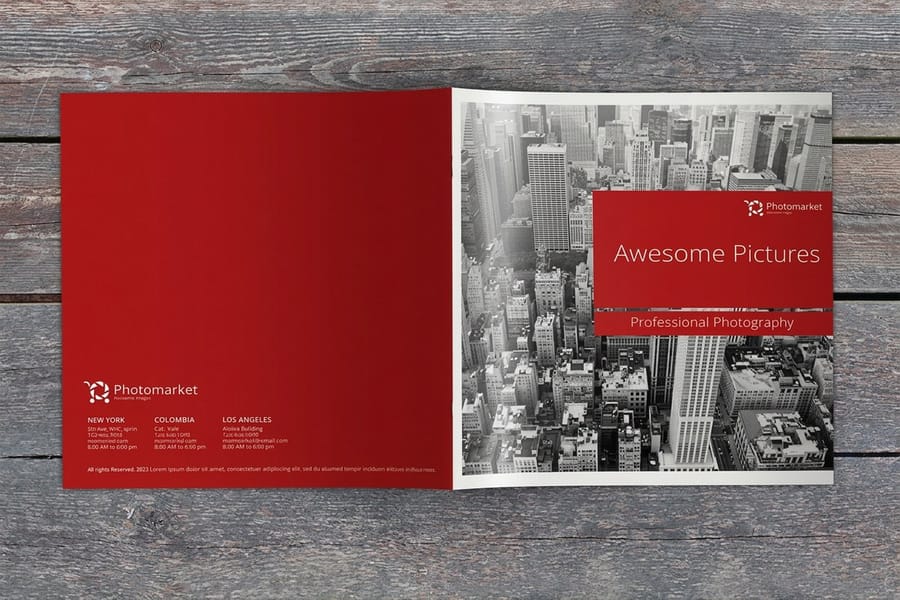
The honest version: the copy shop wins on urgency and on very short runs, and loses on everything else. If you need 20 stapled sets before a meeting in an hour, walk in. Nothing ordered online will beat that.
Past that, the differences are structural rather than promotional. A copy shop runs toner on 24lb bond and 65lb cover, and that is close to the whole menu. A commercial press runs real text and cover stocks, coated and uncoated, with a bindery attached, which is why wire-O, perfect binding, scoring and full bleed are ordinary online and either unavailable or hand-finished at a walk-in counter. Pricing behaves differently too: a copier charges per click so 500 pages cost 500 clicks, while a press amortizes setup across the run and the per-copy price drops as quantity rises.
What you give up is the counter. There is nobody to hand a USB stick to and nobody to eyeball your file, so the file preparation above is doing the job a person used to do. That is the trade, and it is a fair one once your document is a PDF at the right size. If you are weighing a specific job, local versus online printing compares them on cost and control, and commercial printing services near me covers what a nearby shop is genuinely better at.
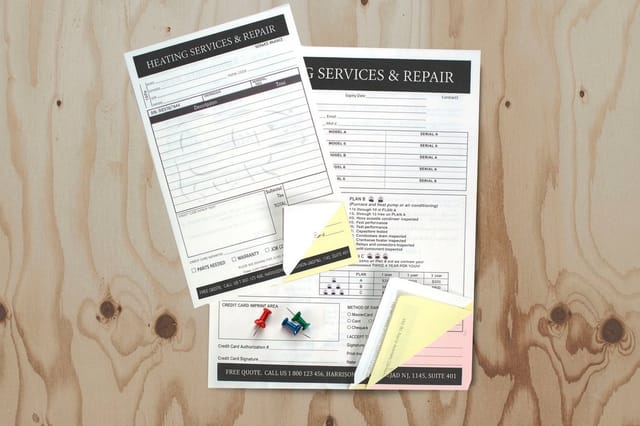
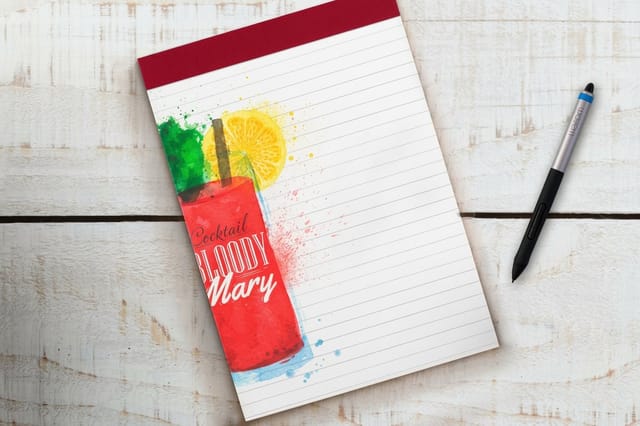
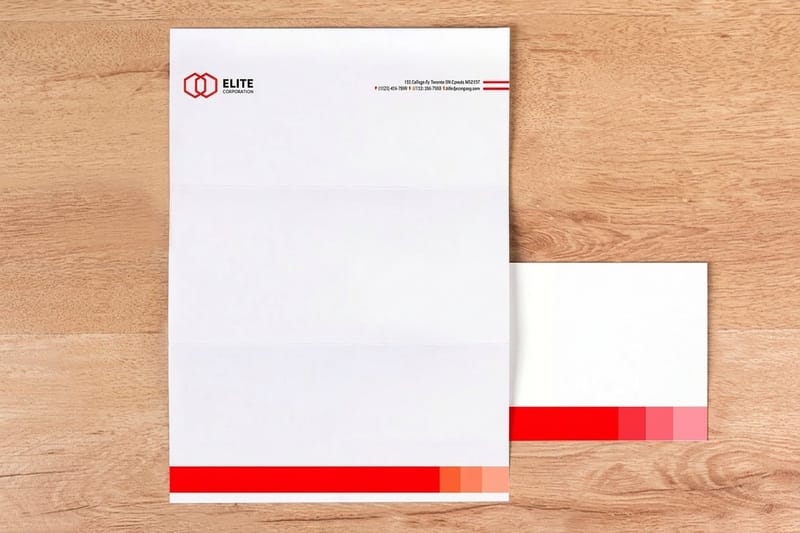
Ordinary business paperwork is where the online route quietly pays off. Standard letterheads start at $99.95 on stock that feeds an office laser, carbonless forms start at $120.82 for invoices and work orders that need a duplicate copy, and standard notepads start at $93.37. The NCR and carbon copy forms guide explains which part numbers you actually need, and the presentation folders range is where those loose documents end up when they get handed to a client.
Wally explains document printing
Export the PDF, count the pages, then pick the binding
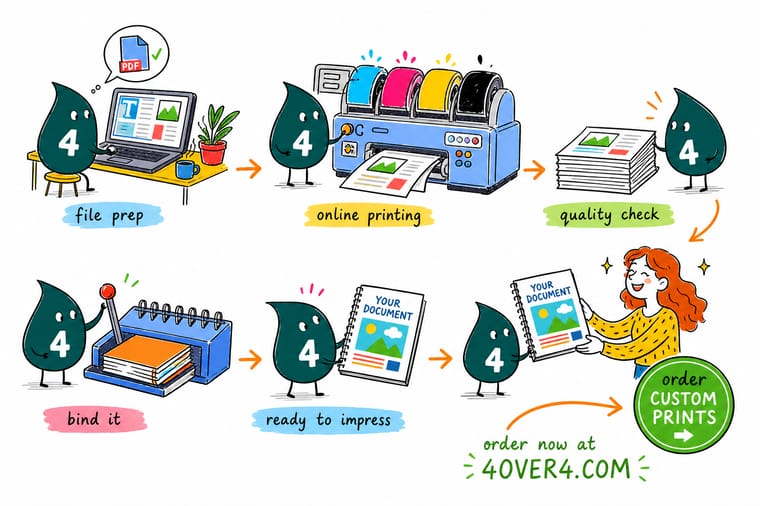
Wally never sends the working file. He exports a PDF at the finished trim size with the fonts embedded, then counts the pages, because the count decides what the bindery can do. Four, eight, twelve and sixteen mean saddle stitch. Forty and up means a spine thick enough to glue. Anything people will write in goes on uncoated text so a pen actually works. Then he adds proofing time in front and shipping time behind, and only then promises somebody a date.
Configure booklet printing →Specs and pricing
Document formats, sizes and starting prices
Bound documents, books and stationery side by side, with live configuration options and starting prices straight from the 4OVER4.COM configurator.

Print it
Order the document formats businesses reorder most
Explore more
Where to go next
By the numbers
Booklets, perfect bound books and forms in one place
Common Questions
Your document printing questions, answered
What file format should I upload for document printing?
A print ready PDF with the fonts embedded, exported at the finished trim size. Word, Pages and Google Docs all export one, and PDF/X-1a or the press quality preset is the safe choice because it flattens transparency and embeds everything. Avoid sending .docx, .pptx or a link to a cloud document: those re-flow when they open on another machine with different fonts, and the page breaks shift. If any element runs off the edge of the page, build the file 0.125 inches larger on every side so there is bleed to trim into.
Is online document printing cheaper than a copy shop?
On volume, clearly. A walk-in shop charges per click on a toner copier, so 500 pages cost 500 times the per-page rate. A commercial press spreads plate and setup cost across the run, which is why the per-piece price falls as the quantity climbs. Standard booklets start at $240.55 and perfect bound books at $375.05 at 4OVER4.COM for a full production run, and those numbers stop looking large once you divide them by the number of finished, bound copies. Under about 25 copies the copy shop usually still wins.
How many pages can a saddle stitched booklet hold?
Up to about 64 pages on normal text stock, always in multiples of four. Each folded sheet contributes four pages, so 4, 8, 12, 16 and so on are valid counts and 10 or 14 are not. Past roughly 64 pages the staples struggle and the fold gets ugly, so the job moves to wire-O or perfect binding. If your manuscript lands on an odd count, add a blank page or an inside back cover note rather than asking the printer to guess.
Why do the inside pages of a thick booklet look narrower?
That is creep, and it is normal. In a saddle stitched book the inner sheets sit further around the fold than the outer ones, so their outer edges push out and the final trim cuts more off them. On a 48 page booklet on 80lb text you can lose a couple of millimeters from the innermost spread. The fix is layout, not press work: keep folios, page numbers and any boxed content at least 0.25 inches inside the trim so nothing important is in the path of the knife.
What paper should a report or a training manual use?
Uncoated 70lb or 80lb text for the interior, and 80lb or 100lb cover for the outside. Uncoated is the right call for anything people annotate, sign or photocopy, because ink from a pen sits on a coated sheet instead of soaking in. Use coated text only when the document is mostly photographs. Letterhead is a separate case entirely: it wants 70lb uncoated text because it has to feed through an office laser printer without curling.
How long does an online document order take to arrive?
Add three numbers, not one. Proof approval happens first and the clock does not start until you click approve, production runs in business days, and shipping is on top of that. A three day production turnaround approved on a Friday afternoon starts Monday, finishes Wednesday, and reaches most of the country by the end of that week on ground. If a date is fixed, order against the ship date rather than the delivery date and pay for the faster service rather than the faster press.
Get Started
A 10 copy perfect bound book costs $375.05
Upload your PDF, pick the interior stock and the binding your page count allows, and we print, bind, trim and ship the finished documents to your door.
Legal Disclaimer
Gold Standard guarantees apply to all standard orders placed through 4over4.com. Price match requires verifiable proof of a competitor's published price for an equivalent product with matching specifications and turnaround time. Satisfaction guarantee covers manufacturing defects and print quality issues. Contact support with order number and documentation. On-time delivery rate based on tracked orders 1999 to 2026. Individual results may vary based on shipping carrier performance.
