
Landscaping Flyers vs Yard Signs vs Door Hangers for Winning More Lawns


Three formats, three jobs on the same street. Each one reaches a different household, keeps working for a different length of time, and one delivery rule settles two of the three.
Yard signs win when you want the finished lawn to do the selling, door hangers win when you want to pick the exact block, and flyers win when the piece has to end up inside the house. A yard sign stays planted for weeks and needs nobody. A door hanger reaches every door on a route you choose but is read once and cannot go near a mailbox. A flyer has no delivery built in, so it only works if you hand it over, which is also why it survives on a fridge.
Quick answer
One street, three jobs, three different lifespans
Pick by how the piece gets in front of a homeowner, not by price. The yard sign is the only one that keeps selling with nobody standing there, because it points at work the neighbors can already see. The door hanger is the only one that lets you choose the exact block without buying a mailing list, and the die cut is what keeps it legal, since only postage-paid mail belongs in a mailbox. The flyer is the only one that travels indoors and is still around when the grass gets long. Run the sign at every finished job, walk hangers on the blocks you already work, and keep flyers in the truck for estimates.
Yard Signs: Advertising That Stands In Front Of Your Own Work
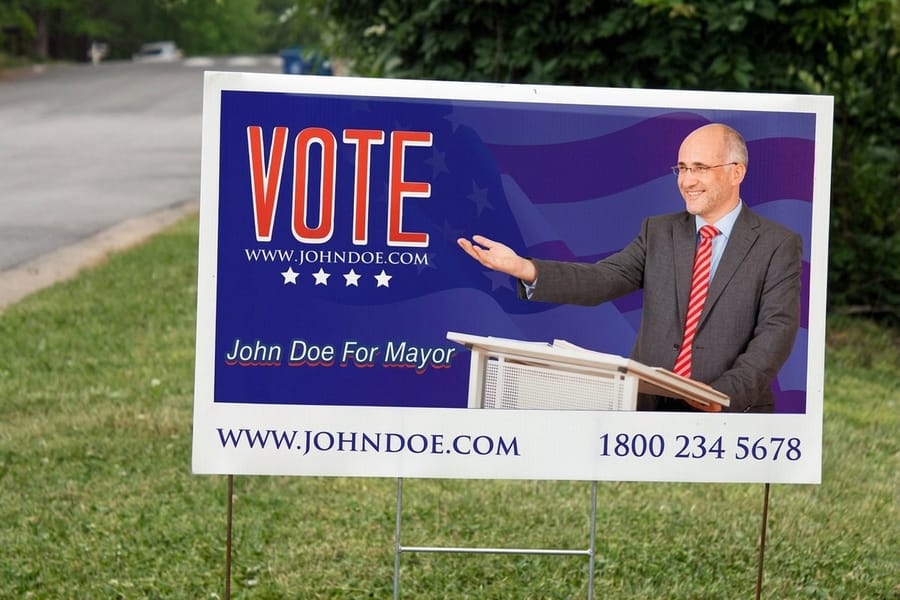
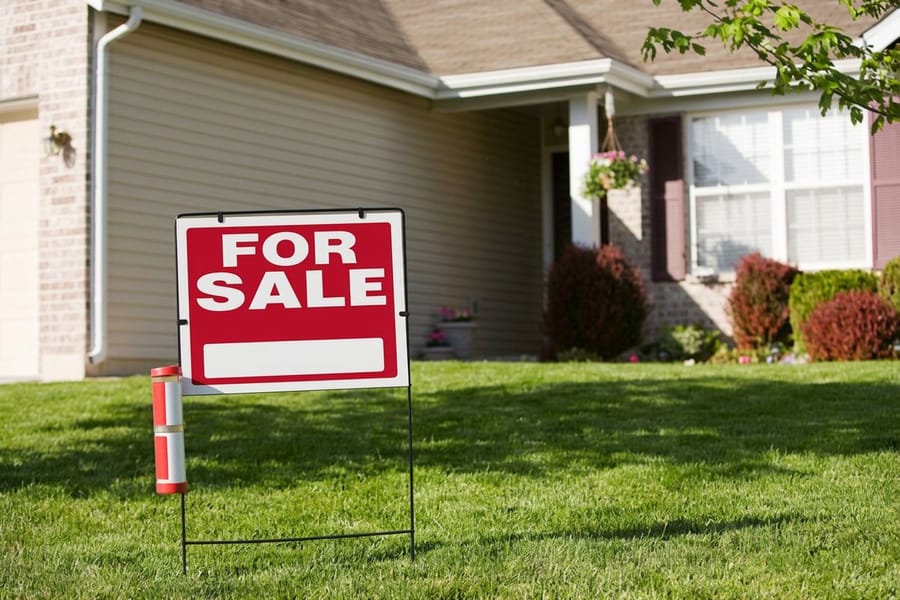
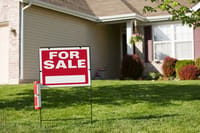
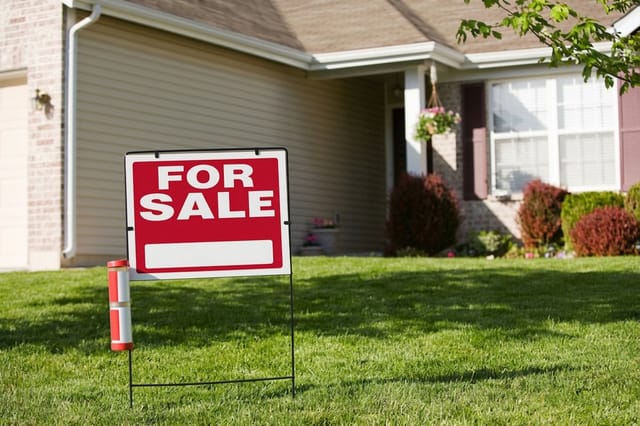
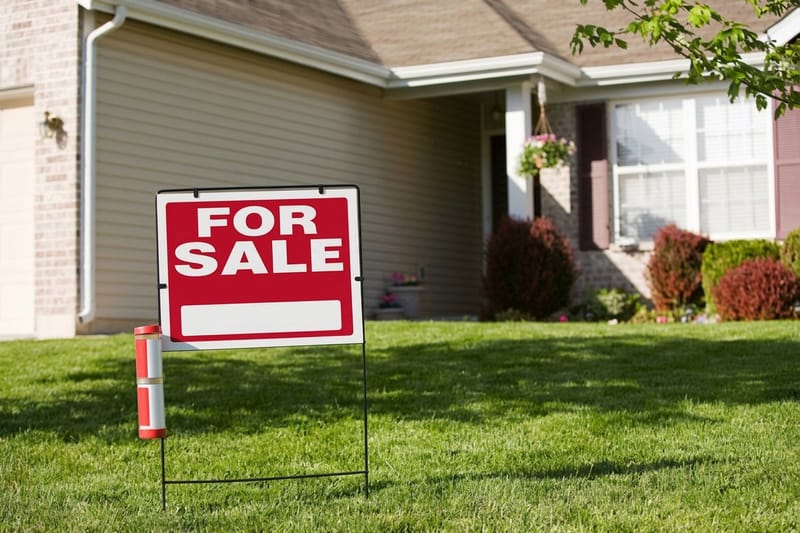
A landscaping yard sign is the only one of the three that sells while you are somewhere else. You finish a lawn, you plant the sign, and for the next several weeks it points at a stripe pattern and a clean edge that anyone driving past can judge for themselves. That is a stronger argument than anything you can write on paper.
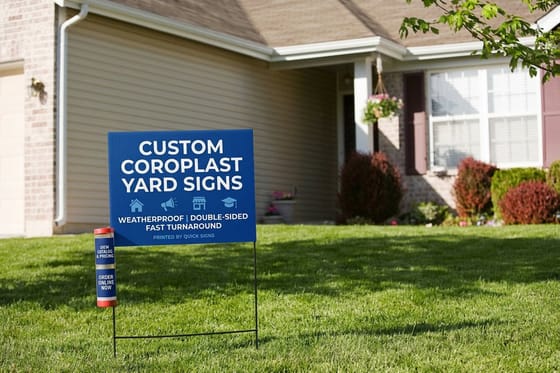
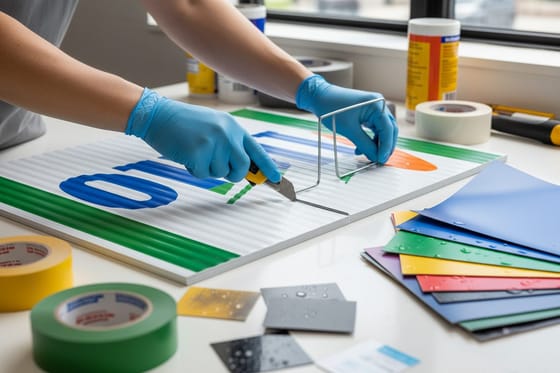
Print them on 4mm coroplast at 18 by 24 inches with an H-stake. Coroplast has hollow flutes running through it, and the stake has to slide into those flutes, so the flutes need to run vertically for a stake that goes in the ground. Ask for double-sided printing: a sign on a corner lot is read from both directions of travel, and a blank back throws away half your placements. Yard sign sizes and materials goes deeper on thickness and stake types.
Design for one glance at driving speed. Company name, the single service you want more of, and a phone number. That is the whole sign. The rough trade rule is one inch of letter height per ten feet of reading distance, so three inch caps read at about thirty feet, which is what a car actually gives you. Anything smaller becomes decoration. How to design a yard sign works through the layout, and the free yard sign template guide gives you a correctly sized file to start in.
Where it fails. You need permission from the homeowner, every time, and some HOAs and municipalities pull commercial signs from residential lawns without warning. A back-lot house with no road view is a wasted sign. And a sign left out all season goes chalky and starts advertising a faded business, so pull them and replace them.
Door Hangers: The Only Format That Lets You Pick The Block

A door hanger is the closest thing print has to a targeting tool that needs no list. You are already parked on Maple Street doing a spring cleanup. Two hours of walking puts a piece on every knob for four blocks in every direction, and every one of those neighbors can see the truck and the work while they read it.
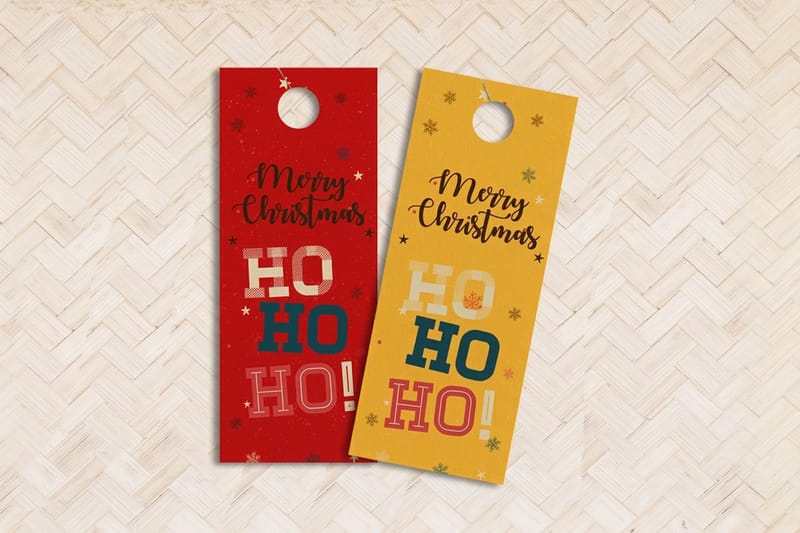
The die cut is the point. A hanger has a punched hole and a slit that lets it grip a knob or a lever handle, and that is what keeps you out of the mailbox. Only postage-paid mail belongs in or on a mailbox, so a flyer stuffed in one is a violation and a hanger on the knob is not. The door hanger legal guide covers the rest of the trespass and no-soliciting questions that come up on real routes.
Put the offer in the top third. When a hanger is hanging, the bottom of the piece is behind a knob and often behind a screen door frame, so the only part read at a walking glance is the panel above the die cut. A dated seasonal offer beats a service list there. Standard sizes run around 3.5 by 8.5 and 4.25 by 11 inches, and the door hanger size guide lays out what each one costs you in message room.
Where it fails. Labor. A run of Door Hangers starts at $290.41, but the print is the cheap part next to paying someone to walk two thousand doors. It also has no second chance: the piece is read once at the door and then it is either in a pocket or in the trash. If your offer is weak, you find out at scale.
Flyers: The Piece That Ends Up On The Fridge

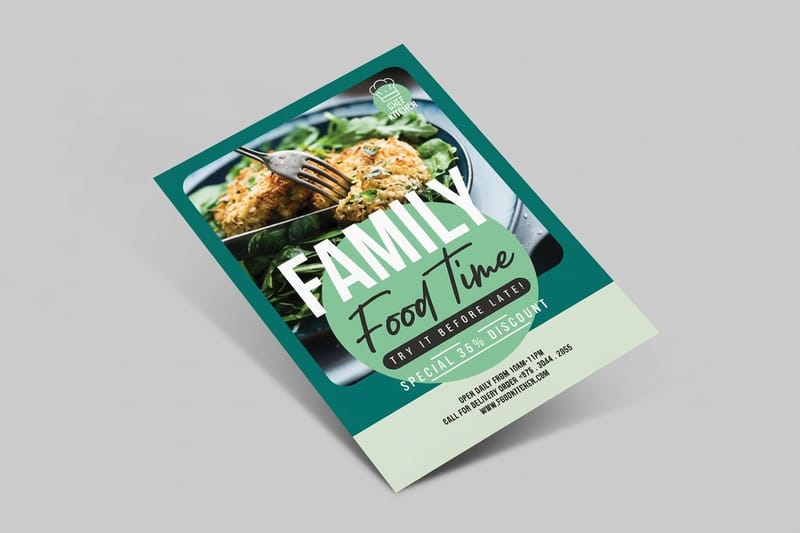
A flyer has no delivery mechanism built into it, and that is both its weakness and the reason it outlasts the other two. Somebody has to hand it over, pin it up, or leave a stack on a counter. Once it is inside a house it stops being advertising and becomes the piece of paper with your number on it.
For landscaping that makes it the estimate leave-behind. You walked the property, you quoted the job, and the homeowner needs something to show a spouse. Print your services, a real price anchor for the common job, and the service area. Nurseries, hardware stores, coffee shops and community boards will usually take a stack, which is where flyers get read far more reliably than under a windshield wiper.
Stock matters less than people think until the flyer gets handled. A gloss text weight is the standard handout and stacks flat in a truck. Move up to a cover weight only if the piece will live in a door pocket or a folder for weeks. Flyer paper stocks and weights spells out the difference, and flyer sizes and dimensions covers why 8.5 by 11 is not always the right call for a handout.
Where it fails. Distribution is entirely on you, and the failure mode is a box of five thousand flyers in the shop that nobody ever hands out. Standard Flyers start at $39.54, so the print is not the risk. The risk is buying more than you will physically distribute this season.
The Verdict: Run All Three, But In This Order
These are not competing options. They are three different moments in the same route, and a crew that runs all three is covering ground the others leave open.
| Format | Who sees it | How long it works | What it costs to start | The real limit |
|---|---|---|---|---|
| Yard signs | Every car and walker on one street | Weeks, until you pull it | From $25.00 | Needs homeowner permission and a visible lawn |
| Door hangers | Every door on a route you choose | One look at the knob | From $290.41 | Somebody has to walk it, and mailboxes are off limits |
| Flyers | Whoever you hand it to | Days to weeks, indoors | From $39.54 | No delivery built in, so unused stock is dead money |
| Postcards | Any address on a mail route | One look at the mailbox | From $16.48 | Postage on top, and you need the route or the list |
The sequence that works: plant a sign at every finished property you are allowed to, walk hangers on the blocks around the jobs you already have booked, and keep flyers in the truck for estimates and counters. When the walking routes near your existing clients are covered, add mail with postcards to reach neighborhoods you have never worked.
Print all three from one file family so the truck, the sign and the flyer look like the same company. Start from a correctly sized layout in the blank template library, then compare specs and quantity breaks in yard sign printing and flyer printing.
Wally works the whole street
Sign in the lawn, hanger on the knob, flyer in the hand
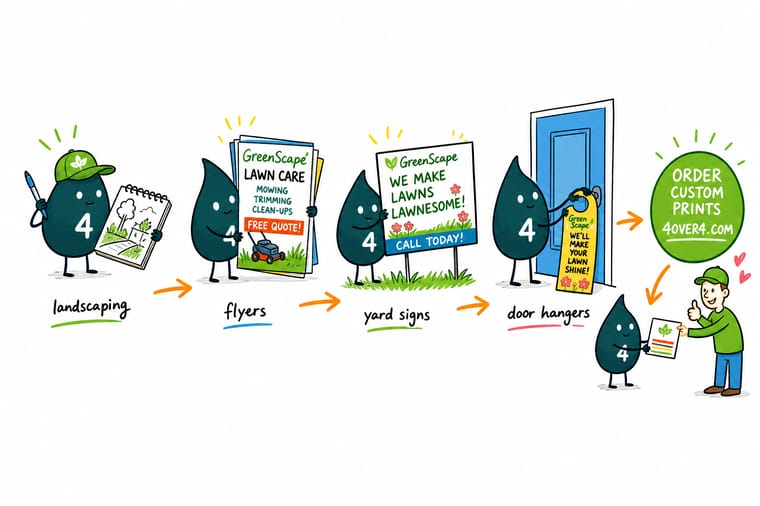
Wally finishes the lawn and plants a sign in it, because the lawn is the advertisement and the sign just points at it. Then he walks the block and hangs a door hanger on each knob, never the mailbox, because that box belongs to the post office. The flyers stay in his truck for the homeowner who asks for a quote, since that is the one piece that makes it inside the house and onto the fridge. Three pieces, one route, no wasted trip.
Print yard signs for your crew →Specs and pricing
Sizes, stocks and starting prices side by side
Configure all three the way a landscaping crew actually orders them, with live options and starting prices straight from the 4OVER4.COM configurator.


Print it
Order the three pieces that work one street


Explore more
Where to go next



By the numbers
Flyers, signs and door hangers on one lawn care order
Common Questions
Your landscaping print questions, answered
Which one should a new landscaping business print first?
Yard signs, if you have any clients at all. A sign costs the least to start with, at $25.00 for Yard Signs, and it markets the one thing a homeowner actually judges you on, which is the lawn standing right behind it. Print enough to leave one at every property you finish, ask permission before you plant it, and collect it when the season ends. Flyers come second because you need something to leave behind after an estimate. Door hangers come third, once you have a route worth walking and the budget for a full run.
Can I put landscaping flyers in mailboxes?
No. A mailbox is reserved for material that carries postage and travels through USPS, and a flyer wedged into one is a violation whether you paid for it or not. That rule is the reason door hangers exist in the first place. If you want the piece to land in the mailbox legally, print it as a mailer and send it through Every Door Direct Mail instead. Our guide on what EDDM is and whether it is right for your business covers the sizes and the paperwork.
How big should a landscaping yard sign be?
Eighteen by twenty-four inches on 4mm coroplast with an H-stake is the size the whole trade settles on, and it is the right call for a lawn set back from the road. The rough rule for reading distance is one inch of letter height for every ten feet, so a company name in three inch caps is legible to a car at roughly thirty feet, which is what you get as someone drives past at residential speed. Anything smaller than 12 by 18 disappears once the grass comes back up.
How many door hangers do I need for one neighborhood?
Count the houses on the route rather than guessing a number. A walker covers roughly one hundred to two hundred doors an hour on a normal suburban street with driveways, so a single afternoon is a few hundred doors. Because Door Hangers start at $290.41 for a run, the format assumes you are working at that scale. If you only want to hit the twenty houses around one job, print a smaller flyer run and hand them over instead.
What paper should landscaping flyers and door hangers be printed on?
Door hangers want a heavier coated stock because they spend hours outside on a knob in whatever the weather does. Gloss cover holds up to a light rain long enough to be read, where an uncoated text weight buckles. Flyers are the opposite problem: they are handled and folded, so a gloss text weight is the standard handout and it stacks better in a truck. If a flyer has to survive a door pocket for a week, move it up to a cover weight and accept the extra cost.
Do I still need postcards if I print all three of these?
Only if you want to reach houses you are not physically visiting. Signs, hangers and flyers all require somebody to be on the street. Standard Postcards start at $16.48 and go through the mail, which is how you reach a subdivision on the other side of town before you have a single customer there. Most landscaping crews add mail once the walking routes near existing clients are already covered.
Get Started
Order 250 door hangers from $290.41 for the next street
Pick your sizes, upload one file family for the sign, the hanger and the flyer, and we print a set that looks like the same crew from the curb and at the door.
Legal Disclaimer
Gold Standard guarantees apply to all standard orders placed through 4over4.com. Price match requires verifiable proof of a competitor's published price for an equivalent product with matching specifications and turnaround time. Satisfaction guarantee covers manufacturing defects and print quality issues. Contact support with order number and documentation. On-time delivery rate based on tracked orders 1999 to 2026. Individual results may vary based on shipping carrier performance.
