
How to Start a Sticker Business and Turn Designs Into Repeat Revenue


Jordan is our labels, packaging and sustainability voice, built from the knowledge of our production team, with over 20 years in printing.
Niche, artwork, materials, pricing, sourcing, channels, and shipping, in the order that actually works. This is the full build, from your first ten designs through wholesale accounts, plus the print that keeps buyers coming back after the envelope is opened. The printed pieces you will order are die-cut stickers for singles, roll stickers once a design sells in volume, and artist business cards for every package, and the material table in step 3 sets their sizes and stocks.
To start a sticker business, choose one audience you understand, create ten designs you legally own, and lock a repeatable spec of size, material, and finish. Price from landed cost plus packaging, fees, and commission, then sell packs rather than singles so postage works in your favor. Cut small test batches at home, move proven designs to printed runs or rolls, and open a marketplace, your own store, in person events, and wholesale in that order.
Start here
A niche you belong to, sold as packs
A sticker business is a design catalog attached to a print supply chain and a sales channel. You pick an audience, make art you own outright, decide on sizes, stock, and lamination, such as a 2 to 3 inch die cut on white vinyl for laptops and water bottles or a 5 to 6 inch piece with a UV rated laminate for bumpers, then set a price that still leaves margin after mailers, payment fees, and platform commission. Small batches can be cut at home; anything that reorders should move to a commercial run. Growth comes from packs, wholesale accounts, and printed brand pieces that put your shop name back in the buyer's hands. Proven designs move to sticker printing wholesale runs, where a die-cut order goes from 25 pieces for $93.37 to 100 for $99.95.
Why stickers are one of the easiest print businesses to start
Stickers sit in a rare commercial sweet spot. They cost very little per unit, they ship in a plain envelope for the price of a stamp, and buyers treat them as an impulse purchase rather than a considered one. That combination means you can test twenty ideas for the price of one wholesale apparel order, and you find out within a week which ones people actually want on their laptop lid.
The barrier is not money, it is focus. Anyone can upload art to a print portal. What separates a shop that clears real revenue from one that clears fifteen dollars a month is a defined audience, a repeatable print spec, and a habit of putting your brand in front of the buyer again after the sale. If you have already worked through a home based venture, the pattern in how to start a small business from home will feel familiar here.
This guide walks the whole path in order: choose the niche, build art you legally own, lock the material and finish, price it so the margin survives fees, decide between cutting blanks yourself and ordering printed runs, then open the channels and keep buyers coming back. The seven step overview further down is the same path in one frame.
Step 1: pick a niche you can out-design everyone in

The most common first mistake is opening a general sticker shop. General shops compete with every marketplace seller on earth and win on nothing. A niche shop competes with a handful of people and wins on knowledge, because you know what that community finds funny, useful, or worth defending.
Good niches share three traits. The people identify with the group out loud, they own a surface worth decorating such as a laptop, a water bottle, a toolbox, or a car window, and they gather somewhere online where you can watch the language they use. Nurses, trail runners, beekeepers, mechanics, midwives, dungeon masters, and plant collectors all clear that bar comfortably.
Validate before you print. Search the community for the phrases you plan to put on stickers, count how often they appear, and look at what already sells in that space. Then commit to ten designs for that one audience rather than fifty scattered ideas. Founders in adjacent handmade categories run the same discipline, and the niche section of how to start a small jewelry business from home is a useful cross check on how narrow you can safely go.
Step 2: build artwork you actually own

Every sticker you sell has to be art you can prove is yours. That means you drew it, you paid an illustrator under a written work for hire agreement that assigns the copyright to you, or you bought a commercial license that explicitly permits resale of the derived product. Marketplace takedowns and cease and desist letters almost always trace back to fan art, sports logos, band names, and cartoon characters. If you print band stickers, sell them only with the band's written license to the logo.
Design for the medium. Stickers are read from a distance of two feet on a curved surface, so heavy line weights, high contrast, and a shape that reads instantly beat fine detail every time. Set your art in vector wherever possible, keep the smallest text above roughly eight points, and leave an eighth of an inch of safe space inside the cut line so a slight registration shift never clips a letter.
Set the cut path deliberately. A die cut follows the outline of the artwork, a kiss cut leaves a square backing that is easier to peel and easier to package, and a sheet groups several small pieces on one backer. Build one master template per size and reuse it, because a consistent spec is what lets you reorder without redoing prepress every time.
Step 3: choose materials and finishes that match the use
Material is a business decision, not a taste decision. White vinyl is the default and handles nearly every consumer design. Clear vinyl looks premium on glass but needs artwork with enough opacity to survive the background showing through. Holographic and glitter stocks carry a visible price premium and photograph extremely well, which makes them the natural upsell tier in a pack.
Lamination decides lifespan. A gloss or matte overlaminate protects the ink from scuffing, water, and sun. Anything destined for a car bumper, a hard hat, a cooler, or a shop window needs a UV rated laminate, otherwise the color will fade within a season and you will be handling replacement requests instead of new orders. Indoor uses such as packaging seals and envelope closures are perfectly happy on uncoated paper stock.
Use this table to set your first spec before you order.
| Format | Sizes | Stocks and finish | Runs |
|---|---|---|---|
| Die-cut stickers | 2 by 2 up to 11 by 11 inches, basic or complex custom shape | White vinyl permanent or repositionable, clear label, uncoated, semi gloss or hi gloss label | 25 for $93.37, 100 for $99.95, 5 business days standard |
| Band stickers | 2 by 3.5 up to 5 by 7 inches, or any size | Label, white or clear vinyl, clear or white cling, kraft, fluorescent and pastel colors | From $25 for 25, 3 business days standard |
| Roll stickers | 1 by 1 inch up, on a 3 inch core | White gloss, white or clear BOPP, silver metallic foil, gloss or matte laminate | 100 and up, 1,000 for $380.66, 6 business days standard |
Standardize early. Two or three sizes and two finishes is a catalog you can reorder, photograph, and price consistently. Ten sizes and six finishes is a spreadsheet problem that will slow every launch you attempt.
Step 4: price so the margin survives fees and shipping
Build your price from the bottom up. Start with the landed cost of the printed piece, add the mailer, the label, and any insert, add the payment processing fee, then add the marketplace or platform commission. Whatever multiple you apply after that is your real gross margin, and it has to absorb discounts, sample giveaways, and the occasional lost package.
Sell packs. A three or five sticker bundle raises average order value while riding on the exact same postage as a single piece, which is where most of the profit in this category actually lives. Keep singles available as the entry price point, put your holographic and oversized designs in a premium tier, and reserve deep discounts for wholesale quantities rather than retail promotions.
Wholesale is a different sheet entirely. Shops typically expect around half of your retail price, so a design has to be printed in volume before wholesale makes sense. Run the numbers on a full box before you quote a store, and treat any wholesale account as a commitment to reorder that design for at least a year.
Step 5: cut blanks at home or order printed runs
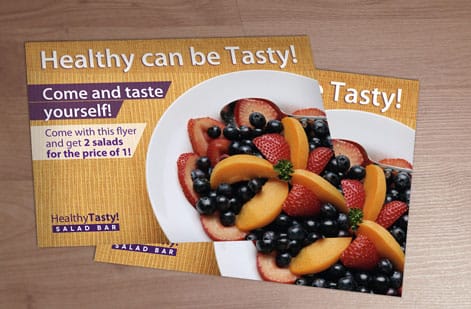
Cutting at home means a desktop cutter, printable vinyl sheets, and a laminating step you perform yourself. The advantages are real: a minimum order of one, same day turnaround for a market you forgot about, and total control over the cut line. The costs are equally real, because every hour spent weeding and laminating is an hour not spent designing or selling, and desktop output rarely matches commercial registration.
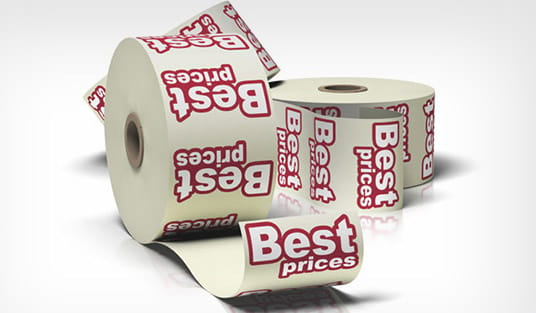
Ordering printed and cut stickers moves that labor to a printer with a plotter and a laminator. Per piece cost drops sharply as the run grows, kiss cutting is precise, and the color holds from one reorder to the next. Rolls are worth asking about once a single design sells consistently, since a roll is the cheapest format per unit and the fastest to pack for events and wholesale.
The practical route is hybrid. Cut small test batches at home, watch which designs reorder, and move only the proven ones into wholesale runs. Sellers in other print categories follow the same escalation, and it is spelled out clearly in how to start a t-shirt printing business.
Step 6: open the right channels in the right order

Start where the buyers already are. A handmade marketplace gives you search traffic on day one at the cost of a commission and a crowded results page. Your own storefront costs you the traffic problem but keeps the customer list, the email addresses, and the full margin. Most shops run both, using the marketplace for discovery and the owned store for repeat buyers.
In person selling is the underrated channel. Craft fairs, conventions, farmers markets, and campus events convert at rates online traffic cannot touch, because people can pick the sticker up and see the holographic shift under real light. Bring a flat display, a card reader, and enough small bills to make change.
Wholesale is the third leg. Independent bookstores, coffee shops, bike shops, and gift stores buy sticker assortments constantly, and one good account will reorder for years. Approach them with a small physical sample pack rather than an email attachment. If you plan to build an audience with content rather than paid ads, the playbook in how to start a small business blog applies directly to sticker keywords.
Step 7: pack and ship without eating your margin
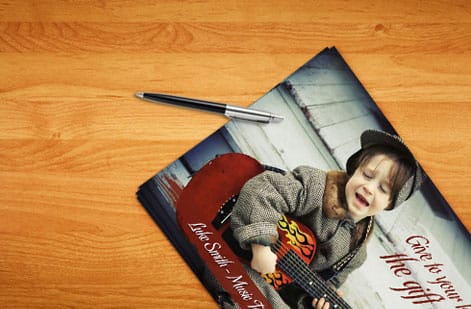
Stickers ship flat, and flat is cheap. A rigid mailer or a stiffened flat envelope protects the piece for a fraction of what a box costs, and a backing board keeps the corners from curling in transit. Weigh a fully packed order once, then build that exact weight into every shipping rate you publish so you are never surprised at the counter.
Decide your tracking policy up front. Untracked letter mail is the cheapest way to send a single sticker and the most expensive way to handle a dispute. Many shops send singles untracked with a clear policy, and switch to tracked service above a set order value.
Packing is a marketing moment. A branded card, a thank you note, and one free sticker cost pennies and produce the unboxing photos that feed your social proof. This is where your print budget earns the most per dollar, because the buyer is already holding the package when they see it.
Print the brand that sells the second order
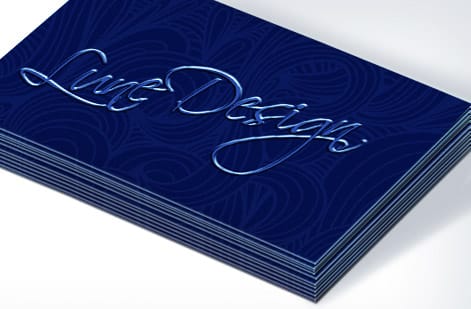
Stickers are the product. The brand around them is what turns a single purchase into a customer. Every package you mail, every market table you set up, and every wholesale sample box should carry a card with your shop name, your storefront address, and one reason to come back, whether that is a discount code or a preview of the next drop.
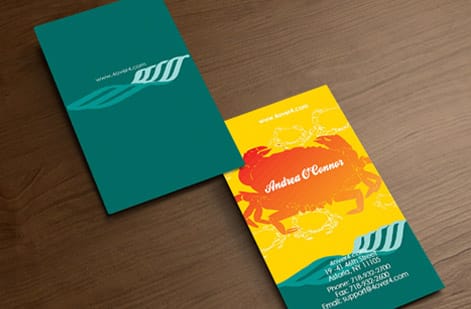
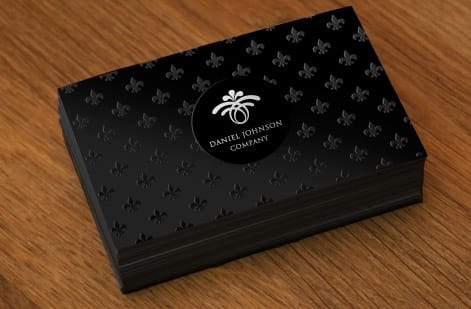
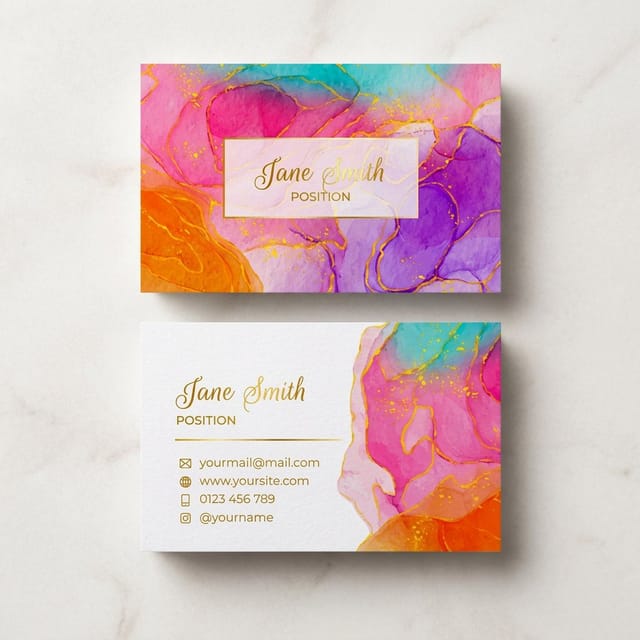
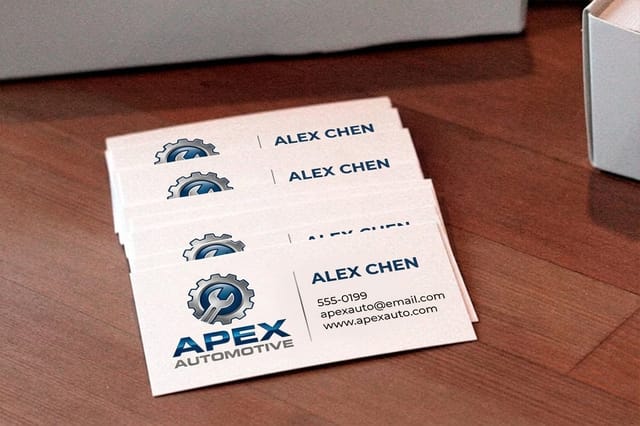
Match the card to the audience you chose in step one. Illustrators and makers selling art driven designs tend to reach for artist business cards, which start around $17.57 and are built to carry artwork rather than a corporate layout. Shops working automotive, motorcycle, or off road niches usually do better with automotive business cards from $17.57, because the design language already speaks to that buyer.
Keep one card for the moments that need to be remembered. 3D lenticular business cards start at $690.88 for a specialty run, and they exist for the same reason holographic stickers do: people keep the thing that moves when they tilt it. Hand those to wholesale buyers and convention contacts rather than putting them in every retail envelope.
Legal basics, first year costs, and how to scale
Register the business name, open a separate bank account, and get a sales tax permit if your state requires one. Track every print order, mailer purchase, and platform fee from the first week, and file each printer invoice under the design it produced, so a 25 piece die-cut run at $93.37 reads as $3.73 a sticker in your costs, because the tax picture is simple when the records exist and painful when they do not. If you sell in person, check whether your city needs a temporary vendor permit for each event.
Your realistic first year cost is a print run, packaging, a storefront subscription, a domain, and whatever you spend on samples. That is a low enough number that the real constraint is your design output and your attention, not your capital. Reinvest the first several months of revenue into more designs and better photography rather than into ads.
Scale by narrowing, not widening. Retire designs that do not reorder, deepen the ones that do into size and finish variants, then add packs, roll formats, and wholesale accounts. If the sticker line proves the model works, the same audience and the same print relationships extend into adjacent products, a path traced in how to start an e-commerce business and in the side hustle economics of how to start a wedding business or side hustle.
Wally explains the sticker business
Sell the pack, print the brand, keep the buyer
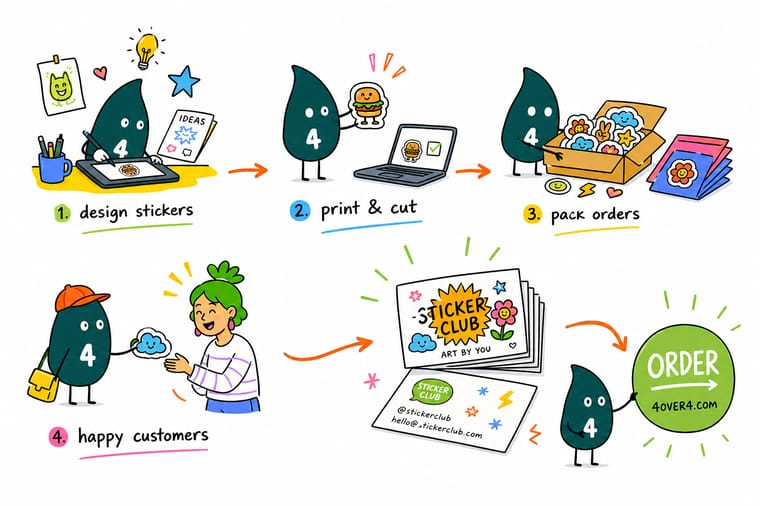
Wally has watched plenty of sticker shops launch. The ones that last do three unglamorous things: they design for one audience instead of everyone, they standardize on two sizes and two finishes so reorders are painless, and they put a printed card in every single package. The sticker earns the first sale. The card earns the second one, and the second one is where the profit lives.
Order artist business cards →
Infographic
The 7 steps to launching a sticker business
One frame, seven steps: one audience, art you can legally sell, a vinyl, clear or holographic stock with a gloss or matte laminate, a price built from cost, packaging and fees, home cut tests before printed runs, marketplace then own store then events then wholesale, and flat mailers with a card inside. Save it, print it, and work through it in order rather than jumping straight to the artwork.
No step stands alone. The niche decides the artwork, the artwork decides the material, and the material decides what you can charge without giving the margin away.
Specs and pricing
Artist business card specs and live pricing
Every sticker order that leaves your table should carry a card. Here are the specs and current pricing for the card most sticker artists reach for first.
| Quantity | Price Per Unit | Total |
|---|---|---|
| 100 | 17.6¢ | $17.57 |
| 200 | 11.5¢ | $23.07 |
| 300 | 9.15¢ | $27.46 |
| 400 | 7.96¢ | $31.86 |
| 500 | 7.25¢ | $36.26 |
| 600 | 6.77¢ | $40.64 |
| 700 | 6.43¢ | $45.04 |
| 800 | 6.18¢ | $49.43 |
Print it
The print that carries your sticker brand

See it in use
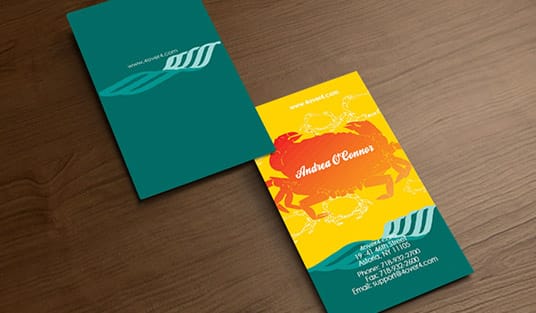
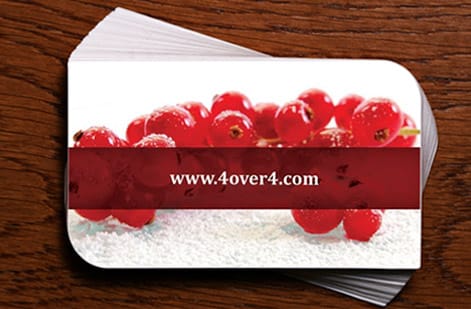
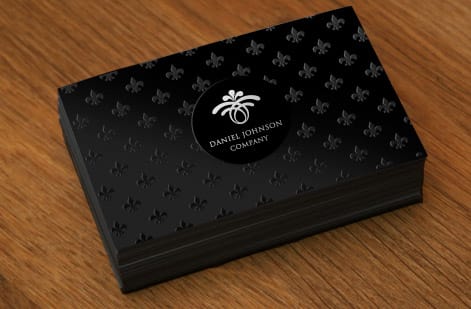
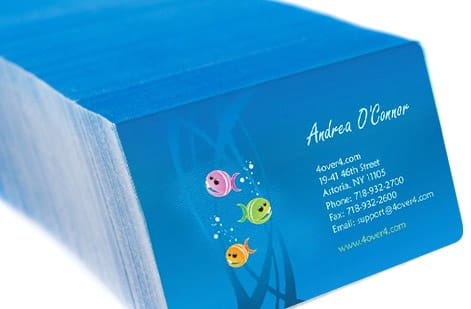
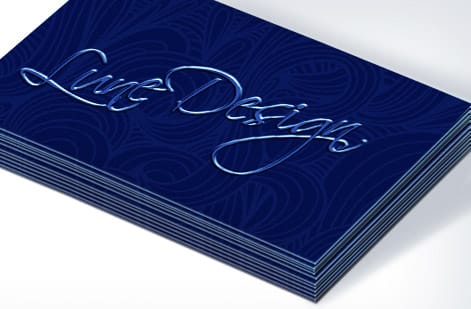
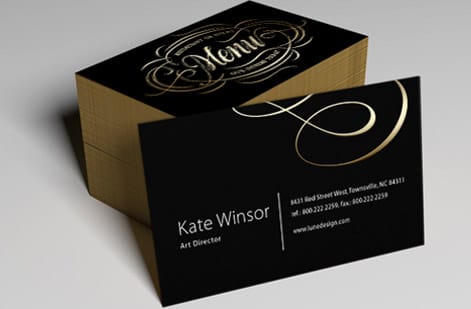
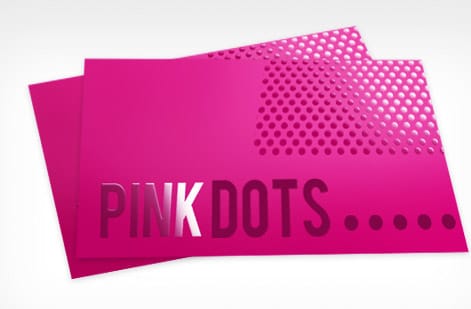
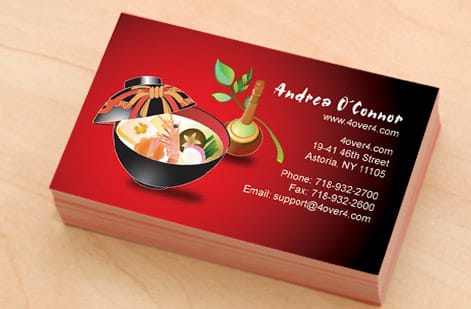
Artist business cards, printed on our stocks

Explore more
Where to go next


By the numbers
60 plus paper types and 1,000 plus products to build a catalog on
Common Questions
Common questions about starting a sticker business
What is a sticker business and how does it actually work?
A sticker business designs artwork, has it printed on adhesive stock, and sells it as singles, packs, or sheets to consumers, or in bulk to other brands. You control three things: the art, the material, and the channel you sell through. Everything else, including cutting, laminating, and packing, can be handled by a printer or a fulfillment partner. Most owners start from a kitchen table with a laptop, a design file, and one print order, then reinvest until the catalog and the reorders carry themselves.
Which group already puts stickers on things?
Pick a group you already belong to or serve, because you will recognize the inside jokes, the vocabulary, and the objects those people put stickers on. Nurses, van lifers, teachers, bass players, dog breeds, and tabletop gamers all buy stickers constantly. Check that the audience has active forums, subreddits, or hashtags where people show their gear, then design ten pieces aimed squarely at that group instead of fifty aimed at nobody in particular.
What does starting a sticker business cost and how are prices set?
A realistic first run sits in the low hundreds of dollars once you cover a print order, mailers, and a storefront subscription. Your retail price is built from landed unit cost, packaging, payment fees, and the channel commission, then multiplied to leave room for discounts and returns. Die cut singles usually retail well above their cost because buyers price them against gift shop impulse buys, not against paper.
What sizes, materials and finishes are available for stickers?
Common retail sizes run from two inches for laptop and water bottle art up to five or six inches for bumper and window pieces. Materials include white vinyl, clear vinyl, holographic, glitter, kraft paper, and removable stock. Finishes cover gloss, matte, and soft touch lamination, plus UV rated overlaminate for anything that will live outdoors. Indoor paper stock is fine for packaging seals, but outdoor art needs vinyl with a laminate if you want it to survive a summer.
How long do stickers take to print and ship?
Turnaround depends on the run size and whether the job needs a custom cut line. Small digital runs move fastest, while large kiss cut roll orders and specialty laminates add production days. Build a buffer into every launch: order proofs before a market or a product drop, not the week of it, and keep a small safety stock of your top three designs so a viral post never leaves you sold out for ten days.
Do I need a license or permit to sell stickers?
Rules vary by state and city, but most sellers register a business name, get a sales tax permit if their state collects it, and keep a separate bank account from day one. If you sell at markets or fairs you will often need a temporary vendor permit. The legal risk that actually shuts sticker shops down is not licensing, it is intellectual property: never sell art that uses a logo, character, athlete, or lyric you do not have written permission to reproduce.
Should I buy blank sticker paper or order printed stickers wholesale?
Cutting blanks at home gives you control and tiny minimums, but it eats hours and caps your quality at what a desktop machine can do. Ordering printed and cut stickers from a commercial printer costs more per piece at small volume and far less at scale, and it gives you laminate, precise kiss cutting, and consistent color. Most owners start at home to test designs, then move proven sellers to wholesale runs or rolls once a design reorders twice.
Get Started
Order 100 artist business cards from $17.57
Your art sells the first order. A card in every package, at every market table, and in every wholesale sample box is what brings the buyer back for the second one.
Legal Disclaimer
Gold Standard guarantees apply to all standard orders placed through 4over4.com. Price match requires verifiable proof of a competitor's published price for an equivalent product with matching specifications and turnaround time. Satisfaction guarantee covers manufacturing defects and print quality issues. Contact support with order number and documentation.
