
How to Print Transparent Posters on Clear Window Film


Clear posters are printed on film rather than paper. Here is which film to pick for your glass, when the file needs white ink behind it, and how to get it on the window without bubbles.
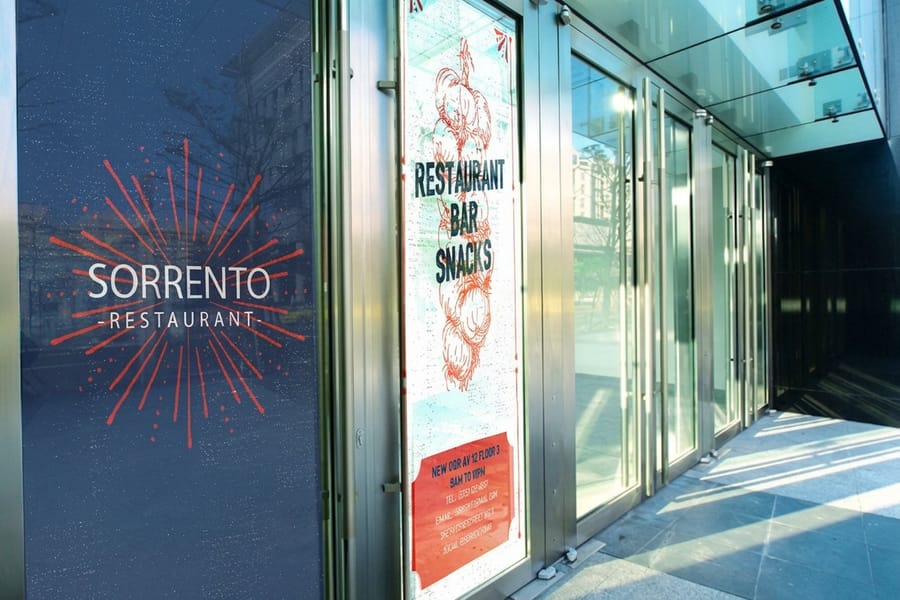
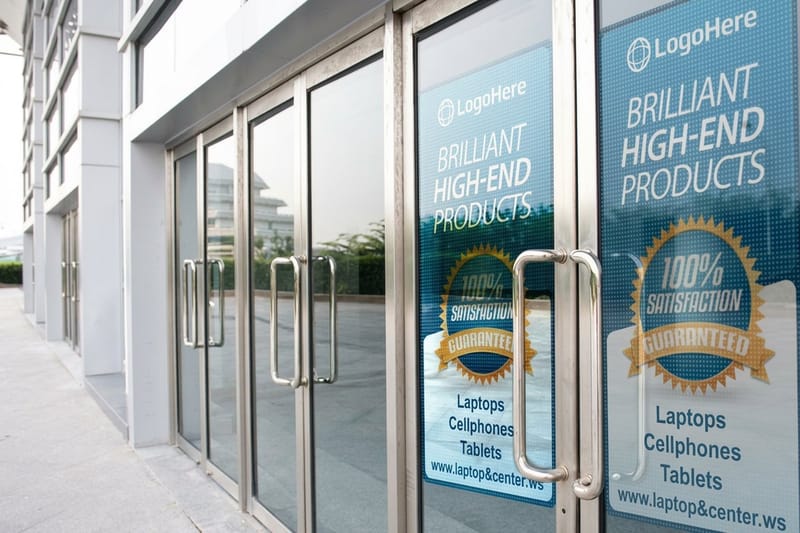
A transparent poster is printed on clear film rather than paper: clear adhesive vinyl or a static window cling for glass, backlit film for a light box, perforated vinyl when a whole pane has to stay see-through from inside. Because CMYK ink is translucent, the artwork looks washed out on glass unless a white underbase is printed beneath the shapes that must stay solid. Applying it on the inside face of the glass also means mirroring the file before it prints.
Quick answer
Clear film, and a decision about white ink
Swap the paper for clear film and the poster becomes transparent, but the ink stays translucent with it. Color printed on clear vinyl or cling lets the street behind the window mix into the artwork, so light tints fade out and photographs go gray. A white underbase printed under the shapes you nominate makes those areas read solid while the rest of the pane stays clear. Backlit film is the separate case: lit from behind, it needs a heavier build than anything you would send to paper.
What a Transparent Poster Is Actually Printed On

Four materials cover almost every job that gets ordered as a clear poster, and they behave differently enough that picking the wrong one is the usual reason a window display disappoints. The question to answer first is not how it looks but what the glass has to do afterward: stay see-through, go opaque, keep the view out, or glow from a light box.
| Material | How it holds | What the glass does | Best for | From |
|---|---|---|---|---|
| Clear window clings | Static, no adhesive. Peels off whole and goes back up. | Stays see-through around the printed shape. | Seasonal promotions and anything that changes every few weeks. | $30 |
| Clear adhesive vinyl | Real adhesive, survives weather and washing. | See-through, with an opaque printed area if white ink is used. | Hours, addresses and logos that stay up for months. | $25 |
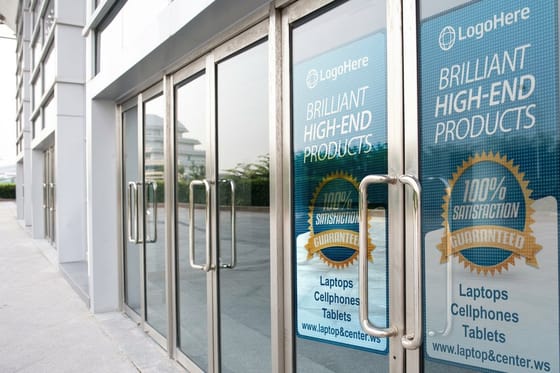
| Perforated window vinyl | Adhesive, punched with a pattern of small holes. | Full image outside, a usable view from inside. | Covering a whole pane without blinding the room behind it. | $30 |
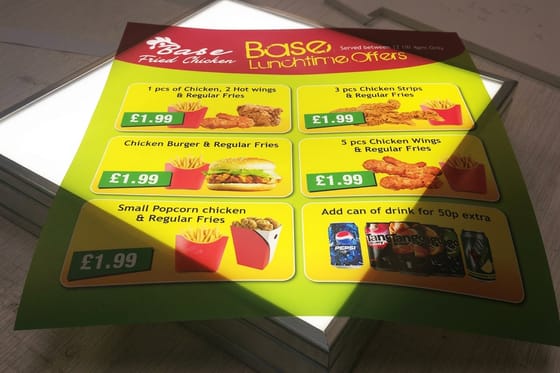
| Backlit film | Slides into a light box or frame, not onto glass. | Not glass at all. The print is the lit panel. | Menu boards, lobby displays, anything read after dark. | $29.20 |
There is a fifth option people ask for by the wrong name. Translucent adhesive vinyl is not clear: it diffuses light rather than passing it, which is what you want on the face of an illuminated cabinet and not what you want on a shop window. If the goal is privacy rather than a printed image, frosted etched vinyl is the material that does that job, and the window graphics range lists them side by side.
Printing a Transparent Poster in Six Steps
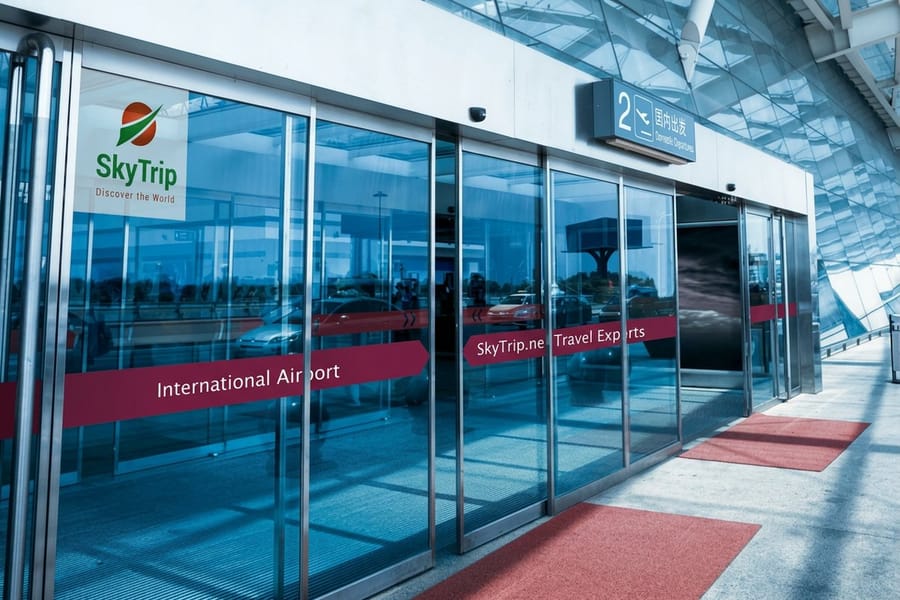
The order of these steps matters. Two of them are decisions that cannot be undone once the file is on press, and both come before you touch the artwork.
- Measure the pane, not the poster. Glass is usually held in a frame that overlaps the edge by a quarter inch or more. Measure the visible opening, then take a quarter inch off each dimension so the film does not run under the frame and lift.
- Decide which face it goes on. Outside the glass means weather, cleaning and fingernails hit the print. Inside means the print is protected but read through the pane, which is the mirroring decision in step four.
- Pick the material from the table above. Reusable points to a cling, months of service points to adhesive vinyl, a full pane that still needs a view out points to perforated.
- Set up the file. Build at full size, CMYK, 100 to 150 dpi for the raster elements, type and logos kept as vector. Flip the whole layout horizontally if it is going on the inside face. Our blank template library gives you correctly sized starting files and the color profile guide covers the profile side.
- Mark what needs white behind it. Tell us which elements are meant to read solid. That becomes the white underbase layer. Everything not marked prints translucent and lets the background through, which is often exactly the effect you want around the edges of a design.
- Proof it against the real background. Hold the proof against the actual window at the actual distance, in daylight and after dark. A design that reads well on a monitor and fails against a bright street is the most common surprise in window work.
Order of operations aside, the cheapest insurance is a small test piece. On a large storefront run, printing one panel first and taping it up for a day answers questions about glare, color and viewing distance that no proof on a desk can answer.
White Ink, Density, and Why Clear Prints Look Washed Out
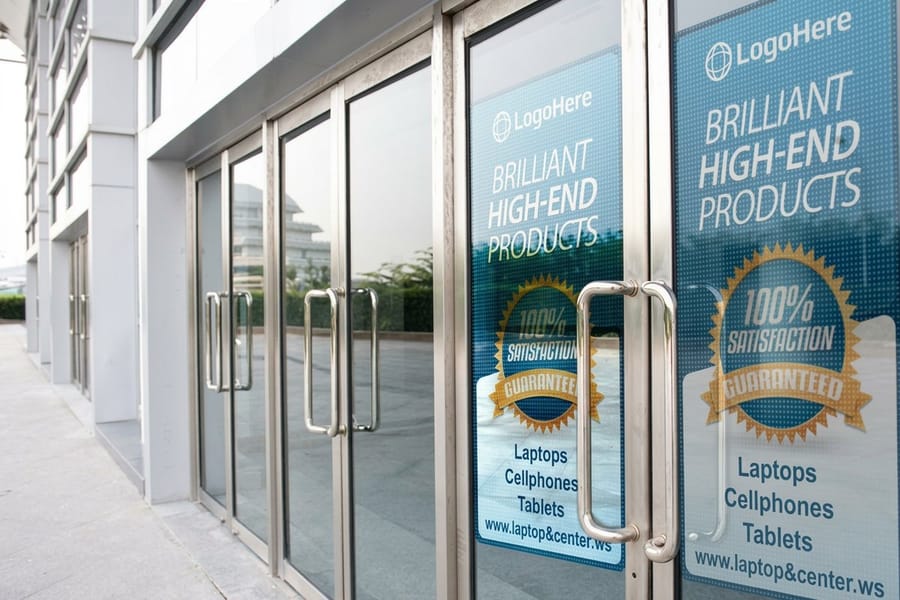
Here is the part that catches designers who have only ever specified paper. On a poster, the white stock behind the ink reflects light back through it, and that reflection is what makes a color look solid. Take the white away and light passes straight through, so the ink behaves like stained glass. A 20 percent tint that reads as a soft gray on paper reads as almost nothing on a window.
Three consequences follow, and they shape the design more than any other constraint on this page. Pale tints and pastel palettes stop working, so a clear poster wants dark solids, heavy weights, and generous letter spacing. Photographs go flat and gray against a bright exterior unless they sit on a white underbase. And drop shadows, soft gradients and thin hairlines lose their edges entirely, because the contrast that defined them came from the paper.
The white underbase solves it selectively rather than everywhere. We print white first, then the color on top, only within the shapes you nominate. A logo prints opaque and correct, while the space around it stays clear glass. That selective quality is the whole appeal of clear film over a solid white window cling, which is the simpler and cheaper answer whenever the design has a hard edge and the glass behind it does not need to show.
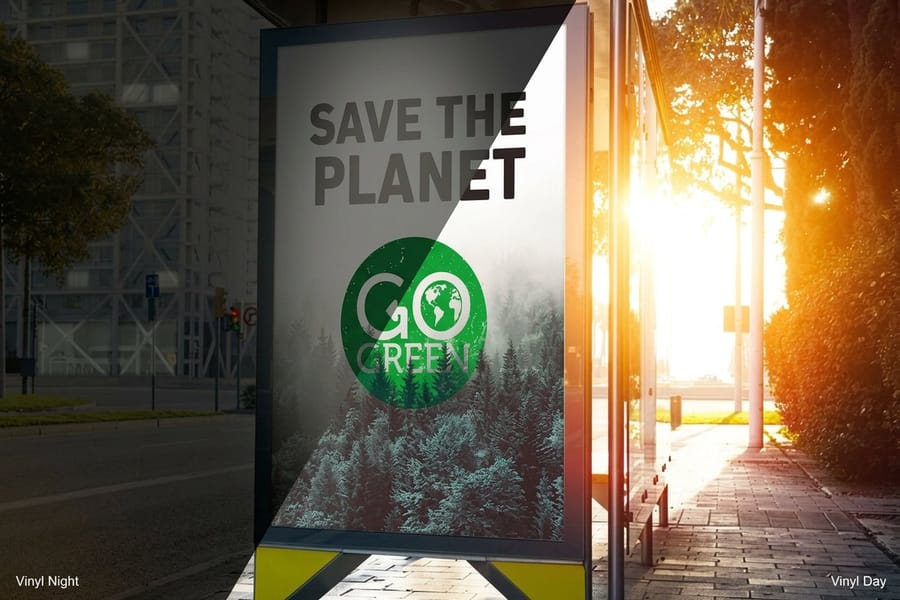
Backlit film inverts the problem. Light comes from behind the print rather than reflecting off a substrate, and that light lifts every value, so an image built to look right under office lighting will read thin and pale once the box is switched on. Shadows and midtones get built heavier on purpose. The backlit film guide goes through the density adjustments in detail, and backlit film starts at $29.20.
Applying It, and How Long It Stays Up
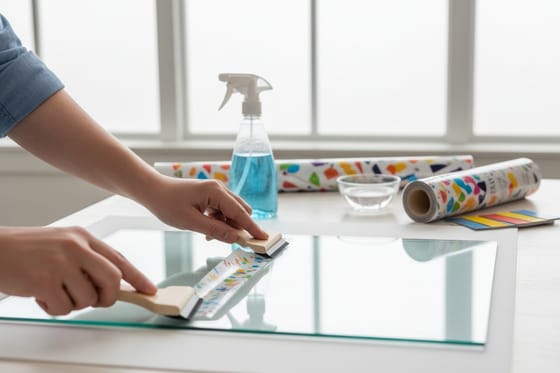
Clean glass is most of the job. Ammonia-free cleaner, then a squeegee, then a lint-free wipe, and no household spray that leaves a soap film behind, because a cling on a soapy pane slides and a vinyl on one bubbles within a week. Cold glass is the second trap: below about 50 degrees Fahrenheit adhesive vinyl will not grab properly, and a panel applied on a cold morning peels at the corners by afternoon.
Small pieces go up dry, hinged with a strip of tape down the middle so you can align before committing. Anything above roughly two feet wide goes up wet, with a light mist of water and a drop of soap on the glass so the film floats and can be repositioned, then squeegeed firmly from the center outward. Small bubbles that remain will usually clear on their own within a day or two as the water evaporates through the film. The window cling application guide covers the technique step by step.
On service life, be realistic about sun. A south-facing pane in full afternoon sun ages a graphic several times faster than a shaded one, and the failure shows up as faded reds and a brittle face material rather than as a graphic falling off. Take vinyl down while it still looks healthy and it releases in one piece. Clings are the exception to all of this because they can be lifted, slipped back onto their liner, and stored flat for next year.
If the poster does not actually need to be transparent, say so before you spend on film. Paper is cheaper, holds color better, and prints sharper, and large format posters start at $25. Clear film earns its money when the glass has to keep doing its job, and that is the only time it is the right answer. For the wider range of window and wall work, the window graphics category and the window signage guide are the next stops.
Wally explains clear posters
The window keeps working, the ink still needs help
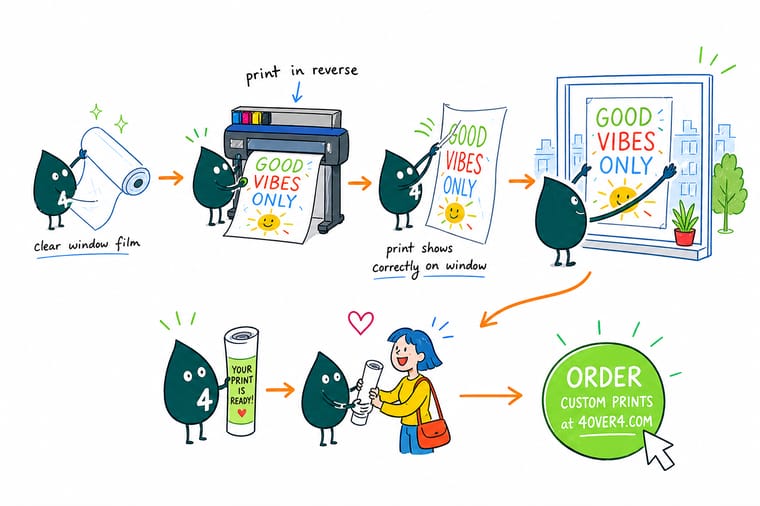
Wally prints the poster on clear film instead of paper, so the glass stays a window. Then he notices his pale blue logo has vanished into the sky behind it. So he prints a layer of white first and puts the color on top of that, and the logo goes solid again while the rest of the pane stays see-through. He measures the glass opening rather than the frame, cleans it with ammonia-free spray, mists it with water, and squeegees from the middle out.
Order clear window clings →Specs and pricing
Clear films, sizes, and starting prices
Backlit film and perforated window vinyl both print in 2 business days, and clear adhesive vinyl in 4, with sizes set on each product page.

Print it
Order a poster that leaves the window working


Explore more
Where to go next
By the numbers
Window graphics inside 1,000+ printed products
Common Questions
Your transparent poster questions, answered
Can you print a poster on transparent paper?
Not on paper. Paper scatters light, so even the thinnest sheet reads as translucent gray rather than clear. A transparent poster is printed on film: clear adhesive vinyl, static cling window film, or backlit polyester. All three run through the same wide format printers as a paper poster, so the file you already have is usually usable, but the substrate has to change.
Why does my clear poster look faded on the window?
Because CMYK ink is translucent and there is nothing white behind it. On paper the white stock reflects light back through the ink and the color reads solid. On clear film the light keeps going, so the sky, the street, and the shop interior all mix into your artwork. The fix is a white underbase printed beneath the color, or a redesign around dark solids and heavy type instead of pale tints.
Do I need to mirror the artwork?
Only for second surface application, meaning the film goes on the inside face of the glass and is read from outside. In that case the ink layer ends up against the pane and the image is seen through the glass, so the file is flipped horizontally before printing. First surface application, on the outside of the glass or on an interior partition read from the same side, needs no mirroring. Tell us which one you are doing when you order and we set the file accordingly.
Clear window cling or clear adhesive vinyl?
Clings use static, not glue. They peel off in one piece, store flat, and go back up next season, which suits promotions that change. They also need smooth glass and they let go in high heat or on textured surfaces. Clear adhesive vinyl has a real adhesive, holds through weather and washing, and is the right pick for anything staying up for months. Clear window clings start at $30 and clear adhesive vinyl at $25 at 4OVER4.COM.
What resolution does a transparent poster need?
At full size, 100 to 150 dpi is plenty for anything read from more than a couple of feet away, and window graphics are always read from further than that. What matters more is vector type and vector logos: on glass the eye is close enough to the edge of a letterform to see a soft rasterised edge, and a window poster spends its whole life next to a hard glass edge that gives the eye a reference.
Will a clear poster damage the window when it comes off?
A cling leaves nothing behind because there is no adhesive at all. Adhesive vinyl is designed for clean removal within its rated life, and it comes off in one pull when it is warm. The trouble comes from vinyl left up years past its life in direct sun, where the adhesive has cooked and the face material has gone brittle, at which point it removes in shreds and wants heat and a solvent. Take it down while it still looks good.
Get Started
Order backlit film, printed in 2 business days
Pick clear cling, clear adhesive vinyl or perforated film, tell us which face of the glass it goes on, and we set the white ink and the mirroring for you.
Legal Disclaimer
Gold Standard guarantees apply to all standard orders placed through 4over4.com. Price match requires verifiable proof of a competitor's published price for an equivalent product with matching specifications and turnaround time. Satisfaction guarantee covers manufacturing defects and print quality issues. Contact support with order number and documentation. On-time delivery rate based on tracked orders 1999 to 2026. Individual results may vary based on shipping carrier performance.
