
How to Order Wholesale Label Printing in Bulk Roll Quantities


What a wholesale label quote is really made of, how roll specs are set, and the break where ordering more stops saving you anything.
To order wholesale labels, fix five things before you ask for a price: finished size and shape, face stock, adhesive, roll spec (core, maximum outside diameter, unwind position), and the quantity break you actually consume in a year. A wholesale quote is built from one-time costs that divide across the run, per-label material costs that never divide, and freight that steps up with roll count. That is why the per-label price falls hard from the smallest break to the next one and barely moves after a few thousand.
Quick answer
One-time costs divide across the run, material never does
A wholesale label price is three blocks stacked together. The die, proof and press setup are paid once and spread across every label you order, which is the whole reason a bigger run costs less each. Face stock, adhesive, ink and laminate cost the same per label at any quantity, so they set a floor the price cannot go under. Freight steps up with roll count instead of falling. Read the curve below and buy to the bend rather than to the biggest number on the price list.
How Wholesale Label Quantities Are Actually Counted
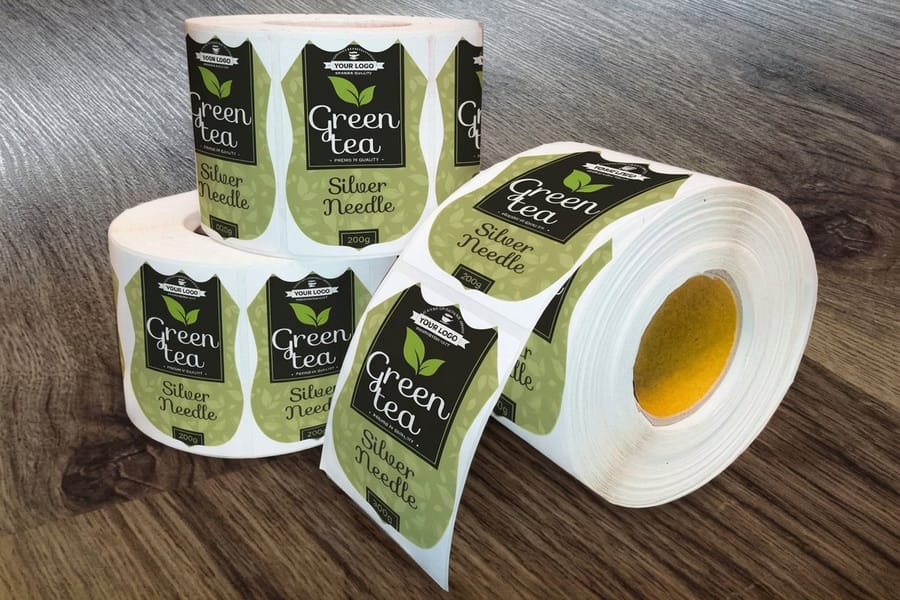
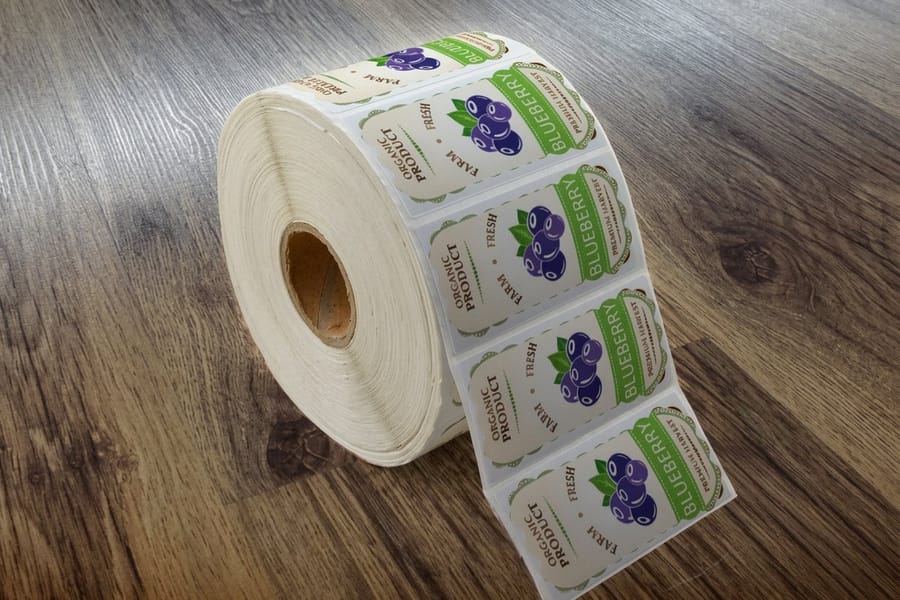
A wholesale label order is priced in labels but produced in rolls, and the two do not line up on their own. Before anyone can quote you, three roll numbers have to be settled.
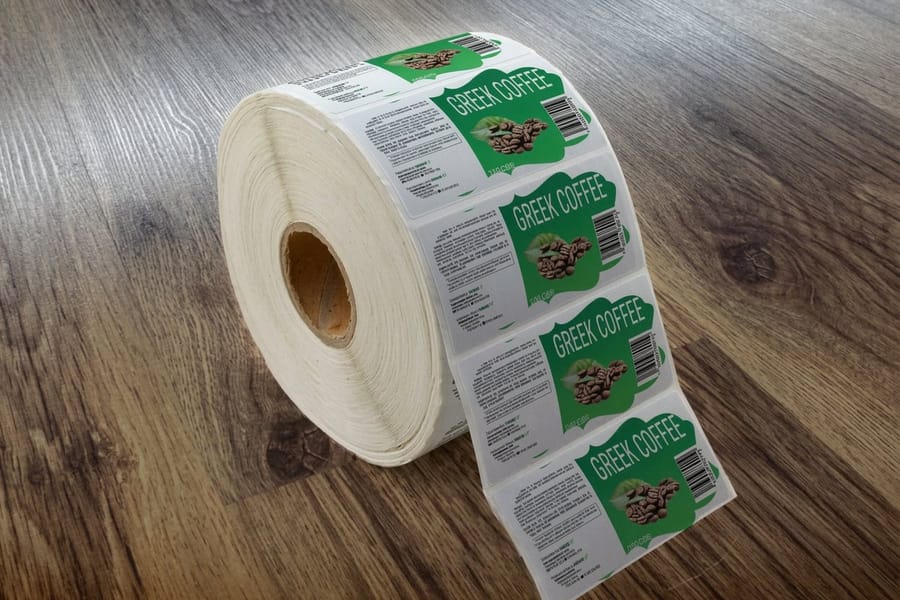
Core size. The cardboard tube at the centre. A 3 inch core is the common machine standard, a 1 inch core is normal for hand application and small dispensers. The core has to match the applicator spindle, not your preference.
Maximum outside diameter. How fat the finished roll is allowed to get before it stops fitting the unwind arm. This, not a label count, is what caps labels per roll.
Labels per roll. Derived from the first two numbers plus your label height and the gap between labels. A tall label on a capped diameter means fewer labels per roll and more roll changes on the line.
Then there is unwind position, which decides which edge leaves the roll first and whether the face points in or out. Hand application ignores it. An applicator does not, and a roll wound the wrong way is either rewound at a cost or scrapped. Ask the person who runs the machine, write the answer down, and reuse it forever.
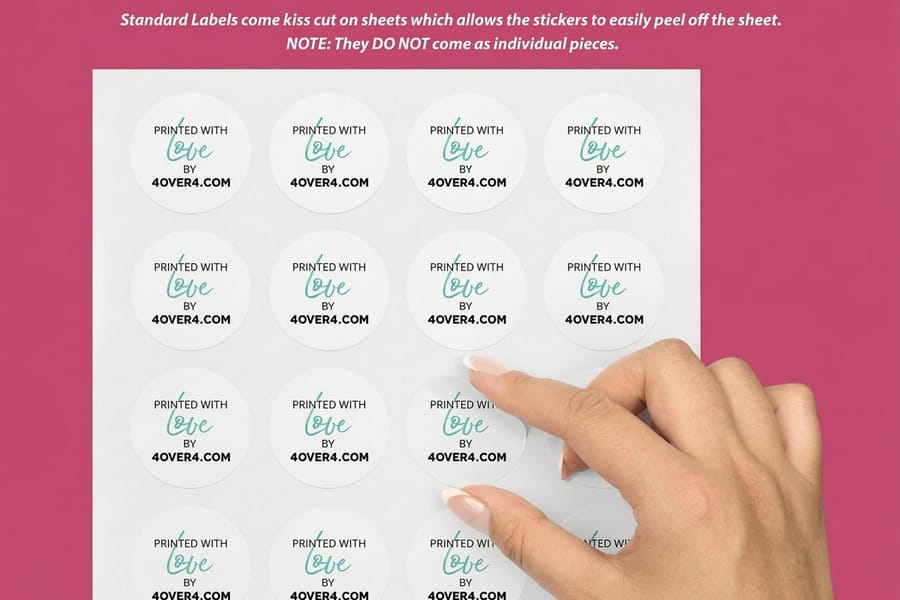
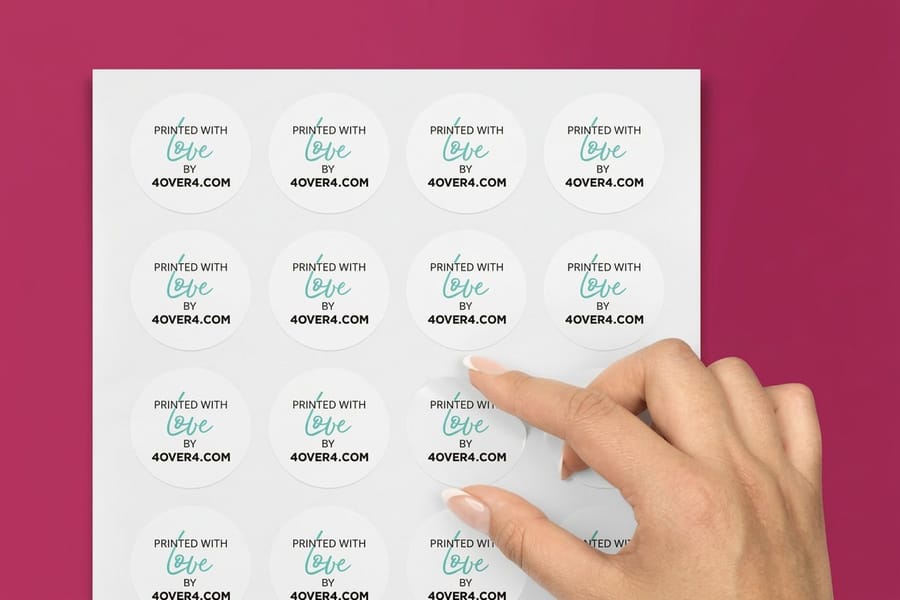
Sheets are the other path. Sheet labels suit short runs, mixed versions and anything applied at a desk, while rolls suit volume and machinery. The full trade-off sits in our comparison of roll labels against sheet labels, and if the finished size is still open, work through choosing the correct label size before you commit to a die.
Where the Per-Unit Price Break Stops Paying You Back
Three blocks make up a label quote, and only one of them gets cheaper as the run grows.
- One-time costs. The die, the proof, plate or file setup, and press make-ready. Divide this by 250 labels and it is brutal. Divide it by 10,000 and it nearly disappears.
- Per-label costs. Face stock, adhesive, ink, laminate and the waste that runs through the press while colour settles. This block never divides. It is the floor.
- Per-shipment costs. Freight, which steps up with roll count and carton weight rather than sliding down.
That is why the curve is steep at the start and flat later. Moving from 250 to 1,000 labels spreads the same setup over four times as many pieces, so the per-label number drops hard. Moving from 5,000 to 10,000 mostly buys twice as much material at the same material price, and the saving per label is small enough that a lot of buyers overbuy for a discount that was never really there.
The practical rule: find the break where the curve bends and buy to it, then reorder at that break rather than stockpiling. Standard Labels start at $23.88, Premium Labels at $29.16, and Die-Cut Labels at $93.37, so the starting point already tells you how much tooling and finishing each format carries. Our breakdown of how bulk price breaks work applies the same arithmetic across every product, and reseller volume terms sit under bulk discounts.
Choosing a Face Stock and Adhesive That Survives the Job

Material choice is where wholesale label orders go wrong at scale, because the failure only shows up after the whole run is applied. Match the stock to what the labelled product goes through.
| Face stock | Behaves like | Right for | Where it fails |
|---|---|---|---|
| Coated paper | Prints sharply, takes ink evenly, tears rather than stretches. | Dry goods, cartons, retail packaging, address and shipping labels. | Wicks moisture. A chilled bottle or a wiped-down jar will darken and lift the edges. |
| White BOPP film | Plastic, flexible, shrugs off water and handling. | Bottles, jars, cosmetics, anything wet, chilled or squeezed. | Costs more than paper, and a matte film shows fingerprints without a laminate. |
| Clear BOPP film | Disappears into the container for a no-label look. | Glass and clear plastic where the liquid is part of the design. | Any trapped air or misapplication is visible. White ink is needed under solid colour. |
| Vinyl | Thicker, conformable, tolerates outdoor exposure. | Equipment, drums, asset tags, anything living outside. | Overkill on a retail shelf and priced accordingly. |
Adhesive is the second decision and it is independent of the face. Permanent is the default. Removable matters for promotions and seasonal versions that come off cleanly. Freezer-grade adhesive exists because standard permanent adhesive does not grab a surface that is already cold and wet, which is the single most common label failure in food and beverage.
Then the laminate. Gloss lifts colour, matte reads as premium and scuffs less visibly, and both add abrasion and moisture resistance for pieces that get handled. For a wet or chilled product go straight to Premium Waterproof Labels, and for the no-label look on glass use Clear Labels. If you are still weighing the three families against each other, the comparison of paper, vinyl and clear labels lays out what each one costs you.
Three Clocks That Set Your Real Lead Time
Buyers plan around production turnaround and then miss the date, because production is only one of three clocks running.
The proof clock. Nothing goes on press until the proof is approved. On a first run this is where days disappear, and almost never because of the printer. If a client has to sign off, build that into the schedule as its own step with its own deadline.
The production clock. The press run itself, plus die-cutting, laminating and rewinding to your roll spec. A first order that needs a custom die adds tooling time before the press even starts. Reorders skip that entirely.
The transit clock. Printing is not shipping. Ground transit from our Queens facility runs one to five business days depending on zone, and an expedited production turnaround paired with the slowest ground service saves nothing.
Two habits fix most missed dates. Approve artwork before the quantity is finalised, since the quantity can move up to the last minute but the file cannot. And place the reorder at a stock level, not a calendar date: when inventory hits roughly one production-plus-transit cycle of labels remaining, order. Our guide to printing turnaround times and order tracking shows exactly which status each stage produces.
The Spec Sheet That Makes Every Reorder Identical
The first wholesale label order is a project. Every one after it should be a two-line email, and that only happens if the spec was written down once. Keep this record for each label you buy:
- Finished size, shape, and the die reference if the shape is custom.
- Face stock, adhesive type, and laminate.
- Core size, maximum outside diameter, labels per roll, and unwind position.
- Ink coverage notes, any white ink under clear film, and the approved proof reference.
- The quantity break you buy at, and the reorder trigger stock level.
Resellers and agencies add one more line: who the shipment goes to and under whose name. Blind shipping sends the cartons straight to your client without our paperwork inside, which is standard practice on trade accounts and explained in blind drop shipping for print resellers. The wider account terms sit on the reseller program page, and how a wholesale trade printer works covers what changes once you are ordering on behalf of clients rather than for yourself.
One warning about changing suppliers mid-programme. A different printer means a different die, a different film supplier and a slightly different white, and a shelf holding two production batches side by side shows it. If you are going to switch, switch on a full run, not a top-up. Browse the full range in label printing or configure a shape directly on Shaped Roll Labels, which start at $300.05 with the die and roll finishing included.
Wally explains the wholesale label curve
Buy to the bend, then reorder at the same spec
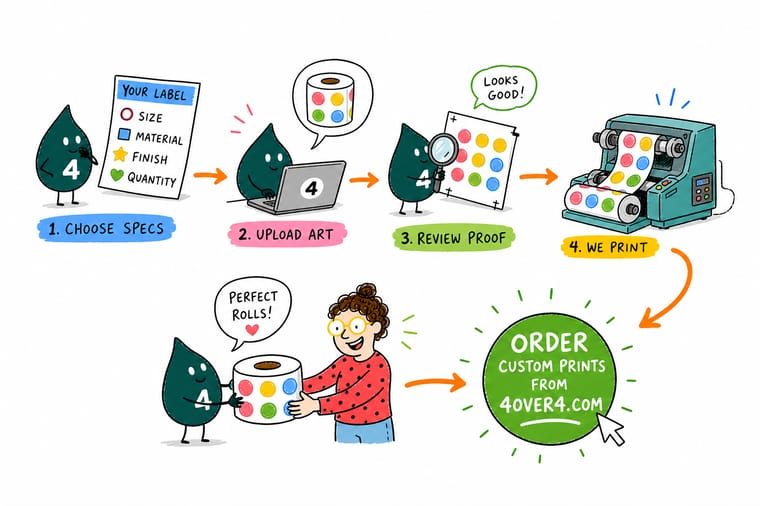
Wally pays for the die and the proof once, then divides them across the whole run, which is why 1,000 labels cost so much less each than 250. Push on to 10,000 and he is mostly buying face stock and adhesive, and those never get cheaper per label. So he buys to the bend in the curve, writes down the core size, the outside diameter and the unwind position, and reorders against that same sheet. Second invoice, no die charge, identical labels.
Configure shaped roll labels →Specs and pricing
Label formats, sizes, and starting prices
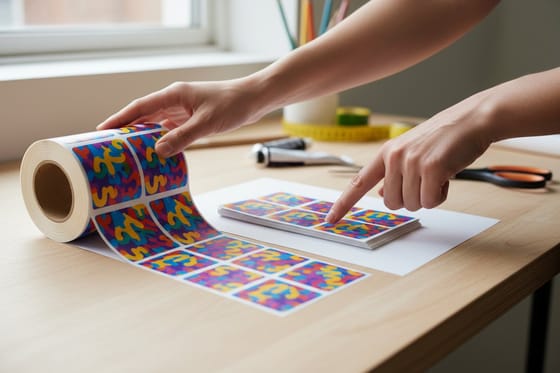
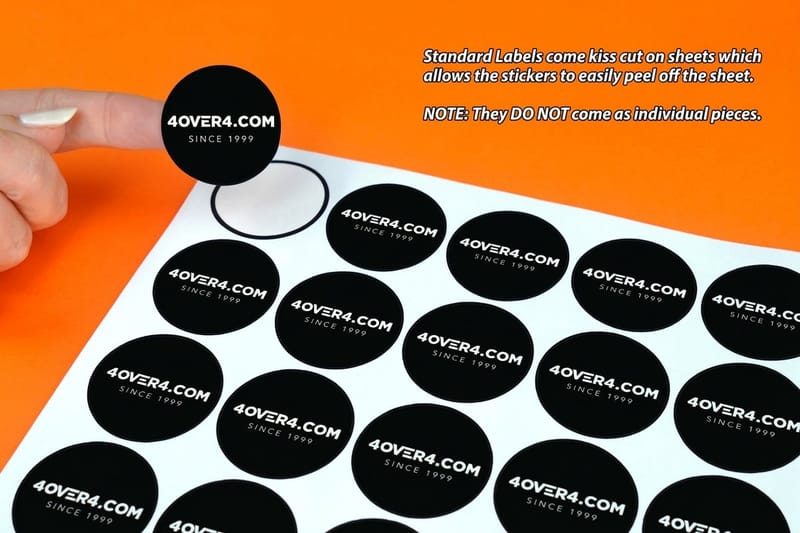
Compare the three formats a wholesale order usually comes down to, with live configuration choices and starting prices straight from the 4OVER4.COM configurator.



Print it
Order labels at a wholesale quantity

Explore more
Where to go next


By the numbers
Bulk label runs you can plan around
Common Questions
Your wholesale label questions, answered
What quantity counts as wholesale label printing?
There is no industry cutoff, but the pricing behaves differently once a run is large enough that the setup stops dominating the invoice. In practice that starts around a thousand labels and gets serious in the five to ten thousand range, where the die, the proof and the press make-ready are spread thin enough that you are paying mostly for face stock and adhesive. Standard Labels at 4OVER4.COM start at $23.88 and Shaped Roll Labels start at $300.05, and the gap between those two numbers is almost entirely tooling and roll finishing rather than paper.
How do I know how many labels to put on a roll?
Work backward from how the labels get applied. A hand-applied label on a small bench operation is comfortable at a few hundred to a thousand per roll, because a bigger roll is heavy and awkward. A machine applicator wants the largest roll its unwind arm accepts, which is set by core size and maximum outside diameter rather than by a label count. Ask whoever runs the line for the core diameter and the maximum outside diameter the machine takes, and the printer converts that into labels per roll for your specific label height and gap.
What is roll direction and why does the printer keep asking?
Roll direction, also called unwind position, describes which edge of the label comes off the roll first and whether the labels face in or out. Applicators are built to accept one position, so a roll wound the other way has to be rewound before it can run, and sometimes it cannot be saved at all. Hand application is indifferent to it. If the labels are going onto a machine, get the position number from the machine operator and write it on the order, then keep it on the spec sheet for every reorder.
Is it cheaper to order one huge run or several smaller ones?
One run is cheaper per label, and that is not always the right answer. Labels age: adhesive stiffens in a hot warehouse, thermal-sensitive stocks discolor, and artwork changes when a formula, a net weight or a regulatory line changes. Buying twelve months of stock for a stable product is sound. Buying three years of stock for a product whose packaging is under review is how a pallet of labels gets thrown away. The middle path is one die, one material, and a reorder every quarter at the same break.
Do I need a custom die, and what does it cost me later?
A rectangle, a square, a circle or a rounded rectangle usually runs on tooling the printer already owns, so there is no separate die charge. An outline that follows a logo or a bottle shoulder needs a custom die, and that cost lands on the first order. It does not land again if you reorder the same shape, which is the main reason a custom shape is worth committing to rather than tweaking every season. Die-Cut Labels start at $93.37 and Shaped Roll Labels start at $300.05.
How far ahead should a reseller place a wholesale label order?
Count three separate clocks and add them: proof approval, production turnaround, and transit. The proof clock is the one buyers underestimate, because it depends on how fast their own client signs off rather than on the press. Transit from our Queens facility is one to five business days depending on the service and zone. If a client launch date is fixed, work backward from it and place the order with a week of slack, especially for a first run that also has to make a die.
Get Started
Ready to price a wholesale label run?
Send the finished size, the face stock, the roll spec and the quantity you consume in a year, and we come back with a price you can reorder against.
Legal Disclaimer
Gold Standard guarantees apply to all standard orders placed through 4over4.com. Price match requires verifiable proof of a competitor's published price for an equivalent product with matching specifications and turnaround time. Satisfaction guarantee covers manufacturing defects and print quality issues. Contact support with order number and documentation. On-time delivery rate based on tracked orders 1999 to 2026. Individual results may vary based on shipping carrier performance.
