
How to Order Bulk Envelopes That Mail at Automation Rates


Four decisions, in this order: the size, window or plain, the postal specs, and the quantity tier. Each one carries a cost if you get it wrong.
To order bulk envelopes, lock the size first, because it decides whether the mailing pays letter or flat postage, then choose window or plain, then check the artwork against the four postal zones, then pick the quantity tier. Envelope cost is dominated by press setup rather than paper, so per piece price falls steeply through the first few thousand and then flattens. The right quantity is however many the artwork will outlive, not however many you expect to mail this quarter.
Quick answer
Size, window, specs, tier, in that order
The size decision outranks everything else, because it sets the postage rate on every piece. Stay inside 11.5 by 6.125 inches and a quarter inch thick and the mailing goes at letter rates. Choose a window when the address already prints on the letter inside, and plain when the front has a job to do. Keep the bottom right 4.75 by 0.625 inches clear, hold the aspect ratio between 1.3 and 2.5, and the run qualifies for automation. Then buy the tier your artwork will outlive, because setup is most of the invoice and it does not repeat.
Start With the Size, Because It Sets Your Postage
Envelope size is a postage decision wearing a print decision's clothes. Anything that stays within 11.5 by 6.125 inches and a quarter inch thick can mail at letter rates. Cross any of those and the piece becomes a flat, which is a different and higher rate table, charged on every single piece of the run.
Four sizes cover most bulk work.
| Envelope | Size | Holds | Mails as |
|---|---|---|---|
| #10 commercial | 4.125 by 9.5 in | A letter sheet folded in thirds, up to about 5 sheets | Letter |
| 6 by 9 booklet | 6 by 9 in | A letter sheet folded in half, or a small brochure flat | Letter |
| 9 by 12 catalog | 9 by 12 in | Unfolded letter sheets, a catalog, a presentation set | Flat |
| A7 announcement | 5.25 by 7.25 in | A 5 by 7 card or invitation | Letter, if the aspect ratio clears 1.3 |
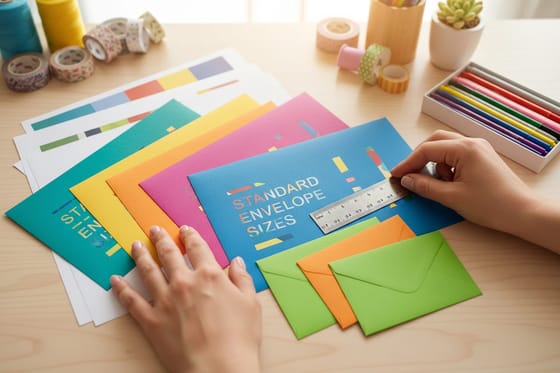
Watch that last row. Letter rate needs a length to height ratio between 1.3 and 2.5, and a squarish invitation envelope can land under 1.3 and pick up a surcharge on every piece. An A7 at 7.25 by 5.25 sits at 1.38, so it clears. A 5.5 inch square envelope does not. If you are choosing between two sizes, run the division before you run the job, and use our standard envelope sizes reference for the full commercial and announcement tables. The pairing question for card mailings is answered in the postcard and envelope pairing guide.
The other thing size decides is what goes inside. Buy the envelope and the insert together, on the same stock family, or you end up with letterheads that show through a thin shell.
Window or Plain, and What Each One Costs You Later
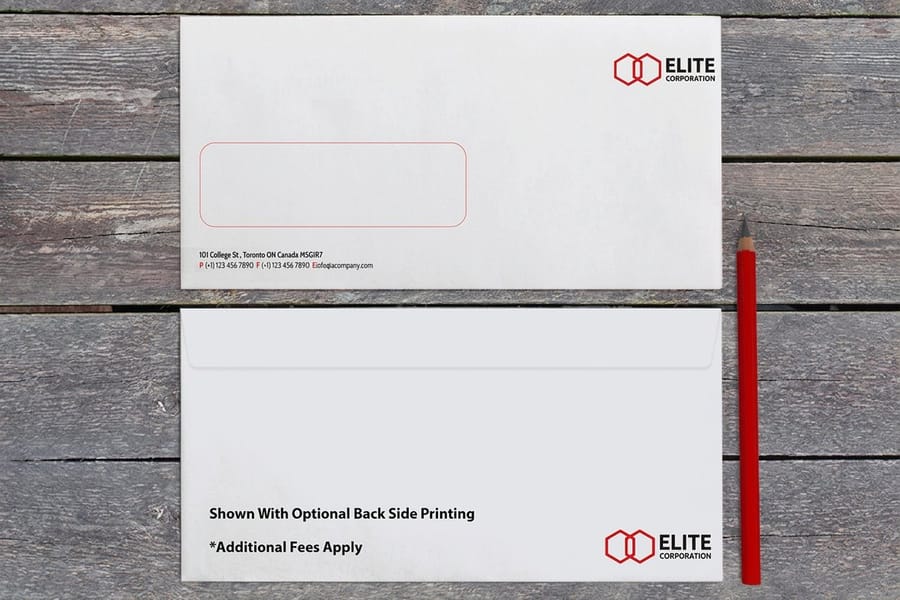
A window envelope moves the addressing job onto the letter inside. That is the whole argument for it, and for invoices, statements and any database merge it is a good one, because you address one thing instead of two and there is no chance of the wrong letter meeting the right envelope.
The cost shows up in three places. The window is a rectangle you cannot print across, usually 4.5 by 1.125 inches sitting 0.875 inch from the left edge, so any front design has to be built around a hole. The insert has to fold to a fixed geometry, which locks your letter layout for as long as you own the envelopes. And the address block has to survive insert shift: a sheet can travel about an eighth of an inch inside the shell during machine insertion, so the address needs clearance on all four sides of the window at the extremes of that movement, not just when it is sitting perfectly.
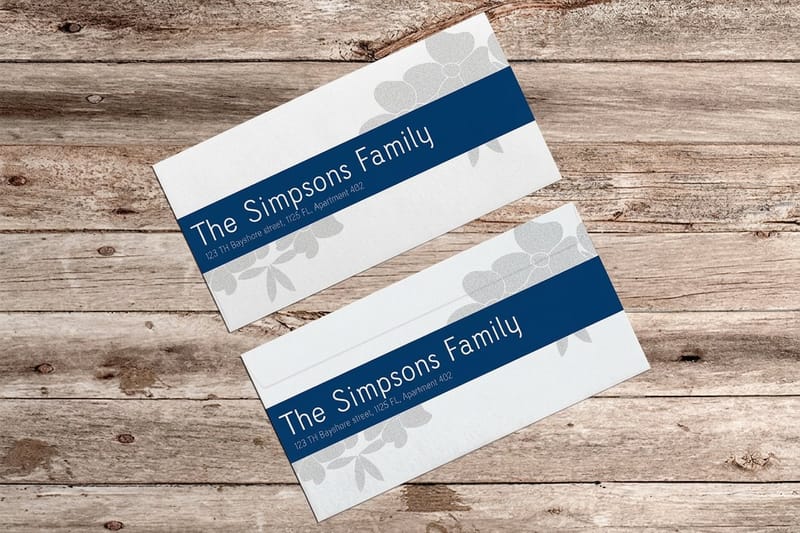
Plain envelopes give the front back to you. You can run a teaser line, a full color band, or a return address treatment that matches the letterhead inside. The tradeoff is that something now has to put an address on the outside, which means inkjet addressing, labels, or handwriting, and each of those is a separate cost per thousand.
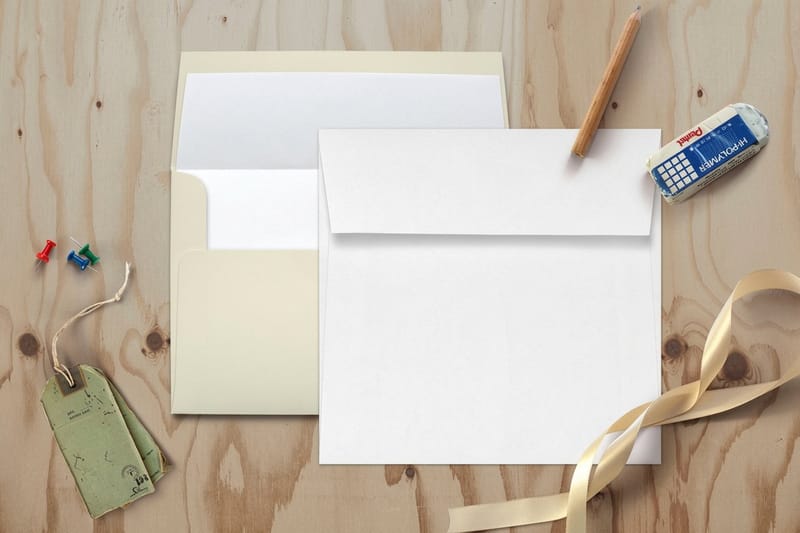
One decision that catches people out: printing on a finished envelope is not the same job as printing a sheet and converting it. A pre made shell goes through the press with seam ridges and a glued flap, so the press leaves a no print margin around the edges. Full bleed on all four sides, and printing on the flap, requires flat sheet printing and conversion afterward, which adds cost and days. Our envelope design guide maps the safe zones for both routes, and the blank template library has correctly sized layouts to start from.
The Four Zones That Decide Whether You Pay Automation Rates
Bulk postage is not a discount for buying a lot. It is a discount for handing the Postal Service mail their machines can read without a person touching it. Four things on the envelope decide that, and none of them are about print quality.
- The OCR read area. The address block has to sit inside the region the scanner looks at. Anything printed across it, including a light background tint, gives the reader competing marks to resolve.
- The barcode clear zone. The bottom right 4.75 by 0.625 inches of the address side must stay empty so the delivery point barcode has somewhere to print. This is the one that gets violated by a full color background after the run is already on press.
- The aspect ratio and dimensions. Between 1.3 and 2.5 length to height, at most 11.5 by 6.125 inches and 0.25 inch thick, at least 5 by 3.5 inches.
- Uniform thickness. A piece that is lumpy, or that has a rigid insert on one side, jams the equipment and gets pulled out of the automation stream.
Window envelopes carry a quiet version of the barcode problem. A standard window starts half an inch above the bottom edge, so its lower portion overlaps the 0.625 inch clear zone. That is fine for the window itself, but the address printed on the letter must ride the top of the window, not the bottom, or the address sits in the zone the barcode needs. Set your letter template that way once and every mailing after it inherits it.
Volume thresholds are separate and worth knowing before you size the run: 200 pieces or 50 pounds for USPS Marketing Mail, 500 pieces for presorted First-Class. A permit is required for both. If that overhead does not suit the job, the direct mail company comparison covers handing the whole mailing to someone who already holds the permit, and list building and rental covers where the addresses come from.
Where the Price Actually Breaks on a Volume Run
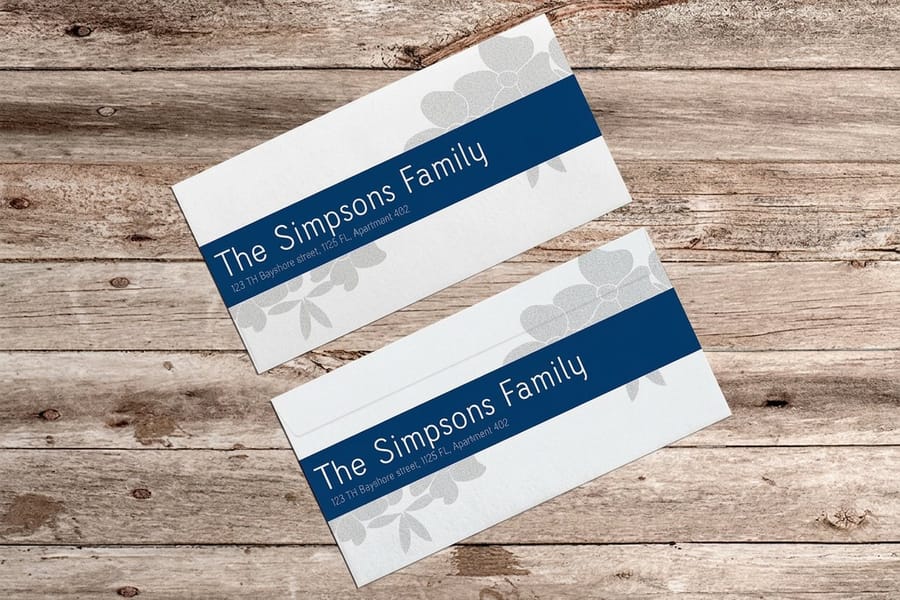
Envelope pricing is mostly makeready. Plates, wash up, registration on a shell that is already folded, and the first few hundred pieces that get pulled while the operator dials it in. That cost lands on the job whether you buy 500 or 5,000, which is why per piece cost drops hard through the first few thousand and then goes nearly flat.
Three practical consequences. Buying twice as many rarely costs twice as much, so the second tier is usually the honest choice. Reordering the same artwork in six months costs you a second full setup, so splitting one run into two is the expensive way to do it. And a second ink color or a second side is a setup charge, not a per piece charge, so it hurts most on the smallest run and barely registers on a large one.
Starting prices at 4OVER4.COM show the shape of it. Printed Envelopes start at $142.99. Blank Envelopes start at $13.17, because there is no press setup at all. Invitation Envelopes start at $170.42 on colored announcement stock, and Remittance Envelopes start at $617.67, which reflects the extra converting a return payment envelope needs. Every one of those moves with quantity, size and stock in the configurator below.
The one thing that should cap your quantity is not budget, it is how long the artwork stays true. A phone number, a suite number, a domain, or a logo refresh turns the remainder of a five year supply into scrap. Buy for the life of the information on the envelope. If you only need a few hundred and the setup math is working against you, ordering custom printed envelopes in smaller quantities walks through the low volume route, and the direct mail services collection covers letting us print, stuff and mail the whole thing.
Wally explains the bulk envelope order
Size first, then the window, then the four zones
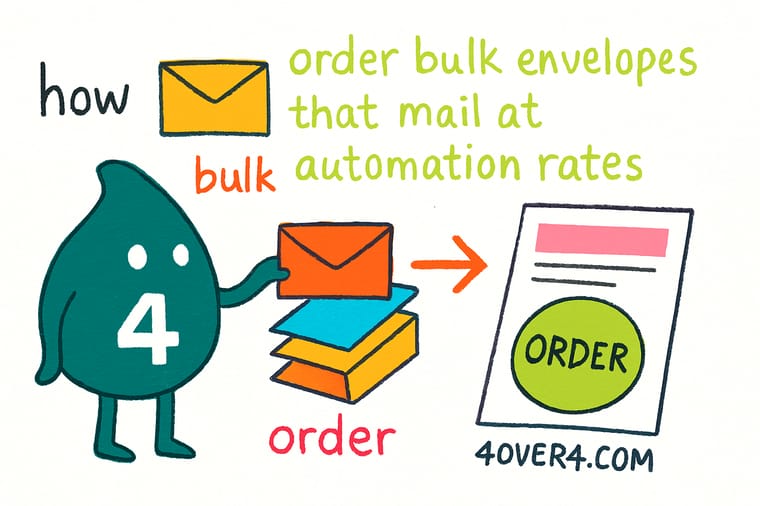
Wally measures the envelope before he prints anything, because 11.5 by 6.125 inches is the line between letter postage and flat postage on every piece. He decides whether the address prints on the letter inside, which means a window, or on the envelope, which means a plain front he can design on. Then he keeps the bottom right corner empty for the barcode and checks the length divided by the height sits between 1.3 and 2.5. Last, he buys the tier the artwork will outlive, because the setup charge is the same whether you take 500 or 2,500.
Configure printed envelopes →Specs and pricing
Envelope sizes, stocks and starting prices
Compare the three envelope routes side by side, with live size and quantity choices and starting prices straight from the 4OVER4.COM configurator.
Print it
Order the envelopes for your next mailing
Explore more
Where to go next
By the numbers
Bulk printing you can plan a mailing around
Common Questions
Your bulk envelope questions, answered
What is the minimum quantity for bulk envelope printing?
Printers set a minimum because the setup cost has to land on something. At 4OVER4.COM, Printed Envelopes start at $142.99 for the smallest configuration, blank stock envelopes start at $13.17, and Remittance Envelopes start at $617.67 because they are a converted piece with a second panel. The USPS minimums are separate and stricter: 200 pieces or 50 pounds for USPS Marketing Mail, and 500 pieces for presorted First-Class Mail. If you plan to claim a bulk postage rate, size the print run around the postal minimum rather than around the print minimum.
Should I order window envelopes or plain ones?
Order windows when the address already prints on the letter inside, which is the case for invoices, statements and anything merged from a database. Order plain when the envelope itself carries the address, when you want a printed teaser across the front, or when the insert is a folded piece whose position in the shell you cannot guarantee. The trap with windows is insert shift: the sheet can move roughly an eighth of an inch inside the envelope during machine insertion, so the address block has to stay fully visible through the window at every point in that range.
How many envelopes should I order at once?
Order for how long the artwork survives, not for how many you will mail this quarter. Setup dominates the invoice on an envelope run, so the per piece cost falls steeply from 500 to 2,500 and then flattens. The real cost of over ordering is not storage, it is a phone number change or an address change that turns the remainder into scrap. Companies that move offices or rebrand on a cycle should buy for that cycle. Everyone else can safely take the deeper tier.
Can I print full bleed on a bulk envelope order?
Only if the envelope is printed flat and converted afterward. A pre made envelope goes through the press as a finished shell, and the press cannot lay ink flat across the seam ridges or the glue line, so you get a no print margin around the edges and around the flap. Flat sheet printing plus conversion prints the whole surface including the flap and the seams, then dies and folds it into an envelope. It costs more and adds days, and it is the only route to edge to edge color.
What paper weight should bulk mailing envelopes be?
24 lb bond is the working standard for a #10 business envelope and it is what most mailing equipment is tuned for. 20 lb is thinner, cheaper and shows the insert through the front, which matters if you are mailing anything with a dark background or a check. 28 lb feels substantially better in the hand and runs fine on most inserters, but it adds weight, and weight is what pushes a mailing over a postage ounce break. Weigh a finished, stuffed, sealed sample before committing the run.
Do I need to send the envelope artwork differently from a flyer?
Yes, in two ways that catch people out. First, supply the artwork at the finished flat envelope size with the seam and flap zones marked, not at the folded size, and pull live copy back from those zones. Second, leave the bottom right 4.75 by 0.625 inches of the address side completely clear so the postal barcode has somewhere to land. A background tint printed into that area is the single most common reason a bulk run gets rejected for automation rates after it has already been printed.
Get Started
Set the size and the window, then price 250 from $142.99
Pick the size, choose window or plain, set the quantity, and we print envelopes that clear the postal zones and ship from New York.
Legal Disclaimer
Gold Standard guarantees apply to all standard orders placed through 4over4.com. Price match requires verifiable proof of a competitor's published price for an equivalent product with matching specifications and turnaround time. Satisfaction guarantee covers manufacturing defects and print quality issues. Contact support with order number and documentation. On-time delivery rate based on tracked orders 1999 to 2026. Individual results may vary based on shipping carrier performance.
