
How to Order Backdrop Prints Without Guessing the Size or the Fabric


Six decisions stand between you and a backdrop that photographs well. Here is the order to make them in, what each material does under a flash, and how much of the print the stand takes away.
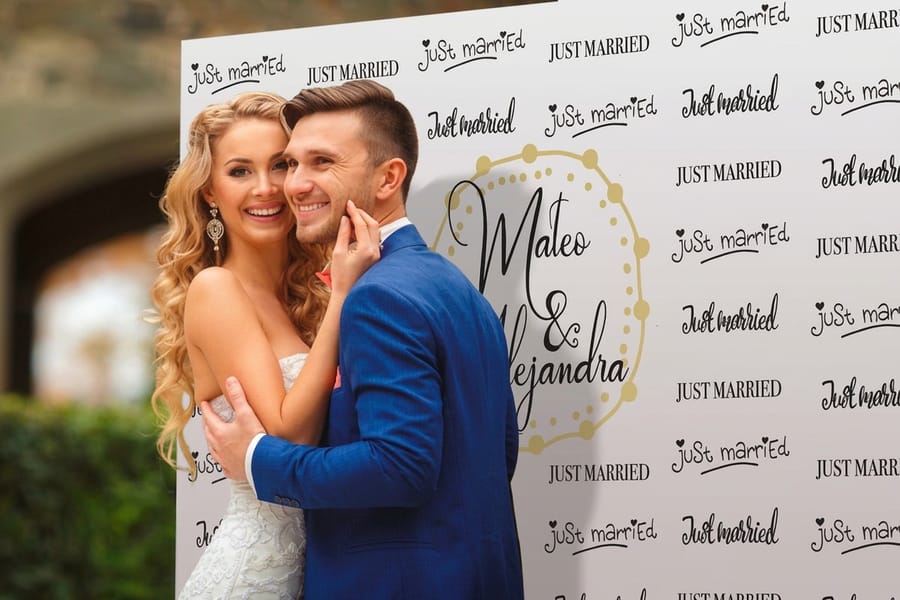
To order a backdrop print, fix the visible size, choose the hardware, then choose the material, and order the graphic at the hardware's stated size rather than the wall's. Fabric for anything a camera points at, vinyl for outdoors or a fixed budget. Build the file at full scale and 100 ppi with vector logos on top, keep critical artwork three inches inside the trim, and size the logo repeat so a whole mark lands beside a face.
Quick answer
Hardware first, material second, file last
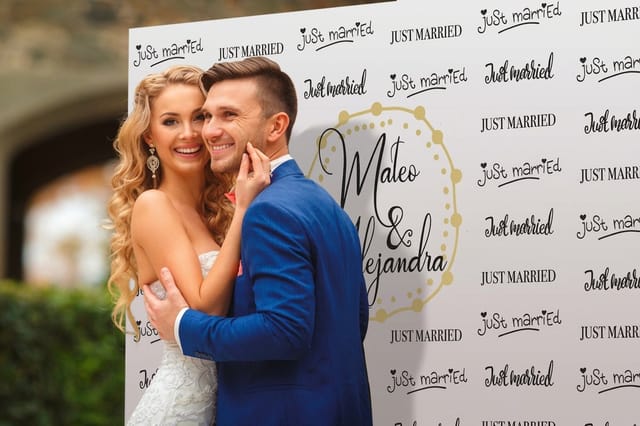
The stand decides the file size, not the wall. Pole pockets and tension frames take material off the print, so the ordered graphic is always larger than the part people see. Fabric is the default for anything photographed because vinyl throws a flash straight back at the lens. Build at full scale and 100 ppi, keep logos in the 8 to 12 inch range on an 8 foot wall, and offset alternate rows so no vertical gap runs down the middle of the shot.
Ordering a Backdrop Print in Six Steps
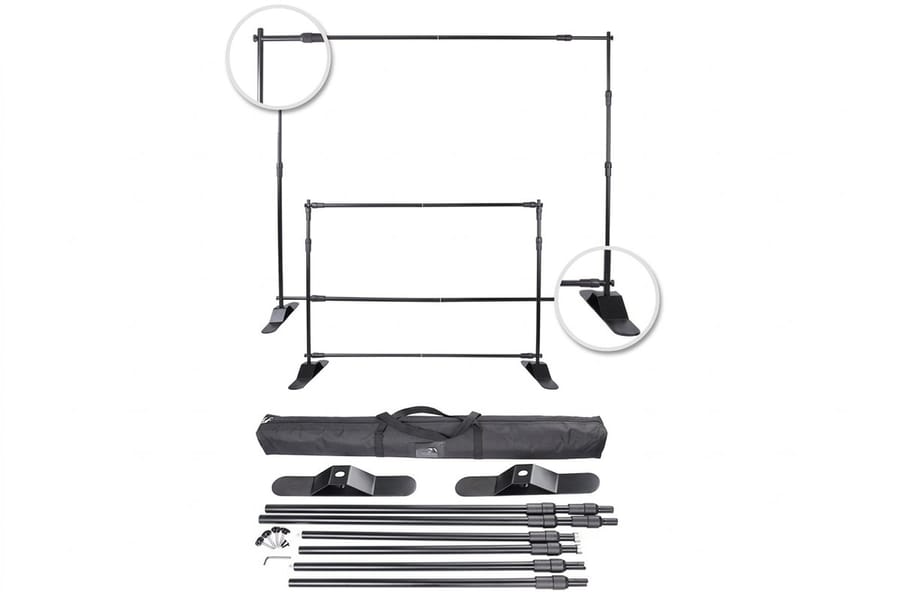
The order itself takes a few minutes. What takes the time is the four decisions that come before it, and getting them out of order is how people end up with a backdrop that hangs six inches short of the floor.
- Fix the visible size first. Stand where the photographer will stand. Two people across needs about 8 feet of width, a group needs 10. Height of 8 feet keeps the pattern above heads in a standing shot.
- Pick the hardware. Telescopic stand, tube frame, or tension frame. This is the decision that sets everything downstream, because each one grips the graphic differently.
- Pick the material. Fabric if the piece is being photographed. Vinyl if it is outdoors, disposable, or the budget is fixed. The section below lays the options side by side.
- Order the graphic at the hardware size. Not the wall size. Pole pockets and silicone edges eat into the sheet, so the printed dimensions are larger than what people see.
- Build the file at full scale, 100 ppi, with vector logos on top. Keep the important marks well inside the safe zone.
- Configure and order. Choose size, material, and turnaround on the product page. Step-and-repeat banners start at $217.50 with the price updating as you change the configuration.
If you have never sent a large format file before, the same file rules that apply to a poster apply here, and our guide to print-ready files covers bleed, color mode, and outlining type. The wider ordering process, from upload to proof to shipping, is in how online printing works.
Vinyl or Fabric, and What the Flash Does to Each
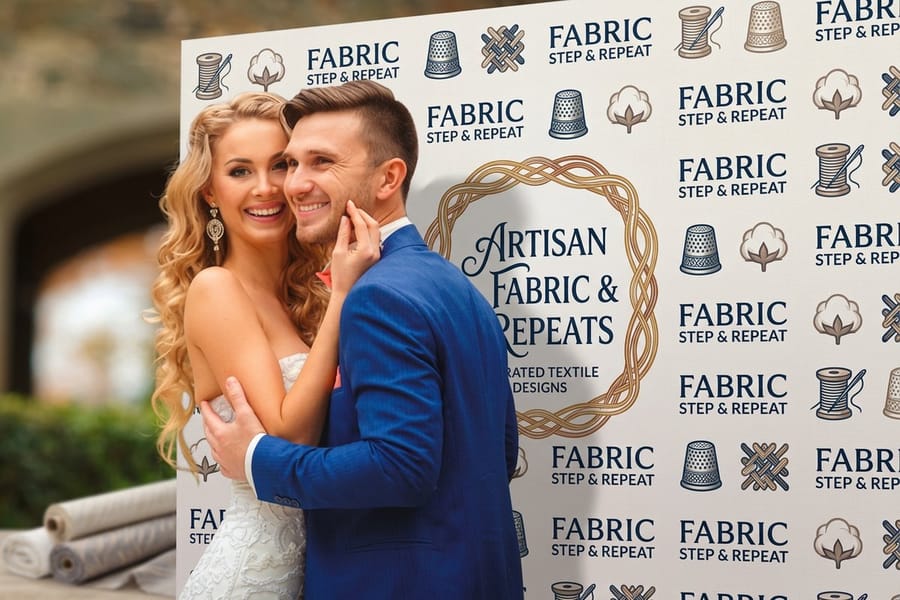
This is the one decision people regret. Vinyl is cheaper, tougher, and completely wrong for a photo wall, because a direct flash hits the coated surface and comes back as a bright oval right where the subject stands. Fabric scatters that light instead of returning it.
| Material | Under a flash | Ships and stores | Best use |
|---|---|---|---|
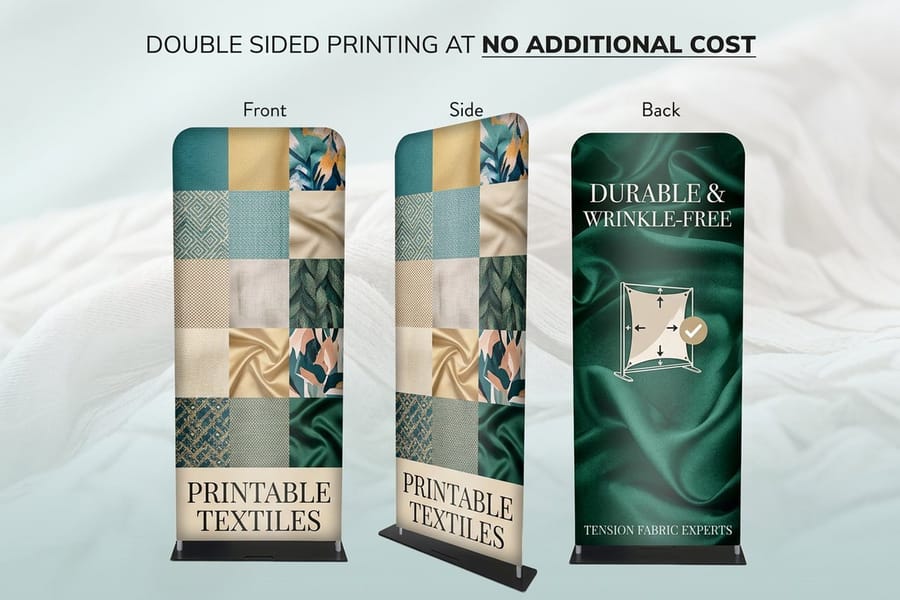
| Knit polyester fabric | Diffuses light, no hotspot. Reads matte on camera. | Folded, washable, packs into a bag. Arrives creased. | Press walls, red carpets, anything photographed. |
| 13 oz scrim vinyl | Bounces a flash back as a bright patch. | Rolled on a core, flat immediately, heavy. | Outdoor events, one-off backdrops, budget jobs. |
| Tension fabric on a frame | Diffuses light and stays dead flat, so no shadow bands. | Graphic folds, frame packs into a case. | Repeat use at multiple shows. |
| Adhesive wall fabric | Matte, but the wall behind it shows every bump. | Rolled, applies and peels off with no residue. | Covering a flat wall you already have. |
The price gap is smaller than most people expect. Fabric step-and-repeat starts at $217.50 and the vinyl version starts at the same $217.50, which means at entry size the material is close to a free choice and there is no real argument for vinyl on a photo wall. Where vinyl genuinely wins is durability outdoors and on plain vinyl banners at $79.00 when a printed background is all you need. For a wall you already own, adhesive wall fabric starts at $25.00 and skips the hardware entirely. Our banner material comparison goes deeper on weights and weave.
Why the Printed Sheet Is Bigger Than What People See
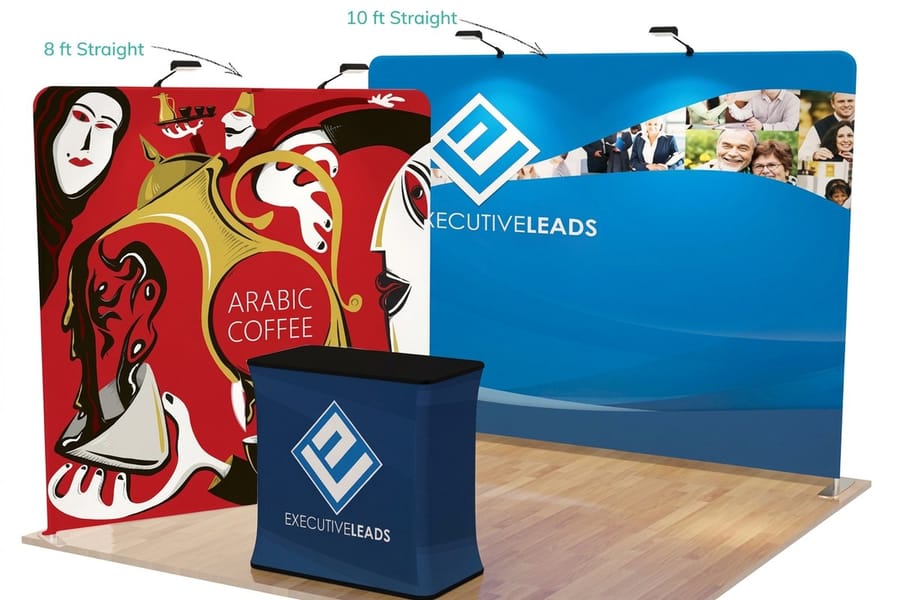
Every backdrop system takes a bite out of the graphic to hold it. Order to the wall dimension and the pattern finishes short, with the bottom row of logos disappearing into the pocket.
A telescopic banner stand runs a pole through a sewn pocket at the top and bottom. The pocket needs its own material, and that material is folded back and stitched, so a couple of inches at each end stop being visible. A tube frame works the same way with a sleeve. A tension frame uses a silicone strip sewn into the edge of the fabric, pushed into a groove around the frame, which pulls a narrow band of the print out of sight on all four sides.
The practical rule: take the graphic dimensions from the product page, build the file to those, and then keep anything you cannot afford to lose, a logo, a hashtag, a legal line, at least three inches inside the trim. Nothing important should sit within two inches of an edge on a backdrop, because the tolerance of a sewn hem is not the tolerance of a guillotine.
Heights are worth thinking about in terms of what the camera crops rather than what the wall holds. Most event photos are shot from roughly the waist up, so the band between about four and six and a half feet off the floor is the part that ends up in nearly every frame. That is the band that has to carry a full logo. Our backdrop sizes and setup guide lists the standard sizes against the stands that fit them, and the banner dimensions guide covers the wider size chart.
Building the File and Spacing the Repeat
Large format does not need 300 ppi. Viewing distance is measured in feet, not inches, so 100 to 150 ppi at full size is the working range and 100 is fine for a backdrop nobody stands closer than three feet from. A 96 by 96 inch file at 100 ppi is a manageable document; the same file at 300 ppi is nine times the data for detail no eye will resolve.
Work at full scale if your machine will take it. If it will not, build at quarter scale and quadruple the resolution, which produces the identical result at a quarter of the file size. Place logos as vector artwork on top of whatever raster background you are using so they stay hard-edged regardless of what the background does, and outline the type before you export.
For the repeat itself, three habits carry most of the work. Keep individual logos in the 8 to 12 inch range on an 8 foot wall. Offset every second row by half a repeat, so no vertical alley of background forms down the middle of a shot. Leave the gap between marks at roughly a third of a logo width, which keeps the pattern legible without turning the wall into wallpaper. If you are juggling several sponsors at different tiers, the hierarchy problem is worked through in our step-and-repeat design guide, and you can start from a correctly proportioned layout in the blank template library or build the artwork directly in our online design tool.
What a Backdrop Costs, and Where the Money Goes
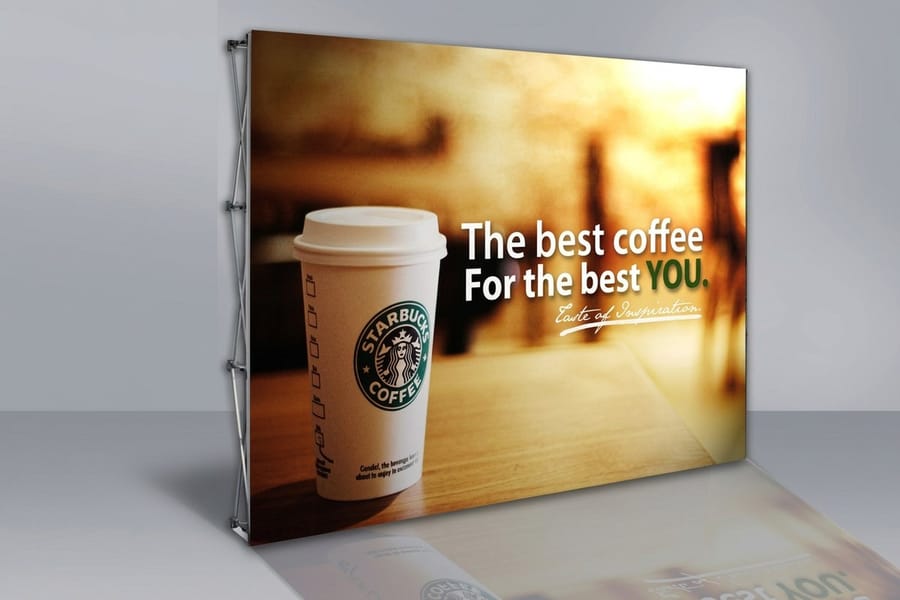
Price is driven by finished size and by whether hardware is included, not really by the material. A graphic alone is one number. A graphic with a frame is a different order of number, and it is usually the better buy if the backdrop travels.
| Product | Starts at | What you get | Buy it when |
|---|---|---|---|
| Step-and-repeat banners | $217.50 | Printed vinyl graphic with pole pockets. | You already own a stand, or the event is outdoors. |
| Fabric step-and-repeat | $217.50 | Knit polyester graphic, matte under flash. | Photographers will be shooting against it. |
| Fabric displays | $163.67 | Fabric graphic sized for a display frame. | You need a smaller backdrop for a booth corner. |
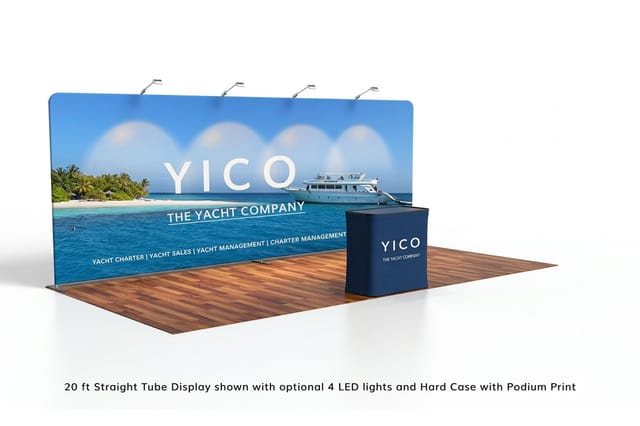
| Straight tube display | $635.96 | Aluminum tube frame plus the fabric graphic and case. | The same wall goes up at show after show. |
| Step-and-repeat red carpet | $108.75 | The runner that goes in front of the wall. | Arrivals are being photographed. |
The honest limit: if a backdrop is going up once, buying a $635.96 frame system to save setup time is money spent on the wrong thing, and a pocket graphic on a rented stand does the job. If it goes up more than three or four times, the frame pays for itself in the setup labor and in the graphic surviving the transport. A full booth needs more than the wall, so fabric table covers at $225.00 and the rest of the trade show range are worth pricing at the same time. Everything backdrop-adjacent that hangs rather than stands lives in the banner printing collection.
Wally orders a backdrop
Measure the stand, not the wall

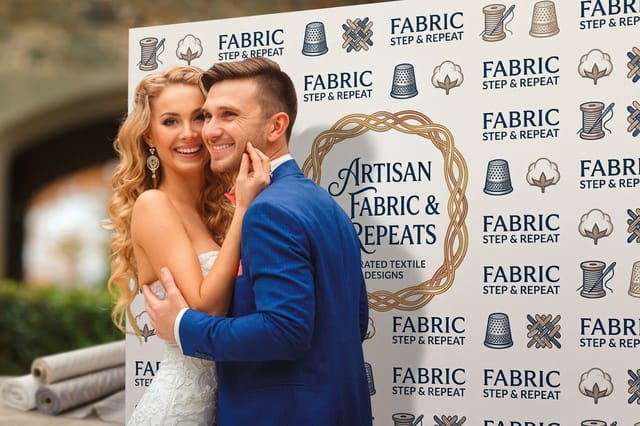
Wally starts at the stand. He reads the graphic size off the hardware, adds the pole pockets, and only then builds the file, because the pocket eats material the wall never asked for. Then he fires a flash at it. Vinyl throws the light back as a bright patch, knit polyester scatters it, so anything a camera points at goes on fabric. Last, he steps back and checks one whole logo lands beside a head instead of behind it.
Configure a step-and-repeat backdrop →Specs and pricing
Backdrop sizes, materials, and starting prices
Compare the backdrop options side by side, with live size and material choices and starting prices straight from the 4OVER4.COM configurator.


Print it
Order the backdrop your photographer will thank you for
Explore more
Where to go next

By the numbers
The wide format line that runs your backdrop
Common Questions
Your backdrop ordering questions, answered
What size backdrop should I order?
For a step-and-repeat with people standing in front of it, 8 feet wide by 8 feet tall is the working default, because it holds two or three people across with room at the edges and the top still reads above heads. Go to 10 feet wide when groups are the point, or when a red carpet runs in front of it. Order the graphic to the hardware's stated graphic size rather than to the wall you are covering, since pole pockets and tension frames take material off the top and bottom. The full sizing breakdown sits in our guide to backdrop banner sizes and setup.
Should I order vinyl or fabric for a backdrop?
Fabric if a camera is involved, vinyl if budget rules. A 13 oz scrim vinyl backdrop is durable and cheap, but its surface bounces a direct flash straight back and you get a bright blown patch in the middle of every photo. Knit polyester diffuses that light, so faces stay exposed correctly. Fabric also folds into a bag, washes, and does not curl at the edges after a season in storage. Vinyl wins on outdoor jobs, on anything that will get scuffed or rained on, and on a one-night backdrop that nobody will photograph closely.
How large should the logos be on a step-and-repeat?
Around 8 to 12 inches wide on an 8 foot backdrop is the range that works. Smaller and the marks turn to texture once a photo is cropped to a head-and-shoulders shot. Larger and only two or three logos land in frame, which looks sparse and gives sponsors less exposure per shot. Offset alternate rows by half a repeat so the eye does not find a vertical alley, and keep the gap between marks roughly a third of a logo width so the pattern still reads at a distance.
Do I need a stand, or can I hang the backdrop?
You need something to hold it flat, and the choice is either a telescopic banner stand with a pole through the top and bottom pockets, or a tube frame the graphic slides over. Hanging a backdrop from grommets against a wall is possible but it ripples, and ripples show as dark bands in a flash photo. If the same backdrop travels to several events, a tube frame is worth the extra money because it packs into a case and goes up without a ladder.
Will the fold creases come out of a fabric backdrop?
Yes. Fabric backdrops ship folded rather than rolled, and the creases relax on their own after a few hours on the frame. A handheld steamer held two or three inches off the back of the fabric clears them in minutes. Do not press a hot iron directly onto a printed polyester surface. If you have no margin for that at all, order vinyl, which arrives rolled on a core and is flat the moment you unwrap it.
How much does a backdrop print cost?
At 4OVER4.COM, step-and-repeat banners start at $217.50 and fabric step-and-repeat starts at $217.50 as well, so the material choice is not what moves the price at entry level, size and hardware are. A step-and-repeat red carpet runner starts at $108.75, fabric displays start at $163.67, and a straight tube display, which is the full frame plus graphic, starts at $635.96. A plain vinyl banner at $79.00 is the cheapest way to put a printed background behind someone, with the glare trade-off that comes with it.
Get Started
Measure the wall, then price the fabric backdrop
Pick your size, choose vinyl or knit polyester, upload the repeat, and we print a backdrop that hangs flat and photographs clean.
Legal Disclaimer
Gold Standard guarantees apply to all standard orders placed through 4over4.com. Price match requires verifiable proof of a competitor's published price for an equivalent product with matching specifications and turnaround time. Satisfaction guarantee covers manufacturing defects and print quality issues. Contact support with order number and documentation. On-time delivery rate based on tracked orders 1999 to 2026. Individual results may vary based on shipping carrier performance.
