
How to Make Picture Plaques for Your Wall Without a Frame or Glass


Two ways to get a photo onto a rigid panel and onto the wall. The wood panel method you can do on a kitchen table, and the printed version that arrives mounted, flat and ready for a hook.
A picture plaque is a photo bonded face up to a rigid panel with a finished edge, so it hangs with no frame and no glass. Build one by sanding and sealing a wood panel, bonding an oversized print with spray adhesive rolled from the center out, trimming flush, sealing the face, and adding a sawtooth or keyhole hanger. Or skip the mess and order it printed and mounted on 3/16 inch foam core, from $39.99 for an 8 by 10 up to a custom 40 by 60.

Quick answer
Four layers, an edge, and a hanger
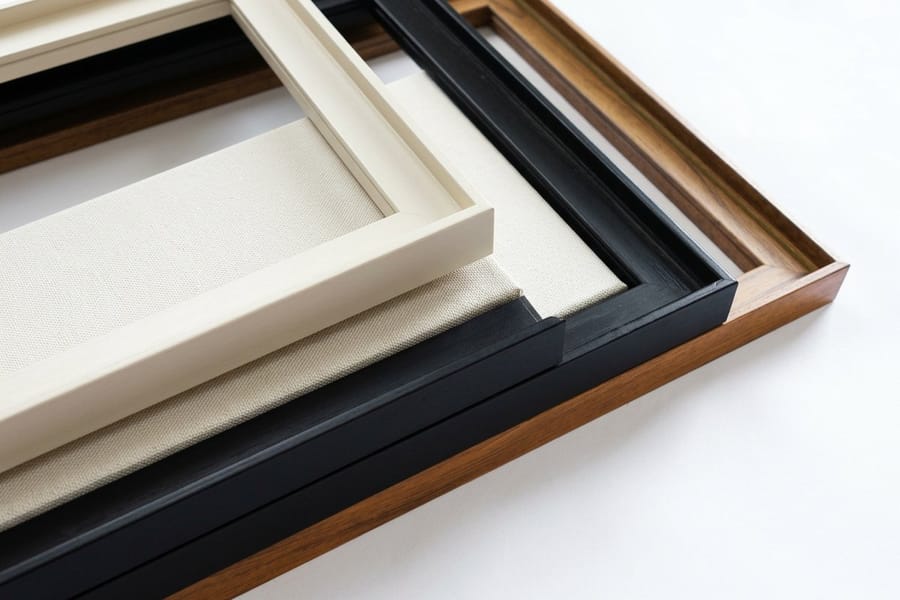
Every picture plaque is the same stack: print, adhesive, rigid panel, finished edge, hardware. The panel is the decision that matters. A 3/16 inch foam core board keeps the print dead flat, weighs almost nothing and sits nearly flush with the wall. A 1.5 inch canvas wrap or a 1/4 inch plexiglass panel adds depth and shadow, and adds weight that changes how you hang it. Everything else, stock, sealer, hanger, follows from that one choice.
What a Picture Plaque Is, Layer by Layer
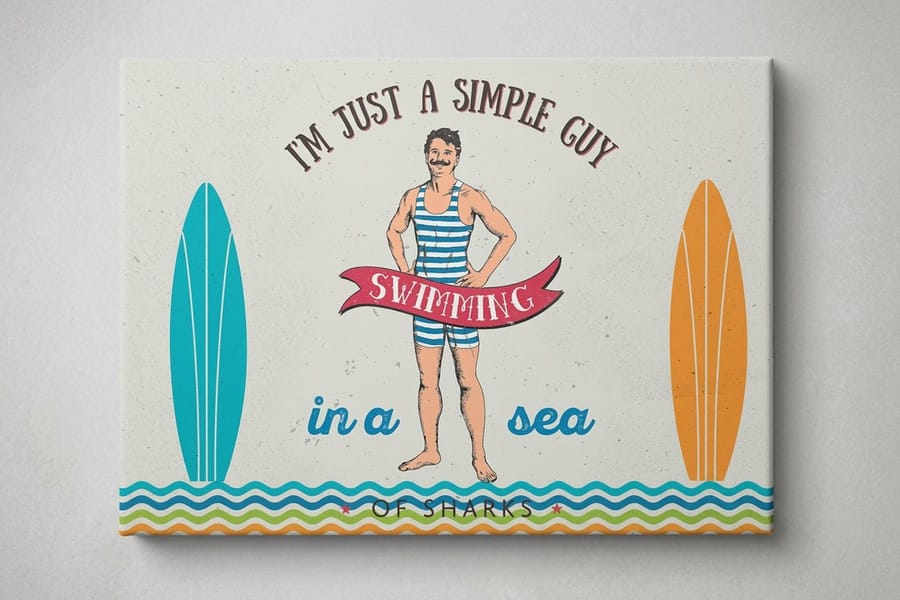
Take a plaque off the wall and turn it over and the whole thing is four layers plus an edge. The printed image on top, an adhesive layer under it, a rigid panel doing the structural work, and a hanger on the back. The edge is the fifth element and the one people forget.
That edge is what separates a plaque from a poster taped to a board. A white foam core edge reads as a print sitting on something. A black core, or a wood edge sanded and painted, reads as a finished object. Our mounted prints offer the board in white or black for exactly this reason, and on a dark photograph the black core is the better call almost every time.
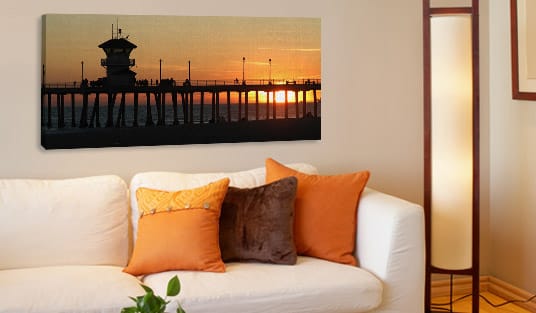
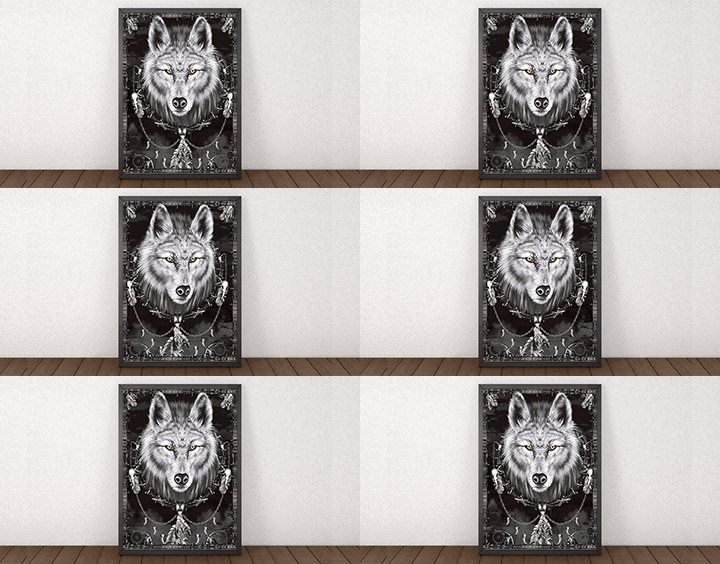
The panel choice also sets how the piece meets the wall. Under a quarter inch of thickness the plaque hugs the surface and disappears into a grid of other pieces, which is what you want for a gallery wall of eight small photos. Past an inch it casts a visible shadow line and holds a wall by itself. That is the real difference between a foam core plaque and a 1.5 inch premium canvas print, and it matters more to how a room feels than the print stock does.
One thing a plaque gives up: glass. Nothing sits between a fingertip and the ink. In exchange there is no reflection, no glare from a lamp, and nothing to break when a plaque slides off a hook.
Making One Yourself on a Wood Panel
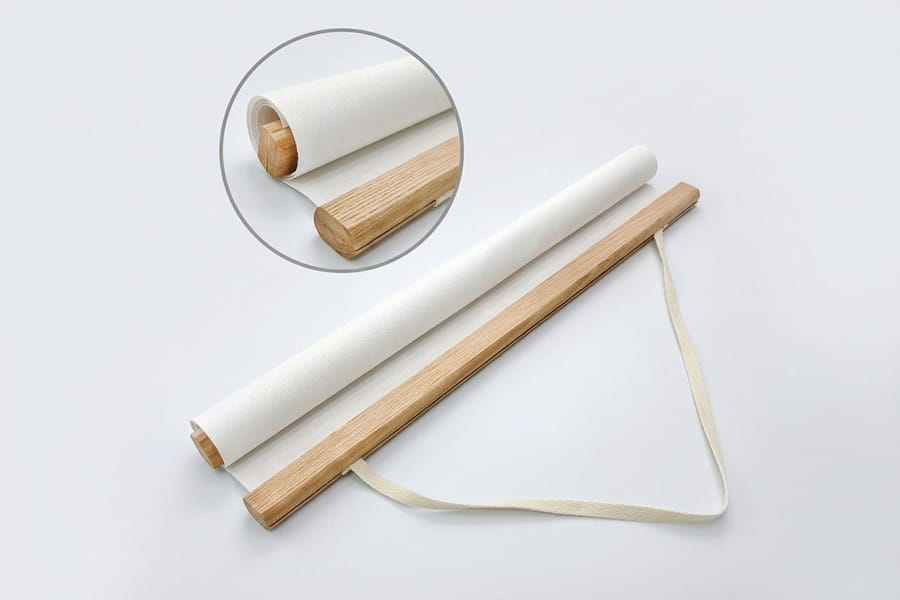
The home version is genuinely cheap and genuinely finicky. Here is the sequence that works, in order.
One, prepare the panel. A birch plywood or MDF panel from a craft store is flat enough. Sand the face smooth, sand the edges, then paint or stain the edges and the back before the image goes anywhere near it. Doing the edges afterwards means cutting a paint line against your photo, and that line is never straight.
Two, print at the finished size. Print the image slightly larger than the panel, around a quarter inch of extra on each side, so you can trim flush after mounting instead of fighting to align it perfectly. Matte prints are far more forgiving here than gloss, because gloss shows every speck of dust trapped underneath.
Three, bond it. Spray adhesive on both surfaces, wait the minute the can tells you to wait, then lay the print down from the center outward and roll it flat with a brayer or a wallpaper roller. Air escapes to the nearest edge, so if you start at a corner you will chase a bubble across the whole panel and lose.
Four, seal and hang. Two or three thin coats of a matte or satin acrylic sealer, each dried fully, protect the face without the plastic sheen a single thick coat leaves. Then a sawtooth hanger for something small, or a keyhole plate routed into the back for something heavier and flush.
Where it goes wrong is the sealer. A water-based topcoat over a dye-based inkjet print lifts the ink and streaks it, and no amount of careful brushing saves it. Seal first with a light spray acrylic, or print with pigment ink, or have the image printed on press. The file-preparation habits in our mounted poster guide apply here too, and correctly sized layouts are in the blank template library.
Ordering the Plaque Printed and Mounted
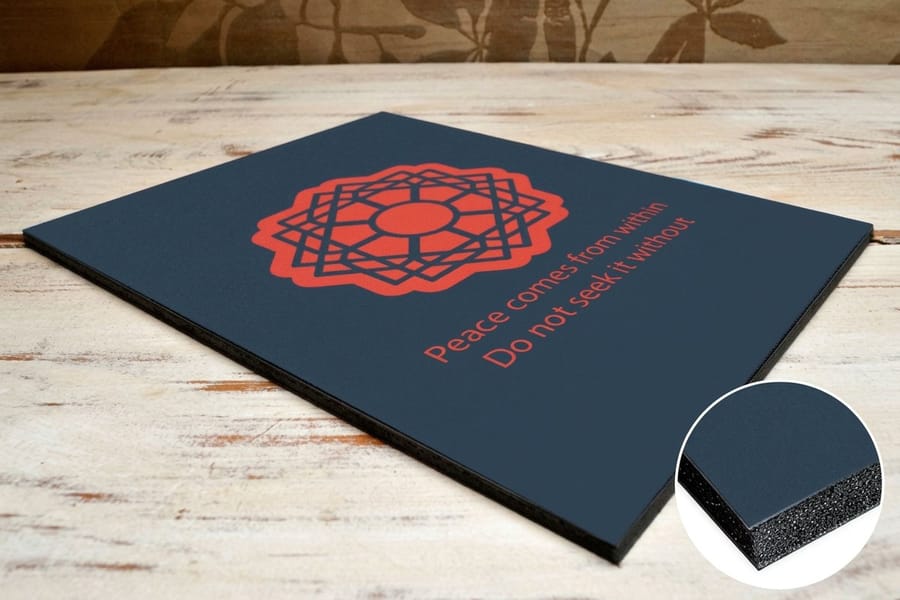
The DIY route stops making sense somewhere around 16 by 20 inches, where a hand-rolled sheet starts trapping bubbles and a large panel gets awkward to press evenly. At that point the mounted version costs less than the materials plus the ruined first attempt.
| Option | Panel | Sizes | From | Best for |
|---|---|---|---|---|
| Mounted Prints | 3/16 in foam core, white or black | 12 sizes, 8 x 10 up to custom 40 x 60 | $39.99 | Photo plaques, gallery walls, anything that hangs flush |
| Foam Core | 3/16 in foam core, white or black | 10 sizes, 16 x 20 up to 40 x 60 | $49.99 | Larger boards that also work on an easel |
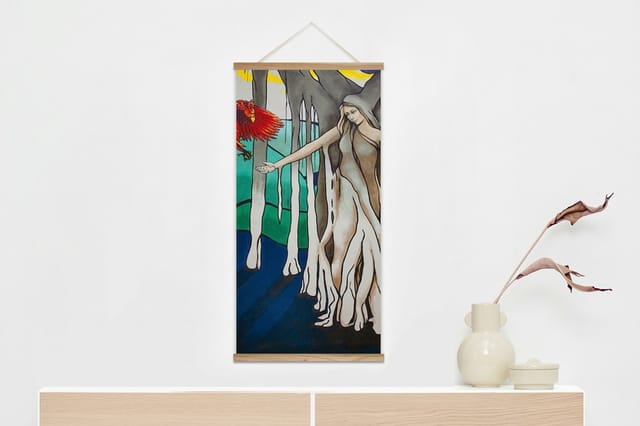
| Wood Poster Hanger Frame | Semi gloss canvas in a wooden hanger | 18 x 24 and 18 x 36 | $32.75 | The wood look with nothing to assemble |
| Framed Canvas | Canvas stretched inside a finished frame | 4 sizes, 16 x 16 up to 24 x 36 | $50.33 | A piece that needs a border to sit right |
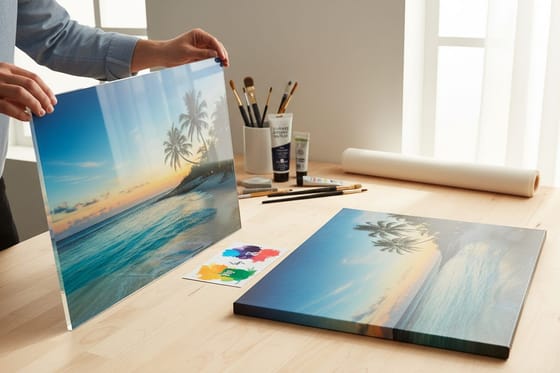
| Acrylic Prints | 1/4 in plexiglass, gloss vinyl face | 16 x 24, 20 x 30, 24 x 36 | $152.72 | Saturated color and depth, in a room with controlled light |
Read the panel column before the price column. Mounted prints and foam core are the same 3/16 inch board and differ mainly in the size ladder, so pick by the size you actually need. Three print stocks run on both: 10.4 mil semi gloss, 10.4 mil hi gloss, and 32 lb bright white uncoated. Semi gloss is the safe default for photographs. Uncoated is the one to choose for line art, type or a scanned document, because it kills reflections entirely and looks like paper rather than a print.
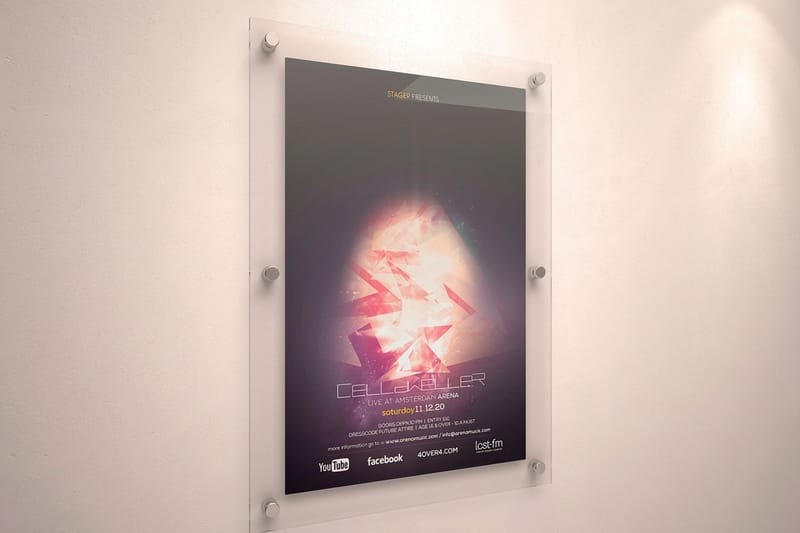
Acrylic is the expensive end and it is honest about why: a 1/4 inch plexiglass panel with a gloss vinyl face and a white adhesive backing gives a depth no foam core board reaches. It is also glossy, which means a lamp behind the viewer will show up in it. If the wall faces a window, the acrylic versus canvas comparison is worth reading before ordering, and the full range sits in the acrylic printing collection.
Sizing the Plaque to the File You Actually Have
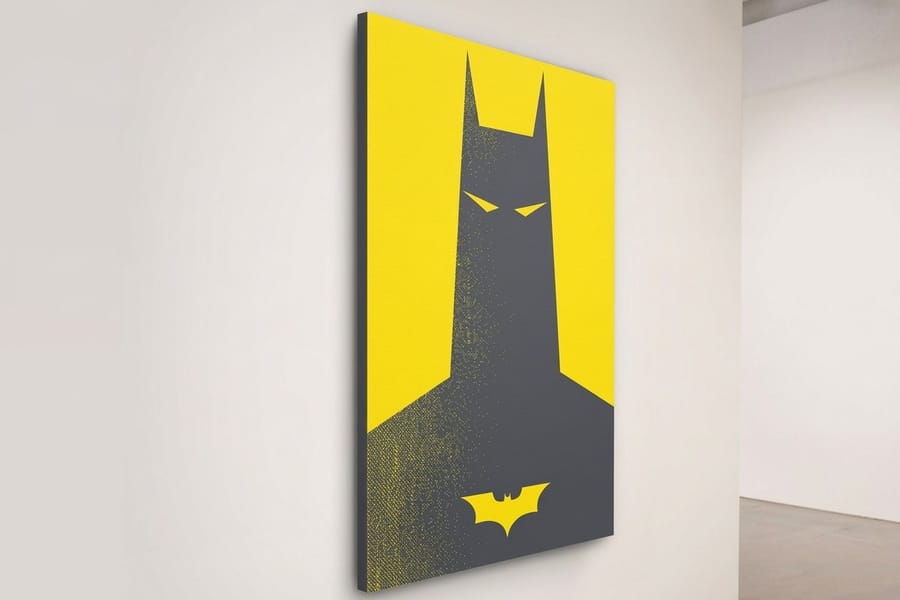
Wall size is the wrong starting point. Start with the pixels, because that is the constraint you cannot negotiate.
Divide the pixel dimensions of your image by 300 and you get the size it prints at full photographic quality. A 4032 by 3024 phone photo comes out at roughly 13.4 by 10 inches. Divide by 150 instead and the same file covers 26.9 by 20.2 inches, which still looks right on a wall you view from six feet away and looks soft the moment somebody leans in. Below 150 ppi, skin texture and fine edges start to mush regardless of viewing distance.
Three habits keep a plaque sharp. Send the original camera file rather than a copy pulled off a messaging app, since those are recompressed and downsized on the way through. Crop before you upscale, not after. And leave a quarter inch of image beyond the trim on every side, so a hair of drift in cutting does not put a white sliver along one edge.
Aspect ratio catches people out too. A phone photo is 4:3 and a 16 by 20 board is 4:5, so something gets cropped. Decide what that something is yourself rather than letting the trim decide, especially with a face near the frame edge. Our guide to custom wall art from photos works through enlarging in more detail.
Hanging It So It Stays Where You Put It
Hardware follows weight, and weight follows the panel. A small foam core plaque hangs on adhesive strips without complaint. Put those strips near the four corners rather than in the middle of the board, because a strip in the center lets the plaque pivot and it will end up crooked within a week.
Wood panels and framed pieces are a different class. A keyhole plate routed flush into the back of a wood plaque holds it tight to the wall and lets you nudge it level, which a sawtooth hanger does not. Anything heavy goes into a stud or a rated wall anchor, full stop, and a 1/4 inch acrylic panel at 24 by 36 inches counts as heavy.
Height is the part everyone gets wrong. Center the piece at about 57 to 60 inches from the floor, which is roughly gallery eye level, not centered on the wall and not aligned with the top of a doorframe. Over a sofa, drop it so the bottom edge sits six to eight inches above the back cushions, so the two read as one block instead of two floating shapes.
For a group of plaques, cut paper rectangles at the finished sizes and tape them up first. Ten minutes of paper saves a wall of extra holes. If you want the full method, our guides on hanging frames on a wall and hanging a poster without damage cover spacing and adhesive limits, and every mounted size we print is listed under poster and mounted printing.
Wally makes a picture plaque
Print, board, roll from the middle, hang
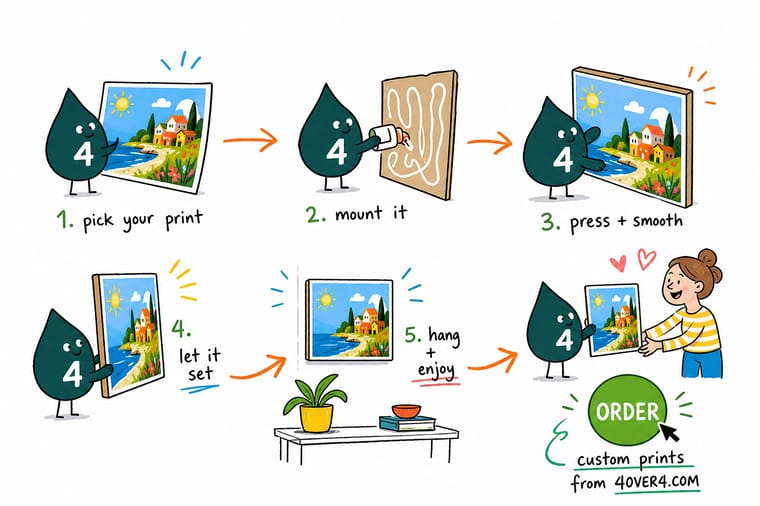
Wally lays the print on the board and rolls it from the center outward, because air only escapes to the nearest edge and starting at a corner chases a bubble across the whole panel. He trims flush, paints the edge, and screws a hanger on the back. No frame, no glass, nothing to reflect a lamp. On a dark photo he picks the black board, because the edge is the part everyone sees from the side.
Order mounted prints →Specs and pricing
Boards, sizes and starting prices
Compare the mounted options side by side, with live configuration choices and starting prices straight from the 4OVER4.COM configurator.


Print it
Put the photo on a panel and get it on the wall


Explore more
Where to go next

By the numbers
Wall prints you can count on at 4OVER4
Common Questions
Your picture plaque questions, answered
What is a picture plaque?
A picture plaque is a photo or artwork bonded face up to a rigid panel, with the edges finished so the piece hangs on its own. There is no frame around it and no glass over it. The panel can be foam core, hardboard, a wood block, plexiglass or stretched canvas, and the choice of panel is what decides how thick the plaque is, how much shadow it casts on the wall and how it gets hung.
Can I make a picture plaque with a home printer?
Yes, with one warning that catches most people. Dye-based inkjet prints run when you brush a water-based sealer over them, so the first coat lifts the color into a smear. Either use a pigment ink printer, or run the image at a copy shop on a laser printer, or seal with two light passes of a spray acrylic before anything wet touches the surface. Test on a scrap corner of the same print before you commit the good one.
What thickness of board should I use?
For anything up to about 16 by 20 inches, 3/16 inch foam core is enough to keep the print dead flat and light enough to hang on adhesive strips. Larger than that, the board itself is still rigid but it starts to feel flimsy in the hand, so a hardboard or wood panel is more satisfying to handle and takes a keyhole hanger properly. Plexiglass at 1/4 inch is rigid at any size we print, but it is heavy enough at 24 by 36 inches that it wants a wall anchor rather than tape.
Do picture plaques warp?
Foam core stays flat in a normal room and bows in a damp one, so a bathroom wall or an unheated garage is the wrong home for one. Wood panels move with humidity too, which is why a DIY plaque sealed on the face and left raw on the back can cup slightly over a season. Sealing both sides of a wood panel evens out the moisture exchange and mostly solves it. Plexiglass and stretched canvas do not warp.
How big can a picture plaque be?
Our mounted prints run from 8 by 10 inches up to a custom 40 by 60, across 12 sizes, all on the same 3/16 inch foam core. Foam core prints start at a 16 by 20 default and reach 40 by 60. Acrylic prints come in 16 by 24, 20 by 30 and 24 by 36. The practical ceiling for a DIY plaque is whatever panel you can lay flat and press evenly, which for most people is around 24 by 36 on a kitchen table.
Does a plaque need any protection without glass?
It depends on where it hangs. A plaque in a hallway gets touched, and a bare inkjet or uncoated print picks up fingerprints and scuffs quickly. Optional single-sided gloss lamination on a mounted print seals the face so it wipes clean, which is worth adding on anything at hand height or in a shop, a classroom or a kitchen. Direct sun fades any print, laminated or not, so keep the piece off a wall that gets afternoon light through glass.
How do I hang a plaque without putting holes in the wall?
Adhesive mounting strips handle a small foam core plaque comfortably, because the board weighs very little. Press the strips near the four corners rather than the middle, so the board cannot pivot, and give the adhesive an hour on a clean wall before you trust it. Heavier pieces are a different question: a framed canvas or a 24 by 36 acrylic panel needs a hook into a stud or a proper wall anchor, and no adhesive strip is the right answer there.
Get Started
Ready to get that photo off your phone and onto the wall?
Pick a size, choose semi gloss, hi gloss or uncoated, and we print it and bond it to a rigid board that arrives flat and ready to hang.
Legal Disclaimer
Gold Standard guarantees apply to all standard orders placed through 4over4.com. Price match requires verifiable proof of a competitor's published price for an equivalent product with matching specifications and turnaround time. Satisfaction guarantee covers manufacturing defects and print quality issues. Contact support with order number and documentation. On-time delivery rate based on tracked orders 1999 to 2026. Individual results may vary based on shipping carrier performance.
