
How to Hang Frames on a Wall Straight, Level, and at the Right Height


The height, the arithmetic that turns it into a hook position, the hardware that matches the weight, and how to build a gallery wall you only drill once.
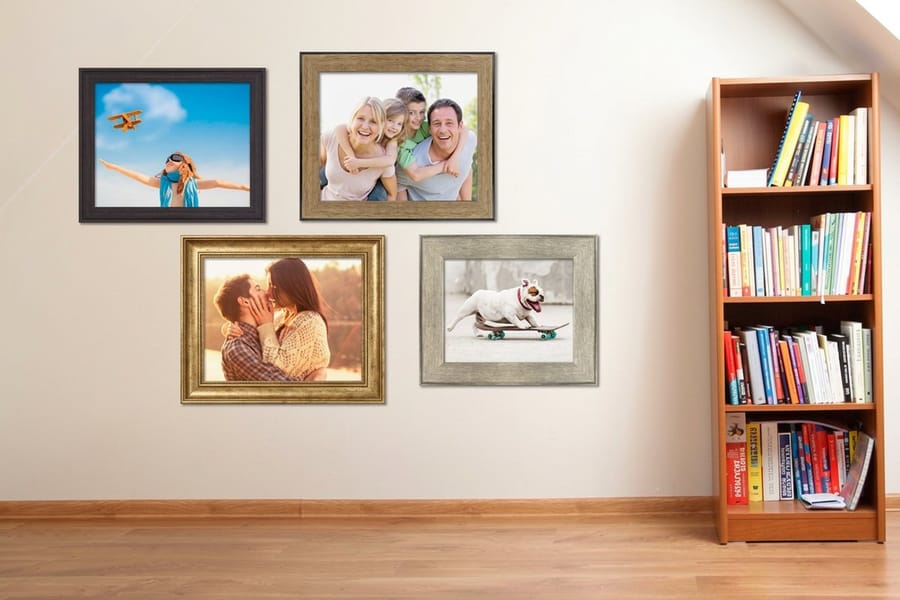
Hang a frame so its middle sits 57 inches above the floor, then put the hook higher than that: 57 plus half the frame height, minus the wire drop. Two hooks 6 to 10 inches apart hold it level where one lets it pivot. Match the anchor to the weight, since anything past about 25 pounds needs a stud or a toggle rather than drywall. Above a sofa or a headboard the floor stops mattering and you leave 6 to 10 inches above the furniture instead.
Quick answer
One center line, one piece of arithmetic, and the right anchor
Measure to the middle of the frame, not the top. Set that middle at 57 inches off the floor, then work out where the hook goes by adding half the frame height and subtracting the wire drop. Hang from two points rather than one so the frame cannot pivot, and pick the anchor from the weight of the piece instead of the look of the wall. Over furniture the rule changes: keep 6 to 10 inches between the sofa back and the bottom of the frame, and let the group span about two thirds of the furniture width.
Start With the Center Line, Not the Top of the Frame
Most crooked-looking walls are not crooked. They are hung to the top edge, which means a tall frame and a short frame end up with their middles at different heights and the whole row reads as unsettled.
Hang to the middle instead. Pick a center height of 57 inches, mark a faint pencil line at that height across the wall, and every piece you hang gets its middle on that line no matter how big it is. A 12 by 16 and a 24 by 36 hung this way look deliberate side by side, and you never have to think about it again.
Then convert center height into hook height, which is the step people skip. Add half the frame height to 57, then subtract the wire drop. Measure the drop by hooking a finger under the wire and pulling it up toward the top of the frame, then measuring from the top edge down to your finger. A 20 inch tall frame with a 3 inch drop puts the hook at 64 inches. Drive the hook there and the middle of the print lands on your pencil line.
Two situations change the number. In a dining room or a den where people are seated most of the time, drop the center line to 52 to 54 inches. In a stairwell, forget a single line entirely and follow the pitch of the stairs, keeping each frame the same vertical distance above the nose of the tread below it.
Hardware That Holds, and the Ways It Lets Go
Weigh the frame before you choose anything. A bathroom scale is close enough, and it will surprise you: glazing is the heavy part, so a 24 by 36 framed print with glass can run several times the weight of the same size on canvas. That single number decides the rest of this section.
| Frame weight | What to use | Where it fails |
|---|---|---|
| Under 5 lb | Adhesive strips on smooth cured paint, or a single angled picture hook. | Textured paint, wallpaper, brick, cold or steamy rooms. |
| 5 to 25 lb | Two picture hooks rated for the load, driven at about 45 degrees into drywall. | Hooks pushed in straight, which pull out under shear. |
| 25 to 50 lb | A stud, found with a magnet or a stud finder, or a toggle bolt through the drywall. | Plastic expansion plugs in half inch drywall, which crumble the hole. |
| Over 50 lb | A French cleat screwed into two studs, spreading the load across the wall. | Any single-point hanger, which concentrates everything on one hole. |
The wire is the second failure point. A wire over one hook gives the frame a pivot, so it goes crooked every time someone shuts a door nearby. Use two hooks 6 to 10 inches apart, or better, skip the wire and hang the two D-rings straight onto two hooks measured to the same height with a level. Stick a felt or rubber bumper on each bottom corner while you are there, because it stops the frame creeping and stops the corner marking the paint.
Plaster walls need one extra habit. Put masking tape over the spot, drill a small pilot hole through it, then set the hook, otherwise the surface chips out around the pin. Our guide to hanging acrylic prints covers standoffs and cleats in more depth if the piece has no frame to hide the hardware.
Spacing, Furniture, and Sizing the Print to the Wall
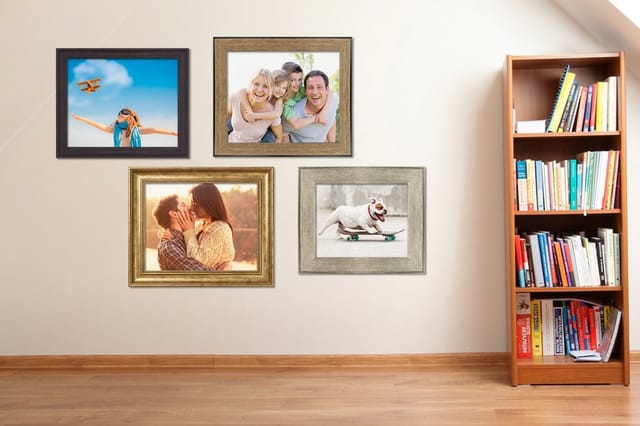
Gaps between frames sit at 2 inches for most groupings. Widen to 3 inches when the frames are big or the mats are generous, tighten to 1.5 inches for a dense grid of small prints, and then keep whatever you picked identical everywhere. An inconsistent gap is the thing people notice.
Over furniture, the floor stops being the reference. Leave 6 to 10 inches between the top of a sofa back or a headboard and the bottom of the frame. Less than 6 and the art looks like it is resting on the furniture. More than 10 and the two stop belonging together, and you get a lonely rectangle floating above a couch.
Size matters as much as height. A piece or a cluster should span roughly two thirds to three quarters of the furniture below it, so a 72 inch sofa wants art around 48 to 54 inches wide. Undersizing is the common error, and it is not fixable by hanging the small piece higher. If you are still deciding, the sizes in our framed photo sizes guide line up against common wall and furniture widths, and poster sizes for walls does the same for unframed pieces.
One more practical point about weight and scale together. Framed prints start at $73.57 and carry glazing, so a large one commits you to real hardware. Stretched canvas starts at $59 and has no glass at all, which is why a big canvas often hangs on two ordinary hooks while the same size framed and glazed needs a cleat.
Building a Gallery Wall Without Patching Holes Twice
Lay the whole thing out on the floor first, in the footprint of the wall. Move frames around until the arrangement holds together, then photograph it from directly above so you can rebuild it if something shifts.
Next, make paper templates. Trace each frame onto kraft paper or a grocery bag, cut it out, and mark on each one where its hook needs to land, using the same add-half-the-height, subtract-the-drop arithmetic from the first section. Tape the paper shapes to the wall with painter's tape and live with them for an evening. Adjusting tape is free, and patching drywall is not.
Give the cluster a common axis so it reads as one object rather than scattered pieces. You have three usable choices: align every frame on one horizontal center line, align the tops of the outer row, or draw an invisible rectangle around the whole group and center that rectangle at 57 inches. The last option is the one that works for mixed sizes, and it is what the paper templates make easy to test. Odd numbers of frames tend to settle better than even ones, and one clearly largest piece anchors the group.
Then hang from the middle outward, checking each frame with a level before you move on, so any small drift lands at the edges instead of in the center of the wall. If the plan is renter-safe, arranging a gallery wall without nails covers the adhesive route and its limits. For a cluster built from photographs rather than art prints, making wall art from your own photos covers resolution and cropping before you commit to a size, and framed posters at $87.86 or mounted posters at $39.99 cover the two ends of the budget for a large grouping.
Wally hangs it level the first time
57 to the middle, then math your way up to the hook
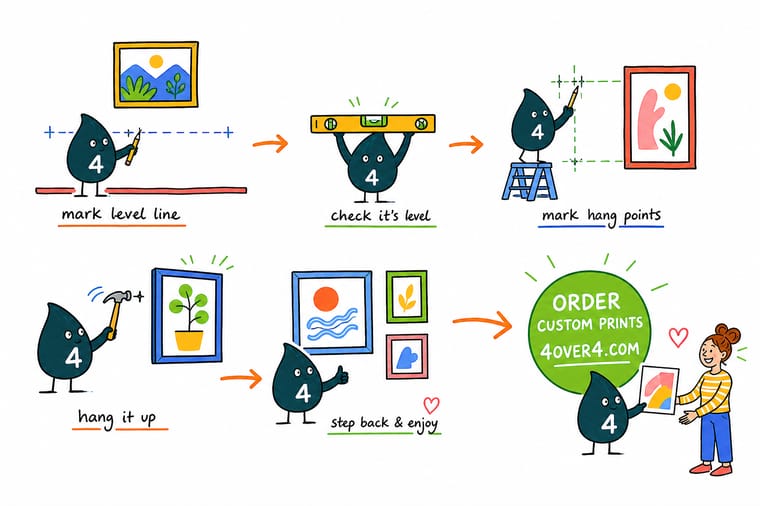
Wally marks a light pencil line at 57 inches, because that is where the middle of the art goes, not the top. Then he adds half the frame height and takes off the wire drop, and that is where the hook lands. He uses two hooks instead of one so nothing pivots when a door slams, weighs the frame before choosing an anchor, and sticks a bumper on each bottom corner. Over a sofa he ignores the floor and leaves 6 to 10 inches above the cushions.
Order framed prints →Specs and pricing
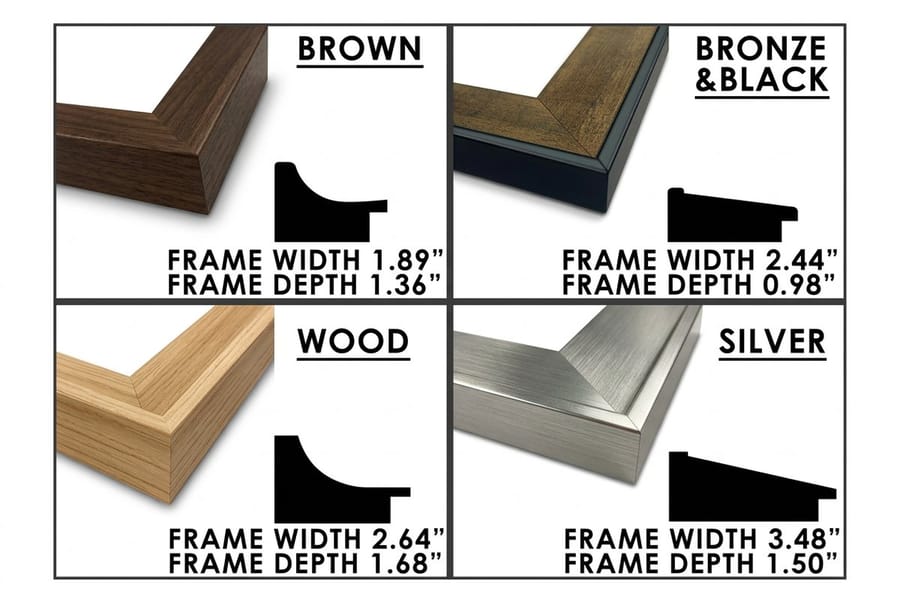
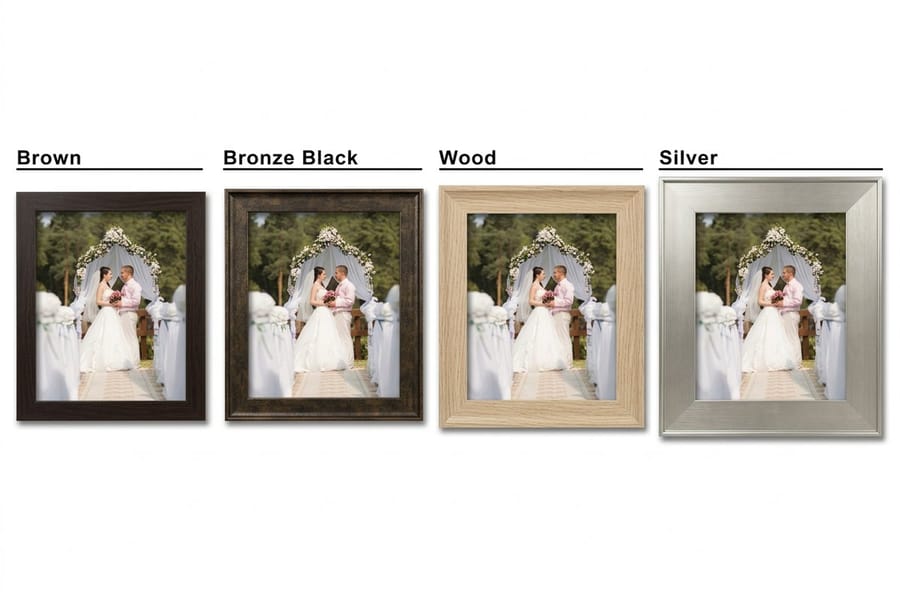
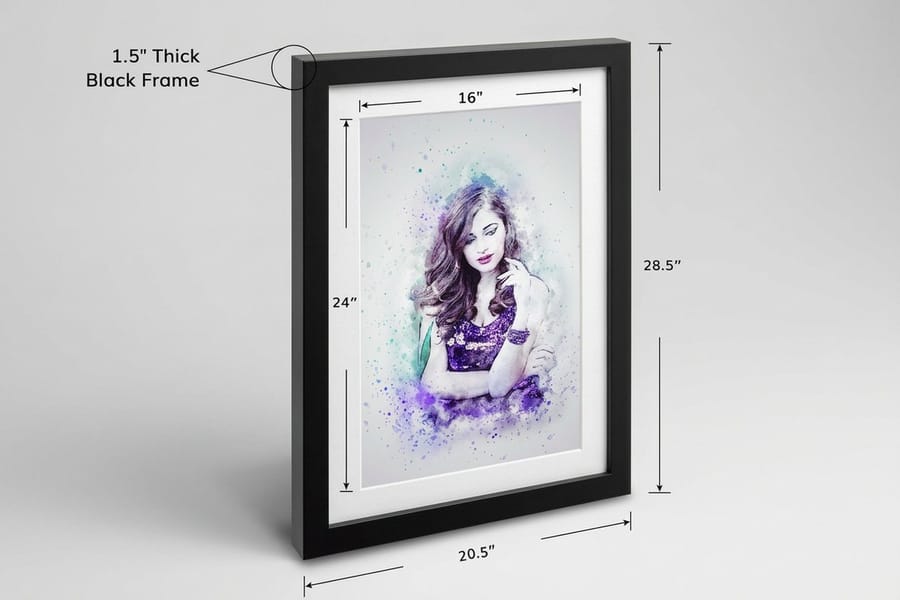
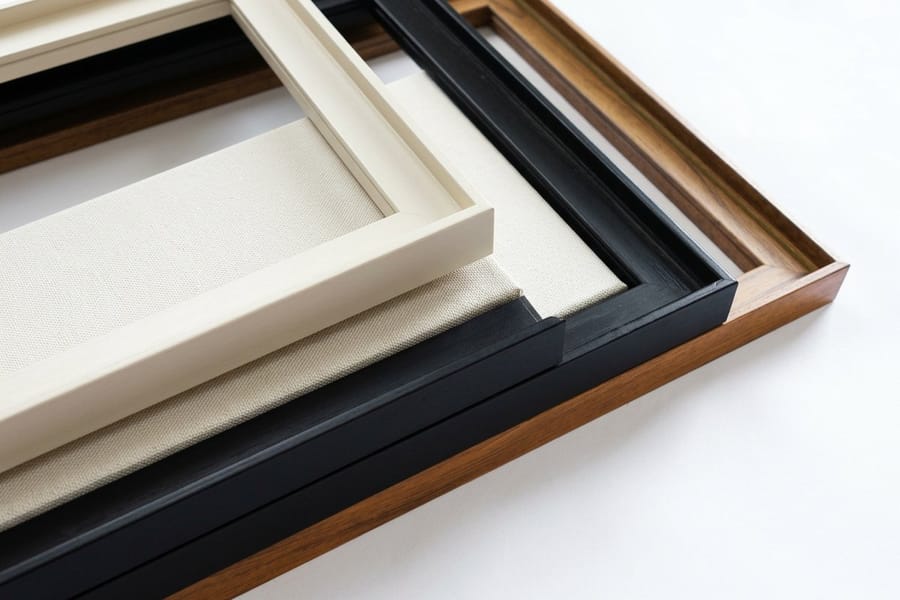
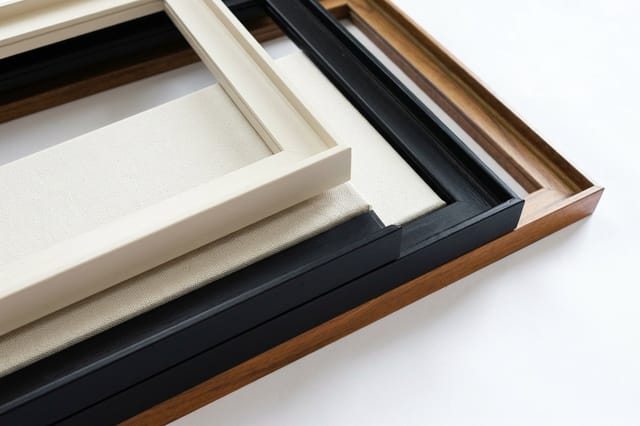
Frame options, sizes, and starting prices
Compare the framed options side by side, with live configuration choices and starting prices straight from the 4OVER4.COM configurator.


Print it
Print the piece before you pick up the hammer

Explore more
Where to go next

By the numbers
Wall art you can count on at 4OVER4
Common Questions
Your frame hanging questions, answered
How high should you hang a frame on a wall?
Put the middle of the frame 57 to 60 inches above the floor. That range is standing eye level for most adults and it is what museums and galleries use, which is why a room hung to it feels settled. Drop to about 52 to 54 inches in a room where people are mostly seated, such as a dining room or a den, because eye level moves down with them. The one place the number stops applying is above furniture, where the gap to the sofa or headboard matters more than the distance to the floor.
How do you work out where the nail goes?
Take the center height you want, add half the frame height, then subtract the wire drop. To measure the drop, pull the hanging wire taut toward the top of the frame with one finger and measure from the top edge down to that point. A 20 inch tall frame with a 3 inch drop hung to a 57 inch center gives 57 plus 10 minus 3, so the hook sits at 64 inches. Mark the wall at that height, not at the top of the frame.
How much weight can a nail in drywall hold?
A bare nail through drywall alone is good for only a few pounds and will eventually tear out. A proper picture hook driven at roughly a 45 degree angle spreads the load and carries what its packaging rates it for, commonly 10, 20, 30 or 50 pounds. Above about 25 pounds, hit a stud or use a toggle bolt or a self-drilling anchor rated for the weight. Weigh the frame on a bathroom scale before you guess, since glass adds far more than the frame profile does.
How far apart should frames be in a gallery wall?
Two inches between frames is the standard gap and it works for most groupings. Go to 3 inches when the frames are large or the mats are wide, and hold at 1.5 inches for a tight grid of small pieces. What matters more than the exact number is keeping the gap consistent across the whole cluster, because the eye reads an inconsistent gap as a mistake long before it reads the spacing as too wide.
Do adhesive strips work for framed prints?
They work within their limits and fail badly outside them. Strips need a smooth, fully cured painted surface, so they let go on textured paint, sanded texture, wallpaper, brick and unfinished wood. They also lose grip in a cold room or a steamy bathroom. Stay under the rated weight, press for the time on the packet, and pull the tab straight down rather than out when you remove them, or the strip takes paint with it. For anything with glass over 11 by 14, use hardware.
How do you keep a frame from tilting or sliding sideways?
The wire is usually the culprit, because a single hook is a pivot point. Hang from two hooks spaced 6 to 10 inches apart so the wire rests in two places, or skip the wire and hang the two D-rings directly on two hooks measured to the same height. Small rubber bumpers stuck to the bottom two corners stop the frame from creeping on the paint and also keep it from marking the wall.
What size print should you order for the wall you have?
Fill about two thirds to three quarters of the wall width above a piece of furniture, so a 72 inch sofa suits a piece or a cluster spanning roughly 48 to 54 inches. On an open wall, step back and let the frame occupy the visual middle rather than crowding a corner. Our guide to framed photo sizes maps the common print sizes against wall widths if you want to check before ordering.
Get Started
Ready to put something worth hanging on that wall?
Pick a size, choose a frame profile, and we print and frame it so all that is left for you is a pencil line at 57 inches.
Legal Disclaimer
Gold Standard guarantees apply to all standard orders placed through 4over4.com. Price match requires verifiable proof of a competitor's published price for an equivalent product with matching specifications and turnaround time. Satisfaction guarantee covers manufacturing defects and print quality issues. Contact support with order number and documentation. On-time delivery rate based on tracked orders 1999 to 2026. Individual results may vary based on shipping carrier performance.
