
How to Make a Calligraphy Practice Book That Opens Flat


A practice book is a grid, a paper choice and a binding decision. Get those three right and the drills do the rest. Here is how each one is set, and what it costs to print.
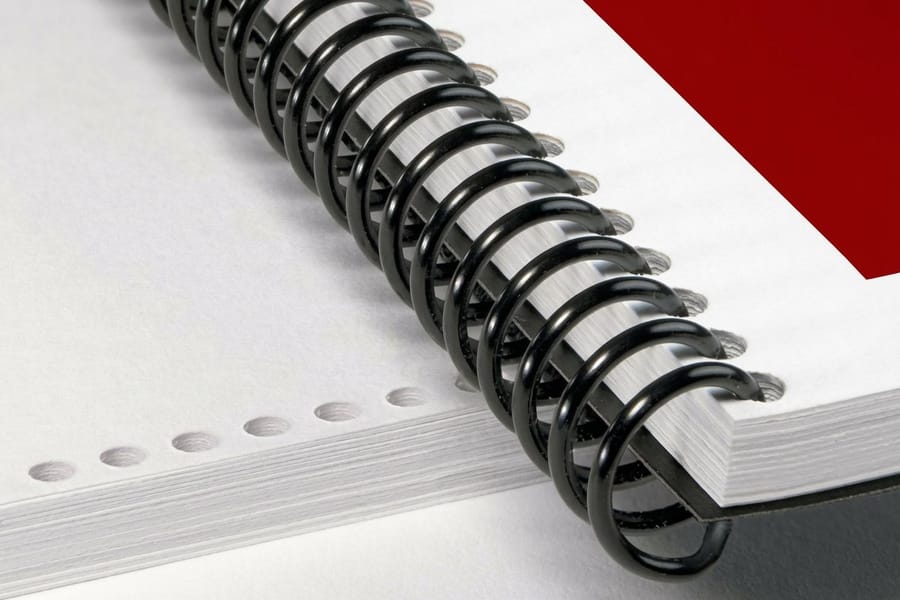
Build the guide sheet from your nib width first, print it at hairline weight in about 20 percent grey on smooth uncoated 80 lb text, then bind it with spiral coil so it opens completely flat. The grid gives you an x-height of five nib widths for italic or four for foundational, plus slant diagonals at 55 degrees for copperplate or 5 to 10 degrees for broad-edge italic. Keep 0.75 in clear on the bound edge for the coil punch, repeat each drill sheet three to five times in the run, and put blank ruled pages at the back.
Quick answer
The nib sets the grid, the ink sets the paper, the gutter sets the binding
Every decision in a practice book traces back to one of three things. The nib decides the x-height and therefore the whole grid. The ink you write with decides the stock, because a wet dip pen feathers on toothy paper and skates on coated paper. And the way your hand travels toward the spine decides the binding, which is why coil beats perfect binding for a book you write in rather than read. The diagram below shows one practice line drawn to scale, with the measurements that matter marked on it.
Step 1: Build the Guide Sheet Around Your Nib
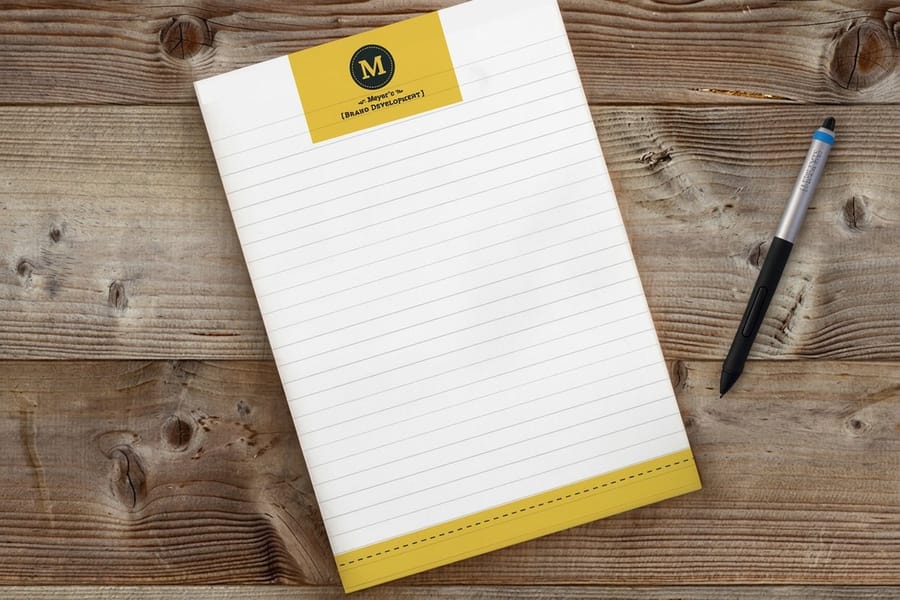
The grid comes from the pen, not from the page size. Lay your nib flat on paper and step it corner to corner to make a small stack of squares, and count the stack to set your x-height: five nib widths for italic, four for foundational, three and a half to four for uncial. A pointed pen has no width to measure, so you work the other way and pick an x-height in millimetres, usually between 4 mm and 7 mm for practice.
Once the x-height is fixed, everything hangs off it. Ascenders and descenders each run about the same distance again above the waistline and below the baseline. Then rule the slant. Copperplate is drawn at 55 degrees from the horizontal, Spencerian nearer 52, and broad-edge italic leans forward only about 5 to 10 degrees. Repeat those diagonals across the full writing width, spaced close enough that there is always one near the letter you are drawing.
Set the whole grid at hairline weight in about 20 percent grey or a pale blue. This is the single change that makes a homemade practice book feel professional: your own stroke has to be the darkest thing on the sheet or you cannot see what you actually did. Leave the binding edge clear too, which we come back to below. If you want to test a grid before committing to a print run, pull one from our free calligraphy practice sheets and write on it for an evening.
Step 2: Pick Paper That Will Not Feather or Skate
Two failures kill practice paper, and they sit at opposite ends of the same scale. Rough uncoated stock with open fibre draws ink sideways, so hairlines bloom and thin upstrokes turn furry. Coated gloss stock has the opposite problem: it will not take the ink at all, the nib skates, and the stroke stays wet long enough to smear under the heel of your hand.
What works is smooth, hard-sized, uncoated text weight. In practical terms, 70 lb text is the light end and fine for pencil and fineliner drills, 80 lb text is the sensible default for a dip pen, and 100 lb text is worth the money if you use walnut ink or diluted sumi that goes down wet. Silk and matte coated stocks are lovely for the cover and wrong for the interior, so it is normal to specify one stock for the body and a heavier coated cover.
Brush pens change the calculation. Alcohol markers bleed through anything under 100 lb text and will mark the sheet behind, so a brush-lettering book is either single-sided or printed on the heaviest interior stock available. Our paper weight guide explains how text and cover weights are measured, and choosing paper for a print project covers coating and finish in more detail.
Step 3: Choose a Binding That Opens Flat
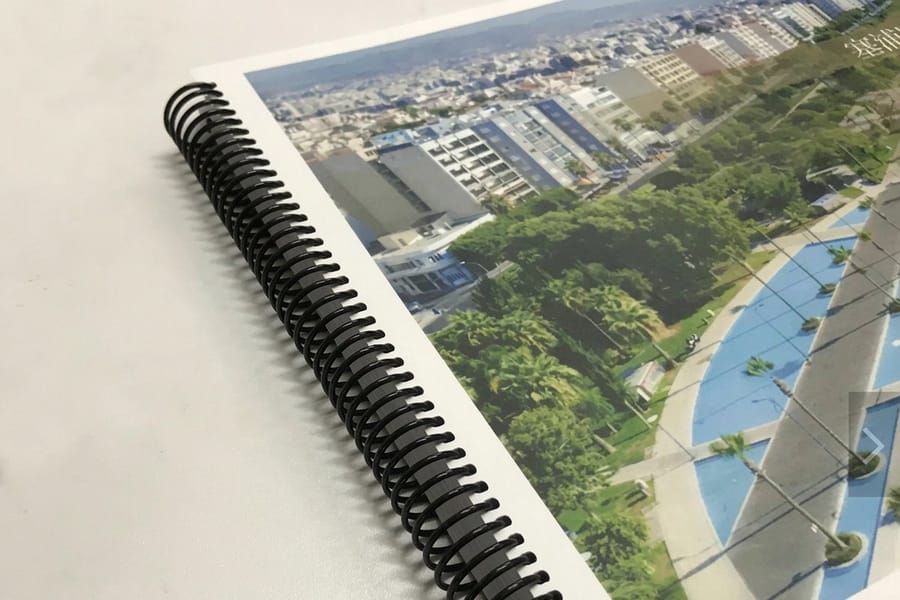
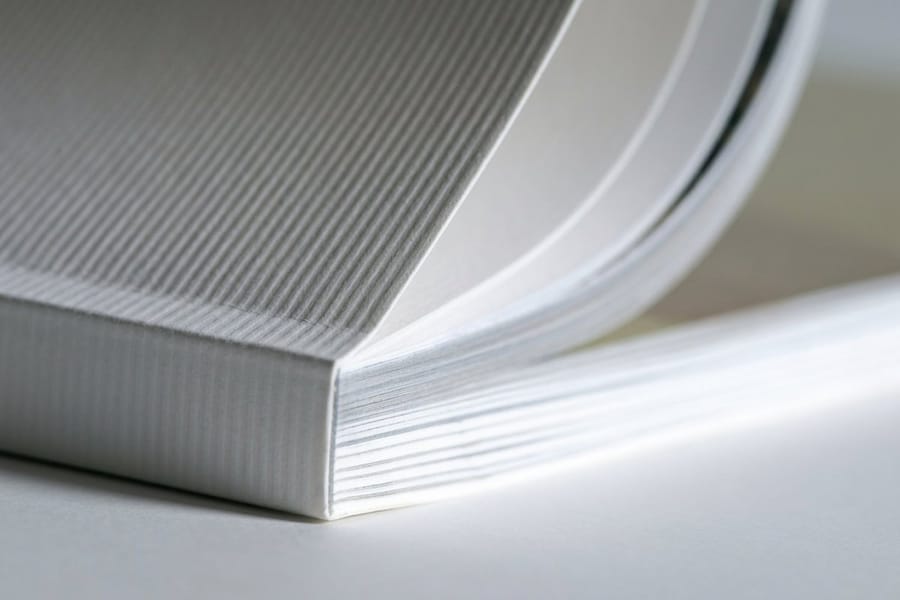
This is where most homemade practice books go wrong, and it is not a matter of taste. If the book arcs at the spine, the sheet tilts away from your nib as your hand travels toward the gutter. Your slant drifts, your pressure changes, and the last inch of every line comes out worse than the rest. You then practise that error a hundred times.
| Binding | How flat it opens | Page count it suits | Best for |
|---|---|---|---|
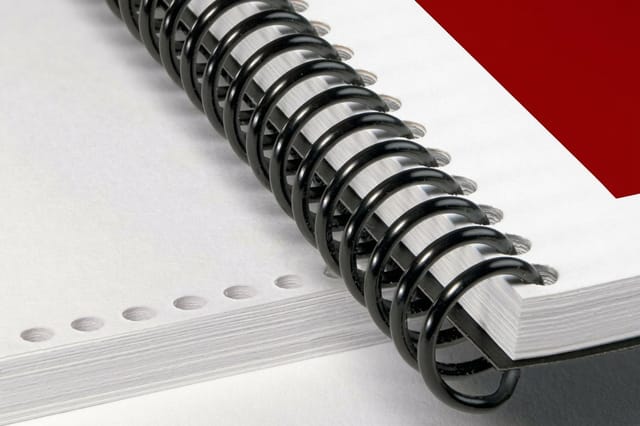
| Spiral coil | Completely flat, and folds back on itself. | Anything from a thin drill book to several hundred pages. | The default practice book. Writing across the gutter and folding it in half on a small desk. |
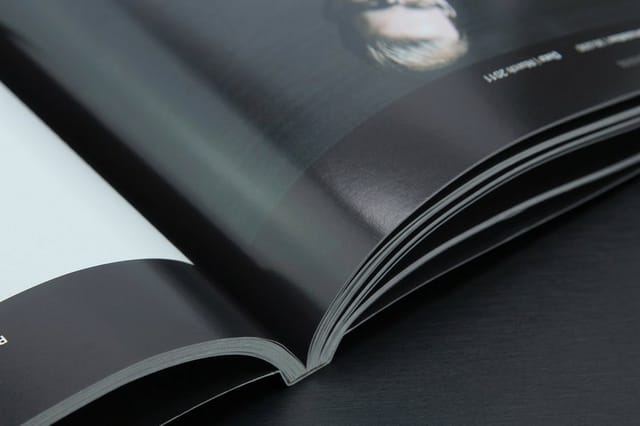
| Perfect bound | Curves at the spine and has to be held open. | Thicker books where the spine has something to glue to. | A finished exemplar or reference volume you read from, not the book you write in. |
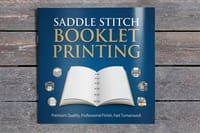
| Saddle stitch | Flat in the centre spread, progressively less so toward the covers. | Page counts in multiples of four, best kept modest. | Short single-hand workbooks and class handouts you hand out and replace. |
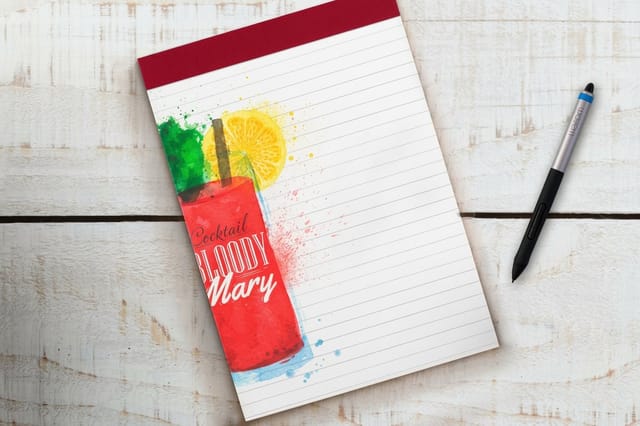
| Padded notepad | Flat, and sheets tear off entirely. | One grid repeated across the pad. | Drilling one letterform and binning the failures without keeping them. |
Read the first column and pick coil unless you have a reason not to. The one honest argument for perfect binding is that it survives a shelf better and looks like a book; if that is what you want, print the exemplars perfect bound and the practice pages coil. Saddle stitch has its own constraint worth knowing before you lay out pages, explained in our guide to page counts and creep, and the full set of options is compared in the binding types guide.
Step 4: Order the Pages, Then Order the Book
Sequence the book the way you would teach it. Warm-up drills first, so a session starts with strokes rather than letters: verticals, ovals, arches, entry and exit strokes, several pages of each. Then minuscules grouped by shape family rather than alphabetically, because the letters that share a stroke should be practised together. Then majuscules. Then joins, words and a short passage. Then fifteen or twenty blank ruled pages at the back for free work.
Repeat each drill sheet three to five times inside the run. Nobody masters a letter in one pass, and a book you have to reprint after a fortnight is a false economy when the binding cost is already paid.
Two setup details decide whether the printed book is usable. First, the bound edge: coil punching takes a strip out of the page, so keep at least half an inch clear on that side and 0.75 in is safer. Every guide line and every slant diagonal stops before it. Second, bleed: a grid that runs to the trimmed edge needs 0.125 in of bleed past the trim, or the trim variation leaves a white sliver on one side of the stack. Start from a correctly sized layout in our blank template library rather than guessing the trim.
Supply a single press-ready PDF with the pages in reading order, fonts outlined, and the grid built as vector lines rather than a placed image, which keeps the hairlines crisp at print resolution. Then configure the run: a spiral coil book starts at $423.28, a perfect bound book at $375.05, and a saddle stitch booklet at $240.55 for the smallest configured run. A single-grid pad of custom notepads starts at $93.37 and is the cheap way to check your paper and line weight before you commit to the full book. Everything sits in the book printing category.
Wally explains the practice book
Nib first, paper second, binding third
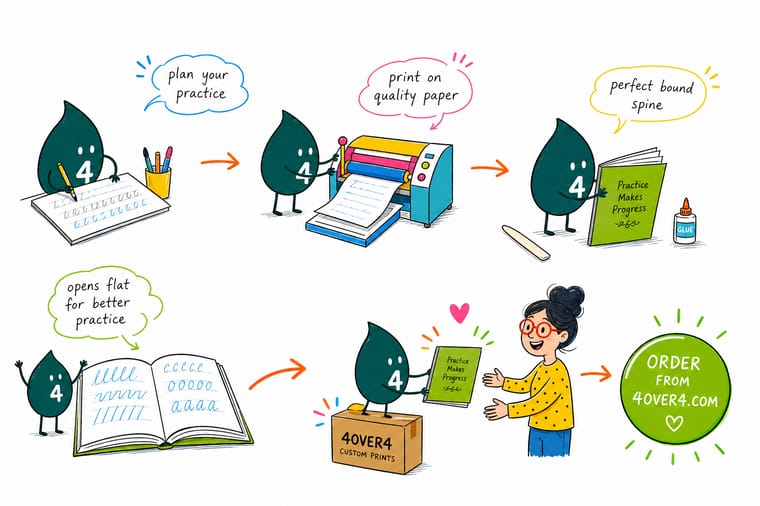
Wally steps his nib corner to corner five times to set the x-height, rules the slant across the whole page instead of just the margins, and prints the whole grid pale so his own strokes stay the darkest thing on the sheet. Then he picks smooth uncoated stock, because rough paper drinks the hairlines and glossy paper will not let them dry. Last, he binds it coil, so the page still lies flat under his hand when he reaches the spine. A book that arcs at the gutter teaches you to write badly at the end of every line.
Configure a spiral coil book →Specs and pricing
Bindings, sizes and starting prices
Compare the three bindings that suit a practice book, with live configuration choices and starting prices straight from the 4OVER4.COM configurator.
Print it
Print the book you will actually write in
Explore more
Where to go next

By the numbers
Book printing you can count on at 4OVER4
Common Questions
Your practice book questions, answered
What paper should a calligraphy practice book be printed on?
Smooth, hard-sized, uncoated text weight. Uncoated stock with visible tooth pulls ink sideways along the fibres and every hairline turns furry. Coated gloss stock does the opposite: it will not absorb the ink, so the stroke sits on the surface, stays wet, and smears under your hand. Smooth uncoated in the 70 lb to 100 lb text range takes a pointed nib cleanly and is heavy enough that a wet stroke does not show through to the next page. If you plan to work in walnut ink or diluted sumi, go to the heavier end of that range.
Which binding is best for a practice book?
Spiral coil, because it is the only common binding that opens completely flat and folds back on itself. That matters more than it sounds: on a book that arcs at the spine, the paper tilts away from your pen as you approach the gutter, your slant drifts, and the last inch of every line is worse than the rest. Perfect binding looks better on a shelf but has to be held open. Saddle stitch lies reasonably flat in the centre spread and progressively worse toward the covers.
How many pages should I print?
Enough to repeat each exercise several times without turning back. A practical build is around 60 to 100 pages: eight to twelve drill sheets, one sheet per letterform group, a set of word and joining pages, and fifteen or twenty blank ruled pages at the back. Repeat every drill sheet three to five times in the run. The cost of adding pages to an existing binding job is small compared with reordering the whole book because you burned through the warm-up section in a week.
What angle should the slant lines be?
It depends on the hand you are learning, and this is the number most homemade grids get wrong. Copperplate is traditionally ruled at 55 degrees from the horizontal, Spencerian sits nearer 52, and broad-edge italic is a much shallower forward lean of roughly 5 to 10 degrees. Rule the diagonals across the whole writing area at a consistent spacing, not just at the margins, because you need one within reach of wherever the letter happens to fall.
Can I print the grid on both sides of the sheet?
Yes on 80 lb text and up, with a caution. Ink that soaks through leaves a ghost on the reverse, and dip-pen work puts down far more ink than a printer does. If you work wet, print single-sided and accept double the page count, or move to a heavier stock. A middle option people forget: print the grid double-sided but only rule the reverse pages lightly, so the back of a heavy practice sheet still works for pencil planning.
What does a practice book cost to print?
At 4OVER4.COM a spiral coil book starts at $423.28, a perfect bound book at $375.05, and a saddle stitch booklet at $240.55 for the smallest configured run. Those are run prices, not per-copy prices, which is why practice books make far more sense as a small batch than as a one-off. If you want one cheap tester before committing, a padded notepad of a single grid starts at $93.37 and tells you whether your paper choice and your line weight are right.
Get Started
Ready to print a practice book that lies flat?
Send one press-ready PDF with the grid drawn as vector lines, pick a smooth uncoated interior stock, and we coil bind it so it folds back on itself under your hand.
Legal Disclaimer
Gold Standard guarantees apply to all standard orders placed through 4over4.com. Price match requires verifiable proof of a competitor's published price for an equivalent product with matching specifications and turnaround time. Satisfaction guarantee covers manufacturing defects and print quality issues. Contact support with order number and documentation. On-time delivery rate based on tracked orders 1999 to 2026. Individual results may vary based on shipping carrier performance.
