
Get Professional Looking Greeting Cards With the Right Stock, Score and Finish


Professional cards are made of three decisions: the stock, the fold, and where the ink stops. Here is what each one does to the card in someone's hand.
A greeting card looks professional when it is printed on cover stock at 100lb or 14pt and heavier, scored before it is folded, folded along the paper grain, and trimmed after printing so the colour runs off the edge with no white border. Home printed cards give themselves away on exactly those points: a gripper margin the printer cannot cover, a limp sheet, and a spine that cracks white the first time the card is closed. Finish comes last, after the stock and the fold are right.
Quick answer
Heavy stock, a scored fold, and ink that runs off the edge
Three production choices carry almost all of the difference. Cover stock at 14pt or heavier gives the card the rigidity people read as quality before they read a word. A crushed score along the fold line stops the coating splitting white down the spine, and cutting the sheet so the grain runs with the fold keeps that spine sharp. Printing oversize and trimming afterward removes the white border a desktop printer cannot avoid. Foil, spot gloss and soft touch are worth buying once those three are settled, and not before.
The Four Things That Give a Home Printed Card Away
People rarely say what is wrong with a card. They just handle it differently. Four things drive that reaction, and all four are production decisions rather than design ones.
The white border. An office printer cannot lay ink past its own gripper margin, so a home card carries a thin unprinted frame on every side. Commercial work is printed on an oversize sheet and trimmed down afterward, which is why the colour runs off the edge with no border at all. Nothing else on this list is as instantly visible from three feet away.
The weight. A card on text-weight paper flops when it is stood on a shelf. Cover stock at 100lb or 14pt holds its own shape, and 16pt has a rigidity you notice in the fingers before you read anything. On a 5 by 7 inch folded card the difference between 100lb and 16pt is the difference between a card that stands and one that leans.
The spine. A folded card that was never scored shows a white crack along the outside of the fold. It is the most common defect on home printed cards and the hardest one to talk your way out of, because it appears on every card in the batch at once.
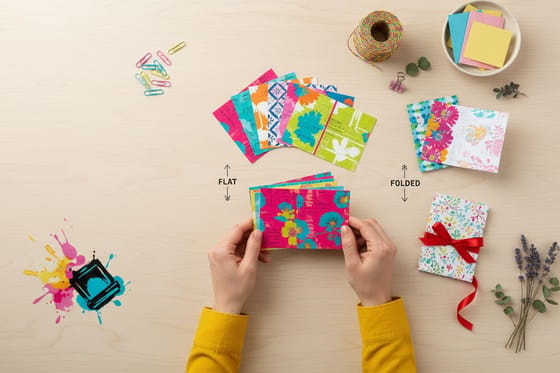
The colour drift. Desktop machines shift across a run and across a session, so card one and card forty do not match. A press holds density with an ink key and a colour bar, which is why a box of a hundred looks like a box of a hundred. If you want the whole comparison of formats before you commit, the guide to flat versus folded greeting cards covers where each one earns its cost.
Do They Use Different Printers for Greeting Cards
Yes, and the machine is only part of it. The card is printed on sheetfed offset or on a production toner or inkjet press, both of which run a straight paper path built for cover stock rather than the curved path an office printer uses to save space. That path is the reason a 16pt sheet feeds without buckling.
The bigger difference is everything that happens after the ink. The printed sheet goes to a creaser that presses a channel along the fold line, then to a folder, then to a guillotine that trims all four edges square. Three separate machines, none of which exists in an office. A desktop printer prints and stops, which is why the fold and the border are always where home cards fail.
There is a paper decision in there too. The press operator cuts the parent sheet so the grain runs parallel to the spine, because paper folds cleanly with its grain and feathers across it. You cannot choose that at home, because a ream of letter paper arrives with the grain already fixed in one direction. That single upstream choice is worth more to the finished card than any setting in a print dialog.
What it means in practice: if the card is folded, ordering it printed is not a convenience, it is the only way to get a spine that does not crack. Greeting Cards start at $56.02 and arrive scored, folded and trimmed. Folded Notecards start at $38.22 if you want the same construction in a smaller, plainer format.
Pick the Stock Before You Pick the Finish
Stock decides how the card feels, how the ink sits, and whether anyone can write in it. Choose it first, because a finish applied to the wrong stock cannot rescue the card.
| Stock | How it feels | Best for | The catch |
|---|---|---|---|
| Gloss coated cover | Slick and bright, with the strongest colour and the deepest blacks. | Photo cards, retail and product imagery, anything colour-led. | Pen ink beads on it. Fingerprints show. Keep the coating off the inside panel. |
| Matte or dull coated | Smooth but not shiny, colour slightly softer than gloss. | Cards that carry both an image and a handwritten note. | Scuffs more easily than gloss in the mail, especially on dark solids. |
| Uncoated cover | Toothy and warm, with ink soaking slightly into the fibre. | Letterpress-style layouts, formal invitations, anything signed by hand. | Colour reads about ten percent flatter, so build images with that in mind. |
| Kraft | Brown, fibrous and visibly recycled. | Craft brands, cafes, packaging inserts, cards with a handwritten feel. | The brown base shifts every colour on it. White prints as nothing unless it is foiled. |
| Suede or soft touch | Velvety, warm, and quiet under the fingers. | The card you want handled and kept rather than read once. | The costliest option per card, and the surface shows an oily fingerprint. |
Read the last column before the second. Most regret about a card comes from that column, not from the design. Kraft Greeting Cards start at $193.15 and take a pen instantly. Suede Greeting Cards start at $617.67 and are the one stock people ask to touch again. The full range sits on the greeting card printing category page.
The Fold Is Where Most Cards Get Ruined
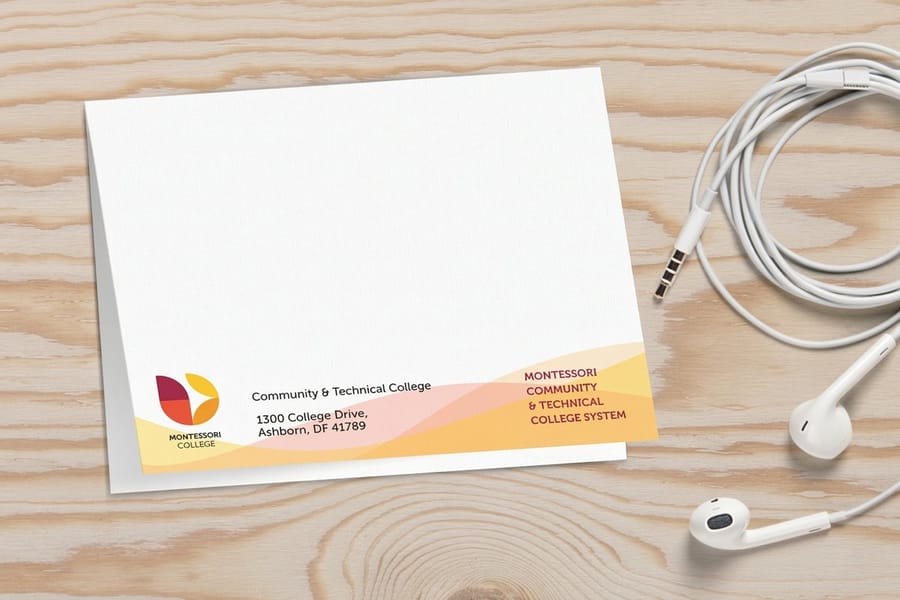
Cover stock does not want to fold. It is thick enough that the outside of a bend has to travel further than the inside, and something has to give. Scoring decides what gives.
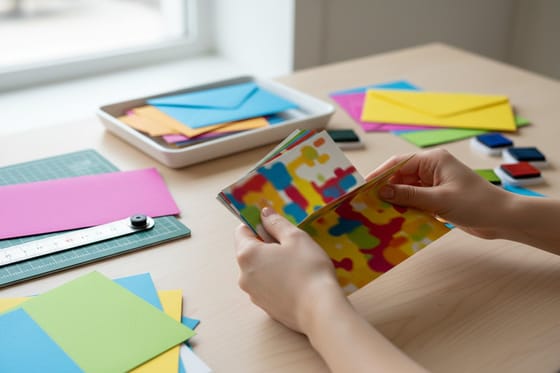
A score is a channel crushed into the sheet with a steel rule, running along the fold line. The crushed fibres act as a hinge, so when the card closes the surface rolls into the channel rather than stretching over a corner. Skip it on 14pt or heavier and the coating splits into a white line that runs the length of the spine. It cannot be repaired after the fact, and it appears on the whole batch.
Grain is the second half. Paper fibres lie mostly in one direction, set when the sheet was made. Fold along them and the spine is sharp. Fold across them and it feathers, buckles slightly, and resists lying flat even when it was scored properly. A shop cuts the sheet so the grain and the spine agree. Any card folded from a ream of office paper is at the mercy of whichever way that ream happened to run.
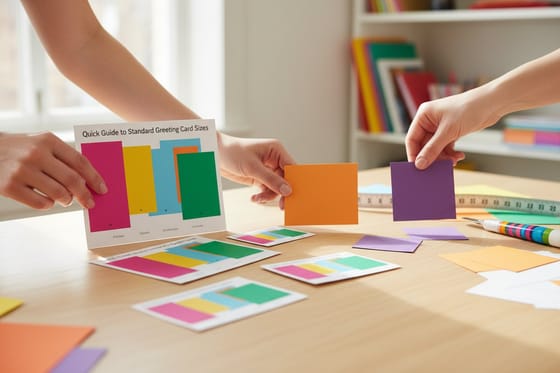
One more thing shows up at 16pt and above: the inside panel of a folded card sits slightly further round the bend than the outside, so the two panels no longer line up exactly at the open edge. On a heavy card that shift is visible. Leaving a small margin of design away from the open edge hides it, and the sizes in the greeting card size guide already account for the trim.
Finish, Envelope and the Details People Actually Notice
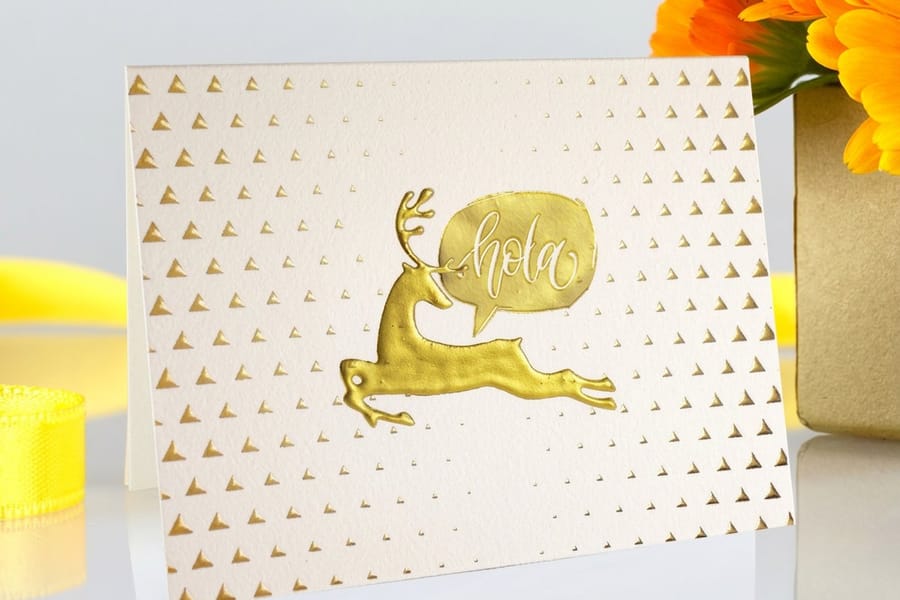
Finishes are the last five percent, and they are worth spending on only after the stock and the fold are right. A foiled card on limp paper still feels cheap.
Foil is the finish that reads as expensive from the furthest away, because metal reflects and ink does not. It works on a small area with clean edges, a monogram, a rule, a mark, and it fights you on fine serif type and on photographs. Raised Foil Greeting Cards start at $618.16 and combine the metallic with a raised layer you can feel with a fingertip. Spot gloss over a matte sheet is the quieter version of the same idea, and it costs less because there is no foil web to run.
The envelope decides what the card looks like before anyone opens it. Match the size properly, an A7 envelope for a 5 by 7 inch folded card and an A2 for a 4.25 by 5.5 inch one, and give yourself about a quarter inch of clearance so the cards stuff without bruised corners. Printed Envelopes start at $142.99 with the return address printed rather than stickered, and ordering them alongside the cards avoids the mismatch that comes from sourcing them separately.
Then leave room to write. A card that gets signed needs an inside panel that takes pen ink, so ask for the coating on the outside only or choose an uncoated stock. If you are building the file yourself, start from a correctly sized layout in the blank template library and work through the file prep in our guide to making greeting cards. If the piece does not need a fold at all, postcards versus greeting cards compares what each format does to postage and response.
Wally explains the professional card
Score it, fold it with the grain, trim it after
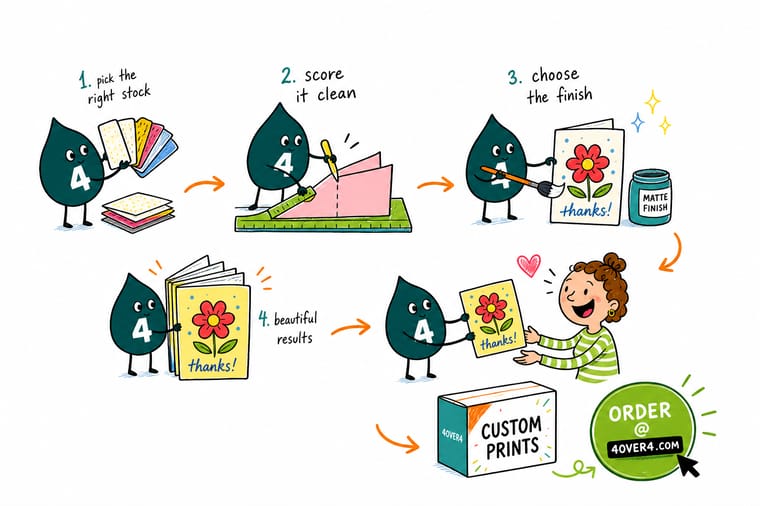
Wally picks the heavy sheet first, because a card that stands up on a shelf has already won half the argument. He runs a steel rule along the fold line to crush a channel into it, folds along the grain so the fibres lie down instead of feathering, and trims all four edges after printing so the colour goes right off the card with no white frame. Then he checks the inside panel takes a pen. Foil comes last, and only if the first four are already right.
Order greeting cards →Specs and pricing
Greeting card stocks, sizes and starting prices
Compare the stocks side by side, with live configuration choices and starting prices straight from the 4OVER4.COM configurator.

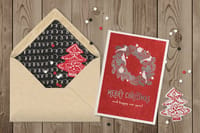
Print it
Order cards that feel printed, not produced at a desk
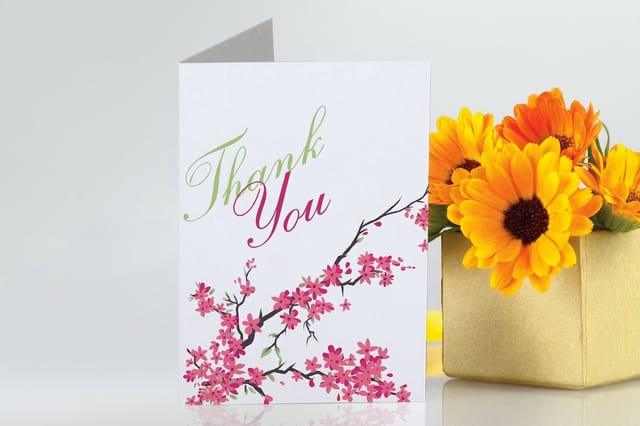
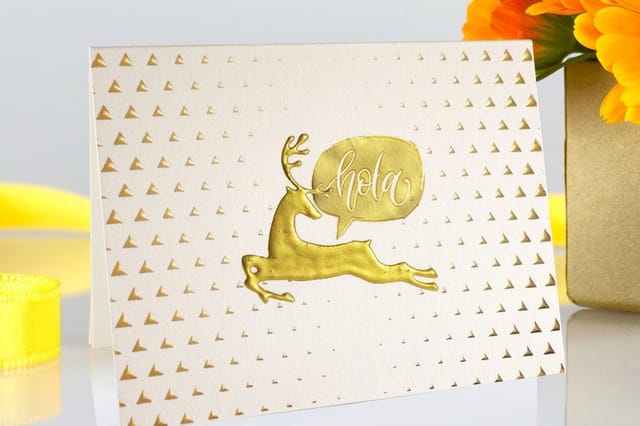
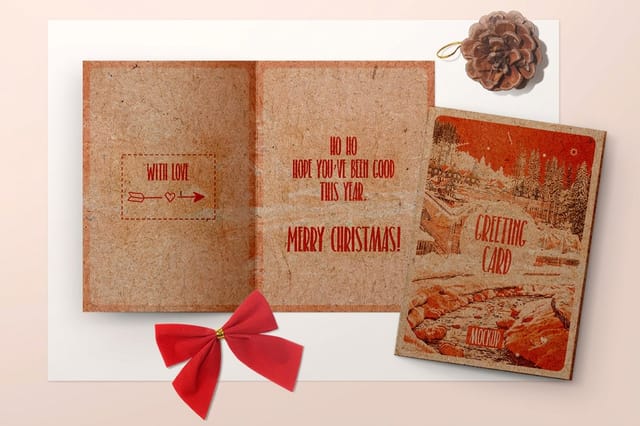
Explore more
Where to go next

By the numbers
Greeting card printing you can count on at 4OVER4
Common Questions
Your greeting card questions, answered
What paper weight looks professional for a greeting card?
For a folded card, start at 100lb cover or 14pt. Below that the card sags when it is stood up, which is the single quickest way to spot a home print across a room. 16pt is the weight most people describe as expensive, and it is worth the small step up on anything 5 by 7 inches or larger, because the bigger the panel the more a light stock droops. Flat cards can go lighter than folded ones since there is no spine holding weight, but 14pt is still a sensible floor.
Do they use different printers for greeting cards?
Yes, and it is not the same class of machine. A commercial shop runs sheetfed offset or a production toner or inkjet press with a straight, heavy-stock paper path, then sends the sheets to a separate creaser and folder and a guillotine trimmer. An office laser or inkjet is built around 20lb to 80lb paper on a curved path, cannot print to the edge of the sheet, and has no scoring head at all. Those three differences produce the white border, the limp feel and the cracked spine that make a home card recognisable.
Why did my folded card crack white along the spine?
The sheet was folded without being scored, or it was folded across the grain, and usually both. Coated cover stock has a clay layer on the surface that has no stretch in it, so when the outside of the bend elongates the layer splits and shows the white fibre underneath. Scoring crushes a channel along the fold line first so the sheet rolls rather than stretches. Folding along the grain gives the fibres somewhere to go. On 16pt and heavier, skipping either step shows on every card in the box.
Can people write inside a card that has a coating?
Not comfortably on gloss. Gloss and satin coatings sit on top of the fibre and give ballpoint and gel ink nothing to soak into, so the writing beads, smears and can still transfer hours later. If the card will be signed by hand, order it coated on the outside only, choose a matte or dull finish, or go uncoated. Kraft and uncoated stocks take pen ink instantly, which is why they are the easy choice for cards that get a handwritten note.
Does the envelope have to match the card size?
The envelope has to be larger than the card by about a quarter inch in both directions, or the card jams going in and the corners bruise. A 5 by 7 inch folded card pairs with an A7 envelope, and a 4.25 by 5.5 inch card pairs with an A2. Order the envelopes with the cards rather than sourcing them separately, because a stack that is a sixteenth of an inch out of tolerance will not stuff cleanly by hand. Printing the return address on the envelope at the same time costs less than a separate short run later.
How much do professional greeting cards cost?
At 4OVER4.COM, Greeting Cards start at $56.02, Kraft Greeting Cards at $193.15, and the specialty finishes sit higher, with Raised Foil Greeting Cards starting at $618.16 and Suede Greeting Cards at $617.67. Folded Notecards start at $38.22 if you want the format without the greeting card treatment. The reason a plain card and a foiled card sit that far apart is the finishing pass, not the printing, so if the budget is tight the money is better spent on stock weight than on an effect.
Get Started
Ready to print a card people keep?
Pick the stock, choose flat or folded, and we score, fold and trim it so the spine stays clean and the colour runs right off the edge.
Legal Disclaimer
Gold Standard guarantees apply to all standard orders placed through 4over4.com. Price match requires verifiable proof of a competitor's published price for an equivalent product with matching specifications and turnaround time. Satisfaction guarantee covers manufacturing defects and print quality issues. Contact support with order number and documentation. On-time delivery rate based on tracked orders 1999 to 2026. Individual results may vary based on shipping carrier performance.
