
How to Get Pictures Framed and Printed at the Right Size


Size the print from the file, match the frame shape so nothing gets cropped away, choose the mat and the glazing, then order it printed and framed in one go.
Divide your photo's pixel width by the print size in inches to find the ppi, pick a size that matches the file's shape so the frame does not crop it, then choose the mat and glazing and order the print and frame together. Aim for 300 ppi on small prints and 150 ppi on anything above 16 by 20. A mat window is cut about half an inch smaller than the print, so order at the nominal size. Framed prints start at $73.57 and framed canvas at $50.33.
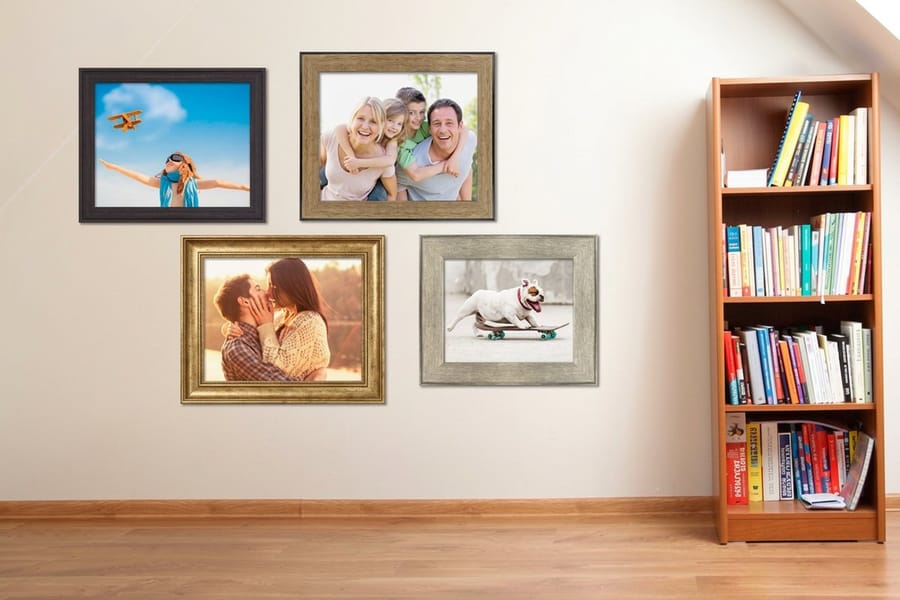
Quick answer
Size from the file, shape from the frame, then order both together
Pixels divided by inches gives you ppi, and ppi sets the largest print your photo can carry. Match the print shape to the file so the frame is not forced to crop it: an 8 by 10 removes 47 percent of the width from a 3:2 camera file, while an 8 by 12 keeps all of it. A mat window is cut roughly half an inch smaller than the print, so order at the nominal size and let the mat overlap. Behind glazing, choose matte or satin. Then order the print and the frame in one job so it arrives ready to hang.
Start With the File, Then Pick the Print Size
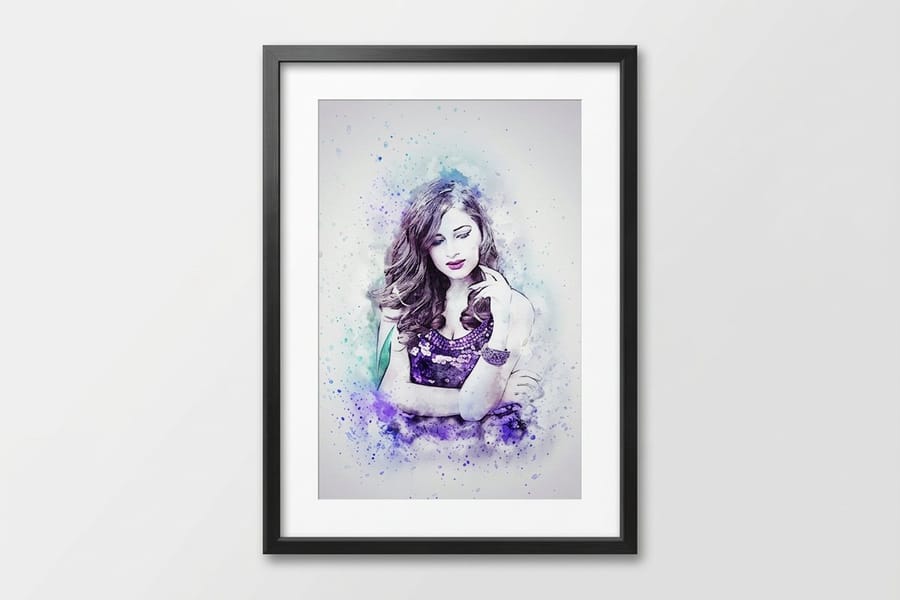
Everyone picks the frame first and then discovers the photo does not fit it. Work the other way. Open the file, read its pixel dimensions, and divide by the inches you are considering. That number is the ppi, and it tells you the honest ceiling for the picture you actually have.
| Print size | Pixels for 300 ppi | Pixels for 150 ppi | What that means in practice |
|---|---|---|---|
| 5 x 7 in | 1500 x 2100 | 750 x 1050 | Any modern phone clears this with room to crop. |
| 8 x 10 in | 2400 x 3000 | 1200 x 1500 | A 12 megapixel phone file makes it, but only just, once cropped to 4:5. |
| 11 x 14 in | 3300 x 4200 | 1650 x 2100 | Needs a 24 megapixel camera for a full 300 ppi print. |
| 16 x 20 in | 4800 x 6000 | 2400 x 3000 | Most people print this at 200 ppi and nobody standing back notices. |
| 24 x 36 in | 7200 x 10800 | 3600 x 5400 | Viewed from six feet, 150 ppi is genuinely enough. |
The second half of sizing is shape, and it is where most cropping arguments start. A camera file is 3:2, a phone file is usually 4:3, and the frame sizes sold in shops are neither. An 8 by 10 is 4:5, so a 3:2 file loses 47 percent of its width getting there and a 4:3 file loses about 20 percent. If you want the whole photograph on the wall, print 4 by 6, 8 by 12, 12 by 18, 16 by 24 or 20 by 30 from a 3:2 file, and 6 by 8, 9 by 12, 12 by 16 or 18 by 24 from a 4:3 file. When the frame size is fixed by the room, crop deliberately in your editor rather than letting the printer centre it and cut somebody's shoulder off. The framed photo sizes guide lists the pairings, and the standard print size chart covers everything wider than a frame.
Frames, Mats and Glazing: What Each Choice Costs You
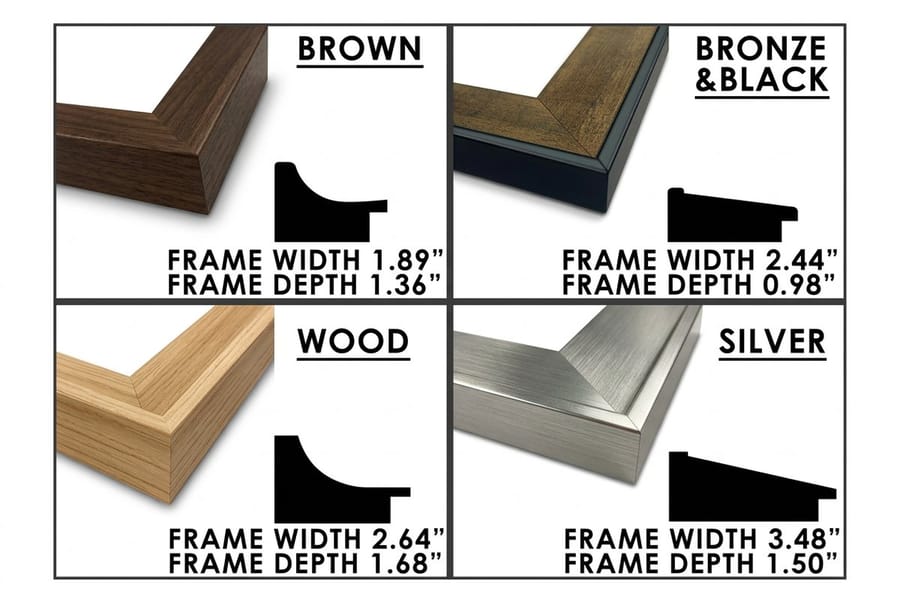
A framed piece is four parts stacked together: the print, the mat, the glazing, and the moulding. Each one changes the price, and two of them change the picture.
The mat. It keeps the print off the glazing and gives the image breathing room. Two inches is the default border and holds up to about 11 by 14; go to 2.5 or 3 inches on anything larger or the mat looks like a mistake. The window is cut roughly half an inch smaller than the print so it has something to grip, which means an 8 by 10 print sits behind a 7.5 by 9.5 opening and gives up a quarter inch on each side. Always order the print at its nominal size and let the mat do the hiding.
The glazing. Acrylic weighs about half what glass weighs, does not shatter, and survives shipping far better, which is why large framed pieces almost always use it. It scratches if you wipe it with a dry cloth and it holds static, so it collects dust. Glass stays optically clean for decades and cleans without care, but a big sheet is heavy and one drop ends the piece.
The surface underneath. Matte or satin behind glazing, every time. Two reflective layers stacked together turn a lamp into two lamps, and gloss can bond to glass in a humid room. If you want that wet, saturated look, skip glazing entirely and go to an acrylic print where the gloss is the surface. Glossy versus matte paper goes into how each one handles light.
| Option | What it is | Starts at | Where it fits |
|---|---|---|---|
| Framed Prints | Photo print, mat and moulding assembled and ready to hang. | $73.57 | Portraits, family photos, anything you want matted. |
| Framed Canvas | Canvas stretched and set inside a frame, no glazing. | $50.33 | Texture over detail, and rooms with strong window glare. |
| Framed Posters | Poster stock framed at larger wall sizes. | $87.86 | Art prints, event pieces, big statement walls. |
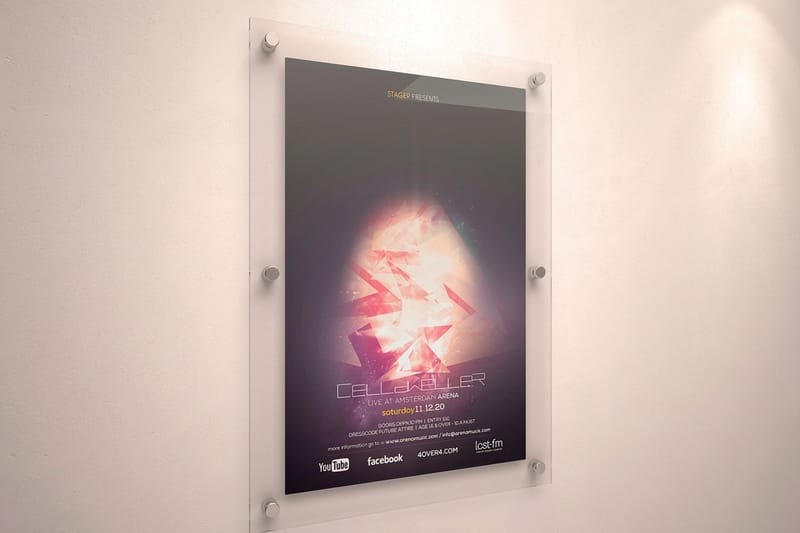
| Acrylic Prints | Image behind clear acrylic, glossy, frameless. | $152.72 | Saturated colour and a modern edge, no mat needed. |
| Canvas Posters | Canvas printed flat and shipped rolled, unstretched. | $25.00 | Framing locally, or trying a size before committing. |
Framed canvas is the quiet value in that list. It skips the glazing and the mat, which is where a lot of the cost sits, and it is the only option there that does not reflect a window back at you. For the trade-off between canvas, acrylic and framed canvas, we compared all three in acrylic prints versus canvas versus framed canvas.
Getting the File Right Before You Send It
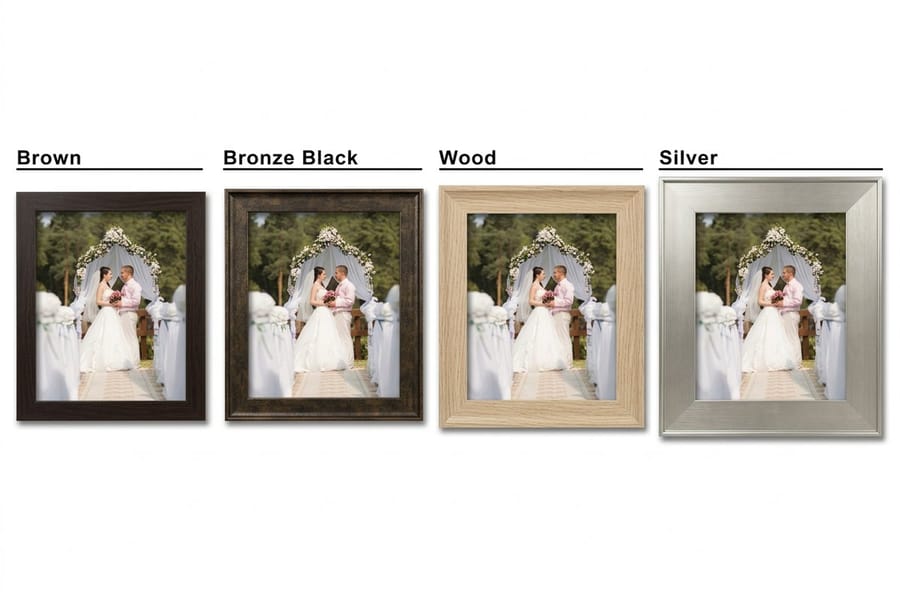
Resolution is the part that cannot be fixed after the fact, so it is worth five minutes. Send the original file, not a copy that has been emailed, uploaded to a chat app, or saved out of a social feed. Every one of those steps recompresses the image and strips pixels, and a picture that started at 4032 pixels wide can come back at 1080.
Upscaling has a real limit. Software can invent pixels and modern tools do it well enough to buy you roughly double the linear size, so a 2000 pixel wide file can hold up at 4000 for a wall piece. What it cannot do is invent detail that was never captured. If the original is soft, out of focus, or noisy from a dark room, enlargement makes all three more obvious, not less. Enlarging a photo for printing walks through where the ceiling actually sits, and image resolution for printing explains what ppi does and does not control.
Three more things decide whether the print matches what you saw. Export in sRGB; a file left in Adobe RGB or ProPhoto arrives with flat, drained blues and greens after conversion. Lift the shadows slightly, because paper reflects light while a screen emits it and the darkest quarter of the tonal range always lands heavier on paper. And judge the image with your monitor at 60 to 70 percent brightness rather than full, which is the single biggest reason people describe a good print as too dark.
If you are laying out something with a border, a title, or several photos on one sheet, start from a correctly sized file in our blank template library instead of guessing at margins.
Framed Now, or Printed Now and Framed Later
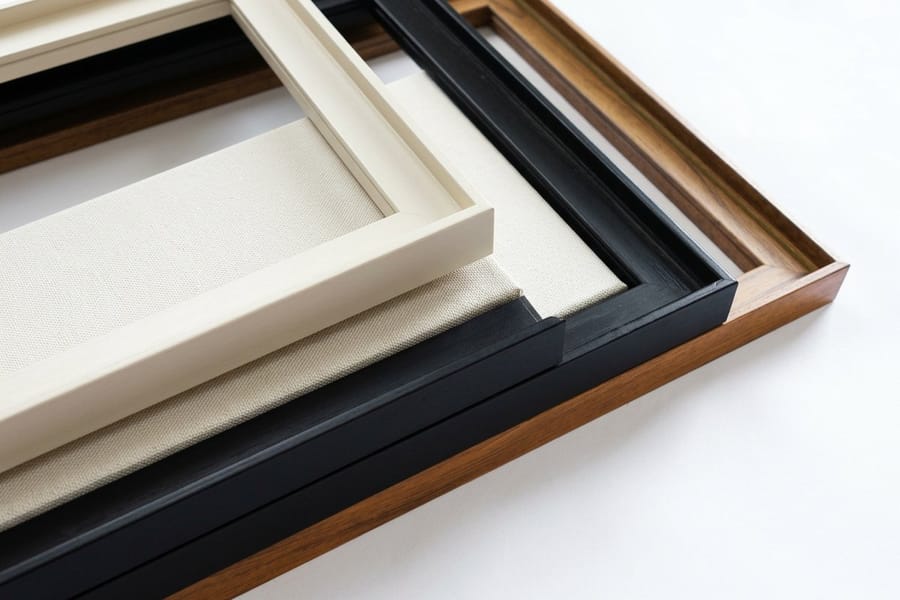
Order it framed when the piece is a gift, when it goes straight onto a wall, or when the size is not one a local shop stocks. Framed prints start at $73.57 with the mat and moulding assembled, and framed canvas at $50.33. You upload the photo, choose the size, and the piece arrives ready to hang, which also means the print never sits in a drawer for six months waiting for a trip to the framer.
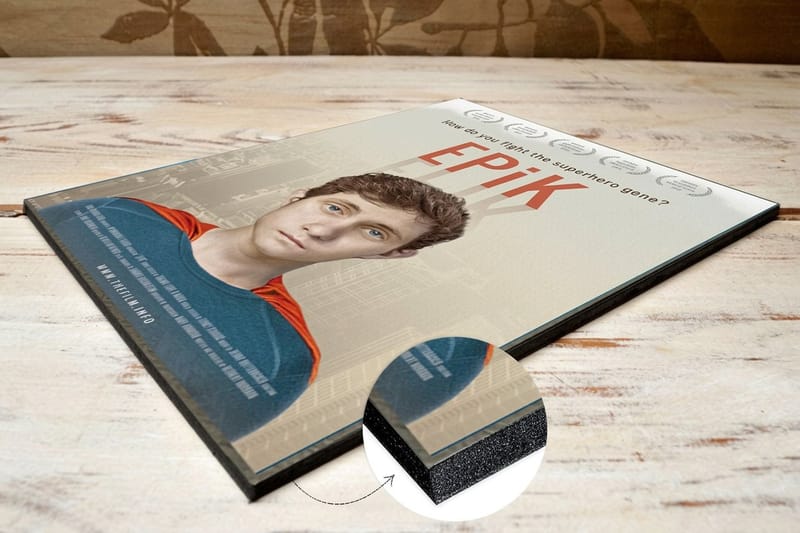
Print flat when you are covering a whole wall or sending copies to several people. A rolled print in a tube costs a fraction of what a framed piece costs to ship, and standard sizes drop straight into off the shelf frames. Canvas posters start at $25.00 and are a cheap way to test a size on the wall before committing to the framed version. If the picture is going into an office or a trade show rather than a living room, foam core mounting at $49.99 gives you a rigid, lightweight panel with no glass to break.
One detail that trips people at the counter: a frame is sold by the artwork size it holds, not by its outside dimension. An 11 by 14 frame takes an 11 by 14 print, or an 8 by 10 print if it ships with a mat. Measure what you have before you buy the frame, not after. When the pieces arrive, hanging frames on a wall covers centre height and spacing, and the rest of the flat options live in poster printing and large format printing.
Wally explains framing a picture
Measure the file first, then cut the mat
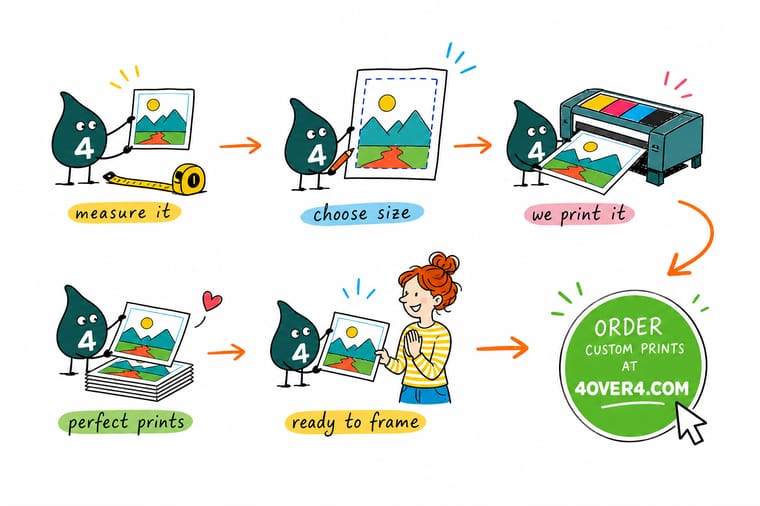
Wally reads the pixel size off the photo, divides by the inches he wants, and only then picks a frame. He orders the print at 8 by 10, because the mat window is cut a half inch smaller and needs that quarter inch on every side to hold the paper. He keeps the surface matte, since glass reflects quite enough on its own. If the picture is a 3:2 camera file he prints 8 by 12 instead of 8 by 10, and nobody loses half a shoulder to the crop.
Order framed prints →Specs and pricing
Framed sizes, finishes, and starting prices
Compare the framed options side by side, with live configuration choices and starting prices straight from the 4OVER4.COM configurator.
Print it
Order the picture printed and framed
Explore more
Where to go next
By the numbers
Photo printing you can count on at 4OVER4
Common Questions
Your framing and printing questions, answered
How big can I print a picture from my phone?
Take the pixel dimensions and divide by the print size in inches. A 12 megapixel phone file is 4032 by 3024 pixels, so at 300 ppi it prints about 13 by 10 inches, and at 150 ppi it stretches to 24 by 18. The 150 ppi number is not a compromise on a wall piece, because you stand several feet back from a large frame and your eye cannot resolve the difference. It is a compromise on a small print held at arm's length, where 300 ppi is worth insisting on. A screenshot or an image saved from social media is usually around 1080 pixels wide, which caps out near 7 inches.
Do I need a mat, and what size should it be?
A mat does two jobs. It holds the print away from the glazing so nothing touches the surface, and it gives the eye a rest between the image and the moulding. A 2 inch border is the standard starting point and works on prints up to about 11 by 14; above that, 2.5 to 3 inches keeps the proportion. The rule that catches people is the overlap: the window is cut roughly half an inch smaller than the print, a quarter inch on each side, so an 8 by 10 print shows through a 7.5 by 9.5 inch opening. Order the print at 8 by 10, never at the window size.
Should the photo be printed glossy or matte if it goes behind glass?
Matte or satin. Glass and acrylic are already reflective, and a glossy print under them creates a second reflective plane, so lamps and windows show up twice. Gloss also has a habit of sticking to glazing in humid rooms, which pulls the emulsion when you finally separate them. Glossy is the right call when nothing covers the surface, on an acrylic print or a mounted photo, where the shine is the finish rather than a layer under one.
Why does my print look darker than it did on screen?
A monitor emits light and paper reflects it, so a file that looks correct on a bright screen usually prints a stop darker in the shadows. Two habits fix most of it. Judge the file with your screen brightness around 60 to 70 percent rather than full, and lift the darkest quarter of the tonal range slightly before sending. Also export in sRGB. A file left in Adobe RGB or ProPhoto often lands with dull, desaturated blues and greens once it is converted for press.
Can I order the print now and frame it later?
Yes, and it is the cheaper route when you are doing a whole wall. Print flat, keep to standard sizes so off the shelf frames fit, and remember that a frame is sold by the artwork size it holds rather than its outside dimension. An 11 by 14 frame takes an 11 by 14 print, or an 8 by 10 print if it comes with a mat. Order the framing with the print when the piece is a gift, when it is going straight onto a wall, or when the size is not a standard one a local shop stocks.
What happens to the edges of a canvas print?
On a gallery wrap the image continues around the sides of the stretcher bars, so between three quarters of an inch and an inch and a half of image disappears from every edge depending on bar depth. Keep faces, text, and anything you care about well inside the frame when you shoot or crop. A framed canvas hides that transition behind the moulding, which is why it forgives a tighter composition than a bare wrap does.
Get Started
Ready to see the photo on a wall?
Upload the picture, pick the size that matches its shape, choose a mat and a frame, and it arrives assembled and ready to hang.
Legal Disclaimer
Gold Standard guarantees apply to all standard orders placed through 4over4.com. Price match requires verifiable proof of a competitor's published price for an equivalent product with matching specifications and turnaround time. Satisfaction guarantee covers manufacturing defects and print quality issues. Contact support with order number and documentation. On-time delivery rate based on tracked orders 1999 to 2026. Individual results may vary based on shipping carrier performance.
