
How to Get Cheap Card Printing Without Cheap Looking Cards


Three levers set the price of a printed card: how many you order, whether the size gangs on the press sheet, and how many extra machine passes you ask for. All three pull in the same direction.
Cheap card printing comes from claiming the free 200 card set first, then ordering a standard size on standard stock at one quantity break above what you actually use. Standard business cards start at $17.57 for 100 at 4OVER4.COM, standard postcards at $16.48, and the free set is $0.00 with $5.99 flat US shipping. Almost all of the per card saving lands between 100 and 1,000 pieces, so bigger runs buy quantity rather than a better rate.
Quick answer
Buy the break above your real usage, not the lowest unit price
The setup cost is what makes a small run expensive, and it is spent before your first card exists. Spreading it across more pieces is why the price per card falls so hard between 100 and 1,000, and why it barely moves after that. Standard trims share a press sheet with other jobs, which is a second discount you get for free by not asking for an unusual shape. Everything above that floor, laminates, spot gloss, die-cut shapes, plastic, is an extra machine pass with a price attached.
The Three Levers That Actually Move a Card Price
Quantity, size and finish. That is the whole list, and they do not carry equal weight.
Quantity does the heavy lifting, once. A print job carries a fixed cost before a single card exists: the file check, the plate or the digital setup, the make ready, the cutting. Spread that over 100 cards and it dominates the price. Spread it over 1,000 and it nearly disappears. That is why 100 standard business cards start at $17.57 while a box ten times the size does not cost ten times as much, and it is also why the curve stops rewarding you after a point. Past roughly a thousand pieces you are buying paper and ink, and those cost what they cost.
Size decides whether your job travels alone. Commercial presses print large sheets and cut them down. A 3.5 by 2 inch card and a 4 by 6 inch postcard fit the standard imposition, which means your job shares a sheet with other people's work and shares the cost of running it. Ask for a trim nobody else uses and the sheet becomes yours alone. The shape is a real design choice, but it is a price choice first, and it is the one most people make by accident.
Finish is where budgets quietly disappear. Each extra pass through a machine is a line on the invoice. See the ladder in the table below before you tick a box, and read how print price breaks work if you want the mechanics behind the quantity step.
| Card | Starts at | Cheap because | What pushes the price up |
|---|---|---|---|
| Free business cards | $0.00 | The tagline on the back pays for the run. | Nothing, but it is one set of 200 per account. |
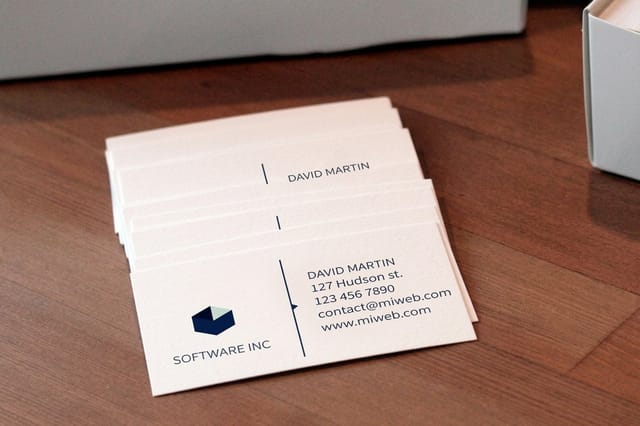
| Standard business cards | $17.57 | Standard 3.5 by 2 inch trim, gangs on the sheet. | Custom shapes, laminates, foil, raised finishes. |
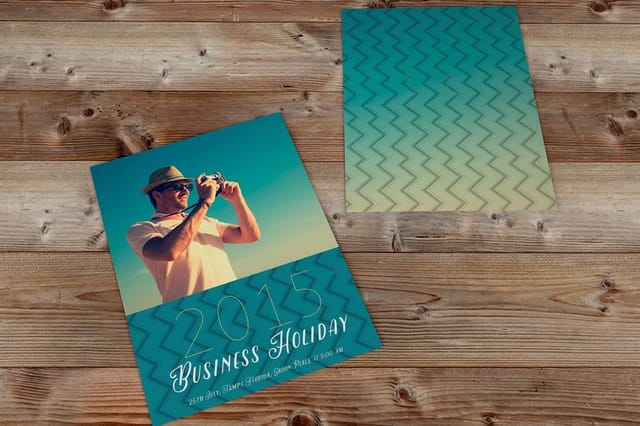
| Standard postcards | $16.48 | Common mailing sizes, printed in volume every day. | Oversized trims that leave the lower postage tier. |
| Appointment cards | $17.57 | Same footprint as a business card, same imposition. | Coated backs, which stop a pen writing the date. |
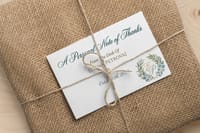
| Thank you cards | $19.77 | Flat cards, cut and shipped without a folding pass. | Folding, envelopes, heavier cover stocks. |
Read the last column first. Every one of those price pushers is a decision you make in the configurator in about four seconds, and the ones that sound cosmetic are usually the ones that double the total.
Start With the Free 200, Then Decide What to Pay For
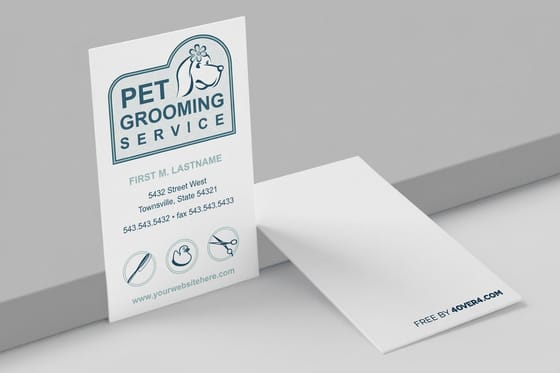
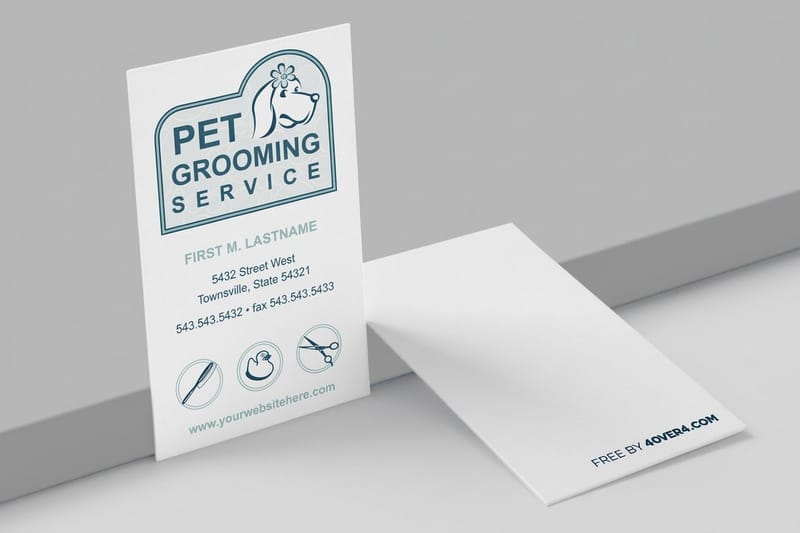
The cheapest card printing available is the set that costs nothing. Free business cards are 200 pieces printed on your own artwork, both sides, full color, trimmed to 3.5 by 2 inches on 14pt stock. Price at checkout is $0.00 with $5.99 flat shipping inside the US.
Now the catch, because there is one and it decides whether this works for you. A small 4OVER4.COM tagline prints on the back of every free set and cannot be removed, so if your back panel carries a QR code, an appointment reminder or a service list, the free run is the wrong tool. Stock is fixed at 14pt gloss coated or 14pt uncoated with 30 percent post consumer content. Turnaround is five business days rather than three. And it is one set per account, ever.
Two hundred cards feels generous until you work a trade show table. A busy weekend clears most of a box, which is why the sensible sequence is to claim the free set to test the artwork in your hand, then order the paid run once the layout is settled. Getting the design right on somebody else's paper is worth more than the $17.57 you saved.
Shipping has its own escape hatch. Loyalty coins cover the $5.99 at 500, and an account earns them through ordinary activity like reviews and referrals rather than spending. The full mechanics sit in our guide on how free business cards work, and you can start the layout from a correctly sized file in the blank template library.
Where Cheap Stops Being Cheap
A cheap card that gets thrown away is not cheap, and neither is a cheap card ordered twice. Two failure modes account for most of the waste we see come back through reprints.
The first is buying volume you cannot use. Someone reads that 5,000 cards work out to under two cents each, orders 5,000, then changes a mobile number in March. The unit price was true and the money is gone. Buy to the break above your genuine annual usage and no further.
The second is stripping the card past the point where it does its job. There is a floor, and the floor is a card that survives a pocket. Below it, the corners go soft, the ink scuffs, and the person holding it draws a conclusion about the business rather than about the paper. The money buys something specific at each step up.
| Finish | Starts at | What the extra pays for | Worth it when |
|---|---|---|---|
| Standard | $17.57 | Press, cut, box. No extra pass at all. | Most of the time, honestly. |
| Die-cut | $26.37 | A cutting die made for your shape, then a punch pass. | The shape itself is doing the selling. |
| Silk laminated | $74.53 | A soft matte film bonded to both faces before cutting. | Cards live in wallets and pockets for months. |
| Spot UV | $76.88 | A second coating pass with its own mask. | One mark should catch the light on its own. |
| Plastic | $180.02 | A different substrate, so press and cutting both change. | The card has to last years, not a season. |
Run the arithmetic per handout rather than per box. A hundred standard cards at $17.57 is about eighteen cents in someone's hand. If a laminated card at $74.53 wins one extra conversation across the box, it paid. If you are handing cards to a queue at a careers fair, it did not, and the plain card was the right answer all along. The stock decision behind all of this is covered in 14pt against 16pt cards, and the full ladder in what business cards cost and why.
Cheap Printing on the Other Cards You Order
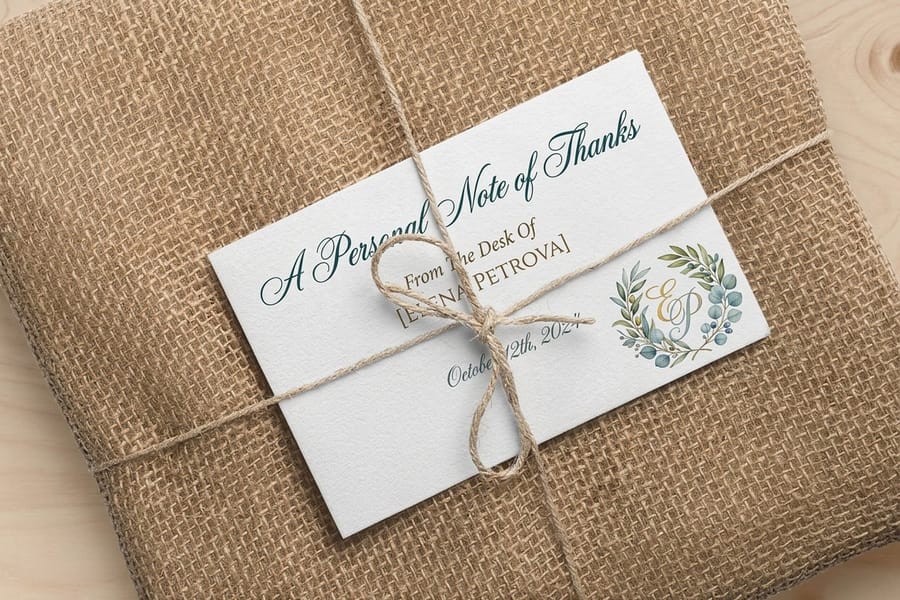
Business cards get all the attention, but the same three levers set the price on everything else with a card in its name. The differences are worth knowing before you order.
Standard postcards start at $16.48 and stay cheap for a reason beyond the press: common sizes fall inside the lower postal tier, and an oversized trim quietly moves your whole mailing to a higher rate. On a run of a few thousand the postage difference outweighs anything you saved on printing. The size rules are laid out in our cheap postcard printing guide.
Thank you cards at $19.77 and flat notecards at $19.77 are the budget end of correspondence printing because they skip the folding pass entirely. Folded notecards start at $38.22, and that gap is scoring, folding and a bigger flat sheet, not better paper. If the note is two lines, print flat and buy more of them.
Appointment cards price the same as standard business cards at $17.57, with one setup trap worth naming: order them fully coated and nobody can write a date on the back. Leave one side uncoated. It costs nothing and it is the single most common reason a salon or a dental practice reprints.
Browse live pricing across the ranges in business card printing, postcard printing and thank you card printing, or work out a whole project before you commit with how to estimate printing costs.
Wally explains a cheap card run
Standard size, one setup, spread it wide
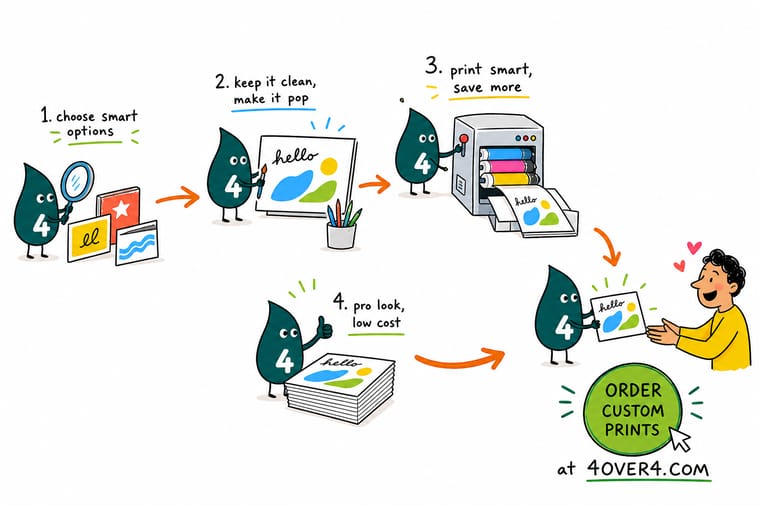
Wally pays for the setup once, before a single card exists. Order 100 and that cost sits on 100 cards. Order 1,000 and it barely shows. He also keeps the trim standard, so your cards ride the same press sheet as everyone else's and split the cost of running it. Ask for an unusual shape and the sheet is yours alone. What he will not do is order 5,000 to chase two cents a card, because the drawer full of old numbers is the most expensive box in the shop.
Claim 200 free business cards →Specs and pricing
Sizes, stocks and live starting prices
Configure the three cheapest card runs we print and watch the price move as you change quantity, stock and turnaround. The numbers come straight from the 4OVER4.COM configurator.
Print it
Order the cheap run that still looks paid for
Explore more
Where to go next


By the numbers
Low prices with a print floor at 4OVER4
Common Questions
Your cheap card printing questions, answered
What is the cheapest way to print business cards?
Claim the free set first. Two hundred cards printed on your artwork cost $0.00 at 4OVER4.COM, with $5.99 flat shipping to a US address and a small 4OVER4.COM tagline on the back. It is one set per account, so once it is used the cheapest route is a paid run at a standard size on standard stock: standard business cards start at $17.57 for 100. Keep the trim at 3.5 by 2 inches, keep the finish plain, and order the quantity you will actually hand out rather than the one with the prettiest unit price.
How many cards should I order to get the best price?
Order to the first quantity break above your real usage, and stop there. Almost all of the drop in cost per card happens between 100 and 1,000, because the setup is being spread across more pieces. After 1,000 the curve flattens, since what is left in the price is mostly paper and ink and neither gets cheaper with volume. Work out how many cards you gave away last year, add a margin, and buy that. Cards sitting in a drawer when the phone number changes cost more than the ones you paid full rate for.
Are cheap cards noticeably worse than expensive ones?
Not on the press. A free order and a paid order run through the same G7 certified equipment and the same file check. What changes with money is the stock, the finish and the trim shape, and those are things people feel rather than see. A 14pt card is a normal professional weight. A 16pt card is stiffer and holds a corner better in a pocket, which is the difference our guide on 14pt against 16pt covers in detail. Nobody has ever noticed the press. They notice a card that arrives soft at the corners.
Why do folded cards cost so much more than flat ones?
A fold is a second machine, a second setup and a second chance to be off by a millimeter. Flat notecards start at $19.77. Folded notecards start at $38.22 for the same kind of stock, and the gap is the scoring and folding pass plus the larger flat sheet each card is cut from before it is folded. If the budget is tight and the message is short, print flat and spend the difference on quantity.
Is it cheaper to print two different designs in one order?
No, and it is worth understanding why. Two designs are two jobs to the press, each with its own plate or its own digital setup, so combining them at checkout saves the shipping and nothing else. If two people need cards, the honest saving is to run each name as its own quantity rather than to split a single run in half and pay two setups on smaller quantities. Where a single order does help is a front that stays the same across a team, since only the changing side needs new artwork prepared.
Should I print cards at home to save money?
For a handful before a meeting tomorrow, yes. As a plan, no. Perforated home stock is thin, the edges come away with a visible lip you can feel with a thumbnail, and the toner sits on top rather than sinking into a coated sheet, so the color shifts under office light. Add ink and card and a jammed feeder and the arithmetic stops working somewhere around 100 cards. Our guide to printing business cards at home walks through when it is genuinely the right call.
Get Started
Order 100 die-cut cards from $26.37
Start with the free 200 card set, or configure a paid run at a standard size and watch the price per card fall as the quantity climbs.
Legal Disclaimer
Gold Standard guarantees apply to all standard orders placed through 4over4.com. Price match requires verifiable proof of a competitor's published price for an equivalent product with matching specifications and turnaround time. Satisfaction guarantee covers manufacturing defects and print quality issues. Contact support with order number and documentation. On-time delivery rate based on tracked orders 1999 to 2026. Individual results may vary based on shipping carrier performance.
