
How to Design Playing Card Style Business Cards That Get Kept


The size, the stock, the corner radius and the file setup for a card that reads as part of a deck, plus the one thing this format costs you.
A playing card style business card is a portrait 2.5 by 3.5 inch card with rounded corners, printed on stock heavy enough to snap back when it bends, which in practice means 16pt or more. Design it portrait from the start rather than rotating a standard layout, give the back an all-over pattern with a margin, order it as a die cut so the corners can be radiused, and set the file at 2.75 by 3.75 inches with 1/8 inch of bleed. The catch: it does not fit a wallet slot or a card holder.
Quick answer
Portrait 2.5 by 3.5, thick stock, and a die for the corners
The format is a portrait card, not a rotated business card. A poker card is 2.5 by 3.5 inches, which gives 8.75 square inches of face against 7.0 on a standard 3.5 by 2 card, so the layout has to be rebuilt rather than turned. Rounded corners need a die cut, and 1/8 inch is the radius that reads as a deck. Keep the back patterned with a margin, hold live artwork 1/8 inch inside the trim, and expect the card to live on a desk instead of in a card holder.
Why a Card Shaped Like a Playing Card Gets Kept
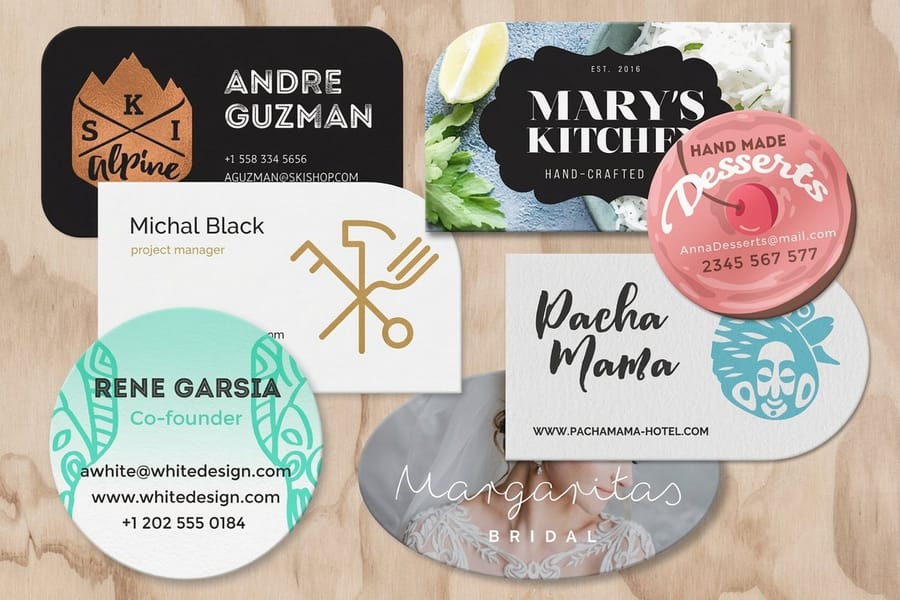
People sort cards without thinking about it. A rectangle goes in the pile, and the pile goes in a drawer. A card the shape of a seven of clubs breaks the sort, because the hand recognises it before the eye reads a word on it.
That recognition is doing the work, and it is worth being clear about what it does not do. The format will not make a weak offer memorable, and it will not fit the card holder on someone else's desk. What it does is buy a second look and a place on a surface rather than in a stack. Bartenders, designers, tattoo artists, photographers, magicians and game studios use it for exactly that reason, and so do sales teams who hand out a numbered set and ask people to collect the rest.
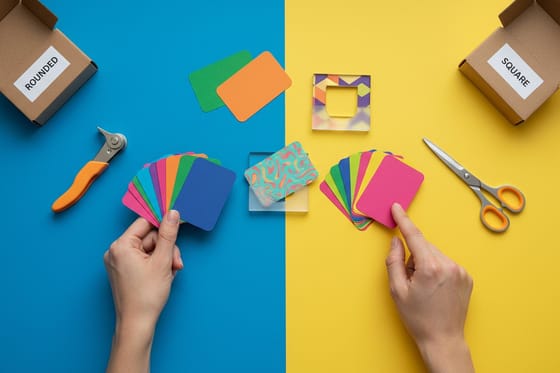
The trade-off is that you are giving up filing for keeping. If your buyers scan cards into a phone and bin the paper, spend the money on stock and finish on a normal 3.5 by 2 card instead, and read our finish comparison before you choose. If your buyers keep things on a desk, the deck format is one of the few shapes that earns its extra cost. The full range of outlines we cut is laid out in the business card shapes guide.
Choosing Stock and Thickness That Feels Like a Card
Thickness carries this design more than the artwork does. Hand someone a thin card cut to 2.5 by 3.5 and they read it as a coupon, because a real playing card snaps back when you bend it and a 14pt sheet stays bent.
Three builds get you there, in rising order of conviction:
| Build | Roughly | How it behaves | Starts at |
|---|---|---|---|
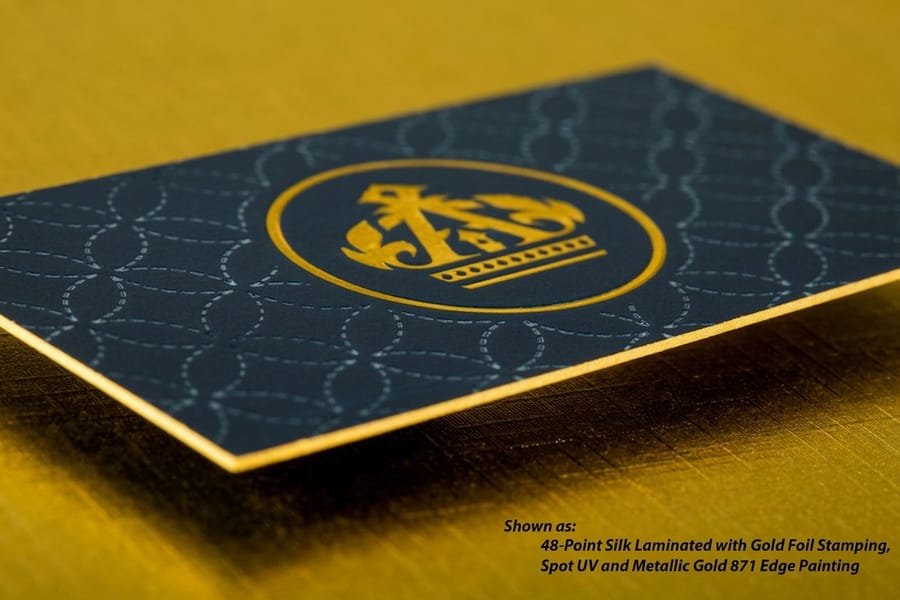
| Silk laminated | 17pt | Soft dry surface, close to a deck back, snaps flat after a bend. The everyday choice. | $74.53 |
| Ultra thick silk laminated | 32pt | Twice the body. Reads as a token or a tile, not a card people shuffle. | $251.36 |
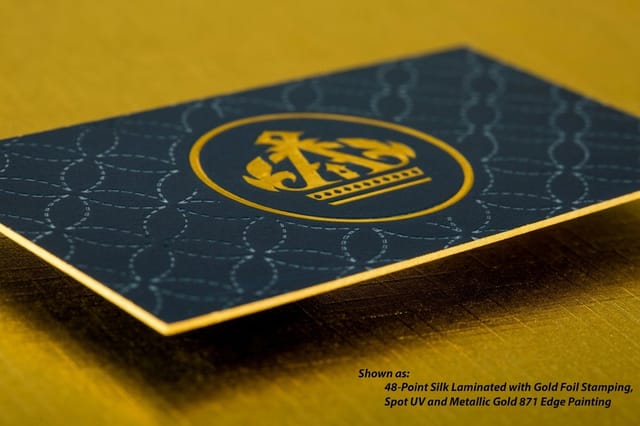
| Plastic | 20pt PVC | The only build that will not crease. Waterproof, and no pen writes on it. | $180.02 |
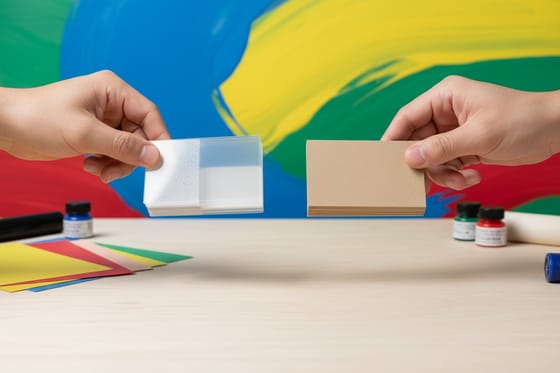
One thing casino stock does that print stock does not: real cards are laminated around an opaque black or blue core, so a lamp behind the card shows nothing through it. A heavy solid back on ordinary card stock can ghost faintly through a light front. If your design puts a dark full-bleed back against a pale front, choose silk laminated business cards or go straight to plastic business cards, where show-through stops being a question. The weight-by-weight breakdown sits in our card thickness chart.
Corner Radius and Finish, the Two Decisions People Rush
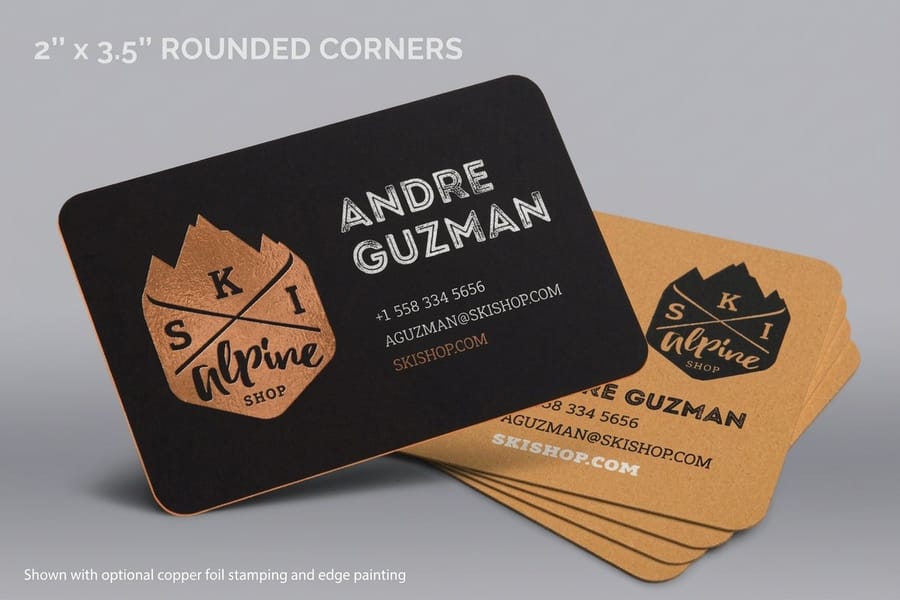
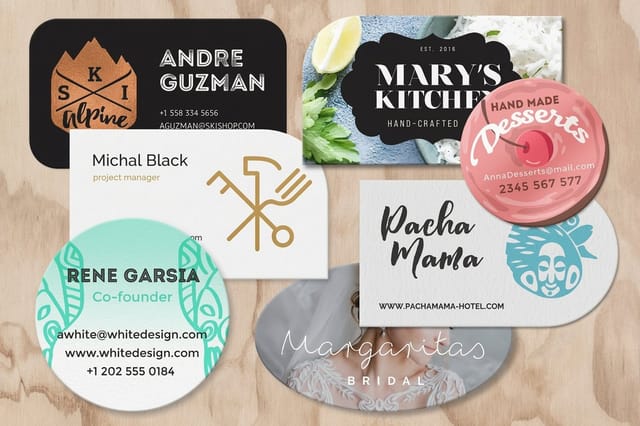
A radius always needs a die. A guillotine cuts straight, so the moment you round a corner the job becomes a die cut, which is why die-cut business cards price differently from a rectangular run. Once you are paying for the die, the radius itself is free, so choose it on how it reads rather than on cost.
A 1/8 inch radius is the one that says playing card. Real decks sit near that, and the corner still looks cut rather than softened. A 1/4 inch radius reads as a loyalty card or a hotel key card, which may be exactly what you want and is definitely not a deck. Whichever you pick, remember that a bigger arc eats the corner: with a 1/4 inch radius, anything sitting in the corner has to move further in than the usual 1/8 inch safety line. The diagram above shows where the arc crosses.
Finish is the second decision, and gloss is usually the wrong one. Gloss lamination makes fingerprints obvious and makes a stack cling together, which is the opposite of the loose dry feel a deck has. Silk lamination gives the closest hand. Spot gloss over a silk back, on the pattern only, gets you something like the sheen of a printed card face without the whole surface going shiny. If you plan to write a name or a number on the card by hand, leave an uncoated strip, because nothing writes on a laminated surface. The trade between corner styles is covered in standard vs rounded corner business cards.
Laying Out the Front and the Back Like a Deck
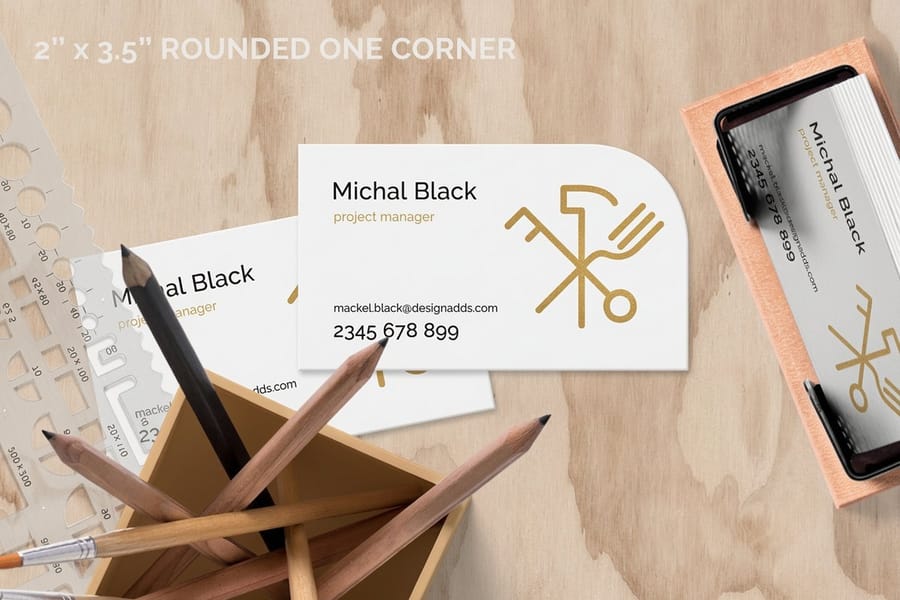
Design the card portrait from the first minute. Rotating a finished 3.5 by 2 layout into a 2.5 by 3.5 frame never works, because you gain height and lose width at the same time, and the line of type that fitted across the old card no longer does.
Steal three conventions from real cards, because they are why the format reads:
- Corner indices, doubled and rotated. A playing card puts its rank in the top left and repeats it upside down in the bottom right, so it reads whichever way up you pick it up. Put the logo mark or the initial in both corners the same way and the card announces itself before it is turned.
- A patterned back with a margin. Decks almost never bleed the back pattern to the edge. The white border is a printing tolerance trick that also hides the wear a solid field shows within a week of being carried.
- A quiet centre. The centre panel holds one mark. Name, number and web address belong on the front, in the lower two thirds, where a face card puts its detail.
Keep the type larger than you would on a standard card. The extra height tempts people into stacking five lines of contact detail, and a card that gets handled is read at arm's length rather than at desk distance. Two contact lines plus a short URL is plenty. If you want the layout drawn for you, start from a correctly sized file in the blank template library.
One Card, a Numbered Set, or a Real Deck
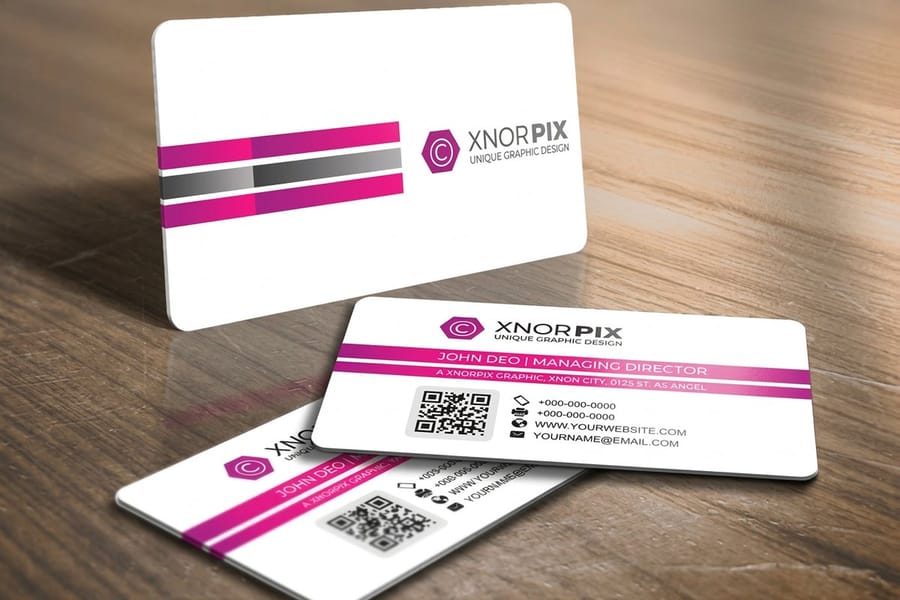
Three formats sit under the same idea, and they cost very different amounts to run.
A single card is the normal case: one design, one back, printed like any other card. A numbered set is where the format earns its keep for a team or a product line. Split one run across designs, so 500 cards becomes five designs at 100 each, with the same back on every one. Price breaks work off the total sheet count rather than per design, so one job with five designs beats five separate small orders on both price and turnaround.
An actual 52 card deck is a different product with a different process, involving a tuck box, a core stock and a shuffle finish. What we print is business card work in the playing card format, and being clear about that with a client saves an awkward conversation later. If the point is the shape rather than the deck, a set of six to twelve designs gets almost all of the collectible pull for a fraction of the money.
Durability decides which stock the set runs on. Cards handed over a bar, carried in a jeans pocket, or pinned up outdoors want plastic business cards. Cards handed across a table and taken home are fine on silk laminate. The material comparison is spelled out in plastic vs paper business cards.
File Setup, Bleed, and the Mistakes That Cost a Reprint
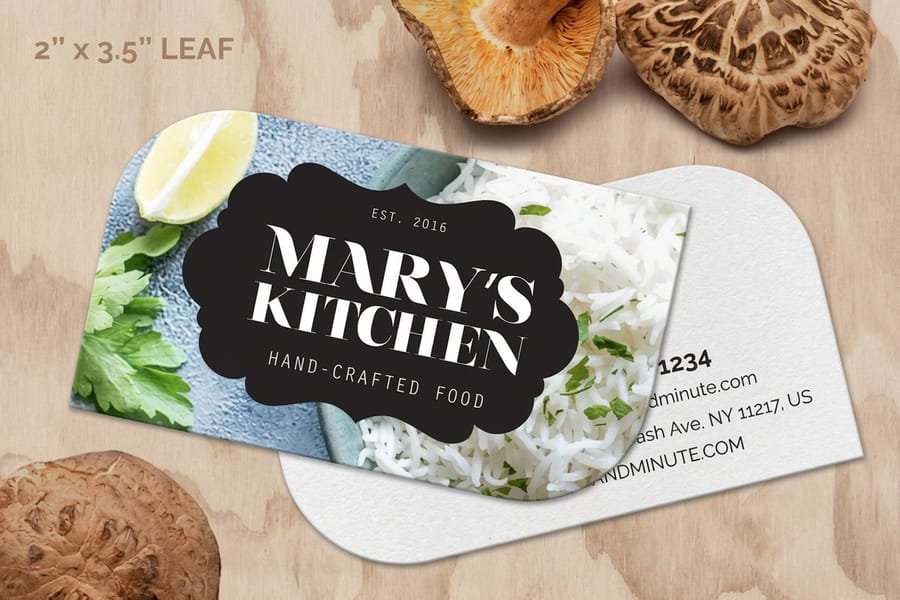
Build the document at 2.5 by 3.5 inches, add 1/8 inch of bleed all round for a 2.75 by 3.75 inch canvas, and hold live artwork 1/8 inch inside the trim. Supply 300 dpi CMYK, convert fonts to outlines, and send front and back as two pages in one PDF rather than two files.
Two mistakes cause most reprints on this format. The first is a thin border drawn just inside the trim. Every cut moves a fraction, and on a card with a die that fraction shows as a border thicker on one side than the other, which is far more visible than an uneven bleed. Either bleed the colour off the edge or hold the border a solid 1/4 inch in. The second is designing the back to the trim line instead of the bleed line, so a hairline of white paper appears along one edge on a dark back. Both are covered properly in bleed and trim explained.
If you supply your own die line, draw it as a separate spot colour path named for the cut, not as a black stroke on the artwork layer, or it prints. Our die cut card printing guide shows how the cut path should arrive. And check the file at actual size on screen before you send it: at 2.5 by 3.5 inches, 6pt legal text that looked fine zoomed in is unreadable in the hand.
Wally deals a hand of business cards
Portrait 2.5 by 3.5, thick stock, and a die for the corners
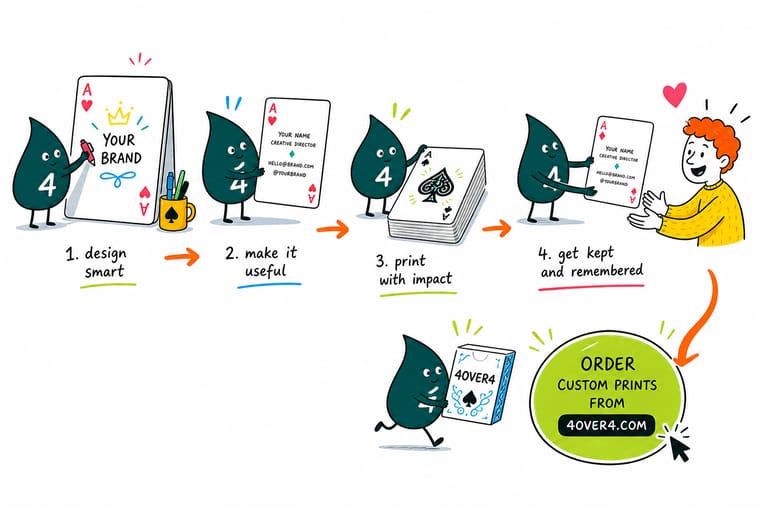
Wally turns the card upright first, because 2.5 by 3.5 is taller than it is wide and a rotated layout never fits. Then he picks stock with enough body to snap back after a bend, puts a patterned back with a small margin on it so handling marks do not show, and sends the job through a die so the corners can be rounded at 1/8 inch. He keeps the artwork 1/8 inch inside the trim, and he tells you the one thing this card cannot do: fit a wallet slot.
Order die-cut business cards →Specs and pricing
Stocks that carry the playing card format
Compare the three builds side by side, with live configuration choices and starting prices straight from the 4OVER4.COM configurator.


Print it
Order the card people put on the shelf
Explore more
Where to go next

By the numbers
Custom card printing you can count on at 4OVER4
Common Questions
Your playing card business card questions, answered
What size is a playing card style business card?
A poker card is 2.5 by 3.5 inches and a bridge card is 2.25 by 3.5 inches, both portrait. Poker size is the one people recognise instantly, so it is the safer choice for a card meant to read as part of a deck. Set the document at 2.5 by 3.5 inches, add 1/8 inch of bleed on every edge for a 2.75 by 3.75 inch canvas, and keep type and logos 1/8 inch inside the trim. The card is a custom size rather than a stock business card size, so it runs as a die cut job.
Will it fit in a wallet or a business card holder?
No, and it is worth deciding that before you design anything. Card sleeves, wallet slots, Rolodex trays and most card cases are built around 3.5 by 2 inches, so a 2.5 by 3.5 card sticks out or does not go in at all. That is the honest cost of the format. People keep these cards on a desk, pinned to a board, or in the drawer with the good stationery, which is a different kind of survival than a card that gets filed and forgotten. If your buyers file cards for later, print a standard size as well and hand the deck card to the people you actually want to remember you.
What stock is closest to a real playing card?
Nothing in a print shop matches casino stock exactly, because real cards use a laminated paper with an opaque black or blue core that stops light passing through, plus an embossed air cushion finish for shuffling. The closest practical builds are silk laminated cards at roughly 17pt, which give the soft dry hand that reads as a card back, and the ultra thick silk laminated build at roughly 32pt for weight you cannot ignore. Plastic business cards are the only option that genuinely will not crease, and they are the honest choice if the card has to survive a pocket for a year.
Can I get rounded corners without paying for a die cut?
No. A guillotine cuts straight lines, so a radius always needs a die, and that is why rounded corner cards price differently from a rectangular card. The good news is that the same die cut order handles any custom outline, so the corner radius costs nothing extra once the job is already a die cut. Die-Cut Business Cards start at $26.37 at 4OVER4.COM, against $17.57 for a rectangular standard card.
Can I print a set of different cards in one order?
Yes, and it is the reason the format works so well for a team or a product line. Split the run across designs, so a 500 card order becomes five designs at 100 each. Quantity price breaks apply to the total sheet count rather than to each design, so keeping the designs on one job is cheaper than placing five small orders. Keep the back artwork identical across every design, exactly as a deck does, or the set stops reading as a set.
Does a playing card business card cost more than a normal one?
Yes, on both counts that matter. The card uses 25 percent more face area than a standard 3.5 by 2 card, so fewer fit on a press sheet, and the rounded corners add a die cut pass. Standard Business Cards start at $17.57, Die-Cut Business Cards at $26.37, Silk Laminated Business Cards at $74.53, and Plastic Business Cards at $180.02. The gap is real, so print the deck card in the quantity you will actually hand out rather than the quantity that looks cheap per unit.
Get Started
Ready to print a card nobody files away?
Pick the stock, set the corner radius, and we die cut the portrait format so it reads as part of a deck the moment it lands in someone's hand.
Legal Disclaimer
Gold Standard guarantees apply to all standard orders placed through 4over4.com. Price match requires verifiable proof of a competitor's published price for an equivalent product with matching specifications and turnaround time. Satisfaction guarantee covers manufacturing defects and print quality issues. Contact support with order number and documentation. On-time delivery rate based on tracked orders 1999 to 2026. Individual results may vary based on shipping carrier performance.
