
How to Design Event Programs That Guests Actually Keep


Folds, panel counts, sizes, paper weight, and binding for ceremonies, memorials, recitals, and galas. Write the order of service first, pick the format that holds it, and print something guests can follow in low light and take home afterward.
To design an event program, write the complete order of service first, then choose the format that fits it. Up to twelve lines fits a flat sheet or a half fold with four panels. Twelve to twenty-five lines fits a tri-fold or Z-fold with six panels. Longer content, photographs, or lyrics call for a saddle stitched booklet in multiples of four pages. Print folded programs on text weight stock, set body type at 10 to 12 points, and proof every name against a written list.

Start here
Event program design in one paragraph
An event program is a printed running order, and the design follows the content rather than the other way around. Draft the full sequence, count the lines, and let that count choose the format: a flat sheet or half fold for short ceremonies, a tri-fold or Z-fold for a fuller order of service, a saddle stitched booklet once photographs and longer text arrive. Fold on text weight stock, keep one idea per panel, set type large enough to read in dim venue light, proof every name twice, and order about ten percent more than your guest count so nobody at the door goes without.
Why the program is the one printed piece every guest takes home
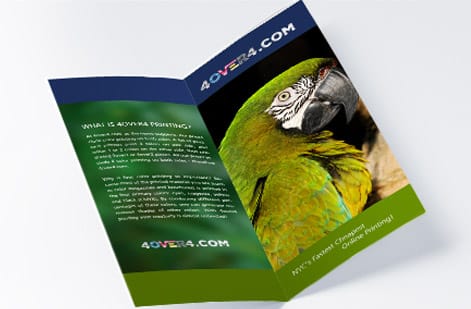
Almost everything else at an event is temporary. The signage comes down, the flowers wilt, the playlist ends. The program is different. Guests hold it through the whole ceremony, fold it into a jacket pocket, and a surprising number of them keep it. That single sheet does more lasting work than any other printed piece on the day.
It also has a job while the event is happening. A good program tells people when to stand, who is speaking next, and how long the service will run, which quietly removes the low hum of uncertainty from a room. If you want to see how other hosts have handled that, the collection of event program examples is a fast way to calibrate before you start designing.
The design questions that actually matter are structural rather than decorative. How many panels do you need, which fold gives you those panels, what stock holds the fold cleanly, and how early does the file need to be finished. This guide works through those in order, and finishes with a printable format diagram you can keep on hand.
What an event program actually has to do
Strip a program back and it carries four things: what the event is, the sequence of what happens, who is taking part, and a closing note from the host. Everything else is supporting material. When a program feels cluttered, it is almost always because decorative content was added before that spine was locked down.
Write the full running order in plain text first, as a numbered list, before you open a design tool. Include every reading, every piece of music, every speaker, and every transition. Count the lines. That count, more than any aesthetic preference, tells you which format you need and stops you from choosing a fold that cannot hold the content.
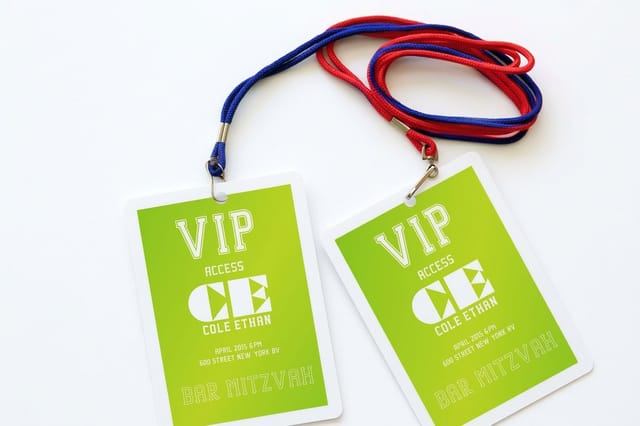
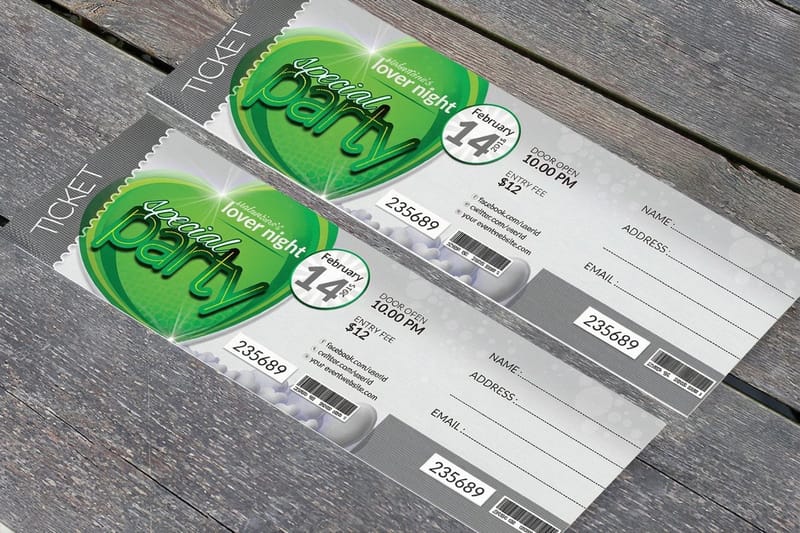
The same discipline applies to the pieces that travel alongside the program. Tickets, badges, and table cards all repeat fragments of the same information, and they read better when they share one source list. Our guide to designing custom event tickets covers the door side of that system.
Choose the fold before you choose the layout
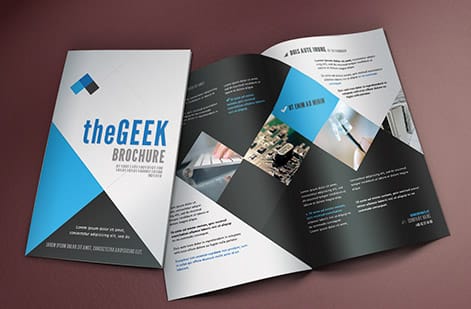
The fold is the single decision that shapes every other one. It sets your panel count, your reading order, the width of each column of type, and how the piece behaves in a hand. Designers who pick a fold last end up rebuilding the layout, because content that flows nicely across a flat sheet rarely survives being cut into panels.
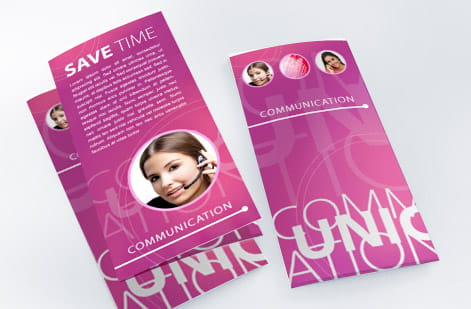
A flat single sheet gives you two surfaces and suits short ceremonies, recitals, and anything where guests only need a running order and a thank you. A half fold turns one sheet into four panels and is the workhorse of wedding and memorial programs. A tri-fold or a Z-fold gives six panels, with the tri-fold nesting inward and the Z-fold opening like an accordion so every panel can be read in sequence without unfolding the whole piece.
A gate fold opens from both sides onto a center panel and is worth using when there is one moment you want revealed, such as a portrait or a vow. Beyond six panels, stop folding and start binding, which is the next section.
Panel counts and how the copy fits each fold

Once you know the fold, map the content panel by panel. On a half fold, the front carries the event name, the date, and the names at the center of the day. Panel two opens with the order of service. Panel three continues it or holds the names of the wedding party or the family. The back panel takes the thank you, the reception details, or a closing verse.
Tri-folds need one extra piece of care because the inner flap folds in first and is slightly narrower than the other panels. Any type or image that runs to the edge of that flap has to be inset a little further, and a border that looks even in the flat file will look uneven once it is folded. Build the panel guides into your document before you place a single word.
Keep each panel to one idea. A panel with a heading, a short block of names, and generous margins reads instantly in dim light. A panel carrying three unrelated blocks makes a guest hunt, and hunting during a ceremony is exactly what the program exists to prevent.
Booklets and binding for longer ceremonies
When the running order passes roughly twenty-five lines, or when you want photographs, full hymn lyrics, biographies, or a printed homily, a folded sheet stops working and a saddle stitched booklet takes over. Saddle stitching means the sheets are nested and stapled through the spine, which is why booklet page counts always move in multiples of four.
That multiple of four is a planning constraint worth respecting early. An eight page booklet is the common starting point: a cover, an inside cover, five content pages, and a back. If your content lands at ten pages, you either tighten it to eight or expand it to twelve, and it is far less painful to make that call before the layout is finished than after.
Booklets also let you separate the ceremonial content from the practical content. Put the order of service in the front half where guests will follow it live, and move directions, accommodation notes, registry details, or acknowledgements to the back half where people look after the fact.
Sizes that work in a hand and in a pew
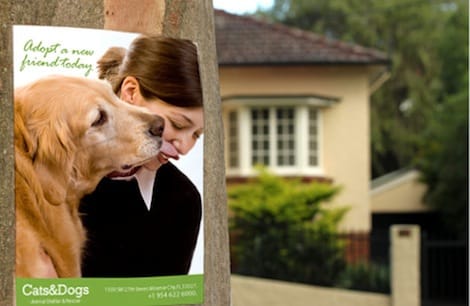
Program sizes cluster into three practical families. Compact programs finish around 4.25 x 5.5 inches or 5 x 7 inches, sit easily in one hand, and fit a jacket pocket or a small clutch. They suit short ceremonies and events where guests are standing or moving between spaces.
Mid sizes finish around 5.5 x 8.5 inches, which is a letter sheet folded once. This is the most forgiving format: enough room for a full order of service at a comfortable type size, still small enough that it does not become a fan in a warm room. It is also the size most guests expect, which counts for something.
Full page programs at 8.5 x 11 inches make sense for conferences, recitals with long repertoire lists, and galas with sponsor recognition. They give you real estate for schedules, floor plans, and logos, but they are unwieldy in a seated ceremony, so match the size to how people will actually hold the piece.
Paper, weight, and finish for programs that get handled
Weight is the specification that changes how a program feels, and it interacts with the fold. Text weight stock in the 80 lb to 100 lb range scores and folds crisply without cracking, which is why folded programs almost always live in that band. Cover weight around 100 lb or heavier gives a flat single sheet a card like presence, and it is the right choice for a booklet cover, but it fights you on a tight fold unless it is scored first.
Coating is a mood decision more than a durability one at this size. Uncoated stock has a soft, quiet surface, reads well under low candlelight or dim venue lighting, and takes a pen if guests are writing anything down. Matte coating deepens photographs while staying glare free. Gloss makes color images snap and is better suited to galas and corporate events than to services.
Order free paper samples before you commit if the event matters. Weight and texture are almost impossible to judge on screen, and holding two stocks side by side settles the question in about ten seconds.
Typography and white space in a ceremony program
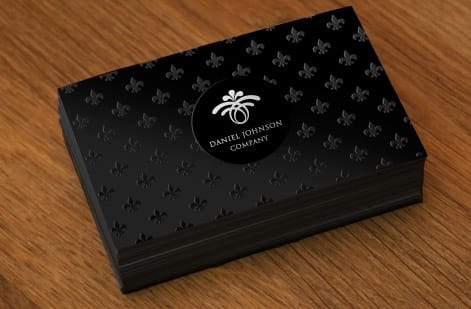
Programs are read in bad conditions. Low light, small hands, older eyes, and a guest who is also trying to pay attention to what is happening in front of them. That argues for body type at 10 to 12 points minimum, generous line spacing, and a typeface with open letterforms rather than a delicate script used at length.
Reserve the decorative face for the names and the headings, where it is read once and read large. Set the running order in a clear companion face. Two type families is plenty, and the contrast between them does more for elegance than a third face ever will.
White space is not wasted space on a program. Space above a heading tells the eye that a new movement of the ceremony has begun. Space around a name gives it weight. If the layout feels crowded, cut content rather than shrinking type, because a program that cannot be read is a program that gets folded away in the first two minutes.
Proofing names, dates, and the details nobody forgives
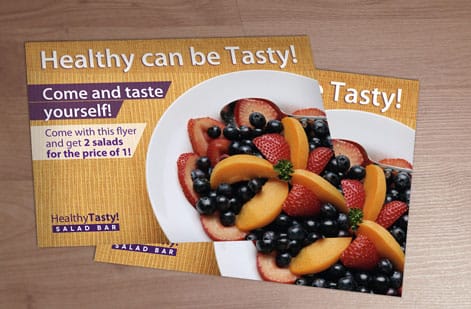
Every printed piece deserves a proof. Programs deserve two. The reason is names. Officiants, readers, musicians, grandparents, sponsors, and honorees are all listed by name, and a misspelled name on a memorial or wedding program is the kind of error that gets remembered long after the ink is dry.
Proof against a written source, never from memory. Ask the family or the organizing committee for a typed list of names and titles, and check the program against that list line by line. Then check the dates, the venue address, the start time, and any phone number or web address a guest might need. Read the running order out loud in sequence to catch a step that has been dropped or duplicated.
Finally, look at the technical layer: images at print resolution, a bleed on any color or photograph that runs to the trim edge, text pulled safely inside the trim margin, and fonts embedded or outlined. If you would rather not wrestle with a design file at all, the comparison of online designer and design help options lays out what each route actually gives you.
Quantities, timing, and what program printing costs
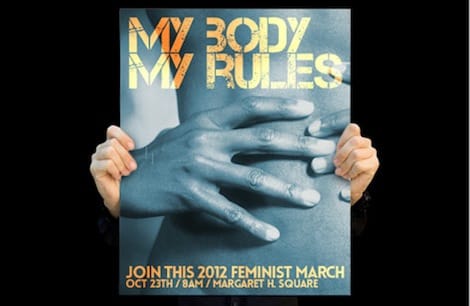
Work the quantity from the guest count rather than from a round number. Seated ceremonies share programs between couples and families, so roughly one program for every one and a half guests covers the room. Then add about ten percent for keepsakes, the photographer, the venue file, and the people who arrive after the door table has been cleared.
Build the schedule backwards from the event date. Production runs in business days after proof approval, folding and stitching add a step, and shipping transit sits on top of that. Give yourself several extra days as slack so that a single correction does not push delivery past the day you need boxes in hand.
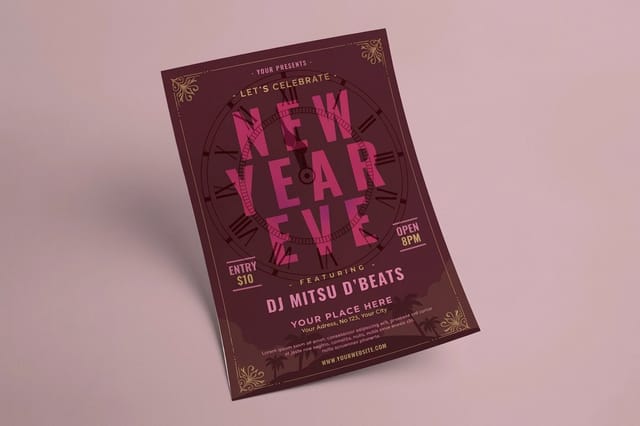
On price, the levers are quantity, size, stock, one sided or two sided printing, coating, folding, and turnaround. Short runs carry more setup per piece, so the unit price falls quickly as the quantity climbs. Event Flyers start at $57.11 and the live price table below updates as you change specs. If you are printing tickets, badges, or signage for the same event, quoting them together in one order keeps the whole set consistent and the shipping simple.
Wally explains event programs
Count the lines, then choose the fold
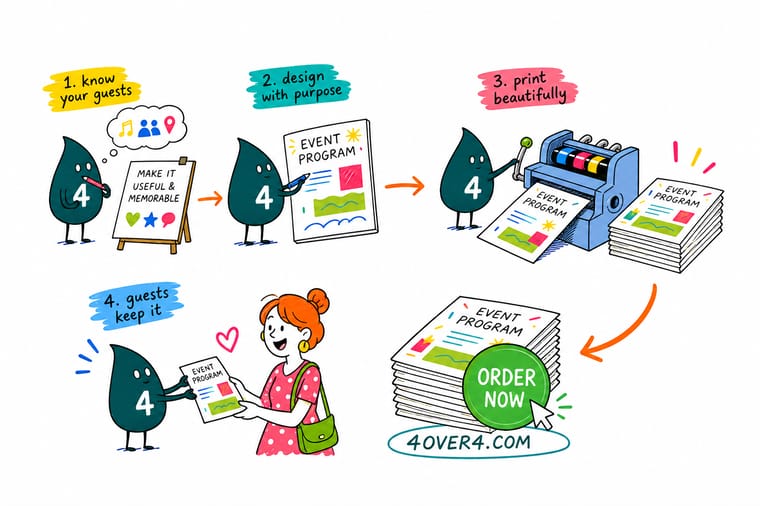
Wally has watched enough ceremonies to know the pattern. The programs that work were planned as content first: someone typed the full running order, counted it, and only then picked a fold that could hold it. The programs that fail were designed as a pretty cover with the schedule squeezed in afterward. Write it, count it, fold it, proof the names, then print.
Design and print your programs →Fold diagram
The 7 event program formats at a glance
One frame, seven formats. Match your line count to a fold, then read across for the panel count and what each one is best at.
Pick the fold from your line count, not from a mockup. Six panels of clean, readable type beat twelve panels of crowded type at every event we have printed for.
Specs and pricing
Event program specs and live pricing
Set your size, stock, and quantity below and the price updates as you go. Turnaround is counted in business days after proof approval, so book the run before your final headcount lands.
| Quantity | Price Per Unit | Total |
|---|---|---|
| 50 | $1.14 | $57.11 |
| 100 | 82.4¢ | $82.38 |
| 200 | 53.3¢ | $106.55 |
| 300 | 41.0¢ | $123.02 |
| 400 | 34.9¢ | $139.49 |
| 500 | 31.2¢ | $155.97 |
| 600 | 26.7¢ | $160.36 |
| 700 | 23.5¢ | $164.75 |
Print it
Print the rest of the event while you are here
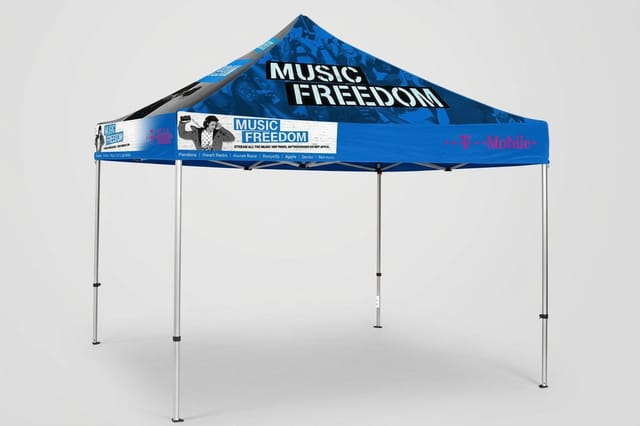
See it in use
Real event print work, produced in-house
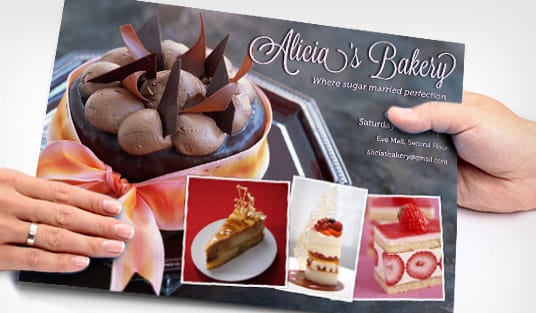
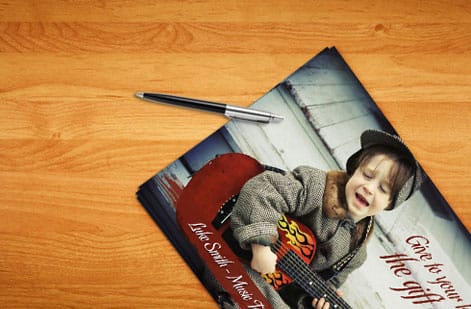
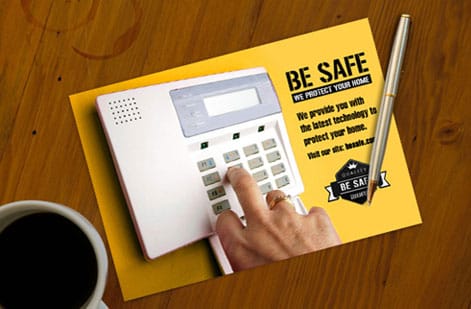
Explore more
Where to go next
By the numbers
Printing you can count on at 4OVER4.COM
Common Questions
Common questions about program printing
What is program printing?
Program printing is the production of the printed handout that walks guests through an event, from a wedding ceremony or memorial service to a graduation, recital, gala, or conference session. The file is usually a folded sheet or a short stitched booklet carrying the running order, the names of the people taking part, and any notes the host wants read. It is printed on text or cover stock, folded to a finished size that fits a hand, and delivered ready to hand out at the door.
How do I choose the right program format?
Count your content first. A running order of eight to twelve lines fits comfortably on a flat single sheet or a half fold. Twelve to twenty-five lines with names, readings, and a note of thanks wants a tri-fold or a Z-fold. Anything longer, or anything with photographs, hymn lyrics, or full biographies, belongs in a saddle stitched booklet where you can add pages in multiples of four without redesigning the whole piece.
What does program printing cost and how are prices set?
Price is driven by quantity, flat and folded size, stock weight, whether you print one side or both, coating, and turnaround. Short runs cost more per piece because setup is spread across fewer copies, so the unit price drops sharply between fifty and five hundred. Event Flyers at 4OVER4.COM start at $57.11, and the live price table on the product page updates the moment you change a spec.
What sizes, stocks, and finishes are available for event programs?
Common finished sizes run from 4.25 x 5.5 inches for a compact handout up to 5.5 x 8.5 inches and 8.5 x 11 inches for a full order of service. Text weight stock around 100 lb folds cleanly and is the usual pick for folded programs. Cover weight suits flat single sheets and booklet covers. Uncoated stock takes a pen and reads softly under low light, while matte and gloss coatings add depth to photographs.
How long does program printing take to print and ship?
Production time is counted in business days from the moment your file passes preflight and you approve the proof, and shipping transit is added on top of that. Folding, scoring, and stitching add a step compared with a flat sheet. For a dated event, work backwards from the day you want the boxes in hand, then add several days of slack so a file correction never eats into your delivery window.
How many programs should I order?
Plan on roughly one program for every one and a half guests for a seated ceremony, since couples and families share. Then add ten percent for people who take a second copy as a keepsake, for the photographer, and for the archive. Reordering after the event costs a second setup and a second turnaround, so the extra copies in the first run are almost always the cheaper choice.
What goes in a funeral or memorial program?
The front panel usually carries a portrait, the full name, and the birth and passing dates. Inside comes the order of service with the officiant, readings, music, and eulogies in sequence, along with the names of pallbearers and anyone taking part. The back panel is where families place an obituary, a poem, a line of scripture, or a note thanking guests for their support and their presence.
Get Started
Ready to print programs your guests will keep?
Send us the file or build it online, pick a stock that folds clean, and we will have boxed programs on your doorstep before the doors open.
Legal Disclaimer
Gold Standard guarantees apply to all standard orders placed through 4over4.com. Price match requires verifiable proof of a competitor's published price for an equivalent product with matching specifications and turnaround time. Satisfaction guarantee covers manufacturing defects and print quality issues. Contact support with order number and documentation. On-time delivery rate based on tracked orders 1999 to 2026. Individual results may vary based on shipping carrier performance.
