
How to Design Custom Golf Boxes That Fit the Balls and Print Clean


Sleeve fit, dozen fit, and the narrow panel your logo has to live on. Written for pro shops, club managers and tournament organizers who need the boxes to arrive before the shotgun.
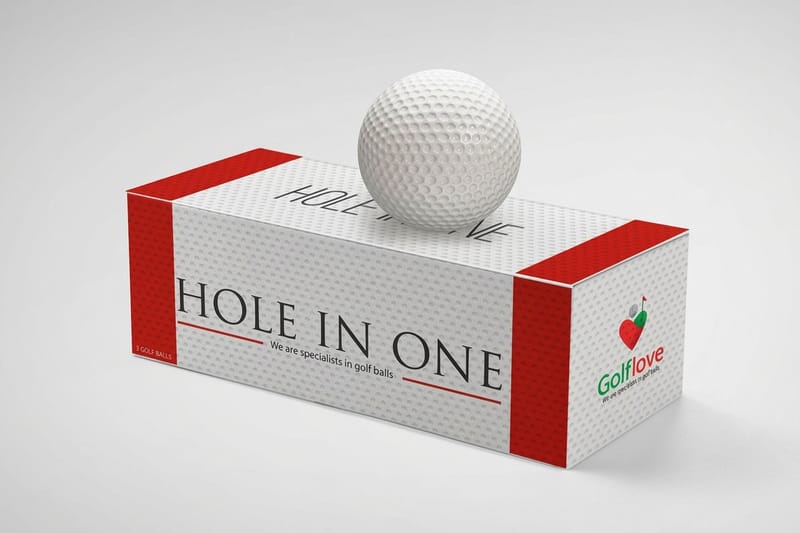
Design a golf box backward from the ball: the minimum legal diameter is 1.680 inches, so a three-ball sleeve box finishes at 1.7 by 1.7 by 5 inches, and a dozen laid flat needs 5.04 by 6.72 inches of floor. That fixes the format before any artwork exists. Then build a vertical lockup, because the printable panel is only 1.7 inches wide, hold type an eighth of an inch off every fold, and plan for 4/0 printing that covers the outside and leaves the interior blank.

Quick answer
One number decides the box, and it is 1.68 inches
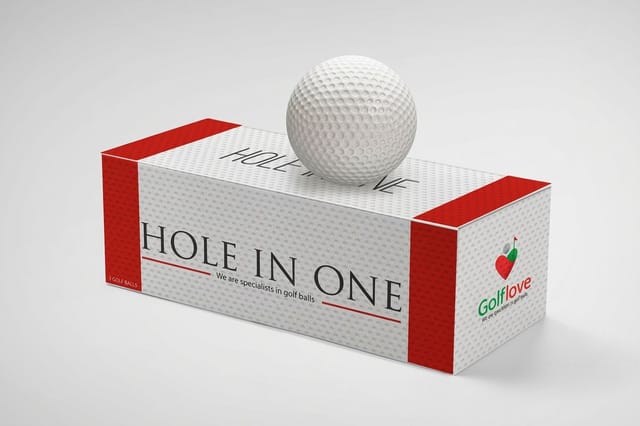
A golf box is drawn around the ball, not around the artwork. Three balls stack to 5.04 inches, which is why a sleeve box is 1.7 by 1.7 by 5 and holds a sleeve and nothing else. A dozen tiles flat at 3 by 4, or 5.04 by 6.72 inches, so a dozen gift box goes wide and shallow rather than tall. Once the format is set, the design problem is a panel 1.7 inches wide, printed 4/0 in CMYK with a blank interior.
Start From the Ball, Not From the Box

A golf box is the rare packaging job where the product refuses to negotiate. The Rules of Golf set the minimum ball diameter at 1.680 inches and every ball in play sits at or just above that, so the interior of your box is decided before you open a design file.
Three numbers carry the whole design. One ball is 1.68 inches. A stack of three is 5.04. A dozen laid flat tiles 3 by 4, which is 5.04 by 6.72 inches of floor. Everything else, the style, the stock, the artwork, is arranged around those figures.
That is why golf ball boxes are built to one fixed size of 1.7 by 1.7 by 5 inches rather than sold as a custom die. The footprint takes a sleeve with almost no slack, which is the point: a ball that rattles inside a box feels like a giveaway, and a ball that will not drop in is a return. The trade-off is that the box does exactly one job. There is no room alongside the sleeve for a tee pack, a divot tool, or a marker, so the moment the gift becomes a set rather than a sleeve, you are shopping for a different box.
For a dozen, the flat 3 by 4 layer is the only sensible arrangement, because two stacked layers of six need 3.36 inches of interior depth and a wall stiff enough to carry it. The custom size on roll end tuck top boxes is made to order up to 6 by 7 inches, which lands a dozen in one layer with about 0.96 inches spare across and 0.28 along the length. Insert walls will take most of that second figure, so draw the tray at the same time as the box rather than after. The guide to boxes with inserts covers how much room a tray really needs, and the box size chart by product type is the faster way to sanity-check a number before you commit.
Design for a Panel 1.7 Inches Wide

Open a brand kit and the logo is almost always drawn to sit horizontally. A sleeve box gives you four faces that are 1.7 inches wide and 5 inches tall, which is the opposite shape. Drop a wide wordmark onto that panel and it comes back at around a quarter inch of cap height, illegible from arm's length.
The fix is a vertical lockup, and it is worth building one properly rather than rotating the horizontal version. Stack the mark above the name. Set the name in a condensed weight. If the brand has a monogram or a crest, this is the panel it was made for, and the club or course name can run up the long axis of a side face where there are 5 inches to play with. Keep type at 8 point or above and rules at half a point or heavier, the same floor that applies to any small commercial print job.
Then respect the folds. A flat sheet becomes a box by creasing, and anything sitting on a crease will crack or shift a fraction as the carton is formed. Hold type and hard-edged logo shapes back at least an eighth of an inch from every score line, extend background color and photography a full eighth past the trim as bleed, and check your artwork against the dieline rather than against a rectangle. Our guide to preparing packaging files walks the dieline handoff step by step, and the blank template library is where to start if you would rather not build the layout from scratch.
One more thing designers forget on this product specifically: the box gets photographed standing up, but it gets handled lying down in a bag with a dozen others. Whatever identifies the box from above, the top panel, is what a volunteer reads while sorting gifts at 6am. Put something legible there.
Stock, Ink, and the Three Things the Box Will Not Do
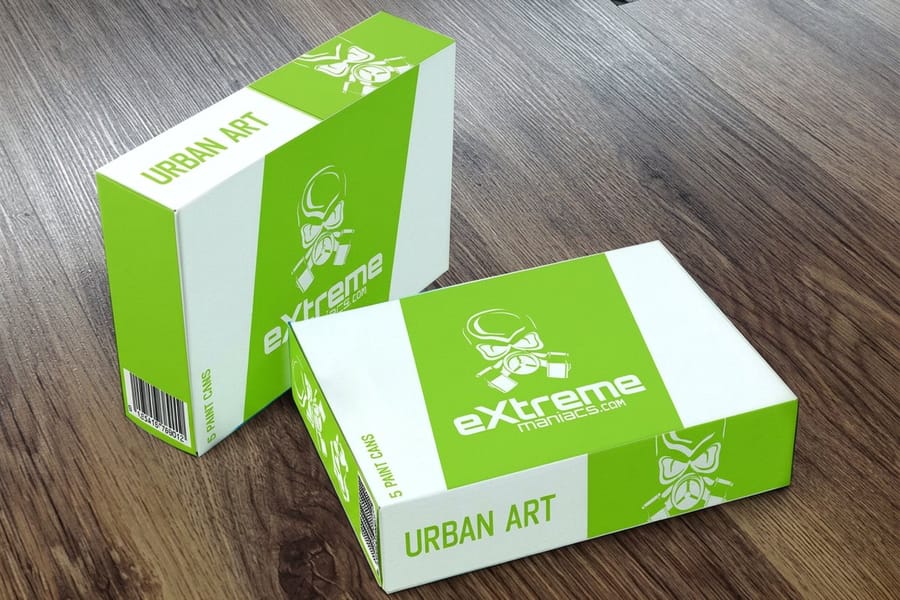
Every box in this family offers the same two stocks and the same ink setup, so the choice is smaller than it looks and the limits matter more than the options.
The stocks are a 14pt Uncoated Cover and an 18pt Cover with gloss on the printed side. Uncoated reads quiet and premium, takes a handwritten name, and forgives fingerprints, which is why pro shops lean on it. It also dries back: CMYK sinks into an uncoated sheet, so a deep course green or a club navy lands a shade softer than the screen promised. The 18pt gloss is heavier in the hand, holds saturated color, and shrugs off a damp morning on a tee box, but a dark solid on gloss records every thumbprint between the registration table and the first drive. Order free paper samples and decide with the stock in your hand.
Now the three limits, all of which surprise somebody on a first order.
- Printing is 4/0. Full color on the outside, blank inside. There is no printed message under the lid on any of these boxes.
- The ink set is CMYK. No spot color, no metallic, no foil on the carton. A brand green that only reproduces as a Pantone will be built from process ink and will be close rather than exact.
- The interior arrives empty. These are printed cartons, not fitted packaging. A tray or divider is a separate piece you source or cut.
None of that is fatal, because the workarounds are cheap. Anything you wanted inside the lid goes on an insert card. Anything you wanted in metallic goes on a die-cut sticker sealing the flap, which doubles as your tamper seal. And a message that changes every season belongs on the sticker or the card, not on the box, so one box artwork carries three years of tournaments. The branded packaging guide covers that layered approach in more detail.
Quantities, Price Breaks, and Ordering to a Tournament Date
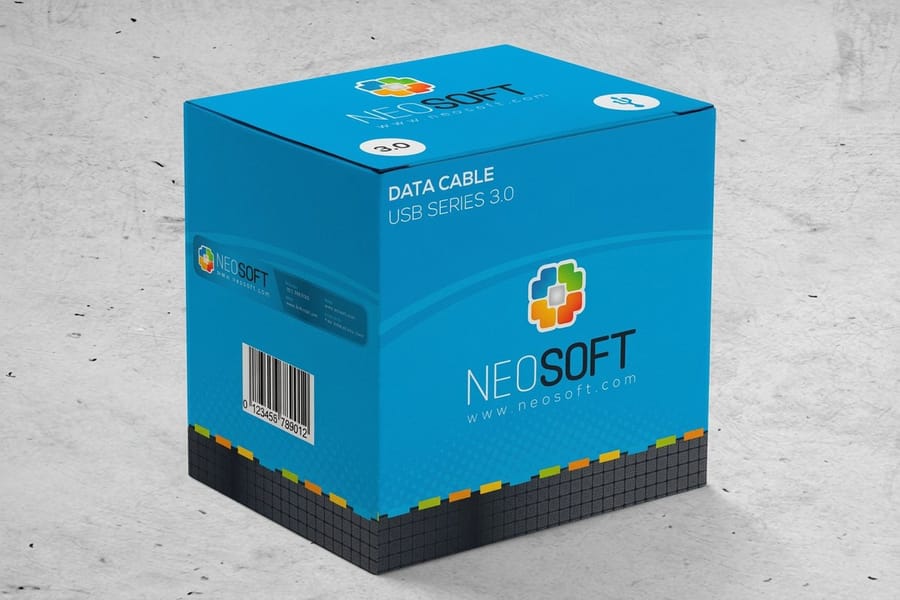
Count the field, not the invitations. A shotgun start on 18 holes is 72 players in foursomes, and 144 when the course sends two groups to each hole. Add sponsors, volunteers, the pro shop, and a handful for photos, and the honest number is always higher than the entry list.
Golf ball boxes start at $269.11 for 50, about $5.38 each. Move up and the curve bends hard in your favor: 200 boxes are $394.33, 500 are $482.19, and 5,000 are $1,646.47, which is roughly $0.33 apiece. Between 50 and 200 you are paying $125 for 150 extra boxes, so if you are anywhere near a break point the next tier up usually costs less per box than the sleeve of balls going inside it. Leftovers are not waste on this product either, since a branded box works all season at the counter.
| Box | Size | What it holds | From | Turnaround |
|---|---|---|---|---|
| Golf ball boxes | 1.7" x 1.7" x 5", fixed | A sleeve of three, and nothing beside it. | $269.11 / 50 | 7 business days |
| Cube boxes | 2.75" or 4" cube | One ball with tees and a marker, or a single ball on a plinth. | $213.09 / 50 | 7 business days |
| Roll end tuck top | 5" x 7" x 1.7", 5.5" x 5.5" x 2.625", custom to 6" x 7" | Eight to a dozen balls in one flat layer, or a ball and glove set. | $711.78 / 250 | 7 business days |
| Pillow boxes | 3.625" x 1.5" x 7.25" | Tees, markers, a towel roll. Slim favors, not balls. | $284.49 / 50 | 9 business days |
| Sales presentation boxes | 11.75" x 1" x 10" | A sponsor kit laid flat: brochure, scorecard, sleeve alongside. | $1,207.12 / 250 | 9 business days |
Read the turnaround column against the event date, not against today. Production starts when you approve the proof, so the real sequence is upload, proof back, sign off, then 7 or 9 business days, then transit. Two clear weeks is comfortable. One week is a gamble, because a single proof correction restarts the production clock. Browse the whole range on custom box printing if the gift has outgrown a sleeve, or work through how to choose a box style when you are deciding between a cube and a roll end.
Wally sizes a golf box
Measure the ball first, draw the box second
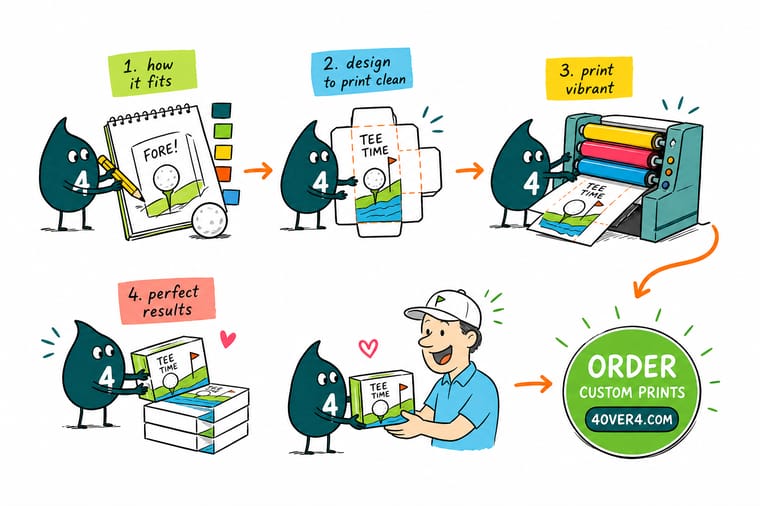
Wally puts calipers on the ball before he touches a pencil. It reads 1.68 inches, so three of them stack to just over 5 and the sleeve box lands at 1.7 by 1.7 by 5. He tries a dozen two ways: stacked in two layers, which needs 3.36 inches of depth and a much stronger wall, or laid flat in a 3 by 4 tile that fits a 6 by 7 inch floor. Flat wins. Then he turns the logo upright, because a panel 1.7 inches wide has no time for a wide wordmark.
Order golf ball boxes →Specs and pricing
Golf box sizes, stocks and starting prices
The three formats that cover a sleeve, a single-ball gift, and a dozen set, with live configuration choices and starting prices straight from the 4OVER4.COM configurator.

Print it
Box the balls before the shotgun goes off
Explore more
Where to go next

By the numbers
Packaging you can count on at 4OVER4
Common Questions
Your golf box questions, answered
What size box fits a sleeve of golf balls?
A three-ball sleeve box finishes at 1.7 by 1.7 by 5 inches. That comes straight off the ball: the Rules of Golf set the minimum diameter at 1.680 inches, so a 1.7 inch square footprint takes a ball with almost nothing to spare, and three stacked balls measure 5.04 inches against the 5 inch height. It is a deliberately tight box. Golf ball boxes at 4OVER4.COM are built to that one fixed size, which is why there is no measuring step and no test fit before you order.
Can you fit a dozen golf balls in one custom box?
Yes, but only in a single flat layer of 3 by 4, which occupies 5.04 by 6.72 inches. Stacking two layers of six needs 3.36 inches of interior depth and a much heavier box. The practical route is the custom size on roll end tuck top boxes, which is made to order up to 6 by 7 inches. That leaves roughly 0.96 inches spare across the short side and 0.28 inches on the long side, and insert walls eat into both, so draw the tray before you approve the die.
Can I print on the inside of a golf box?
No. Golf ball boxes, cube boxes and roll end tuck top boxes all print 4/0, meaning full color across the outside with a blank interior. If you want a message the golfer reads on opening, print it on a small insert card, a hang tag, or a die-cut sticker sealing the flap. That is also the cheaper way to handle a date or a sponsor list that changes every year, since the box artwork can stay put across seasons.
Which stock should I choose for a golf box, 14pt or 18pt?
Both boxes in the range offer a 14pt Uncoated Cover and an 18pt Cover with gloss on the printed side. Uncoated is the pro shop choice: it reads quiet and expensive, takes a pen, and hides handling. The catch is that CMYK on an uncoated sheet dries back a shade, so a deep course green or a navy will land softer than it looks on screen. The 18pt gloss is heavier, holds saturated color, and survives a tee box in the rain better, but a dark solid on gloss shows every fingerprint. Order free paper samples before committing a run.
How long do custom golf boxes take to print?
Standard production on golf ball boxes and roll end tuck top boxes is 7 business days from artwork approval. Pillow boxes and sales presentation boxes run 9. Add a day or two for the free online proof to come back and for you to sign off, then transit on top. For a tournament, working backward from the event date and leaving two clear weeks is the sane plan, because a proof correction resets the clock on production.
How much do custom golf boxes cost?
Golf ball boxes start at $269.11 for 50, which is about $5.38 a box. The curve is steep in your favor after that: 200 boxes are $394.33, 500 are $482.19, and 5,000 are $1,646.47, or roughly $0.33 each. Cube boxes start at $213.09 for 50 and roll end tuck top boxes at $711.78 for 250. If you are anywhere near a break point, the next tier up usually costs less per box than the sleeve of balls going inside it.
Get Started
Ready to put your logo in a golfer's hand?
Pick the format that matches the gift, choose 14pt uncoated or 18pt gloss, upload the dieline, and we print boxes that fit the ball to the hundredth of an inch.
Legal Disclaimer
Gold Standard guarantees apply to all standard orders placed through 4over4.com. Price match requires verifiable proof of a competitor's published price for an equivalent product with matching specifications and turnaround time. Satisfaction guarantee covers manufacturing defects and print quality issues. Contact support with order number and documentation. On-time delivery rate based on tracked orders 1999 to 2026. Individual results may vary based on shipping carrier performance.
