
How to Design a Perpetual Calendar That Works for Any Year


An eternal calendar carries no year and locks no weekday to a date, so one printed piece keeps working. Here is the grid, the stock, and the one specification that decides whether anyone can write on it.
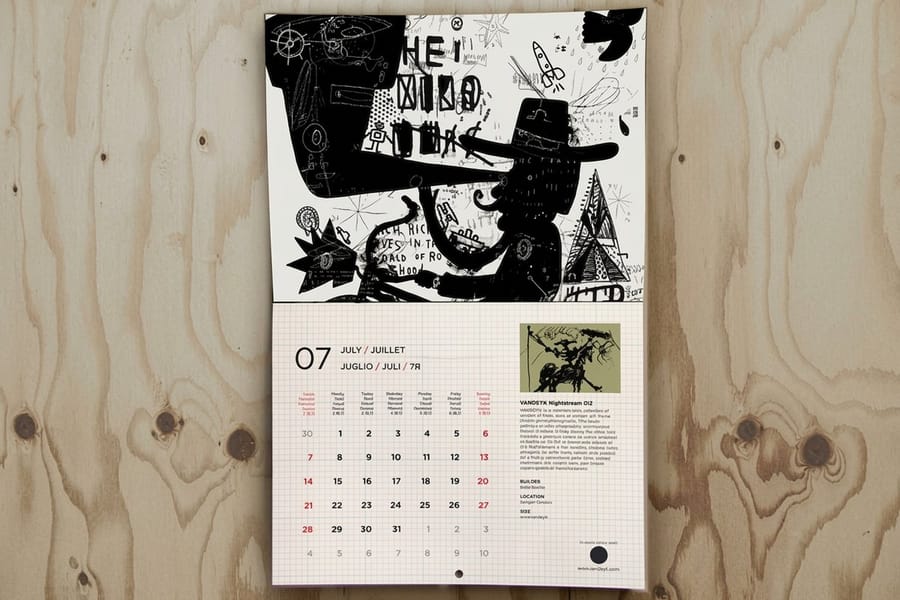
A perpetual calendar, sold just as often as an eternal calendar, prints the dates 1 to 31 with no year and no weekday fixed to any number, so the same piece is usable every year. You design one by taking the weekday alignment out of the grid, giving every date enough clear space to be written into, and specifying a stock that still accepts a pen after a few years of handling. The limit is real and worth stating on the sheet: with no year, the calendar cannot tell anyone that March 14 is a Friday unless you add a year key or a movable part.
Quick answer
Undated dates, room to write, and only fourteen possible years
An eternal calendar works because it prints what never changes and leaves out what does. Dates 1 to 31 are permanent; the year and the weekday alignment are not, so both come off the sheet. What replaces them is space: without weekday columns to obey, each date can take a full writing line. If you do want weekdays back, one small key is enough, because January 1 falls on seven possible weekdays and a year is either common or leap, which gives fourteen layouts in total and no more.
What a Perpetual Calendar Actually Is
Three different objects get sold under the same name, and they solve different problems. Knowing which one the brief means saves a redraw.
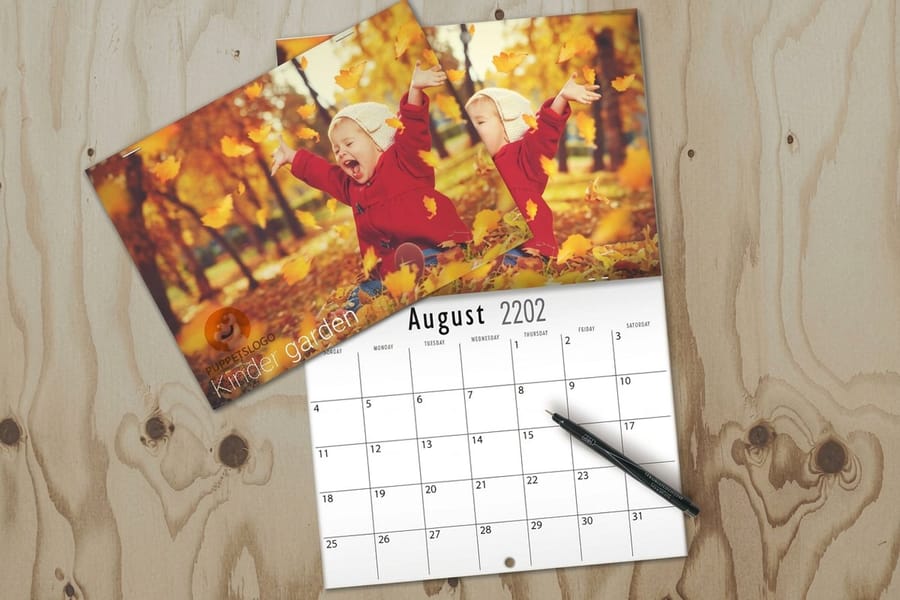
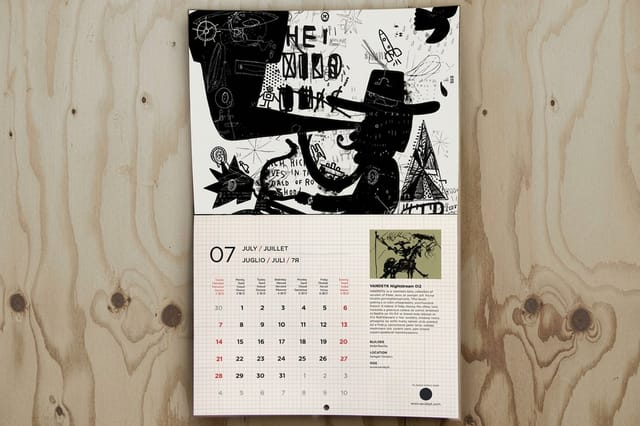
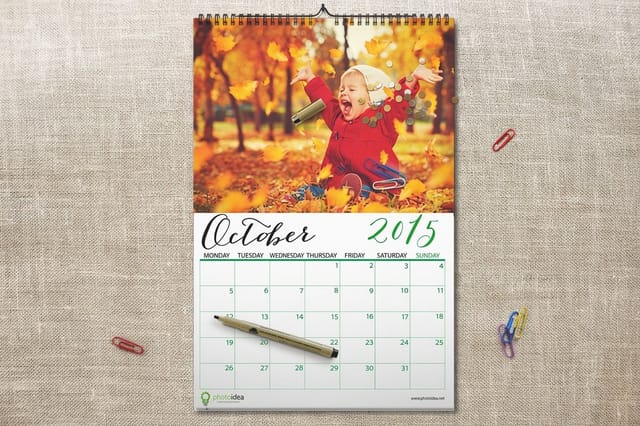
The undated grid. Twelve months of dates with no year and no weekday header. People write birthdays, anniversaries, service intervals and renewal dates straight into the boxes and hang the same sheet again next January. Most printed perpetual calendars are this, and it is the only one of the three that needs no die cutting, no assembly and no instructions.
The movable calendar. A wheel, a slider, or a set of blocks the reader turns to line a weekday up with a date. The mechanism does the job the printing cannot, which is why these are usually wood or acrylic rather than paper.
The lookup chart. A single sheet carrying a year key, a month key and one date grid. Cross reference the three and it gives you the weekday for any date across a century. It is dense to read and the most literally perpetual of the three.
Nearly every order that arrives as custom calendars is the first kind. If the brief actually wants a specific year on the wall, that is a different layout with different rules, and the wall calendar design guide covers it.
Why Fourteen Layouts Cover Every Year There Will Ever Be

January 1 can land on any of seven weekdays. A year is either 365 days or 366. Seven times two is fourteen, and that is the entire set. Every Gregorian year ever printed and every one still to come uses one of fourteen calendar layouts.
That is what makes a lookup chart possible at all. Print one date grid plus a key that tells the reader which layout a given year uses, and a single sheet answers weekday questions for as long as somebody keeps it. The pattern is exact rather than close enough: 400 Gregorian years contain 146,097 days, which is exactly 20,871 weeks, so the sequence of layouts repeats every four centuries with nothing left over.
The undated grid takes the simpler road and gives weekdays up entirely. For a birthday calendar or a maintenance calendar that costs you nothing, because the question is always which date and never which day. It costs you a great deal on anything schedule shaped. A class timetable, a shift rota or a delivery calendar all need weekday alignment, so they need a dated print run, and a printed calendar earns its wall space for different reasons in that case. Size drives how much of this you can fit; the standard calendar sizes guide shows what each format leaves room for.
Designing the Grid, Step by Step
Work in this order. Changing the format once the grid is drawn means drawing it again.
- Pick the format before the layout. Wall sheet, bound wall calendar, desk tent or magnet. Each gives a different amount of writing room and a different lifespan, and the grid has to be built for the one you chose.
- Delete the weekday row. With no year, a Sunday to Saturday header is decoration that eats a line of space and misleads the first person who uses it.
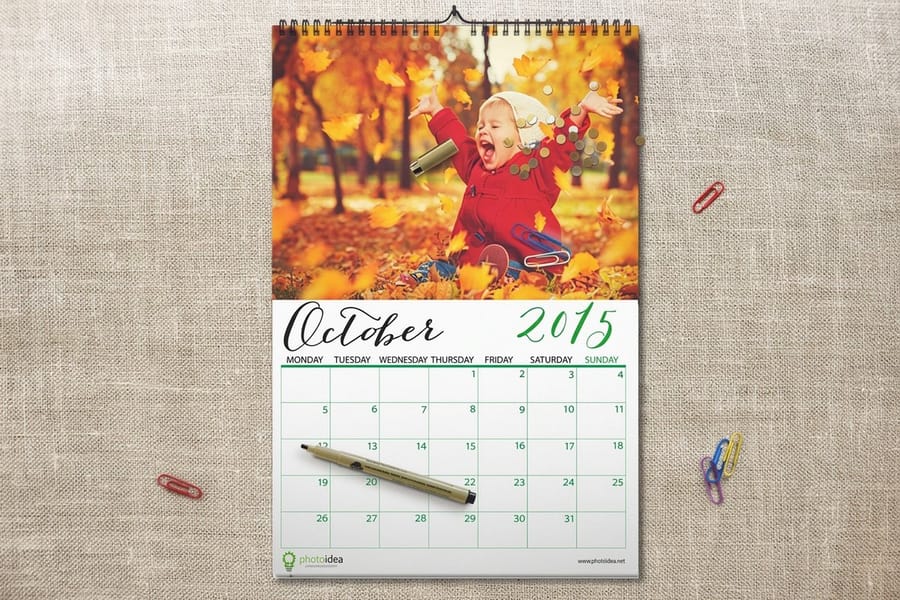
- Rethink the shape of the month block. Free of weekday columns, a month is just 28 to 31 numbered slots. One column of 31 rows, or four columns of eight, hands each date a full writing line instead of a small box.
- Size cells to the handwriting, not to the design. On an 11 by 17 sheet with a 10 inch live area, seven columns leave about 1.4 inches each, which is three or four handwritten characters. Four columns leave 2.5 inches, which is a name.
- Handle February and the short months. Print the 29th cell and mark it for leap years. If the twelve months share one master grid, gray the 31st on April, June, September and November.
- Leave the year off everything. The footer, the cover, the copyright line, the file name that ends up on a proof. One stray year turns a perpetual calendar into a dated one and kills the reason it exists.
- Set the file like any other print job. CMYK, 300 dpi at final size, an eighth of an inch of bleed on every edge, and type held the same distance back from the trim. Correctly sized layouts sit in the blank template library.
One more habit worth building in: put a legend somewhere on the sheet. Two lines telling the owner that the 29th applies in leap years and that the calendar carries no weekdays turns a confusing object into an obviously deliberate one. The components of a custom calendar covers the rest of the furniture, from the header art to the hang hole.
Format, Stock and Binding for Something That Has to Last
A dated calendar has to survive twelve months. A perpetual one has to survive being lifted off a nail a few hundred times, and that changes what you specify.
| Format | Writing room | What fails first | Best for |
|---|---|---|---|
| Single wall sheet | All twelve months on one surface, so each month gets the least | The hang hole, then creasing at the fold | Birthday and anniversary calendars, family kitchens |
| Bound wall calendar | A full page per month, the most room of any format | The binding, and staples long before wire | Service records, allotment and maintenance logs |
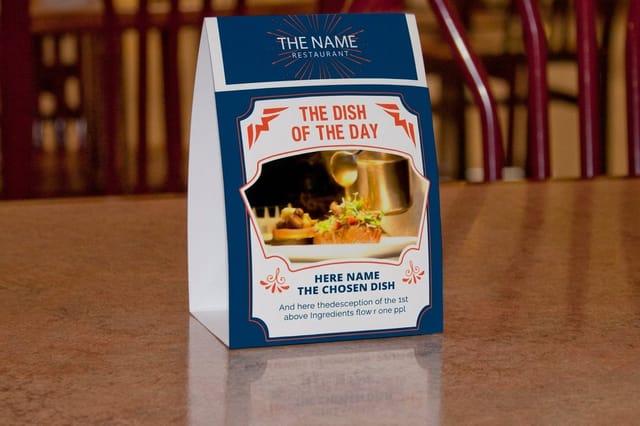
| Desk tent | Small, one visible month at a time | The score lines where it folds | Front desks, reception counters, sales desks |
| Magnet | Almost none, so it works as a reference not a diary | Edge lift, then the printed surface | Fridges, filing cabinets, van doors |
Read the third column first, because that is where the money goes. On a bound calendar, wire-o binding lets the pages turn a full circle and lie flat, and it holds long after saddle stitch staples have worked loose. Wire-o coil calendars and our custom calendars both start at $812.59 for 25. A one sheet version costs far less: posters start at $108.75 for 50, which is the honest way to print a perpetual birthday calendar in volume. Table tents start at $554.39 for 250, and magnets cover the fridge version.
Then the coating, which matters more here than the paper. Gloss aqueous and UV coatings sit on top of the sheet and reject ballpoint ink, so a pen skips and a wet mark smears for an hour. Uncoated stock takes pen, pencil and highlighter without argument. Gloss lamination is the deliberate opposite: nothing writes on it but a dry erase marker, which is exactly right for a reusable planner and exactly wrong for a birthday calendar meant to hold ink for a decade. The build that satisfies both is a laminated cover over uncoated interior pages. Binding, finish and format options go through each combination, and the full calendar printing range shows what each one costs to configure.
Wally explains the eternal calendar
Print the dates, leave the year off, give people room to write
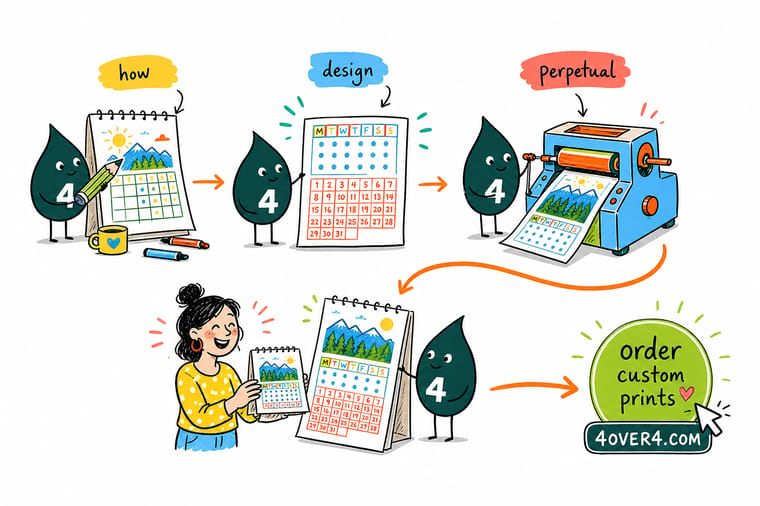
Wally draws the numbers 1 to 31 and then stops. No year in the footer, no Sunday to Saturday header, because the moment the year is gone those columns stop meaning anything. What he does instead is spend the space they freed up on bigger boxes, so a birthday actually fits. He prints the 29th in February with a leap year note, keeps the pages uncoated so a pen bites, and binds it wire-o so the hang hole survives being lifted off the nail for the next ten Januaries.
Order custom calendars →Specs and pricing
Calendar formats, sizes, and starting prices
Compare the formats an undated calendar can live on, with live configuration choices and starting prices straight from the 4OVER4.COM configurator.



Print it
Order a calendar built to be reused
Explore more
Where to go next

By the numbers
Undated calendar grids printed and bound here
Common Questions
Your perpetual calendar questions, answered
Is an eternal calendar the same as a perpetual calendar?
Yes. Eternal calendar is the phrase most gift shops and marketplaces use; perpetual calendar is the term the printing trade uses for the same undated piece. The one place the words split is horology, where a perpetual calendar means a watch movement that tracks month lengths and leap years mechanically. On paper they mean the same thing: a calendar with no year printed on it.
Do I need weekdays on a perpetual calendar?
No, and printing an unlabeled Sunday to Saturday header is the most common mistake on these files. Weekday columns only mean something once a year is fixed. Leave them on an undated grid and the first person to use it will line a birthday up under Tuesday and assume the calendar is telling them something. Either delete the header entirely or add a proper year key that names which of the fourteen layouts applies.
How do you handle February 29 on an undated calendar?
Print all 29 cells and mark the 29th for leap years, usually with a lighter tint or a small note in the margin. A perpetual February drawn with 28 boxes is simply wrong one year in every four, and the customer notices in the leap year when there is nowhere to write. If your twelve months share one master grid rather than twelve separate blocks, gray out the 31st on April, June, September and November for the same reason.
What paper and coating let people write on it year after year?
Uncoated stock, in almost every case. Gloss aqueous and UV coatings sit on the surface and repel ballpoint ink, so the pen skips and smears, which defeats the point of a calendar built to be written on. Gloss lamination is the opposite trade: nothing writes on it except a dry erase marker, which is right for a reusable planner and wrong for a birthday calendar that has to hold ink for a decade. A practical build is a laminated cover with uncoated interior pages.
How long does a printed perpetual calendar actually last?
The failure point is almost never the printing. It is the hang hole and the binding. A punched hole in a light cover stock tears within two or three years of being lifted off a nail, and saddle stitch staples work loose once pages have been flipped a few hundred times. Wire-o binding, a heavier cover, and a reinforced or grommeted hang hole are what carry a calendar past the five year mark. Ink fade only becomes visible on a sheet in direct sun.
Does a perpetual calendar make sense as a client giveaway?
It depends on which you value more: wall time or reorders. An undated calendar keeps your logo in front of someone for several years, which no dated calendar does. It also removes the annual reason to reorder and the annual reason to contact the client. Most print buyers who run both send a dated calendar to accounts they want a January conversation with, and a perpetual one to referral sources and vendors. Our guide on how to order bulk calendar printing for clients works through the quantity breaks.
Get Started
Order a magnet calendar in 25s, printed in 5 business days
Pick the format, keep the pages uncoated so a pen bites, and we print an undated calendar people hang again every January.
Legal Disclaimer
Gold Standard guarantees apply to all standard orders placed through 4over4.com. Price match requires verifiable proof of a competitor's published price for an equivalent product with matching specifications and turnaround time. Satisfaction guarantee covers manufacturing defects and print quality issues. Contact support with order number and documentation. On-time delivery rate based on tracked orders 1999 to 2026. Individual results may vary based on shipping carrier performance.
