
How to Create Custom Merchandise for Your Business Without Overordering


Which items suit which audience, what they really cost at 4OVER4.COM, the sizing trap that only apparel has, and how to prepare one logo so it prints on all of it.
Start by counting the people who will physically receive the item, then pick a product that suits that moment and order only what that window consumes. Cheap and flat for a crowd, which means stickers, magnets or totes. Good and heavier for a short list, which means mugs or shirts. Prepare one vector logo and export a version per substrate, because a sticker needs a cut path, a screen printed shirt needs solid colors, and a mug wrap has to clear the handle.
Quick answer
Headcount first, item second, artwork third
Custom merchandise works when the item matches the moment it gets handed over. Count the people who will receive it over the next quarter, split them into the crowd and the short list, and give the crowd something flat and cheap while the short list gets something they keep on a desk. Then order for that window rather than for the next price break, because merchandise sitting in a storeroom costs full price and returns nothing. Prepare a single vector master with a 100 percent black version alongside it, and export the substrate variants before you place the order.
Start With the Handout Count, Not the Item
Every merchandise order is priced in quantity tiers, which means the number of people who will physically take the item out of your hands controls the budget more than the item itself does. Decide that number first and most of the other decisions make themselves.
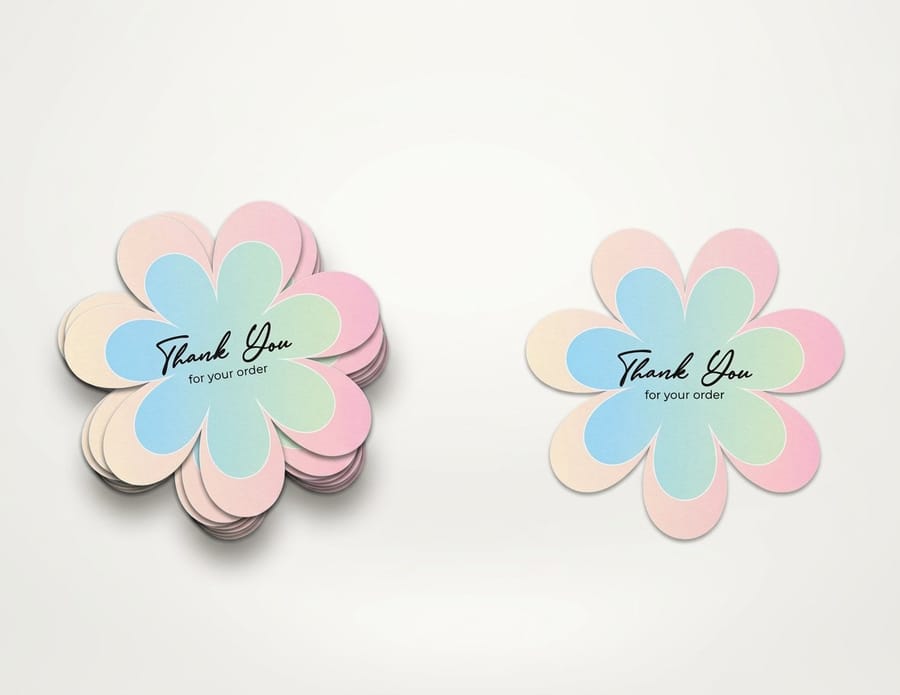
Write down the events between now and the end of the quarter and put a headcount next to each one. A booth at a regional show might see four hundred people over two days, and almost none of them will buy anything. Onboarding might be twelve people all year. Those two lines want opposite products. The booth wants something flat, light and cheap enough that you hand it over without calculating, which is why die-cut stickers and magnets clear a table faster than anything else on it. The twelve hires want something good, because they keep it on a desk for two years and it is the first physical thing your company gives them.
The mistake worth avoiding is ordering one item for both jobs. A run of decent mugs handed out at a trade show is expensive, heavy to ship, and mostly ends up abandoned in a hotel room. The same mug given to a new hire is cheap for what it does. Same product, completely different return, decided entirely by who receives it. Browse the full shelf in the promotional products collection once you know your headcounts.
What Each Item Costs, and Why the Numbers Do Not Compare
Here is the shelf with real starting prices from our configurator, plus the part most comparison articles leave out: where each one stops working.
| Item | Starts at | Where it earns its money | Where it fails |
|---|---|---|---|
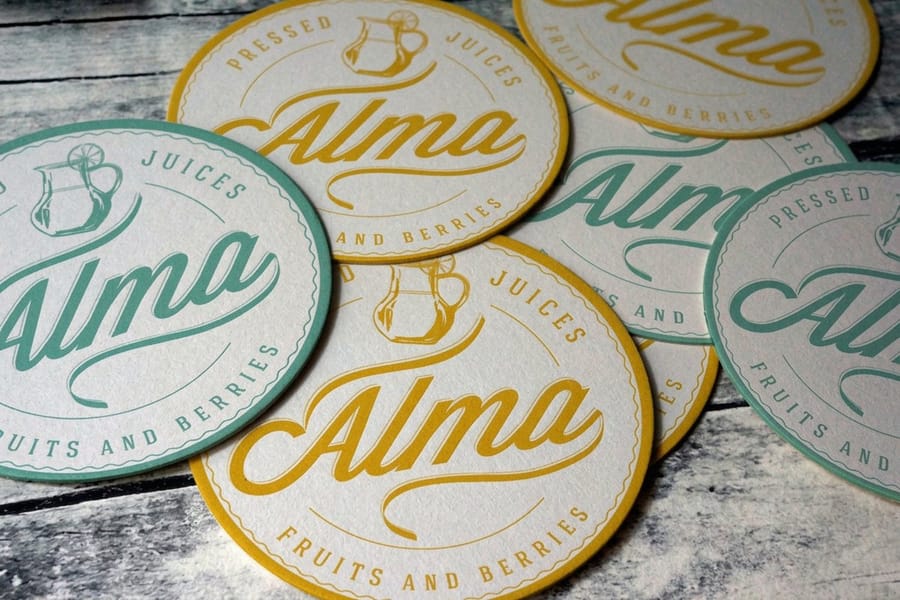
| Drink coasters | $10.98 | Bars, breweries, restaurants, tasting rooms, anywhere a glass gets put down. | Nobody carries one home from a conference. It works in a venue, not in a hand. |
| Mousepads | $13.17 | Desk gifts and client kits, where the logo sits in view all day. | Dead weight for anyone who works on a laptop away from a desk. |
| Magnets | $19.68 | Service reminders, delivery inserts, anything that should live on a fridge. | Flat art only. Fine reversed type and hairlines fill in on a magnet face. |
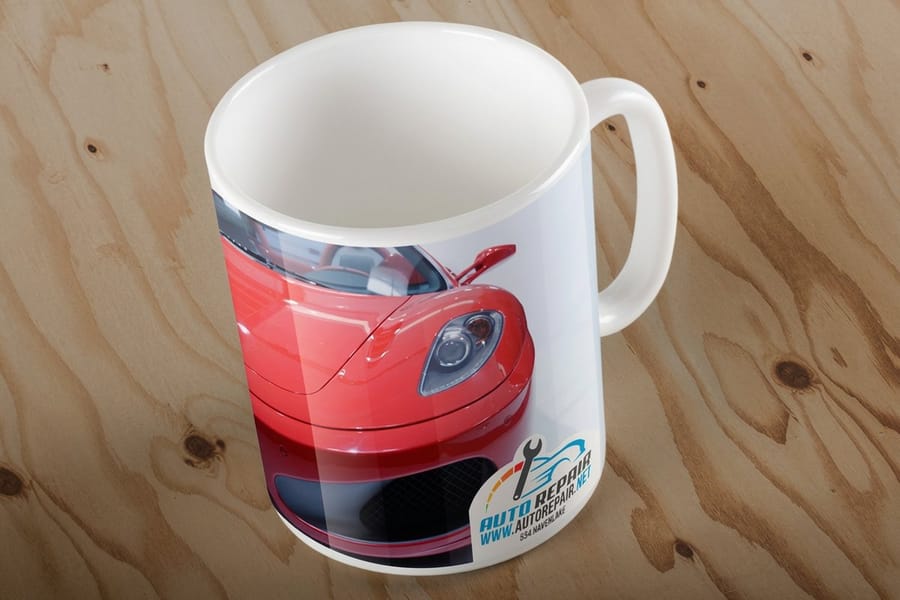
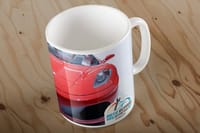
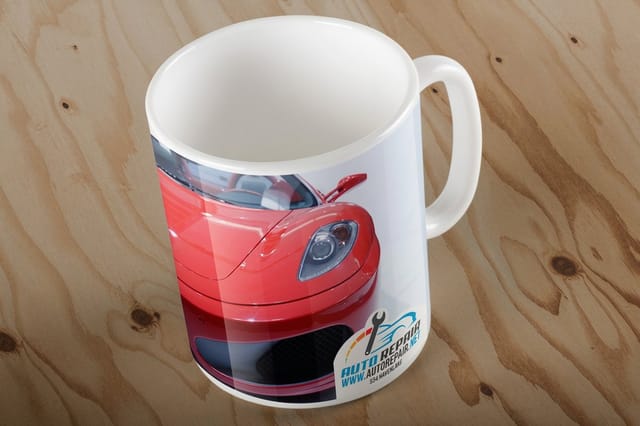
| Mugs | $20.86 | Onboarding kits and client thank-yous that stay on a desk for years. | Heavy to ship, and the handle interrupts the wrap so art cannot run full circle. |
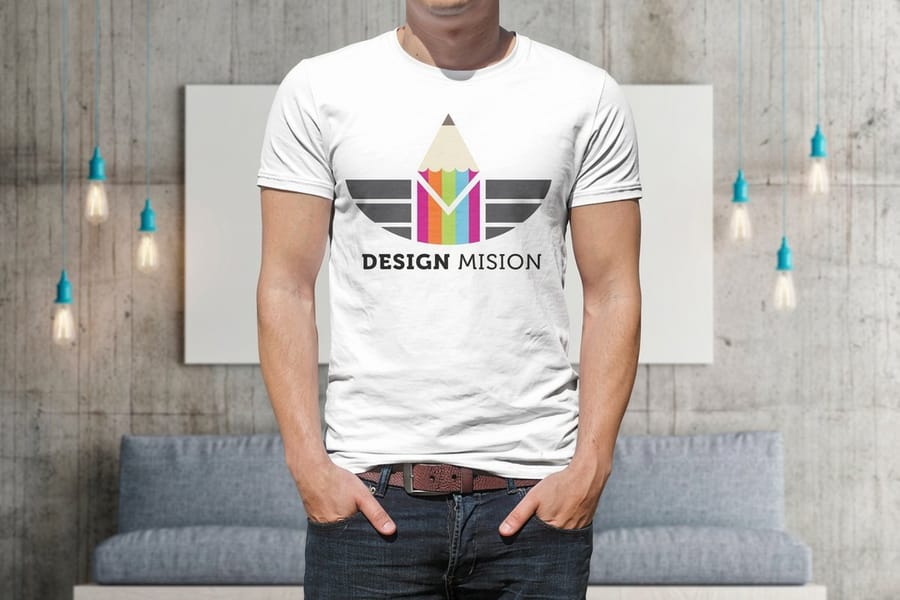
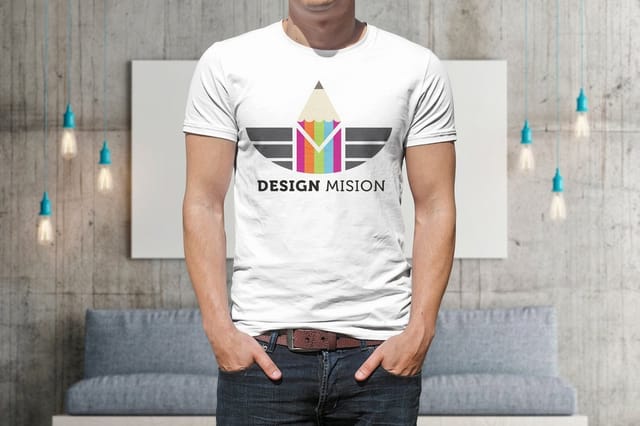
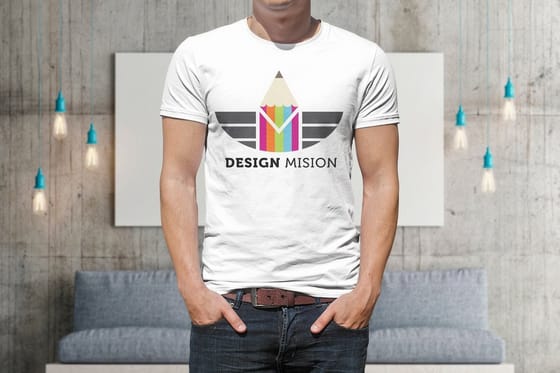
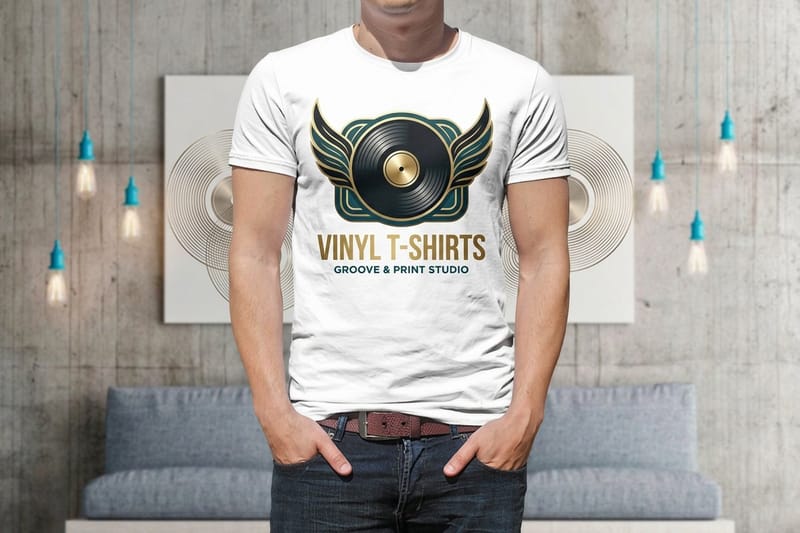
| T-shirts | $21.96 | Staff, events, retail, anywhere the wearer becomes the advertisement. | Six sizes to forecast. Guess the curve wrong and the leftovers are unusable. |
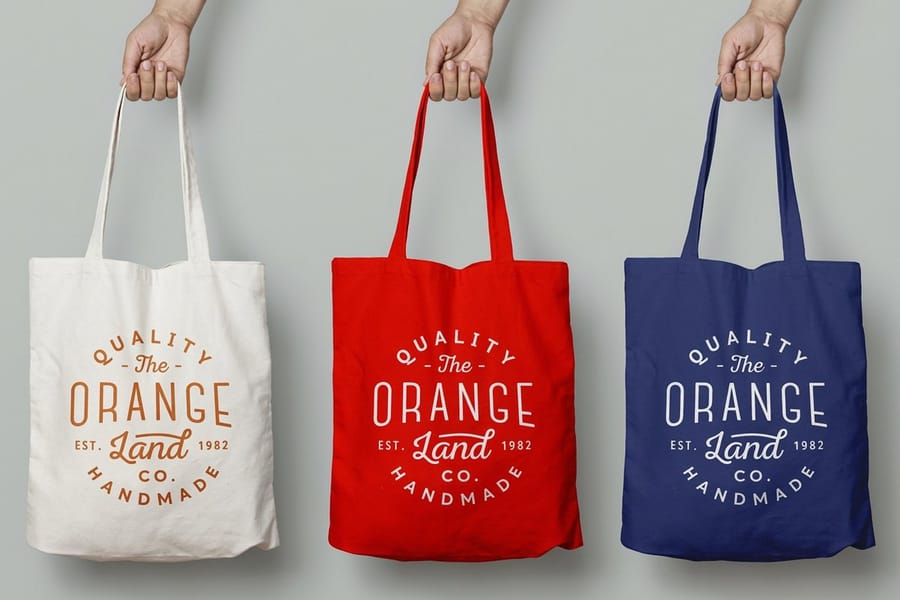
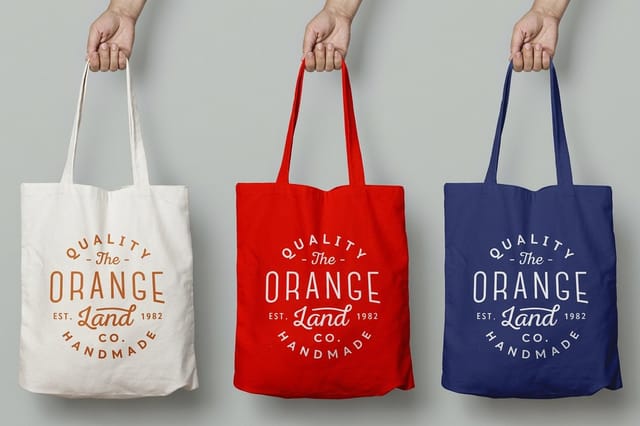
| Tote bags | $22.73 | Conferences and retail. It carries everything else people picked up that day. | Light ink on natural canvas needs a white underbase, which adds a pass. |
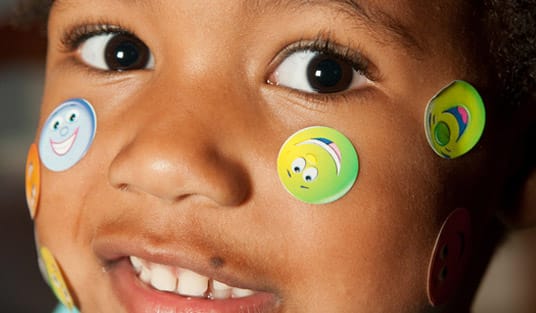
| Die-cut stickers | $93.37 | Custom shapes cut to your logo, at a cost per sticker that gets very small. | Needs a clean vector cut path. A raster logo cannot be cut at all. |
Now the caveat that makes this table honest. Every one of those prices is the lowest configured quantity for that product, and those quantities are not the same from one product to the next. Coasters at $10.98 look ten times cheaper than stickers at $93.37, and per piece they may not be cheaper at all, because the sticker price buys a full run. Put your real quantity into each product page and compare what the configurator returns, not what the shelf label says.
Apparel Is the Only Item Here With an Inventory Problem
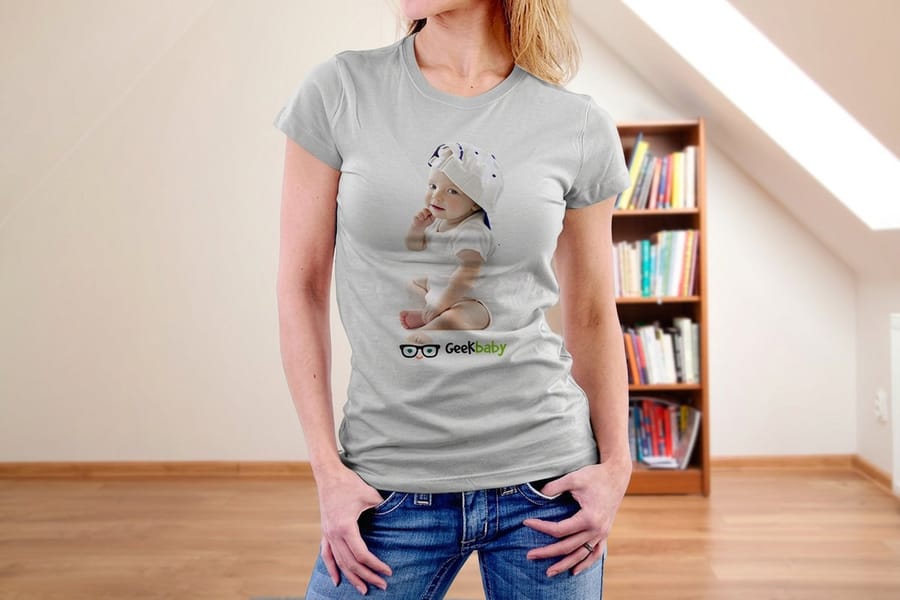
A mug is a mug. A tote is a tote. A shirt is six products wearing one design, and that is the single most common way a first merchandise run goes wrong.
Order a hundred shirts split evenly across small through triple extra large and you will finish the year with a box of smalls and a box of 3XL that nobody claimed, while medium and large ran out on day one. Weight the order instead: go deep on medium, large and extra large, keep small and 2XL shallow, and treat 3XL as something you order only when someone has asked for it. If you are handing shirts to a known group, ask for sizes in advance and order to the list. It feels slow. It is much faster than a second run for the four people you missed.
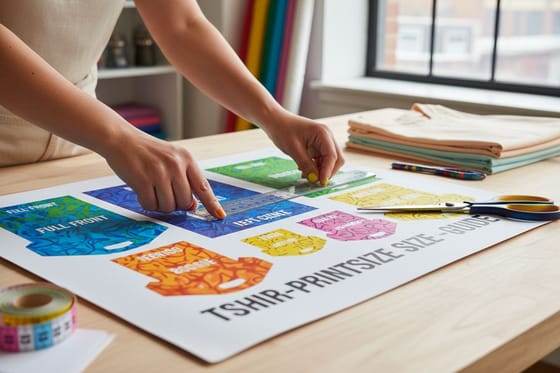
The other apparel decision is the decoration method, and it changes both the look and the economics. Screen printing puts one ink through one screen at a time, so it is cheap at volume and expensive for a run of twenty, and every extra color adds a screen. Direct-to-garment sprays the art like an inkjet, which handles gradients and photographs and suits small quantities. Embroidery outlasts both on polos and caps but flattens fine detail into stitches. Our comparison of DTG printing and embroidery covers which artwork survives which method, and the t-shirt print size guide settles how big the front graphic should actually be. If you would rather skip the sizing problem entirely on a giveaway, everything else in the branded merchandise range comes in exactly one size.
Prepare One Logo File That Survives Every Substrate
Send the same file to a sticker cutter, a screen printer and a mug press and at least one of them will come back with a problem. The fix is to build one vector master and export a version per substrate before you order anything.
The master is a vector file with fonts converted to outlines, in full color, plus a second version knocked back to 100 percent black. That black version is what saves you on screen printed apparel, engraving and anything single color, and it takes ten minutes to make once. From there:
- Stickers. Extend the artwork past the finished shape so the cut has somewhere to land, and supply the cut line as its own path rather than as a drawn outline in the art.
- Screen printed shirts. Flatten to solid colors. Every soft shadow becomes a halftone screen, and every extra color becomes a screen charge.
- Mugs. The wrap stops short of the handle on both sides, so a design that runs full circle will be cut. Keep the important part on one face.
- Natural canvas totes. Raw cotton is a mid tone, so pale inks need a white underbase to read at all. Check contrast against the actual bag color, not against white.
- Magnets and coasters. Both are flat digital surfaces, so they are the most forgiving, but they still need art at 300 dpi at final size.
If you are laying out a piece from scratch, start on a correctly sized document from the blank template library so bleed and safe area are already right. That one habit removes most of the back-and-forth before a job goes to press.
Plan Where It Goes Before the Boxes Arrive
The merchandise that fails is almost never badly printed. It is printed fine and then stored, because nobody decided in advance who hands it to whom.
Give each item a job before you order it. Stickers and magnets go in the shipping box with every order, which costs nothing extra in postage and turns fulfillment into a second marketing channel. Tote bags go at the front of a booth so people carry your logo around the hall for two days. Shirts go to staff at the event and to the customers who signed something. Mugs go into the onboarding kit. Write that sentence for every line on the order and any item without one gets cut from the order.
Then set up the reorder while the first run is fresh. Keep the prepared substrate files together with the job, note the exact product, quantity and stock you used, and you can repeat the order in a couple of minutes instead of rebuilding artwork from memory next year. When one run turns into a standing program, the volume breaks start to matter, and sourcing wholesale promotional products covers where those breaks actually sit. Pair the merchandise with the paper side of the brand too, since a business card is still the item most likely to leave a meeting in someone's pocket.
Wally explains merchandise math
Cheap for the crowd, good for the short list
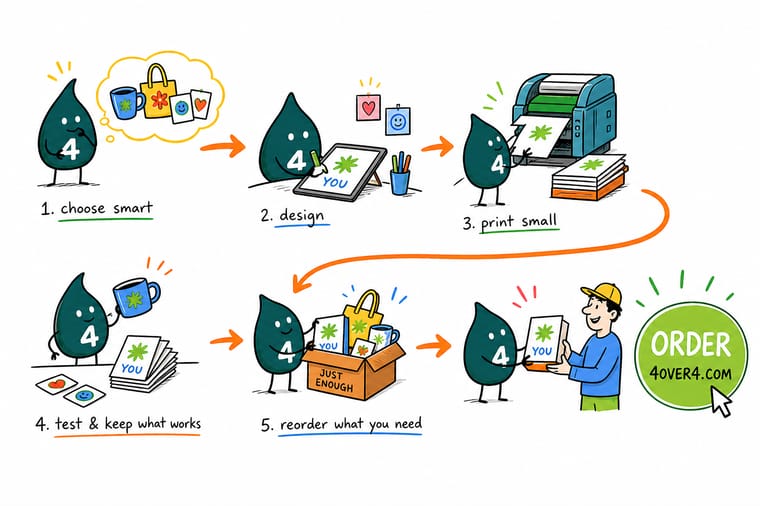
Wally counts heads before he counts products. Four hundred people walking a trade show floor get stickers, magnets and a tote, because those are light, flat and cost him nothing to give away. The twelve people who signed something get a mug and a shirt, because those stay on a desk and in a drawer for years. He orders what the next ninety days will actually consume, not what the next price break tempts him with, and he exports a separate artwork file for every substrate before he places the order.
Shop the promotional products collection →Specs and pricing
Sizes, options and starting prices on three merch staples
Shirts, mugs and custom-shaped stickers cover most first orders. Here are the live configuration choices and starting prices straight from the 4OVER4.COM configurator.
Print it
Order the three items most first runs start with
Explore more
Where to go next

By the numbers
Branded merchandise across 25 years and 1,000+ products
Common Questions
Your custom merchandise questions, answered
What is the cheapest custom merchandise for a small business?
By starting price at 4OVER4.COM, drink coasters open at $10.98, mousepads at $13.17 and magnets at $19.68, which puts them below apparel and below custom-shaped stickers. Cheapest to buy is not the same as cheapest per handout, though. Each product has its own minimum quantity, so a low headline price can cover far fewer pieces than a higher one. Configure the quantity you actually need on each product page and compare the per-piece number the configurator returns.
How many pieces should I order for a first merchandise run?
Work backwards from the calendar rather than from the price break. List the events, hires, client shipments and store days between now and roughly ninety days out, add up how many pieces each one consumes, then order that. The bigger tier is always tempting because the per-piece price drops, but merchandise that sits in a closet for a year costs full price and returns nothing. Once you know the run empties, the next order can safely be larger.
Can I print a full color photographic logo on a t-shirt?
Yes, but the method decides the result. Direct-to-garment printing handles photographic art and gradients because it sprays ink like an inkjet, and it suits short runs. Screen printing pushes one ink through one screen at a time, so every color adds a screen and a pass, and soft shadows have to be converted to halftone dots. If your logo has a gradient and you are ordering a handful of shirts, direct-to-garment is the sane route. Our comparison of DTG printing and embroidery walks through the trade-offs on each fabric.
Do I need a vector file, or will my PNG work?
For anything screen printed, cut or engraved, you need vector. A cutting machine follows a path, not pixels, so a die-cut sticker without a vector cut line cannot be cut at all. For flat digital printing on a mousepad or a coaster, a high resolution PNG at final size can work, but it has to be at least 300 dpi at the printed dimensions, and a logo pulled off a website is usually 72 dpi and far too small. If all you have is a raster logo, have it redrawn once. You will use that file for years.
What merchandise works best for a trade show?
Anything flat, light and cheap enough to give away without thinking. Stickers and magnets go into a pocket or a laptop bag and cost nothing to ship home, which is why they clear a booth table faster than anything else. Totes work as the carrier for everything else people collect that day, which puts your logo on the floor of the hall for two days. Save the mugs and the good shirts for the people who actually book a meeting.
Can I put two different designs in the same order?
Each distinct design is its own print setup, so two designs at fifty pieces each price like two jobs of fifty rather than one job of a hundred. That matters most on screen printed apparel, where the setup is a physical screen per color per design. If you want variety without paying twice, keep one design and vary the product instead, or change the garment color and keep the artwork identical.
Get Started
Order a printed mousepad from $13.17
Pick the item, set the quantity your next quarter actually consumes, and upload one prepared file. We print shirts, mugs, totes, stickers and magnets from the same artwork.
Legal Disclaimer
Gold Standard guarantees apply to all standard orders placed through 4over4.com. Price match requires verifiable proof of a competitor's published price for an equivalent product with matching specifications and turnaround time. Satisfaction guarantee covers manufacturing defects and print quality issues. Contact support with order number and documentation. On-time delivery rate based on tracked orders 1999 to 2026. Individual results may vary based on shipping carrier performance.
