
How to Choose the Right Pouch Size for Your Product


The right pouch holds your product with room to spare and a front panel for your brand. Density matters more than weight, because a pound of beans and a pound of powder fill different volumes.
Choose a pouch size by matching its width, height, and gusset to your product fill weight and density. Stand-up pouches use a gusset for volume and shelf presence, flat pouches suit light single-serve items. Size up slightly for headspace and a clean seal, then brand the front panel with a custom label sized to fit.
Start here
Measure the fill, not the bag
The right pouch size matches width, height, and gusset to your product fill weight and density. Stand-up pouches use a gusset for volume, flat pouches suit thin single-serve items, and both need headspace for a clean seal. Size up slightly rather than down, then brand the front panel with a custom label from 4OVER4.COM. The blueprint below shows how to measure and size.
Size chart
Standard custom pouch sizes
Custom pouches run a standard ladder of sizes, from about 3.5 by 5 inches (89 by 127 mm) for a 1 ounce sample up to 12 by 18 inches (305 by 457 mm) for a 5 pound bulk fill, and stand-up styles add a 2 to 5 inch (51 to 127 mm) bottom gusset that a flat pouch does not have. Find your fill weight in the first column, then read the pouch as width by height by gusset.
| Fill weight | Stand-up pouch, W by H by gusset | Same size in mm | Flat pouch, W by H | Typical fill |
|---|---|---|---|---|
| 1 oz | 3.5 by 5 by 2 in | 89 by 127 by 51 mm | 3 by 5 in | Single-serve coffee, tea and spice samples |
| 2 oz | 4 by 6 by 2.5 in | 102 by 152 by 64 mm | 3.5 by 5 in | Loose leaf tea, seasoning, small candy |
| 4 oz | 5 by 8 by 3 in | 127 by 203 by 76 mm | 4 by 6 in | Small-batch coffee, granola, trail mix |
| 8 oz | 6 by 9 by 3.5 in | 152 by 229 by 89 mm | 5 by 7 in | Half-pound coffee, snacks, dried fruit |
| 1 lb (16 oz) | 8 by 12 by 4 in | 203 by 305 by 102 mm | 6 by 9 in | Whole bean coffee, pet treats, jerky |
| 2 lb | 9 by 14 by 4.5 in | 229 by 356 by 114 mm | 8 by 10 in | Protein powder, baking mixes, rice |
| 5 lb | 12 by 18 by 5 in | 305 by 457 by 127 mm | 10 by 14 in | Bulk flour, pet food, wholesale refills |
Two habits keep this table honest. First, the millimetre column is the same pouch rounded to the nearest millimetre, so order in one unit and convert once rather than twice. Second, height is read from the bottom seal to the top of the pouch, and suppliers differ on whether that includes the zipper strip, so confirm which they mean before you commit to a run.
Density decides which row you land on. Whole bean coffee is light for its volume and pushes a 1 pound fill to the 8 by 12 by 4 inch pouch, while dense ground spice at the same weight can sit a row lower. When you are between two rows, take the larger one: the extra headspace gives a clean heat seal and room for product that settles or releases gas.
Once the size is fixed, the front panel is your print area. Measure that panel, leave roughly a quarter inch clear on each side, and order a custom label cut to fit, or browse the full range of packaging labels to match finish and material to the product.
Why pouch size makes or breaks the product
Pouch size is one of those decisions that looks trivial and is not. Get it right and your product sits full and confident on the shelf with room for a clean label. Get it wrong in either direction and it costs you. A pouch that is too big slumps half empty, wastes film, and quietly signals poor value. One that is too small strains the seals, risks splitting, and leaves nowhere to put a proper label.
The core rule is simple: size the pouch to the fill, not to the eye. What actually goes inside, by weight and by volume, decides the right dimensions, and the type of pouch changes how much a given footprint holds. This guide walks you through measuring, matching fill weight to size, and the difference between stand-up and flat pouches.
Then comes the part 4OVER4 handles. A pouch is blank until it is branded, and a custom label or a printed box is what turns it into a shelf-ready product. We will show how to size the label to the panel you chose so the whole package works together.
Stand-up versus flat pouches
Stand-up pouches cover the whole practical range, roughly 3.5 by 5 inches at 1 ounce up to 12 by 18 inches at 5 pounds, while flat pouches stay small, roughly 3 by 5 inches up to 6 by 9 inches, so the style you pick sets the sizes you can even order. The first fork is the pouch style, because it changes both capacity and presentation. A stand-up pouch has a gusset, a folded panel at the base that opens out so the pouch stands on its own once filled, normally 2 inches deep on a 1 ounce pouch and up to 5 inches on a 5 pound one. That gusset adds real volume and gives the product shelf presence, which is why coffee, snacks, granola, and pet food almost always come in stand-up form.
A flat pouch has no gusset, so it lies flat and holds less for the same face dimensions. Expect a flat pouch to carry roughly half of what a stand-up of the same width and height carries, which is why a 6 by 9 inch flat sachet is a 1 pound job while a 6 by 9 inch stand-up with a 3.5 inch gusset is an 8 ounce one. Flat pouches suit thin, light, or single-serve items: sample sachets, single-use powders, seasoning packets, and small accessories. They are cheaper and more compact, but they do not stand or show off a front panel the way a stand-up does.
Whichever you choose, the branding is what sells it, and that is where our packaging labels come in. A stand-up pouch gives a large flat front for a full-color custom label, while a flat sachet needs a compact label sized to its smaller face. For multiples, a printed box ties a set together, and our kitting and fulfillment can pack and ship the finished units for you.
How to measure a stand-up pouch
Three measurements define a stand-up pouch, and getting all three is the difference between a good fit and a guess. Width is the distance across the face of the pouch, seam to seam. Height is measured from the bottom seal up to the top, though suppliers differ on whether that includes the zipper area, so confirm which they mean, because a zipper strip can account for half an inch of the number you were quoted.
The one people miss is the gusset, the flat depth of the base when it is unfolded. The gusset is what gives a stand-up pouch its capacity, because it opens into a bottom that holds volume. A pouch listed as 6 by 9 inches with a 3.5 inch gusset (152 by 229 by 89 mm) holds noticeably more than the face dimensions alone suggest, roughly 8 ounces of coffee rather than the 4 ounces the flat face implies.
Write those three numbers as width by height by gusset, in that order and in one unit, and you have the real footprint to plan around: 8 by 12 by 4 in, or 203 by 305 by 102 mm. This is the same fit-first discipline behind sizing any label to its surface, which our guide on wine bottle label dimensions covers for curved bottles. Once you know the flat front, our online design tool helps you build a label that fills it cleanly.
How to measure a flat pouch

Flat pouches are simpler, because there is no gusset to account for. You measure just width and height across the face, seam to seam and seal to top, and that footprint is the capacity. Since a flat pouch does not expand at the base, what you see is very close to what it holds.
The trade-off is that a flat pouch of the same face size as a stand-up holds less, so do not assume the two are interchangeable. If you are moving a product from a flat sachet to a stand-up pouch or the reverse, recheck the fill against the new style rather than keeping the same dimensions.
Flat pouches shine for lightweight and single-serve products, and their smaller face means the label has to work harder in less space. A clean, legible custom label that fits the compact front without crowding is what keeps a small sachet looking professional rather than cramped. For products that ship in quantity, a printed custom box keeps a set of sachets organized and branded together.
Matching fill weight to pouch size
What sizes do custom pouches come in? Custom pouches come in a standard ladder from about 3.5 by 5 inches (89 by 127 mm) for a 1 ounce sample to 12 by 18 inches (305 by 457 mm) for a 5 pound bulk fill, with stand-up styles carrying a 2 to 5 inch bottom gusset and flat styles carrying none.
Fill weight is the fastest way to a starting size, as long as you remember it is a guide and not a law. As a rough map, 1 to 2 ounces suits about a 3.5 by 5 inch pouch, 4 ounces around 5 by 8 inches, 8 ounces near 6 by 9 inches, a pound around 8 by 12 inches, and 5 pounds near 12 by 18 inches. The full table sits just below this section.
What size pouch holds one pound of coffee? An 8 by 12 inch stand-up pouch with a 3.5 to 4 inch gusset (203 by 305 mm, 89 to 102 mm gusset) is the working answer for whole bean, because beans are light for their volume and need the extra depth. Ground coffee at the same 1 pound weight settles tighter and can drop to a 6 by 9 inch pouch with a 3.5 inch gusset, and either way leave an inch of headspace at the top for a clean heat seal.
The catch is density. The same 8 ounces of dense ground spice takes far less volume than 8 ounces of fluffy puffed snack, so two products at the same weight can need different pouches. Always sanity-check the weight-based size against how much space your actual product occupies, and lean slightly larger so there is headspace for a clean heat seal.
Headspace matters for more than sealing. Foods that settle or release gas, like fresh-roasted coffee, need a little extra room and sometimes a vented pouch, which our guide on coffee bag vents explains. Once the pouch size is settled, the front panel dimensions tell you exactly how big your custom label should be.
Branding and ordering the finished package
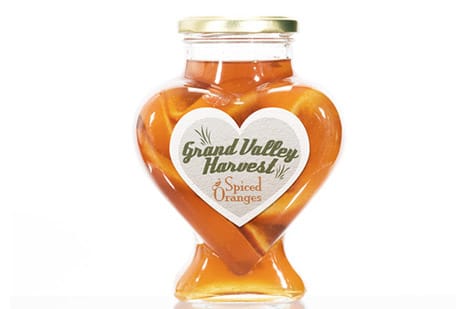
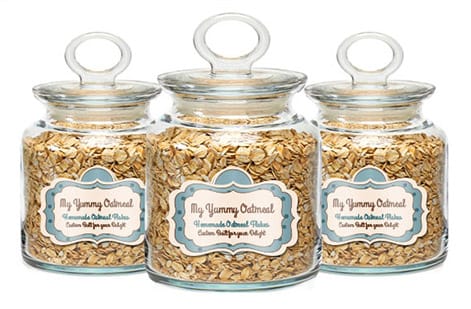
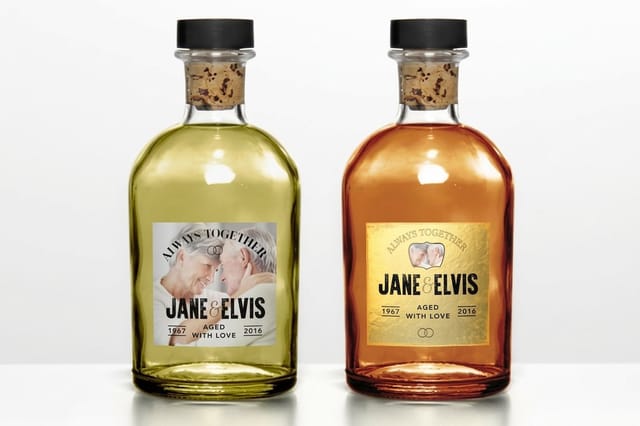
With the pouch sized, the product becomes shelf ready the moment it is branded. Measure the flat front panel of your chosen pouch and order a custom label to match, in a shape and finish that suits the product, whether that is a clean matte for a premium look or a durable gloss for something handled often. On an 8 by 12 inch pouch that usually means a label around 7 by 5 inches, leaving a quarter inch clear of each side seam so nothing lifts at the edge. For bottled or jarred lines, premium bottle labels follow the same fit-first approach.
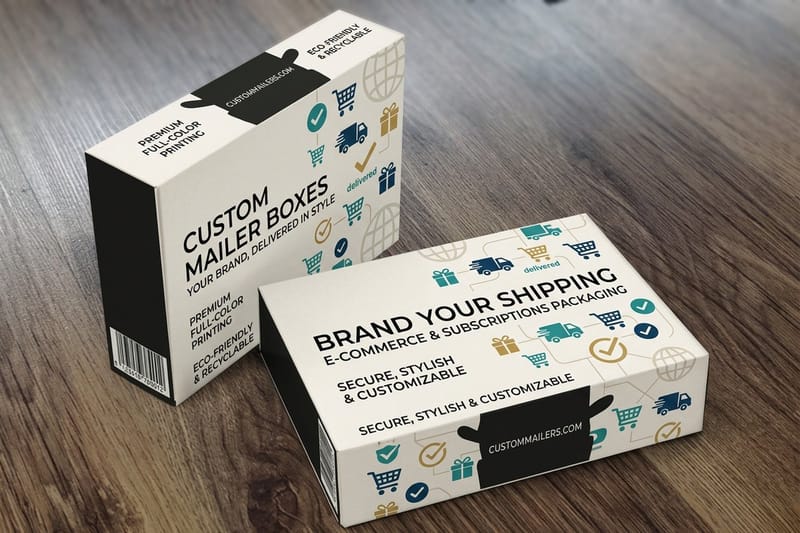
To group multiples or ship direct to customers, a printed custom mailer box holds a set together and carries your branding through the unboxing. Our shrink wrap and kitting services can bundle and pack the finished units so they arrive ready to sell.
Cost follows the usual levers: size, material, finish, and quantity, with the per-unit price dropping as the run grows. A 5 pound pouch label at 12 by 18 inch scale costs more per piece than a 1 ounce sachet label, and both fall as the run grows. You set the options on the product page and the total updates live, so you can see the number before you order. Use the live label specs and pricing below, or order free samples to feel the label stock in hand before your run goes to press.
Wally sizes the pouch to the fill
Then brands the front panel to match
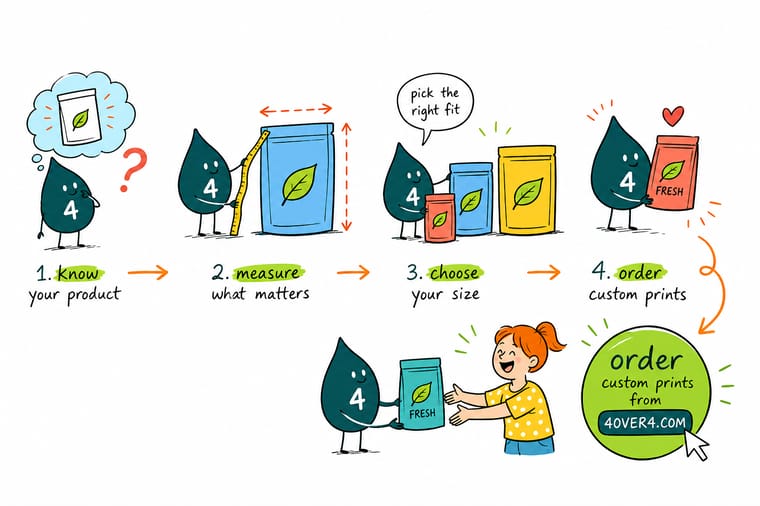
Wally sizes packaging the honest way: weigh the product, read width, height, and gusset, and leave headspace for a clean seal. Too big slumps, too small splits, so match the pouch to the real fill and its density. Once the front panel is set, 4OVER4 prints a custom label built to fill it, turning a plain pouch into a shelf-ready product.
Order packaging labels →Quick reference
Fill weight to pouch size at a glance
Use these as a starting point for stand-up pouches, then adjust for your product density and leave headspace for a clean seal.
| Fill weight | Typical pouch size | Best for |
|---|---|---|
| 1 to 2 oz | About 3.5 x 5 in | Samples, single-serve coffee, spices, and small treats where a compact footprint keeps the pouch looking full. |
| 4 oz | About 5 x 8 in | Loose-leaf tea, snack portions, and small-batch goods that need a bit more face for a label. |
| 8 oz | About 6 x 9 in | A common half-pound size for coffee and granola, with enough front panel for full branding. |
| 1 lb | About 8 x 12 in | Standard retail coffee and bulk snacks, the size most food brands start from. |
| 5 lb | About 12 x 18 in | Bulk and wholesale fills where a wide gusset carries the extra volume and weight. |
Step by step
Choose the right pouch size in 6 steps
- Weigh and measure your actual productStart from the real fill: weigh the product and note how much volume it takes up. A dense powder and a fluffy snack of the same weight need very different pouches.
- Decide stand-up or flatChoose a stand-up pouch with a gusset if you want the product to sit upright on a shelf, or a flat pouch for thin, light, or single-serve items where shelf presence matters less.
- Match fill weight to a starting sizeUse the fill-weight table as your first guess, then adjust for density. Err slightly large rather than small so the seams are not stressed and the pouch seals cleanly.
- Leave room for the seal and headspaceA pouch cannot be filled to the very top. Allow headspace for a clean heat seal and, for foods that settle or off-gas, a little extra room.
- Check the label fits the front panelConfirm your branding fits the flat front of the pouch at the size you picked. If the label feels cramped, size up so the design breathes.
- Order a matching custom label or boxOnce the pouch size is set, brand it. Order a custom label sized to the front panel, or a printed box to hold multiples, and your product is shelf ready.
Specs and pricing
Custom label specs and live pricing
Once the pouch is sized, brand the front panel. Custom labels ship in 3 business days on uncoated, semi-gloss, hi-gloss and white vinyl.

| Quantity | Price Per Unit | Total |
|---|---|---|
| 1 | $25.00 | $25.00 |
Print it
Brand your packaging at 4OVER4
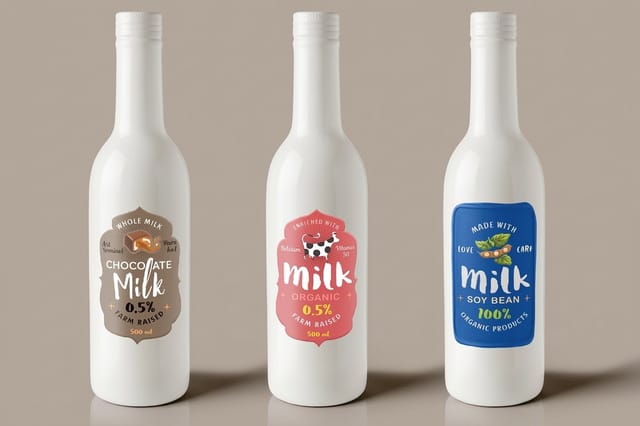
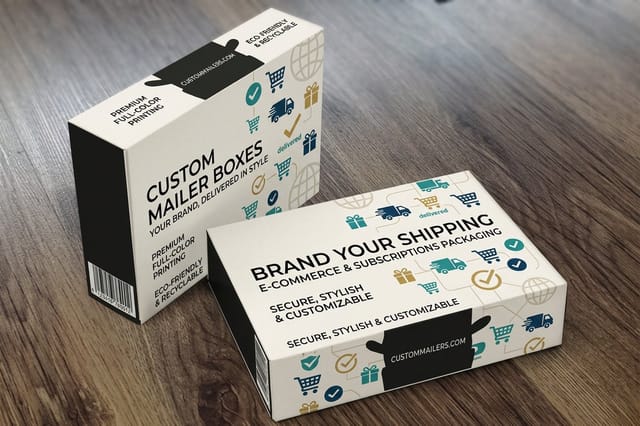
See it in use
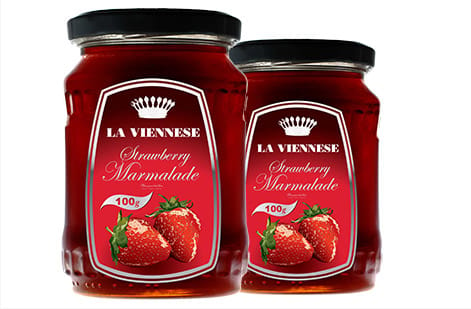
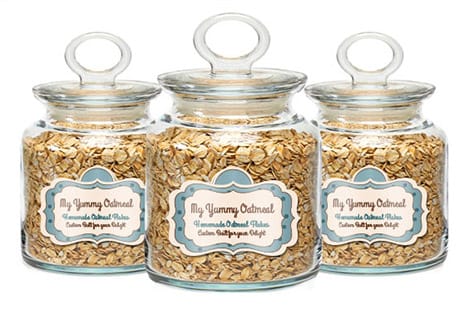
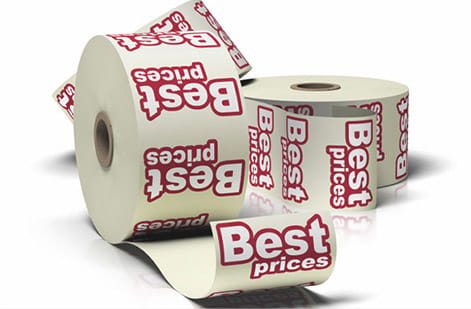
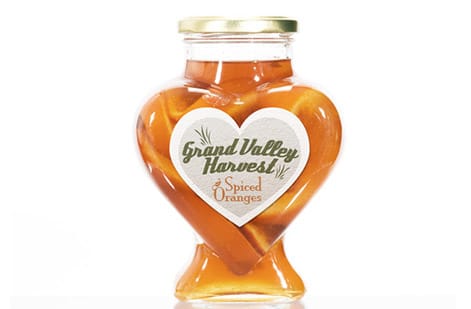
Real packaging labels, produced in-house

Explore more
Where to go next
By the numbers
Sixty stocks and materials a pouch can use
Common Questions
Common questions about pouch size
What is the difference between stand-up and flat pouches?
A stand-up pouch has a gusset, a folded panel at the base that opens out so the pouch can stand upright on its own once filled. That gusset adds volume and shelf presence, which is why coffee, snacks, and pet food usually come in stand-up pouches. A flat pouch has no gusset, so it lies flat and holds less for the same face dimensions. Flat pouches suit thin, light, or single-serve items like sample sachets, powders, and small accessories. The choice affects both how much the pouch holds and how it presents on a shelf.
How do I accurately measure a stand-up pouch size?
Measure three things. Width is the distance across the face of the pouch from seam to seam. Height is measured from the bottom seal to the top of the pouch, and depending on the supplier this may or may not include the top zipper area, so confirm which they use. The gusset is the flat depth of the base when the pouch is unfolded, and it is what gives a stand-up pouch its capacity. Together, width by height by gusset defines the true volume, which matters far more than face dimensions alone.
What is pouch size and why does it matter?
Pouch size is the combination of width, height, and gusset that determines how much product a pouch holds and how it looks on a shelf. It matters because getting it wrong is costly in both directions. Too large and the pouch slumps half empty, wastes film, and reads as poor value. Too small and it strains the seals, risks splitting, and leaves no room for a clean seal or a proper label. The right size holds your fill comfortably with headspace to spare and gives your branding a front panel it can own.
How much headspace does a clean seal need?
Work from the product, not the pouch. Weigh your actual fill and note its density, since the same weight of beans and of powder fill different volumes. Decide whether you need a stand-up pouch for shelf presence or a flat pouch for thin items. Use fill weight as a starting point, for example roughly 6 by 9 inches for 8 ounces, then adjust up for fluffy products and confirm there is headspace for a clean seal. Finally, make sure your label fits the front panel comfortably at the size you choose.
What does branding a pouch cost and how are prices set?
The pouch itself comes from a packaging supplier, and the branding is where 4OVER4 fits: custom labels sized to the front panel, or printed boxes to hold multiples. Label and box pricing is set by size, material, finish, and quantity, and the per-unit price drops as the run grows. You choose the size and options on the product page and the total updates live, so you can see exactly what a larger run or a premium finish does to the number before you order.
Do pouches for food have labeling requirements?
Yes. Food pouches sold at retail generally need clear labeling that includes the product identity, net weight, ingredients, allergen information, and the name and address of the business, and specific categories carry their own rules. This is one more reason to size the pouch with the label in mind, since a cramped front panel makes compliant labeling hard to fit. Designing a custom label that carries the required information cleanly, on a pouch sized to hold it, keeps both the shelf appeal and the compliance in place.
Get Started
Order 25 premium bottle labels, printed in 3 days
Size the pouch to your product, then print a custom label to match at 4OVER4.COM. Pick the shape, material, and finish, and watch your price update live as you set the run.
Legal Disclaimer
Gold Standard guarantees apply to all standard orders placed through 4over4.com. Price match requires verifiable proof of a competitor's published price for an equivalent product with matching specifications and turnaround time. Satisfaction guarantee covers manufacturing defects and print quality issues. Contact support with order number and documentation. On-time delivery rate based on tracked orders 1999 to 2026. Individual results may vary based on shipping carrier performance.
