
How to Choose a Booklet Printing Company That Binds It Right


Binding, page count math, proofs and turnaround, in the order that decides whether your booklet arrives right. Four questions separate a printer who runs booklets daily from one who takes the order and works it out later.
Judge a booklet printing company on four things: which bindings they run in their own building, whether their page count rules fit your document, what proof you get before the run, and whether the turnaround clock starts at checkout or at proof approval. A shop that binds saddle stitch, perfect bound and coil in house will tell you which one your page count actually supports. A shop with one binding machine will tell you your job suits that machine.

Quick answer
Binding first, then page count, then the proof and the clock
Your page count picks the binding, and the binding picks the printer. Saddle stitch runs from 8 to roughly 64 pages in multiples of four and opens flat. Perfect binding needs about 40 pages before the glue has a spine to grip, and buys you a printable spine in exchange for a book that fights being held open. Coil handles almost any count and lies dead flat. Once the binding is settled, only two questions remain: what proof do you get, and does the quoted turnaround start at order or at approval.
What Separates a Real Booklet Printer From a Print Broker
Most quotes look identical because most quote forms ask the same five questions. The differences show up in the answers you get when you push past the form.
The single most useful question is where the binding happens. A shop that prints sheets and sends them to an outside bindery is not lying when it quotes a five day turnaround, but that five days often means five days of printing plus whatever the bindery does next. Ask it plainly: does the folding, stitching and gluing happen in your building. The answer tells you who owns your schedule.
| What to ask | Why it decides the job | The answer that should worry you |
|---|---|---|
| Which bindings do you run in house? | In house binding means one schedule and one point of accountability. | A vague yes that never names a machine. |
| Does turnaround start at order or at proof approval? | It changes the delivery date by days, not hours. | Whichever one makes the number look smaller. |
| Is the cover counted in my page count? | Self cover and plus cover quotes are not comparable. | Silence, then a different total after you upload files. |
| What proof do I get, and when? | A proof after plates or after imposition catches different mistakes. | No proof at all unless you ask for one. |
| Do you shingle for creep? | On thick saddle stitched work it decides whether inner page numbers survive the trim. | Not knowing what shingling is. |
The second thing to check is whether the configurator lets you build your actual job. If a page count of 44 is not selectable, or your finished size is not on the list, you are about to negotiate by email for three days. Our standard booklets and saddle stitch booklets both configure page count, stock and quantity in one pass, with a live price attached to each combination rather than a callback.
Binding Types, and What Each One Costs You
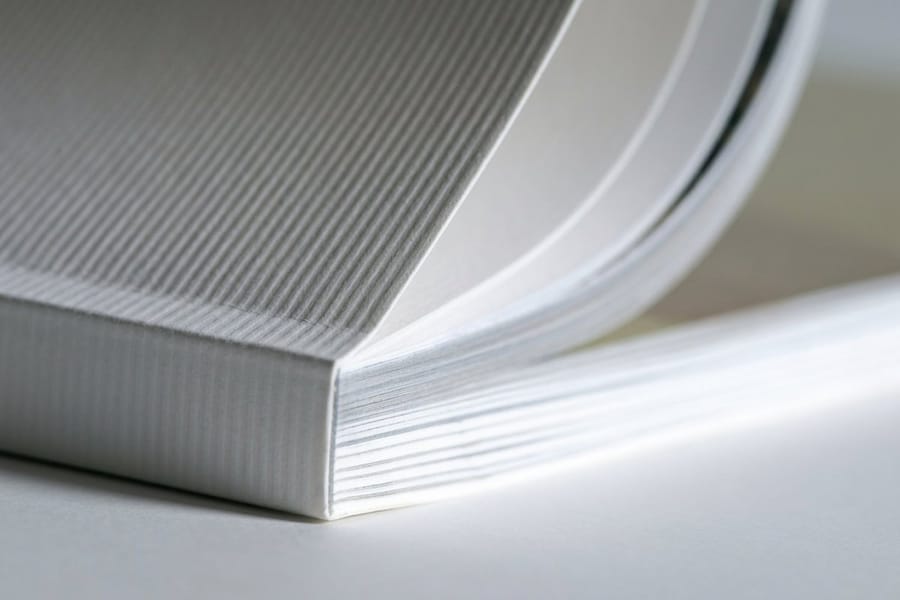
Binding is the first real decision, and it is mostly settled by page count. Everything else, the stock, the finish, the quantity, sits downstream of it.
| Binding | Practical page range | Lies flat | Printable spine | Starts at |
|---|---|---|---|---|
| Saddle stitch | 8 to about 64, multiples of four | Yes, opens fully | No | $240.55 |
| Perfect bound | 40 and up, any even count | No, the spine resists | Yes | $375.05 |
| Spiral coil | 8 to several hundred | Yes, completely | No | $423.28 |
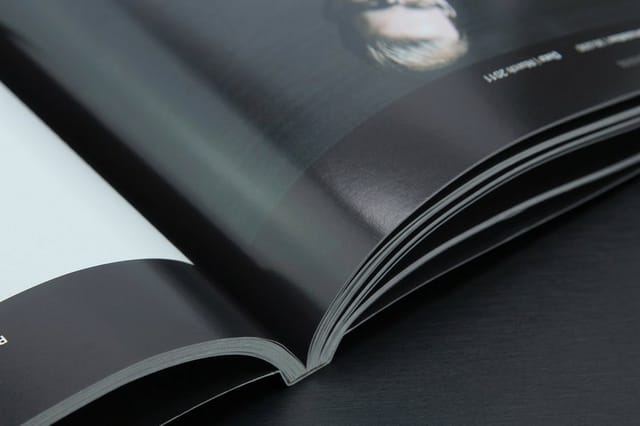
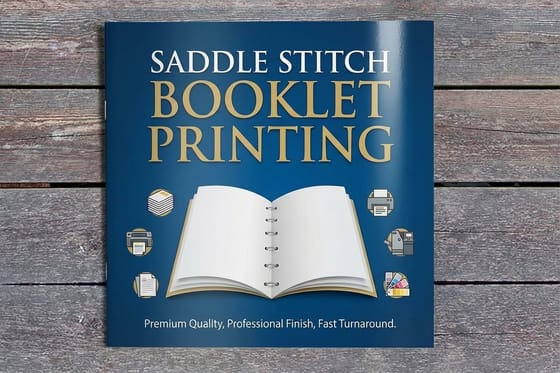
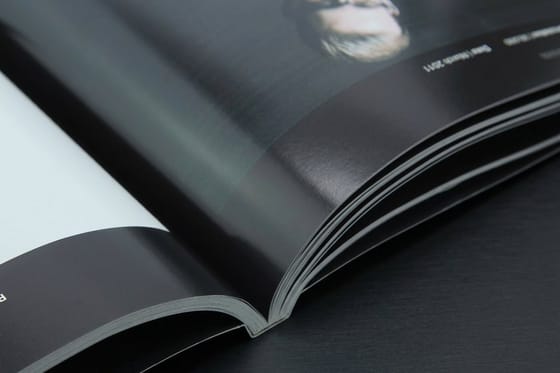
Saddle stitch is two staples through the fold. It is the cheapest binding, it opens flat, and it is what most event programs, small catalogs and product guides should be. Past roughly 64 pages the booklet stops closing properly and the fore edge starts to bulge, which is the point where the printer should be steering you elsewhere rather than taking the order.
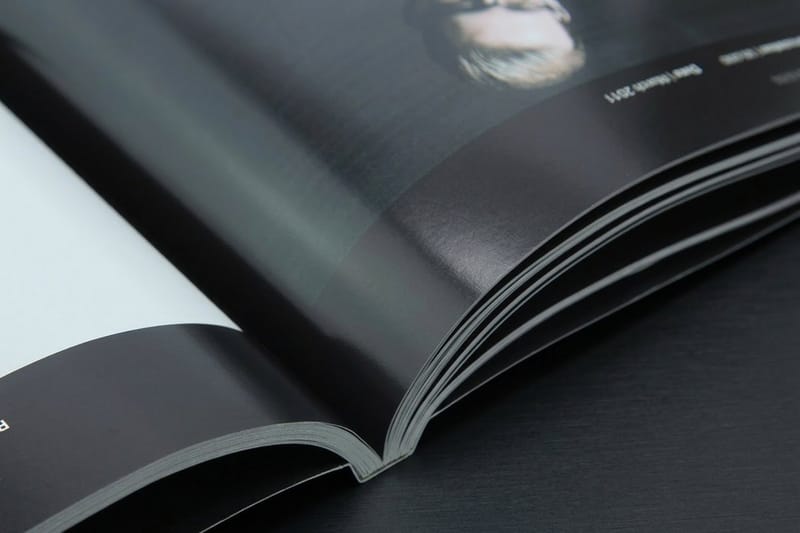
Perfect binding glues a squared block into a wrapped cover. You get a spine you can print on, which is the entire reason it exists: a book on a shelf has to be identifiable edge on. The trade is that it does not lie flat, and a reader holding it open at page 60 is fighting the glue. For a manual somebody uses with both hands busy, that is a genuine problem.
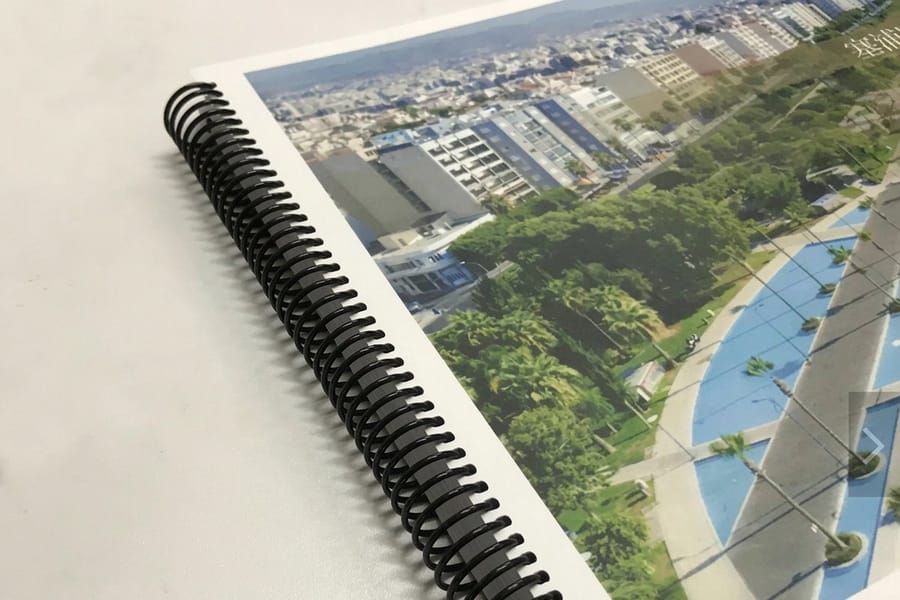
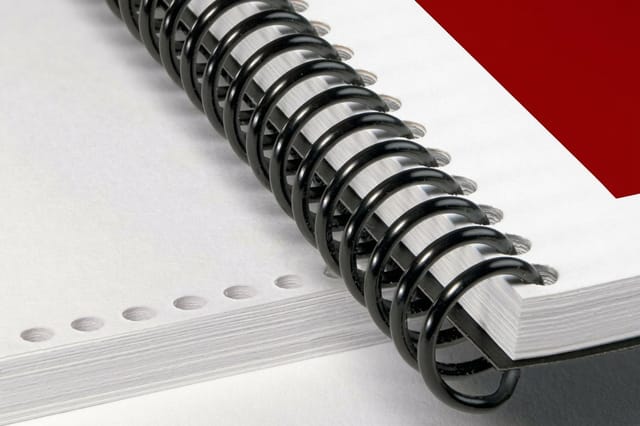
Coil binding solves exactly that. The pages rotate a full 360 degrees and stay wherever you put them, which is why workbooks, cookbooks and field manuals get coiled. You lose the printable spine and you gain bulk, so a coiled book in a flat mailer is a poor combination. Compare the three side by side in the binding methods guide, or browse everything we bind in the bookbinding collection.
Page Counts, Multiples of Four, and Creep
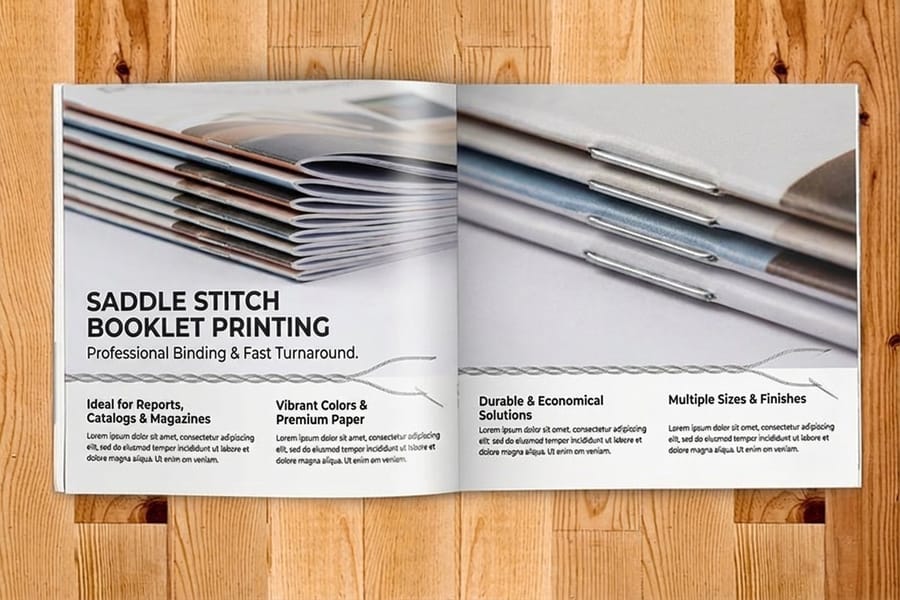
Take one sheet of paper and fold it in half. You now have four printable sides. That is the whole rule, and it is why a saddle stitched booklet is always 8, 12, 16, 20, 24 pages and so on.
Counting trips people up more than the math does. Every side is a page. The outside front cover is page 1, the inside front cover is page 2, and the back cover is the last page. A 16 page booklet is four sheets of paper. When a printer asks for your page count and you say 16, they should be looking at a 16 page PDF, single pages, in reading order, not eight spreads.
Creep is the second thing nobody mentions until it goes wrong. In a saddle stitched booklet the inner sheets are nested inside the outer ones, so they wrap around more paper and stick out further at the fore edge. The whole stack gets trimmed to one line, which means the innermost pages lose more of their outside margin than the cover does. On a 16 page booklet on light stock you will barely notice. On a 60 page booklet on 100 lb text, the difference is real enough to cut a page number off.
Two defenses. Keep live text at least 0.25 in from the trim on every page, not just the cover. And ask whether the printer shingles the imposition, which shifts each inner page slightly toward the spine to cancel the push out. A shop that runs booklets daily will answer that question in one sentence. The page counts and creep guide works through the numbers, and the correctly sized layouts live in the blank template library.
Proofs: What Each Kind Actually Catches
A proof is the last cheap moment in the job. After it, every mistake costs a reprint. The trouble is that the word covers two very different things and printers rarely separate them for you.
A soft proof is a PDF, usually an imposed one, sent back after preflight. It catches the mistakes that ruin a booklet: a missing page, a page in the wrong order, an image sitting 6 pt off the safe margin, a spine that reads upside down, artwork supplied in RGB. It cannot tell you a single reliable thing about color, because you are looking at a backlit screen and the job will arrive as ink on paper.
A hard copy proof is a physical sample, produced and shipped to you. It is the only way to see how a rich black sits on uncoated text stock, how much a photo darkens on a matte sheet, or whether your brand blue survives the CMYK conversion. It costs money and, more importantly, it costs calendar: production, transit, review and approval all happen before the press run starts.
The decision is simple once you frame it as risk. If a color miss would force a reprint, buy the hard proof. If the run is short, internal, and the only real question is whether page 14 landed where you meant it to, the PDF is enough. Either way, read the proof against the original file rather than from memory. Our print ready file guide lists what preflight rejects, which is most of what a proof would have caught anyway.
Turnaround: When the Clock Actually Starts
Turnaround is where quotes stop being comparable. Two printers can both say four business days and mean dates a week apart.
Three separate clocks run on every booklet job. Preflight and proofing comes first, and it stalls entirely if your file has a problem or if you approve the proof on a Friday afternoon. Production comes second, and this is the number the printer advertises. Transit comes third, and it is nobody in the print shop's number at all. A booklet quoted at four days can easily be four days of production plus one day waiting on your approval plus three days of ground shipping.
Ask two questions and the fog clears. Does the production clock start at order or at proof approval, and is shipping transit included in the quoted date. A straight answer to both is a good sign about the rest of the operation. Binding also has its own rhythm: coil and wire binding are handwork on short runs and often add a day that saddle stitching does not.
Plan the real deadline backward from the event, not forward from the order. If a catalog has to be on a trade show table on the 14th, you want it in your hands on the 11th, which means approving a proof well before that. When the calendar is already tight, our rush and same day printing options cover what can genuinely be compressed, and how bulk price breaks work is worth reading before you cut quantity to save time.
Wally explains picking a booklet printer
Count the pages, then pick the binding, then read the proof
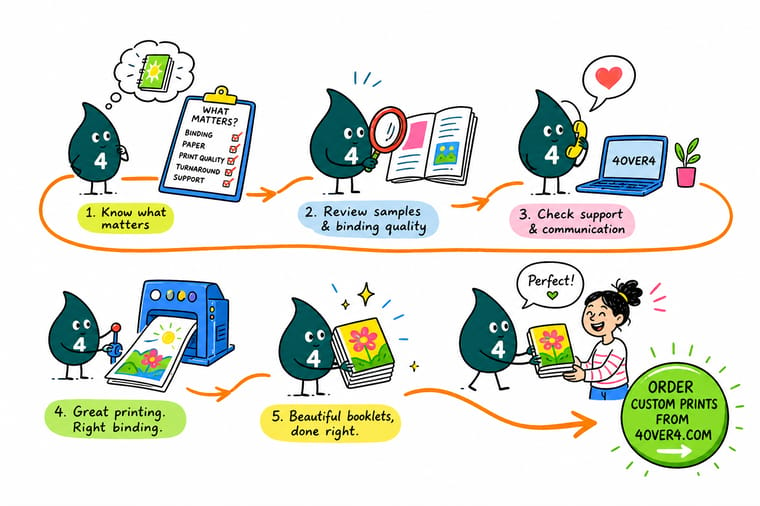
Wally folds one sheet in half and counts four pages, which is why a saddle stitched booklet is always a multiple of four. Under about 64 pages he staples the fold and it opens flat. Over that he glues a square spine so it stands on a shelf, or coils it so it lies dead flat on a bench. Then he checks the proof against the file, not from memory, and asks the one question that decides your delivery date: does the clock start when you order, or when you approve.
Configure a booklet →Specs and pricing
Booklet options, page counts, and starting prices
Compare the binding options side by side, with live configuration choices and starting prices straight from the 4OVER4.COM configurator.

Print it
Order a booklet bound the way the page count wants

Explore more
Where to go next


By the numbers
Saddle stitch, perfect bound and coil bound in house
Common Questions
Your booklet printing questions, answered
How many pages does a saddle stitched booklet need?
A minimum of eight pages, and always a multiple of four. The reason is physical: one sheet folded in half gives you four printable pages, so every sheet you add moves the count by four. If your content runs to 26 pages you either add two blanks or edit down to 24. Counting is the part people get wrong. Every side counts, including the outside front cover, the inside front cover, the inside back cover and the outside back cover. A 24 page booklet means 24 sides of paper, not 24 sheets.
What is the minimum page count for perfect binding?
Around 40 pages on typical text weight stock, because the glue needs a spine thick enough to grip. Below that the block is too thin, the adhesive has almost nothing to bond to, and the spine cracks the first time somebody opens the book flat. If your document sits between 32 and 48 pages, the honest answer is that stock weight decides it. A heavier text stock builds spine faster than a light one, so the same page count can perfect bind on 100 lb text and fail on 60 lb. Perfect Bound Book at 4OVER4.COM starts at $375.05.
Does the cover count in the page count?
Yes, on a self cover booklet where the cover prints on the same stock as the inside. It is quoted separately on a plus cover booklet, where the cover runs on a heavier stock and the page count refers to the text block only. This single ambiguity causes more quote mismatches than anything else in booklet printing. When you compare two quotes, confirm which convention each one used before you assume one printer is cheaper.
Should I pay for a hard copy proof?
Pay for one when color accuracy carries money, when the piece has a spine that has to align across a wrap, or when you are printing a run large enough that a reprint would hurt. Skip it on a short internal run where a PDF proof confirming page order is enough. The real cost is not the proof fee, it is the calendar: a physical proof has to be produced, shipped, reviewed and approved before the press run starts, which typically adds several business days to the job.
How much does booklet printing cost?
At 4OVER4.COM, Standard Booklets start at $240.55, Saddle Stitch Booklet starts at $240.55, Perfect Bound Book starts at $375.05, and Spiral Coil Book starts at $423.28. Those are entry prices for the smallest configuration of each product. Booklet pricing moves on four levers at once: page count, quantity, text and cover stock, and binding. Change the page count by four and the price changes, because you added or removed a whole sheet of paper on every copy in the run.
Can I mix paper stocks inside one booklet?
A heavier cover with lighter text pages is standard and every booklet printer offers it. Mixing stocks inside the text block, for example a gloss photo section bound into an uncoated body, is a custom bindery job rather than a configurator option. If your project needs it, expect a quoted job with a longer schedule instead of an instant online price, and expect the printer to ask exactly where the section falls in the page sequence, because it has to land on a signature boundary.
Get Started
Order 25 saddle stitch booklets from $240.55
Set your page count, pick the binding it supports, choose text and cover stock, and see the price before you commit to anything.
Legal Disclaimer
Gold Standard guarantees apply to all standard orders placed through 4over4.com. Price match requires verifiable proof of a competitor's published price for an equivalent product with matching specifications and turnaround time. Satisfaction guarantee covers manufacturing defects and print quality issues. Contact support with order number and documentation. On-time delivery rate based on tracked orders 1999 to 2026. Individual results may vary based on shipping carrier performance.
