
Ways to Create Creative Stickers That Print as Well as They Look


Nine ideas that hold up on a real press, the material each one needs, and the four file numbers that decide whether the sticker you receive matches the one you designed.
You get a creative sticker by changing one of three things: the cut shape, the material, or the finish. Contour cut to the artwork so the silhouette becomes the mark, print on holographic, glitter or clear film and leave empty space so the material shows, or kiss-cut a set of small designs onto one sheet people can peel from. The artwork rules follow from the choice: bold shapes on glitter, a white underprint on clear, and everything you care about kept an eighth of an inch inside the cut line.
Quick answer
Change the shape, the material, or the sheet
Creativity in stickers comes from the three decisions you make before the artwork matters. Cut the sticker to a contour so the outline carries the idea. Print on a stock that reacts to light, then design around the empty areas where that stock actually shows. Or lay a family of small designs onto one kiss-cut sheet so the sticker becomes something people keep and pick from. Each route has one rule attached: an eighth of an inch of clearance from the blade, a white underprint layer wherever a clear or holographic sticker needs to look opaque, and solid shapes rather than hairlines anywhere the surface has texture.
The Three Levers That Make a Sticker Creative
People usually ask this question hoping for a list of design tricks. The useful answer is structural: a sticker has exactly three things you can push on, and the ones that look inventive are almost always pushing on two at once.
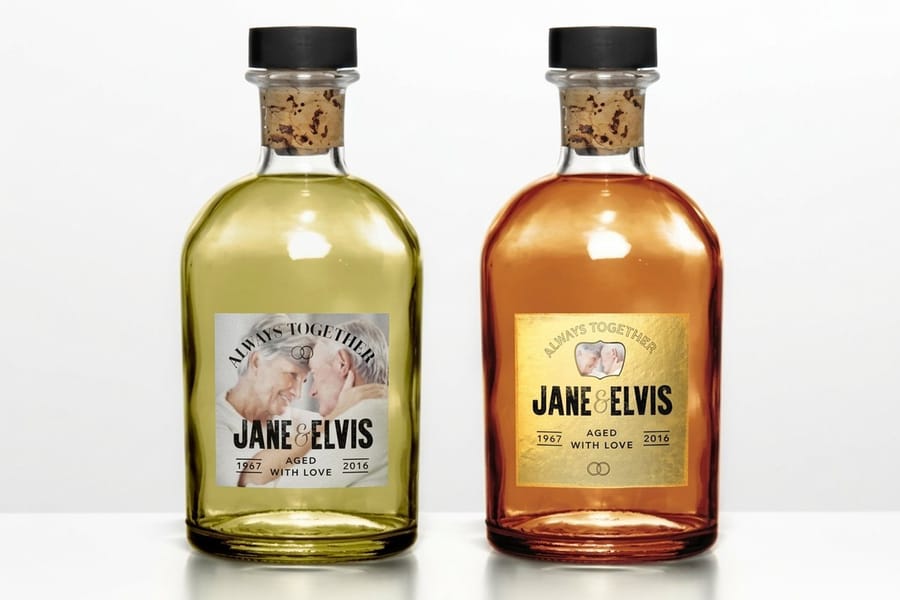
The shape. A rectangle is a default nobody chose. A contour cut that follows the artwork makes the outline part of the mark, which is why a die-cut version of a logo you have used for years suddenly looks new. It costs the same as a square, so there is no reason to accept the square.
The material. Standard white vinyl is a neutral surface. Holographic film, glitter, clear film, metallic and kraft are all surfaces that do something to the ink sitting on them. That is a design decision made before you open the file, and it changes what the artwork should be.
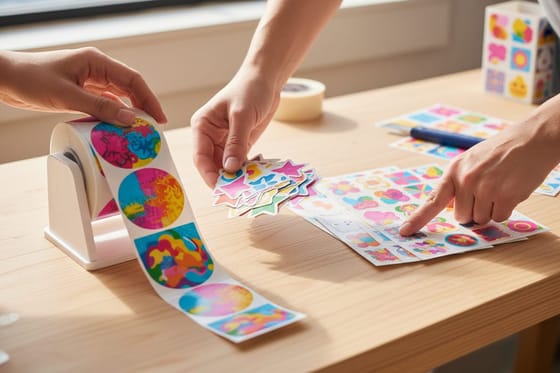
The finish and the cut format. Gloss lifts saturation, matte kills glare and takes a pen, and a laminate is what stands between a sticker and a rainy windshield. On top of that sits the format question: loose singles, a kiss-cut sheet, or a roll. Our rundown of sticker materials goes through each surface in detail, and die-cut stickers start at $93.37 if the shape is the lever you want to pull first.
Pick two of the three and commit. A holographic die-cut in an odd silhouette is striking. A holographic die-cut with a gradient background, a foil layer and a spot gloss is a file that will come back from prepress with questions.
Nine Creative Sticker Ideas That Actually Print Cleanly
These are the effects that survive contact with a press and a cutter. Each one names what it needs from the artwork, because that is where most creative sticker ideas quietly fall apart.
- Let the silhouette be the logo. Cut to the outline of the illustration rather than a shape around it. Works when the artwork has a closed, reasonably chunky outer edge. Fails on artwork with thin dangling limbs, antennae or trailing script.
- Print a window. On clear stickers skip the white underprint in one area so the surface behind shows through. A logo that appears to float on a laptop lid gets that effect for free, and clear stock starts at $25.
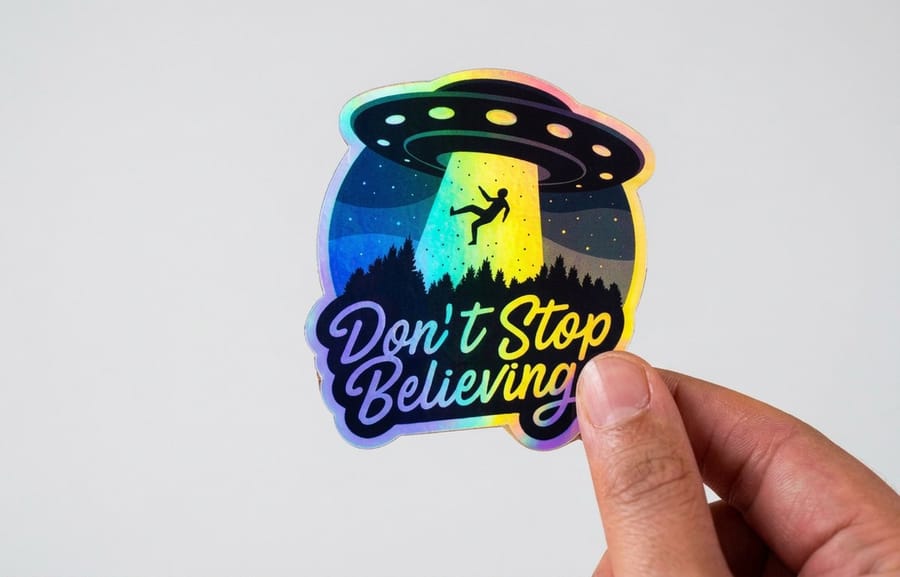
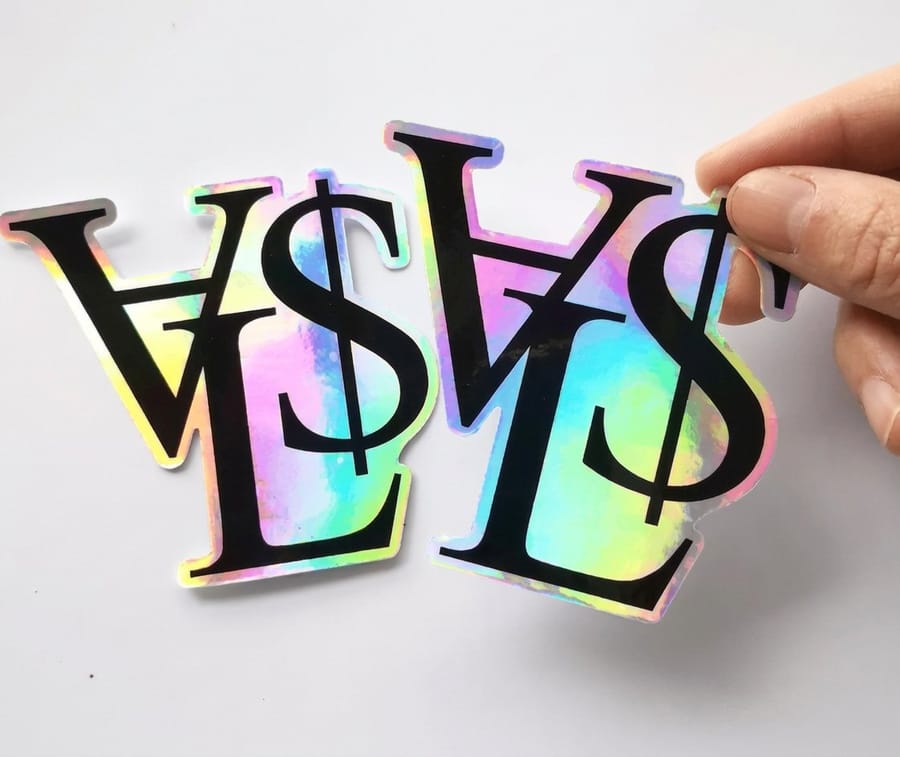
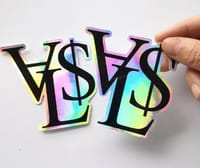
- Use the rainbow as the background. On custom holographic stickers the film only shows where you have not printed. Line art and bold type on a mostly empty sticker is the design that makes the material earn its $322.98 starting price.
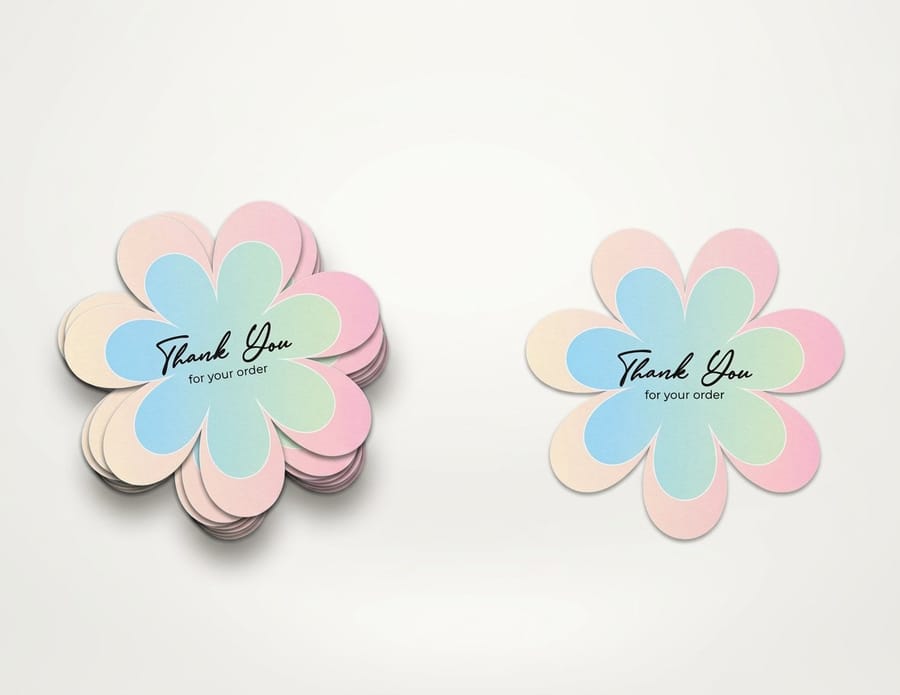
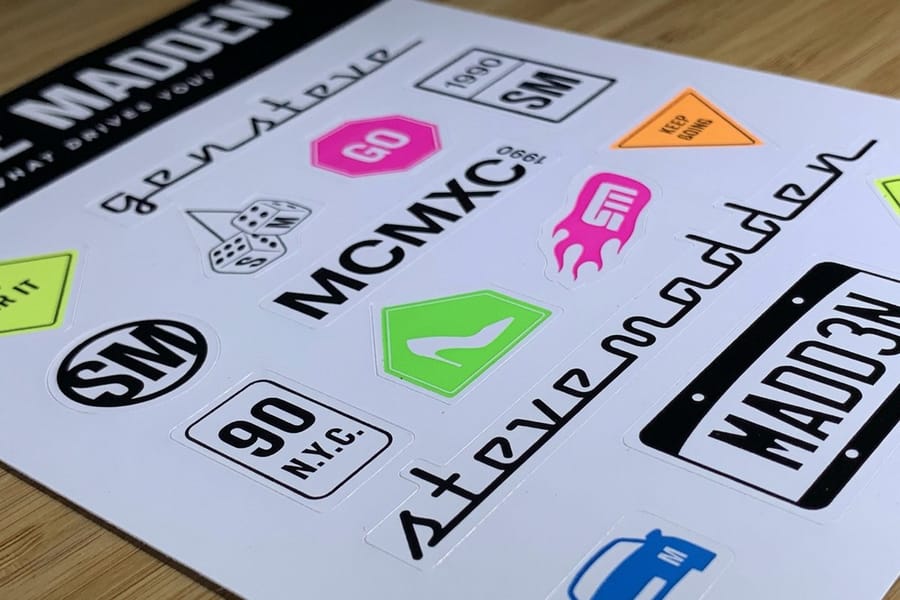
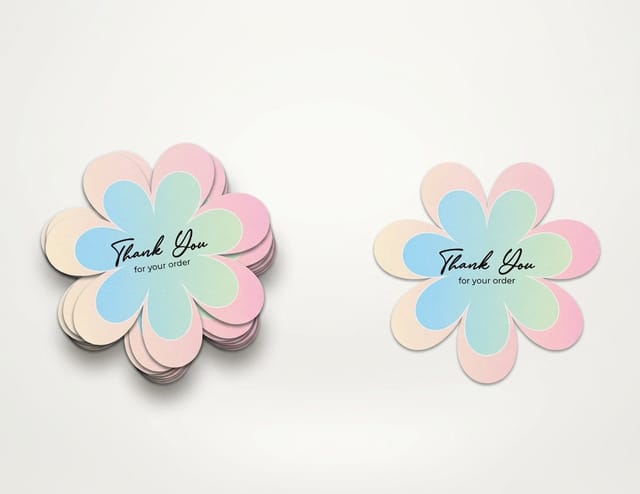
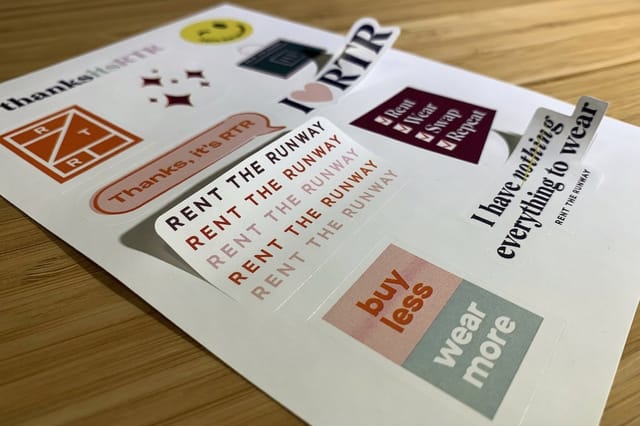
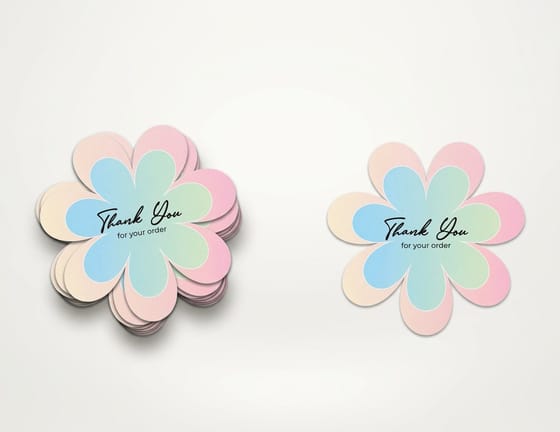
- Build a peel-and-collect sheet. A dozen small designs kiss-cut on one backing turns a giveaway into something people keep and trade. See sticker sheets for the format.
- Go big enough to read from across a room. A single 6 inch sticker beats twenty 2 inch ones for anything that will live on a door, a case or a toolbox.
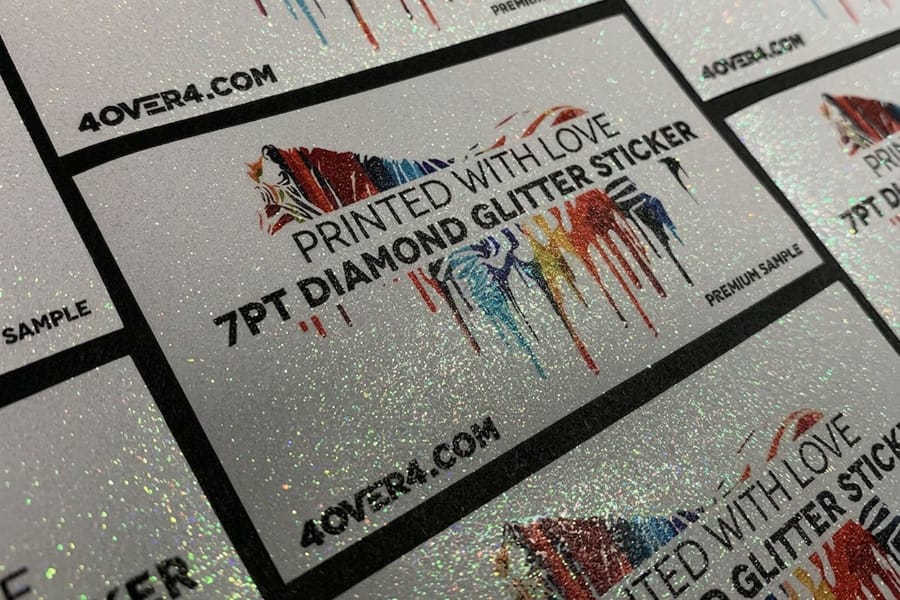
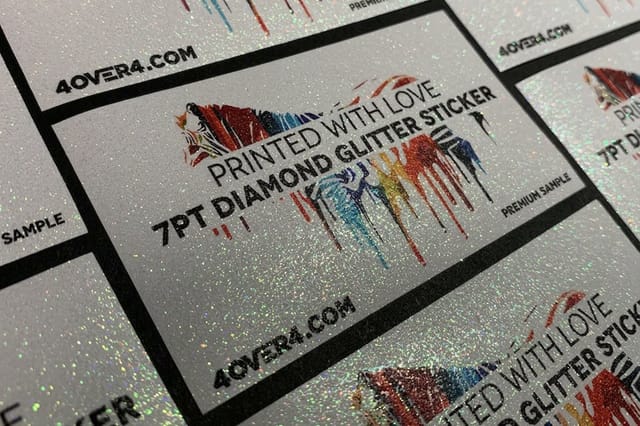
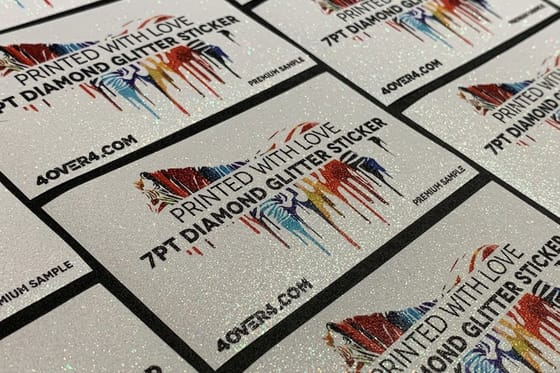
- Add texture the eye reads before the brain. Diamond glitter stickers from $31.84 carry a physical sparkle, but the grain swallows small detail, so keep type large and shapes solid.
- Number them. A limited run marked 1 of 50 changes how people treat the sticker. It costs nothing at design stage if you lay out the numbers as part of the sheet.
- Make it a set with one shared element. Same border, same palette, different subject. This is how a sticker pack reads as a brand rather than as leftovers.
- Match the sticker to where it will be stuck. A long horizontal shape for a laptop hinge, a circle for a jar lid, a slim rectangle for a phone case edge. Designing for the surface reads as intent.
What does not survive: photographic images on glitter, gradients on holographic film, and hairline detail on any die-cut shape. The holographic and lenticular comparison is worth reading before you commit to a moving effect, because the two are constantly confused and only one of them is priced like an everyday sticker.
What Each Specialty Material Does To Your Artwork
The material is not a swatch you pick at the end. It changes how the file should be built, and the differences are big enough to ruin a design that ignored them.
| Material | What it does to the ink | Design for it by | Where it fails |
|---|---|---|---|
| White vinyl | Nothing. True color, full opacity, the reference point. | Building the file normally with a 1/8 in bleed. | Nowhere, which is also why it never looks special on its own. |
| Clear film | Colors go translucent unless a white layer prints under them. | Deciding which areas get white and which stay see-through. | Dark or busy surfaces, where a translucent sticker disappears. |
| Holographic | Rainbow diffraction shows through every unprinted area. | Leaving generous empty space and using bold line work. | Full coverage artwork, which hides the film you paid for. |
| Glitter | A physical sparkle layer scatters light across the surface. | Large solid shapes and type above roughly 10 point. | Fine serifs, thin rules and photographic detail. |
| Kraft paper | The brown stock darkens and warms every color on top of it. | Choosing a palette that suits brown, or going one color. | Anything that needs a true white, and anything that gets wet. |
Read the last column before the second. The fastest way to waste money on a creative sticker is to pick a premium material and then print artwork that cancels it out, and a flood of full-coverage color on holographic film does exactly that. If durability matters more than novelty, standard vinyl with a laminate outlasts all of these, and bumper stickers at $38.44 are built for the worst surface a sticker ever lives on.
Setting Up the File So the Idea Survives the Cutter
Four numbers cover almost every sticker file, and getting them right is the difference between the sticker you designed and the sticker you receive.
Bleed, an eighth of an inch. Extend the background past the cut line on every side. The blade drifts, and bleed is what stops a sliver of bare white edge appearing on part of the run.
Safe area, an eighth of an inch inward. Keep type, logos and thin strokes at least that far inside the contour. This is the rule people break most often, usually with a line of small text hugging the edge.
Resolution, 300 dpi at final size. A sticker is held at arm's length or closer, so it is one of the least forgiving pieces we print. A logo pulled off a website will look fine on screen and soft on vinyl.
The cut path. Supply it as a separate vector path, offset outward from the artwork rather than sitting exactly on it. A path that hugs the illustration exactly leaves the blade no room, and the result reads as a shaky outline.
Outline your fonts, flatten the effects you cannot explain, and check the shape at actual size rather than zoomed in. Start from a correctly sized layout in our blank template library, and if you are unsure what size the idea wants, the standard sticker size guide lists what each format is normally ordered at. Our step by step design walkthrough takes the same file from blank artboard to upload.
Cutting Machine at Home or Printed Properly
Both are legitimate, and the honest split is quantity. A cutting machine on a desk is genuinely better for a handful of one-off shapes, for prototyping a die line before you commit, and for anything you want tonight.
It stops being better at around thirty pieces. Home stickers come off an inkjet, which means water soluble ink that needs a laminate sheet applied by hand, a cut made one sheet at a time, and a color that drifts as the cartridge empties. There is no white ink in a desktop printer at all, which rules out clear stock and holographic film entirely. That is not a small gap, since two of the most striking creative options depend on it.
Printed stickers arrive laminated, cut to the same contour on every piece, and colour-matched across the run. Premium stickers start at $29.16, which for a hundred pieces is well under what the paper and laminate alone would cost. Our sticker machine versus printing comparison puts the two side by side, and the sticker pricing guide shows where the cost per sticker drops as the quantity climbs.
The sensible workflow uses both. Cut a test shape at home to see whether the silhouette reads, fix the contour, then order the run from the sticker printing range once the die line is proven.
Wally explains creative stickers
Cut it, choose the stock, then design the empty space
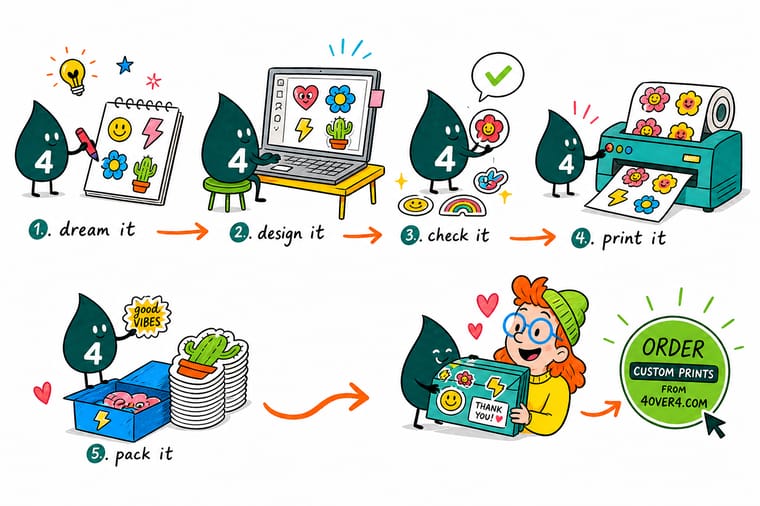
Wally starts with the blade, not the artwork. He draws the cut path around the illustration first, offsets it outward so the cutter has room, then decides what the sticker is printed on. On holographic film he deletes half the background, because the rainbow only shows where no ink lands. On clear film he adds a white layer under the parts that must look solid and leaves the rest see-through. On glitter he throws out the thin strokes, since the sparkle eats them. Same picture, four different stickers, and the one that looks most inventive is usually the one with the most empty space left in it.
Order die-cut stickers →Specs and pricing
Sticker materials, sizes, and starting prices
Compare the three routes side by side, with live configuration choices and starting prices straight from the 4OVER4.COM configurator.

Print it
Order the stickers behind the ideas above
Explore more
Where to go next

By the numbers
Sticker printing you can count on at 4OVER4
Common Questions
Your creative sticker questions, answered
What is the fastest way to make a plain design look creative?
Change the cut, not the artwork. Take the logo or illustration you already have and order it as a die-cut sticker so the outline follows the shape instead of sitting in a rectangle. The silhouette does the work, and it costs the same as a square. If the artwork is genuinely simple, the second lever is stock: the identical file on holographic film reads as a completely different object because the background moves when the sticker tilts.
Can you print white on clear or holographic stickers?
Yes, and on those two materials it is the decision that matters most. Clear and holographic stock have no white paper behind the ink, so cyan, magenta, yellow and black all print translucent and wash out. A white underprint layer is laid down first, then the color goes on top of it, and the result looks like a normal opaque sticker. Where you leave the white layer out, the clear film or the rainbow foil shows straight through the color. Plan which parts of the design get it before you send the file.
Do glitter and holographic stickers survive outdoors?
Better than paper, worse than plain laminated vinyl. Both are vinyl based and shrug off water, so a water bottle or a laptop is fine. Direct sun is the limit: prolonged UV dulls the sparkle and can lift the color long before the adhesive gives up. For a car window or an outdoor sign use standard vinyl with a UV laminate instead, and keep the specialty stock for things that live indoors or in a bag.
Should I order die-cut singles or a sticker sheet?
Order singles when one design carries the message, for example a logo you hand out at a booth or slap on a shipping box. Order a sheet when you have a family of small designs that belong together, because a sheet lets someone peel one, keep the rest, and come back to it. Sheets also cut the cost per sticker sharply, since you are paying for one printed piece instead of eight. The trade-off is that a sheet is a single item to give away, so it works as a product or a thank-you, not as something you scatter across a room.
How small can the detail on a die-cut sticker be?
Keep strokes at or above half a point and type at 6 point or larger, and keep both an eighth of an inch away from the cut line. The press holds finer detail than that without complaint. The cutter is what limits you, because the blade tracks the contour with roughly a sixteenth of an inch of drift across a run. A hairline that sits right on the edge of the shape will be perfect on some stickers and shaved off on others, which is worse than not printing it at all.
Is it cheaper to make stickers at home with a cutting machine?
For fewer than about thirty stickers, usually yes, once you already own the machine. Past that the maths flips. A home inkjet lays water soluble ink on sticker paper that needs a laminate sheet on top to survive a drink, each sheet is cut one at a time, and the color shifts between batches. Printed stickers arrive already laminated, cut to the same contour every time, and priced by the hundred. Clear stickers and vinyl stickers start at $25 at 4OVER4.COM, which is roughly what a pack of good sticker paper plus laminate costs.
Get Started
Got the idea? Let us cut it.
Upload the artwork, pick the shape and the stock, and we print stickers that arrive laminated, cut clean, and the same on every piece in the box.
Legal Disclaimer
Gold Standard guarantees apply to all standard orders placed through 4over4.com. Price match requires verifiable proof of a competitor's published price for an equivalent product with matching specifications and turnaround time. Satisfaction guarantee covers manufacturing defects and print quality issues. Contact support with order number and documentation. On-time delivery rate based on tracked orders 1999 to 2026. Individual results may vary based on shipping carrier performance.
