
Gold Embossing Explained and When Gold Foil Is the Better Buy


Embossing sculpts the paper. Foil supplies the gold. They combine in one sculpted die or in two passes, each leaves its own mark on the back of the sheet, and the die maker needs the file built a particular way.
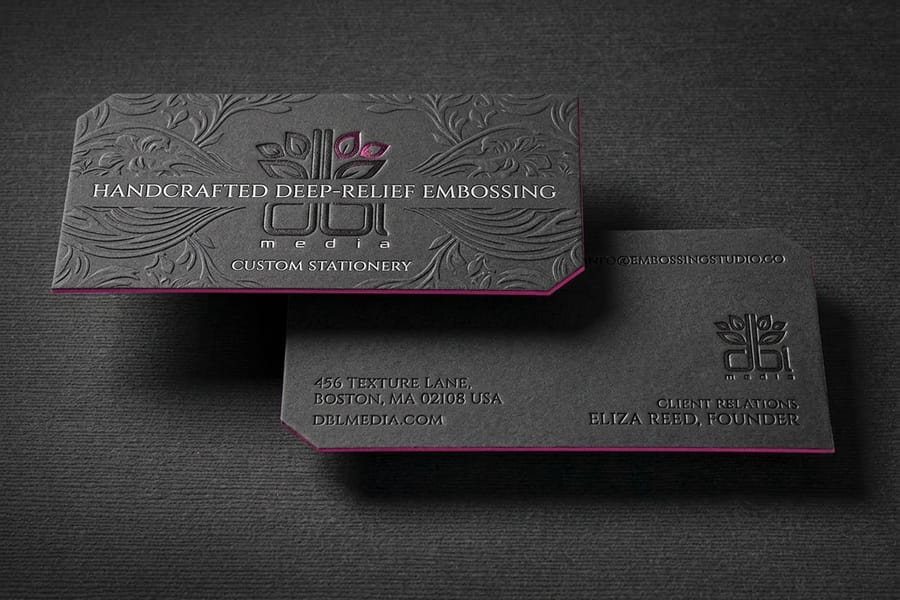
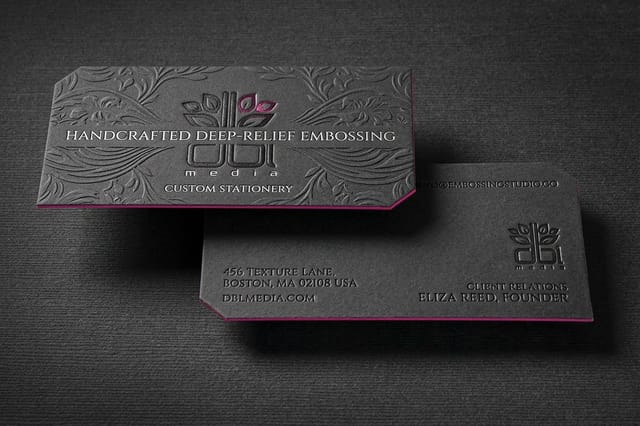
Gold embossing is two processes in one strike: a die pushes the artwork up out of the sheet, and gold foil is pressed onto the raised face at the same moment. Embossing on its own adds no color, so a blind emboss on white stock stays white. Because the die moves the paper rather than coating it, a raised front always leaves a matching recess on the back, and the depth you can get is capped by the caliper of the stock.
Quick answer
The die makes the shape, the foil makes it gold
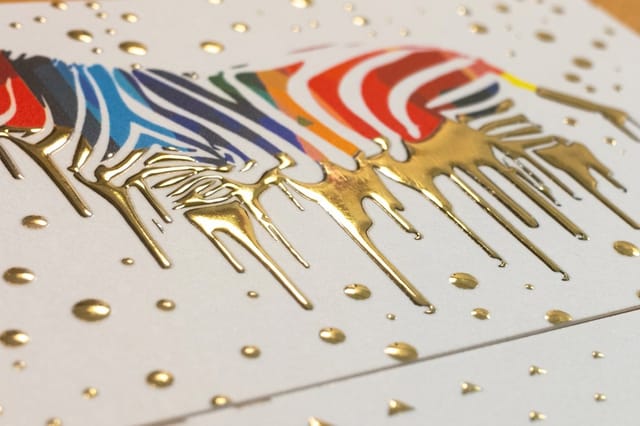
Embossing changes the shape of the paper and adds no color of its own. Gold arrives as a metallic foil pressed on with heat, either flat on an undisturbed sheet or, with a sculpted combination die, onto the raised face in the same pass. Everything that moves the sheet shows on the reverse, so an emboss leaves a recess and a deboss leaves a bump. Stock caliper caps the depth, and a print built raised foil gives a similar look without any tooling at all.
What Happens in the Press When a Card Is Embossed
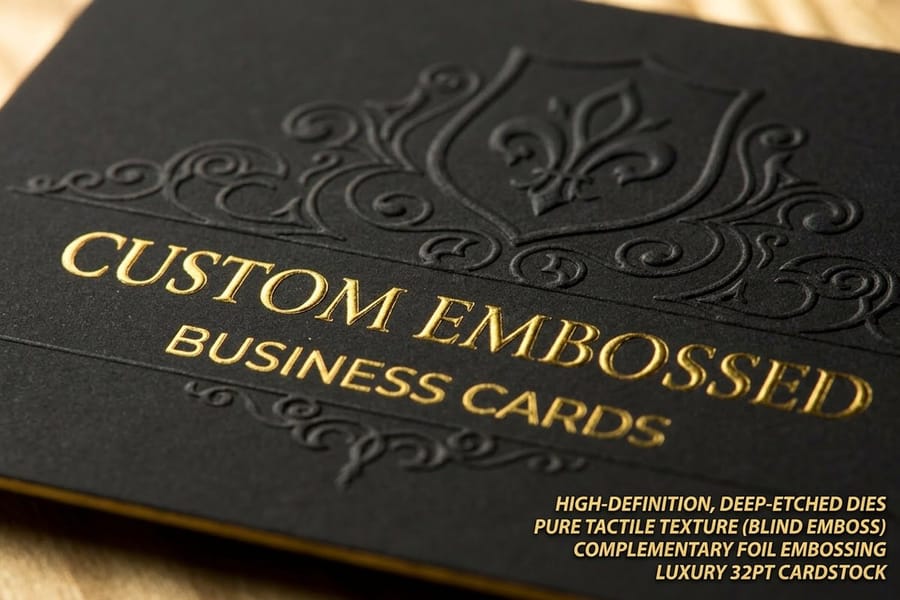
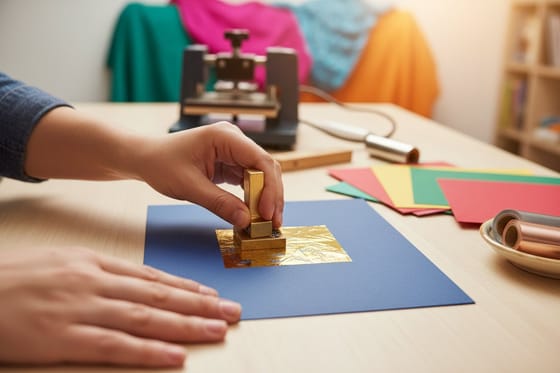
Embossing is a shaping process, not a printing process. Your artwork is cut into a pair of dies, one raised and one recessed, and the sheet is squeezed between them under pressure and usually a little heat. The fibers stretch and take the new shape permanently. Nothing is added to the card, which is the fact that surprises people who ordered gold and got a white logo standing up off white stock.
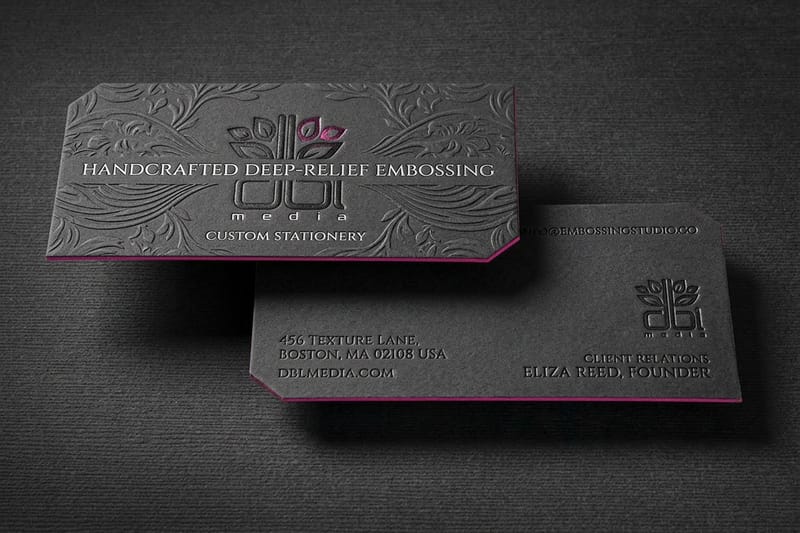
That colorless result has a name in the trade: a blind emboss. It is a real finish and a good one on heavy uncoated stock, but it only reads when light hits the card at an angle. Turn the card flat under an office ceiling and a blind emboss can vanish.
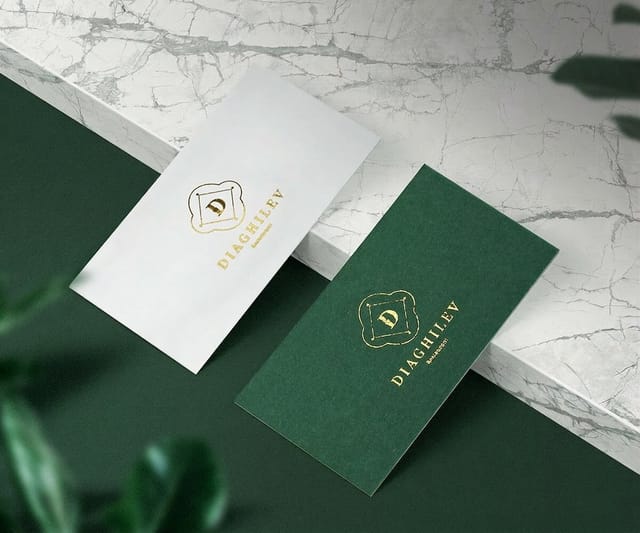
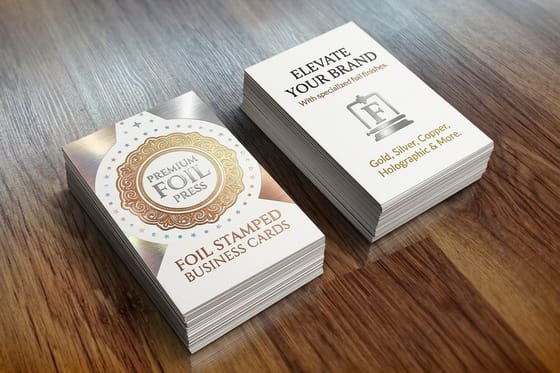
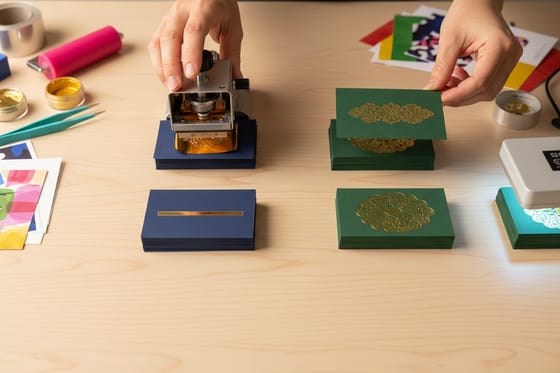
To get gold into the shape you need foil, and there are two ways to combine them. The clean way is a sculpted combination die that carries the foil and forms the relief in one strike, so the gold sits exactly on the raised face with no registration gap. The other way is to foil stamp first and emboss over the foil in a second pass, which introduces registration tolerance: a fraction of a millimeter of drift shows as a sliver of bare paper along one edge of the shape. If the artwork is small or delicate, ask for the single hit.
Our embossed business cards run on that die based process, and the wider custom embossing and stamping guide covers the same tooling applied to folders, covers and stationery.
Gold Embossing, Gold Foil, Deboss and Raised Foil Compared
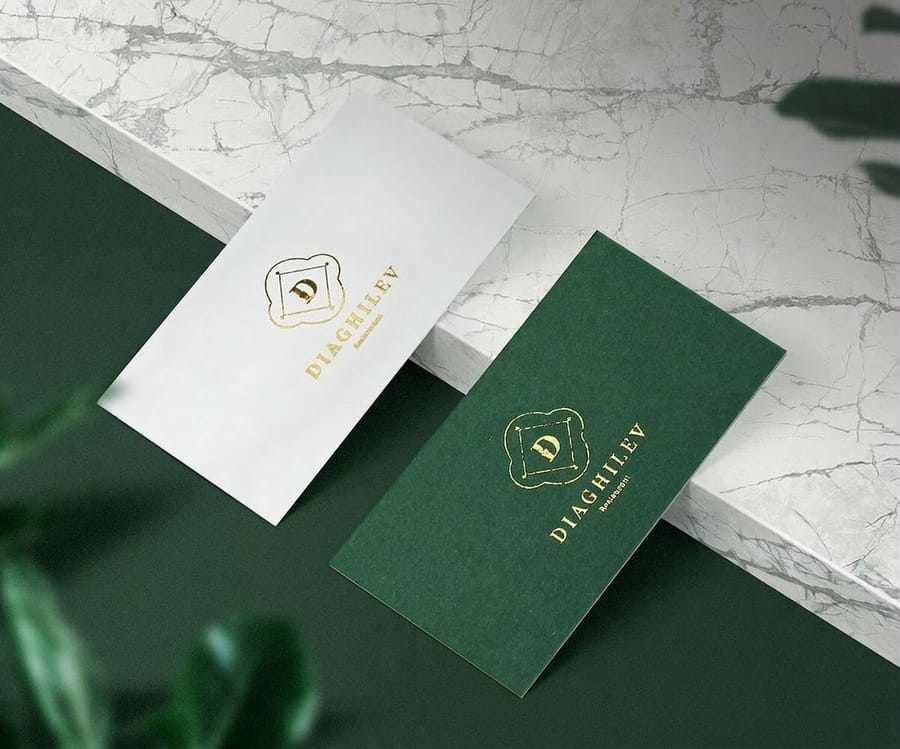
Four finishes get quoted against each other on almost every luxury card brief, and the fastest way to separate them is to ask two questions: does the paper move, and is anything added on top.
| Finish | Paper moves? | Adds gold? | Back of the sheet | Starts at |
|---|---|---|---|---|
| Blind emboss | Yes, pushed up by a die. | No, texture only. | A matching recess. | $251.36 |
| Flat gold foil | Barely, the sheet stays level. | Yes, true metallic foil. | Little or nothing visible. | $222.13 |
| Deboss and letterpress | Yes, pressed down. | Only where ink is carried. | A matching bump. | $251.36 |
| Raised foil | No, the relief is built on top. | Yes, foil over a raised layer. | Flat and still printable. | $86.78 |
Read the fourth column before the fifth. A two sided card with a full bleed photo on the reverse fights an emboss, because the recess sits under the image. Raised foil is the one option here that gives height and gold while leaving the back untouched, which is why it wins so many jobs that started out as an embossing brief. What it will not give you is sculpted depth or a multi level effect, since the relief is a uniform build rather than a shaped die.
If the choice is really between the two foil routes rather than between foil and relief, foil stamping vs raised foil goes deeper on the trade, and gold foil vs metallic gold ink explains why printed gold ink never reaches the same brightness.
Building the File So the Die Comes Out Right
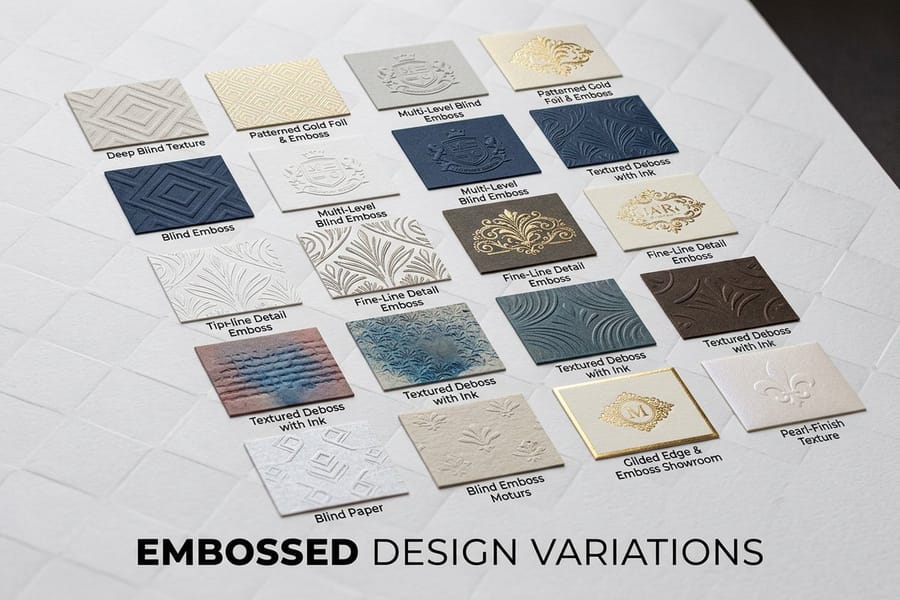
The die is cut from your file, so a vague file makes a vague die. Supply the emboss and the foil as separate vector shapes, each on its own clearly named layer or spot color, filled 100 percent in a single flat color. The shape defines the tool, not the appearance, so a drop shadow, a soft glow or a gradient in that layer is meaningless and will simply be flattened out by the die maker.
- Vector only. A placed JPEG or PNG cannot be cut into a die. Convert type to outlines and keep the logo as paths.
- Minimum weights. Rules at half a point or heavier, type from about 8 point up, and no hairline strokes. Thin lines produce a shoulder too shallow to see.
- Keep shapes apart. Two raised elements a hair apart merge into one blob when the shoulders meet. A little extra spacing costs nothing.
- Stay off the trim. Hold the raised area back from the cut edge, where there is no surrounding sheet to brace against and the emboss distorts.
- Mind the reverse. Lay your back side design over the emboss shape in the file and move anything that lands on the recess.
- Say what you want raised. Name the layer plainly, because a die maker reading a file called Layer 4 has to guess.
Set the document up at the finished size with the usual bleed and safety margins. Our blank template library has correctly built starting files, and the stock and coating guide for embossed cards covers the caliper decision that limits how deep the die can go.
Which Gold Finish to Actually Order
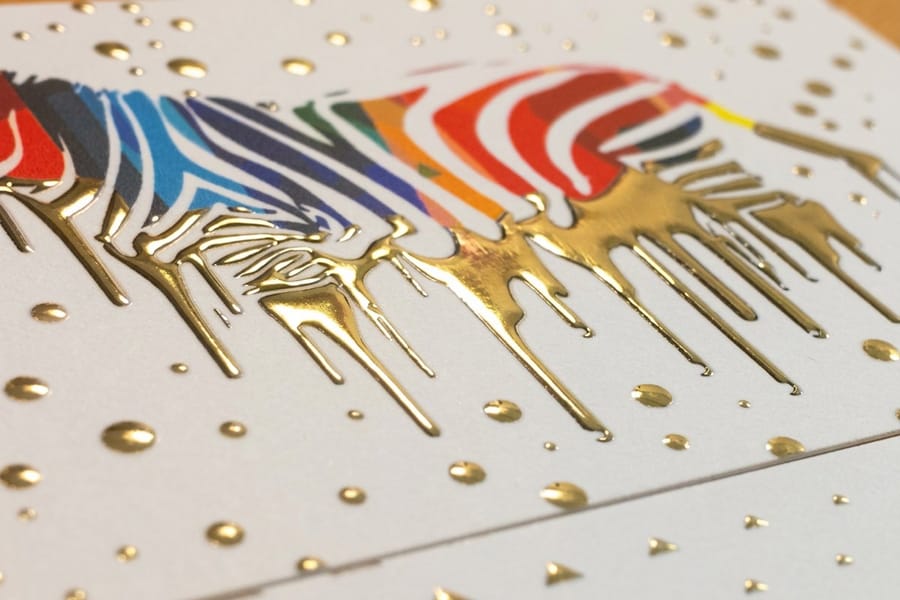
Match the finish to how the piece gets used, not to how it looks in a mood board. A card that gets handed across a table and turned over rewards relief, because touch is doing the work. A card that mostly lives in photographs rewards flat foil, because a blind emboss barely survives a product shot.
For a first order, raised foil business cards at $86.78 are the sensible test. You get gold, you get height under a fingertip, and the back stays flat and printable, all without paying for tooling. If it lands well and the brand is going to hold this identity for years, step up to a sculpted embossed card at $251.36 or a flat foil card at $222.13, where the die gives you edges and depth that a build up process cannot.
Where gold embossing does not earn its money: bulk mailers that get skimmed, anything reprinted every few weeks with changing details, and any job where the reverse carries dense information. Put the budget into stock weight there instead, and compare against standard business cards at $17.57 before you commit. Everything we emboss or foil sits in the embossing collection and the foil collection, and the wider business card printing range shows where each finish fits the rest of the line.
Wally explains gold embossing
The die makes the shape, the foil makes it gold
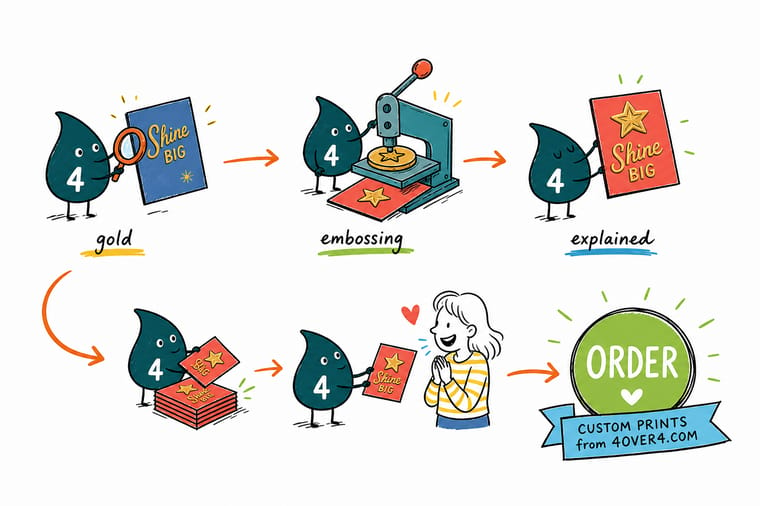
Wally squeezes the card between a raised die and a matching recessed one, and the artwork stands up off the sheet. On its own that is all he gets: a shape you can feel, in the color the paper already was. Feed a ribbon of gold foil in with the same die and the raised face comes out gilded in one hit. Turn the card over and you can see the price of it, a recess exactly where the front rises, which is why he keeps the fine print on the back well clear.
Order embossed business cards →Specs and pricing
Embossed, foiled and raised foil side by side
The same card in three finishes, with live configuration choices and starting prices straight from the 4OVER4.COM configurator.

Print it
Order a gold finish people can feel
Explore more
Where to go next

By the numbers
Dies, foil and embossing, all under one roof
Common Questions
Your gold embossing questions, answered
What is gold embossing?
In everyday use it means one of two things, and they are worth separating before you order. Plain embossing presses the sheet between a male and a female die so the artwork stands up off the card, and it adds no color at all, which is why a blind emboss on cream stock looks like cream, not gold. Foil embossing uses a single sculpted die that carries gold foil, so the shape rises and the raised face is gilded in the same pass. If you asked for gold and got texture only, the job was blind embossed rather than foil embossed.
Is gold embossing the same as gold foil stamping?
No. Foil stamping presses a heated die against a roll of metallic foil so the foil releases onto the sheet, and the card stays flat. Embossing sculpts the paper. Foil gives you color and shine with almost nothing happening to the back of the card. Embossing gives you relief you can run a thumb across but no color. Combining them costs more than either one because the die has to be sculpted rather than flat etched.
Does embossing show on the back of the card?
Yes, always. The paper has been moved, not coated, so a raised front means a recess on the back and a debossed front means a bump. Plan the reverse around it: keep body copy, QR codes and phone numbers clear of the area behind the emboss, or accept that they will sit on uneven ground. This is the single most common surprise on a first embossed order.
What stock do I need for a gold emboss?
Thicker is safer. A 14pt or 16pt sheet takes a clean shallow emboss and that is what most business cards use. If you want visible sculpted depth, a multi level effect, or a large raised area, move to 32pt or a soft uncoated cotton stock, which stretches instead of cracking. Heavily coated glossy stock is the riskiest choice, because the coating can craze along a tight radius where the paper bends hardest.
How fine can the artwork be?
Give the die something to hold. Solid shapes, monograms, heavy rules and type from roughly 8 point up in a weight that is not hairline all emboss cleanly. Hairline strokes, fine serifs at small sizes and screened tints do not, because the die edge cannot make a sharp shoulder in a line that thin. Keep raised elements a few millimeters apart so the shoulders of two shapes do not merge, and keep them clear of the trim edge, where the sheet has nothing to brace against.
Will gold embossing show up in a photo of the card?
A blind emboss mostly will not. It reads by shadow, so it needs raking light and a real hand holding the card, and it usually disappears in a flat product shot or a scan. Flat foil is the opposite: it photographs bright and holds up on screen. If the card will live in listing photos, on a website, or in a pitch deck, foil carries further than relief.
How much more does an embossed card cost than a plain one?
At 4OVER4.COM, Embossed Business Cards start at $251.36 and Foil Business Cards at $222.13, against $17.57 for Standard Business Cards. The gap is mostly the tooling, since a die has to be made for your artwork before a single card runs. Raised Foil Business Cards start at $86.78 and get you a gold, raised surface without a die, which is the practical middle ground for most first orders.
Get Started
Order 100 raised foil business cards from $86.78
Pick your stock, choose a sculpted emboss, a flat foil or a raised foil finish, and we print cards that hold their edge under a fingertip.
Legal Disclaimer
Gold Standard guarantees apply to all standard orders placed through 4over4.com. Price match requires verifiable proof of a competitor's published price for an equivalent product with matching specifications and turnaround time. Satisfaction guarantee covers manufacturing defects and print quality issues. Contact support with order number and documentation. On-time delivery rate based on tracked orders 1999 to 2026. Individual results may vary based on shipping carrier performance.
