
Gold and Silver Foil Printing Explained, From Art File to Finished Stamp


Emma is our prepress and print production voice, built from the knowledge of our production team, with over 20 years in printing.
Gold foil printing is a heated stamp, not an ink, and foil is the finish people notice before they read a word. This guide covers how the stamping process works, when gold beats silver, how to build artwork that transfers cleanly, and what the premium actually costs on cards and flyers.
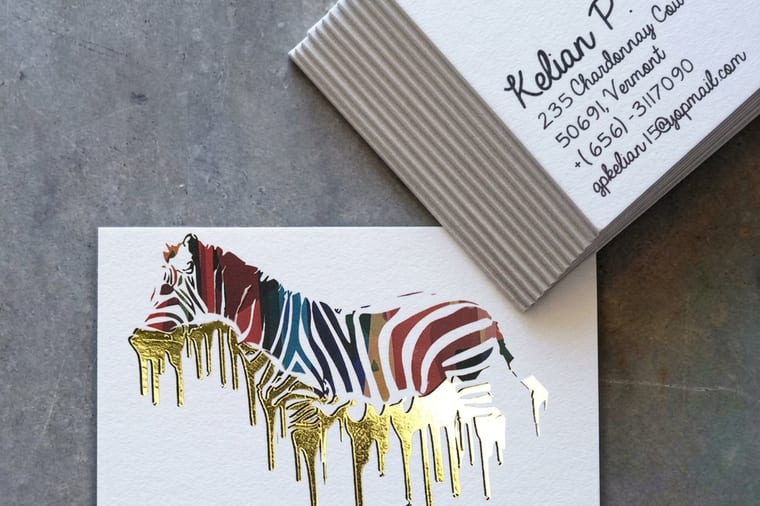
Gold and silver foil printing is a stamping process, not an ink. A heated metal die presses a roll of metallic film onto the sheet, the adhesive bonds it to the paper, and the carrier film peels away leaving a true mirror finish. Gold reads warm and traditional, silver reads cool and modern. Foil artwork must be supplied as solid vector shapes on their own layer, with no gradients or tints, because a die can only cut one shape at one depth.
Start here
A metal die, heat, and a roll of foil
Foil stamping transfers a thin metallic film onto paper using a heated die and pressure. The die is etched to the exact shape of your artwork, so the finish only appears where you designed it to appear. Gold suits warm, classic and traditional palettes, silver suits cool, modern and photographic ones. The whole job succeeds or fails at the file stage, because the die can only reproduce solid vector shapes, which is why the foil elements need their own clean layer.
Gold foil printing
Gold foil printing on cards and flyers, in numbers
Gold foil printing is stamped, not inked: a heated die presses gold film onto the sheet wherever your foil layer says. We stamp it on foil business cards from 500 for $222.13, on 16 point silk laminated or 14pt uncoated cover, and on fat foil business cards from 250 for $240.55, on 32pt UltraWhite uncoated. Foil flyers start at 500 for $328.42 at 4 by 6 to 5 by 7 inches. Each run takes 9 business days, with the foil on the front, the back or both.
What foil printing is and how the metal actually gets onto the paper
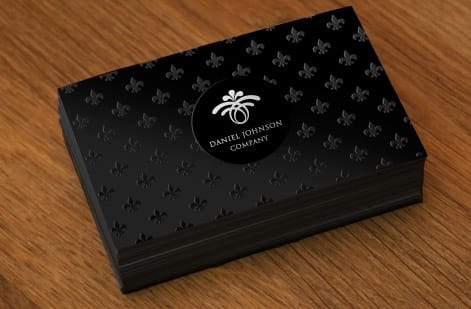
Foil printing, more accurately called foil stamping, is a finishing process that happens after the ink is dry. There is no metallic ink involved and no fifth color on the press. Instead, a metal die is etched into the exact shape of your artwork, mounted, heated, and pressed down through a roll of foil onto the sheet.
The foil itself is a stack of layers on a thin polyester carrier. Under the carrier sits a release coat, then the metallized color layer that gives the shine, then a heat activated adhesive on the underside. When the hot die makes contact, the release coat lets go and the adhesive grabs the paper. The carrier film peels away and the metal stays exactly where the die touched, and nowhere else.
That is why foil looks different from anything you can print. It is a mirror sitting slightly below the surface of the sheet, so it flashes as the piece tilts and goes dark when it does not face a light source. If you want the full comparison against a printed alternative, our guide to gold foil vs metallic gold ink printing puts the two finishes next to each other, and the overview of different types of printing shows where stamping fits in the wider process family.
Gold, silver and the finishes in between
Gold and silver are not interchangeable. Gold is warm, so it belongs with cream, kraft, deep navy, burgundy, forest green and matte black. It carries a traditional, established feeling, which is why law firms, jewellers, restaurants and wedding stationery reach for it first. Put gold next to a cool gray palette and it can look slightly yellow rather than rich.
Silver is cool and neutral. It sits comfortably against white, gray, charcoal, icy blue and photographic imagery, and it reads as modern rather than ceremonial. Silver on a bright white heavy stock is one of the cleanest looks available in print, because there is no color temperature argument happening on the sheet at all.
Beyond the two classics, foil is available in rose gold and copper for a softer warm tone, matte metallics that reflect without the glare, and holographic foils that split light into color as the piece moves. Matte gold in particular is worth knowing about, because it keeps the luxury signal while staying readable under bright retail lighting. If you like finishes that change with the viewing angle, 3D lenticular business cards take that idea considerably further.
The products where foil stamping earns its keep
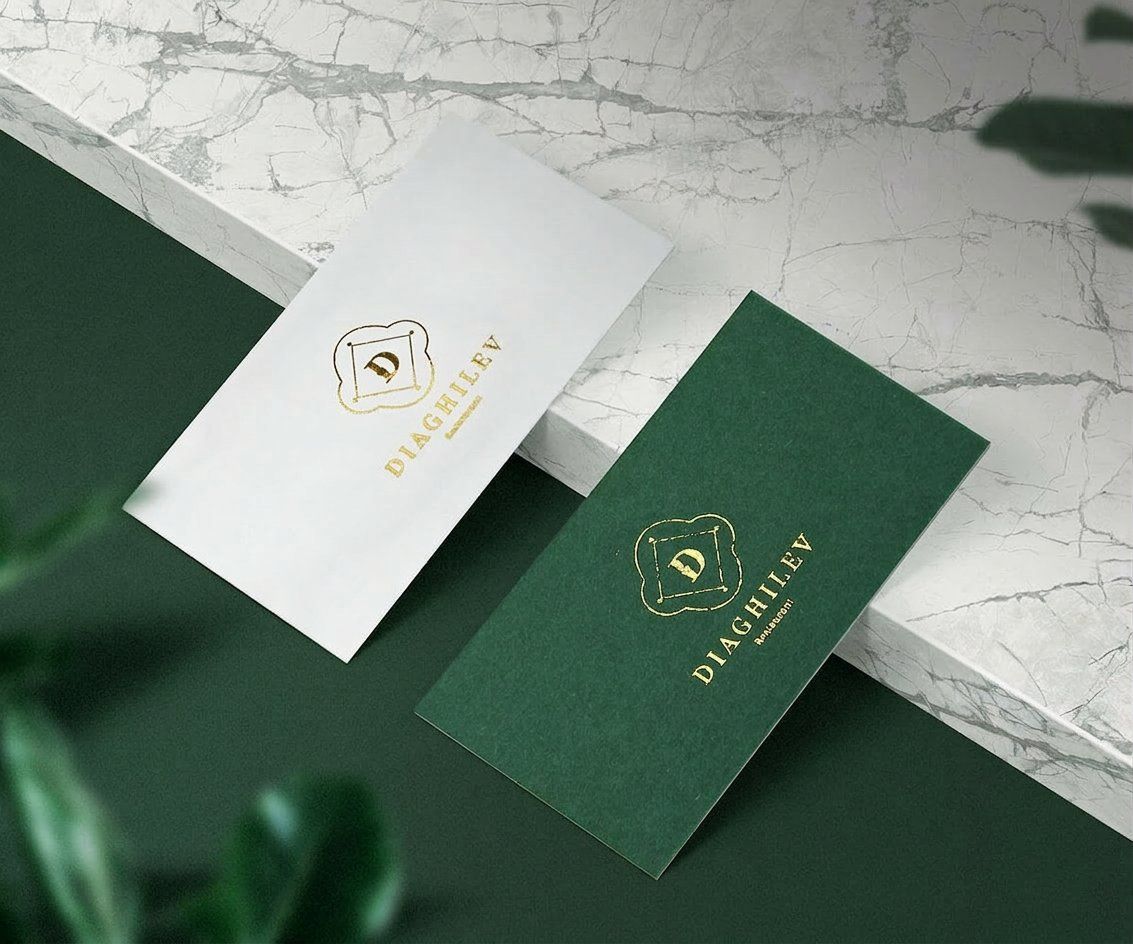
Foil pays off where the piece is handled, held and looked at closely. That is the honest test. A sign seen from across a room gains nothing from a mirror finish, but a card handed over at a meeting gains a great deal, because the recipient tilts it and the metal moves.
- Foil Business Cards starting at $222.13. The default choice for a stamped logo or name on a standard weight card.
- Fat Foil Business Cards starting at $240.55. Extra thick stock, so the metallic mark lands on a card with real substance and a visible edge.
- Foil Flyers starting at $328.42. For launches, menus, event announcements and anything mailed where opening the envelope should feel like an occasion.
Invitations and announcements are the other natural home for the process, and if you are pricing a wedding suite it is worth reading our MOO wedding invitations alternative before you commit. Smaller inserts benefit too, since one stamped rule on a buckslip costs very little attention and buys a lot of perceived value. Browse the full foil printing collection to see everything we stamp.
Designing files for foil, the fill area rules that decide the result

Foil artwork is not a color, it is a shape. The die can only be one depth and one outline, so every foil element has to be a solid, flat, filled vector shape. Build those shapes in their own layer, name it Foil, and fill everything on it 100% K so the pre press team can see the outline with no ambiguity. Anything soft, faded or blurred cannot be made into metal.
The rules that matter most in practice:
- No gradients, tints or screens. A 40% tint of your foil shape does not produce 40% foil, it produces a die that either fills solid or fails.
- Convert type to outlines. Live text invites a font substitution at exactly the wrong moment. Outlines guarantee the die matches what you approved.
- Respect the stroke weight. As a rule of thumb, hairlines below roughly half a point tend to break up, and very light serifs lose their thin strokes. Give delicate marks a slightly heavier weight than you would for ink.
- Watch enormous solid areas. Large uninterrupted blocks can trap air and show pinholes. Breaking a big solid into shapes, rules or reversed type is usually both safer and better looking.
- Keep clearance. Hold foil elements away from the trim edge, away from folds and scores, and give them breathing room from fine four color detail so a small registration shift never becomes visible.
- Do not knock foil out of thin printed outlines. Trapping metal precisely inside a hairline box is the most common source of disappointment. Let the foil element stand on its own.
Send the layered file with the foil layer clearly labeled and a flattened preview showing where the metal goes. Two minutes of labeling saves a day of back and forth. If you are also thinking about how the finished card will be received, business card etiquette around the world is a useful companion read while you finalise the layout. For foil on product labels rather than paper, see our guide to foil labeling.
What foil costs, why it costs that, and how long it takes

Four things drive the price of a foil job. First, the die, which has to be etched for your specific artwork and is a fixed cost no matter how many pieces you order. Second, the stamping pass, which is a separate run through a press with its own setup and registration. Third, the quantity, which spreads the first two costs across more pieces. Fourth, the stock, since foil wants a heavier sheet with enough body to hold the impression.
The practical consequence is simple. Foil is expensive in small quantities and surprisingly reasonable in sensible ones. Ordering twice in a quarter means paying the setup twice, so if you know you will need cards again in three months, order for six months now. The same logic applies to a design change: lock the artwork before the die is made, because a revised shape means a revised die.
On timing, treat foil as a job with an extra stage rather than a slow job. Production covers die making, press setup, stamping, checking and trimming, and shipping transit is counted separately on top. Pick your turnaround and quantity together on the product page so the live price grid shows you the real trade off, and approve a clean file first time. Nothing delays a stamped job like artwork that has to be rebuilt.
Ordering foil printing at 4OVER4 without any guesswork

Pick the product first, because the product decides which foil colors and stocks are on the menu. Open Foil Business Cards or Foil Flyers, choose the size, the stock and the quantity, and watch the price update as you go. Everything you can configure is listed on the page itself, so there is no separate quote to wait for. Foil business cards come in 2 by 3.5, 2.125 by 3.375, 1.5 by 3.5 and 2.5 by 2.5 inches from 500, foil flyers in 4 by 6, 4.25 by 5.5, 4.25 by 6 and 5 by 7 inches from 500, and both take 9 business days.
Then upload the layered artwork with the foil layer named and separated. If you would rather feel the stock before committing a whole run to it, request free paper samples first, because the difference between a standard cover weight and an extra thick card is obvious in the hand and invisible on a screen. Our team checks the foil layer before the die is made and comes back to you if a shape looks too fine to hold.
If you are still deciding between finishes, spend ten minutes in the specialty printing articles before you order. Foil is one of several ways to make a piece feel considered, and the right answer depends on the format and the audience as much as the budget.
Wally explains foil
The metal only lands where the die touches
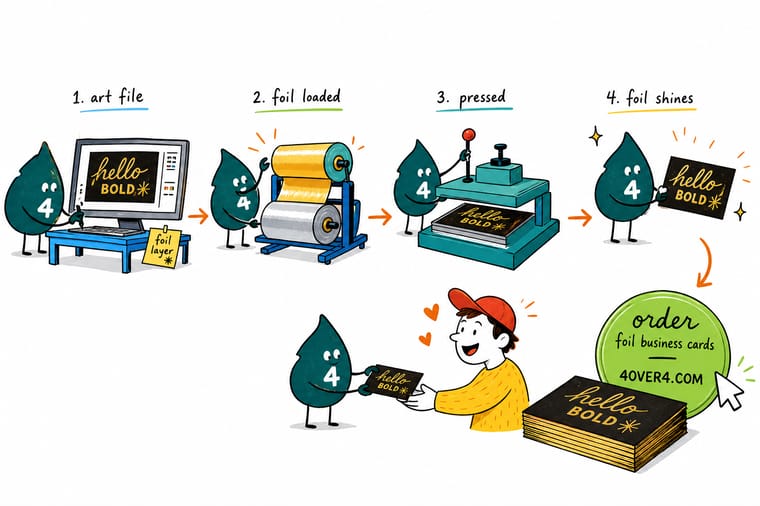
Wally likes foil because it is honest. There is no clever screen or halftone hiding in there, just a hot die, a film and a shape you drew. So he draws the shape properly first: solid fill, own layer, no gradients, nothing thinner than a stroke that can survive the press. Then he leaves plenty of plain paper around it, because a mirror only looks like a mirror when something dull sits next to it.
Design and print foil cards →
Infographic
How a foil stamp is built, layer by layer
One frame, two halves. The top row is what a roll of foil is actually made of, four layers from the polyester carrier through the release coat and the metallized color to the heat activated adhesive. The bottom row is what happens the moment the heated die comes down on your sheet.
The layers explain the rules. Because the die transfers one solid shape, your artwork has to be one solid shape, which is why gradients, tints and hairlines are the three things pre press asks about most often.
Specs and pricing
Foil business card specs and live pricing
When the foil layer is ready, the rest is configuration. Foil business cards run on 16 point silk laminated or 14pt uncoated cover in seven foil colors, gold, silver, copper, rose gold, red, black and blue, on the front, the back or both, from 500 for $222.13 with 9 business days of production.
| Quantity | Price Per Unit | Total |
|---|---|---|
| 500 | 44.4¢ | $222.13 |
| 1,000 | 26.9¢ | $269.14 |
| 2,500 | 20.2¢ | $504.19 |
| 5,000 | 19.7¢ | $986.04 |
| 10,000 | 16.4¢ | $1,644.19 |
| 15,000 | 14.4¢ | $2,161.30 |
| 20,000 | 13.5¢ | $2,701.94 |
| 25,000 | 13.0¢ | $3,242.54 |
Print it
The three products we stamp most
Fat foil business cards stamp gold or silver on 32pt UltraWhite uncoated from 250 cards. Foil flyers take six foil colors at 4 by 6 to 5 by 7 inches from 500, with spot UV as an option.
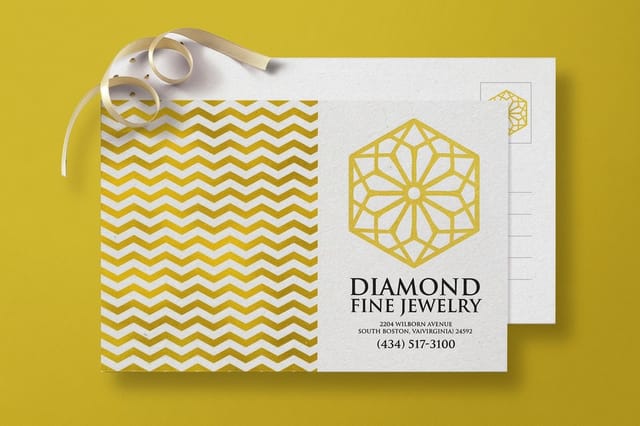
See it in use
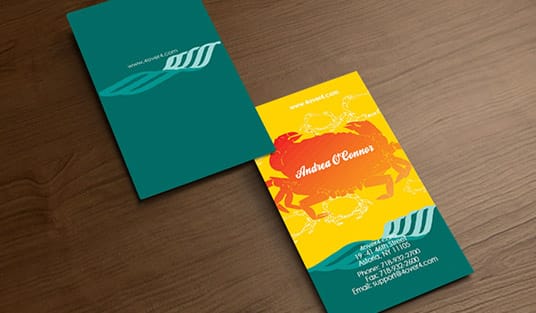
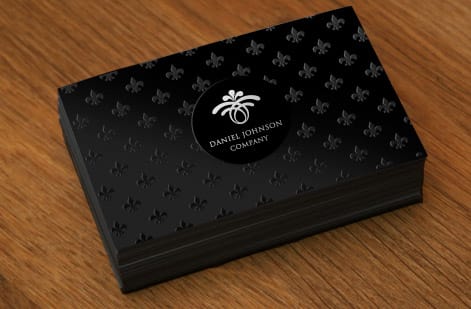
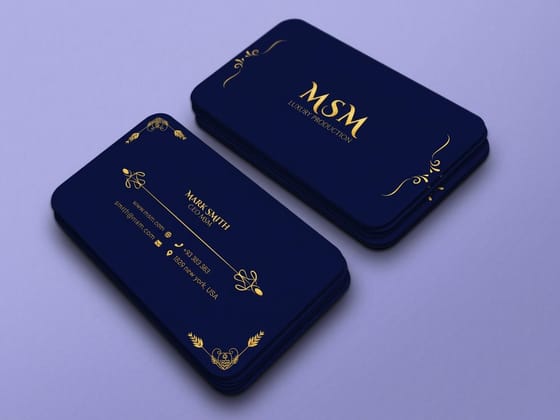
Foil stamped cards we ran in house
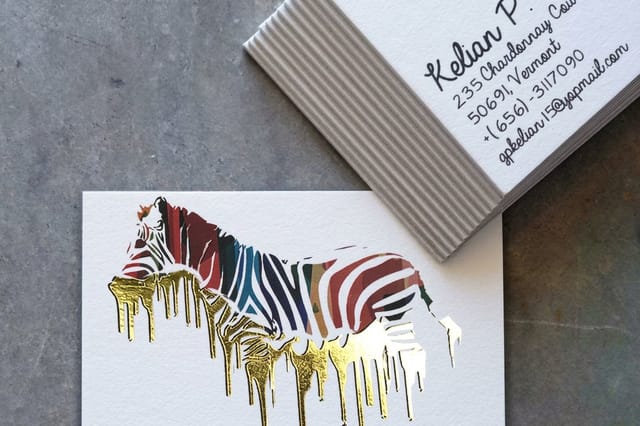
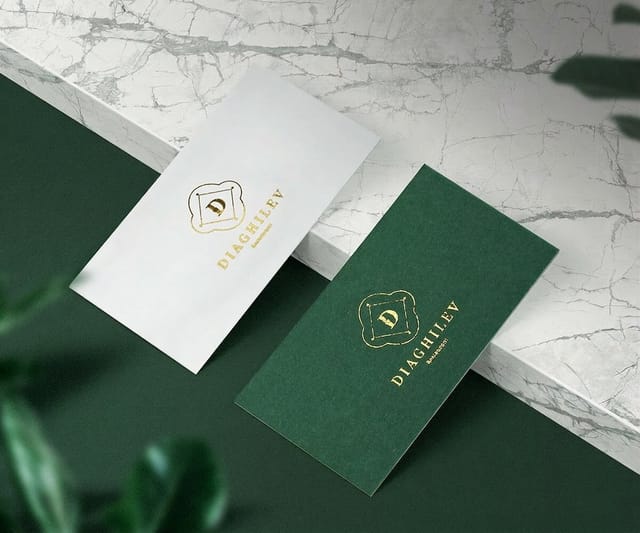
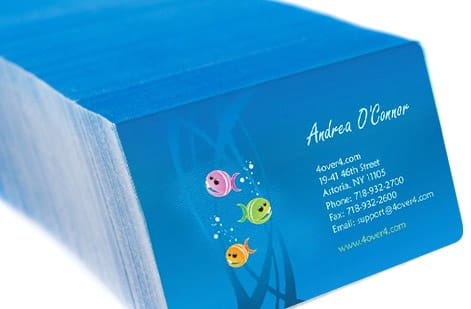
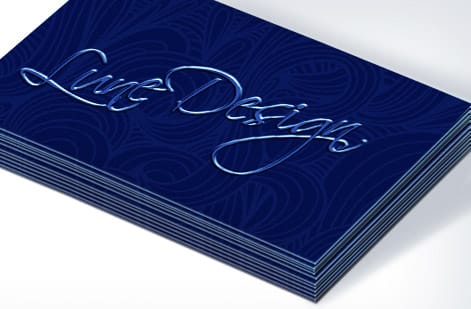
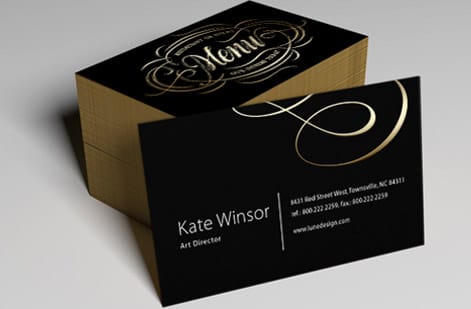
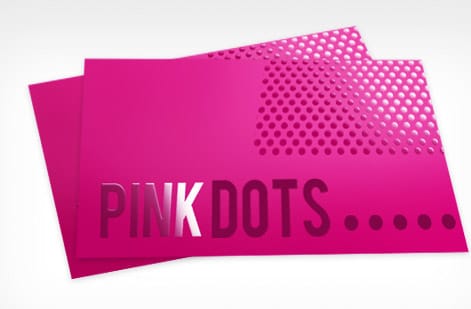
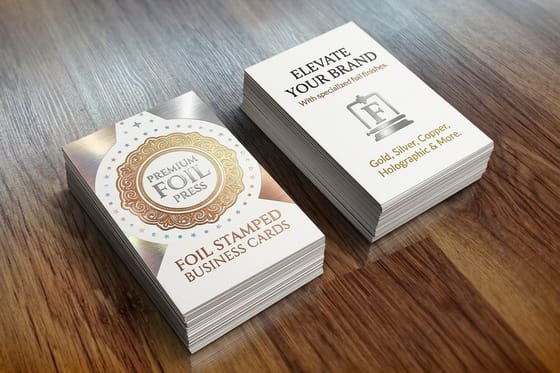
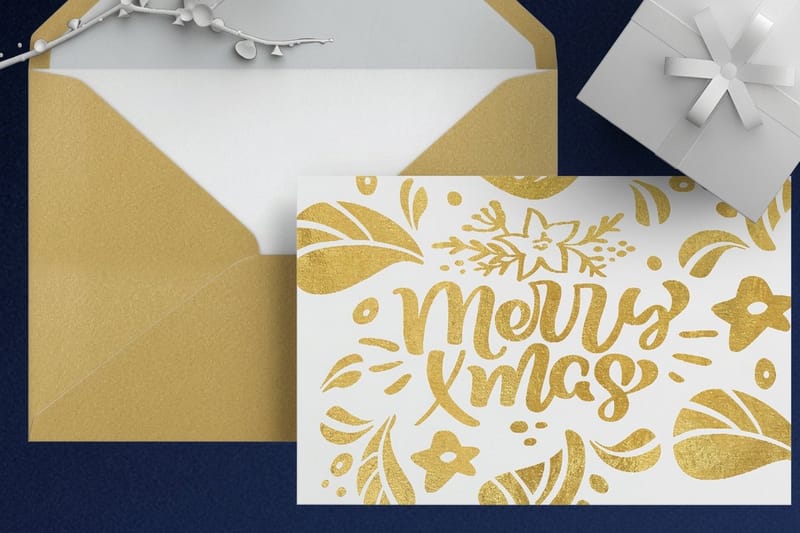
Look at how each card keeps plain paper around the stamp, and how fine the thinnest foil stroke gets before it would break up.
Explore more
Where to go next
Set stamped foil against printed metallic ink, see every item we stamp, place foil among the other print processes, and read up on finishes that make a card turn in the hand.

By the numbers
The paper catalog behind a foil order
Common Questions
Common questions about gold and silver foil printing
What is gold foil printing?
Gold foil printing is a finishing process, not an ink process. A metal die is cut to the shape of your artwork, heated, and pressed through a roll of gold colored foil onto the sheet. The heat releases the metallic layer from its carrier film and the adhesive bonds it to the paper. What stays behind is a slightly recessed, genuinely reflective gold shape that changes as the card moves in the light.
Should I pick gold or silver, and how much of the layout should carry foil?
Start with the piece, then the palette. Business cards and invitations carry foil best because they are handled up close, which is where the shine actually pays off. Choose gold when the design leans warm or classic, silver when it leans modern or cool. Then decide how much of the layout gets foiled. One logo, one rule and one line of type usually beats a page covered in metal, because the eye needs somewhere plain to rest.
What does gold foil printing cost and how are prices set?
Price comes from four things: the die that has to be made for your shape, the stamping pass itself, the quantity, and the stock underneath. Foil Business Cards start at $222.13 and Fat Foil Business Cards start at $240.55, with Foil Flyers starting at $328.42. Because the setup is fixed, larger runs spread it thinner and the cost per card falls noticeably as the quantity climbs.
What sizes, stocks and finishes are available for gold foil printing?
Foil needs a stock with enough body to take the pressure, so it is offered on heavier cover weights rather than thin text papers. Standard card and flyer sizes are available, along with extra thick options for a more substantial feel in the hand. Foil colors run beyond gold and silver to rose gold, copper, matte metallics and holographic. The exact size, stock and foil color list for each item sits on its own product page, next to the live price grid.
How long does gold foil printing take to print and ship?
Foil adds a step, so it is never as quick as a plain digital job. The die has to be produced, the press has to be set up and registered to your artwork, and the stamped sheets need to be checked before trimming. Choose your turnaround on the product page at the same time as your quantity, then count shipping transit on top. Approving a clean, correctly layered file on the first pass is the single biggest thing you control.
Is foil stamping the same as metallic ink?
No. Metallic ink is ink with metal flake suspended in it, printed like any other color, which gives a soft shimmer that sits flat on the sheet. Foil is a mirror finish transferred as a film, and it catches light at a completely different level. Ink can cover large areas and hold photographic detail, foil cannot. Foil looks unmistakably expensive on a small mark, ink does not.
Can I print full color and foil on the same piece?
Yes, and it is the most common way foil is used. The full color artwork prints first, then the foil is stamped on top in a second pass. Keep the foil elements clear of fine four color detail where a slight shift in registration would be obvious, and never rely on the foil landing perfectly inside a thin printed outline. Give it a little room and the combination looks deliberate rather than tight.
Get Started
Order 500 foil business cards from $222.13
Upload your layered artwork, choose gold, silver or a specialty foil, and let our press do the rest. Free paper samples are available first if you want to feel the stock.
Legal Disclaimer
Gold Standard guarantees apply to all standard orders placed through 4over4.com. Price match requires verifiable proof of a competitor's published price for an equivalent product with matching specifications and turnaround time. Satisfaction guarantee covers manufacturing defects and print quality issues. Contact support with order number and documentation.
