
Gift Certificate Sizes and Gift Card Dimensions for Business


Every size that gets ordered, in inches and millimetres, with the paper-versus-plastic decision, the numbering trap, and the document setup that keeps a run from being reprinted.
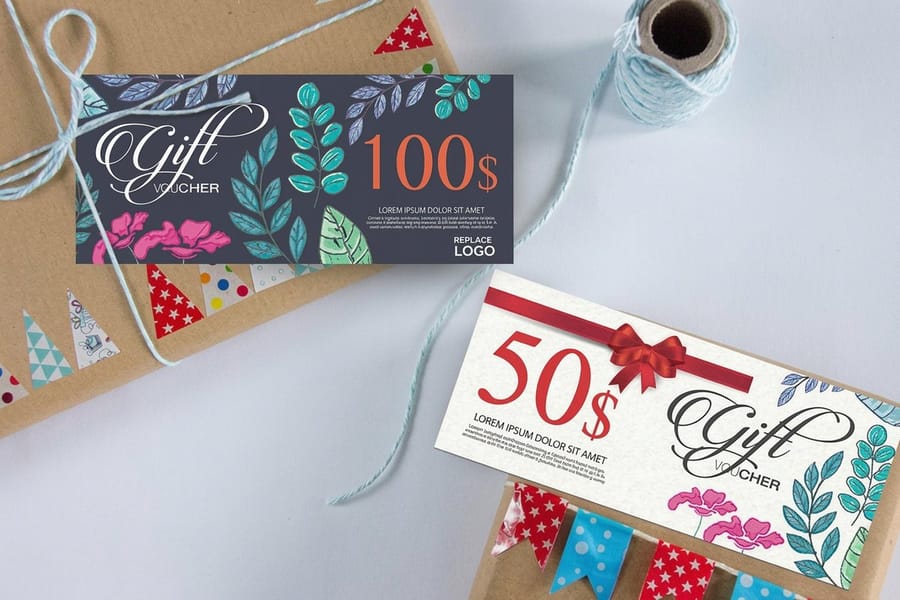
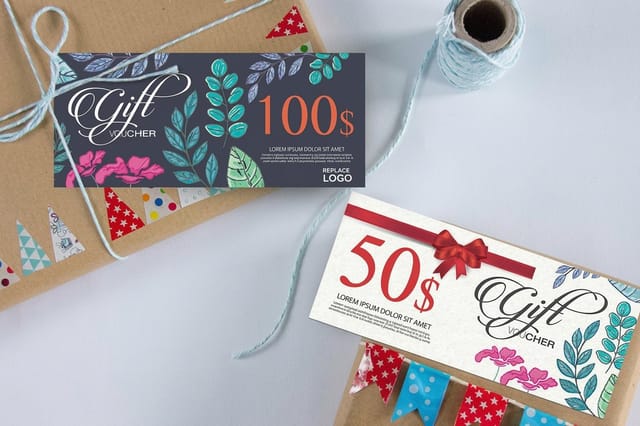
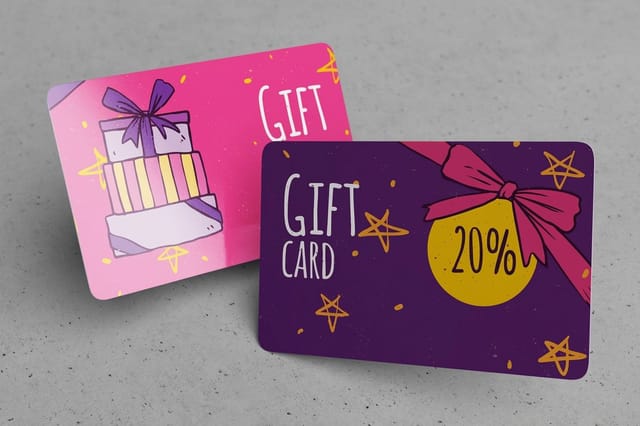
A paper gift certificate is 3 by 7 inches, and a plastic gift card is 2.125 by 3.375 inches, which is 85.6 by 53.98 mm, the same CR80 size as a credit card. Those two sizes cover almost every order. A 3 by 7 certificate slides flat into a #10 business envelope, and 8.5 by 11 inches is there when you want a full sheet with a tear-off stub. Plastic buys you a wallet-sized card with a stripe, a barcode or a scratch-off PIN. Paper buys you a numbered document with no card program behind it.
Quick answer
Two sizes cover almost every gift program
Print paper certificates at 3 by 7 inches and plastic cards at 2.125 by 3.375 inches. The certificate reads as a document, holds a written value and a sequential number, and posts flat in a #10 envelope. The card matches ISO/IEC 7810 ID-1, so it fits a wallet slot, a display rack and a swipe reader without anyone having to check. Everything else on this page is about which of the two your business actually needs, and how to set the file up so the run comes back right the first time.
Why the Size Decision Comes Before the Design

A gift certificate has three jobs, and each one pulls on the dimensions. It has to look worth the money written on it, it has to survive whatever container it travels in, and it has to be readable at the counter when somebody redeems it.
Get the size wrong and the failures are practical rather than aesthetic. A certificate too tall for a #10 envelope has to be folded, and the fold lands on the value or the number. A card too thick for a wallet slot ends up in a drawer. A layout too short leaves no clean space for a sequential number, so the number prints over artwork and the person at the register squints at it.
So work backwards. Decide how the piece reaches the customer, then let the container set the size. Handed over at a counter in an envelope points to a 3 by 7 gift certificate. Carried in a wallet and swiped at a terminal points to a CR80 plastic gift card. Mailed as part of a holiday campaign points to a certificate inside a folding gift card holder. The design comes after that, not before.
Standard Gift Certificate Sizes and Dimensions
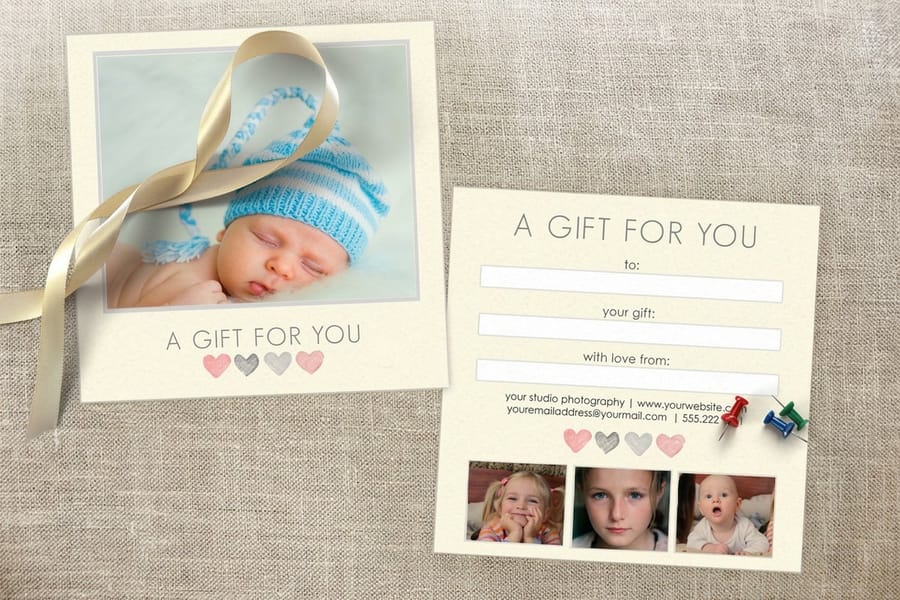
Here are the sizes that actually get ordered, with what each one is good for. Millimetre equivalents are rounded to one decimal.
| Size | Millimetres | What it is | Fits |
|---|---|---|---|
| 3" x 7" | 76.2 x 177.8 mm | The default gift certificate size in our configurator. | #10 business envelope, flat, no fold. |
| 3.5" x 8.5" | 88.9 x 215.9 mm | A taller face for a photograph or a heavier logo lockup. | #10 envelope, and most card holders. |
| 8.5" x 11" | 215.9 x 279.4 mm | Full sheet, usually with a tear-off stub or a framed presentation. | 9 x 12 envelope, or folded into a #10. |
| 2.125" x 3.375" | 53.98 x 85.6 mm | The CR80 plastic card, ISO/IEC 7810 ID-1. | Wallet slot, swipe reader, standard carrier. |
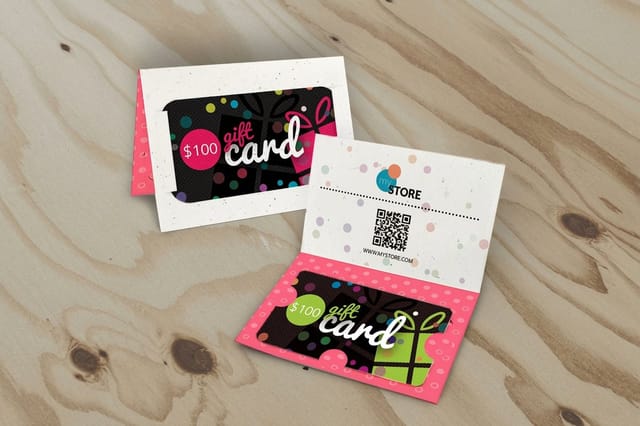
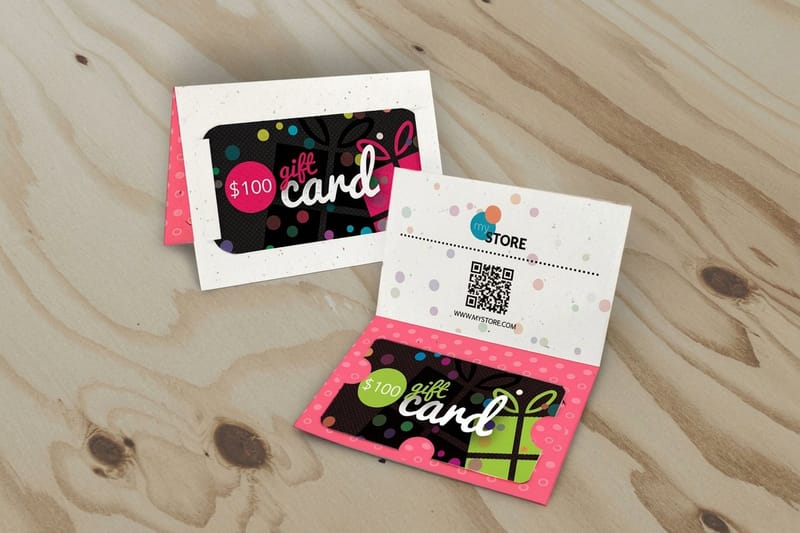
| 6" x 9" scoring to 6" x 4.5" | 152.4 x 228.6 mm | Folding holder that a plastic card slots into. | A6 or 6 x 9 envelope, with the card inside. |
Two of those rows are worth arguing about. The 3 by 7 is the size to default to for anything printed on paper, because it reads as a document, prints cleanly on all fifteen of our certificate stocks, and never needs a fold. The 8.5 by 11 earns its place only when the certificate carries a stub the business keeps, or when the recipient is meant to frame it, in which case a certificate size aimed at framing may serve better than a gift format.
Whichever you pick, the diagram above is drawn to one scale on purpose. Sizes quoted in a list all sound similar. Seen next to each other, the gap between a wallet card and a 7 inch certificate is obvious.
Credit Card Sized Gift Cards Versus Paper Certificates
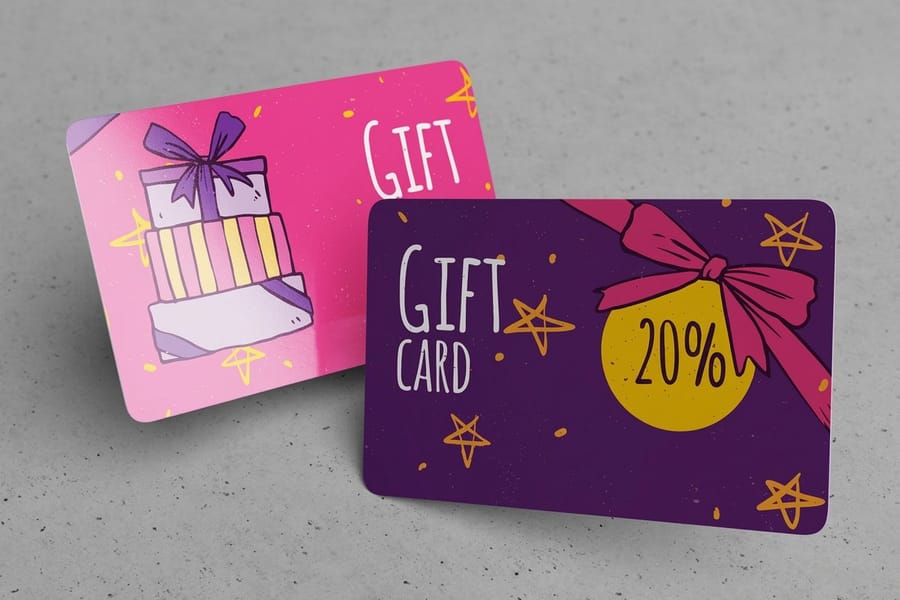
This is the real decision on the page, and it is not about which looks better. It is about how the value gets tracked and how long the piece has to live.
A plastic card is 2.125 by 3.375 inches on a 30 mil blank, the same dimensions as the credit card next to it in the wallet. That size is why the whole ecosystem works: card carriers, display racks, swipe readers and wallet slots were all built around ID-1. Our plastic gift cards add the machinery that goes with it, including three magnetic stripe options, five barcoding with numbering configurations, a signature panel, scratch-off with PIN, embossed numbering and a lanyard slot, in either UV gloss or silk laminated matte. If a balance has to sit in your POS and get drawn down over several visits, that is the format that supports it.
A paper certificate is a document. It carries a written value, a signature line, an expiry if your state allows one, and a sequential number that gets logged when it comes back. It has no chip, no stripe, no balance, and for a lot of businesses that is a feature rather than a shortfall: a single-use certificate needs no integration and no card program.
The entry prices tell the rest of the story. Gift certificates start at $42.84, plastic gift cards start at $226.11, and those are different minimum runs, so price your exact quantity in the configurator before deciding. The rule of thumb from the counter: reloadable balances and year-round retail go plastic, seasonal promotions and service businesses go paper. If you want the card look without the card program, holographic gift cards print at the same CR80 size with a refractive base.
Choosing a Size for Retail, Restaurants and Salons
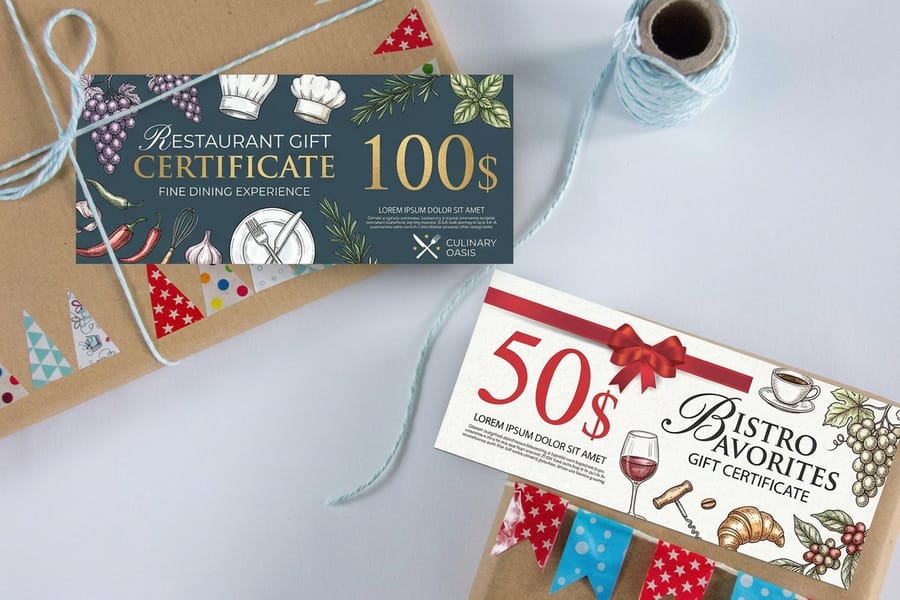
The same three sizes suit different businesses for reasons that have nothing to do with taste.
- Retail with a POS and repeat visits. A CR80 plastic card, on a rack near the register. The balance sits in the system, the card gets reloaded, and the display fixtures already fit the size.
- Restaurants. A 3 by 7 restaurant gift certificate in a matching envelope, handed across the host stand. The value is fixed, the number gets logged when it is redeemed, and there is nothing to integrate on a night when the terminal is busy.
- Salons and spas. A salon gift certificate at 3 by 7, usually printed on a linen or metallic pearlescent stock, because the piece is a gift object as much as a payment instrument. It gets handed over in person and it should feel like something.
- Corporate and holiday programs. A plastic card inside a folding holder. The holder does the presenting, carries the message, and turns a bare card into something you can hand to a client without an apology.
One warning about the seasonal case. Businesses that print certificates once a year for the holidays tend to over-order and then reprint anyway because the design changed. Sequential numbering with a chosen starting number solves half of that, since next year's run continues the sequence rather than repeating numbers already in the wild. The other half is deciding, before the artwork, whether the year is going to appear on the face at all.
Paper, Finishes and the Security Features That Fit
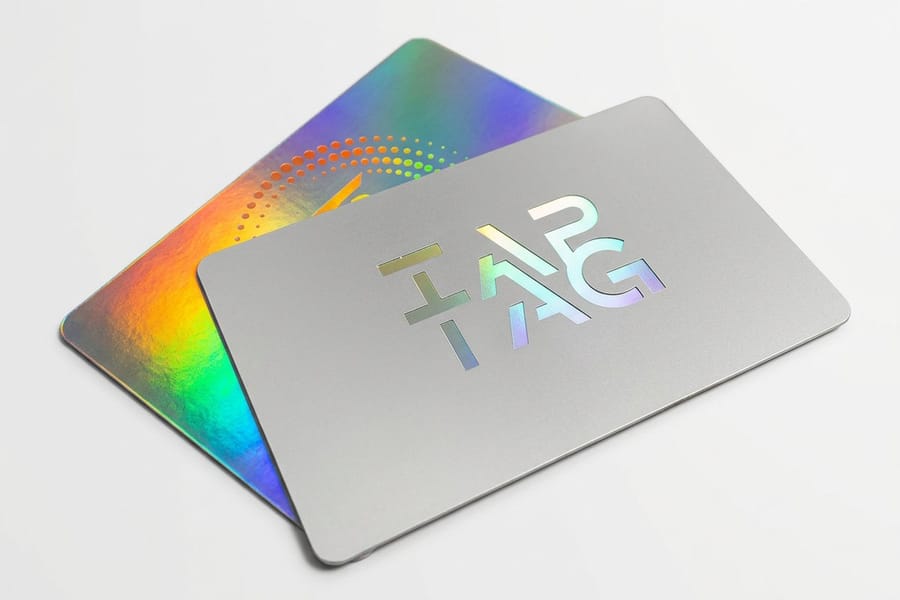
Size decides what fits. Stock decides whether it feels like a gift, and a few features decide whether it can be copied on the photocopier in the back office.
Our gift certificates run on fifteen paper types across five groups: uncoated, coated, linens, metallic pearlescent and a handful of specialty stocks. Uncoated is the one to pick when staff write a value or a name by hand, because ink from a ballpoint sits on a coated sheet and smears. Linen adds texture that reads as formal at a salon or a boutique. Metallic pearlescent catches light and does most of the work that foil would do, at a lower cost.
For security, paper and plastic take different routes. On paper the tools are sequential numbering with a starting number you set, a signature line, and a stock nobody has on a desktop printer. On plastic the tools are physical: a scratch-off panel over a PIN, embossed numbering, a magnetic stripe, or a holographic base that a scanner and a copier both fail to reproduce. Our guide to magnetic stripes and barcodes covers which of those your POS can actually read.
What none of it does is stop the most common loss, which is a certificate redeemed twice because nobody logged the number. The print can only give you a number to log. For what you can and cannot put on the face about expiry, read the gift certificate expiration rules before the file goes to press, because that copy is the hardest thing to change after a run is printed.
Designing Inside the Bleed and Safe Zones

Set the document up once, correctly, and the rest of the layout takes care of itself. Add 0.125 inch of bleed on every side and keep anything you care about 0.125 inch inside the trim.
| Trim size | Build the document at | Keep content inside |
|---|---|---|
| 3" x 7" | 3.25" x 7.25" | 2.75" x 6.75" |
| 3.5" x 8.5" | 3.75" x 8.75" | 3.25" x 8.25" |
| 2.125" x 3.375" | 2.375" x 3.625" | 1.875" x 3.125" |
Three habits prevent most certificate reprints. Do not put a thin frame near the trim, because certificates are cut in stacks and a border half a millimetre off centre reads as crooked even when the cut is in tolerance. Do not place the numbering block over a photograph or a dark panel; give it a clean rectangle of light stock. And leave the signature line long enough for a real signature, which on a 3 inch tall certificate means roughly a third of the width, not a token rule under the value.
Then supply the file the way any press job wants it: full size, fonts outlined, images at 300 dpi at final size. The bleed and trim explainer walks through the setup in detail, the blank template library gives you a correctly sized starting file, and if plastic is where you landed, 30 mil plastic card materials covers what the card blank does to your colours.
Wally sizes up a gift program
One goes in an envelope, the other goes in a wallet
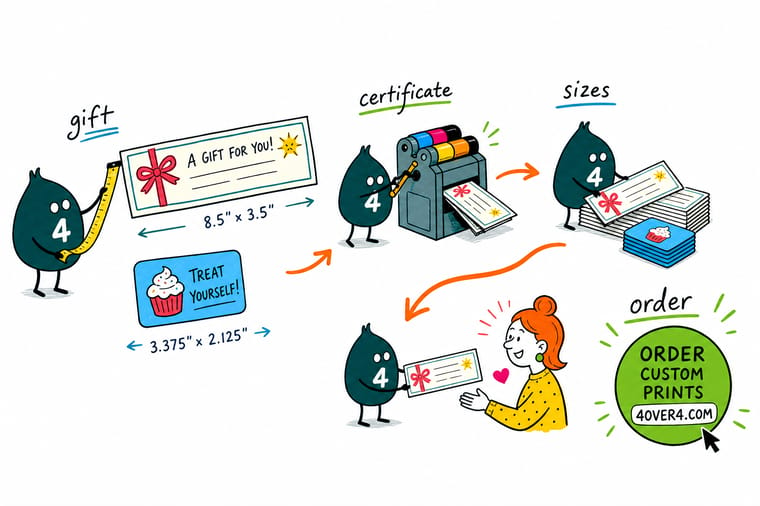
Wally holds a 3 by 7 inch certificate in one hand and a 2.125 by 3.375 inch plastic card in the other. The certificate posts flat in a #10 envelope, carries a written value and a sequential number, and needs nothing behind it. The card is CR80, the credit card size, so it fits every wallet slot and swipe reader, and it can carry a stripe, a barcode or a scratch-off PIN. Wally picks the container first, then the size, then the artwork. Doing it in the other order is how a certificate ends up folded across its own number.
Order gift certificates →Specs and pricing
Sizes, options and starting prices side by side
Certificate, card and holder, with the live configuration choices and starting prices straight from the 4OVER4.COM configurator.

Print it
Order the size your program needs
Explore more
Where to go next


By the numbers
Gift certificate printing you can count on at 4OVER4
Common Questions
Your gift certificate size questions, answered
What is the standard gift certificate size?
The working standard for a paper gift certificate is 3 by 7 inches, and that is the default size on our configurator. It is a deliberate shape: long enough to hold a business name, a value, a signature line and a numbered stub, short enough to slide into a #10 business envelope without folding. The other size people ask for is 3.5 by 8.5 inches, which gives a slightly taller face for a photograph or a heavier logo lockup, and 8.5 by 11 inches is available when you want a full sheet with a tear-off portion or a framed presentation piece.
How big is a gift card?
A plastic gift card is 2.125 by 3.375 inches, which is 85.6 by 53.98 mm. That is the CR80 card defined by ISO/IEC 7810 as ID-1, the same size as a credit card, a driver license and a hotel key card. Nothing about it is negotiable if you want the card to sit in a wallet slot, run through a swipe reader, or drop into an off-the-shelf card carrier. Our plastic gift cards and holographic gift cards are both built at that size on a 30 mil card.
Will a 3 by 7 gift certificate fit a #10 envelope?
Yes, with room to spare. A #10 business envelope is 4.125 by 9.5 inches, so a 3 by 7 certificate drops in flat and a 3.5 by 8.5 certificate still clears the opening. That matters more than it sounds, because a certificate that has to be folded loses the crisp presentation people expect from a gift, and a fold across a numbered stub makes the number harder to read at redemption. We offer matching blank envelopes as an option in the gift certificate configurator so the pair arrives together.
Can I get sequential numbering on gift certificates?
Yes. Sequential numbering is one of the seven option groups on our gift certificates, and you set the starting number yourself, so a second run can pick up where the first one stopped instead of repeating numbers you have already issued. Leave a clean rectangle in the layout for it. Numbering printed over a photograph or a dark panel is legible on screen and unreadable at a busy counter, and every reprint that happens for that reason is avoidable.
Do plastic gift cards need a magnetic stripe?
Only if your point of sale reads one. Plenty of small retailers run gift cards on a barcode instead, which is cheaper and works with the scanner already on the counter. Our plastic gift cards carry both paths: three magnetic stripe choices, five barcoding with numbering options, plus a signature panel, scratch-off with PIN, and embossed numbering. Ask your POS provider which format their system expects before you order, because a card printed with the wrong track format has to be reprinted, not reprogrammed.
What bleed and safe margin should a gift certificate file use?
Build 0.125 inch of bleed on all four sides and keep text and logos 0.125 inch inside the trim line. On a 3 by 7 certificate that means a 3.25 by 7.25 inch document with a 2.75 by 6.75 inch safe area. Certificates are cut in stacks, so a border that sits close to the trim will look thicker on one side of the pile than the other. If a design needs a frame, either give it real distance from the edge or let it bleed off completely.
Get Started
Ready to print a gift program that gets redeemed?
Pick 3 by 7 on paper or a CR80 plastic card, add sequential numbering and matching envelopes, and we print a run your counter staff can read at a glance.
Legal Disclaimer
Gold Standard guarantees apply to all standard orders placed through 4over4.com. Price match requires verifiable proof of a competitor's published price for an equivalent product with matching specifications and turnaround time. Satisfaction guarantee covers manufacturing defects and print quality issues. Contact support with order number and documentation. On-time delivery rate based on tracked orders 1999 to 2026. Individual results may vary based on shipping carrier performance.
