
Certificate Sizes for Awards, Diplomas and Gift Certificates


Jordan is our labels, packaging and sustainability voice, built from the knowledge of our production team, with over 20 years in printing.
Every certificate size in regular use, in inches and millimeters, with the frame and the envelope each one fits and the stock that survives a hand-written signature.
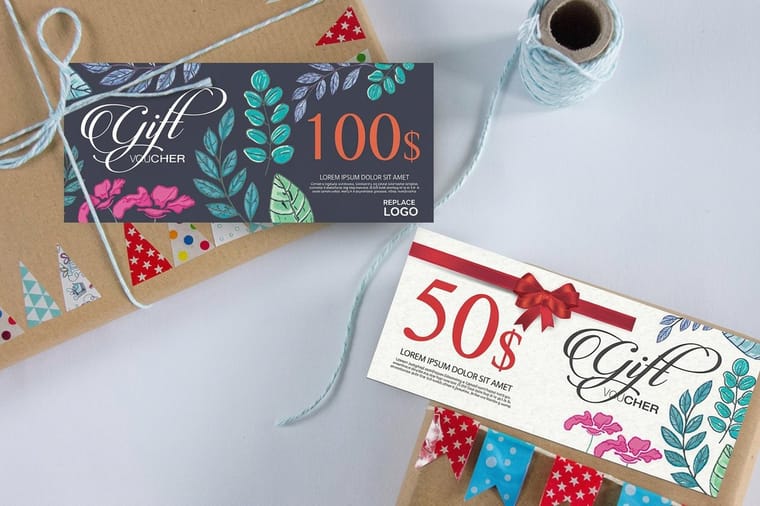
Award and achievement certificates print at 8.5 by 11 inches more often than every other size combined, with 8 by 10 inches the runner-up because it drops straight into a frame off a shelf. Gift certificates are sized around the envelope instead: 8.5 by 3.67 inches is the common one, three to a letter sheet and flat inside a #10, while 4 by 9 and 3.5 by 8.5 inches also mail without folding. Outside the US the equivalent of letter is A4 at 210 by 297 mm, close enough to look interchangeable and far enough off to wreck a centered border. For the sizes each kind of business uses, see our gift certificate size guide.
Quick answer
Frames decide award sizes, envelopes decide gift certificate sizes
Pick the size from what happens to the certificate after you hand it over. If it gets framed, 8 by 10 inches or 11 by 14 inches saves a trip to a framer, because 8.5 by 11 fits neither and needs a document frame or a cut mat. If it gets filed or slipped into a diploma cover, 8.5 by 11 is the only sensible answer. If it gets mailed as a voucher, start from the envelope: 8.5 by 3.67 inches and 4 by 9 inches both lie flat in a #10, and 5.5 by 8.5 inches needs an A9. The diagram below shows all five at true relative scale.
Standard Certificate Sizes and the Frame Each One Fits

Five sizes cover nearly every certificate that gets printed. The differences that matter are not aesthetic, they are physical: what frame it drops into, what envelope it mails in, and whether it fits the cover or the file it ends up living in.
| Size | Millimeters | Drops into | Use it for |
|---|---|---|---|
| 8.5 x 11 in | 216 x 279 | An 8.5 x 11 document frame, or an 11 x 14 frame with a cut mat. | The default. Awards, diplomas, training records, anything filed or slipped into a padded cover. |
| 8 x 10 in | 203 x 254 | Any 8 x 10 frame off a shelf, no mat needed. | Certificates you expect to be hung on a wall the same week they are handed over. |
| A4 | 210 x 297 | An A4 frame. It will not sit square in a letter-size one. | Anything going to a recipient outside the United States. |
| 11 x 14 in | 279 x 356 | An 11 x 14 frame, usually with a mat. | Wall diplomas, professional licenses, top-tier recognition meant to be read across a room. |
| 5 x 7 in | 127 x 178 | A 5 x 7 frame, or a card envelope. | Participation, class completion and event certificates printed in quantity. |
Orientation is a separate decision from size, and it carries more weight than most people expect. Landscape is the ceremonial layout: a recipient name set at 30 point or larger needs horizontal room, and the wide proportion is what a century of diplomas has trained people to read as an honor. Portrait reads as a document, which is exactly right for a safety certification or a training record headed for a personnel file.
One trap catches people every time. A padded diploma cover is built for a letter sheet, so if the certificate is going inside a cover, print 8.5 by 11 and nothing else. An 8 by 10 rattles around in it. If you are still choosing the sheet itself, the stock weights in our paper weight guide matter more to how a certificate feels than the size does, and standard letterheads start at $99.95 if the same design also needs to work as stationery.
What we print at these sizes, and what it costs to start:
| Size | Product | Stock | Starts at |
|---|---|---|---|
| 3 x 7 in or 3.5 x 8.5 in | Gift certificates | 15 stocks, including 14pt and 18pt uncoated and white linen that take a pen, with optional sequential numbering | 50 for $42.84, 5 business days |
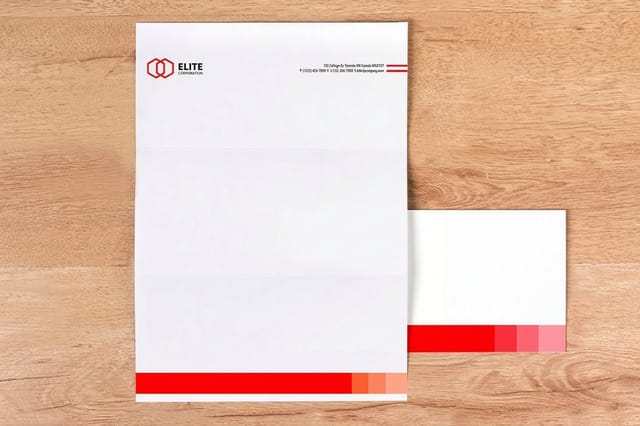
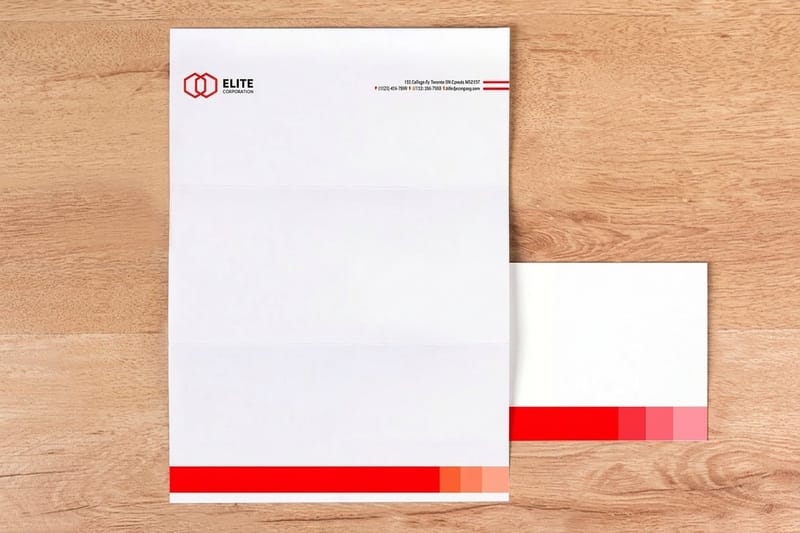
| 8.5 x 11 in | Letterheads | 70# uncoated text, or 24# Royal Laid and 28# Royal Linen | 50 for $99.95, 5 business days |
The standard certificate size stays 8.5 by 11 inches for awards and 8.5 by 3.67 or 3.5 by 8.5 inches for gift certificates; send a PDF at the trim size plus 0.125 inches of bleed on every edge.
Gift Certificate Sizes Are Chosen by the Envelope
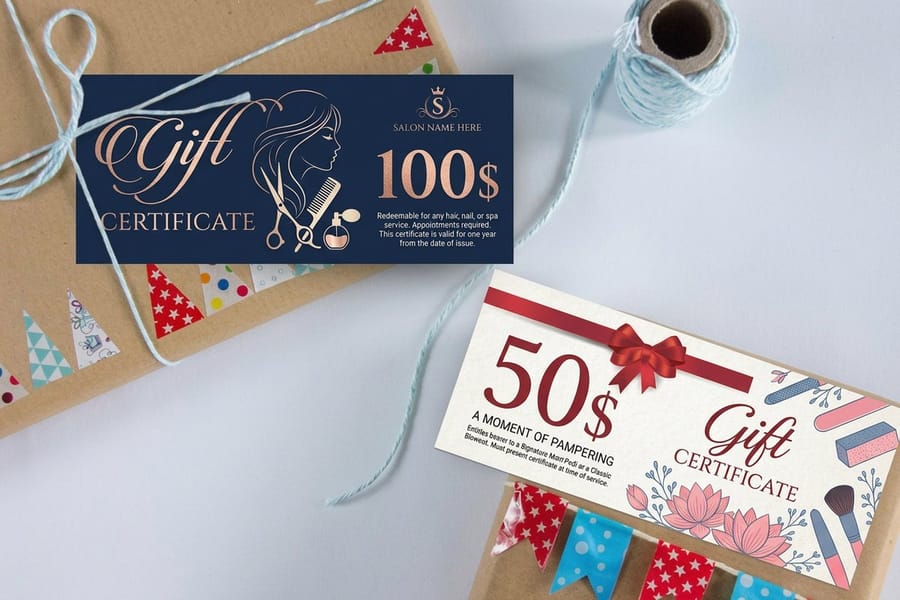
Award certificates are sized for frames. Gift certificates are sized for envelopes, and once you know which envelope you are mailing in, the size chooses itself.
| Size | Mails in | Why you would pick it |
|---|---|---|
| 8.5 x 3.67 in | A #10 business envelope, flat, no fold. | The most ordered. Three cut from the height of a letter sheet, and it gives you a wide field for the amount and the terms. |
| 4 x 9 in | A #10, flat, with about an eighth of an inch to spare. | A taller face for artwork when the design needs more vertical room than a 3.67 inch strip allows. |
| 3.5 x 8.5 in | A #10 with room around it. | A slimmer, more card-like proportion. Easier to hand across a counter than to mail. |
| 5.5 x 8.5 in | An A9 at 5.75 x 8.75, or a 6 x 9 catalog envelope. | A half-sheet certificate that reads as a document rather than a voucher. Popular for spa and service packages. |
| 3.5 x 2 in | A card carrier, or a wallet. | Standard card proportions when the certificate has to survive months in a purse. |
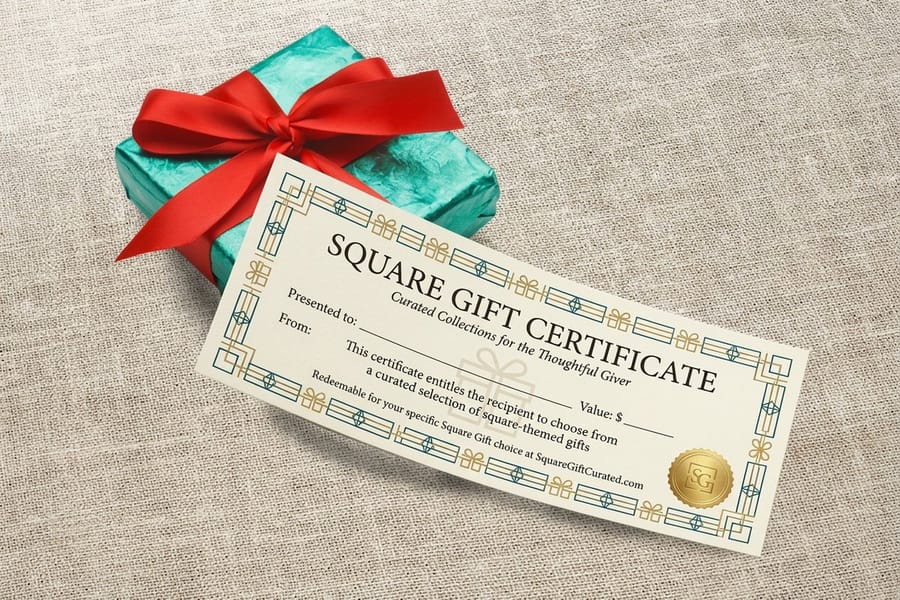
Square is the size to think twice about. A 5 by 5 certificate looks distinctive and photographs well, but the United States Postal Service charges a non-machinable surcharge on square envelopes, so every piece costs more to mail than the same design in a rectangle. If they are handed out in person, that cost never appears, and square gift certificates are a genuinely different look, which the square gift certificates story shows. If they are mailed, price the postage before you commit.
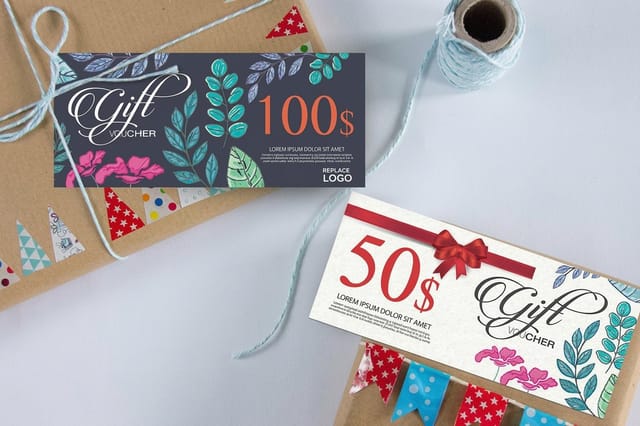
Our gift certificates start at $42.84 and the configurator lists the exact sizes and stocks we run. The gift certificates story shows them up close. If you are matching an envelope you already have in a supply closet, check the interior dimensions against our envelope size guide first, then order the certificate to fit rather than the other way around. Printed envelopes start at $142.99 if you want the envelope branded to match, and the full range sits in envelopes printing.
Stock, Coating and the Signature Problem
The fastest way to make a certificate feel cheap is to print it on text-weight paper. Around 70 lb text has the drape of a memo, and people register that the moment they take it out of an envelope. Cover weight, roughly 80 lb to 100 lb uncoated, is what gives a certificate the stiffness the moment calls for. Our cardstock weights guide maps the numbers to what your hand actually feels.
Coating is the decision people get wrong. A gloss or aqueous finish looks rich in a mockup and then defeats the pen: ballpoint skips across it, gel ink sits on the surface for a minute before it sets, and fountain ink never dries properly at all. If there is a signature line, a date field or a blank for a recipient name, the stock is uncoated or matte. A gloss certificate that gets signed with a wet pen and then slid into an envelope arrives with a smeared signature, which is worse than any saving on the print.
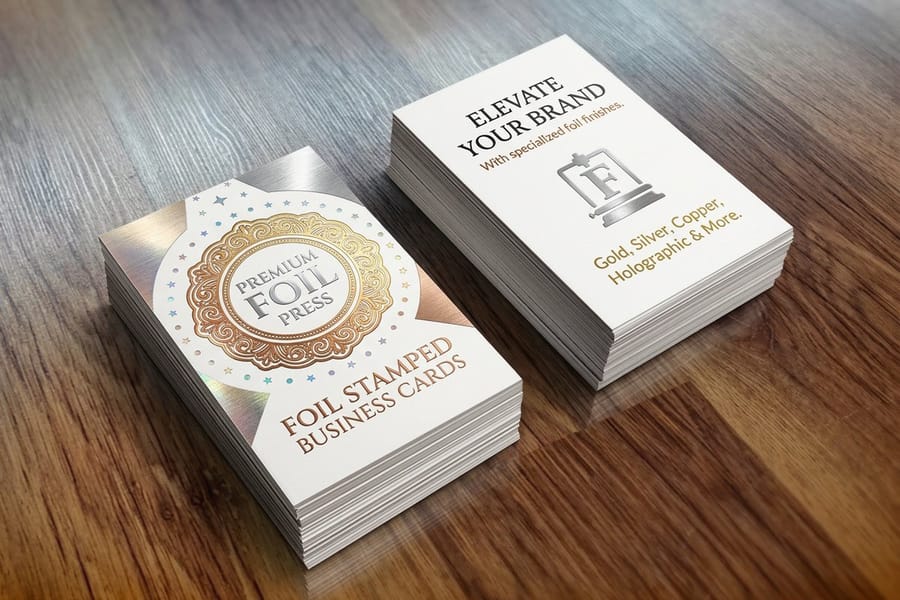
A metallic seal is the one decoration that consistently reads as official rather than decorative, and there are two ways to get one. A separate adhesive seal applied by hand costs less per piece and lets you use the same blank certificate for several award types. The trade-off is real: printed foil cannot go back through an office laser printer afterward, so if names are being filled in on your own machine, use adhesive seals and keep the printed sheet plain. The rest of the letter-size options live under letterheads printing.
Setting Up the File So the Border Survives the Cut
Certificates are harder to set up than they look, and the reason is the border. Commercial trimming holds to about a sixteenth of an inch, which nobody notices on a flyer and everybody notices on a symmetric frame around a name. A thin decorative rule sitting a tenth of an inch from the trim line will come back visibly thicker on one side.
Three habits fix almost every certificate file:
- Bleed 0.125 inches on all four sides and keep every element that must not be cut at least 0.25 inches inside the trim line. That is a wider safety margin than we ask for on most products, and on a bordered layout it earns its keep.
- Make the border thick or make it bleed. A half-point rule reveals every shift. A quarter-inch band or a background that runs off the edge on purpose absorbs the same shift invisibly.
- Give the handwriting room. Leave half an inch of clear vertical space above a signature line, because real signatures are taller than the rule under them, and leave a full inch of blank width for a recipient name. Long names are the most common reason a fill-in certificate looks cramped.
Set body and script text in 100 percent black rather than a rich black build. Rich black on a fine serif face shows a colored fringe wherever the plates shift slightly, and certificate typography is exactly the delicate, high-contrast lettering that puts that fringe on display. Convert fonts to outlines, supply the file at final size, and read our bleed and trim guide if any of that is new.
The quickest way to skip all of it is to start from a layout that already carries the right lines. Our blank templates come with bleed and safety marked at the correct offsets for each size, and the editable gift certificate templates give you a finished layout to fill in. For a file already cut to our gift certificate sizes, start from the blank gift certificate templates. If the certificate carries a redeemable value, read up on gift certificate expiration rules before you print terms onto a few thousand pieces, because the rules differ by state and reprinting is the expensive way to learn that.
Certificate File Size in Pixels for Printing
Build the file at 300 pixels per inch at final size, then add 0.125 inches of bleed on each edge, about 38 pixels a side and 75 pixels on each dimension. The table gives both numbers for every size on this page, plus the 3 by 7 inch gift certificate we print.
| Certificate size | Pixels at trim | Pixels with bleed |
|---|---|---|
| 8.5 x 11 in | 2,550 x 3,300 | 2,625 x 3,375 |
| 8 x 10 in | 2,400 x 3,000 | 2,475 x 3,075 |
| A4 (8.27 x 11.69 in) | 2,480 x 3,508 | 2,555 x 3,583 |
| 11 x 14 in | 3,300 x 4,200 | 3,375 x 4,275 |
| 5 x 7 in | 1,500 x 2,100 | 1,575 x 2,175 |
| 8.5 x 3.67 in | 2,550 x 1,101 | 2,625 x 1,176 |
| 4 x 9 in | 1,200 x 2,700 | 1,275 x 2,775 |
| 3.5 x 8.5 in | 1,050 x 2,550 | 1,125 x 2,625 |
| 5.5 x 8.5 in | 1,650 x 2,550 | 1,725 x 2,625 |
| 3.5 x 2 in | 1,050 x 600 | 1,125 x 675 |
| 3 x 7 in | 900 x 2,100 | 975 x 2,175 |
Set the canvas to the bleed size, keep names and signature lines 0.25 inches (75 pixels) inside the trim, and export a PDF rather than a JPEG so the type stays sharp. A photo or seal placed at less than 300 pixels per inch at its printed size will look soft, whatever the canvas size says.
Wally sizes a certificate
Measure the frame and the envelope first, then the certificate
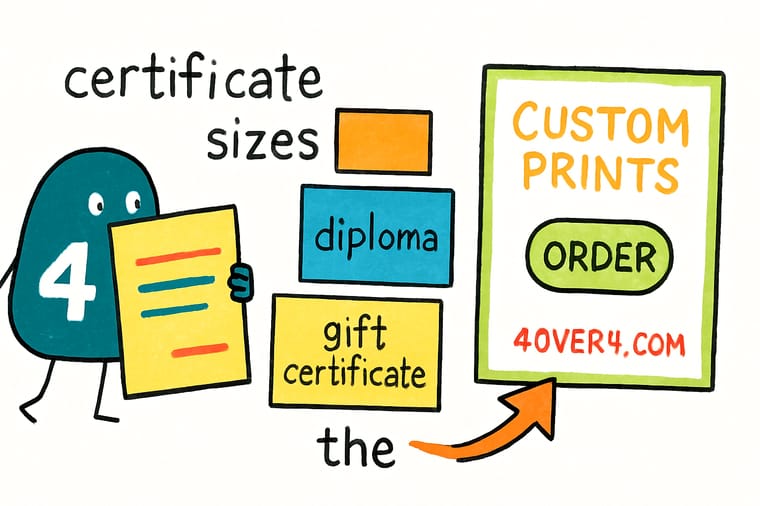
Wally never starts with the certificate. He asks what happens to it. Hung on a wall means 8 by 10 or 11 by 14, because those are the frames people already own. Filed or tucked into a diploma cover means 8.5 by 11. Mailed as a voucher means he grabs the envelope first, and 8.5 by 3.67 slides into a #10 flat. Then he checks the pen: if anyone signs it, the stock is uncoated, because gloss makes ballpoint skip and leaves fountain ink wet in the envelope.
Order gift certificates →
Specs and pricing
Certificate sizes, stocks and starting prices
Gift certificates print at 3 by 7 or 3.5 by 8.5 inches on 15 stocks, from 50 for $42.84 in 5 business days. Letterheads print at 8.5 by 11 inches from 50 for $99.95. Printed envelopes come in 41 sizes up to 10 by 13 inches, from 250 for $142.99 in 7 business days.

Print it
Order a certificate that holds a signature
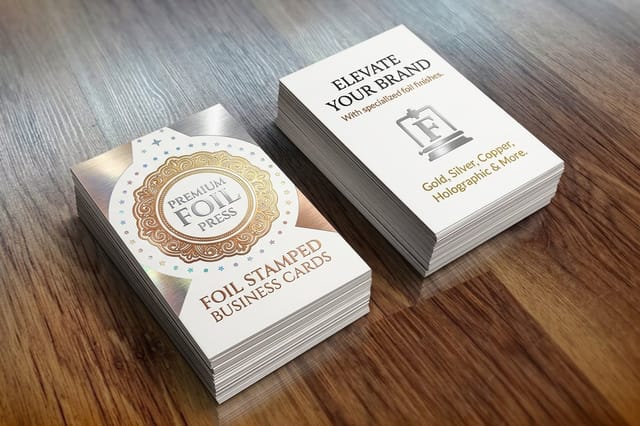
Pick an uncoated or linen stock for any certificate someone signs, number gift certificates in sequence so each one can be tracked, and use foil stamped business cards from 500 for $222.13 when the award needs a matching wallet card.

Explore more
Where to go next
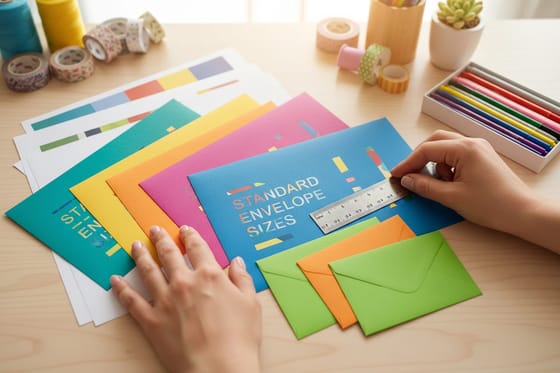
Match the envelope to the certificate, check what 14pt and 100 lb cover feel like, choose a letterhead paper, and fill in a gift certificate template before you order.
By the numbers
Certificate printing across 25 years and 1,000+ products
Common Questions
Your certificate size questions, answered
What is the standard certificate size?
8.5 by 11 inches in the United States, printed portrait for documents and landscape for awards. It is the standard because it matches the letter sheet, so it fits filing cabinets, diploma covers, scanners and every office printer. Outside the US the equivalent is A4 at 210 by 297 mm, which is 8.27 by 11.69 inches. The two are close enough to look interchangeable in a mockup and far enough apart to ruin a border when you swap them.
Will an 8.5 by 11 certificate fit an 8 by 10 frame?
No. It is half an inch too wide and an inch too tall, and trimming it down cuts into the border. You have three options: buy an 8.5 by 11 document frame, use an 11 by 14 frame with a mat cut to an 8.5 by 11 opening, or print the certificate at 8 by 10 in the first place. If you know at the design stage that the certificate gets framed rather than filed, 8 by 10 is the size that saves everyone the trip to a framer.
What size is a standard gift certificate?
8.5 by 3.67 inches is the most common commercial size, because three of them cut from the height of a letter sheet and one slides flat into a #10 business envelope. The other sizes in regular use are 4 by 9 inches, which also fits a #10, 3.5 by 8.5 inches for a narrower look, 5.5 by 8.5 inches for a half-sheet certificate that needs an A9 envelope, and 3.5 by 2 inches when you want something wallet-sized on a carrier card.
Portrait or landscape for an award certificate?
Landscape for awards, portrait for records. A recipient name set at 30 point or larger needs horizontal room, and landscape is the orientation the eye reads as ceremonial because that is how diplomas and honors have been laid out for a century. Portrait reads as a document, which is the right signal for training completion records, safety certifications and anything that goes into a personnel file.
What paper should a certificate be printed on?
Cover weight, uncoated. An 80 lb or 100 lb uncoated cover has the stiffness people expect when they take a certificate out of an envelope, and it takes a signature without smearing. Text weight around 70 lb feels like a memo the moment someone holds it, which undercuts the whole point. The exception is a gift certificate you will mail in volume, where lighter stock keeps postage down and nobody frames it anyway.
Can I laser print names onto pre-printed certificates?
On plain uncoated stock, yes, and it is the cheapest way to run a hundred certificates with different names. Two things break it. Heavy coated stock can make toner sit on the surface and flake off along a fold, and foil elements can lift or dull under the fuser. If names are going in on an office printer later, order uncoated with no foil and test one sheet before you commit the box.
How much bleed does a certificate need?
0.125 inches on all four sides, with important artwork kept 0.25 inches inside the trim line. Certificates are more sensitive to this than most print because they are usually built around a symmetric border, and a symmetric element is the easiest place to see a sixteenth-inch shift. A thick border tolerates the shift, a hairline border broadcasts it. Our blank templates already carry the bleed and safety lines at the right offsets.
Get Started
Square gift certificates start at 50 for $42.84
Pick the size that matches the frame or the envelope, choose an uncoated stock that takes a signature, and we print, trim and ship them ready to sign.
Legal Disclaimer
Gold Standard guarantees apply to all standard orders placed through 4over4.com. Price match requires verifiable proof of a competitor's published price for an equivalent product with matching specifications and turnaround time. Satisfaction guarantee covers manufacturing defects and print quality issues. Contact support with order number and documentation.
