
Custom Paper Packaging Explained, From Kraft Board to Curbside Recycling


Tissue, sleeves, cartons, corrugated mailers and hang tags are all paper, and they behave nothing alike. Here is how to pick the tier, print on brown board without the color going wrong, and keep the pack in the recycling stream.
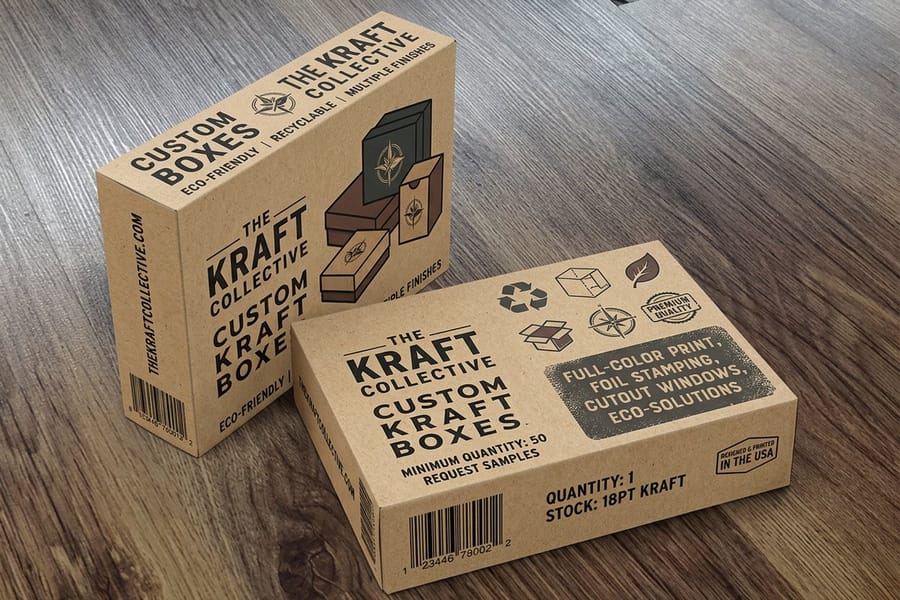
Custom paper packaging is any pack built from paper fibre, and the format is chosen by caliper: 17 gsm tissue wraps, a 12 to 18 pt sleeve bands, 14 to 24 pt board folds into a retail carton, and corrugated from about a sixteenth of an inch upward survives a courier. The board is kraft, bleached white or recycled, and the choice shows up in your colors, because ink is transparent and brown board pulls every tint toward it. Recyclability is decided by the finish, not the board: uncoated and aqueous coated paper goes curbside, laminated, metallized and windowed packs mostly do not.
Quick answer
Pick by caliper, design for the board, then let the finish decide the bin
Three decisions carry a paper pack. The caliper sets the format, from 17 gsm tissue up to B flute corrugated at roughly an eighth of an inch, and it should follow the weight you are shipping rather than the look you want. The board sets your color range, because ink is transparent and kraft mixes brown into everything printed on it. The finish sets the end of life: aqueous coating keeps the pack in the paper stream, lamination and plastic windows take it out. Get those three right and the artwork is the easy part.
The Paper Packaging Formats, and What Each One Is Actually For
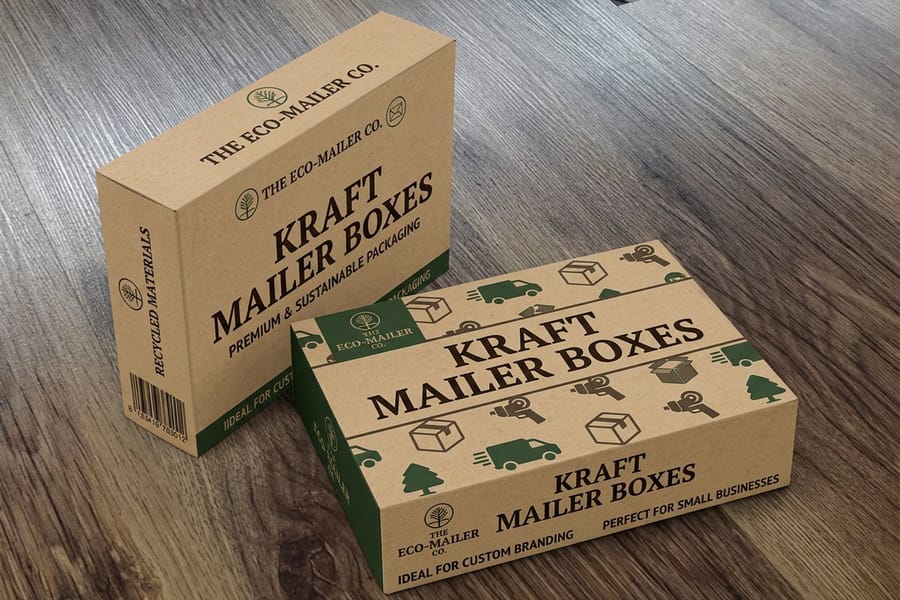
Paper packaging is not one product, it is a stack of them at wildly different thicknesses, and the cheapest way to waste money is to order the wrong tier. A cosmetic brand does not need corrugated. A ceramics seller absolutely does.
| Format | Typical caliper | What it carries | Where it fails |
|---|---|---|---|
| Tissue paper | About 17 gsm | Nothing. It wraps, cushions lightly and sets the tone when the box opens. | Any load at all, and any moisture. |
| Sleeve or wrap | 12 to 18 pt | Holds a plain box closed and carries the whole brand story on one printed band. | It is not structure. The box under it still has to do the work. |
| Folding carton | 14 to 24 pt board | Retail shelf items: soap, candles, supplements, cosmetics. Ships flat, folds at your bench. | Courier handling. A single layer of board crushes. |
| E flute corrugated | About 1/16 in | Ecommerce mailers. Stiff enough for transit, thin enough to print well and stack. | Heavy or awkward loads that need more crush resistance. |
| B flute corrugated | About 1/8 in | Fragile and heavier goods, and anything getting handled more than once. | Cost and volume. You pay to ship the air the flute occupies. |
Read the last column before the third. Most packaging regret comes from a format that was chosen on how it looked in a photo rather than on what it had to survive. A kraft mailer box and a folding carton photograph almost identically, and only one of them arrives intact after a sorting belt. If you are still weighing the two, the cardstock and corrugated comparison takes it panel by panel, and the full packaging printing range shows the formats side by side.
Kraft, Bleached Board and Recycled Board, and How Ink Behaves on Each
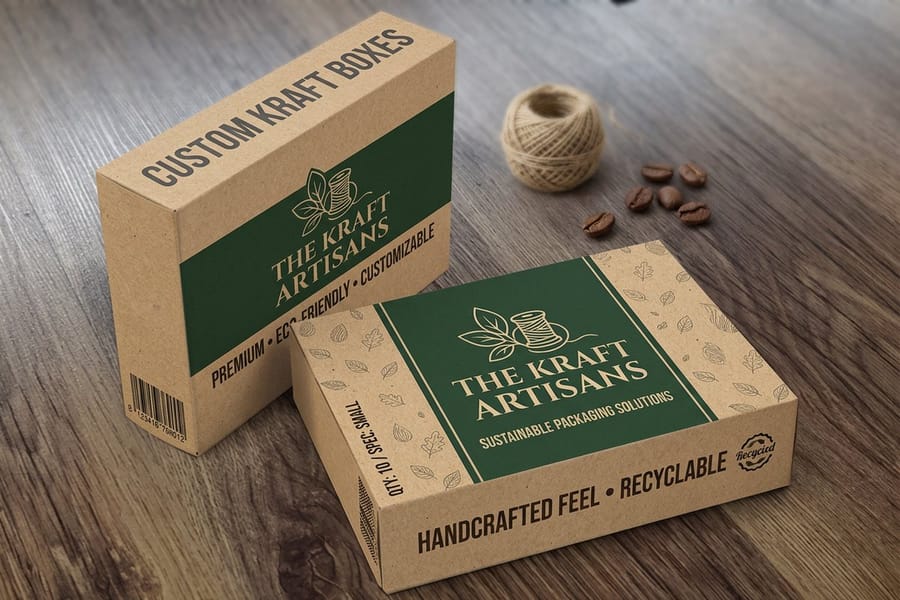
Three boards cover almost everything we print. They differ in what happened to the pulp, and that difference lands squarely in your artwork.
Kraft is unbleached sulfate pulp. The fibre stays long and strong, which is why kraft board takes a fold and a courier well, and it stays brown because nobody spent energy whitening it. Bleached board is the white sheet: it gives you a true, neutral base, so photography, pastels and precise brand colors reproduce as intended. Recycled board is recovered fibre, often with a grey core visible on the cut edge and a clay coated white face so it still prints cleanly.
Here is the part that catches people. Printing ink is transparent. On kraft, every color you lay down mixes with the brown beneath it, so a pale blue reads grey, a bright yellow drifts olive, and white does not exist at all unless the press prints an opaque white base first and puts your color on top of that. It is an extra pass and an extra cost. The alternative is better design: one strong ink, heavy line work, and shapes that leave the kraft showing as a deliberate color rather than an accident.
Recycled board has its own tell. The core is grey, so a die cut edge or a hand hole shows a darker line, and a very light tint printed on the face can pick up a faint cast from the fibre underneath. Neither is a defect, and both are worth knowing before you approve a proof. Our paper stocks guide covers how the same inks behave across matte, gloss, linen and kraft surfaces, and eco friendly boxes let you specify recycled content directly in the configurator.
What Stays Recyclable, and the Finishes That Quietly End It
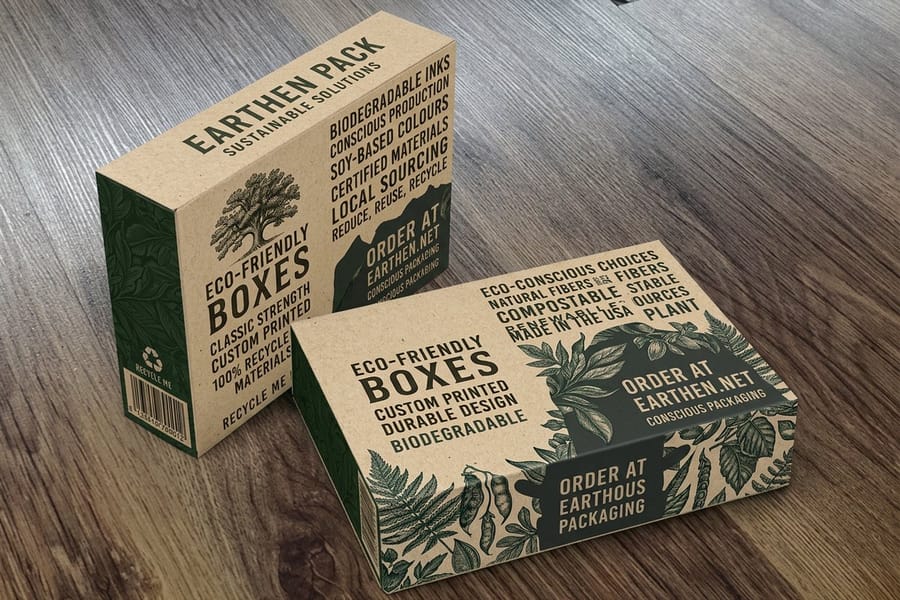
A paper pack is only recyclable until you add something that is not paper. This is the single most common gap between what a brand prints on the box and what actually happens to the box.
Safe for the paper stream: uncoated kraft and bleached board, aqueous coating, and standard offset inks including soy based inks. Aqueous is a water based varnish that soaks into the sheet rather than sitting on it as a film, so the mill can pulp it normally. That is the finish to ask for when the recyclability claim on the pack has to be honest.
Trouble for the paper stream: gloss and matte lamination, which is a plastic film bonded to the board and rejected by most municipal mills; metallized or foil laminated board; plastic windows; and heavy grease contamination, which is why a soaked pizza base is refused even though the board itself is fine. Small foil stamped areas and spot UV are a grey zone that varies by mill, so if the claim matters to you, keep the surface clean and let the board do the talking.
Two practical swaps carry most of the weight. Replace laminated gloss with an aqueous coating and you keep the sheen without the film. Replace plastic tape with printed packaging tape in a paper grade and the whole sealed pack goes in one bin instead of two. If you are writing environmental claims onto the artwork itself, read what sustainable printing actually covers first, because a claim that outruns the spec is worse than no claim.
What to Order First, and What It Costs to Start
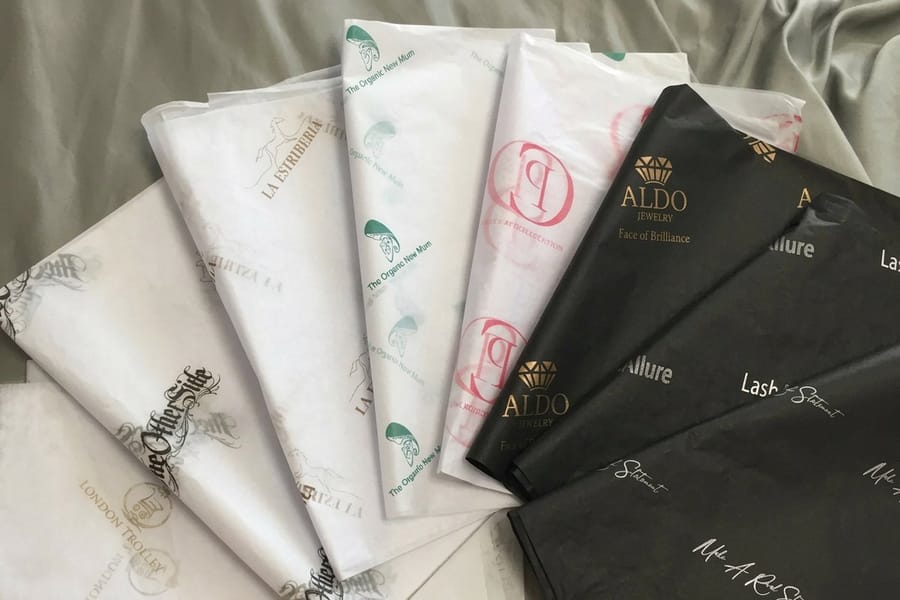
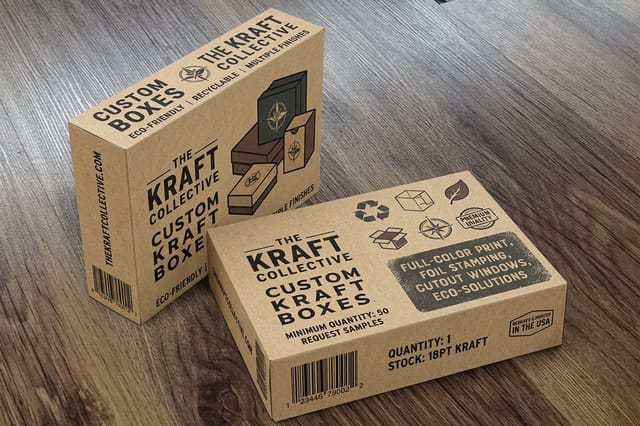
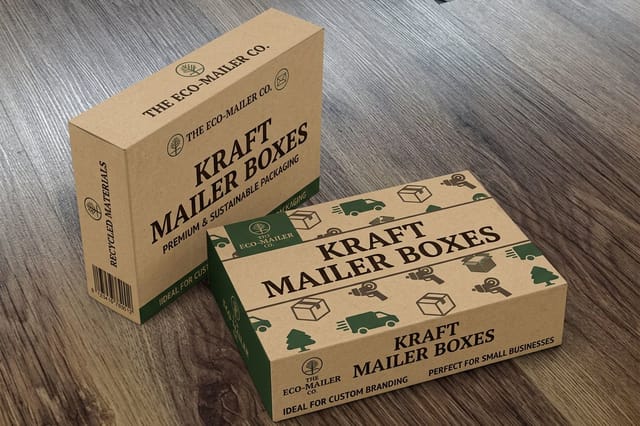
The prices split sharply, and knowing where they split changes the order you build things in. Custom kraft boxes and eco friendly boxes both start at $711.78, because a box run involves a cutting die and a genuine minimum quantity. Packaging sleeves start at $438.25, printed packaging tape at $347.11, custom tissue paper at $126.32, and recycled hang tags at $25.27.
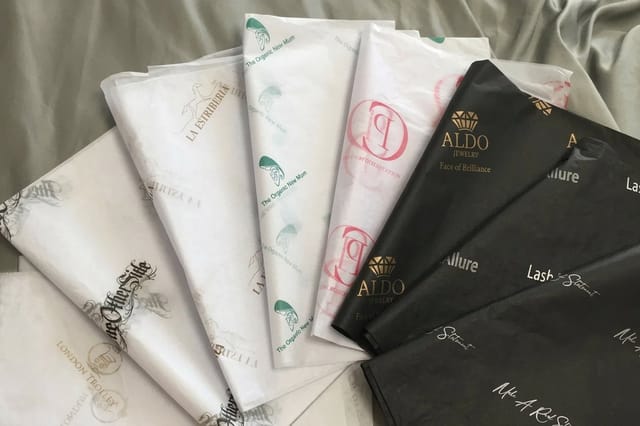
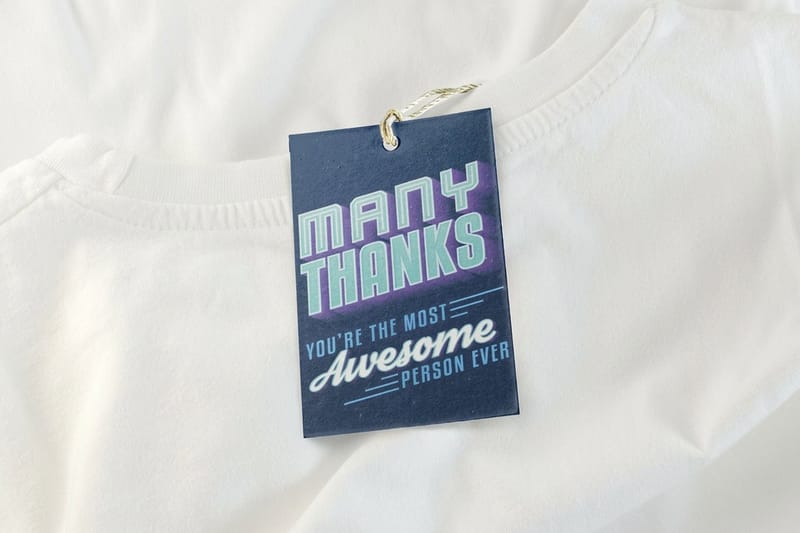
That gap is why so many brands brand the inside of the pack before the outside. Buy a plain stock mailer, wrap the product in printed tissue, band it with a sleeve, tie on a kraft hang tag, and seal it with printed tape. The unboxing reads as fully branded and the whole kit costs less than one custom box die. When your volume makes the die worth it, move the artwork onto the box and keep the tissue.
Before any run, get the file right. Build the artwork onto a die line rather than beside one, start from a correctly sized layout in the blank template library, and follow the file preparation guide for packaging so bleed, panel orientation and glue flap clearance are handled before the plate is made. Then check a printed proof and fold it. A flat proof hides score direction, and board that cracks white along a fold is something you want to find on one sample rather than on a pallet.
One more piece to plan in: the label. Regulated categories carry mandatory copy, and it usually lands on a packaging label rather than on the box itself, which keeps the box artwork stable while the label changes per batch. If a term in your quote is unfamiliar, the printing glossary spells it out, and how to create branded packaging covers the design side once the specs are settled.
Wally explains paper packaging
Caliper picks the format, finish picks the bin
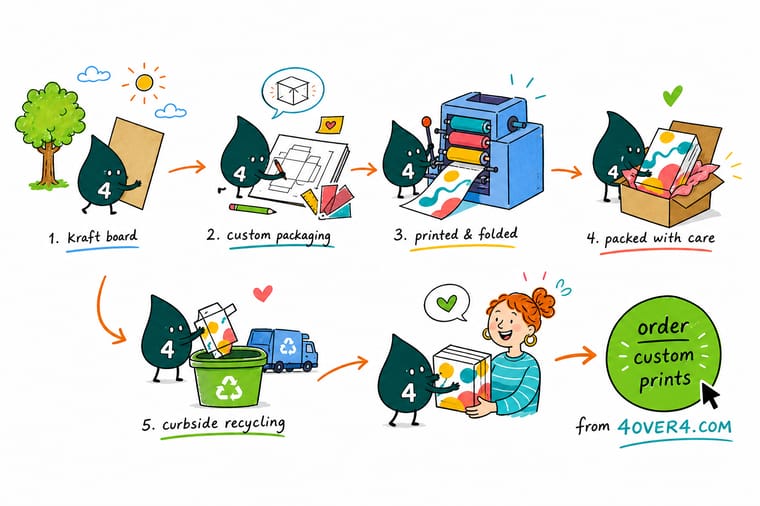
Wally lines the stack up by thickness: tissue to wrap, a sleeve to band, board to fold, corrugated to survive the courier. Then he prints on brown kraft and watches the pale blue go grey, because ink is see through and the board underneath always joins in. Last, he checks the finish. Aqueous varnish soaks in and the box still pulps. Gloss lamination is plastic glued to paper, and the mill sends it back.
Order custom kraft boxes →Specs and pricing
Box sizes, board options and starting prices
Compare the three paper box builds side by side, with live configuration choices and starting prices straight from the 4OVER4.COM configurator.
Print it
Build the pack, from the box to the tissue inside it
Explore more
Where to go next
By the numbers
Packaging printing you can count on at 4OVER4
Common Questions
Your paper packaging questions, answered
What is custom paper packaging?
It is any pack built from paper fibre rather than plastic: tissue paper, printed wraps and sleeves, folding cartons made from paperboard, corrugated mailers and shipping boxes, hang tags, and paper tape. The fibre can be bleached white board, unbleached brown kraft, or recycled board with a grey core. The word paper is doing a lot of work there, because a 17 gsm tissue sheet and a B flute corrugated box behave nothing alike. What they share is a recycling stream, provided nobody laminates them.
Is kraft packaging actually more recyclable than white board?
Not inherently. Both are paper fibre and both go in the same curbside stream. Kraft simply skips the bleaching stage, so it uses less processing to reach the shelf and it looks unbleached, which is what most people are reading when they call it the greener option. What genuinely changes the outcome is the finish on top: uncoated kraft and aqueous coated board recycle, while gloss lamination, metallized board and plastic windows send the pack to landfill in most municipal systems.
Why do my colors look wrong on kraft board?
Because printing ink is transparent and the board is brown. Everything you print sits over that brown and shifts toward it. Light blues turn grey, bright yellows turn olive, and pure white is simply not available unless the press lays down an opaque white base first and prints your color on top of that. Design for it instead of fighting it: heavy line work, single strong ink, and knocked out shapes that let the kraft itself become a color in the design.
What is the difference between a folding carton and a corrugated box?
A folding carton is a single layer of paperboard, roughly 14 to 24 pt, scored and glued so it ships flat and folds up at your bench. It is the retail box for cereal, cosmetics and soap. A corrugated box has a fluted layer sandwiched between two liners, which makes it far stiffer and adds real thickness, from about a sixteenth of an inch for E flute upward. If the pack has to survive a courier, you want corrugated. If it has to look sharp on a shelf and holds something light, the carton is cheaper and prints better.
Do I need a die line before I can order?
Yes for anything folded. A die line is the flat map of the box with cut lines, score lines and glue tabs marked, and the print file has to be built onto it, not near it. You can start from a correctly sized layout in our blank template library rather than drawing it yourself, and the file preparation guide covers bleed, panel orientation and where art gets swallowed by a glue flap.
How much does custom paper packaging cost to start?
It depends entirely on the format, and the split is bigger than most people expect. Custom kraft boxes and eco friendly boxes start at $711.78 because a box run involves a cutting die and a genuine minimum quantity. Printed packaging sleeves start at $438.25, packaging tape at $347.11, custom tissue paper at $126.32 and recycled hang tags at $25.27. Brands on a small budget usually brand the inside of the pack first, with tissue, a sleeve and a tag, and move to a custom box once the volume justifies the die.
Get Started
Ready to spec your paper packaging?
Size the box to the product, pick kraft or recycled board, choose an aqueous finish that keeps the pack recyclable, and we will send a free proof before anything goes on press.
Legal Disclaimer
Gold Standard guarantees apply to all standard orders placed through 4over4.com. Price match requires verifiable proof of a competitor's published price for an equivalent product with matching specifications and turnaround time. Satisfaction guarantee covers manufacturing defects and print quality issues. Contact support with order number and documentation. On-time delivery rate based on tracked orders 1999 to 2026. Individual results may vary based on shipping carrier performance.
