
Envelope Types Explained and What Each Style Is Built to Hold


Commercial, booklet, catalog, announcement, remittance and window. Here is what each style is built for, the trap in every pair that looks identical, and the 4OVER4 envelope that matches the job.
Envelope styles are named by the edge that opens, the flap and the seam, not by size. Commercial (#10), booklet and A-style announcement envelopes open along the long side. Catalog envelopes open on the short end and carry a seam down the back. Remittance envelopes extend the flap into a response form, and a window is a die-cut aperture added to a commercial or booklet body. A 9 by 12 booklet and a 9 by 12 catalog hold the same sheet and load in different directions.
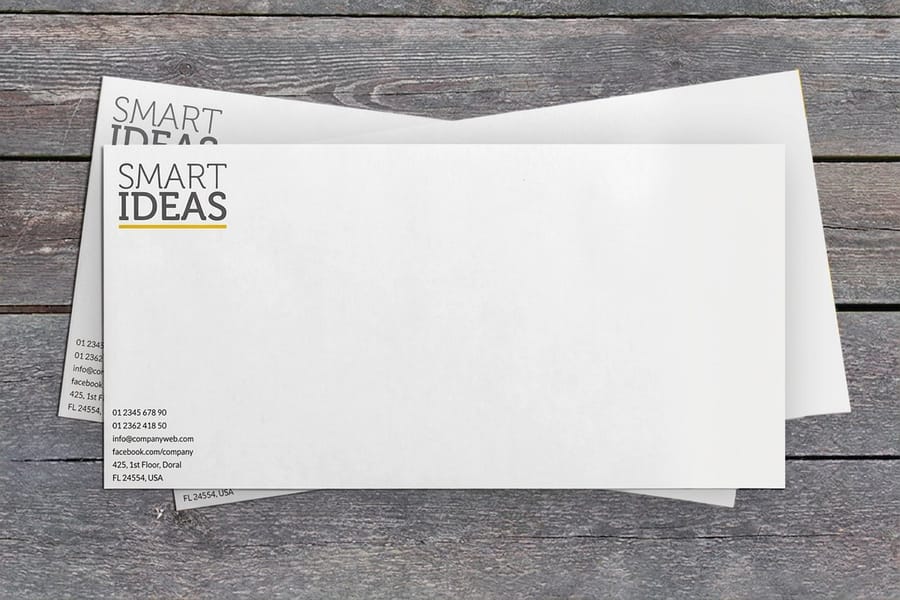
Quick answer
Which edge opens, how deep the flap runs, where the seam falls
Style is construction, not dimensions. Open-side envelopes, which covers commercial, booklet and A-style, open along the long edge and feed through inserting equipment. Open-end catalog envelopes open on the short end and hold thicker contents. The flap tells you what the envelope was designed to swallow, since a deep square A-style flap takes a stiff folded card that a shallow commercial flap would fight. The seam tells you how the back will print. Once those three are settled, size is the easy part.
What Actually Separates One Envelope Style From Another
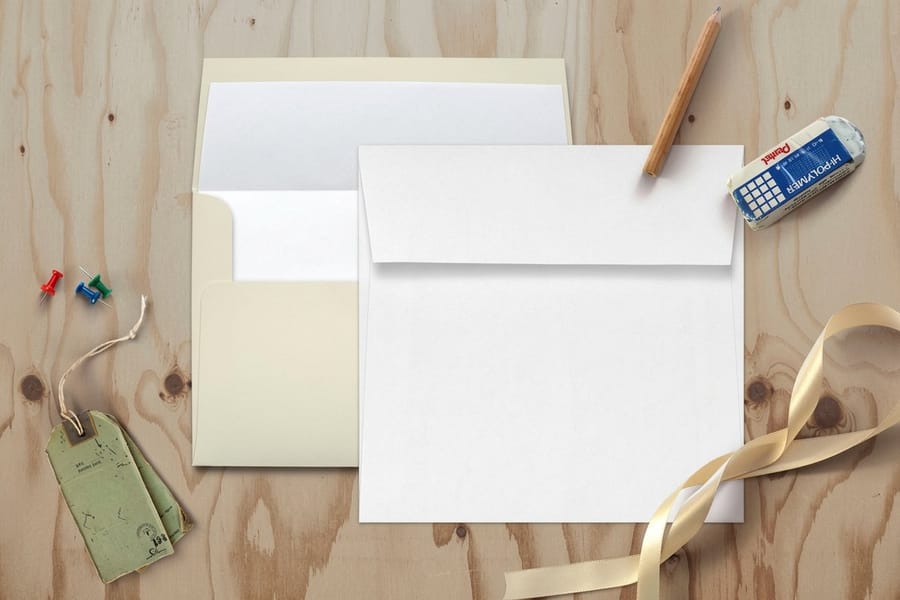
Three things, and size is not one of them. Every envelope style is a combination of the edge that opens, the shape and depth of the flap, and how the back panel is seamed.
The opening edge. An open-side envelope opens along its long edge. The #10 you post an invoice in, a 9 by 12 booklet and an A7 invitation envelope are all open-side, and that is what lets a machine drop the contents in sideways. An open-end envelope opens on the short end, which is the definition of a catalog envelope. Same paper, same footprint, completely different loading.
The flap. Commercial envelopes carry a shallow pointed or square flap, deep enough to seal and no deeper. Booklet flaps run wide and shallow along the long edge. A-style announcement envelopes carry a deep square flap that opens the mouth wide, which is how a stiff folded card gets in without bending a corner. Deeper flaps also take a printed or colored liner, since there is enough area to see it.
The seam. Side seam envelopes are glued down both edges, leaving a clean unbroken back panel. Diagonal seam envelopes meet in a V behind the flap. Catalog envelopes carry a seam straight down the center of the back. The seam decides how the back prints, which is the part most people find out about after the proof.
Get those three straight and the size chart stops being confusing. If you want the measurements themselves, our complete guide to common envelope sizes lists them in inches.
The Envelope Styles You Will Be Offered, One by One
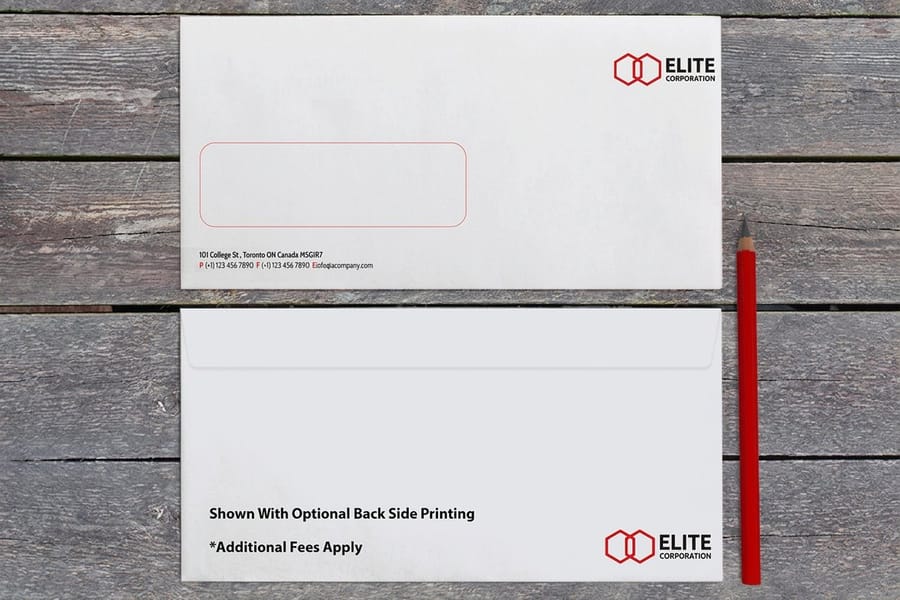
Six names cover nearly everything a commercial printer stocks. Read the second column first, because that is the one that changes how the envelope behaves.
| Style | Opens on | Flap and seam | Built to hold |
|---|---|---|---|
| Commercial | Long side | Shallow pointed or square flap, side or diagonal seam. | Letters, invoices and statements folded in thirds. #10, #9 and 6 3/4 are the usual sizes. |
| Booklet | Long side | Wide shallow flap along the long edge, side seams. | Flat unfolded sheets, brochures and media kits, in volume through an inserter. |
| Catalog | Short end | Flap on the short end, seam down the center back. | Thicker contents filled by hand. Stronger for bulk, awkward for machines. |
| Announcement (A-style) | Long side | Deep square flap, side seams, takes a liner. | Invitations, greeting cards and folded notes. A2, A6, A7 and A9. |
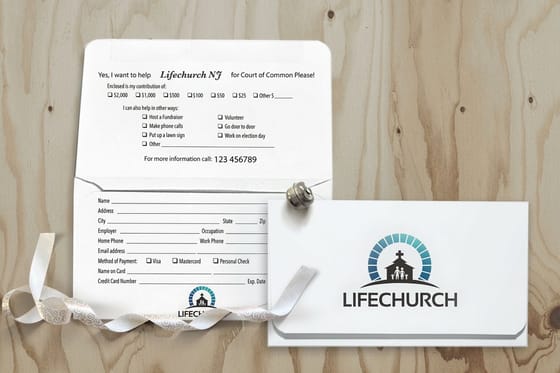
| Remittance | Long side | Extended flap that folds down into a printed response form. | Payments, pledges and donations coming back to you. |
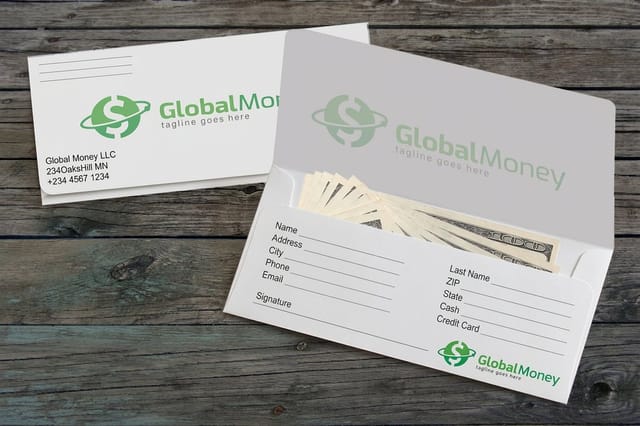
| Window | Long side | A die-cut aperture added to a commercial or booklet body. | Anything where the address is already printed on the insert. |
Two of those get mixed up constantly. Booklet and catalog can both be 9 by 12 and hold the same unfolded letter sheet, and a supplier who says large envelope may mean either. Ask which edge opens. If the mail house is machine inserting, it needs booklet. If someone at a desk is packing sample kits, catalog is faster to load and takes the extra thickness better.
Everything on this list can be printed rather than bought plain. Custom printed envelopes start at $142.99, and if you would rather run them through your own laser printer or hand address them, blank envelopes start at $13.17. The legal envelope sizes guide covers the longer 10 by 13 and 9 by 12 formats law offices order most.
Window Envelopes, and Why the Aperture Position Decides Your Layout
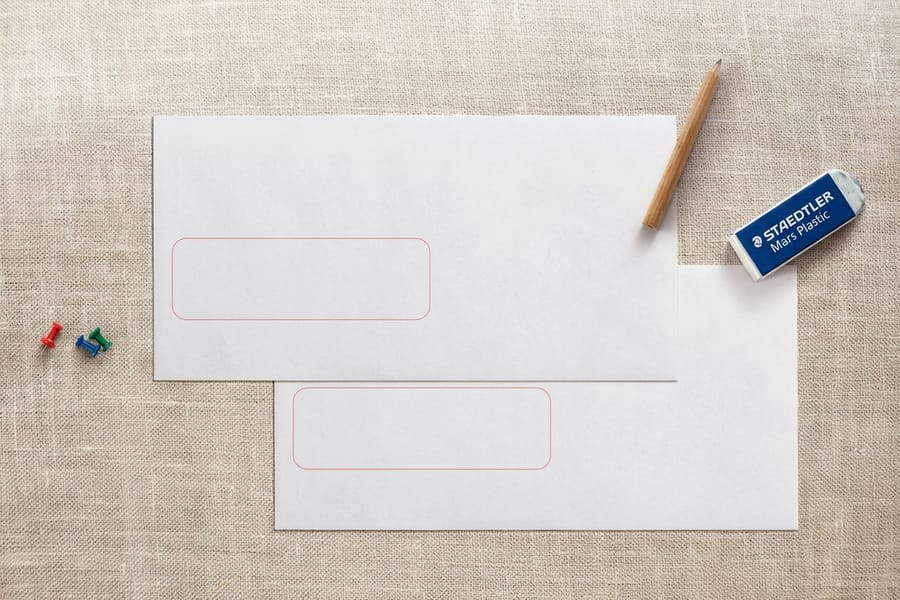
A window envelope is a commercial or booklet envelope with a rectangle cut out of the front and a film patch behind it. That is the whole difference. What matters is where the rectangle sits, because it fixes the position of the address block on the sheet inside.
On a standard #10, the window measures 1 1/8 by 4 1/2 inches and sits 7/8 inch in from the left edge and 1/2 inch up from the bottom. Place the address inside that footprint with at least 1/8 inch of clearance on every side. Then test it with the sheet pushed a quarter inch left, right, up and down, because a letter folded in thirds moves that much inside the envelope once it is sealed. An address that only reads when the insert is perfectly centerd will come back to you undeliverable.
One more rule the sorting equipment enforces: nothing but the delivery address should show through the window. A phone number, a marketing line or a second address peeking through the aperture is enough to knock the piece out of automation. Set up the letter first and the envelope second, not the other way round.
Our window envelope setup guide has the measurement diagrams, and the blank template library gives you a correctly sized layout to start from so nothing drifts out of the aperture. Pair it with matching letterheads and the address lands in the same place on every run.
Matching the Envelope Style to the Job
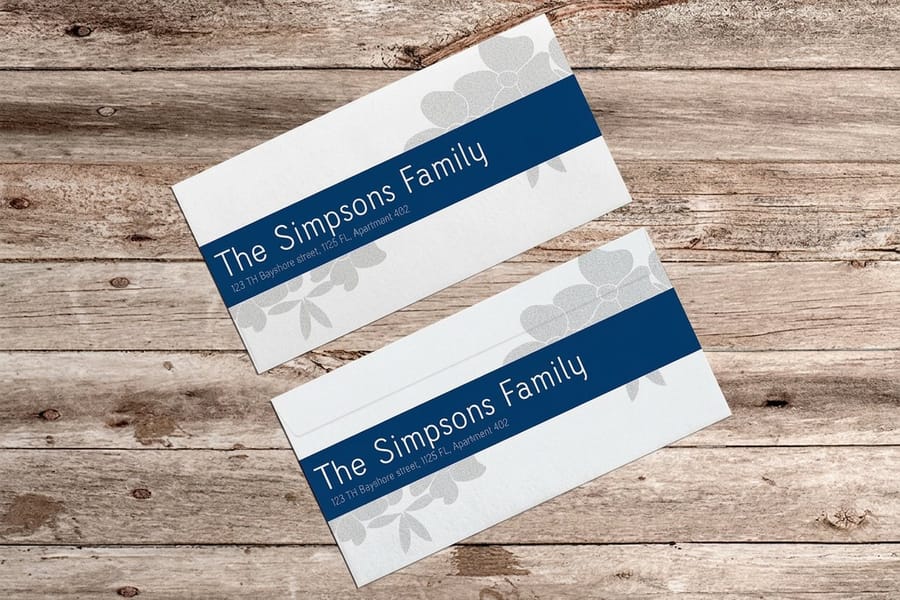
Work backwards from what goes inside and what happens to the piece after it leaves. The six envelopes we print cover the jobs that come up most.
| The job | Order | Starts at |
|---|---|---|
| Business mail carrying your logo, in #10 or another commercial size | Printed Envelopes | $142.99 |
| Envelopes you will address yourself or run through an office printer | Blank Envelopes | $13.17 |
| Weddings, announcements and greeting cards in A2 to A9 | Invitation Envelopes | $170.42 |
| A reply device that comes back with a payment inside | Remittance Envelopes | $617.67 |
| Fundraising appeals and pledge returns for a nonprofit | Donation Envelopes | $617.67 |
| Weekly giving envelopes for a congregation | Offering Envelopes | $617.67 |
Two notes on that list. The remittance style is the one people underuse: the flap extends into a panel your customer folds down and fills in, so the response form and the envelope are the same piece of paper and nothing gets separated in a pile of mail. Read the remittance envelope sizing guide before you order, because the classic 6 3/4 body has to fit inside the #10 you mail it out in.
The second note is on blank envelopes. At $13.17 they are the cheapest way into a small run, and they make sense when the quantity is low or the design changes every month. Past a few thousand pieces, printing the envelope beats feeding them through an office laser one at a time, and the ink sits better. If you are ready to order, the walkthrough for ordering custom printed envelopes covers quantity, stock and turnaround, and the full envelope printing category lists every size we hold.
The Limits Worth Knowing Before You Print
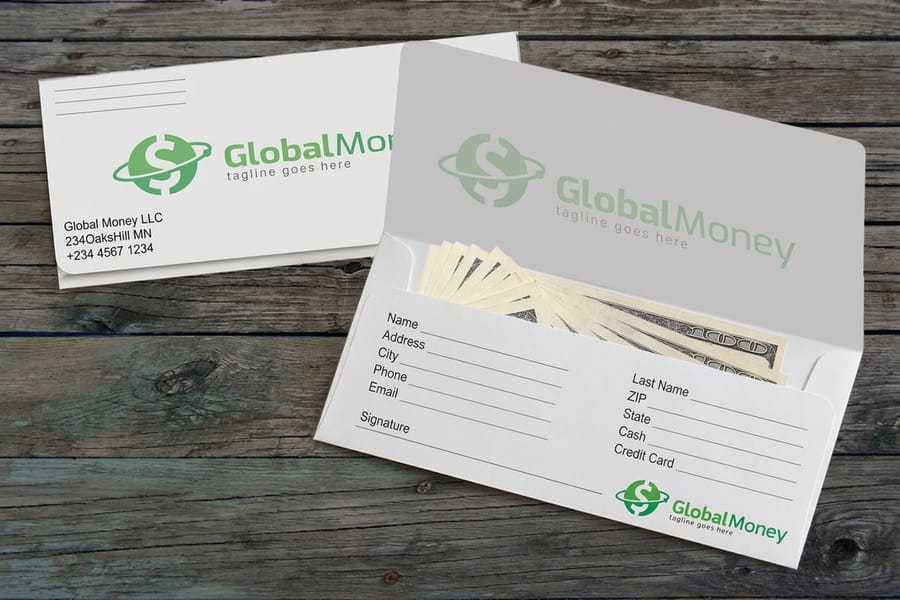
Envelopes carry constraints that flat sheets do not, and all of them come from the fact that an envelope is a folded, glued, uneven object rather than a rectangle of paper.
Keep ink off the gum. Adhesive will not stick to a printed surface, so artwork has to stop about a quarter inch short of the gum strip on the flap and short of the seal area on the body. Full bleed across a flap is possible, but say so when you order, because it changes how the envelope is converted.
Expect seams to read through. A heavy solid printed across the back of a diagonal seam or center seam envelope shows a faint line where the paper doubles. Nothing is wrong with the print. If the back panel carries a big block of color, pick a side seam envelope, which has a flat uninterrupted back.
Check the mailing envelope, not just the design. For letter rates the Postal Service wants a rectangle at least 3 1/2 by 5 inches, no more than 6 1/8 by 11 1/2 inches, under a quarter inch thick, with a length to height ratio between 1.3 and 2.5. A #10 sits at 2.30 and an A7 at 1.38, so both clear it. Square envelopes sit at 1.0 and pick up a nonmachinable surcharge on every piece, which is the sort of thing that doubles postage on a wedding list without anyone noticing until the counter tells them.
Buy self-seal in quantities you will use. Peel-and-seal strips are convenient and they age. Ordering three years of stock to hit a price break usually ends with a box of flaps that no longer grip. If you plan to store them, plain gummed flaps hold up better.
None of this changes the design work much. It changes what you check before you sign the proof. Our envelope design guide covers the layout side, and addressing an envelope for professional mail covers where the text goes once the envelope is chosen.
Wally explains envelope styles
Same sheet, same size, two different envelopes
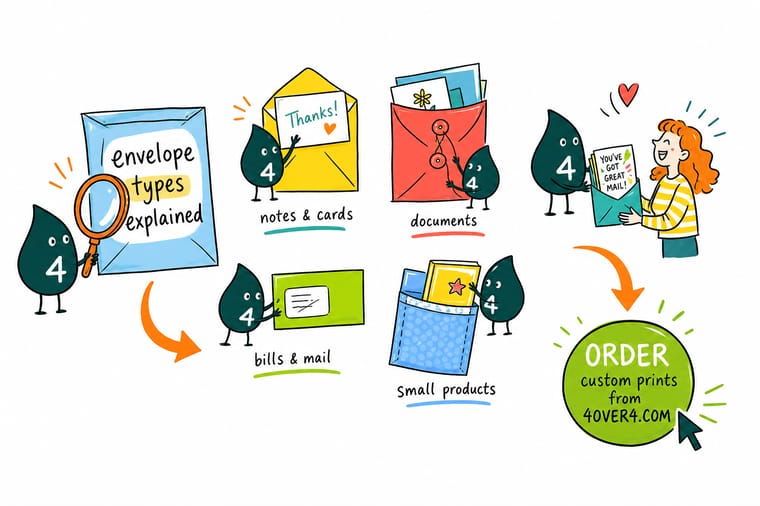
Wally holds two 9 by 12 envelopes. One opens along the long edge, so the brochure slides in wide and a machine can fill a thousand of them. The other opens on the short end with a seam down the back, so it takes a thicker stack but somebody has to load it by hand. Ask which edge opens before you ask what size it is. That one question settles most envelope orders.
Order custom printed envelopes →Specs and pricing
Envelope sizes, stocks and starting prices
Compare the three envelopes most orders come down to, with live configuration choices and starting prices straight from the 4OVER4.COM configurator.
Print it
Order the envelope that suits the job
Explore more
Where to go next
By the numbers
Envelope printing you can count on at 4OVER4
Common Questions
Your envelope questions, answered
What is the difference between a booklet envelope and a catalog envelope?
The edge that opens. A booklet envelope opens along its long side, so a 9 by 12 booklet takes an unfolded letter sheet in through the 12 inch edge and lies open wide while you fill it. A catalog envelope of the same 9 by 12 dimensions opens on the 9 inch short end and has a seam running down the center of the back panel. Booklets run through automatic inserting equipment; catalogs are normally stuffed by hand and hold thicker contents more comfortably. If you are mailing a flat brochure in volume, ask for booklet. If you are shipping a chunky sample pack from a counter, catalog is easier to load.
Which envelope is a #10 and what actually fits in it?
A #10 measures 4 1/8 by 9 1/2 inches and is the standard American business envelope. It takes an 8 1/2 by 11 sheet folded in thirds with room to spare, which is why invoices, letters and statements all default to it. The next sizes down are the #9 at 3 7/8 by 8 7/8, used as the reply envelope that fits inside a #10, and the 6 3/4 at 3 5/8 by 6 1/2 for a letter folded in quarters. Our printed envelopes are quoted in these commercial sizes.
Can you print full color on any envelope style?
Almost, with two physical limits that apply to every style. Ink laid over a back seam sits on a slight ridge, so a solid dark panel across the back of a catalog or diagonal seam envelope shows a line where the paper doubles. Ink laid on the gum strip stops the flap from sealing. Leave roughly a quarter inch of clearance around the gum line and expect the seam to read through heavy coverage, or choose a side seam envelope with a clean flat back panel when the back is a big part of the design.
Do window envelopes need a different template?
Yes, and it is the letter inside that needs the work rather than the envelope. Set the address block so it sits inside the aperture with at least 1/8 inch clear on all four sides, then check it still clears when you slide the insert a quarter inch in any direction, because that is roughly how much a folded sheet moves inside the envelope. Nothing except the delivery address should be visible through the window. Our window envelope setup guide walks through the measurements, and the blank template library has the layouts already sized.
What envelope do I use for a 5 by 7 invitation?
An A7, which measures 5 1/4 by 7 1/4 inches and leaves an eighth of an inch of clearance around a 5 by 7 card. It carries the deep square flap that suits a heavier stock and takes a contrasting liner well. A2 at 4 3/8 by 5 3/4 handles a folded note card, and A9 at 5 3/4 by 8 3/4 fits a larger program or a photo mailer. Invitation envelopes at 4OVER4.COM start at $170.42.
Do square envelopes cost more to mail?
They do. The Postal Service applies a nonmachinable surcharge to square envelopes because its letter sorting equipment needs a rectangle with an aspect ratio between 1.3 and 2.5, and a square sits at 1.0. The same surcharge catches anything taller than 6 1/8 inches, longer than 11 1/2 inches, thicker than a quarter inch, or rigid or clasped. A 5 1/4 by 7 1/4 A7 clears all of that at a ratio of 1.38, which is one reason it stays the default invitation envelope in the United States.
Get Started
Ready to order the right envelope?
Pick the style, the size and the stock, upload your artwork, and we print envelopes that seal properly and clear the sorting equipment.
Legal Disclaimer
Gold Standard guarantees apply to all standard orders placed through 4over4.com. Price match requires verifiable proof of a competitor's published price for an equivalent product with matching specifications and turnaround time. Satisfaction guarantee covers manufacturing defects and print quality issues. Contact support with order number and documentation. On-time delivery rate based on tracked orders 1999 to 2026. Individual results may vary based on shipping carrier performance.
