
Digital vs Offset Booklet Printing - Which Wins


Two presses, two very different price tags. Digital skips the plates for fast, flexible short runs, while offset earns its setup cost at high volume. Which one wins for your booklet follows from your run length, your deadline, and your color.
For most booklet orders, digital printing wins. It uses no plates, so short and mid-size runs print fast and cheap, and every copy can be personalized. Offset printing carries an up-front plate and setup cost, then prints each copy for very little, so it only pulls ahead on large runs (roughly a few thousand copies) or when you need an exact Pantone brand color. Below about a thousand booklets, choose digital.
Start here
Where the two presses cross over
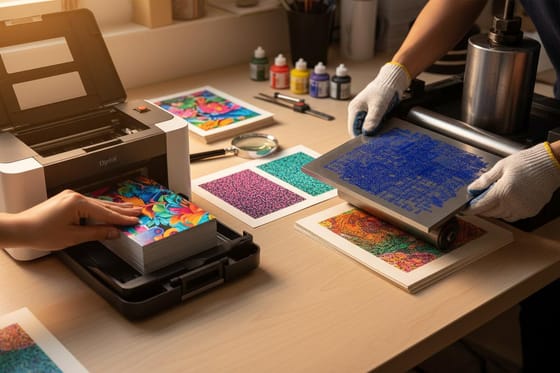
Digital printing goes straight from your file to the press with no plates, so it is faster and cheaper for short and mid-size booklet runs. Offset printing burns metal plates first, which costs money up front but makes each copy very cheap at high volume and holds an exact Pantone color. The crossover sits near a thousand copies: below it, digital wins on cost, speed, and flexibility. Well above it, offset wins on unit price and consistency. The table and infographic further down make the whole trade-off visible at a glance.
Why the printing method changes what your booklet costs
A booklet is not a single sheet, it is a small stack of folded, bound pages, and that changes the economics of printing it. Before you choose a size or a stock, one decision quietly sets the whole budget: whether the job runs on a digital press or an offset one.
The two methods put ink on paper in completely different ways, and each is built for a different kind of order. Get the match right and your booklets arrive fast and priced fairly. Get it wrong and you either overpay on setup for a short run or wait too long for a job that never needed plates.
This guide explains what a digital booklet actually is, how offset differs, when each one wins, and how to read the true cost. If you already know you want a fast, flexible short run, our digital printing collection is where to start.
What is a digital booklet? Digital booklet printing explained
A digital booklet is a bound, multi-page piece printed on a digital press that reads your file and lays toner or inkjet ink straight onto the sheet. There are no printing plates and no press setup between your artwork and the paper, which is the whole point: you can print one hundred booklets as easily as a thousand, and every copy can be different.
That freedom is why digital rules short and mid-size runs. There is no setup fee to pay off, turnaround is often just one to three days, and you can personalize each copy with a different name, region, or offer. It also makes proofs and reprints painless, so a quick tweak never means paying to start over. Our digital printing collection and the built-in design templates are built around exactly this workflow.
The trade-off shows up only at high volume, where the per-copy ink cost stays flat instead of dropping. For a run of a few hundred standard booklets, though, digital is almost always both the faster and the cheaper answer, and you can confirm it live in the configurator.
What is offset booklet printing?
Offset printing takes the long road, and at scale that road is cheaper. Your artwork is burned onto metal plates, one per color. The plates transfer ink onto a rubber blanket, the blanket rolls it onto large press sheets, and those sheets are then folded and bound into finished booklets. The name comes from that middle step: the ink is offset onto the blanket before it ever touches paper.
All of that plate-making and calibration is an up-front cost, so a small offset run is expensive per copy. But once the press is dialed in, each additional booklet costs very little, which is why offset dominates large orders. It also holds an exact Pantone (PMS) brand color and keeps that color rock-steady across tens of thousands of copies, something a brand-critical run genuinely needs. For the method comparison beyond booklets, see our guide on digital printing vs offset printing.
Offset shines when volume is high and consistency is non-negotiable. For everything smaller or more time-sensitive, the setup cost works against you, which is where the next two sections come in.
When digital wins for booklets

Reach for digital when the run is short to mid-size, the deadline is tight, or the copy needs to change from one booklet to the next. Because there is no setup to amortize, a run of fifty or five hundred prints for a sensible price instead of carrying a plate fee that dwarfs the order.
Digital is the right call when you want proofs before you commit, when you plan to reprint in small batches as you go, or when personalization matters, such as event booklets with a different name on each cover. It is also ideal for testing a design before scaling up, since you can print a small first run, refine it, and reorder without penalty.
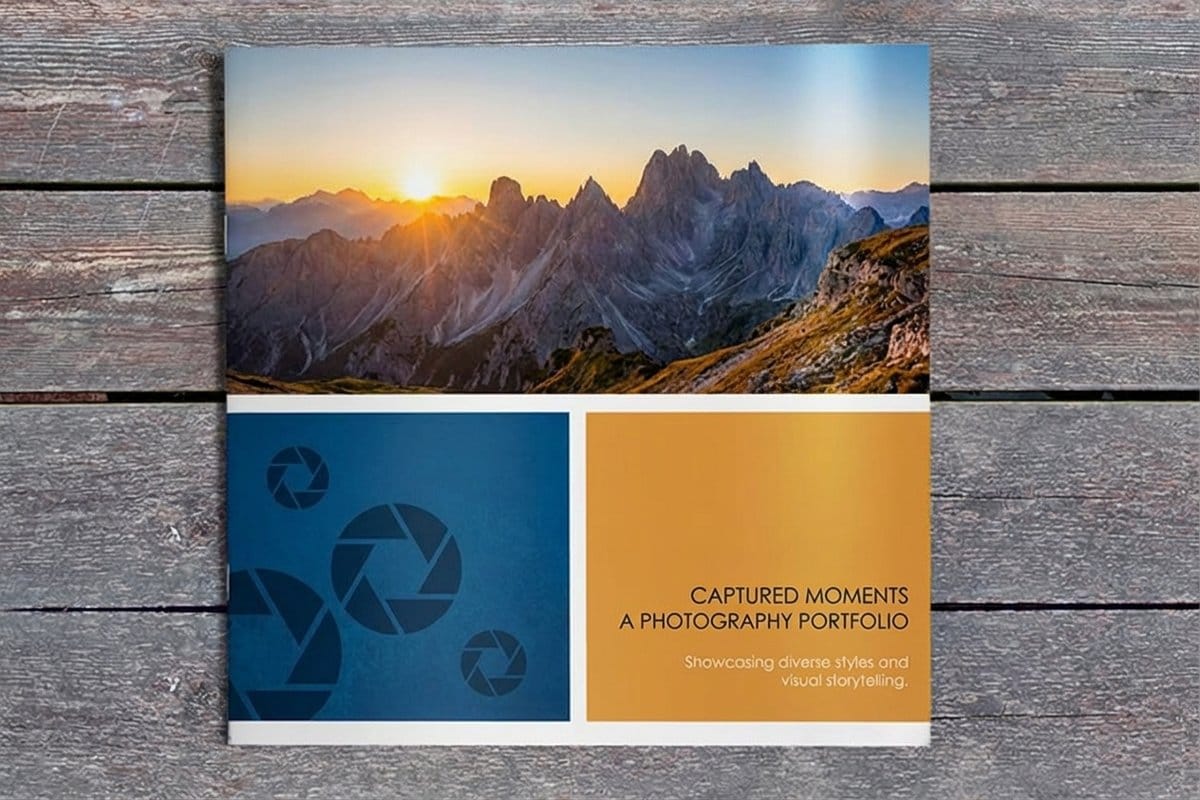
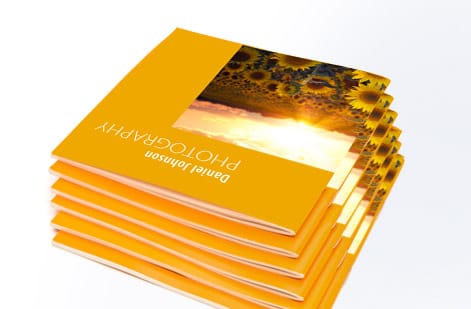
In practice that covers most real-world booklets: program guides, product catalogs for a launch, lookbooks, training manuals, and photography booklets where image quality matters more than raw volume. When speed and flexibility lead, digital wins.
When offset wins for booklets

Offset takes the lead the moment the numbers get big. Once you are printing several thousand booklets, the plate and setup cost spreads so thin that each copy becomes cheaper than digital could manage, and the savings only grow as the run climbs.
It is also the method to choose when brand color has to be perfect. If your booklet must carry an exact Pantone match or hold identical color across a massive print run, offset delivers that consistency in a way digital cannot fully guarantee. The same goes for specialty stocks, metallic inks, and unusual finishes that live on the offset side of the shop.
So offset earns its place for high-volume, brand-critical work: large annual catalogs, national program books, and education booklets printed by the thousand. For those jobs the up-front setup is a bargain measured against the per-copy savings.
Booklet formats and binding that work with either method

The printing method sets the cost, but the format sets the feel. Most booklets use saddle stitch, where folded pages are stapled along the spine, which is clean, economical, and ideal up to roughly eighty pages. Thicker books move to other binding styles, and the page count feeds straight back into which press makes sense.
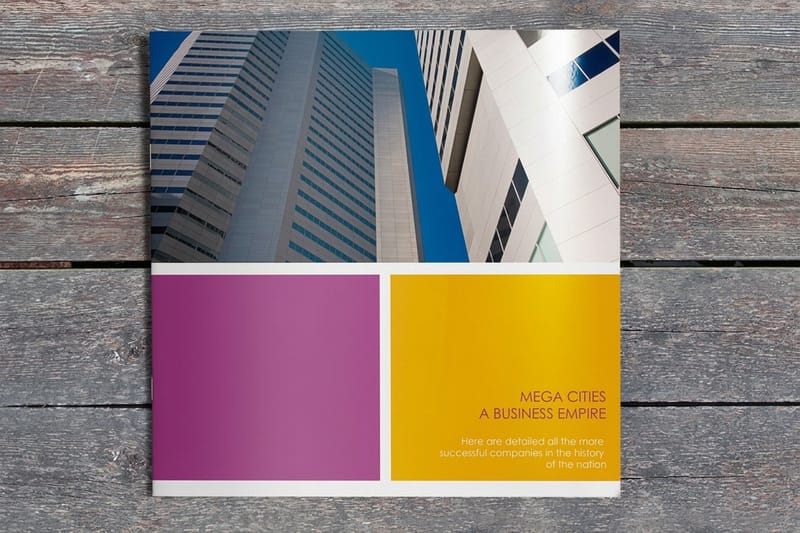
Format also drives the reading experience. A square booklet feels modern and image-forward, a saddle-stitch booklet is the standard for programs and guides, and heavier stocks give a stiffer hand-feel that suits a lookbook. If you are still deciding between a bound booklet and a larger bound piece, our comparison of booklets vs catalogs lays out the trade-offs.
Whatever format you land on, both digital and offset can produce it. The choice between them still turns on quantity, deadline, and color, which is exactly what the table below sets side by side.
How to choose, and what it costs to print booklets at 4OVER4

The decision rule is short. Count your copies, check your deadline, and ask whether the brand color must be an exact Pantone. If the run is under about a thousand, the turnaround is tight, or the copy changes per booklet, print digital. If the run is several thousand and color has to be locked to a Pantone across every copy, print offset. Everything else is detail.
Cost is easy to reason about once the method is set. Booklet price scales with a few levers: quantity (more copies lower the unit price), page count, trim size, paper stock, and finish. Standard booklets start around $240, and you can watch the number move live in the configurator as you add pages or bump the quantity, so there are no surprises at checkout.
If you want to feel the paper before you commit, order free samples first, then jump into the digital printing collection to place a fast short run. The specs and live pricing for standard booklets are right below.
Wally explains digital vs offset
The winning method is the one that fits your run
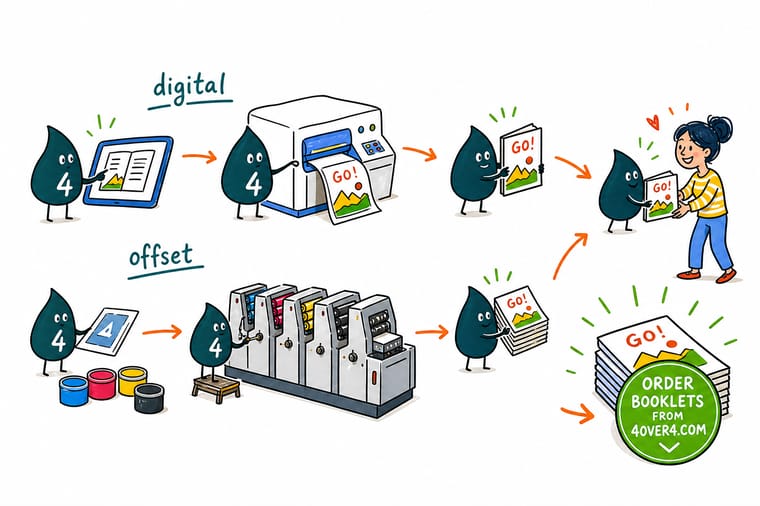
Wally sizes up every booklet the same way: how many copies, how fast, and how fussy the color. Small run on a deadline goes digital, no plates, no waiting. A run in the thousands with a locked-in Pantone leans offset. Tell 4OVER4 the quantity and we put it on the press that prints it best, sharp and on time.
Print your booklets →Side by side
Digital vs offset booklet printing, compared
Same booklet, two presses. The two methods stack up below on the factors that actually decide your order, from setup cost to color matching.
| Factor | Digital | Offset |
|---|---|---|
| Plates and setup | None, prints from your file | Plates and setup for every job |
| Best run size | Short to mid, up to about 1,000 | Large, roughly 2,500 and up |
| Unit cost, small order | Lower, nothing to amortize | Higher, setup spread over few copies |
| Unit cost, big order | Higher per copy at volume | Lowest per copy at volume |
| Turnaround | Fastest, often 1 to 3 days | Longer, plates plus press setup |
| Color matching | Excellent CMYK, calibrated | Exact Pantone (PMS) match |
| Variable data | Yes, personalize every copy | No, one fixed layout per run |
| Proofs and reprints | Easy and on demand | Costly to restart a run |
Digital carries the day on setup, speed, and small-run cost, which is why it wins for most booklet orders. Offset takes the lead only at high volume or when an exact Pantone match is non-negotiable.
Infographic
Which method wins, at a glance
One frame, both presses. Save it as a quick decision guide the next time you spec a booklet run.
The two presses are not rivals so much as tools for different jobs. Match the method to your quantity, deadline, and color needs, and the booklet takes care of itself.
Specs and pricing
Standard booklet specs and live pricing
Once the method is set, the booklet itself is size, page count, stock, and finish. Here are the live specs and price-per-unit for standard booklets at 4OVER4.COM, straight from the configurator.

| Quantity | Price Per Unit | Total |
|---|---|---|
| 25 | $9.62 | $240.55 |
| 50 | $6.04 | $302.06 |
| 100 | $3.61 | $361.37 |
| 200 | $2.22 | $444.85 |
| 300 | $1.65 | $495.38 |
| 400 | $1.29 | $515.14 |
| 500 | $1.06 | $531.61 |
| 600 | 91.5¢ | $549.19 |
Print it
Print your booklets at 4OVER4
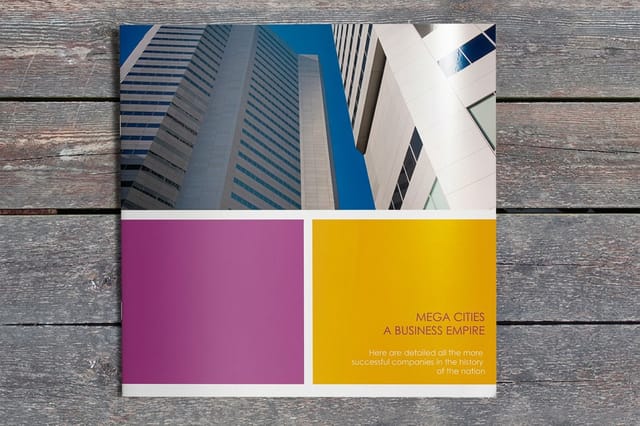
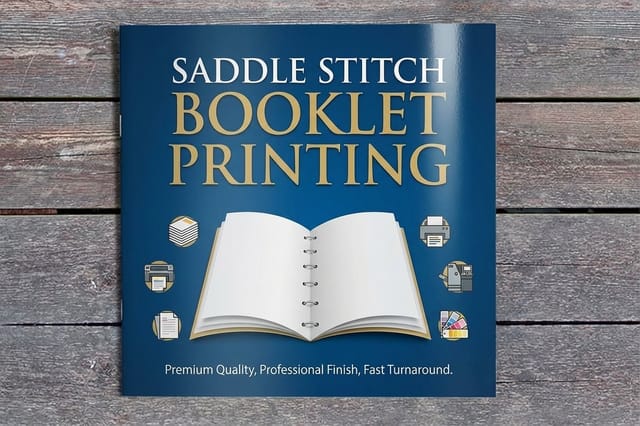
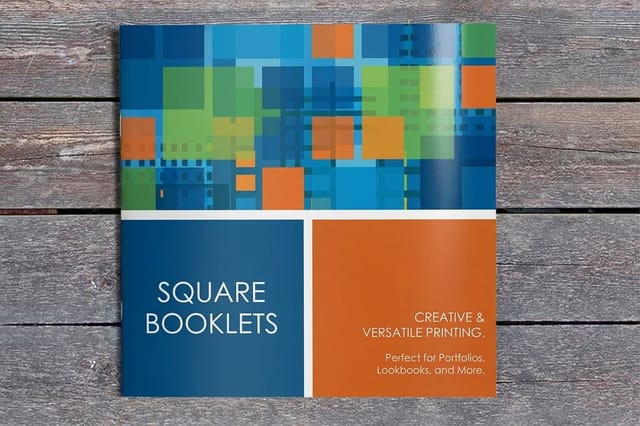
See it in use
Booklets from the customer showcase
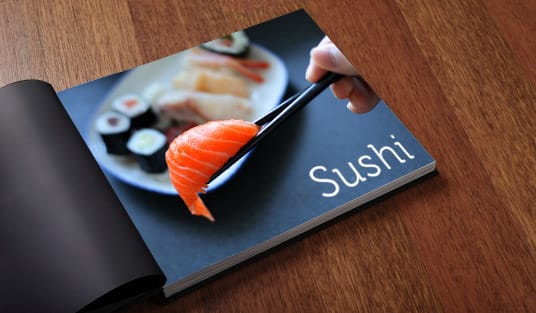
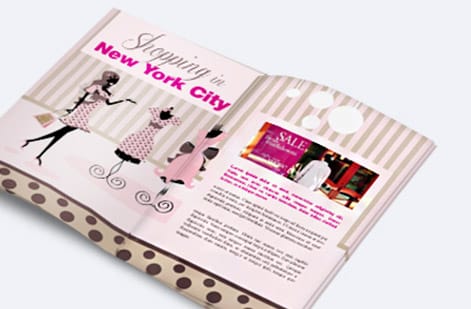
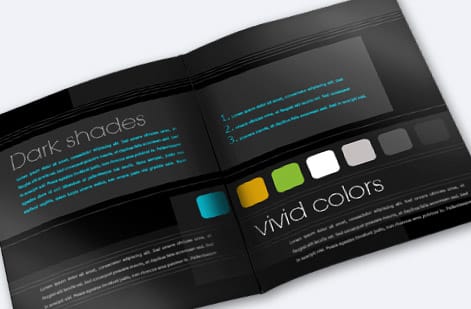
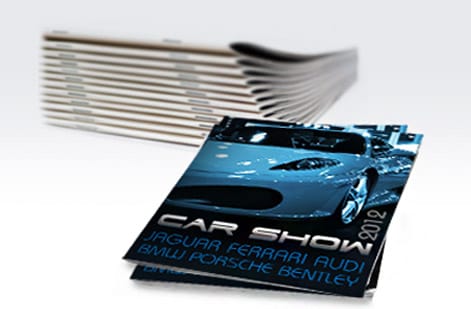

Explore more
Where to go next

By the numbers
The two presses behind a 4OVER4 booklet
Common Questions
Common questions about digital and offset booklets
What is a digital booklet?
A digital booklet is a multi-page printed booklet produced on a digital press rather than an offset one. The press reads your file and lays down toner or inkjet ink directly onto the sheet, with no printing plates in between. Because there is nothing to set up first, a digital booklet can be printed in small quantities, personalized copy by copy, and turned around in a day or two. It is the default choice for short and mid-size booklet runs.
What is the difference between digital and offset booklet printing?
Digital printing sends your file straight to the press and needs no plates, which makes it fast and cheap in small quantities. Offset printing burns your artwork onto metal plates, transfers the ink through a rubber blanket onto large sheets, then folds and binds them into booklets. The plates add an up-front setup cost, so offset only becomes the cheaper option once the run is large enough to spread that cost thin. Put simply, digital is built for speed and flexibility, offset for high-volume consistency.
Which is cheaper for booklets, digital or offset?
It depends entirely on how many booklets you need. For small and mid-size runs digital is cheaper because there is no setup to pay off. For large runs offset is cheaper because the plate cost is divided across thousands of copies while the ink itself is inexpensive. The tipping point sits near a thousand booklets for most sizes and page counts, though a heavier stock or higher page count can shift it.
How many copies before offset is worth it?
As a general guide, offset starts to make financial sense somewhere around 1,000 to 2,500 booklets, and it clearly wins above that. Below a thousand, the offset setup fee is too big a share of the order and digital comes out ahead. The exact number moves with page count, trim size, and stock, so the reliable way to know is to price both in the configurator at the quantity you actually need.
Does digital printing look as good as offset for booklets?
For the vast majority of booklets, yes. Modern digital presses hold sharp text, clean images, and calibrated CMYK color that most readers cannot tell apart from offset. Offset keeps a narrow edge in two situations: matching an exact Pantone brand color, and holding perfectly identical color across many thousands of copies. Outside of those cases, a digital booklet looks every bit as professional.
What booklet sizes and binding does 4OVER4 offer?
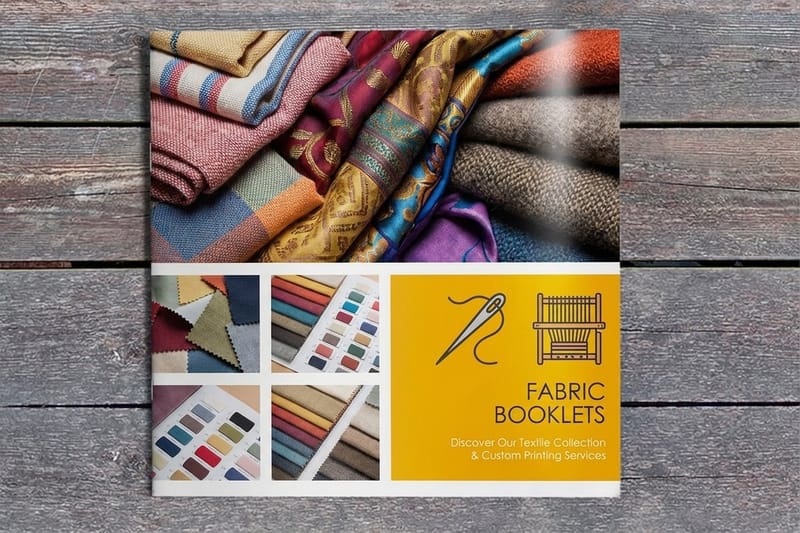
You can order standard, square, education, photography, kids, and fabric-cover booklets, plus saddle-stitch binding for thinner books. Saddle stitch folds the pages and staples them along the spine, which is ideal for booklets up to roughly 80 pages. Sizes run from compact pocket formats to large-format square layouts, on stocks from everyday text weight to heavier cover paper. Set the size, page count, and binding in the configurator to see every combination.
What does it cost to print booklets, and how are prices set?
Booklet pricing scales with quantity, page count, trim size, paper stock, and finish. More copies lower the unit price, more pages and heavier stock raise it. At 4OVER4.COM you set each option in the configurator and the price updates live as you go, so you can see exactly what changes when you add pages or bump the quantity. Standard booklets start around $240, and the per-unit cost falls as the run grows.
Get Started
Print 25 booklets from $240.55
Bring your booklet to 4OVER4.COM and print it on the press that fits your run. Set the quantity, page count, and stock, then allow 7 business days for production.
Legal Disclaimer
Gold Standard guarantees apply to all standard orders placed through 4over4.com. Price match requires verifiable proof of a competitor's published price for an equivalent product with matching specifications and turnaround time. Satisfaction guarantee covers manufacturing defects and print quality issues. Contact support with order number and documentation. On-time delivery rate based on tracked orders 1999 to 2026. Individual results may vary based on shipping carrier performance.
