
Custom Holographic Cards Explained, Foil Stamped or Full Rainbow Stock


Every rainbow card on the market is built one of two ways. Stamped foil and holographic stock differ in how the rainbow is made, each carries its own price at 4OVER4.COM, and each one loses.
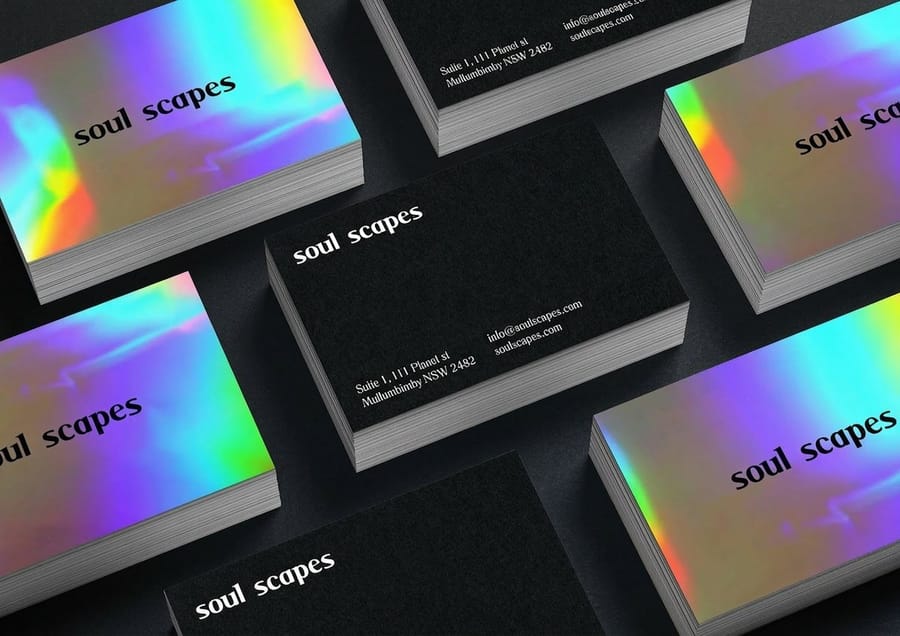
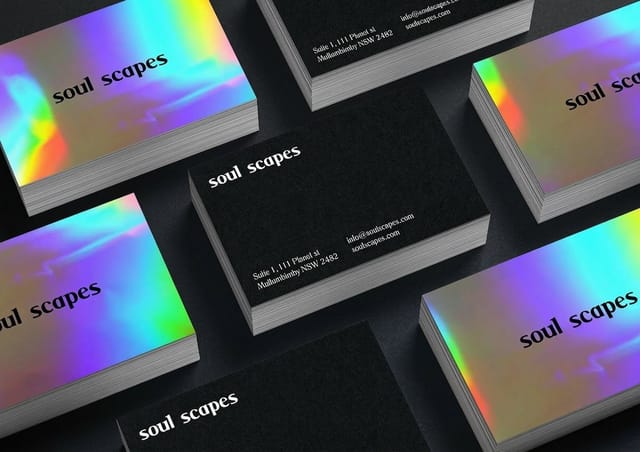
A custom holographic card gets its rainbow either from foil stamped onto paper in the shape of a die, or from holographic stock that shimmers across the whole card. Stamping gives you one bright element against a plain field and suits logos and borders. Holographic plastic makes the entire surface shift and carries gift and loyalty hardware such as magnetic stripes and sequential numbering. At 4OVER4.COM raised holographic business cards start at $86.78, holographic plastic cards at $226.11, and stamped holographic business cards at $251.36.
Quick answer
Stamped foil in a die shape, or a card that is rainbow all the way through
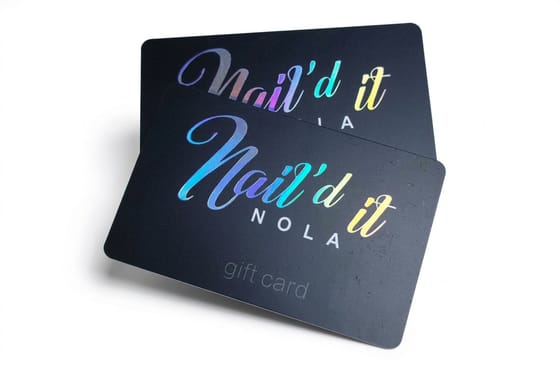
Foil stamping presses holographic film onto a printed paper card wherever the die touches, so the effect is a shape, not a surface. Holographic stock is the card itself, iridescent edge to edge, with your ink printed over it. Stamping wins when a logo needs to jump off a clean card and when you want type to stay readable. Stock wins when the whole object should catch light, and it is the only route to a swipeable gift or loyalty card. Cost follows coverage, sides, foil colors, material and quantity, in that order.
The Two Ways a Card Turns Rainbow
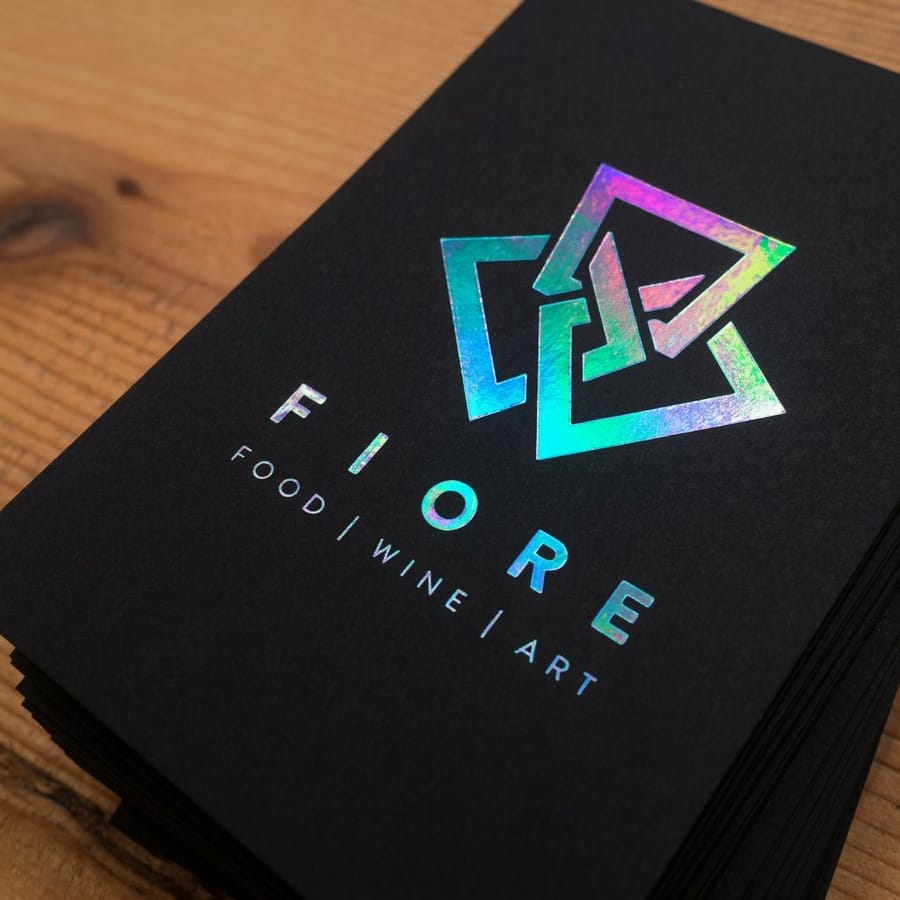
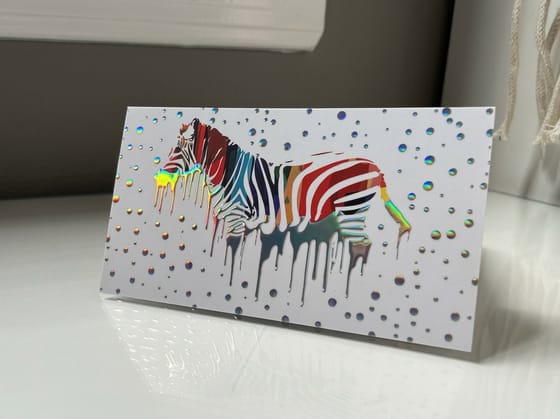
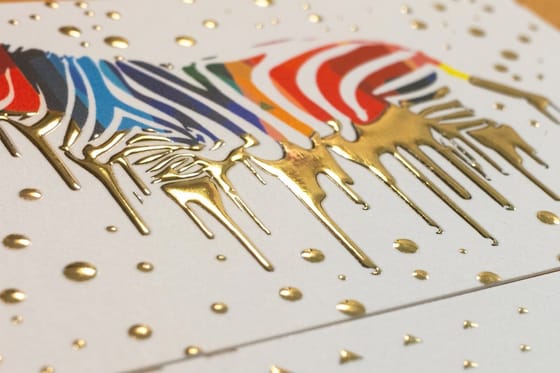
Holographic is a finish, not a single product, and the word covers two builds that behave differently in the hand. In the first, the card is ordinary printed paper and a heated metal die transfers holographic foil from a ribbon onto it, so the rainbow appears only in the shape of the die. In the second, the card stock is holographic to begin with and your artwork prints over the top, so the whole surface shifts color as it moves.
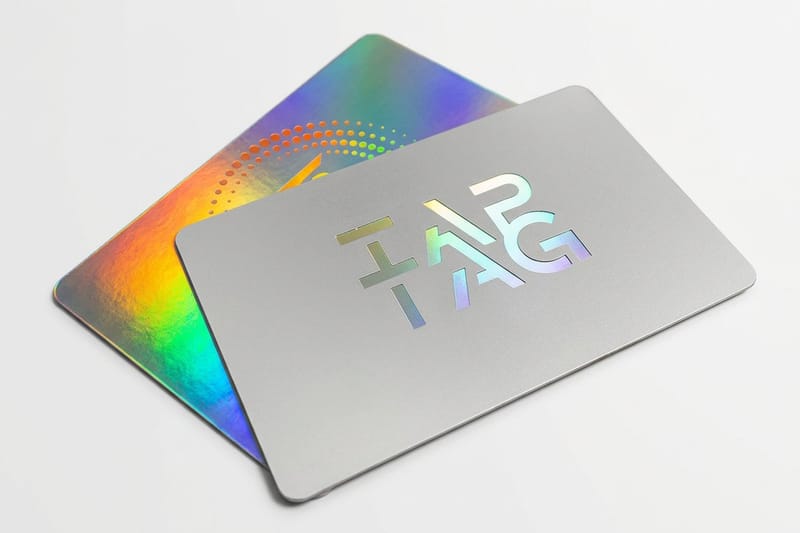
The practical difference is contrast. A stamped card reads as a matte or gloss card with one blazing element on it, which is why a logo stamped in holographic foil pulls the eye where you want it. A full holographic card reads as a single shimmering object, striking on a counter and difficult to put a paragraph of text on. Neither is better. They answer different briefs, and the file you build for one is wrong for the other.
| Build | What shimmers | Base material | Starts at |
|---|---|---|---|
| Holographic foil stamping | Only the die shapes you specify | Printed paper card, four stocks | $251.36 on business cards |
| Raised holographic foil | The die shapes, sitting up off the surface | Laminated stock, one foil color | $86.78 on business cards |
| Holographic plastic stock | The entire card, edge to edge | Plastic, 2.125 by 3.375 inches | $226.11 |
| Holographic edge gilding | The four cut edges only | Thick card, foil applied to the edge | $328.42 |
Edge gilding is the outlier worth knowing about. Nothing on the face of the card changes, but the cut edge is foiled so the card flashes when it is held sideways or sitting in a stack. Holographic edge gilded business cards start at $328.42, and they are the quiet option when the front of the card has to stay clean. For the wider family of shiny stocks, our holographic vs metallic pearl vs diamond glitter comparison puts them side by side on cost and artwork.
Foil Stamped Cards, and What the Die Can Do
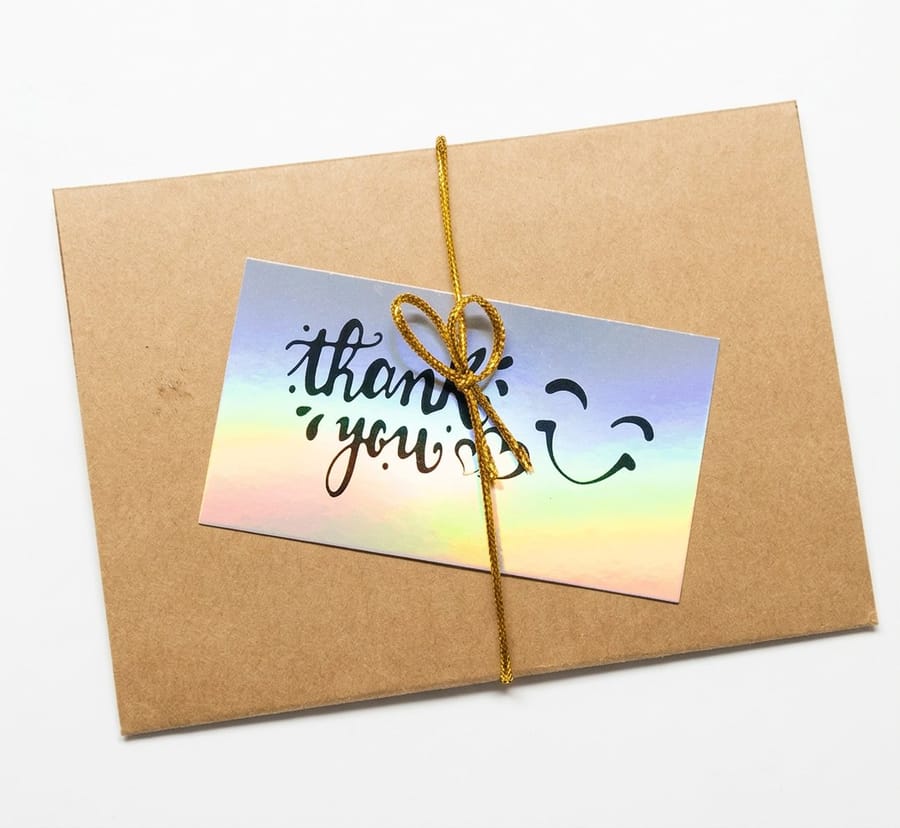
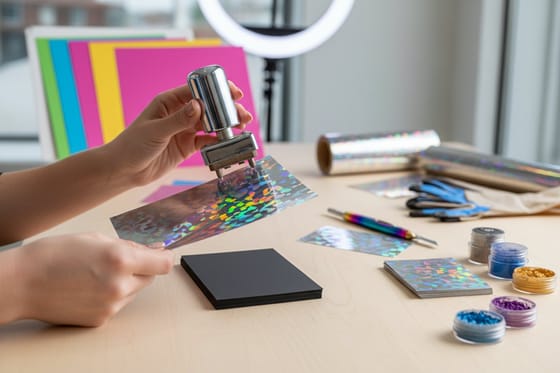
Stamping is a mechanical process, not an ink. A magnesium or copper die is etched to your shape, heated, and pressed through a roll of holographic foil into the card. The heat releases the foil from its carrier film and the pressure fixes it to the sheet, which is why the effect is mirror-bright rather than printed-looking. It is also why the die is a real object with a real setup cost, and why a design change after the die is cut is expensive.
What you get to control on holographic business cards is unusually deep for a specialty product. There are 23 configurable option groups, four paper types, four foil color slots on the front and four on the back, plus embossing, debossing, spot UV, edge painting, edge gilding and rounded corners on the same order. Foil stamping itself has four settings covering which faces get foil. The same stamped approach runs on holographic postcards from $220.20 in four sizes up to 6 by 9 inches, holographic greeting cards from $367.82, and holographic hangtags from $186.73.
The die also sets the limits. Foil will not hold a hairline, a fine serif at small size, or a soft gradient, because it either transfers or it does not, with no halftone in between. Keep foil shapes solid, keep strokes chunky, and put your phone number in ink rather than foil. Large solid foil panels invite their own problem: fingerprints and micro-scratches show on a big mirror surface, so a stamped logo ages better than a stamped full-bleed. If you want the effect to stand off the card instead of sitting flush, raised holographic business cards start at $86.78 and give you texture you can feel with a thumb.
Full Rainbow Stock, Plastic and Gift Cards
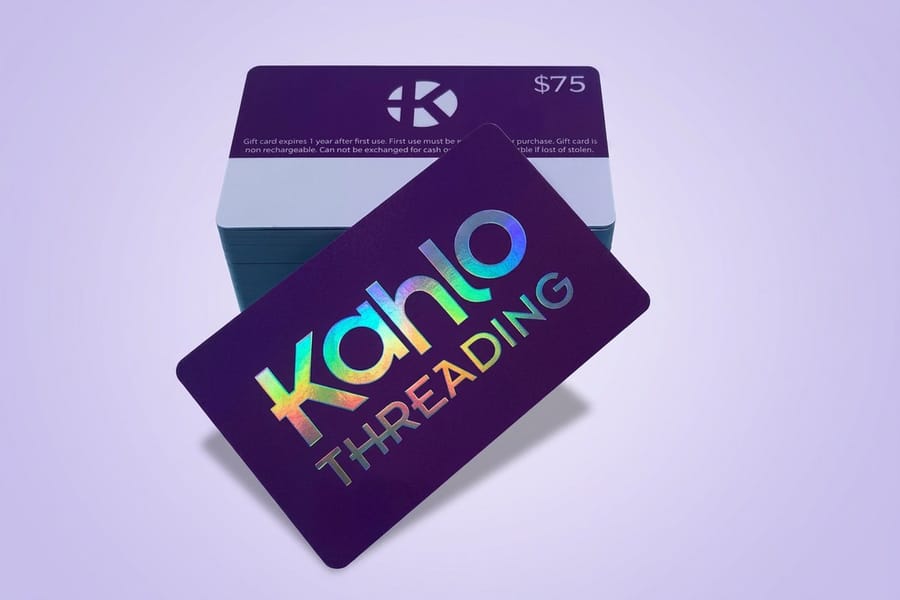
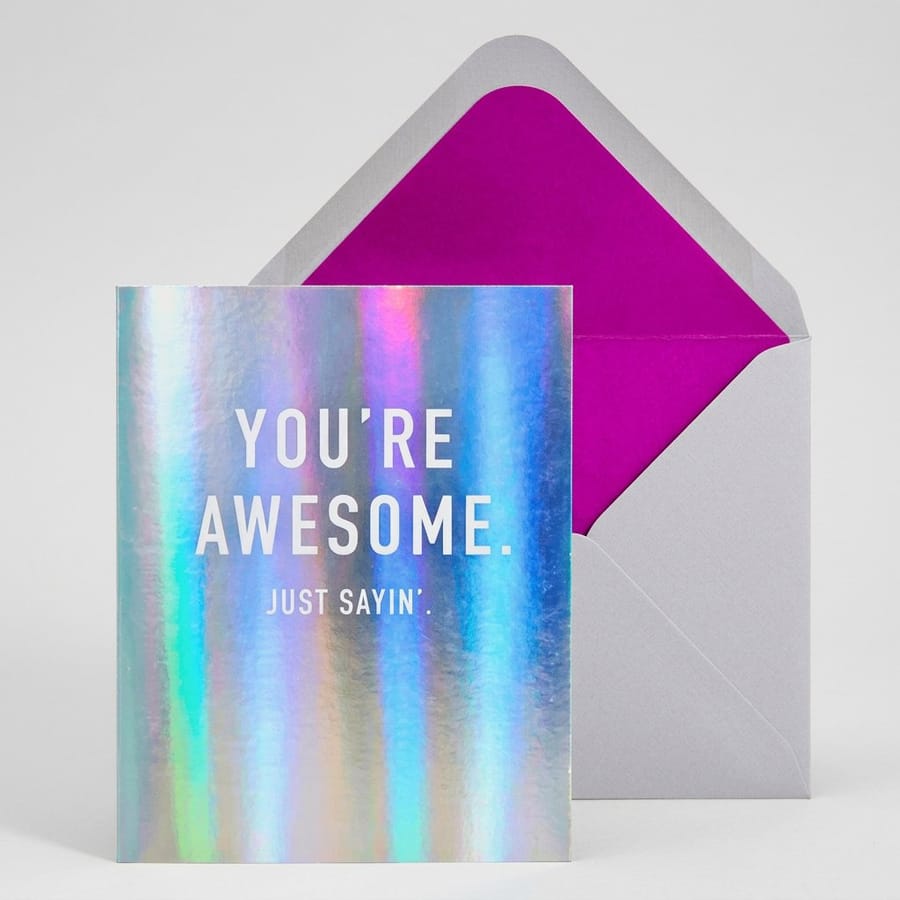
Holographic plastic cards start at $226.11 and take the opposite approach. The card is a plastic sheet that is already iridescent, cut to 2.125 by 3.375 inches, the standard credit card footprint, and finished either in UV gloss or in a silk laminated matte that knocks the glare back without killing the shift. Your artwork prints onto that surface, which means every ink you lay down is competing with the rainbow underneath it.
That competition is the design brief. White ink and dense solid blocks hold up. Light tints and pale greys disappear. Photographs turn strange, because the shimmer moves under the image and the eye reads it as a printing fault. The working pattern is a solid opaque panel for anything that has to be read, and bare holographic stock everywhere else, so the shine looks deliberate.
The reason to choose plastic is rarely the shine on its own. It is the hardware on the same order form. Holographic gift cards start at $226.11 and carry a signature panel, a magnetic stripe, barcoding with numbering, variable data for sequential numbers, a scratch off with pin, embossed numbering and a lanyard slot. A stamped paper card cannot be swiped, encoded or numbered like that. If a card has a balance on it or opens a door, this is the build. The rest of the range sits in the plastic cards collection.
What Drives the Price, and How to Order Without a Reprint
Five things move the number on a holographic quote, and only one of them is quantity. Foil coverage comes first: the die is priced by the area it covers, so a logo is cheap and a full border with a back panel is not. Second is sides, because foil on the back is a second pass through the machine and prices like one. Third is the count of foil colors, since each one is its own pass. Fourth is base material, plastic against paper. Fifth is the extras stacked on top, spot UV, embossing, edge gilding, rounded corners.
Order in this sequence and you will not pay for the same job twice.
- Choose the method first. Decide whether you want a bright shape on a plain card or a card that shimmers all over. Everything downstream follows from that one call.
- Build the artwork in two layers. Keep your printed ink on one layer and every foil shape as solid 100% black vector on a separate one, named so the prepress team cannot mistake it. Start from the sized file in our blank template library rather than resizing something later.
- Set the type in ink, not in foil. Body copy, phone numbers and small legal lines belong on the printed layer. Foil carries the logo, the rule, the icon.
- Price two configurations. Run one foil color on one side, then price your full wish list. The gap is usually where the argument for restraint lives.
- Take the proof. A proof shows placement and trim before a die is cut. Free proofs are on every order, and approving one promptly is what keeps the schedule honest.
One last decision that saves money: holographic does not have to be the whole identity. A stamped card paired with plain stock for the rest of the set costs a fraction of foiling everything, and it still lands. Browse the full range in holographic printing or compare it against the standard range in business card printing before you commit, and see how to make holographic business cards for the file setup in detail.
Wally explains holographic cards
One card gets a rainbow shape, the other is rainbow all over
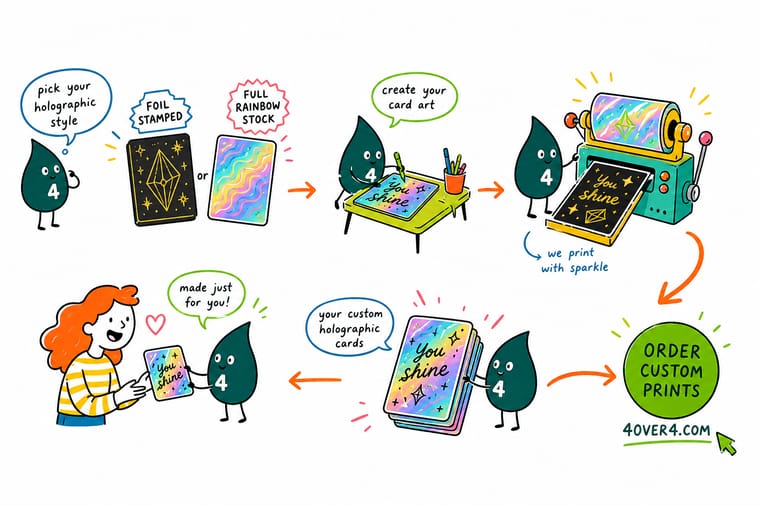
Wally holds up two cards. In his left hand a plain printed card with a logo stamped in holographic foil, bright in one spot and calm everywhere else, because a heated die only touched that shape. In his right hand a plastic card that is iridescent from edge to edge, ink printed straight over the shine. Tilt them both and you see the trade: the stamped card keeps its small print readable, the rainbow card keeps everyone staring. Wally will tell you which one your job actually needs.
Order holographic business cards →Specs and pricing
Holographic card builds, options, and starting prices
The stamped card, the plastic card and the mailable postcard, side by side with their live configuration choices and starting prices from the 4OVER4.COM configurator.

Print it
Order the card this guide just explained

Explore more
Where to go next

By the numbers
Specialty foil work across 25 years
Common Questions
Your holographic card questions, answered
What are custom holographic cards?
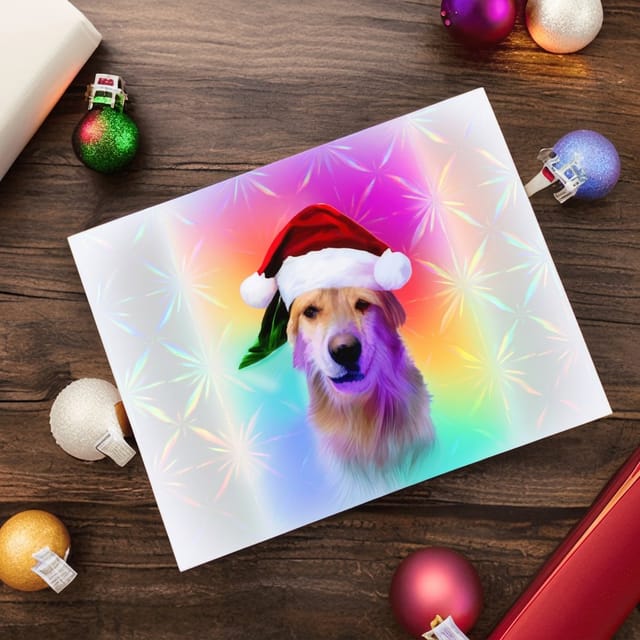
They are cards that throw a rainbow shift as they move, made one of two ways. Either holographic foil is stamped onto a printed paper card in the exact shapes of a metal die, so only your logo, border or lettering turns iridescent, or the card is printed on holographic stock so the whole surface shifts and the ink sits on top. At 4OVER4.COM the stamped route covers business cards, postcards, greeting cards and hangtags, while the full-surface route is a plastic card built for gift and loyalty programs.
What is the difference between holographic foil and holographic stock?
Coverage and base material. Foil is a thin metallized film transferred from a ribbon by a heated die under pressure, so it lands only where the die touches and the rest of the card stays ordinary paper. Holographic stock is the card itself, already iridescent edge to edge, printed over afterwards. Foil gives you contrast, a bright shape against a matte field. Stock gives you a card that catches light from every angle but leaves you fighting the shimmer for legibility.
How much do custom holographic cards cost?
At 4OVER4.COM raised holographic business cards start at $86.78, holographic hangtags at $186.73, holographic postcards at $220.20, holographic plastic cards and holographic gift cards at $226.11, holographic business cards at $251.36, holographic edge gilded business cards at $328.42, and holographic greeting cards at $367.82. Those are starting prices for the base configuration. Adding a second foil color, foil on the back, spot UV or edge gilding moves the number, and the configurator reprices live as you choose.
What sizes and finishes can I get on holographic cards?
Holographic business cards run 2 by 3.5 inches in either orientation, on four paper types, with rounded corners, embossing, debossing, spot UV, edge painting and edge gilding all available on the same order. Holographic postcards come in 4 by 6, 5 by 7, 5.5 by 8.5 and 6 by 9 inches. Holographic greeting cards come as a 10 by 7 sheet scored to 5 by 7, or flat at 5 by 7 or 4.25 by 5.5. Holographic plastic cards come in one size, 2.125 by 3.375 inches, with a UV gloss or a silk laminated matte finish.
How long do holographic cards take to print and ship?
Longer than plain digital printing, because the foil is a second pass through a separate machine and the die has to be made before that pass can run. Production time depends on the quantity, the number of foil colors and whether both sides get foil, so the honest answer is the one the configurator gives you: pick your size, options and quantity on the product page and it shows the production choices and the delivery date for that exact job. Order a proof if the deadline is tight, since a proof approval that sits in an inbox is what usually costs a day.
Can I put holographic foil on one part of the card only, or on both sides?
Both are standard. The Foil Stamping group on holographic business cards has four settings covering front, back and both, and each side has its own foil color slots, so you can stamp a logo on the front and leave the back clean, or run different foil colors on each face. Raised holographic business cards handle this with a Foil Side choice instead, one foil color and a pick of which face carries it.
Do holographic cards work for gift cards and loyalty programs?
That is exactly what the plastic build is for. Holographic gift cards start at $226.11 and carry the program hardware on the same order form: signature panel, magnetic stripe, barcoding with numbering, variable data for sequential numbers, a scratch off with pin, embossed numbering and a lanyard slot. A stamped paper card can look just as good on a counter, but it cannot be swiped or encoded.
Get Started
250 holographic business cards cost $251.36, or $1.01 each
Pick stamped foil or holographic plastic, upload your artwork with the foil on its own layer, and we will press it while you check the proof.
Legal Disclaimer
Gold Standard guarantees apply to all standard orders placed through 4over4.com. Price match requires verifiable proof of a competitor's published price for an equivalent product with matching specifications and turnaround time. Satisfaction guarantee covers manufacturing defects and print quality issues. Contact support with order number and documentation. On-time delivery rate based on tracked orders 1999 to 2026. Individual results may vary based on shipping carrier performance.
