
Custom Food Paper Sheets Explained for Baskets and Wraps


Flat pre-cut sheets for baskets, wraps, trays and deli counters. The grease barrier works one way, four sizes cover most of food service, and the artwork rules that survive a fold.
Food paper sheets are flat, pre-cut squares of grease-resistant paper used to line baskets, wrap sandwiches and cover trays. The resistance comes either from densifying the fibre, which is what greaseproof paper is, or from a wax, silicone or plastic coating. Each step up that ladder buys more time before oil strikes through, and costs heat tolerance, ink adhesion and recyclability in exchange.
Quick answer
The barrier decides everything else
A food paper sheet is judged on one number: how long it holds before oil reaches the other side. Plain kraft gives you minutes. Calendered greaseproof gives you most of a meal. Wax gives you a full service but softens under a heat lamp. A poly lining gives you everything except heat tolerance and any chance of recycling. Pick the rung that matches how long the food sits on the paper, then design the artwork for a sheet that will be folded and stained.
What a Food Paper Sheet Actually Is
Start with the shape. A food paper sheet ships flat and pre-cut, so a line cook grabs one and it is already the right size. Rolls need a dispenser, a cut and a judgement call in the middle of service, which is exactly the wrong time to be making one.
The second difference is the paper itself. Ordinary printing stock is engineered to hold ink and stay bright. Food paper is engineered to slow down oil, and everything else about it follows from that. It is usually thin, in the 25 to 40 gsm range for a wrap, because a wrap has to fold and tuck without cracking. It is often uncoated on at least one face so it grips the food instead of sliding. And it is almost always printed in one or two flat colors rather than full process, for reasons covered further down.
Three names describe the same family of products. Deli paper is the counter version, cut smaller and stacked next to the slicer. Food wrapping paper is the larger sheet you fold around a burger. Food liner paper is the one that goes into a basket or a tray. Same stock choices, different finished size. If your job needs an unusual finished size or a shaped edge, any shape and size paper die-cutting starts at $87.00 and cuts a flat sheet to whatever outline you supply.
Grease Resistance Is a Ladder, Not a Yes or No
Nobody sells a sheet that is simply greaseproof. They sell a level of resistance, measured in how long the sheet holds before oil reaches the other side, and every step up the ladder trades something away.
| Stock | How the barrier works | Holds grease for | What it costs you |
|---|---|---|---|
| Uncoated kraft or tissue | Nothing stops the oil. The fibre absorbs it. | Minutes under hot fried food. | Nothing, and it is the cheapest sheet on the list. Fine for dry goods and outer wraps. |
| Natural greaseproof | Fibres are beaten and calendered until the sheet is dense enough to resist oil on its own. | Most of a sit-down meal. | More per sheet than kraft, and it still darkens where oil pools. |
| Dry waxed | Wax is worked into the sheet rather than laid on the surface. | A full service. | The sheet stays soft and foldable, but wax softens under a heat lamp. |
| Wax coated | A wax film sits on the face of the paper. | A full service, and it resists moisture too. | It cannot go near an oven, and the surface takes ink less willingly. |
| Silicone parchment | Cured silicone releases both fat and moisture. | Right through baking. | The highest price, and silicone resists ink, so printing options narrow sharply. |
| Poly lined | A thin plastic film is laminated to the paper. | Grease and water, indefinitely. | It melts with heat, and the film keeps the sheet out of paper recycling and most compost. |
Read the last column before the third. Most operators over-specify here, pay for a wax coating, then use it under a pastry that would have been perfectly happy on plain kraft. The honest question is how long the food sits on the paper. A burger handed over a counter is on that sheet for four minutes. A basket of fries under a lamp waiting for a table order can sit for twenty, and twenty is where uncoated sheets fail visibly.
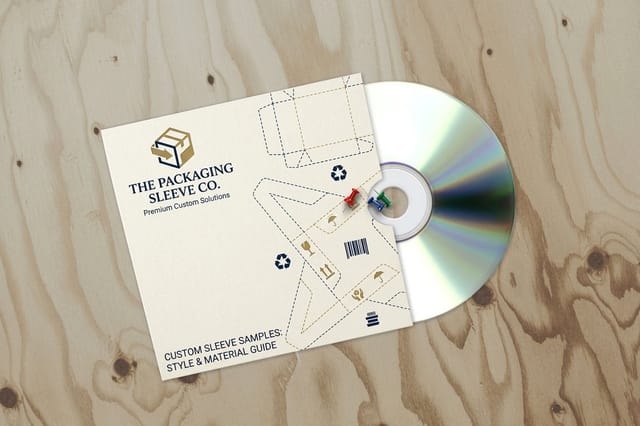
Ink complicates the top of the ladder. The same coatings that stop oil also stop ink from keying into the surface, which is why heavily coated and siliconised sheets are printed with specialist flexo inks and rarely with rich coverage. If you want the barrier and the branding, the usual answer is to split them: plain liner against the food, printed sheet or packaging sleeve above it. Sleeves start at $438.25 and carry full-color artwork that a wrap never could. Our paper stocks guide covers how coatings change ink behavior across the rest of the catalog.
The Sizes That Actually Get Ordered
Four finished sizes cover most of food service, and they exist because they match the way food is held rather than because a mill picked round numbers.
- 12 by 12 inches. The basket liner. It should overhang the rim slightly so the paper shows and the basket stays clean underneath.
- 15 by 15 inches. The burger wrap. Enough paper to fold four sides under a stacked item and still tuck.
- 12 by 15 inches. The sub and deli sandwich sheet. Length where you need it, no waste across the width.
- 12 by 10.75 inches. The deli counter sheet, sized to interleave sliced meat and cheese rather than to wrap anything.
The rule underneath all four is simple. Measure the food, add about three inches on every side, and round to the nearest stock size. Undersize the sheet by an inch and the wrap pops open in the bag, which is the single most common complaint about a wrap that otherwise looks great.
Tray liners break the pattern because they follow the pan, not the food. A half sheet pan liner runs close to 12 by 16 inches and a full sheet closer to 16 by 24. If your basket or tray is a shape nobody stocks, a die-cut sheet solves it in one step, and you can lay the artwork out on a correctly sized file from the blank template library before you order.
Printing a Sheet That Will Be Folded, Stained and Thrown Away
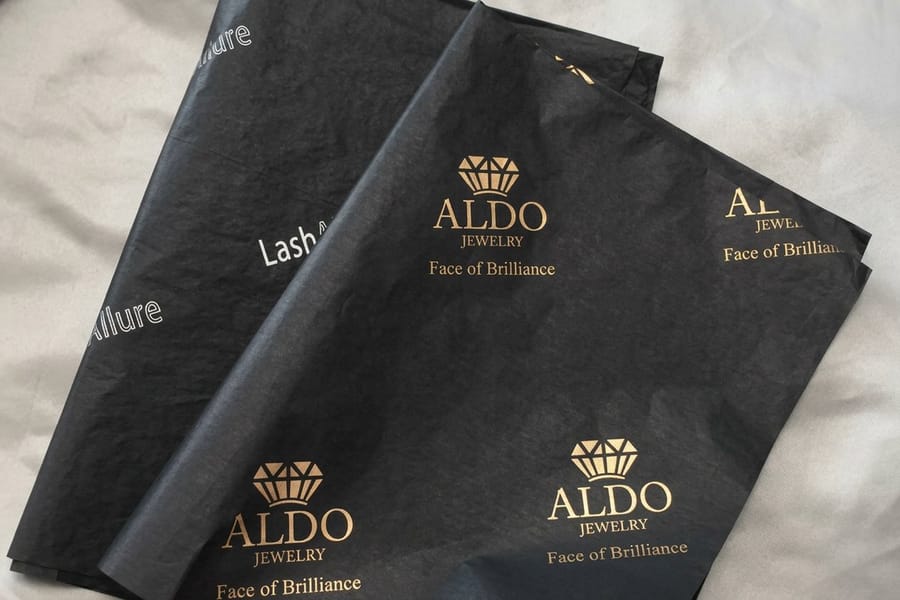
A food sheet is the only printed piece in a restaurant that gets crumpled on purpose. Design for that and it works. Design it like a flyer and it fails within seconds of leaving the pass.
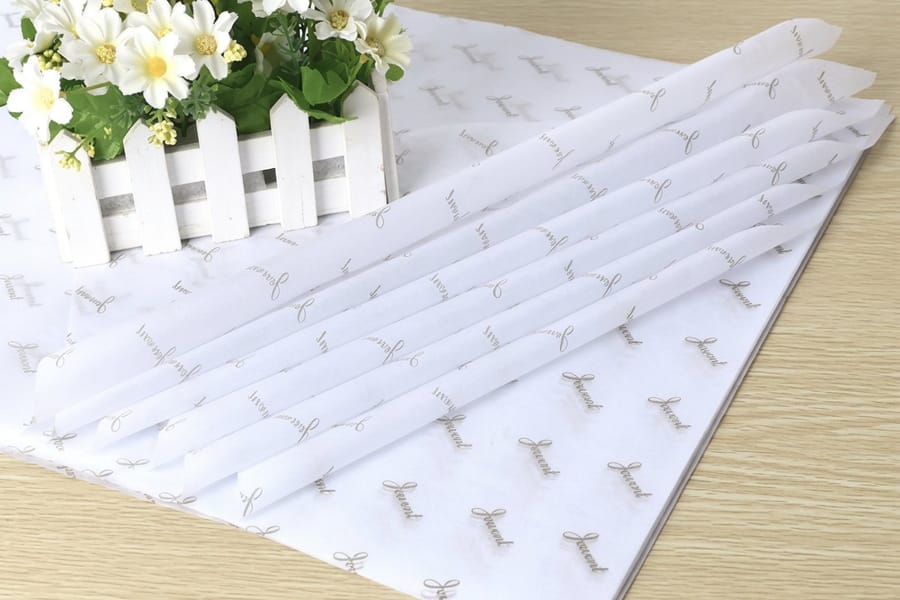
Tile the artwork. A single logo in the center of a 15 inch square is visible for exactly as long as the sheet stays flat, which is until someone picks up the burger. A repeating pattern of the wordmark, rotated and spaced, reads from every fold and every angle. It also hides registration drift, which matters on a thin sheet running fast on a flexo press.
Keep coverage light. Two things go wrong with heavy ink. The sheet stiffens, so the fold cracks and the wrap stops tucking. And the ink film sits on the surface where hot fat can lift it. One or two colors at maybe 20 to 30 percent coverage is the shape of most food sheet artwork, and it is a cost decision as much as a technical one.
Choose colors that survive oil. Every uncoated sheet goes darker and slightly translucent where fat lands. Kraft brown, deep green, black and strong reds absorb that change. A pale gray or a soft pastel on bright white does not: the sheet looks stained rather than used, and the customer reads it as a hygiene problem rather than as fried food doing what fried food does.
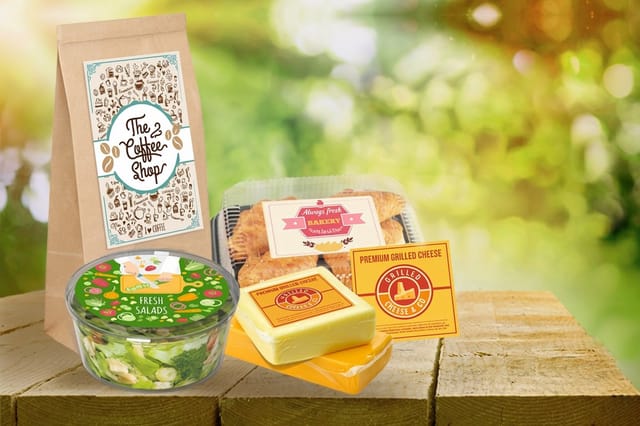
Set the file up like any print job. Full size artwork, bleed to the trim, fonts converted to outlines. Our packaging file prep guide covers dielines and bleed for shaped pieces, and the same discipline applies to a flat sheet with a cut outline. If the same brand also needs date coding or ingredient text on the food itself, standard food labels start at $23.88 and do that job far better than printing it onto a wrap.
Where They Go, and Where Printed Tissue Fits Instead
Baskets and wraps are the obvious two. Tray liners under a paper-lined tray, deli sheets at the counter, bakery box liners, catering platters and food-truck service windows are the rest. In every one of those, the sheet does two jobs at once: it stops the container getting dirty, and it puts the brand into the customer photograph.
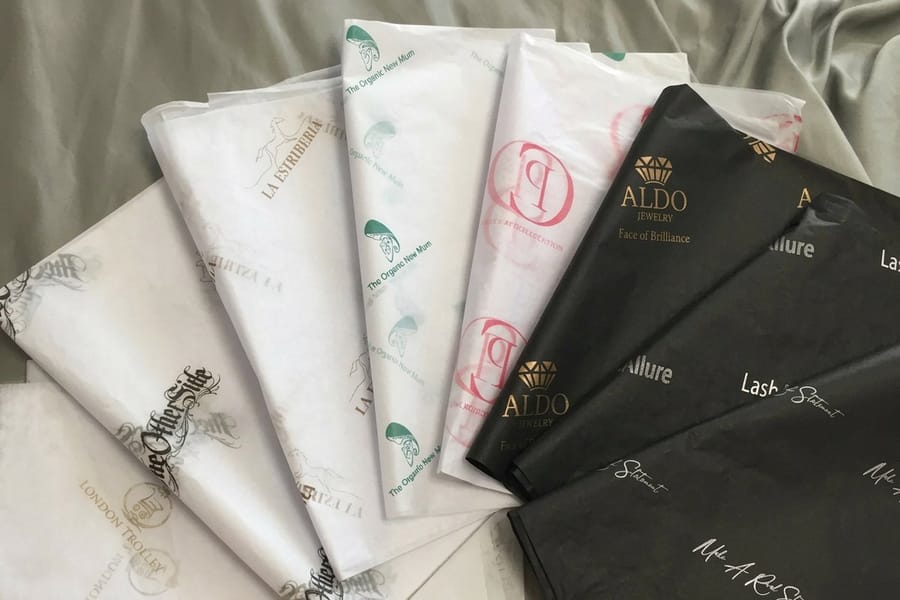
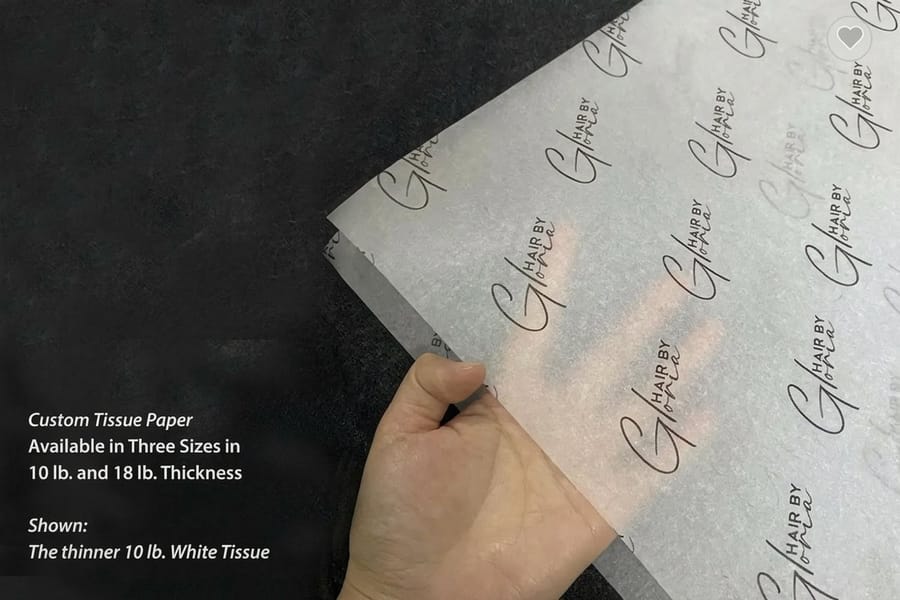
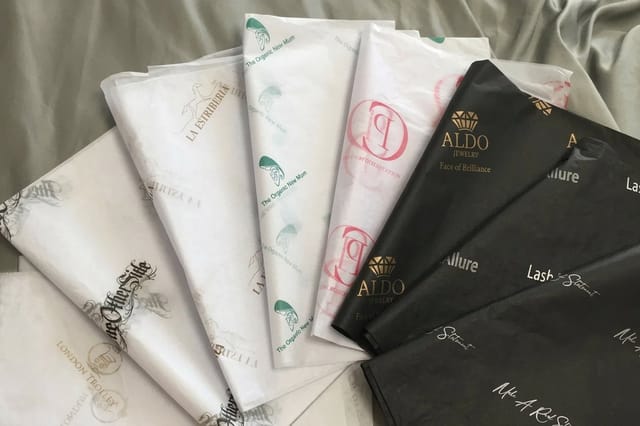
Printed tissue sits in a slightly different place, and it is worth being precise about it because the two get confused constantly. Custom tissue paper starts at $126.32 and is a packaging tissue. It is right for bakery boxes, pastries, bread, retail wrap, gift and subscription boxes, and as the branded layer visible above a plain barrier liner. It has no grease barrier, so it is the wrong sheet against hot fries or a dripping sandwich. Order it for what the customer sees, and keep a purpose-made greaseproof or waxed liner for what the food touches.
The rest of the counter print usually gets ordered in the same pass. Kraft menus start at $166.04 and match a brown wrap without any color matching effort. Sleeves, labels and tape finish the set. The restaurant printing collection and the food and beverage collection group the whole range, and the tissue paper printing category holds the printed wrap options on their own.
Wally explains food paper sheets
How long does the food sit on the paper
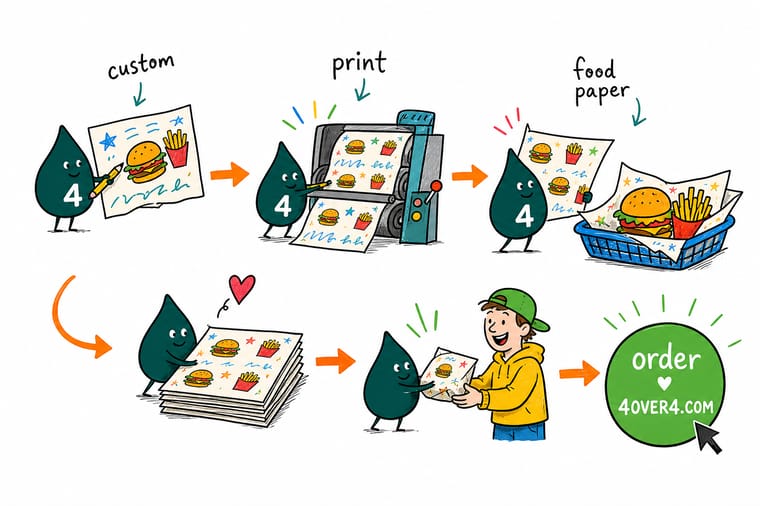
Wally lines one basket with plain kraft and one with a greaseproof sheet, then walks away for twenty minutes. The kraft has gone dark and see-through. The greaseproof still looks like paper. That is the whole decision. He tiles the logo across the sheet instead of centring it, because the moment a customer folds the wrap a single centred mark disappears. And he keeps the ink light, since a heavy ink film stiffens a thin sheet until the fold cracks.
Order custom tissue paper →Specs and pricing
Sheet sizes, quantities and starting prices
Configure the printed sheet, the die-cut shape and the food label side by side, with live options and starting prices straight from the 4OVER4.COM configurator.

Print it
Print the wrap, the sleeve and the label together
Explore more
Where to go next

By the numbers
Food service print across 25 years and 1,000+ products
Common Questions
Your food paper questions, answered
What are food paper sheets?
They are flat sheets of paper cut to a finished size and used as basket liners, sandwich and burger wraps, tray liners and deli counter sheets. The trade also calls them deli paper, food wrapping paper or food liner paper. What separates them from ordinary paper is the barrier: the stock is either densified during manufacture or coated with wax, silicone or a plastic film so oil takes longer to soak through. Sizes cluster around 12 by 12 inches for a basket, 15 by 15 inches for a wrapped burger or sandwich, and roughly 12 by 10.75 inches for a deli sheet.
Are printed food paper sheets food safe?
Food safety on a printed sheet has two halves and both have to hold. The substrate itself has to be cleared for food contact, which is a question for the mill that made it, and the ink has to be a food-safe or low-migration ink rather than a general commercial ink. The common commercial answer is to print on the side that faces away from the food and to keep coverage light, which limits migration and keeps the sheet absorbent. If a sheet is going to sit against hot, oily food, ask the supplier for the food-contact documentation in writing rather than assuming it.
What size should a burger or sandwich wrap be?
Work backwards from the food, not from a size chart. A wrap needs roughly three inches of paper beyond the item on every side so it can fold under and tuck without popping open. A standard burger lands comfortably on a 15 by 15 inch sheet. A deli sandwich or a wrap-and-cut sub is happier on 12 by 15 inches, which gives length without wasting paper across the width. Baskets are the opposite problem: a 12 by 12 inch liner should overhang the rim slightly so the paper is visible and the basket stays clean.
Can you print full color photographs on food paper?
You can, but the sheet will not thank you for it. Food paper is usually printed flexo in one or two colors because heavy ink coverage stiffens an absorbent sheet, costs more, and cracks along a fold. A photographic image also loses contrast on kraft, which is a warm brown rather than white, and it turns blotchy the moment grease reaches it. Line art, a wordmark, a pattern or a two-color illustration all survive service. Save the photography for the box, the sleeve or the menu.
Can food paper sheets be recycled or composted?
Grease is the deciding factor, not the printing. Any paper that has soaked up oil is rejected by paper recycling, because the fat contaminates the pulp slurry, so a used basket liner is out of that stream regardless of what it is made of. Uncoated and greaseproof sheets can go into commercial composting where it is accepted locally. A poly-lined sheet cannot, because the plastic film stays behind. If end of life matters to you, the choice is made at the stock stage, before anything is printed.
Can I use custom tissue paper as a basket liner?
For dry food, yes. Printed tissue works well inside bakery boxes, around pastries, under bread, in retail packaging and as a branded second layer sitting above a proper barrier liner. It is a packaging tissue, so it has no grease barrier and will wet out under fries or a hot sandwich within a minute or two. Custom tissue paper at 4OVER4.COM starts at $126.32, and the usual arrangement in a food-truck or counter setting is a plain greaseproof liner against the food with printed tissue visible above it.
Get Started
100 kraft menus cost $166.04, or $1.66 each
Pick the sheet size, tile your artwork, and we print food wrap and packaging tissue that still reads after it has been folded around lunch.
Legal Disclaimer
Gold Standard guarantees apply to all standard orders placed through 4over4.com. Price match requires verifiable proof of a competitor's published price for an equivalent product with matching specifications and turnaround time. Satisfaction guarantee covers manufacturing defects and print quality issues. Contact support with order number and documentation. On-time delivery rate based on tracked orders 1999 to 2026. Individual results may vary based on shipping carrier performance.
