
Why Self-Mailers Beat Envelopes in Direct Mail


Nadia is our customer education voice, built from the knowledge of our production team, with over 20 years in printing.
What a Self-Mailer Is and Why It Skips the Envelope

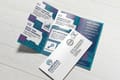
A folded self-mailer is how you mail flyers without envelopes: the printed piece is folded, sealed with tabs and addressed on its own outside panel, so it goes through the mail on its own. There is no envelope, no insert, no window to line up, and the address block, the indicia or stamp, the return address, and your entire offer all live on the same sheet of paper, which is folded, sealed with tabs, and handed to the Postal Service exactly as it comes off the press.
That single change removes a surprising amount of friction. Every envelope in a campaign is a separate item to spec, order, store, and machine-insert. When the mailer is the message, your production list shrinks to one line, your proofing shrinks to one file, and the number of things that can go wrong at the lettershop drops with it.
4OVER4.COM has printed more than 10 billion print products since 1999 and mails self-mailer formats every week for retailers, clinics, restaurants, real estate teams, and nonprofits. The formats below are the ones that clear USPS automation cleanly, which is the part most first-time mailers get wrong.
The three things a self-mailer has to do
It has to stay closed in the mail stream, it has to present a clean address panel that machines can read, and it has to survive the handling that a bare piece of paper takes on the way to a mailbox. Paper weight, tabbing, and fold direction cover all three, and each one is a rule rather than a preference.
When you do need one
Envelopes printing
Statements, enclosures, and anything private still belongs in a sealed package.

The Folded Self-Mailer Spec for Mailing Flyers Without Envelopes
To mail flyers without envelopes, start from a flat sheet and fold it down to letter size. An 8.5 by 11 inch flyer on the default 100# gloss text folds in half to 5 1/2 by 8 1/2 inches, inside the 6 1/8 by 11 1/2 inch letter-rate limit, and the same sheet in a tri-fold or Z-fold gives you six panels. The larger 8.5 by 14, 9 by 12 and 11 by 17 inch sheets fold down the same way, with 9 folding styles to choose from on Direct Mail Flyers.
Five steps from flat flyer to mailbox
- Pick the size and the fold. Check the finished piece stays within 6 1/8 by 11 1/2 inches, 1/4 inch thick, and at least 3 1/2 by 5 inches.
- Put the final fold on the bottom. The closed edge is the one the sorting equipment grips.
- Seal the open edge. Use non-perforated tabs or wafer seals, placed to suit the fold and the paper weight.
- Clear the address panel. Keep art, folds and tabs out of the address block, the barcode clear zone and the postage area.
- Order at mailing quantity. Direct Mail Flyers start at $238.73 for 500, and 1,000 cost $276.63.
Self-Mailer Fold Types and When Each One Works
Fold choice is not a design flourish. It decides how many panels of selling space you get, how the piece opens in someone's hands, and whether the Postal Service treats it as a clean automation piece or kicks it to a higher price. Start from the message length, then check the fold against the rules in the next section.
- Half fold. One fold, four panels, the sturdiest and cheapest option. Best for a single strong offer, an event announcement, or a coupon that needs room to breathe.
- Tri-fold, letter fold. Six panels in a compact piece. The classic sequence of cover, inside spread, and back panel works for services, menus, and price lists.
- Z-fold, accordion fold. Six panels that open flat like a fan, so the reader sees the whole story at once. Strong for step-by-step programs and before-and-after comparisons.
- Double parallel fold. Eight panels folded down to a slim shape. Good when you need volume of content in a piece that still mails at letter size.
- Roll fold. Panels tuck inside each other and reveal in sequence, which suits a narrative offer that builds toward one call to action.
Whichever fold you pick, the last fold has to end up on the bottom edge of the finished piece. That is the closed edge the Postal Service equipment grips, and it is the single most common reason a beautifully designed self-mailer gets rejected or surcharged.
The three formats below are the production-ready versions of these folds at 4OVER4.COM, with mailing built into the order rather than bolted on afterward.
Print picks
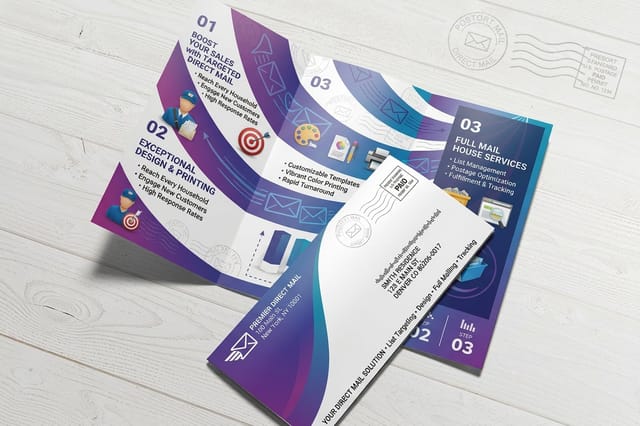
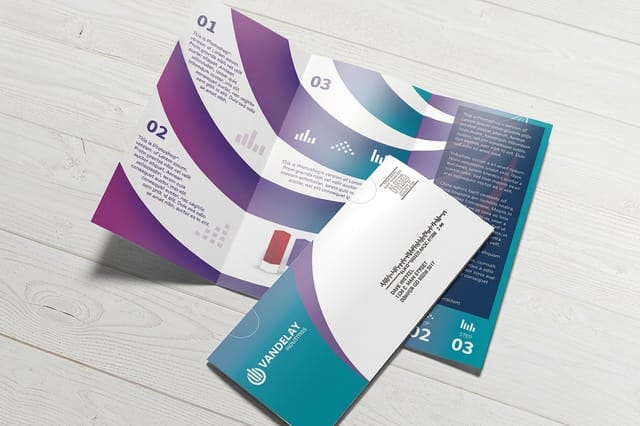
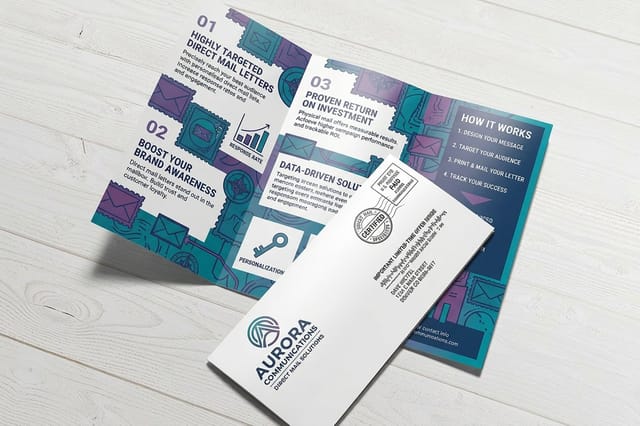
Three self-mailer formats that mail as one piece
Live prices, folded, tabbed, addressed, and inducted from a single order.
USPS Rules Every Self-Mailer Has to Follow
The Postal Service publishes its self-mailer requirements in the Domestic Mail Manual, and they exist for one reason: a folded sheet with no envelope has to run through automation without unfolding, jamming, or tearing. Meet the rules and your piece prices at the lowest letter rate available to your mailing. Miss them and you pay more, or the mailing does not go at all.
- Size. Letter-rate self-mailers stay within 6 1/8 inches high, 11 1/2 inches long, and 1/4 inch thick, with a minimum of 3 1/2 by 5 inches. Go past the maximum and the piece becomes a flat, which is a different and higher price category.
- Fold direction. The final fold must be on the bottom edge. Panels that open at the bottom catch on equipment.
- Tabs and seals. The open edge needs non-perforated tabs or wafer seals. The number and placement depend on the fold style, the panel count, and the paper weight, so confirm the tabbing plan before the file goes to press.
- Paper weight. Heavier folded pieces need a minimum stock weight so the panels stay rigid. Lightweight text stock that works inside an envelope can be too flimsy to mail bare.
- Address panel. The address block, barcode clear zone, and postage area all sit on the same panel with the clearance USPS specifies. Keep artwork, folds, and tabs out of that space entirely.
USPS updates these standards periodically, so treat any checklist as a starting point and confirm the current version for your mail date. Our prepress team reviews every self-mailer file against the standards in force at the time of print, which is the practical way to avoid a re-run.
Compare the alternative
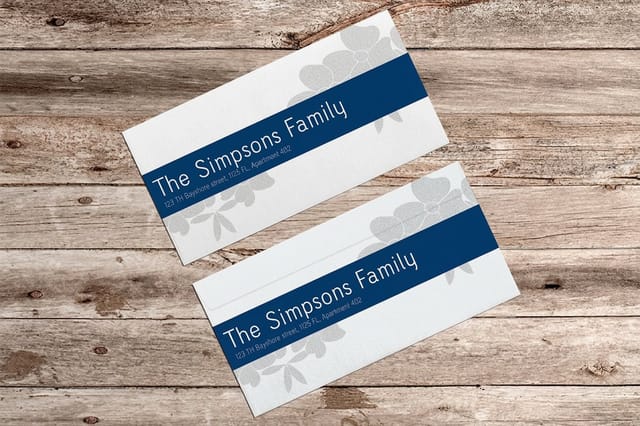
Envelope formats, side by side
Stock, finish, size, quantity, turnaround, and price for the sealed-package route.
 Invitation Envelopes | 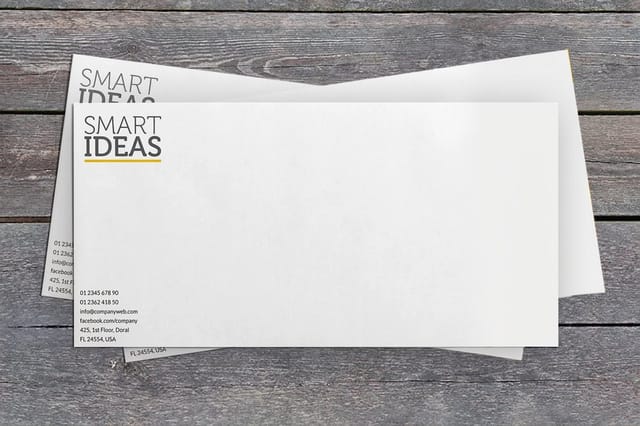 Printed Envelopes | 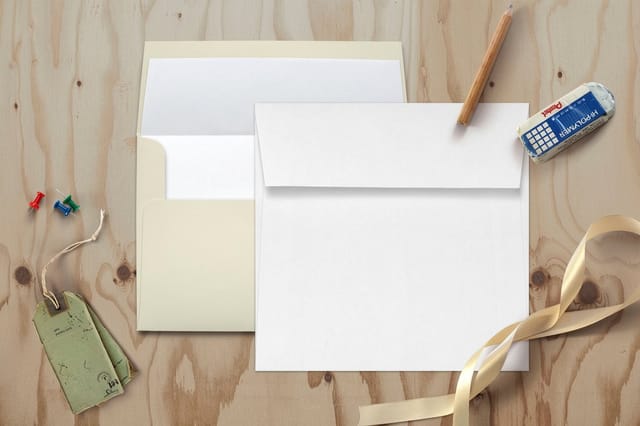 Blank Envelopes | 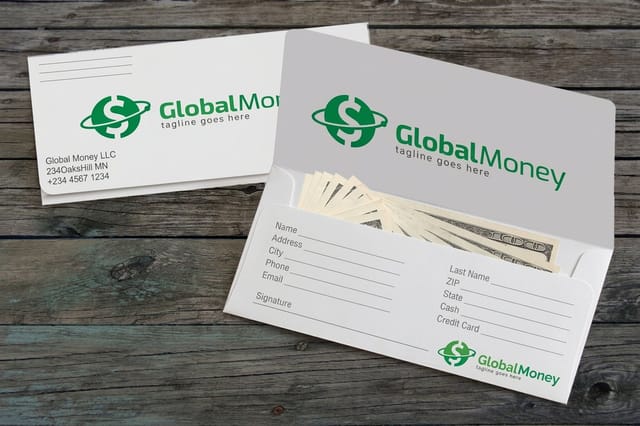 Donation Envelopes | |
|---|---|---|---|---|
| Min price | $170.42 | $142.99 | $13.17 | $617.67 |
| Paper / stock | White Wove | White Wove | Envelope | White Wove |
| Size | A2 (4.375" x 5.75") | #10 Regular (4.125" x 9.5") | #10 Regular (4.125" x 9.5") | #9 Remittance (7.5" x 8.875") |
| Default qty | 250 | 250 | 50 | 250 |
| Turnaround | 7 business days | 7 business days | 1 business day | 7 business days |
| Rating | ||||
| View & customize | View & customize | View & customize | View & customize |
What a Self-Mailer Costs Next to an Envelope Package
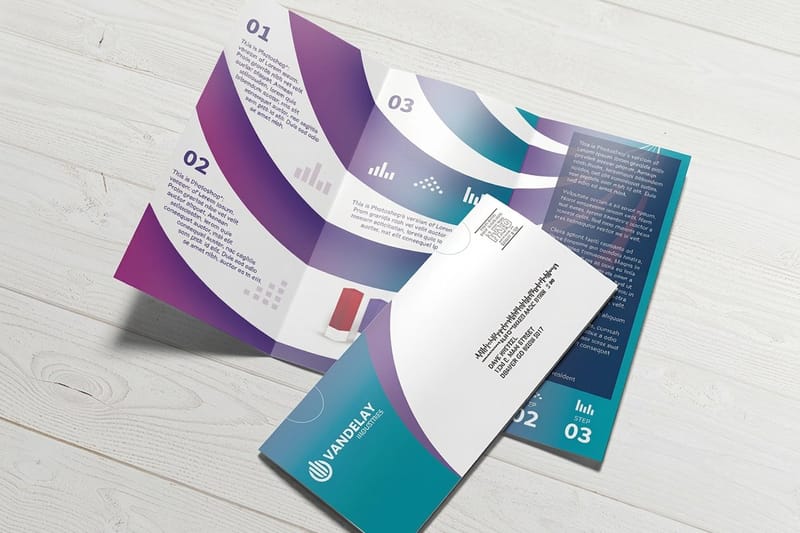
Postage is set by the Postal Service and applies the same way to any letter-rate piece up to 6 1/8 by 11 1/2 inches and 1/4 inch thick, so a self-mailer saves nothing on the rate itself. The savings come from everything around the postage: one printed item instead of two to four, one press run and one bindery pass, and less weight riding in the mail.
An envelope package is at least two printed items, and often three or four once you add a letter, a reply device, and a carrier envelope. Each one carries its own setup, its own minimum, and its own chance of arriving late. A self-mailer collapses that into one press run and one bindery pass.
- No envelope to buy. A custom printed envelope is a separate SKU with its own artwork, stock, and lead time.
- No inserting. Machine inserting is priced per thousand and adds a handling stage where pieces get damaged or mismatched.
- Less weight. Removing the envelope shaves weight, which matters when a package sits near a rate break.
- One approval. One file to proof instead of three, which usually saves more calendar days than it saves dollars.
Direct Mail Flyers, Direct Mail Brochures, and Direct Mail Letters all start at $238.73 at 4OVER4.COM. The table below pulls live configurator pricing so you can see how the per-piece number falls as quantity climbs, which is where most direct mail budgets are actually won.
Quantity and price
Direct mail flyer pricing and specs
Real configurator numbers. The more you mail, the lower the cost per piece falls.
| Quantity | Price Per Unit | Total |
|---|---|---|
| 500 | 47.7¢ | $238.73 |
| 600 | 41.1¢ | $246.31 |
| 700 | 36.3¢ | $253.88 |
| 800 | 32.7¢ | $261.47 |
| 900 | 29.9¢ | $269.05 |
| 1,000 | 27.7¢ | $276.63 |

When an Envelope Still Beats a Self-Mailer
Being honest about this makes the rest of the advice usable. The envelope exists because privacy and ceremony are real. If your mailing carries account numbers, medical details, legal notices, or anything a recipient would not want a housemate reading off the counter, the envelope is not optional.
Envelopes also outperform on high-value, low-volume drops where the goal is to feel like personal correspondence rather than advertising. A hand-addressed envelope to two hundred top prospects will beat a beautiful self-mailer to the same list almost every time, because the recipient opens it before deciding what it is.
- Send an envelope for statements, renewals, confidential offers, and anything with personal data on the page.
- Send an envelope when you are enclosing something with dimension, such as a card, a sample, or a reply device that has to come back.
- Send a self-mailer for broad-reach offers, grand openings, seasonal promotions, route-based neighborhood mail, and anything where the visual has to work in the two seconds between mailbox and counter.
- Send a self-mailer when speed matters, because one file and one production path is always the faster path.
Plenty of campaigns run both. A self-mailer does the wide awareness pass, then an envelope package follows the responders. The specs below cover the letter format if you decide the long-form version deserves its own drop.
Long-form option
Direct mail letters
Full specs for the format that takes over when the pitch needs paragraphs instead of panels.
Designing a Self-Mailer That Actually Gets Read
A self-mailer has no envelope to buy it time. The recipient sees the message and makes a keep-or-bin decision in the walk from the mailbox to the kitchen. That is a brutal edit, and it rewards a design that leads with one idea instead of hedging across five.
Design the address side first
Most people design the front panel and treat the address side as leftovers. Flip that. The address panel is the first thing the recipient sees, so give it a headline, an offer, and a reason to turn the piece over. Keep the barcode clear zone and postage area untouched, then use the space that remains deliberately.
Respect the folds in the artwork
- Keep type off the folds. Cracking through a headline looks like a mistake even when the fold is exactly where it should be.
- Design panel by panel. Build the file as separate panels in reading order, not as one flat spread you slice later.
- Mind the shorter panel. Tri-folds and roll folds have a tucked panel trimmed slightly narrower, so pull critical content away from that edge.
- Coat for handling. An aqueous or matte coating keeps a bare piece from scuffing across the mail stream, and it stops heavy ink coverage from marking the panel behind it.
Give the response one clear route
One offer, one deadline, one action. A QR code, a short vanity URL, or a phone number placed on more than one panel so the reader finds it wherever they happen to open the piece. If you need to track channel performance, use a distinct code per drop rather than trying to read intent from a shared landing page.
Start fast
Fold templates and print-ready blanks
Free layouts plus exact-size blanks so your panels, folds, and address block land where USPS expects them.








The List, the Addressing, and the Drop Date
Format and design set the ceiling on a campaign. The mailing list decides whether you get anywhere near it. A well-built list of two thousand qualified households will out-earn a bought list of twenty thousand strangers, and it costs less in postage to find out.
Clean the file before the drop. Run address standardization and move updates so undeliverable pieces come out before you pay to mail them. Deduplicate at the household level for consumer mailings, because two identical self-mailers arriving in the same box reads as waste rather than persistence.
Then pick the in-home date and work backward. Print, tabbing, addressing, and postal induction each take time, and marketing mail moves on a schedule rather than a promise. If a self-mailer has to land the week before an event, build the calendar from that week outward, not from the day the artwork happens to be approved. Our guide to building or renting a mailing list walks the sourcing and hygiene steps in order.
Multi-panel drop
Direct mail brochures
Six panels or more for service lists, menus, and seasonal ranges, printed and mailed together.
Putting a Self-Mailer Campaign Into Production
The self-mailer earns its place in a direct mail plan because it does the most obvious thing well. It removes a layer between your offer and the person holding it, it takes cost out of the parts of the job nobody sees, and it gets to the mailbox faster because there are fewer moving pieces to coordinate.
Start with the shortest fold your message will fit. Confirm the size, the fold direction, the tabbing, and the paper weight against current USPS standards. Design the address side like a front cover. Clean the list. Then mail it, measure it, and mail again with what you learned, because direct mail compounds when the same households see you more than once.
When the file is ready, Direct Mail Flyers handle the single-offer drop, Direct Mail Brochures carry the multi-panel story, and Direct Mail Letters take over when the pitch needs paragraphs. All three print and mail from one order at 4OVER4.COM.
Wally explains the no-envelope mailing
One printed piece, folded, tabbed, and addressed to travel on its own
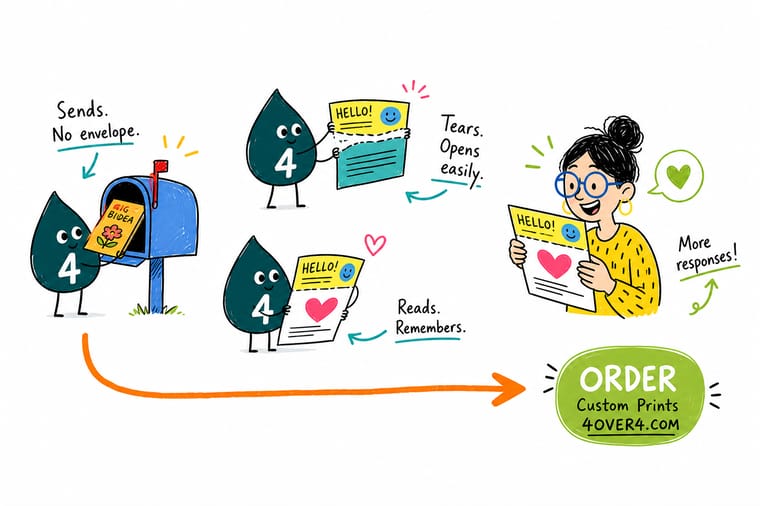
Think of a self-mailer as a flyer that carries its own passport. The address, the postage, and the offer all print on the same sheet, the piece folds with the last fold on the bottom edge, and non-perforated tabs hold it shut through postal automation. Nothing gets inserted and nothing gets sealed, so the file you approve is exactly what lands in the mailbox. Pick the fold that fits your message, then mail it.
Design your direct mail flyers →What to Remember Before Your Self-Mailer Goes to Press
Keep reading
Direct mail guides worth an extra ten minutes
Renting a list, choosing a format, pairing mail with online ads, and the examples that earned their postage.
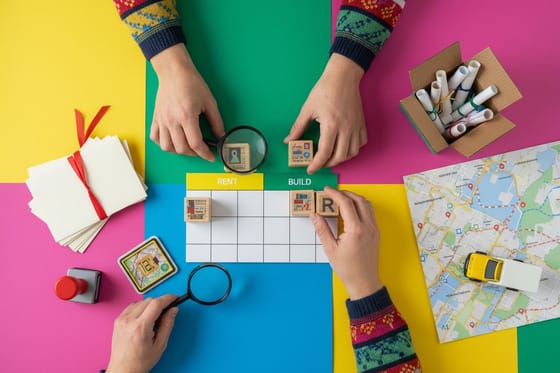 Read next Build or Rent a Mailing List Source, clean, and dedupe the list before you pay to mail it. Read next Most Effective Direct Mail Formats Eight formats that consistently earn a response.
 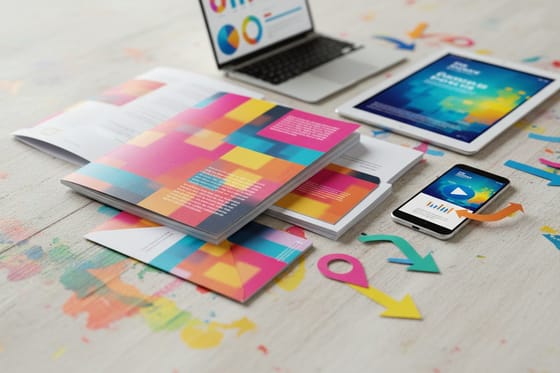 Read next Direct Mail Plus Online Ads Pair the mailbox with the feed for small business reach.
  Read next Brilliant Direct Mail Examples Campaigns worth stealing structure from.
 Explore more
More ways to run direct mail with 4OVER4.COM
The three self-mailer formats from $238.73, envelopes for when a package wins, and the statistics and comparisons behind a drop.
Product Direct Mail Flyers Folded, tabbed, and mailed as one piece from a single order. Product Direct Mail Brochures Multi-panel self-mailers for ranges, menus, and programs.  Product Direct Mail Letters Long-form direct mail when the pitch needs paragraphs.
  Shop Envelopes Printing For the mailings that still need a sealed package. Guide Build or Rent a Mailing List The sourcing and hygiene steps, in order.
  Statistics Direct Mail Statistics The numbers behind response, reach, and recall. Article Brilliant Direct Mail Examples Real campaigns and what made them work.
  Alternative 4OVER4 vs PostcardMania How the two compare for direct mail printing.
 Mail 500 folded flyers without an envelope, from $238.73
Pick your fold, upload the artwork, and let our prepress team check the size, tabbing, and address panel against current postal standards before anything prints.
Self-Mailer and Direct Mail FAQs
What are the benefits of direct mail marketing?
A folded self-mailer puts a physical 5 1/2 by 8 1/2 inch piece in a household or office, which gives it a shelf life that a scrolled-past ad never gets. It reaches people who never opted into your email list, it is easy to target by geography or household profile, and it is straightforward to measure with a unique code, QR destination, or phone number per drop. Mail also stacks well with digital: a household that receives a self-mailer and then sees your ads recognizes the brand instead of meeting it cold. The figures behind all of this are collected in our direct mail statistics roundup.
Does direct mail really get noticed more than email?
It gets noticed differently, which is usually the more useful point. A mail piece has to be physically picked up and sorted, so it earns a moment of attention that an unopened inbox message never does, and it can sit on a counter for days as a passive reminder. Email is faster and cheaper to send, so it wins on frequency and immediacy. The strongest programs run both and let each do its job, with mail carrying the offer that deserves weight and email handling the follow-up. Our piece on combining direct mail and online ads covers how to sequence them.
What does mailing flyers without envelopes actually mean?
It means printing a self-mailer: a folded flyer that carries the recipient address, the return address, and the postage directly on one of its own panels, then travels through the mail with nothing wrapped around it. The open edge is closed with non-perforated tabs so the piece stays shut through postal automation, and the final fold sits on the bottom edge. Nothing is inserted and nothing is sealed, so the printed piece you approve is exactly the object that lands in the mailbox. Direct Mail Flyers are the standard version of this format.
How do I choose the right self-mailer format?
Start with how much you actually have to say. One offer with a deadline fits a half fold and reads fastest. A service list, menu, or seasonal range needs the six panels of a tri-fold or Z-fold. A program with steps or a comparison benefits from a Z-fold that opens flat so the reader sees everything at once. When the copy runs past what panels can carry, move to Direct Mail Letters instead of shrinking type. Then check your choice against the size, fold direction, tabbing, and paper weight rules before the file goes to press, because those decide the postage category. More format options are covered in our direct mail formats guide.
What does mailing flyers without envelopes cost and how is pricing set?
Pricing is built from quantity, size, paper stock, fold, coating, and turnaround, with postage applied separately according to current USPS rates for your mail class and piece characteristics. Direct Mail Flyers, Direct Mail Brochures, and Direct Mail Letters all start at $238.73 at 4OVER4.COM, and the per-piece cost falls sharply as the run size grows because press setup is spread across more pieces. Skipping the envelope removes a second printed component and the machine inserting stage, so the same budget buys a larger drop.
