
Trade Show Marketing Ideas That Fill Your Booth


Tobias is our voice for cutting, binding and large format, built from the knowledge of our production team, with over 20 years in printing.
Trade Show Advertising Is Three Jobs, Not One
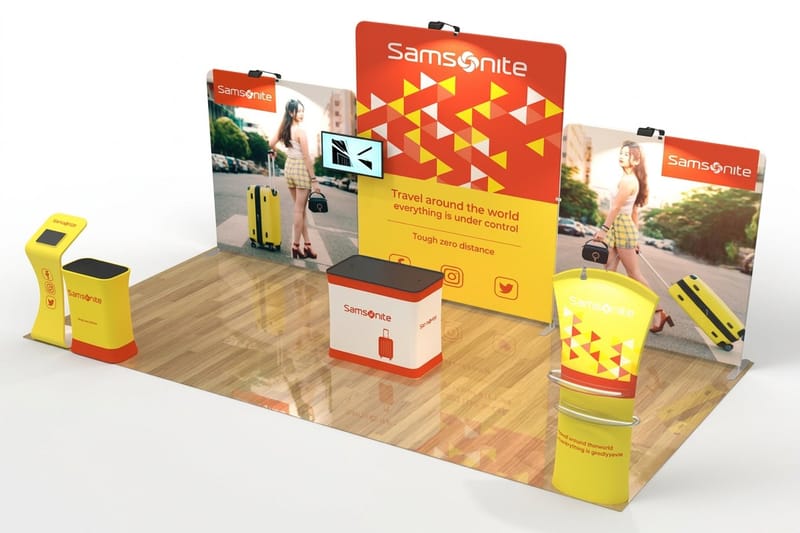
This trade show marketing guide gives you seven steps and the promotion ideas that go with them, from a back wall that reads from twenty feet to a giveaway worth keeping and a printed mailer two weeks after the show. You need all of it because a show floor is a corridor of competing arguments, and your buyer walks it once, at speed, with a bag on one shoulder and a phone in the other hand. Trade show advertising is what wins a second of that walk, holds it long enough for a real conversation, and leaves something behind that survives the flight home. In print that means a table throw on the counter, event badges on your staff and flyers for the aisle, next to the back wall and banners covered below.
Most exhibitors only budget for the first job. They buy the backdrop, print the banner, and then improvise the rest on the plane. The booth looks fine and the show still returns nothing, because nothing carried the visitor from the aisle to the calendar invite two weeks later.
The seven steps below fix that. Each one ends in a decision you can act on and a printed piece you can order, so the framework doubles as a shopping list. 4OVER4.COM has printed more than 10 billion cards and print products since 1999, and the exhibit work is the same discipline every time: decide the message, size it to the space, and get files approved before the truck leaves.
What counts as trade show advertising
It is the backdrop and the banner stand, the table cover, the badge and lanyard, the one page leaflet, the giveaway, and the follow-up mailer. Anything printed that carries your name inside or after the event belongs in the same plan and the same budget line.
Shop the show
Trade show printing collection
Booths, banners, table covers, badges, and giveaways built for the floor.
Your Trade Show Print Timeline, Order by Order
Plan the print order from move-in day backward, longest production first. These are the standard production times at 4OVER4.COM, before shipping, and each piece needs approved artwork before the clock starts.
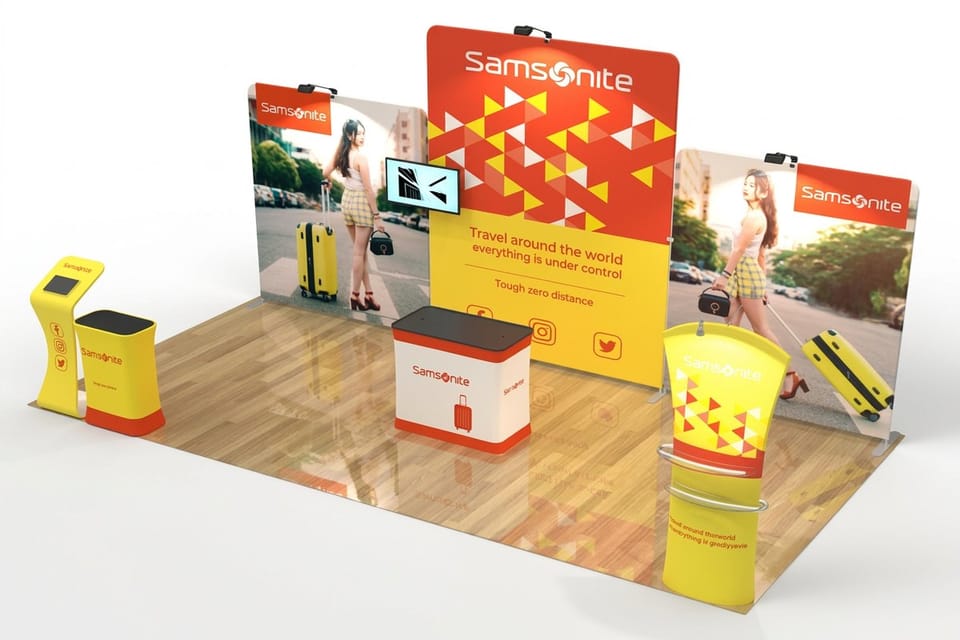
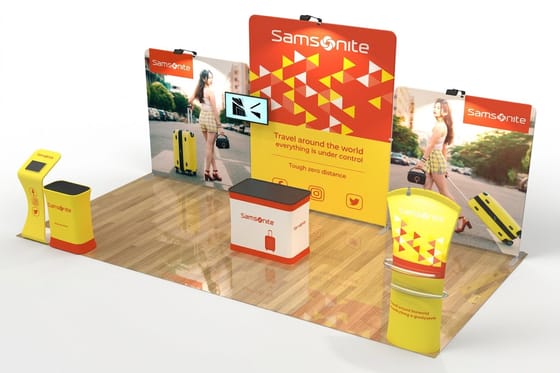
- Booth kit, 8 business days. A 10' x 10', 10' x 20' or 20' x 20' back wall printed on 8.8oz tension fabric, so order it the week you sign the contract.
- Banners, 4 business days. 2 Sided Blockout Banners on 15oz BlackOut Vinyl, from 2' x 3' up to 4' x 8', with grommets or pole pockets for the hardware you bring.
- Table throw, 4 business days. 9oz premium polyester with a 1 inch hem, cut for a 6 foot or an 8 foot table.
- Staff badges, 5 business days. Minimum 25, on 18pt PVC or 30pt gloss laminated stock, with a lanyard slot and each name printed on.
- Flyers and follow up postcards, 3 business days. The last pieces to order, since the offer and the show date on them change latest.
Trade Show Promotion Ideas You Can Print
Promotion starts before the doors open and keeps going after the booth is packed. These ideas each rest on one printed piece you can order with the rest of the show list.
- Mail your booth number first. A 4" x 6" postcard to the registrant list or your own customers two weeks out, with the booth number large and one reason to stop by.
- Stand a banner at the aisle edge. A 33" x 79" retractable banner stand sets up in minutes and catches the traffic your back wall faces away from.
- Print a show only offer. A 5.5" x 8.5" flyer with a code or a price that expires the week after the event, so you can count the leads it brings in.
- Put names on the badges. Personalized staff badges let a visitor ask for the same person again when they call after the show.
Step 1: Write the Number You Need Before You Book the Booth
Decide what the show has to produce before you choose it. Twenty qualified conversations, six demos booked, one distributor signed. A number turns a vague marketing expense into a target the whole booth team can aim at, and it settles every later argument about what to print and how much to spend on it.
Work backward from your close rate. If one in five serious conversations becomes a quote and one in three quotes closes, a show that has to deliver two new accounts needs roughly thirty real conversations. That number then sets your staffing, your booth size, and how many pieces you print.
Write it on the first line of the show plan and keep it visible. Exhibitors who do this stop buying floor space by square footage and start buying it by traffic pattern. If you are exhibiting for the first time, the first time exhibitor checklist walks through the same budget math in order.
Print picks
Three exhibit formats that carry a booth
Live prices, ready to configure for your booth size and show date.
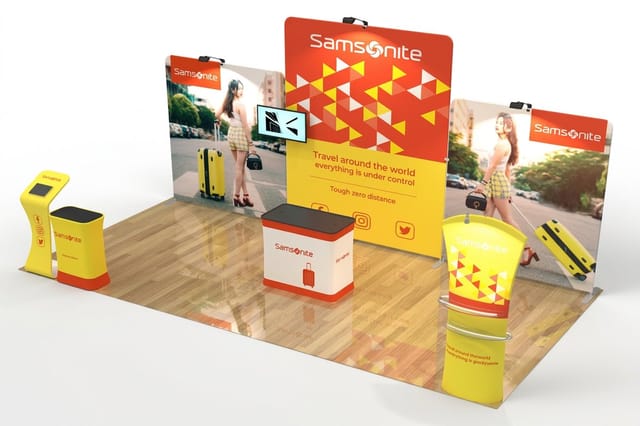 Trade Show Booth Kits $2599.00 each A complete backdrop, hardware, and graphics package that travels in a case.
 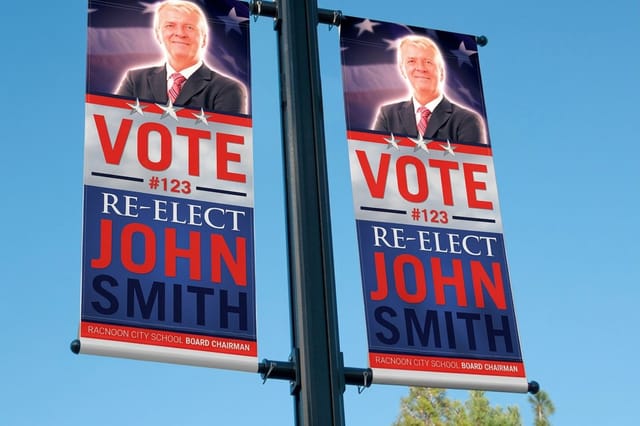 2 Sided Blockout Banners $108.75 each Two printed faces, no bleed through, readable from either end of the aisle.
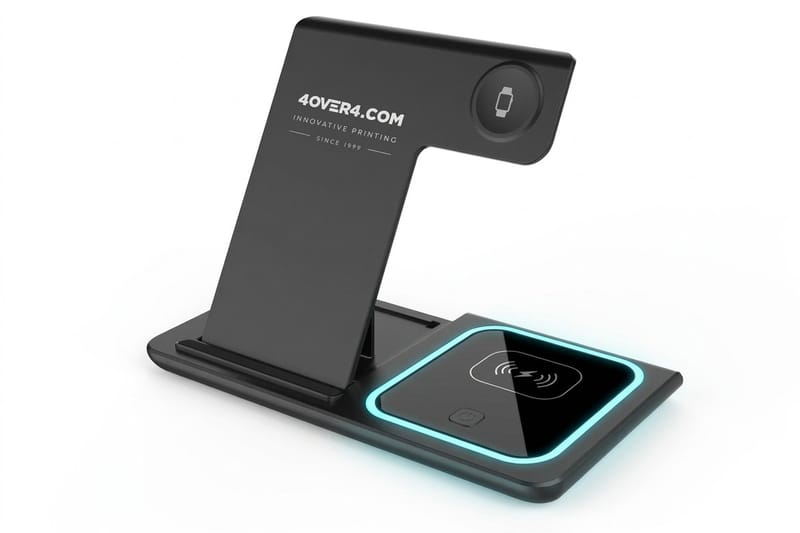
 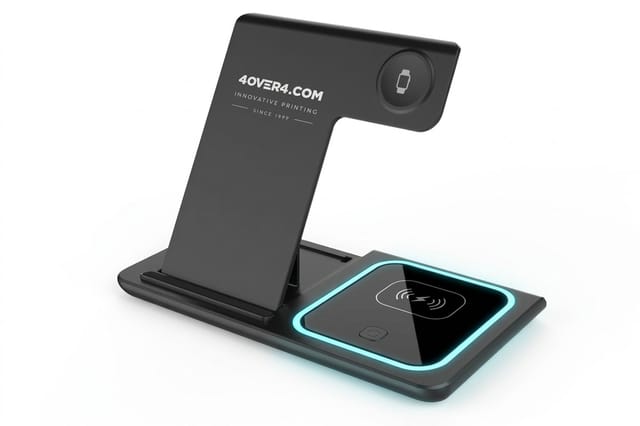 3 in 1 Foldable Wireless Charger $15.00 each A giveaway people keep on the desk instead of dropping in the hotel bin.
 Step 2: Pick Shows Where Your Buyer Already Walks
The biggest show in your industry is rarely the best one for a small exhibitor. A regional event with four hundred of the right attendees beats a national floor with twelve thousand of the wrong ones, because you can actually reach the whole room in two days.
Ask organizers for the attendee breakdown by job title and company size, not the headline attendance figure. Ask which aisles the keynote traffic passes and where the food and charging stations sit. A booth near a bottleneck earns more dwell time than a bigger booth in a dead corner.
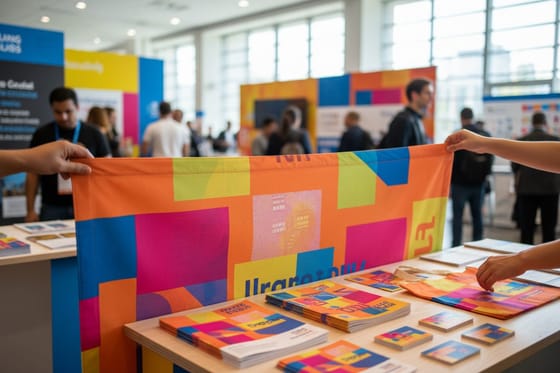
Then look at what a focused first outing can do. This first trade show case study follows a small team that picked one regional event, printed one coherent set of materials, and left with a pipeline instead of a story about foot traffic.
- Attendee fit. What share of registrants can actually buy or specify what you sell?
- Floor position. Corner, end cap, or inline, and what walks past it on the way to the sessions.
- Competitive density. Ten near identical booths in one aisle means your graphics have to work harder.
- Total cost. Space plus drayage, electrical, travel, and print, not the booth fee alone.
Step 3: Design a Booth That Reads From Twenty Feet
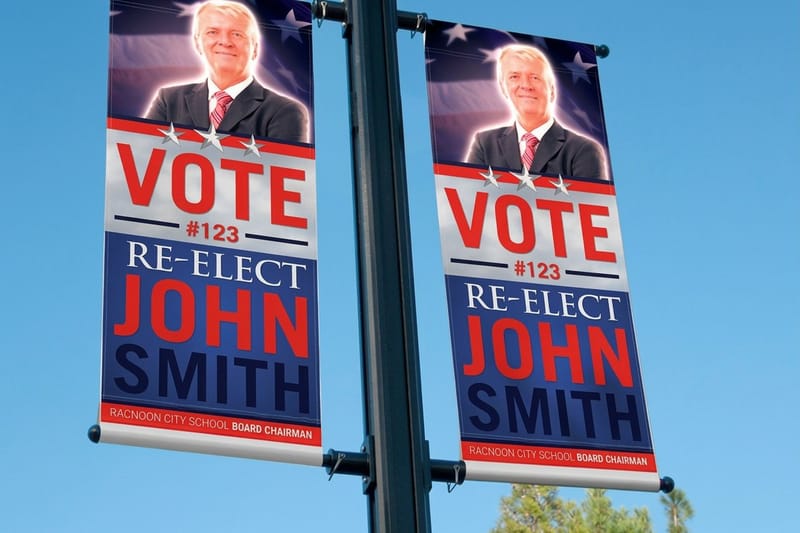
Visitors read your booth in the three seconds it takes to walk past it. That is room for one line, one image, and your name. Everything else is for people who already stopped. The most common exhibit mistake is a backdrop written at brochure distance, which reads as gray texture from the aisle.
Put the promise at eye height, between four and seven feet off the floor. Keep the headline under seven words and make it about the visitor's problem, not your company history. Reserve the lower panels for product images and the upper band for the logo, which is what people see over a crowd.
Hardware follows the message. A Trade Show Booth Kit gives you a full back wall in one shippable case, and 2 Sided Blockout Banners catch traffic arriving from either direction because the blockout core stops one side from ghosting through the other. For sizing by booth depth and ceiling height, the banner sizes and types guide has the measurements.
Contrast beats decoration
Dark type on a light field, or the reverse, always outperforms a photo with text laid over it. Show lighting is uneven and often colored, so a design that only works under a studio light will disappoint on the floor. More layout ideas live in the booth ideas and materials checklist.
Quantity and price
Trade show booth kit pricing and specs
Real configurator numbers, plus the material and hardware details for the back wall.
| Quantity | Price Per Unit | Total |
|---|---|---|
| 1 | $2,599.00 | $2,599.00 |
| 2 | $2,599.00 | $5,198.00 |
| 3 | $2,499.00 | $7,497.00 |
| 4 | $2,499.00 | $9,996.00 |
| 5 | $2,499.00 | $12,495.00 |
Step 4: Give People a Reason to Stop Walking
Attention is bought with something happening, not something hanging. A live demo on a two minute loop, a sample people can handle, a short quiz on a tablet, a chair. Movement and the chance to touch a product stop more visitors than any headline, and they give your staff a natural opening line.
Staff the booth like a shop floor, not a reception desk. Nobody seated, nobody eating, nobody behind a table barrier. One person forward to greet the aisle, one back to run the demo, and a clear handoff between them so a good conversation never gets abandoned mid sentence.
Print supports the stop. A single sheet leaflet in a hand at the right moment carries the offer while the visitor is still standing there, and event flyers and displays covers the formats that hold up on a busy floor. Personal presence matters just as much, and these self promotion tips help booth staff open without sounding like a script.
Aisle stopper
2 sided blockout banners
An opaque core keeps both printed faces clean, so traffic from either direction reads the same message.

Step 5: Put Something in Their Hands Worth Keeping
Almost every branded pen ends the week in a hotel wastebasket. The test for a giveaway is simple: would this item still be on a desk in March? A useful object with a long life beats a hundred disposable ones, and it costs less overall because you hand it only to qualified visitors.
Tie the item to the conversation. A 3 in 1 Foldable Wireless Charger sits on the desk of the person you want to reach and works every day, so the gift is remembered at the exact moment they are working. Keep the premium items behind the counter and hand them over after a real conversation, not to everyone passing by.
Pair the object with a printed piece that carries the next step, because the item alone rarely explains what you do. More options by budget and audience are collected in trade show giveaway ideas.
- Desk life. Chargers, notebooks, and mugs stay in view for months.
- Tier it. A low cost item for the aisle, a better one for qualified prospects.
- Brand it lightly. A small clean mark gets used, a full wrap gets hidden.
- Pack for weight. Whatever you carry in, you also pay to ship or lift.
The piece they keep
Wireless charger
A ready-made folding three coil charger for phone, watch, and earbuds, for the people who actually make the decision.
Step 6: Capture the Lead While the Conversation Is Still Warm
The badge scan is the start of a record, not the record itself. Two weeks later nobody remembers which scan was the buyer with the budget and which was the student collecting tote bags. Capture context in the moment or accept that most of the value evaporates by the closing bell.
Agree on three fields before the show opens: what they need, when they need it, and who else has to approve it. Type it into the lead form or write it on the back of the card while the person is still in front of you. Rate every lead A, B, or C on the spot so the follow up list sorts itself on the flight home.
Keep a printed fallback within reach. Scanners fail, apps time out, and the show network goes down at exactly the wrong moment. A short paper form on a clipboard has saved more pipelines than any exhibitor wants to admit.
Compare formats
Popular trade show print, side by side
Material, size, quantity, turnaround, and price across the formats exhibitors order most.
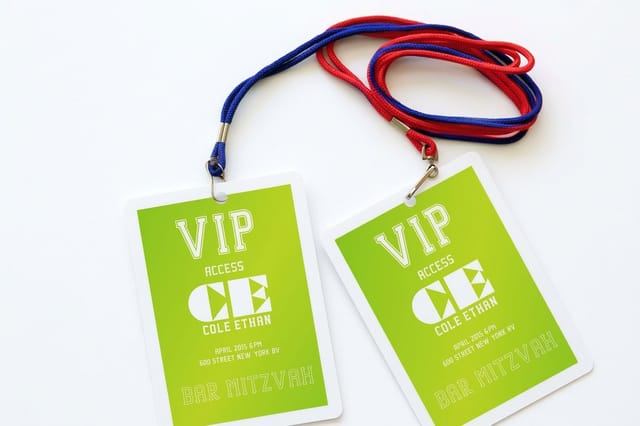 Event Badges | 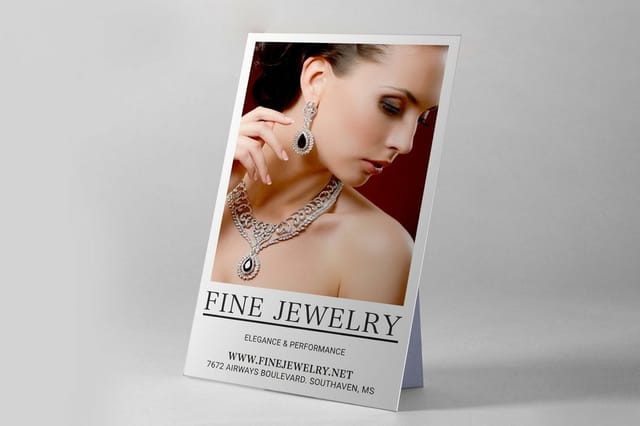 Counter Cards | 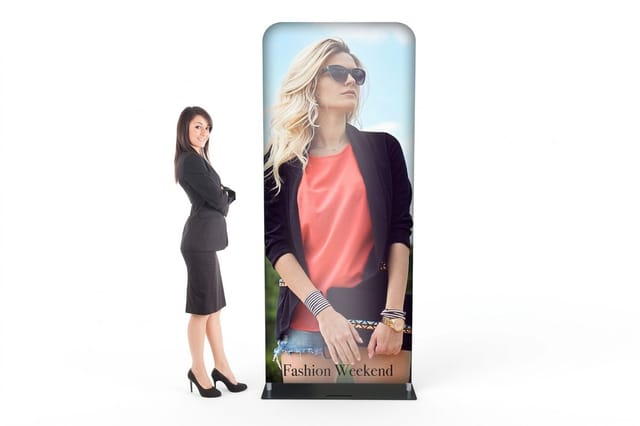 Fabric Tube Displays | 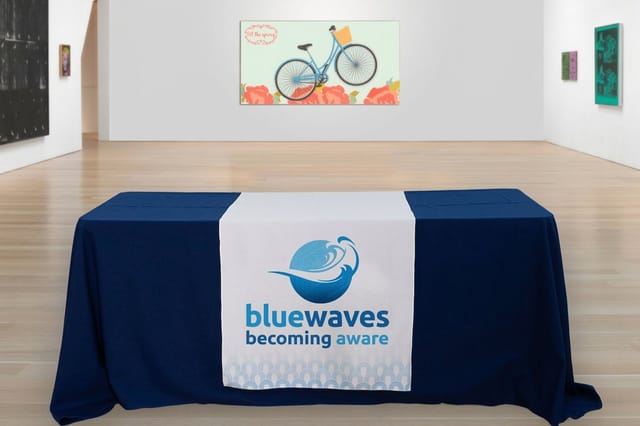 Table Runners | |
|---|---|---|---|---|
| Min price | $49.88 | $21.97 | $163.67 | $97.76 |
| Paper / stock | 30pt Gloss Laminated | 56pt. SBS Board | 8.8oz. Tension Fabric | 9oz Premium Polyester |
| Finish | - | Standard Finish | - | - |
| Size | 2" x 3" | 8.5" x 11" | 36" x 90" | 24" x 72" |
| Default qty | 25 | 1 | 1 | 1 |
| Turnaround | 5 business days | 2 business days | 4 business days | 4 business days |
| Rating | ||||
| View & customize | View & customize | View & customize | View & customize |
Step 7: Follow Up Within Forty Eight Hours
Your competitors are all emailing the same list next Monday. Send yours while the visitor can still picture your booth, and reference the thing you actually discussed. One specific sentence about their problem outperforms any templated thank you for visiting our booth message.
Split the list by the grade you assigned. A leads get a call and a proposed time. B leads get an email with one relevant piece and a soft ask. C leads go into the newsletter and stay there. Trying to treat all three the same is why most show lists go cold in a fortnight.
Then mail something physical to the A list two weeks later, when the inbox has cleared. A printed card or a short mailer arriving after the digital rush lands almost alone, and it costs less than the coffee you bought at the show.
Build the Print List and Get It on the Truck
Turn the seven steps into one order. Back wall and hanging banners for the booth, a table cover, badges and lanyards for staff, leaflets for the aisle, giveaways for qualified visitors, and a mailer for follow up. Ordering it as a single list catches the gaps, which is usually the piece that ties the booth to the follow up.
Start from a print ready layout in the banner sizing guide so your artwork matches the finished size and bleed the first time. If the show is already close, last minute booth material printing lays out what can still be produced and shipped in time and what has to be cut from the plan.
Deadlines that actually matter
- Artwork approval. Large format files need a proof review before anything goes on press.
- Production time. Booth kits and hardware take longer than flat printed pieces.
- Ship to the right address. Advance warehouse or direct to show site, never both.
- Move-in day. Anything arriving after it is decoration for an empty booth.
Start fast
Banner templates and print ready blanks
Free layouts plus exact size blanks so your artwork lands on the right bleed the first time.
Wally maps your booth from aisle to follow-up
One plan, one print order, seven steps that connect
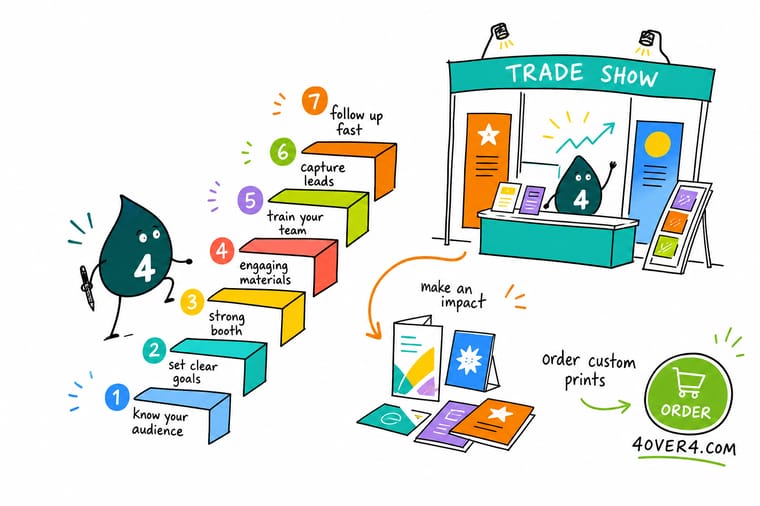
Think of the booth as a relay. The back wall wins the glance, the banner holds the walk, the demo earns the stop, the handout survives the flight, and the follow up closes the loop. Wally lines those up so nothing gets ordered twice and nothing gets forgotten. Pick your booth size, set the show date, and let the print list build itself from there.
Build your trade show print list →What to Remember Before You Sign the Next Booth Contract
Read next
Trade show guides worth reading before you print
Sizing, checklists, and rush options, from the 4OVER4.COM library.
Guide Trade Show Banner Sizes and Types Pick the right banner format for your booth depth and ceiling height. Guide First Time Exhibitor Checklist Everything to book, print, and pack before your first show. Guide Last Minute Booth Printing What can still be produced and shipped when the show is days away. Case study A Startup at Its First Show How one small team turned a single regional event into pipeline. Explore more
More ways to win the show floor
Booth kits from 10' x 10' to 20' x 20', blockout banners from 2' x 3', and the giveaway and follow up pieces for each part of the exhibit plan.
 Article Trade Show Marketing Strategies That Fill Your Booth and Your Pipeline Trade show marketing strategies that fill a booth, from pre show outreach and booth graphics to giveaways and
  Collection Trade Show Printing Booths, banners, table covers, badges, and giveaways in one place. Product Trade Show Booth Kits A full back wall with hardware and graphics in a shippable case. Product 2 Sided Blockout Banners Two printed faces with no bleed through, built for busy aisles.
  Product 3 in 1 Foldable Wireless Charger A giveaway that stays on the desk after the show.
  Case study First Trade Show Case Study One regional event, one coherent print set, real results.
  Guide Banner Sizes and Types Match the banner format to your booth and your message.
  Guide First Time Exhibitor Checklist The full pre show list, from contract to move-in day.
  Guide Last Minute Booth Materials Rush printing options when the show is already close.
  Article Booth Ideas and Materials Layout ideas plus the checklist of what to bring. Article Flyers and Displays for Events Print formats that hold up on a crowded show floor.
  Article Trade Show Giveaway Ideas Items people keep, sorted by budget and audience.
 Ready to print a booth that earns its floor space?
Set your number, pick the show, then order the back wall, the banners, and the giveaway as one list so everything arrives before move-in day.
Trade Show Advertising Questions, Answered
What is trade show advertising?
Trade show advertising is every branded element that works before, during, and after an event: the back wall and banners that stop aisle traffic, the table cover and badges your staff wear, the leaflet a visitor carries out, the giveaway that lands on a desk, and the printed follow up that arrives two weeks later. Treated as one connected set rather than separate purchases, it moves a visitor from a glance to a booked conversation. The booth ideas and materials checklist lists the pieces in order, and the event badges video overview shows the badges your staff can wear.
How do I choose the right trade show advertising?
Start with your booth size, your floor position, and the number of conversations the show has to produce. A ten by ten inline booth needs one strong back wall and a banner that reads down the aisle. A corner or island booth needs double sided graphics because traffic arrives from both directions. Then add only the pieces that carry the visitor forward: something to hand over, something to keep, and something to mail afterward. Anything that does not move a lead along is decoration.
What does trade show advertising cost and how are prices set?
Price follows format, size, material, and quantity. Trade Show Booth Kits start at $2,599.00 because the price includes hardware, graphics, and a shipping case for a full back wall. 2 Sided Blockout Banners start at $108.75 and scale with finished square footage, since larger banners use more material and more finishing. Promotional items like the 3 in 1 Foldable Wireless Charger start at $15.00 per unit and drop as quantity rises. Live pricing for every configuration shows on each product page as you build it.
What sizes, stocks, and finishes are available for trade show advertising?
Large format pieces print on vinyl, mesh, and blockout materials, with hemming, grommets, pole pockets, and reinforced corners as finishing options. Blockout stock carries an opaque core so a double sided print never ghosts through. Booth kits arrive as a fitted graphic on a tension frame. Handouts print on standard and premium paper stocks with matte, gloss, or soft touch coatings. Sizes run from a tabletop banner to a full back wall, and the sizing guide maps each format to booth depth and ceiling height.
How long does trade show advertising take to print and ship?
Flat printed pieces such as leaflets and cards move fastest, large format banners need a little more production time, and full booth kits take the longest because hardware is assembled and packed with the graphics. The real deadline is not the print job, it is the show. Build in artwork approval, production, transit, and either advance warehouse cutoff or show site delivery windows. Order as soon as the booth contract is signed, and check the rush options if the show is already close.
