
Niche Business Ideas You Can Start Small and Launch Fast


Tobias is our voice for cutting, binding and large format, built from the knowledge of our production team, with over 20 years in printing.
A niche business idea is one customer plus one constraint, not a product category, and a good one can be tested for the price of a short print run before you spend anything else. Pick the idea whose first ten customers you can name, print 250 postcards for exactly those people, and let the replies decide. The printed launch kit is small: 100 premium business cards for $17.57, 200 postcards for $31.86, and a vinyl banner from $79 if you sell at a market.
Niche ideas and what they cost to start
| Niche idea | The constraint that defines it | Where the first customers are | Real startup cost | First print run |
|---|---|---|---|---|
| Allergy-friendly pet treats | One dietary restriction, vet-checked recipe | Groomers, dog parks, breed groups | Kitchen rules and label compliance apply | Die-cut stickers for jars, plus cards |
| Mobile bike and e-bike repair | You travel to the bike, not the reverse | Apartment blocks, commuter routes | Tools and a vehicle | Flyers and yard signs |
| Resume editing for career changers | One moment in a career, not everyone | Alumni groups, LinkedIn, referrals | A laptop | Business cards and postcards |
| Sourdough supply for small restaurants | Wholesale only, no retail counter | Chefs within a delivery radius | Certified kitchen, early mornings | Brochures with a wholesale price list |
| Bilingual wedding stationery design | Two scripts on one invitation | Planners, venues, cultural groups | Design software and samples | Sample packs and business cards |
| Estate clear-out photography | Auction listings, not portraits | Auctioneers, probate lawyers | Camera and a lighting kit | Postcards to law offices |
Startup cost here means the money you must spend before the first customer, not the money you hope to make. For a service idea, that floor is 100 business cards at $17.57 and 50 postcards at $16.48. Ideas with a license, a kitchen or a vehicle in that column are real businesses, just not weekend ones. You can order premium business cards from the configurator once the idea is chosen.
Why niche businesses win
A broad idea forces you to compete on price against companies with better prices. A narrow one lets you compete on fit, and fit is the only advantage a one-person business can actually defend in its first year. The bakery that sells bread to everyone is arguing with a supermarket. The bakery that supplies sourdough to eleven restaurants inside a twenty-minute drive is arguing with nobody, and it needs eleven brochures with a wholesale price list, not a mailing to the whole town.
Narrowing also fixes the marketing problem, which is the real problem. When your customer is "small businesses", you cannot write a headline and you cannot buy a list. When your customer is "wedding planners in Queens who book bilingual ceremonies", you can name thirty of them, and thirty is a print run rather than an advertising budget.
The trade-off is honest and worth stating: a narrower niche has a smaller ceiling. You will run out of allergy-focused dog owners in your county long before a general pet brand runs out of pet owners. Most founders never reach that ceiling, and the ones who do widen from a position of having paying customers instead of guessing. If you want the market and message worked out on paper first, our brand messaging guide sets out the components in order.
A niche is a customer plus a constraint
Most idea lists give you categories: candles, tutoring, lawn care. A category is where you start, not where you land. The niche appears when you add a constraint that rules people out on purpose. Tutoring becomes exam retakes. Lawn care becomes rental properties between tenants. Candles becomes scent-free candles for people who react to fragrance.
The test is simple. If you cannot say who the offer is not for, you have a category. Write the exclusion down before you write the tagline, because the exclusion is what makes the tagline write itself.
Ideas that look cheap and are not
Food, childcare, personal care and anything on wheels carry costs that never appear on a startup ideas list: a certified kitchen, a license, insurance, an inspection, a vehicle. They can still be excellent businesses. They are simply not the ones to pick if the reason you are reading this is that you have five hundred dollars and a weekend.
The genuinely low-cost starts are the ones where the only inputs are your time and a way to be found: editing, design, repair, cleaning, tutoring, bookkeeping, reselling. For those, the entire startup cost is the tools you already own plus business cards at $17.57 and something to hand out.
Niche small business ideas by category
These are grouped by what the business actually sells, because that decides the startup cost, the first customer, and the print that reaches them. Each one names the constraint that turns a category into a niche.
Read them as prompts rather than instructions. The idea matters less than whether you can name the first ten people who would pay for it, which is the filter applied in the next section.
Service niches, the cheapest to start
1. Post-renovation cleaning. Contractors need the site handed over clean and will pay a premium for a crew that owns a shop vacuum and turns up on a Friday. Sell to builders, not to homeowners.
2. Resume and profile editing for career changers. One moment, one document, one price. Alumni associations and industry groups are the list, and a postcard to a meetup organiser costs less than a coffee.
3. Small-business bookkeeping for one trade. Pick electricians, or salons, or food trucks. Knowing the chart of accounts for one trade lets you charge more and work faster than a generalist.
4. Mobile bike and e-bike repair. The constraint is that you travel. Apartment buildings and office parks are dense lists, and a flyer on a noticeboard reaches the whole building for pennies.
5. Estate clear-out photography. Auction houses and probate lawyers need fast, honest listing photos. It is unglamorous, repeatable work with almost no competition.
Product niches, where the constraint does the selling
6. Allergy-friendly pet treats. One dietary restriction, stated plainly on the jar. Labels and die-cut stickers from $93.37 do most of the shelf work here, because the buyer is reading the ingredients before anything else.
7. Scent-free personal care. A real and underserved constraint. The whole brand is one word on the front of the pack.
8. Left-handed tools and kitchenware. A permanent niche with a permanent, findable audience and no need to invent demand.
9. Replacement parts for discontinued furniture. Boring, searchable, and people arrive already wanting to buy.
10. Bilingual wedding stationery. Two scripts on one invitation is a genuine design skill. Planners and venues are the referral network, and they judge you on the sample pack you leave behind.
Local niches, where print beats the internet
11. Wholesale baking for restaurants. Delivery radius is the constraint. A brochure with a wholesale price list, left with a chef, outlives any email.
12. Rental turnover services. Landlords need the same four jobs done between tenants. Sell the bundle, not the hours.
13. Weekend market stall for one product done properly. One product, one banner, one price. A vinyl banner at $79 and a table is the whole storefront.
14. Neighborhood dog walking with GPS reports. The report is the constraint and the reason to charge more than the teenager down the street.
15. Seasonal decoration installation. Six weeks of intense work, high ticket, almost no year-round cost. Yard signs at $25 in the gardens you have already decorated sell the next street for you.
Validating an idea before you spend a dollar
Validation is not asking friends whether your idea is good. It is finding out whether a stranger will do something inconvenient because of it: reply, book a call, join a waitlist, or pay a deposit. Everything short of that is encouragement, and encouragement has never paid an invoice.
The cheapest real test is a small print run aimed at one named list. Print 250 postcards, put one offer and one way to respond on them, and deliver them to a list you chose deliberately. A handful of replies from 250 tells you more than a hundred people telling you it sounds great, because the people who replied spent something to do it.
Set the number that counts before you send anything. Decide in advance what result makes you continue and what result makes you stop, and write it down. Founders who skip that step read any outcome as a green light, which is how a bad idea survives its first six months.
What a print test costs and what it tells you
Standard postcards start at $16.48 and standard flyers at $39.54, so a real test of a real offer to a real list sits comfortably under a hundred dollars including delivery. Compare that with the time cost of building a website, a logo and a booking system for an idea nobody has agreed to buy yet.
Track responses per hundred pieces rather than a total, and keep the offer identical across the run. If you change the headline halfway through, you have run two tests badly instead of one test well. Our lead generation strategies for small businesses covers what to do with the replies once they arrive.
The follow-up that turns a reply into a customer
Most tests fail at the second step, not the first. Someone responds, nothing happens for four days, and the interest evaporates. Decide the follow-up before you print: who answers, how fast, and what they say.
A short second touch works well here. A follow-up postcard to the people who responded, sent within a week, costs almost nothing and separates you from every business that sent one thing and stopped.
Launch essentials, in the order they earn
Buy in the order that money comes back. Business cards first, because they turn conversations you are already having into contacts. Then one piece that makes an offer to a list you chose. Everything after that is a decision you can make with revenue instead of savings.
The numbers below come straight from the live configurator, so you can size a launch budget before you commit to a quantity. Note how the per-unit cost falls as the run grows, and then ignore it for your first order: the cheapest unit price on a message you abandon in a month is not a saving.
Quantity and price
Business card pricing and specs
Live pricing from 100 cards at $17.57, with the per unit cost falling as the run grows.
| Quantity | Price Per Unit | Total |
|---|---|---|
| 100 | 17.6¢ | $17.57 |
| 200 | 11.5¢ | $23.07 |
| 300 | 9.15¢ | $27.46 |
| 400 | 7.96¢ | $31.86 |
| 500 | 7.25¢ | $36.26 |
| 600 | 6.77¢ | $40.64 |
You can also earn coins on every order and redeem them against later runs, which matters more than it sounds when your marketing budget is measured in tens of dollars. If you want the price breakdown before you decide on stock, our guide to what business cards cost and why explains where the money goes.
Print materials every startup needs
Different business types need different first pieces, and buying the wrong one is the most common way a new business burns its print budget. Here is the split by what you actually sell.
- Service businesses. Business cards and postcards, nothing else at first. You are selling trust and availability, so the card has to survive a wallet and the postcard has to carry one offer.
- Food and drink. Labels and stickers before anything else, because the pack is the shelf argument. Add a brochure only when you start selling wholesale to chefs and buyers.
- Retail, craft and market stalls. A vinyl banner, a price card, and stickers on the packaging. The banner is read from across a market hall, so it gets three words and a price, not a paragraph.
- Local trades and home services. Flyers for the streets you already work on and yard signs at finished jobs. Both are targeted by geography, which is the only targeting a local trade needs.
- Online-first brands. Business cards for events and a printed insert in every parcel. The insert is the cheapest repeat-purchase tool an online brand has, and almost nobody uses it.
Print it
Business cards, ready to hand out
Premium stocks and finishes, printed and shipped fast enough for the launch date you already told people.
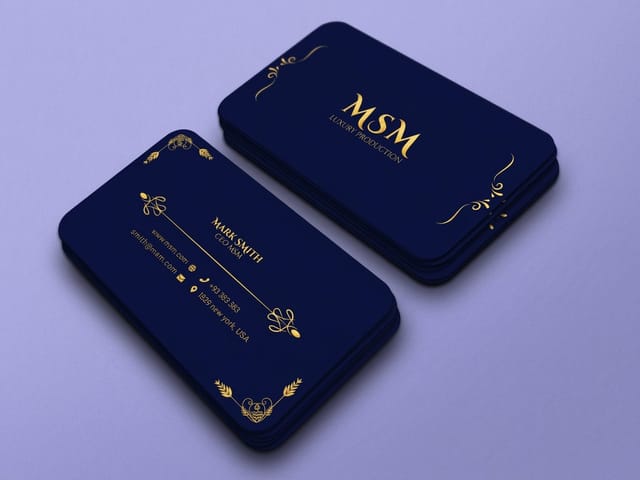
Stock and finish change how a piece survives. A card on 14pt stock bends in a back pocket by the end of a market day, and 16pt does not, which is the entire argument for the thicker option. Matte reads calmer and takes a pen, so it works when someone writes a price or a date on the back. Gloss lifts photography and shrugs off a damp hand, which suits food and trades. For anything living outdoors, a vinyl banner at $79 outlasts a paper sign by seasons, and yard signs at $25 put your name in the garden of a job you have already done.
Once a range and a price list exist, a brochure at $57.11 does work no single sheet can: it sits on a chef counter or a reception desk and gets picked up again a week later. Buy it at that point, not before. For the full picture of what to print and when, see our business marketing supplies guide, and browse business card printing or sticker printing for the full range.
Blanks for a launch with no designer
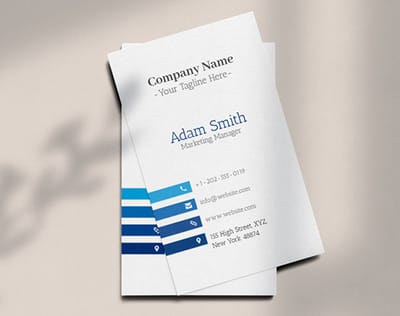
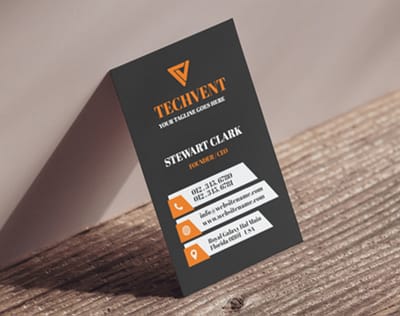
If you are not starting from a finished design, templates remove the two mistakes that cost a reprint: artwork sitting outside the trim and type falling into the bleed. 4OVER4.COM sizes its blanks to exact product specs, a 3.5 x 2 inch business card or a 4 x 6 inch postcard, so the cut lines and safe area are already marked. Grab a print ready blank from the blank template library before you open your design software.
Start fast
Blanks for a launch with no designer
Blanks for the card and the sticker, sized so nothing sits outside the trim.





Wally narrows a category into a niche
One customer, one constraint, one printed test
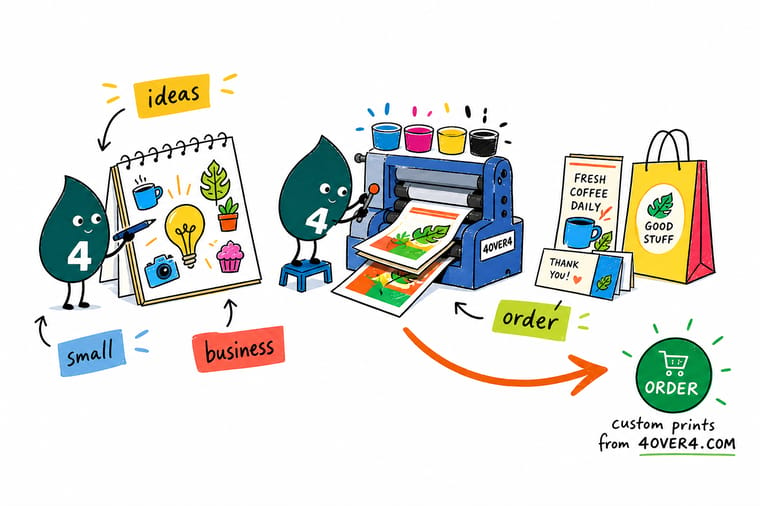
Start from a category, add the constraint that rules people out on purpose, then name ten customers you can actually reach. Print 250 postcards with one offer and one response method, set your pass mark before you send, and count replies per hundred pieces. 4OVER4.COM prints the test run and the launch kit on premium stock.
Order postcards →What to remember about picking a niche
Rules that hold for every idea on this page
- Name the first ten customers. If you cannot list ten real people or businesses who would pay for this, you have a category rather than a niche. Write the ten names down before you spend anything.
- Pick a constraint, not a category. Say who the offer is not for. The exclusion is what makes the headline write itself and what makes a stranger recognize themselves in it.
- Charge before you build. Take a deposit or a pre-order before the website, the logo or the inventory. Money changing hands is the only validation that has never lied.
- One message per printed piece. A card says who you are. A postcard makes one offer. A banner carries three words. A piece that tries to do all three does none of them.
- Keep the first run small. Print the smallest quantity that gives you a readable result. The unit price is lower at 5,000, and 5,000 of a message you abandon in a month is not a saving.
Getting started with 4OVER4.COM
Pick the idea whose ten customers you can name. Print the smallest run that gives you a readable answer, aim it at those ten and the two hundred people most like them, and decide the pass mark before the first piece leaves your hands. If the replies come, print the launch kit. If they do not, you spent under a hundred dollars finding out, which is the cheapest lesson available to a founder.
We proof every job before it prints, so the file you upload is checked before a press runs it. Compare finishes on print marketing examples that still win customers, or start from a free design template if the artwork does not exist yet.
Explore more
More ways to launch and promote
Die-cut stickers run 25 for $93.37 in 5 business days and vinyl banners print in 3.
 Product Premium Business Cards The first thing a new business needs, from $17.57. Product Standard Postcards The cheapest way to test an offer on a real list. Product Standard Flyers Targeted by street, not by algorithm.
  Product Vinyl Banners A market stall storefront for $79.
  Product Die-Cut Stickers Packaging and jar labels cut to your shape.
  Category Business Card Printing Every stock, finish and shape in one place.
  Article 100 Small Business Name Ideas Naming prompts for the idea you just picked.
  Article 20 Small Business Hacks What founders do differently in the first year.
  Guide Business Marketing Supplies What to print first and what can wait.
 Ready to print the test run?
Pick your size, drop in your design or a free template, and 4OVER4.COM prints it sharp on premium stock, as fast as your launch date needs.
Common questions about niche business ideas
What actually counts as a niche business idea?
A niche is a specific customer plus a constraint that rules other customers out on purpose. Candles is a category. Scent-free candles for people who react to fragrance is a niche, because it names both who it serves and who it does not. The practical test is whether you can write down the ten people or businesses who would buy first. If you can name them, you can reach them without an advertising budget, and that is the whole advantage a new business has. If the answer is "anyone who likes candles", the idea is still a category and you have not finished the work yet.
How much money do I actually need to start?
It depends entirely on whether your idea needs a license, a vehicle, a kitchen or insurance. Service ideas built on time and tools you already own can start for the price of a print run: premium business cards from $17.57 and standard postcards from $16.48 at 4OVER4.COM. An insurance agent, for example, can start with our Insurance Postcards at the same price. Food, childcare, personal care and anything driven on public roads carry compliance costs that never appear on startup idea lists, and they are the ideas people abandon halfway through. Neither group is better. Pick the group that matches the money and time you genuinely have, not the one that sounds most exciting.
How do I test an idea without building a business first?
Make a stranger do something inconvenient because of your offer. Print 250 postcards with one offer and one way to respond, deliver them to a list you chose deliberately, and count the replies per hundred pieces. Set your pass mark before you send anything, so the result decides for you instead of your optimism deciding for the result. A test like this costs under a hundred dollars, takes about a week, and gives you a harder answer than a survey, a landing page with no traffic, or a group of friends being kind about your idea.
Do I still need business cards if customers find me online?
Yes, for one specific reason: the card is what happens after a conversation, and conversations still happen in person. Trade counters, markets, networking events, a parent at a school gate and a chef in a kitchen doorway all end with someone needing your details in a form they will still have on Tuesday. A card also signals a real business in a way a phone number typed into a stranger notes app does not. It is a low-stakes decision at $17.57 for a run of premium cards, and the cost of not having one is the lead you never hear from again.
Which print materials should a brand new business buy first?
Business cards first, then one piece that makes an offer. For a service business that second piece is postcards or flyers, because both can be aimed at a specific street or a specific list. For a product business it is labels and stickers, because the pack is doing the arguing on the shelf. Everything else can wait: brochures make sense once you have a range and a price list, and banners make sense once you have a stall, a shopfront or an event. Buying all of it in week one is the most common way new businesses waste their first print budget.
